
 By Frank Lucasale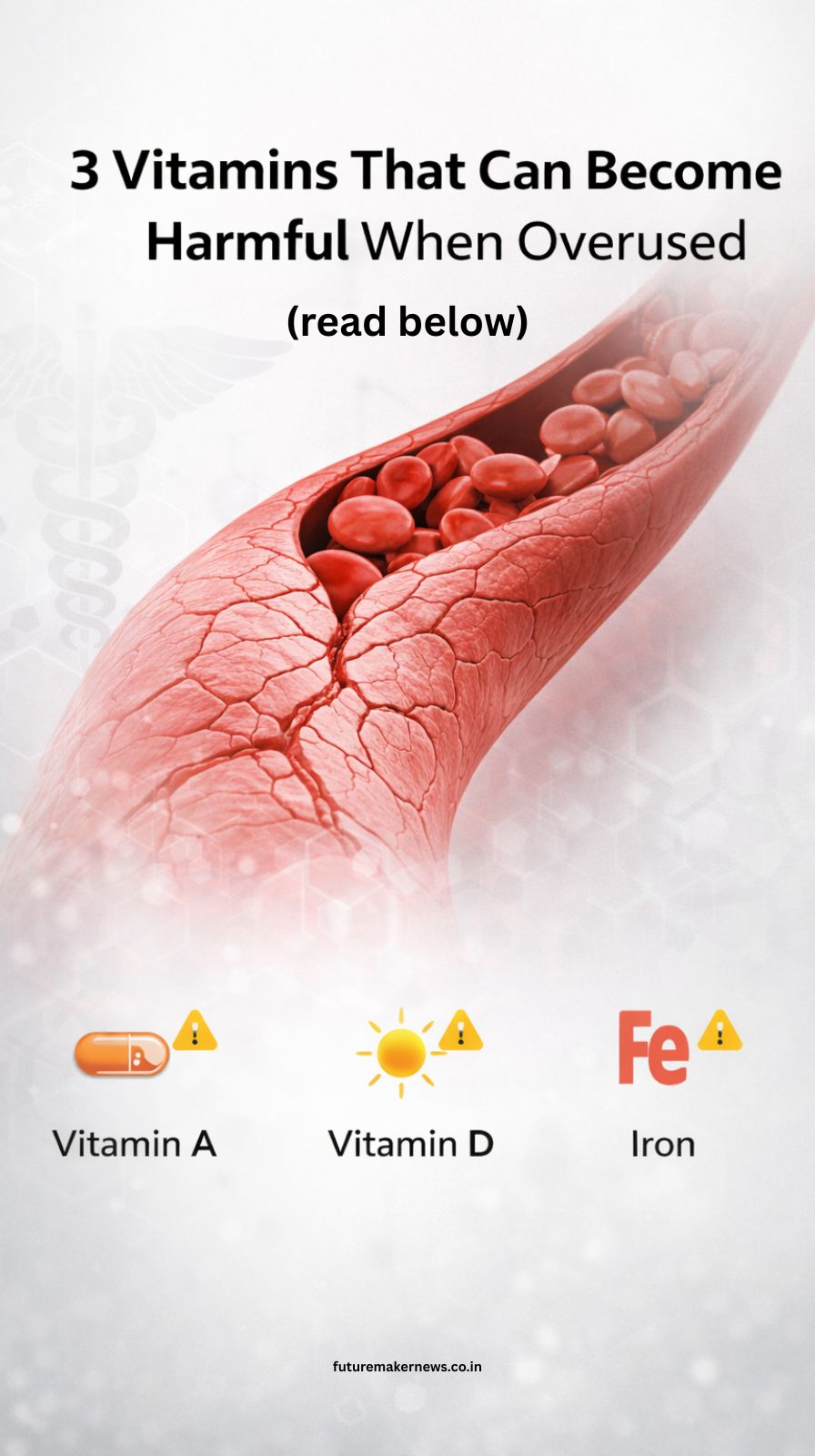
Vitamins are marketed as harmless insurance policies for health.
Bright labels promise energy, immunity, and longevity — no prescription required. But medical research has revealed a less comfortable truth: Some vitamins, when taken in high doses for months without medical supervision, can quietly damage the liver, kidneys, blood vessels, and heart.Not because vitamins are “poison,”
but because the body was never designed to process chronic megadoses of isolated nutrients.
Here are three supplements most commonly linked to long-term toxicity when misused, and why the risk often goes unnoticed.
1. Vitamin A (Retinol): The Fat-Soluble Accumulator
Vitamin A is essential for vision, immunity, and cell growth — but only in small amounts. The danger lies in synthetic preformed vitamin A (retinol, retinyl palmitate), commonly found in supplements and fortified foods. Unlike water-soluble vitamins, vitamin A is stored in the liver.
When intake consistently exceeds the body’s needs, it accumulates.
What long-term excess can cause:
- Liver inflammation and fibrosis
- Headaches, nausea, hair thinning
- Bone loss and increased fracture risk
- Fatigue often misdiagnosed as stress or burnout
Clinical cases of hypervitaminosis A have been documented after months of daily over-supplementation — even at doses people assumed were “safe.” Key issue: the liver cannot flush excess vitamin A efficiently.
2. Vitamin D Megadoses: When “More” Backfires
Vitamin D is vital for bone health and immune regulation.
But modern supplement culture often promotes 5,000–10,000 IU daily without blood testing.
Vitamin D increases calcium absorption.
When taken excessively for long periods, this can lead to hypercalcemia — too much calcium in the blood.
Documented risks include:
- Kidney stones and kidney damage
- Calcification of blood vessels
- Heart rhythm disturbances
- Increased cardiovascular strain
The problem isn’t vitamin D itself — it’s unsupervised megadosing without monitoring blood calcium and vitamin D levels. Medical guidelines consistently emphasize: Vitamin D should be personalized, not blindly stacked.
3. Iron Supplements: Helpful — Until They Aren’t
Iron is lifesaving for people with diagnosed deficiency.
But for those without anemia, excess iron becomes dangerous.
The human body has no active mechanism to excrete excess iron.
Instead, it stores it in organs like the liver, pancreas, and heart.
Long-term excess iron can lead to:
- Oxidative damage to blood vessels
- Increased cardiovascular risk
- Liver and pancreatic stress
- Elevated inflammation markers
This is why physicians test ferritin levels before recommending iron — and why routine supplementation without diagnosis is discouraged.
Iron isn’t a daily “energy vitamin.”
It’s a medical intervention.
Why This Happens: Pills vs. Physiology
Whole foods deliver vitamins in balanced, bio-regulated forms, alongside fiber, enzymes, and cofactors that limit overabsorption.
Supplements deliver isolated compounds, often in doses far beyond evolutionary exposure.
Your liver and kidneys don’t interpret them as “health” —
they interpret them as chemical inputs that must be processed or stored.
Over time, storage becomes strain.
The Real Takeaway (Not Fear — Awareness)
This isn’t an argument against vitamins.
It’s an argument against chronic, unsupervised supplementation driven by marketing rather than medicine.
Evidence-based principles:
- Test before supplementing
- Respect upper intake limits
- Be cautious with fat-soluble vitamins
- Treat iron and high-dose vitamin D as medical tools, not wellness trends
Health isn’t built by swallowing more pills.
It’s built by understanding what the body can — and cannot — safely handle.
Final Thought
Nature didn’t design the body for constant megadoses of isolated nutrients.
It designed it for balance.
Supplements can support health —
but misuse over time can quietly undermine it.