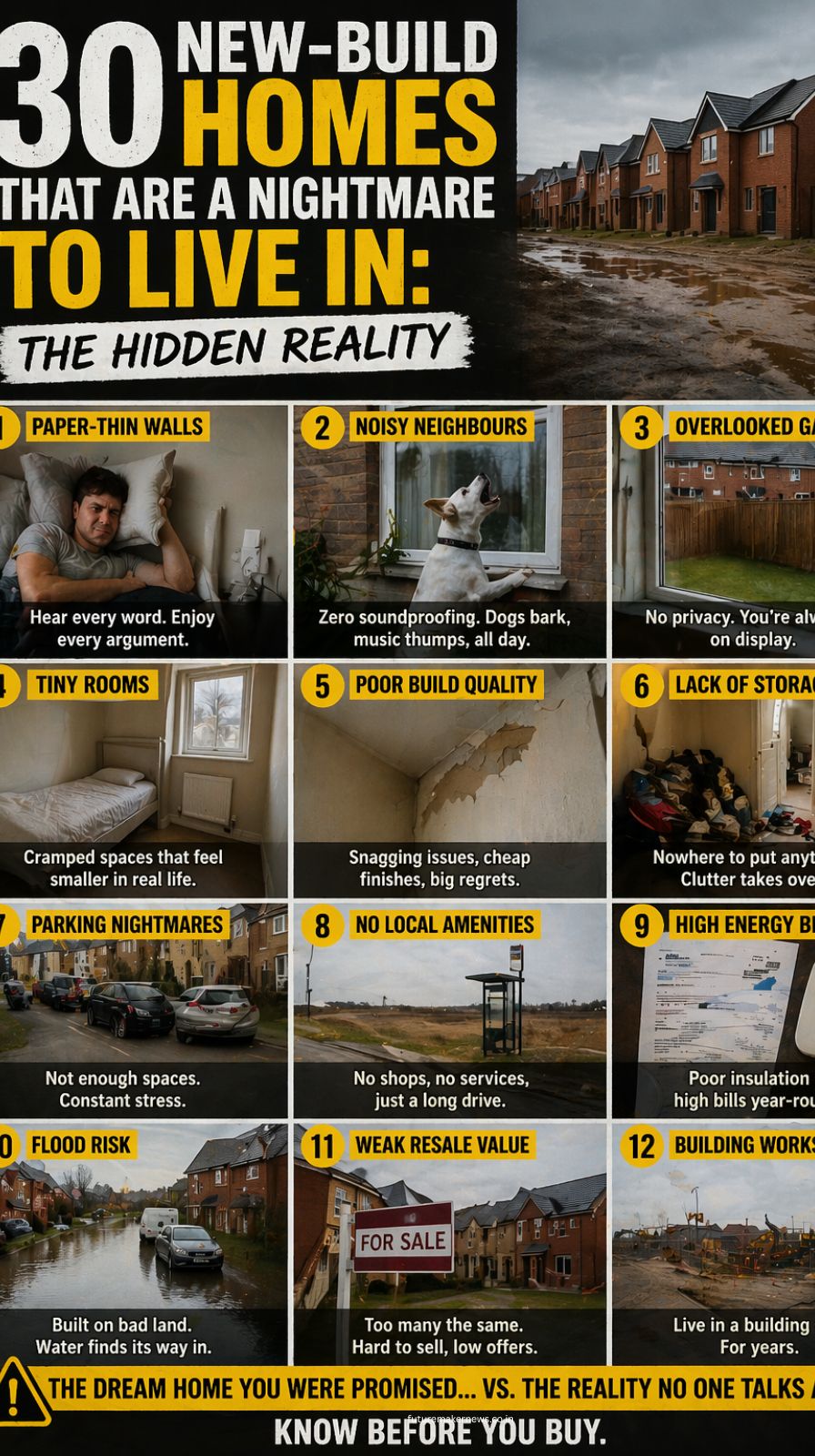
Interior of a new construction home showing cracked walls, leaking ceiling, and visible building defects representing poor construction quality.

There is a certain magic to walking into a brand-new construction home. The scent of fresh paint, the gleam of untouched countertops, and the promise of a life without “old house” problems. But in 2026, many homeowners are discovering that “new” doesn’t always mean “perfect.” In fact, for some, the dream home has quickly morphed into a living nightmare.

With developers racing to meet housing demands, the quality of modern home construction has come under intense fire. From structural failures to “snagging” lists longer than a novel, here are 30 reasons why new-build homes are leaving residents in tears.

The Structural Sinking Ship

  • 1. The “Dancing” Foundation: Many residents report settlement cracks appearing within weeks. While some shifting is normal, extreme cases have seen floors sloping so severely that furniture literally slides across the room.
  • 2. Walls That Breathe (And Not in a Good Way): Poorly installed drywall and lack of proper stud alignment have led to walls that bow and flex when touched.
  • 3. The Staircase to Nowhere: One of the most shocking construction defects reported in 2025-2026 involves staircases that were measured incorrectly, leaving a 2-foot gap between the top step and the second floor.
  • 4. Backwards Houses: In a viral 2026 case, a developer accidentally built a home entirely backwards—the front door opened into the back garden while the rear sliders faced the main road.

Plumbing and Water Horrors

  • 5. The “Faecal” Loft: Imagine moving into a $500,000 home only to find an uncapped sewage pipe in the attic. Residents have report their entire house smelling like a waste plant because the plumbing was never finish.
  • 6. Indoor Waterfalls: A common new-build nightmare involves leaking showers that aren’t sealed, causing water to pour through the kitchen ceiling the very first time someone bathes.
  • 7. The “Vibrating” Plumbing: Thin pipes and poor insulation lead to “water hammer” effects so loud they wake up the neighbors three doors down every time you flush a toilet.
  • 8. Black Mould in a “Fresh” Build: Despite being weeks old, some homes are riddled with black mould due to improper ventilation and “wet” timber being use during the rush to build.

Electrical and Tech Glitches

  • 9. Sockets to Nowhere: It’s a classic snagging issue: you plug in your toaster only to realize the electrical socket isn’t actually connect to any wiring behind the wall.
  • 10. Phantom Lights: In “Smart Homes” gone wrong, faulty automated lighting systems have been known to turn on and off at 3:00 AM, leaving owners feeling like they live in a haunted house.
  • 11. Internet Dead Zones: Some developers have forgotten to install the necessary fiber-optic internal cabling, leaving homeowners in high-tech estates with dial-up speeds.
  • 12. Dangerous Wiring: Inspectors in 2026 are finding an alarming number of unprotected circuits, posing massive fire risks in homes that haven’t even been lived in for a month.

The Exterior Disasters

  • 13. Swamp Gardens: New-build gardens are notorious for poor drainage. After one rainstorm, many “luxury” backyards turn into literal swamps because the builders buried construction debris under a thin layer of turf.
  • 14. Falling Brickwork: “Snagging” videos on social media show bricks that can be pulled out by hand because the mortar mix was too weak or applied in freezing temperatures.
  • 15. Guttering Gaps: It seems simple, but many new builds are finished with misaligned gutters, causing rainwater to bypass the downpipe and soak directly into the window frames.
  • 16. Missing Insulation: Homeowners are freezing in 2026 because builders “forgot” to blow insulation into the wall cavities, leaving the house with the thermal efficiency of a cardboard box.

The Human Element: Workmanship Woes

  • 17. The “Mug” Tribute: It’s a common horror story—finding mouldy coffee cups and half-eaten lunches sealed behind the bathroom wall panels or under the floorboards.
  • 18. Dancing Washing Machines: Builders often forget to remove transit bolts from pre-installed appliances. On the first night, the washing machine “dances” across the kitchen, destroying the custom cabinetry.
  • 19. Splatter Everywhere: From paint on the expensive carpets to plaster on the sofas, the lack of protection during the “finishing” phase leaves many new builds looking like a war zone.
  • 20. The “Wrong” Tiles: Imagine paying for premium marble only to walk in on moving day and find the cheapest grey ceramic available because the builder “ran out of stock.”

Privacy and Sound Issues

  • 21. Paper-Thin Walls: In modern maisonettes and townhomes, residents report being able to hear their neighbor’s phone vibrating on a nightstand through the wall.
  • 22. Shared Garden Drama: Due to poor surveying, some homeowners have discovered they technically “own” a slice of their neighbor’s living room, leading to legal nightmares.
  • 23. No Guest Parking: Many new estates are design so tightly that there is zero space for visitors, leading to constant “parking wars” between neighbors.

The “Hidden” Costs of 2026

  • 24. The “Ghost” Warranties: Homeowners are finding that when they try to claim on their builder’s warranty, the development company has already been dissolved, leaving them with no one to sue.
  • 25. Property Tax Hikes: Many buyers are shocked when their property taxes double in the second year because the initial estimate didn’t account for the “finished” value of the home.
  • 26. Management Fee Traps: New builds often come with “private estate” fees that can double without notice, covering everything from “communal grass cutting” to “lighting maintenance.”

Cosmetic Failures

  • 27. Wonky Windows: If your window doesn’t open, it’s likely the frame was forced into an opening that wasn’t square.
  • 28. Peeling “Wood”: That “luxury oak” flooring? In many nightmare builds, it’s actually cheap MDF skirting that warps and peels the moment it touches a damp mop.
  • 29. Inconsistent Paint: Walk into any nightmare new-build and you’ll see “patchy” walls where the builder used one coat of paint instead of three to save time.
  • 30. The Sagging Ceiling: Caused by heavy water tanks being placed on joists that weren’t reinforced, leading to a terrifying bulge in the bedroom ceiling.

How to Protect Yourself from a New-Build Nightmare

If you’re planning to buy a new construction home in 2026, don’t let the shiny exterior blind you. Follow these essential steps to ensure your “Dream Home” doesn’t become a “Money Pit.”

  • Hire an Independent Snagger: Never rely on the builder’s own inspection. A professional snagging survey is the best $500 you will ever spend.
  • Check the Developer’s History: Google the builder + “horror stories.” If they have a history of dissolving companies after a project, run the other way.
  • Document Everything: From the first walkthrough, take photos of every crack, leak, and “wonky” finish.
  • Don’t Move In Until It’s Fixed: Once you have the keys, you lose 90% of your leverage. Demand that major defects are fixed before you sign the final papers.
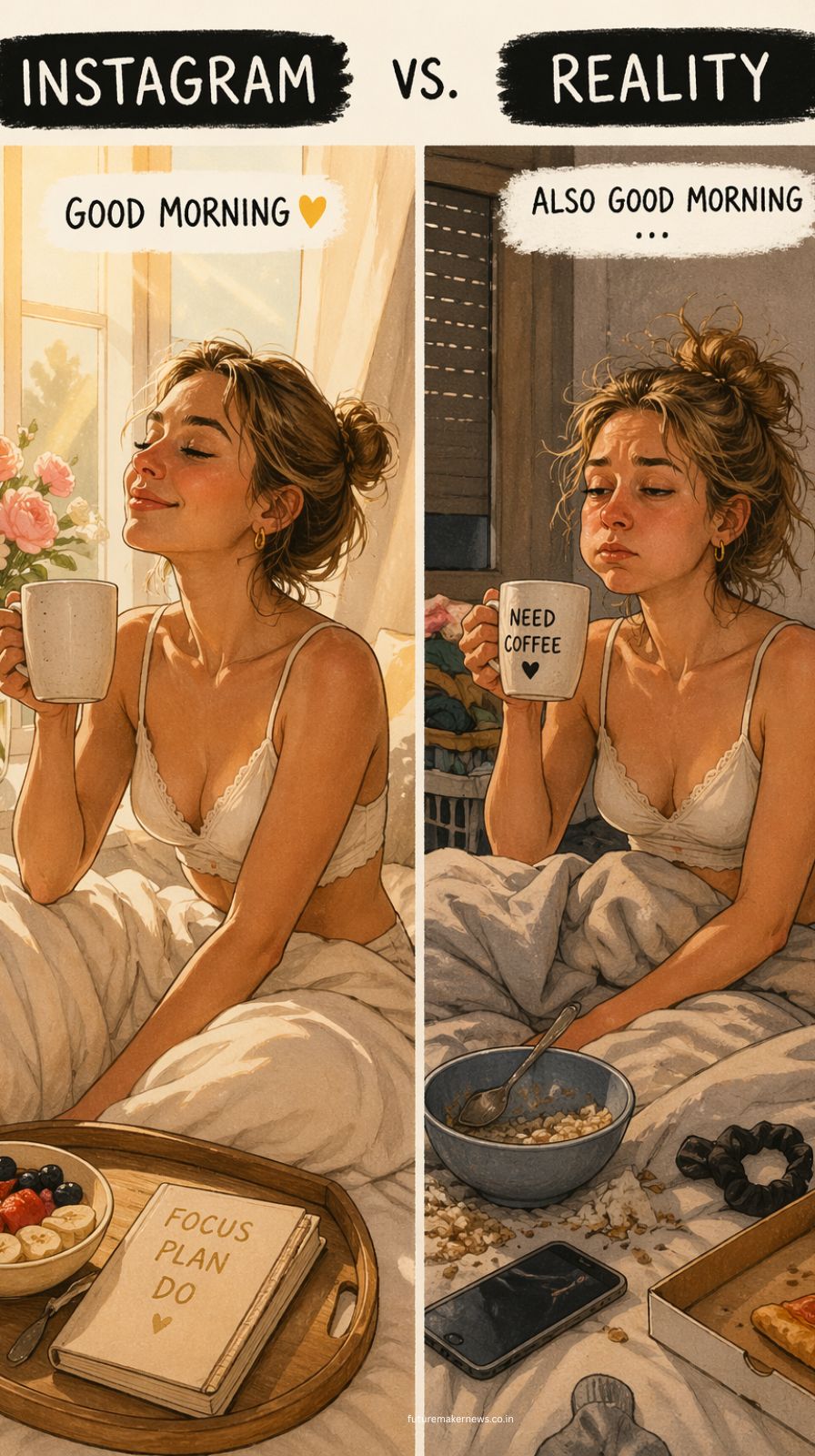
Split-screen image comparing a polished Instagram-style photo with a messy real-life version to illustrate the difference between social media and reality.

We’ve all been there: scrolling through Instagram at 2:00 AM, feeling like everyone else is living a high-fashion fantasy while we’re wearing a stained t-shirt and eating cereal over the sink. The Instagram vs. Reality debate is nothing new, but one German artist has mastered the art of calling out this digital facade in the most relatable way possible.

Enter Geraldine West, the Cologne-based creator whose viral side-by-side photo series has become a beacon of truth in a sea of Facetuned perfection. By recreating common “influencer” tropes with a dose of brutal honesty, she reminds us that the aesthetic lifestyle we crave is often just a carefully staged lie.

The Genius Behind the Parody: Who is Geraldine West?

Geraldine West isn’t just a comedian; she’s a mirror to our modern obsession with social media validation. Her project, aptly titled “Instagram vs. Reality,” features her posing in two drastically different scenarios:

  • The Left Side (Instagram): A perfectly lit, color-coordinated, and flawlessly styled shot that looks like it belongs in a luxury magazine.
  • The Right Side (Reality): The messy, chaotic, and often hilarious truth of what that same moment actually looks like for a normal human being.

Her ability to pinpoint the exact visual language of influencers—from the “spontaneous” laugh to the perfectly draped blanket—is what makes her content so addictive.

1. The “Relaxing” Bubble Bath Blunder

We’ve all seen the photo: a woman submerged in a mountain of bubbles, holding a glass of champagne, surrounded by expensive candles and rose petals. It looks like the ultimate self-care Sunday.

Geraldine’s Reality: In her version, the champagne has spilled, her hair is a wet mess, the bubbles are getting in her mouth, and she’s awkwardly trying not to slip under the water. It’s a hilarious reminder that bath selfies are actually high-stress logistical nightmares.

2. The “Effortless” Winter Wonderland

When the first snow falls, Instagram becomes a gallery of stars in designer winter coats, catching snowflakes on their tongues with perfect makeup.

Geraldine’s Reality: She shows us the red noses, the watery eyes, the bulky thermal layers, and the struggle of walking through slush without falling on your face. This honest content resonates because we’ve all felt the bite of a German winter—and it’s rarely “chic.”

3. The “Healthy” Grocery Haul

The clean eating trend on social media usually involves a wicker basket filled with organic kale, perfectly red strawberries, and a baguette poking out at just the right angle.

Geraldine’s Reality: Her grocery bag is overflowing with toilet paper, frozen pizza, and snacks she’ll probably eat in the car. It’s the relatable grocery run we all actually experience when we aren’t trying to impress 50,000 strangers.

Why “Reality” Content is Taking Over in 2026

In 2026, the digital landscape has shifted. Users are experiencing filter fatigue. We are tired of the over-saturated lifestyles that feel unattainable. Artists like Geraldine West are successful because they provide emotional relief.

  • Authenticity is Currency: In an era of AI-generated influencers, seeing a real person with messy hair and a double chin is refreshing.
  • Mental Health Impact: Constantly comparing our “behind-the-scenes” to someone else’s “highlight reel” leads to anxiety. Parody art breaks that cycle.
  • Community Building: When we laugh at a “Reality” photo, we feel a connection to the artist and other followers who “get it.”

The Role of Her Secret Weapon: The Pug

No discussion of Geraldine West is complete without mentioning her adorable pug. Often appearing in the “Reality” side of the shots, her dog acts as the ultimate vibe check. While Geraldine is trying to look glamorous, the dog is usually looking confused, licking her face, or simply being a chaotic ball of fur. This inclusion adds an extra layer of unscripted joy to her work.

How to Spot “Instagram Lies” on Your Feed

If you find yourself feeling down while scrolling, keep these behind-the-scenes secrets in mind:

  • The Lighting Trick: Most “natural” glow is actually a $500 ring light or professional-grade photo editing.
  • The Pose Factor: Influencers spend hours practicing “body contorting” poses to create the illusion of specific shapes.
  • The Messy Room: Just off-camera, there is almost always a pile of laundry and discarded props.
  • The Buried Lead: Many lifestyle bloggers take 300 photos just to find the one that looks “effortless.”

Final Thoughts: Embracing Your Own “Reality”

Geraldine West’s work isn’t just about making fun of others; it’s about giving us permission to be ourselves. Life is messy, grocery shopping is exhausting, and baths are slippery. By choosing to celebrate the unfiltered moments, we reclaim our time and our happiness from the algorithm.

Next time you see a “perfect” photo, remember Geraldine. Laugh at the absurdity, put your phone down, and enjoy the beautiful, chaotic mess of your real life.

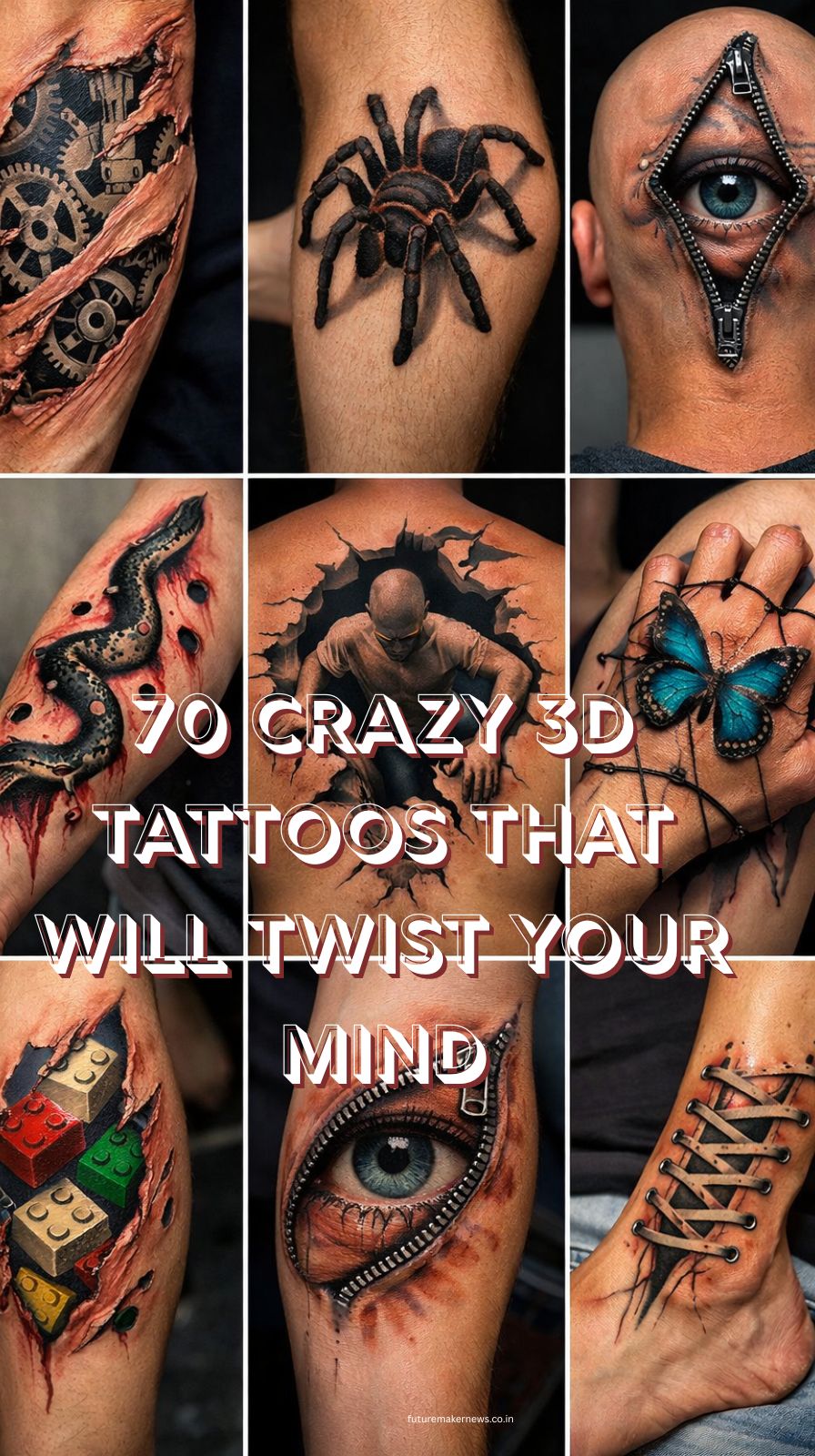
Close-up of a realistic 3D tattoo showing a ripped skin biomechanical design with metallic gears and a lifelike butterfly illusion on human skin.

In the evolving landscape of body art, we have moved far beyond simple outlines and flat shading. As we navigate through 2026, the 3D tattoo movement has reached a fever pitch, blending hyper-realism with optical illusions that challenge the very nature of human perception. These aren’t just tattoos; they are masterpieces of depth, shadows, and perspective that appear to leap off—or sink into—the skin.

Whether it’s a mechanical gear turning beneath a “ripped” forearm or a butterfly so lifelike you’ll want to brush it away, 3D ink represents the pinnacle of modern tattooing. If you are looking for inspiration that defies logic, buckle up. Here is a deep dive into the most mind-bending 3D tattoo designs and the revolutionary techniques behind them.

The Science of the Illusion: How It Works

What makes a tattoo look three-dimensional? It isn’t magic; it is a sophisticated application of light and shadow (Chiaroscuro) and linear perspective.

  • Shadow Casting: The key to “floating” tattoos is the drop shadow. By placing a soft, blurred shadow slightly away from the object, the artist creates the illusion of distance from the skin.
  • High-Contrast Highlights: Using bright white ink or leaving negative space creates the “reflection” of light, giving objects a wet or metallic sheen.
  • Anatomical Flow: In 2026, the best artists use the body’s natural curves to enhance the 3D effect. A tattoo on a bicep, for instance, “moves” and changes shape as the muscle flexes.

1. Biomechanical and “Ripped Skin” Wonders

This category remains the reigning king of 3D body art. It plays with the idea that there is an entire world beneath our skin.

  • Cyborg Realism: Imagine your shoulder skin “peeling back” to reveal chrome pistons, hydraulic wires, and glowing LED circuits.
  • Muscular Anatomy: Tattoos that mimic the actual muscle fibers beneath the skin, often styled as if the skin has been unzipped or torn away.
  • The Spiderman Reveal: A fan favorite where a “torn” chest reveals the iconic Spiderman suit underneath, complete with realistic fabric textures.

2. Nature That Breathes: Hyper-Realistic Flora and Fauna

The goal here is total photorealism. If people don’t do a double-take, the artist hasn’t done their job.

  • The Landing Butterfly: A delicate 3D butterfly on a collarbone or wrist, featuring a perfect drop shadow that makes it look like it could fly away at any second.
  • Creepy Crawlies: From spiders “peeking” out of pockets to scorpions that appear to be scuttling across the neck.
  • Snake Wraps: A 3D snake that appears to weave in and out of the arm, with scales so detailed they feel textured to the eye.

3. Mind-Bending Geometric and Optical Illusions

For those who love abstract art, these tattoos turn the body into a living M.C. Escher painting.

  • The Void: A black-hole effect on the palm or chest that looks like an endless, spiraling pit.
  • Impossible Shapes: The Penrose Triangle or endless staircases that break the laws of geometry.
  • Carved Wood Effect: One of the most stunning trends of 2026. The skin is tattooed to look like ornate wood carvings, with deep “grooves” and “splinters” that look physically etched into the limb.

4. The “Sticker” and Patchwork Revolution

A newer trend taking over the 2026 scene is the 3D sticker tattoo. These look like high-quality vinyl stickers slapped onto the skin.

  • The White Border: By adding a thin white outline and a slight shadow, artists make cartoon characters or Y2K logos look like they are peeling off the skin.
  • Crinkle Texture: Artists are now mastering the look of “crinkled” plastic or foil stickers, adding a layer of micro-realism that is truly baffling.

5. Hidden Depths: The “Puzzle Piece” Style

This style treats the skin as a removable layer, revealing something unexpected underneath.

  • The Missing Piece: A jigsaw puzzle piece “removed” from the leg, showing a blue “inner void” or realistic muscle tissue below.
  • The Zipper: A zipper running down the spine or arm that “opens” to reveal anything from a galaxy to a skeletal structure.

The High Tech of 2026: AR and Smart Ink

We can’t talk about crazy 3D tattoos without mentioning the technological leaps that have occurred this year.

  • AR-Enhanced Tattoos: Using apps like Project Inkscape, some 3D tattoos are designed to “animate” when viewed through a smartphone camera.
  • Chrome and Liquid Metal: New advanced shading techniques and metallic pigments allow artists to create tattoos that look like actual molten silver or gold on the skin.
  • Holographic Geometry: By using specific color-layering techniques, artists can create patterns that seem to shift or “flicker” like a hologram as you walk past.

Choosing the Right Artist for 3D Work

If you are planning to get one of these mind-twisting tattoos, remember that 3D work is the most difficult style to master.

  1. Check the Portfolio: Look for high-resolution photos of healed work. If the shadows aren’t perfect, the illusion fails.
  2. Specialization Matters: An artist who excels at traditional tattoos may not have the technical skill for micro-realism or 3D shading.
  3. Consult on Placement: 3D illusions work best on relatively flat surfaces or areas where the movement of the body enhances the design rather than distorting it.

The Longevity of 3D Ink: Aftercare and Aging

A common concern with realistic tattoos is how they age. Because they rely on subtle gradients, they require impeccable aftercare.

  • Sun Protection is Mandatory: UV rays are the enemy of fine-line realism. If you want your 3D illusion to stay sharp, you must use high-SPF sunscreen daily.
  • The “Bold Will Hold” Rule: While 3D tattoos are often softer, 2026 artists are using “power lines”—subtle but strong base outlines—to ensure the tattoo remains readable for decades.
  • Moisturize Regularly: Healthy, hydrated skin holds pigment better and keeps the “pop” of the 3D effect vibrant.

Final Thoughts: Why We Are Obsessed with the 3D Look

At its core, a 3D tattoo is a celebration of human potential and the limits of art. It’s about taking the most traditional canvas—the human body—and turning it into a playground of impossible visuals. Whether it’s a small, delicate 3D gemstone on a finger or a full-back architectural masterpiece, these designs prove that our skin is a frontier of endless creativity.

Collage of awkward cringe moments including gym posing, failed proposal, over-edited selfie, and corporate team building fail

We have all been there. That sudden, cold shiver that runs down your spine when you remember something embarrassing you said three years ago at a party. But there is a specific, modern phenomenon that takes this feeling to a global scale: the Cringe Pic.

In the digital age, our most mortifying moments aren’t just memories; they are digital artifacts. Whether it is a failed attempt at looking “cool,” a public display of social unawareness, or a fashion disaster caught on camera, cringe culture has become a cornerstone of internet entertainment.

But why do we seek out these embarrassing photos? Why does it feel so good to feel so bad? Let’s dive into the psychology of the cringe and explore 40 layers of awkwardness that define the human experience.

The Science of Vicarious Embarrassment

When we look at cringe-worthy images, our brains are doing more than just laughing. We are experiencing vicarious embarrassment.

  • Mirror Neurons: Our brains are wired to empathize. When we see someone in a socially painful situation, our mirror neurons fire as if we are the ones standing in the middle of the mall in a neon spandex suit.
  • The “Thank God It’s Not Me” Factor: There is a subtle sense of relief. Viewing second-hand embarrassment reinforces our own social boundaries.
  • Social Learning: Believe it or not, cringe pics act as a “what-not-to-do” guide for social survival.

Category 1: The “Main Character” Energy Gone Wrong

We all want to be the star of our own story, but some people take the spotlight a bit too literally. These are the photos of people acting like the world is their personal photoshoot—usually in the most inappropriate places.

  • The Public Transport Diva: Doing a full yoga routine on a crowded subway.
  • The Gym Poseur: Spending 20 minutes setting up a tripod and zero minutes lifting weights.
  • The Historical Site Selfie: Taking a “duck face” photo at a somber memorial.

These social media fails remind us that there is a very thin line between confidence and complete lack of self-awareness.

Category 2: Failed Romantic Gestures

Nothing stings quite like romantic cringe. When the heart is involved, the potential for a viral fail triples.

  • The Over-the-Top Promposal: Complete with a flash mob that no one asked for and a “No” at the end.
  • The Tattoo of a Three-Week Relationship: Nothing says “forever” like a portrait of someone who blocked you on Instagram yesterday.
  • The Public Serenade: Watching someone play an acoustic guitar at a girl who clearly wants to be anywhere else on Earth.

These moments are painful because we’ve all felt that desperation to be loved. We just didn’t record it and post it for internet points.

Category 3: The “Edgy” Phase We All Regret

If you didn’t have a phase where you thought you were the deepest person in the room, did you even grow up?

  • Deep Quotes on Low-Res Backgrounds: “I’m the joker, you’re just the cards.”
  • The Mirror Selfie with a Knife: Usually a kitchen knife. Usually in a bathroom with a pile of laundry in the background.
  • Extreme Filters: The 2012 era of sepia and vignettes that made everyone look like they were living in a dusty attic.

These throwback fails are a rite of passage. We laugh at them because they represent a universal truth: we were all once trying way too hard.

Category 4: The Workplace “Team Building” Fails

Corporate culture is a breeding ground for high-tier cringe. When HR tries to be “fun,” the results are often haunting.

  • The Corporate Rap Video: White-collar executives trying to rhyme about “synergy” and “quarterly goals.”
  • Mandatory Fun Days: Photos of grown adults in business casual doing a three-legged race with visible misery in their eyes.
  • The LinkedIn “Hustle” Post: A 500-word essay on how a leaf falling in a park taught someone about B2B sales strategy.

Why We Love “Hurt-To-Look-At” Content

There is a specific subgenre of cringe pics known as “hurt to look at.” These aren’t just funny; they physically make you squint.

  • Visual Tension: A photo of someone’s phone screen with 4,000 unread notifications.
  • Social Disharmony: A group photo where one person is clearly being excluded, yet they are smiling the hardest.
  • The “Nice Guy” Text: Screenshots of someone being overly polite until they are rejected, at which point they turn into a different person entirely.

This content thrives because it taps into our social anxieties. We are terrified of being the person in the photo, so we look at the photo to make sure we aren’t.

The Evolutionary Benefit of Cringe

Believe it or not, cringe is an evolutionary superpower.

  1. Group Cohesion: By laughing at social faux pas, we reinforce the “rules” of our tribe.
  2. Humility: Seeing others fail—and failing ourselves—keeps our egos in check.
  3. Bonding: Sharing a cringe-worthy meme with a friend is a high-speed way to say, “I’m glad we both know better than this.”

How to Handle Your Own Cringe Moments

If you find yourself becoming a viral sensation for the wrong reasons, or if you simply woke up in a cold sweat thinking about a middle-school memory, here is how to cope:

  • Own the Narrative: The fastest way to kill cringe is to laugh at it yourself. If you’re in on the joke, no one can use it against you.
  • The 5-Year Rule: Ask yourself: “Will this matter in five years?” Usually, the answer is no.
  • Digital Hygiene: Every few months, go back and look at your social media history. If you feel a “sting” of embarrassment, that’s actually a good sign—it means you’ve grown as a person.

The Bottom Line: Cringe is Human

The reason 40 incredibly embarrassing pics can garner millions of views is that they represent the raw, unpolished, and often messy reality of being a human being in a digital world. We are all trying to navigate social hierarchies, find love, and look cool while doing it.

Most of the time, we fail. And that’s okay.

The next time you see a cringe pic that makes you want to crawl under your desk, remember: that person is just a mirror of our own imperfections. We are all one bad haircut or one “deep” Facebook post away from being the next internet meme.

Embrace the awkwardness. It’s the only thing that proves we’re actually living.

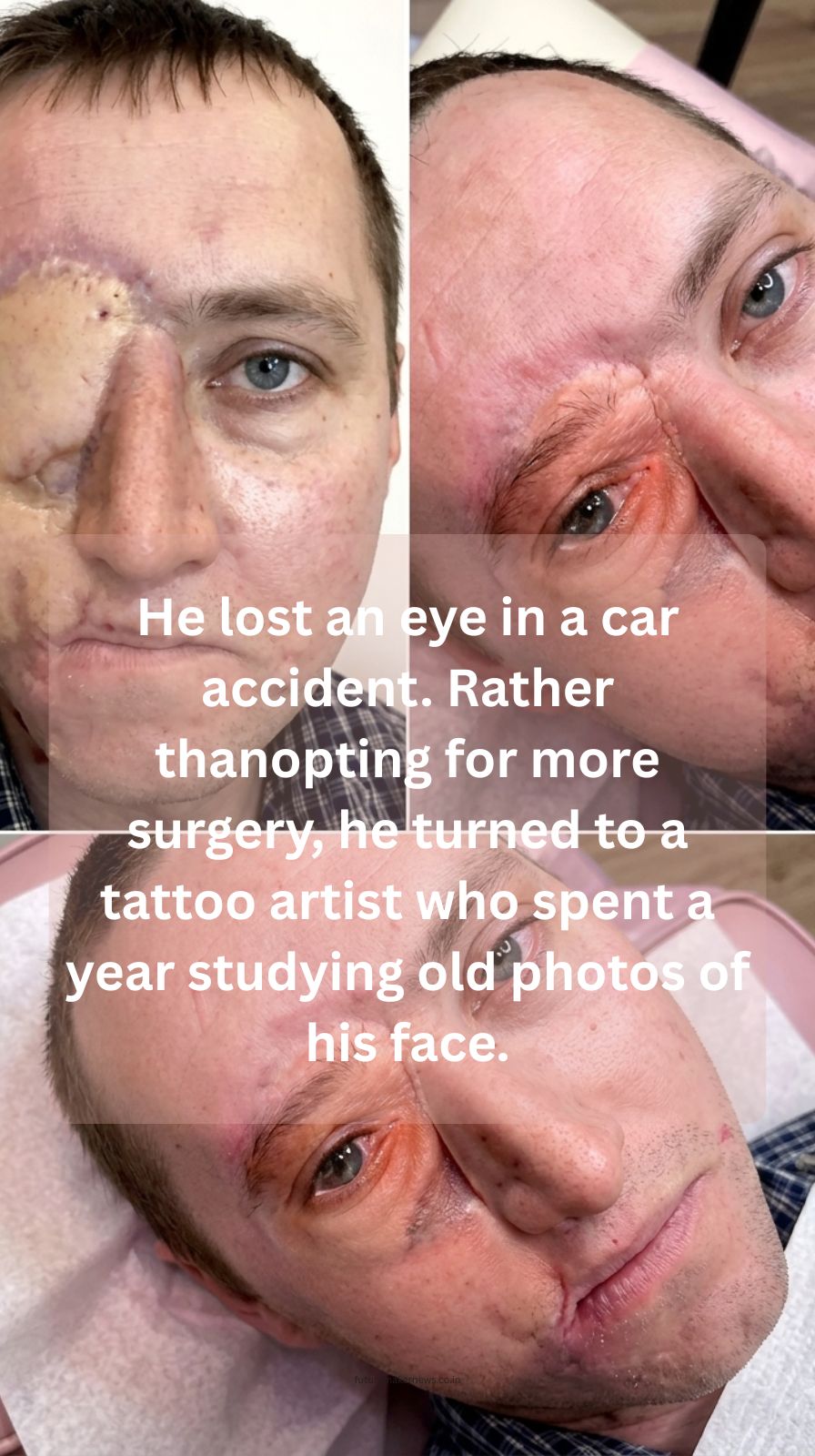
Man with hyper-realistic tattooed eye after accident, showcasing paramedical tattoo reconstruction and facial scar camouflage

In the blink of an eye, life can change forever. For one man, a devastating car accident didn’t just leave him with scars; it took away a vital part of his identity—his left eye. Most people would follow the traditional medical path, undergoing endless cycles of reconstructive surgery and fitting for a prosthetic eye.

But this story isn’t about tradition. It’s about the intersection of human resilience, artistic precision, and the refusal to be defined by a medical condition. This is the story of how a tattoo artist accomplished what surgeons couldn’t: restoring a man’s sense of self through ink and needle.

The Moment Everything Changed

The impact was sudden. Metal crushed against metal, and in the chaos of a highway collision, a shard of glass changed his perspective—literally.

  • The Physical Toll: Total loss of vision in one eye and severe damage to the orbital socket.
  • The Emotional Weight: Looking in the mirror and seeing a “stranger” staring back.
  • The Surgical Cycle: Multiple operations that left him feeling like a medical project rather than a person.

He faced a choice: continue with cosmetic surgery that promised “closeness” but never “perfection,” or find a more creative way to heal.

Why Surgery Wasn’t the Answer

Medical science is miraculous, but it has its limits. Glass eyes and acrylic prosthetics are incredible feats of engineering, but they often lack the “soul” of a real eye.

  • The “Uncanny Valley”: Prosthetics often look slightly off, creating a sense of discomfort for the wearer.
  • Painful Recoveries: Every surgical intervention required weeks of healing and mounting medical bills.
  • Static Appearance: A prosthetic doesn’t always mimic the depth and texture of a living iris.

He decided to stop being a patient and started looking for an aesthetic solution that felt more permanent and personal.

The Unconventional Solution: Medical Tattooing

Enter the world of paramedical tattooing. This isn’t about anchors or dragons; it’s about skin pigmentation and optical illusions. He reached out to a master tattoo artist known for hyper-realistic portraits.

The goal? To tattoo the eyelid and the surrounding tissue to mimic the appearance of a healthy, open eye, creating the illusion of symmetry without the need for further invasive procedures.

A Year of Observation

This wasn’t a “walk-in” appointment. To achieve photorealistic results, the artist spent an entire year preparing.

  1. Studying the Past: They gathered dozens of high-resolution photos of the man from before the accident.
  2. Color Theory: Analyzing the specific shades of hazel, gold, and green in his iris.
  3. Light and Shadow: Studying how light hit his face in different environments to recreate the natural reflection of a wet cornea.
  4. Symmetry Mapping: Using his remaining eye as a blueprint to ensure the tattooed eye sat at the exact same horizontal plane.

The Process: Artistry Under the Needle

When the sessions finally began, it was a delicate dance of micropigmentation. The skin around the eye is incredibly thin and sensitive, requiring a master’s touch.

  • Layering Pigment: The artist didn’t just use one color. They used dozens of custom-blended inks to build depth.
  • The Sclera Effect: Using off-white and subtle blues to mimic the “white” of the eye, avoiding a flat, cartoonish look.
  • The Eyelash Illusion: Tattooing individual “hairs” to match the natural growth pattern of his existing lashes.
  • Scar Camouflage: Using skin-tone pigments to blend the jagged lines of the accident into the surrounding tissue.

The Psychology of the “New” Face

For the wearer, this wasn’t just about aesthetics. It was about psychological recovery.

  • Regaining Confidence: No longer feeling the need to wear sunglasses indoors.
  • Control over Narrative: Being able to tell a story of artistic triumph rather than one of medical trauma.
  • Closure: The completion of the tattoo marked the end of the “accident phase” of his life.

The Rise of Paramedical Tattooing in Modern Medicine

This story highlights a growing trend in aesthetic medicine. More people are turning to tattoo artists for help with:

  • Areola Restoration after mastectomy.
  • Scar Camouflage for burn victims.
  • Scalp Micropigmentation for hair loss.
  • Vitiligo Repigmentation to even out skin tone.

The tattooing industry is no longer just about rebellion; it is a vital tool for post-traumatic healing.

Why This Story Matters to You

We all face “accidents” in life—moments that leave us feeling broken or incomplete. This man’s journey teaches us three vital lessons:

  1. Innovation is Everywhere: Sometimes the best solution to a problem lies outside of the box (or the doctor’s office).
  2. Patience is Key: A year of study led to a lifetime of satisfaction. Quality work cannot be rushed.
  3. Beauty is Subjective: What looks like a “fix” to a surgeon might not feel like a “fix” to the soul. You have the right to define your own beauty standards.

The Final Result: A Masterpiece in the Mirror

When the final needle stroke was finished and the swelling subsided, the man looked in the mirror and saw himself. Not a victim, not a patient, but a man restored by creative vision.

The tattooed eye was so realistic that people on the street didn’t even notice it wasn’t “real.” But he noticed. He saw the fine lines, the perfect shading, and the vibrant color that signaled his return to the world.

Redefining the Limits of Art

This collaboration between a trauma survivor and a tattooist proves that art heals. While modern medicine saved his life, artistic expression saved his spirit.

  • The Impact: His story has gone viral, inspiring thousands of others with facial disfigurements.
  • The Legacy: It has bridged the gap between tattoo culture and professional healthcare.
  • The Future: As ink technology improves, the possibilities for restorative tattooing are endless.

Final Thoughts on Resilience

The human spirit is like tattoo ink—it’s permanent, it’s vibrant, and it can be used to rewrite any story. Whether you are dealing with a physical scar or an emotional wound, remember that there are always alternative paths to wholeness.

You don’t always need a scalpel to fix what is broken. Sometimes, all you need is a person who is willing to look at your old photos, understand your soul, and help you draw a new future.

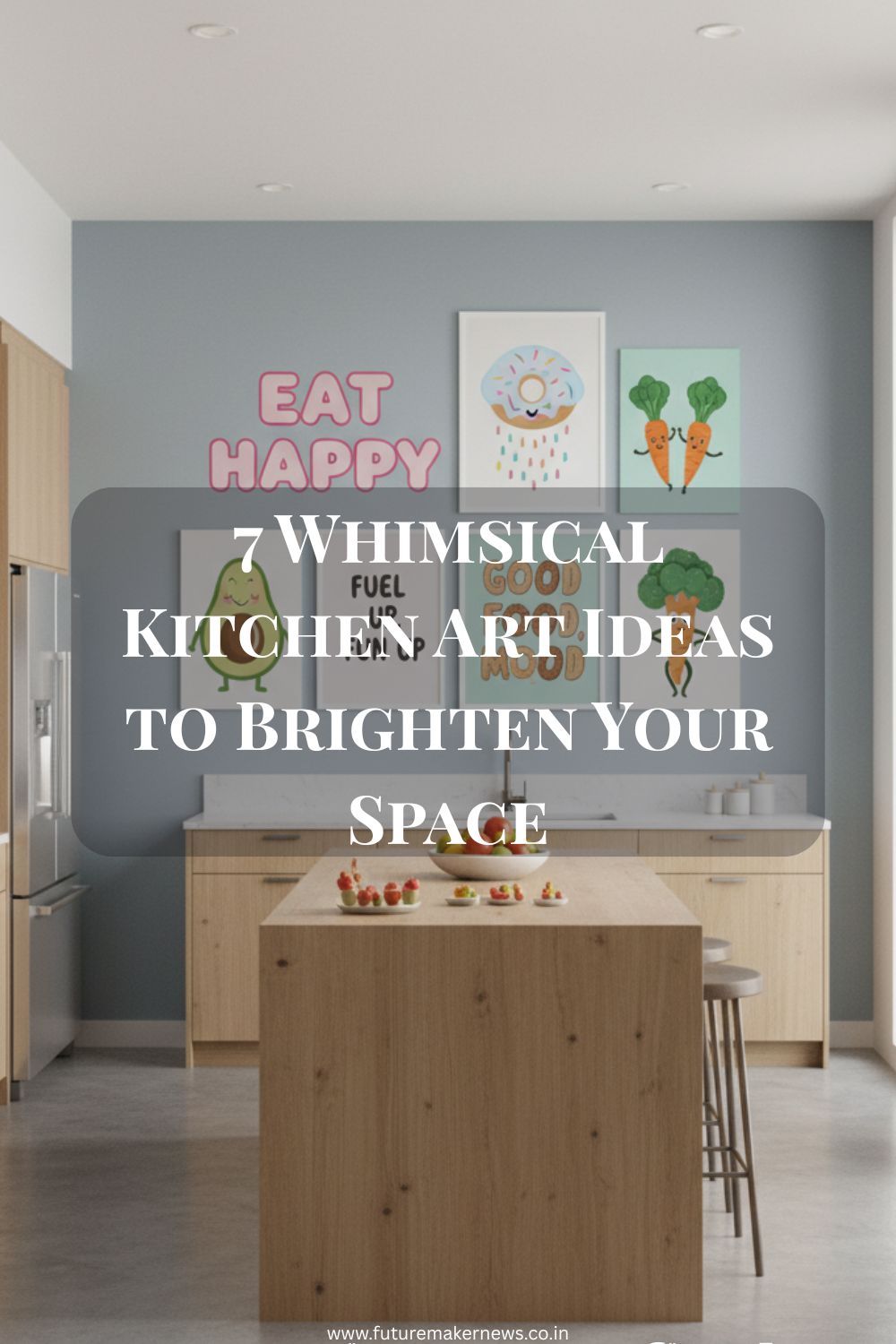
“Bright modern kitchen with whimsical food art prints and fun typography on the walls.”

Let’s be honest — most kitchens get overlooked when it comes to personality. We style our living rooms, obsess over bedroom aesthetics, and then… hang a “Bon Appétit” sign and call it a day. But your kitchen deserves better. It’s the heart of your home — the place that smells like love, creativity, and maybe a little burnt toast.

If you’re ready to ditch those basic kitchen prints and fill your walls with art that actually sparks joy, you’re in the right place. This is your ultimate guide to whimsical kitchen art — playful, colorful, and totally unexpected ideas that will make you smile every time you pour a cup of coffee.

Why Whimsical Kitchen Art Works

Your kitchen should feel warm, inviting, and full of personality — not sterile or overly themed. Whimsical art does exactly that. It adds character, humor, and creativity without feeling forced or cliché.

Here’s why you’ll love this aesthetic:

  1. It makes your space feel alive.
    A quirky print or playful color scheme transforms “just a kitchen” into a space that feels like you.
  2. It sparks conversation.
    Guests notice art that’s witty, surprising, or full of charm.
  3. It keeps the mood light and fun.
    Even dishwashing feels better when you’re smiling at a piece of art that says, “Whip it real good.”
  4. It’s budget-friendly.
    You can create or print your own kitchen art ideas at home for a few dollars.

So forget the “Live, Laugh, Love” signs — let’s make your walls smile back at you.

7 Whimsical Kitchen Art Ideas That Will Instantly Brighten Your Space

Below are seven creative ideas to bring humor, color, and charm to your kitchen. From fun food quotes to playful illustrations, each idea adds a unique twist that’s anything but basic.

1. Funny Food Quotes That Feel Fresh, Not Cheesy

“Framed funny food quote prints in a modern kitchen gallery wall.”
“Fun food quotes that make your guests smile — not cringe.”

Forget overused phrases like “But first, coffee.” Go for clever, original, and design-forward quotes that make people pause (and grin).

Here are some funny kitchen quote ideas to try:

  • “Whip it real good ”
  • “You’re the avocado to my toast ”
  • “Simmer down now.”
  • “This kitchen is for dancing.”
  • “Bake the world a better place.”
  • “Don’t go bacon my heart ”

Design Tip:
Print your favorite quotes in modern typography — think bold sans serif fonts, or playful handwritten styles — and frame them in minimalist white or wooden frames.

2. Watercolor Fruit & Veggie Prints (With a Twist)

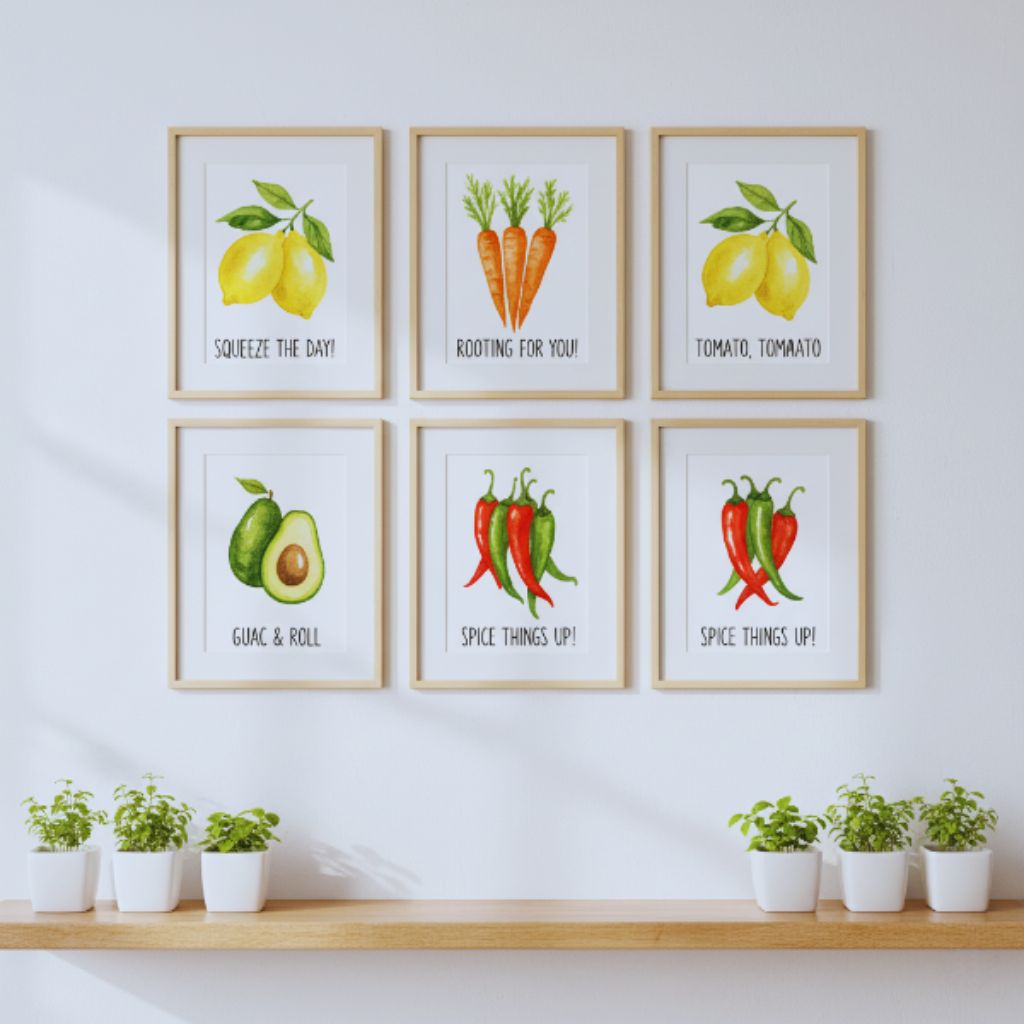
“Watercolor fruit and vegetable wall prints with playful captions in a bright kitchen.”
“Fresh, colorful watercolor art that adds instant charm to your kitchen.”

There’s something timeless about watercolor kitchen art — but add a whimsical spin by pairing it with playful captions or quirky arrangements.

Try these combos:

  • A watercolor lemon with the phrase “Easy peasy lemon squeezy.”
  • A dancing carrot family titled “Rooting for You!”
  • A vibrant chili pepper with “Spice Things Up ”
  • A minimalist pear duo captioned “Perfect Pair.”

These look stunning in bright, airy kitchens or near breakfast nooks.

Pro Tip:
Mix and match fruits and veggies in a grid — it creates a cohesive, gallery-style look while keeping the energy playful.

3. Retro Coffee Art for a Morning Mood Boost

“Retro-style coffee posters above a home coffee bar station.”
“Create a retro café vibe right in your kitchen.”

Your morning coffee deserves a spot of honor — and what better way than a wall of retro-style coffee prints?

Ideas for a vintage coffee corner:

  • 1950s-inspired espresso poster with bold typography.
  • Cute illustrations of coffee cups with cheeky captions like:
    • “Espresso yourself.”
    • “Life happens, coffee helps.”
    • “Caffeine & kindness.”

Styling Tip:
Hang 2–3 coffee-themed prints above your coffee station or next to your espresso machine. Add warm tones like rust, beige, and muted teal to enhance that nostalgic café vibe.

4. Illustrated Recipe Art

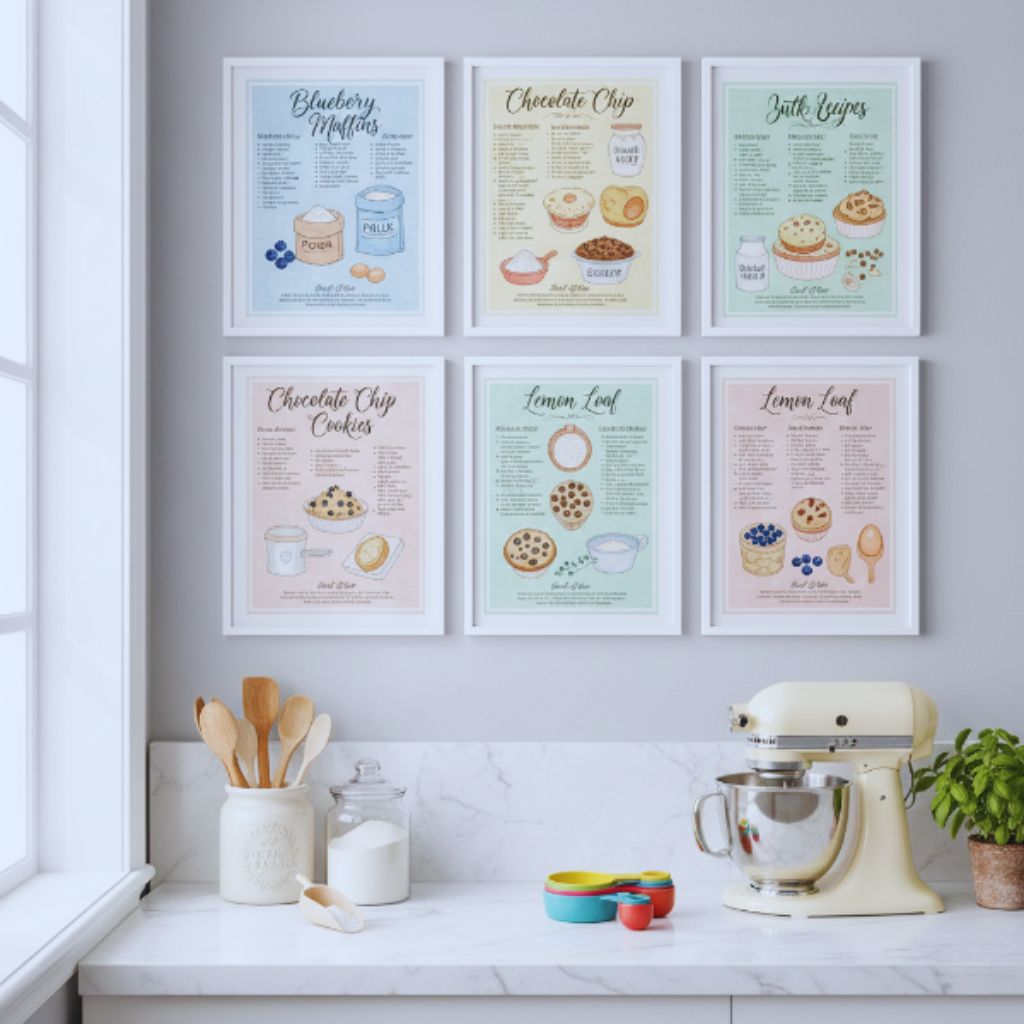
“Framed illustrated recipe art with hand-drawn ingredients and handwritten text.”
“Turn your favorite recipe into a timeless kitchen keepsake.”

Turn your favorite recipe into art! Frame hand-illustrated recipes — from grandma’s chocolate chip cookies to your secret pasta sauce — and you’ll have both sentimental and decorative value.

Here’s how to do it:

  • Write or type your recipe in a pretty font.
  • Add cute hand-drawn ingredients (flour, eggs, sugar).
  • Use color splashes to bring it to life.

You can even create a gallery wall of family recipes, giving your kitchen a nostalgic and personal feel.

Creative Twist:
Scan handwritten recipes from family members for a more heartfelt, vintage look.

5. Whimsical Animal-Inspired Food Prints

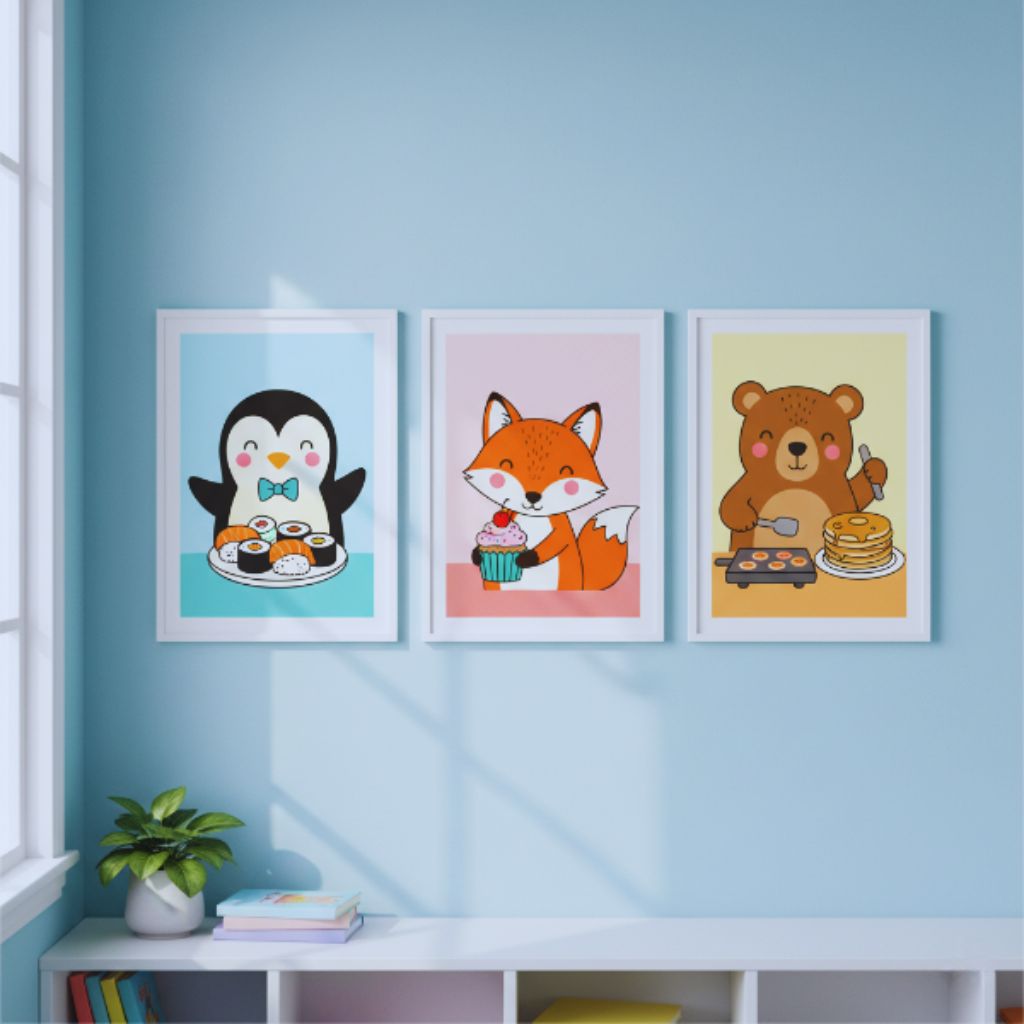
“Whimsical animal and food art prints in colorful kitchen decor.”
“Add a dash of humor and cuteness with food-loving animals.”

This is one of the trendiest (and funniest) art ideas right now — animal + food mashups!

Think:

  • A flamingo sipping lemonade.
  • A fox holding a cupcake.
  • A bear chef flipping pancakes.
  • A penguin serving sushi.

The possibilities are endless — and the results are adorable.

Why It Works:
The combination of cute animals and delicious food is universally appealing and adds instant charm to your kitchen space.

6. Typography Meets Minimalism: Bold Statement Prints

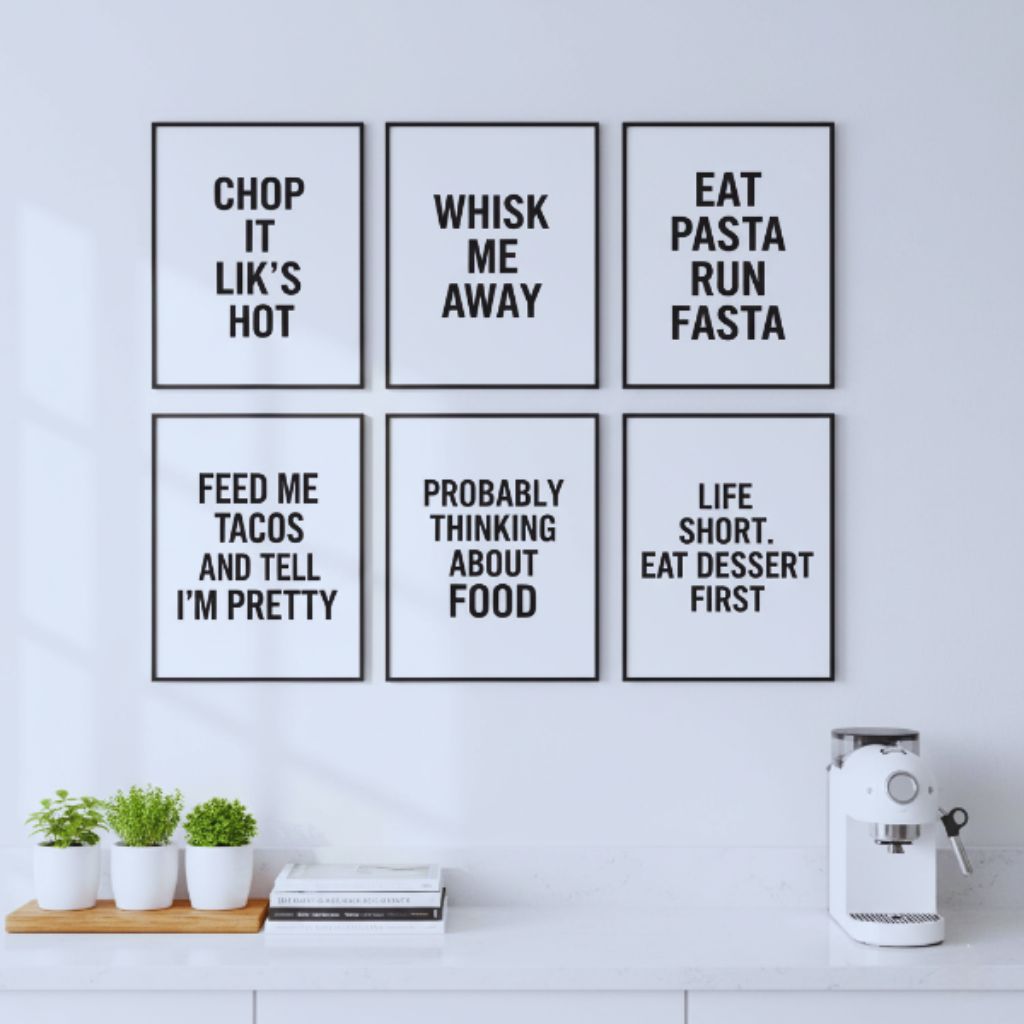
“Modern kitchen wall with black and white typography food quote prints.”
“Let your walls speak with bold, witty words.”

Sometimes, less really is more. A crisp, bold typography print in black and white can make a strong, modern statement — especially if the words are witty or food-related.

Try phrases like:

  • “Eat Well. Laugh Often.”
  • “Chop It Like It’s Hot.”
  • “More Butter, Please.”
  • “Feed Me Tacos and Tell Me I’m Pretty.”

Styling Tip:
Frame a single oversized print as a centerpiece above your dining nook, or group three in a clean grid layout.

7. Collage & Mixed-Media Food Art

“Handmade collage kitchen art featuring vintage recipe clippings and paint textures.”
“Mix textures, colors, and nostalgia to create one-of-a-kind art.”

Want something truly unique? Create your own collage art using magazine cutouts, recipe cards, and food illustrations.

Here’s how to make it special:

  • Layer clippings of vintage cookbooks, produce ads, or café menus.
  • Add splashes of paint or doodles for a handmade vibe.
  • Include a short quote or label — “Made with Love” or “Kitchen Stories.”

Design Note:
This DIY approach adds texture and depth — plus, it’s a fun weekend project you can personalize endlessly.

Bonus Idea: Mix and Match Styles

The best part about whimsical kitchen decor is that it doesn’t have to match perfectly. You can blend vintage with modern, colorful with minimalist, and funny with heartfelt.

Try mixing:

  • One watercolor fruit print
  • One bold quote poster
  • One illustrated recipe page

Together, they create visual balance and tell a story — your story.

Tips for Displaying Your Kitchen Art

To make your whimsical kitchen art truly stand out, here are a few quick styling tips:

  • Use varied frame sizes for a dynamic gallery wall.
  • Add color contrast — if your kitchen is neutral, use bright prints; if it’s colorful, try minimalist black and white.
  • Play with placement. Art doesn’t have to be on the main wall — try corners, open shelving, or even above the stove.
  • Rotate seasonally. Switch out prints for holidays or seasons to keep your decor feeling fresh and inspiring.

Why Fun Art Belongs in the Kitchen

Your kitchen is more than a place to cook — it’s where memories simmer, laughter bubbles, and the best stories begin.

When you hang art that makes you smile, you infuse that joy into your everyday rituals — your morning coffee, your Sunday baking, even your midnight snack runs.

It’s not just decoration. It’s daily motivation.

So go ahead — swap those basic prints for playful kitchen wall art that celebrates flavor, fun, and creativity. Because your kitchen deserves to be as delightful as the meals you make in it.

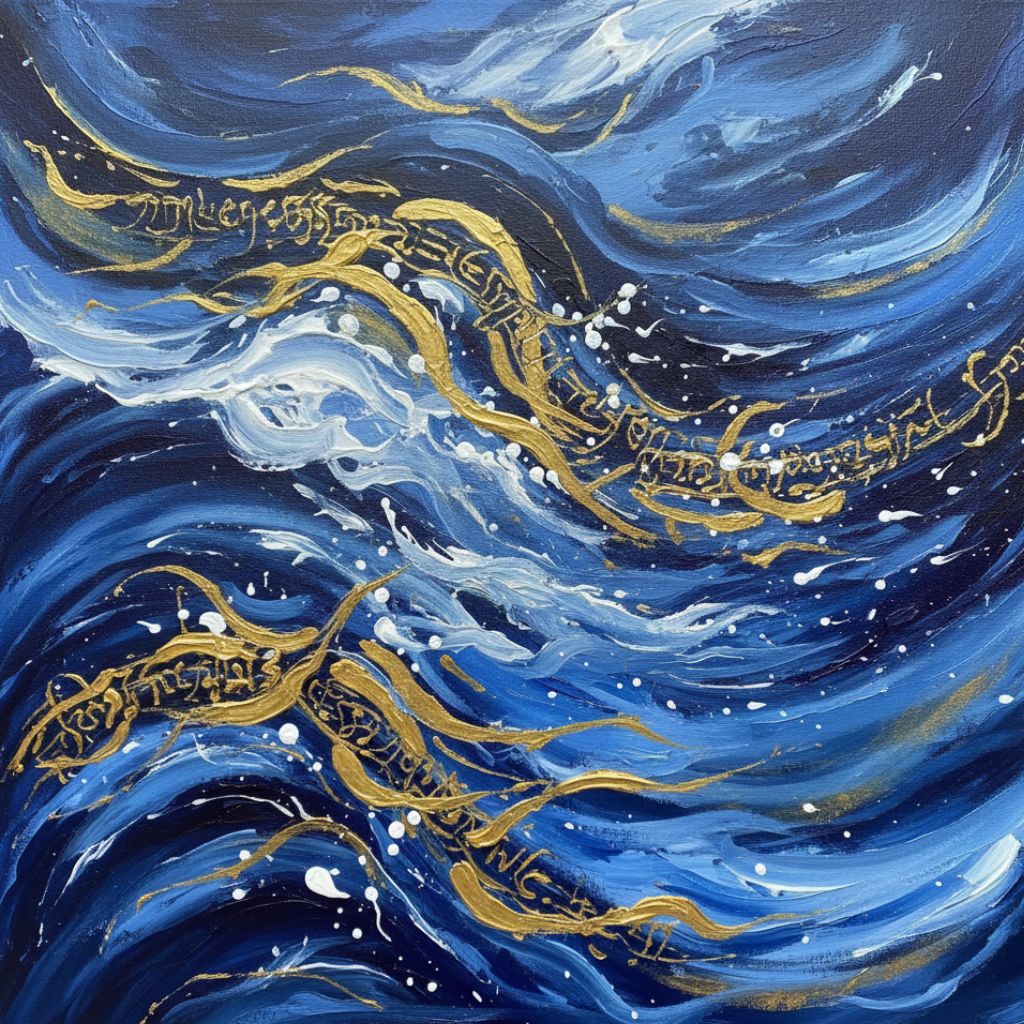
A moody abstract painting with dark blue and gold tones, representing emotion and depth.

When it comes to Instagram growth, few things captivate audiences like the mysterious beauty of abstract art. Abstract art isn’t just about colors and shapes—it’s about emotions, imagination, and interpretation. If you’re an artist, a creator, or simply someone who loves to post visually aesthetic content, your captions play a crucial role in boosting engagement.

In today’s world, your followers scroll fast—but a powerful quote or short caption can stop them in their tracks. The right abstract art caption can turn a simple post into a thought-provoking masterpiece, sparking curiosity and conversation.

So, if you’ve been wondering what to write under your stunning art posts, here’s a curated list of 50 short, creative, and Instagram-friendly abstract art quotes that will help you express more, engage better, and inspire deeper connections.

Why Abstract Art Captions Matter for Instagram

Before diving into the list, let’s understand why captions are so important.

Your abstract art already speaks volumes through its colors, textures, and mystery. But a caption gives your audience context—a window into your thoughts, emotions, and inspiration.

Here’s why a great caption can boost your engagement:

  • Increases emotional connection: Words give meaning to your art and help people relate to it.
  • Boosts saves and shares: Deep or aesthetic captions make followers want to save or share your post.
  • Improves visibility: Using the right hashtags and keywords like #abstractart, #artquotes, or #artlovers makes your post discoverable.
  • Enhances brand personality: Captions show your unique style and artistic voice.

Now let’s explore some powerful short captions for abstract art that will make your Instagram posts shine!

50 Short Abstract Art Quotes & Captions for Instagram

1. Deep & Meaningful Abstract Art Quotes

A moody abstract painting with dark blue and gold tones, representing emotion and depth.
“Abstract art speaks where words fail.”

These quotes capture the soul of abstract art—perfect for thought-provoking art posts.

  1. “Abstract art speaks where words fail.”
  2. “Every stroke tells a silent story.”
  3. “Art is the voice of the soul—unfiltered and raw.”
  4. “In chaos, I find clarity.”
  5. “Colors express what words cannot.”
  6. “What you see depends on how you feel.”
  7. “Abstract art is the poetry of the unknown.”
  8. “Every line is a heartbeat of creativity.”
  9. “Emotion in motion—that’s art.”
  10. “Art is not meant to be understood, but felt.”

2. Short Abstract Art Captions for Instagram

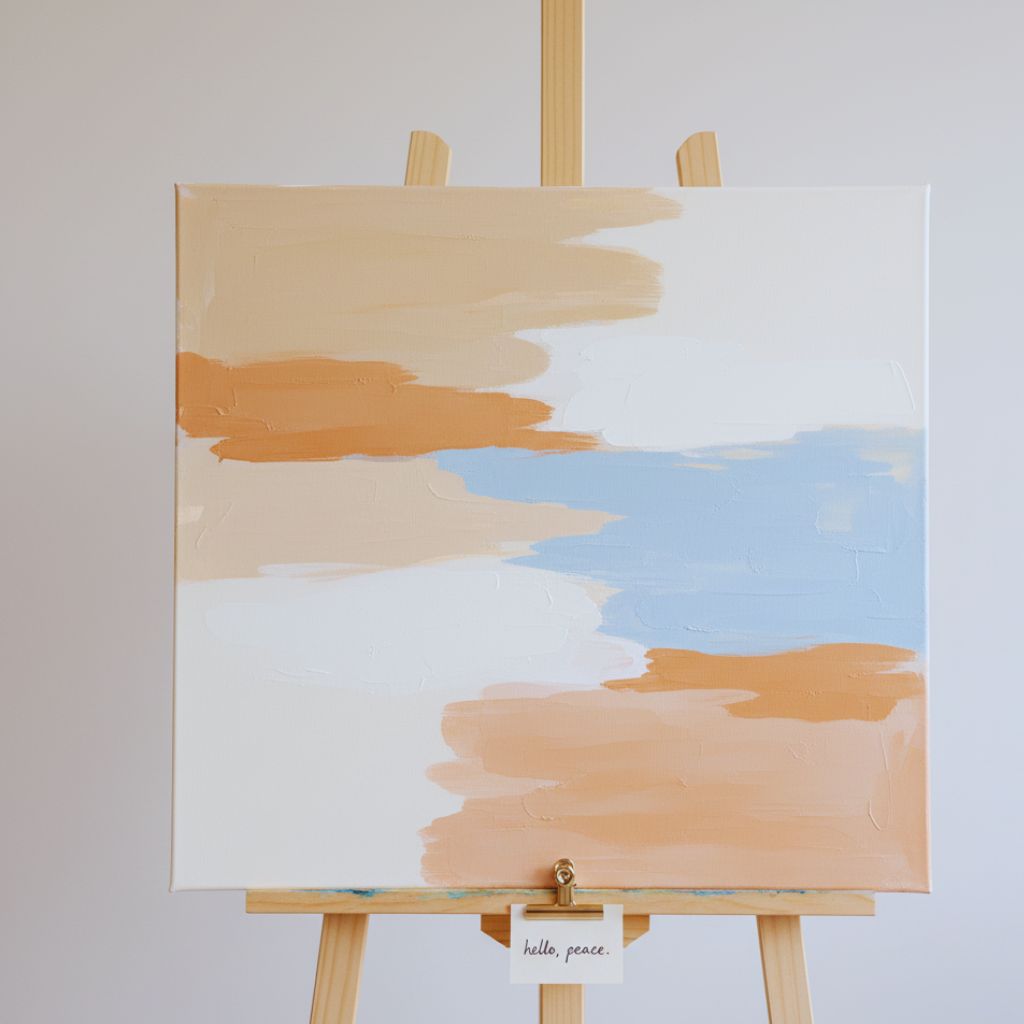
Soft pastel abstract painting with gentle brush textures and minimal tones.
“Pure imagination on canvas.”

Perfect for when you want to keep things minimal yet meaningful.

  1. “Pure imagination on canvas.”
  2. “My thoughts, painted.”
  3. “Art that feels alive.”
  4. “Shapes of emotion.”
  5. “Less logic, more soul.”
  6. “The beauty of imperfection.”
  7. “Beyond the visible.”
  8. “Dreams in color.”
  9. “Vibes, not visuals.”
  10. “Untold stories in strokes.”

3. Aesthetic Abstract Art Quotes for Artists

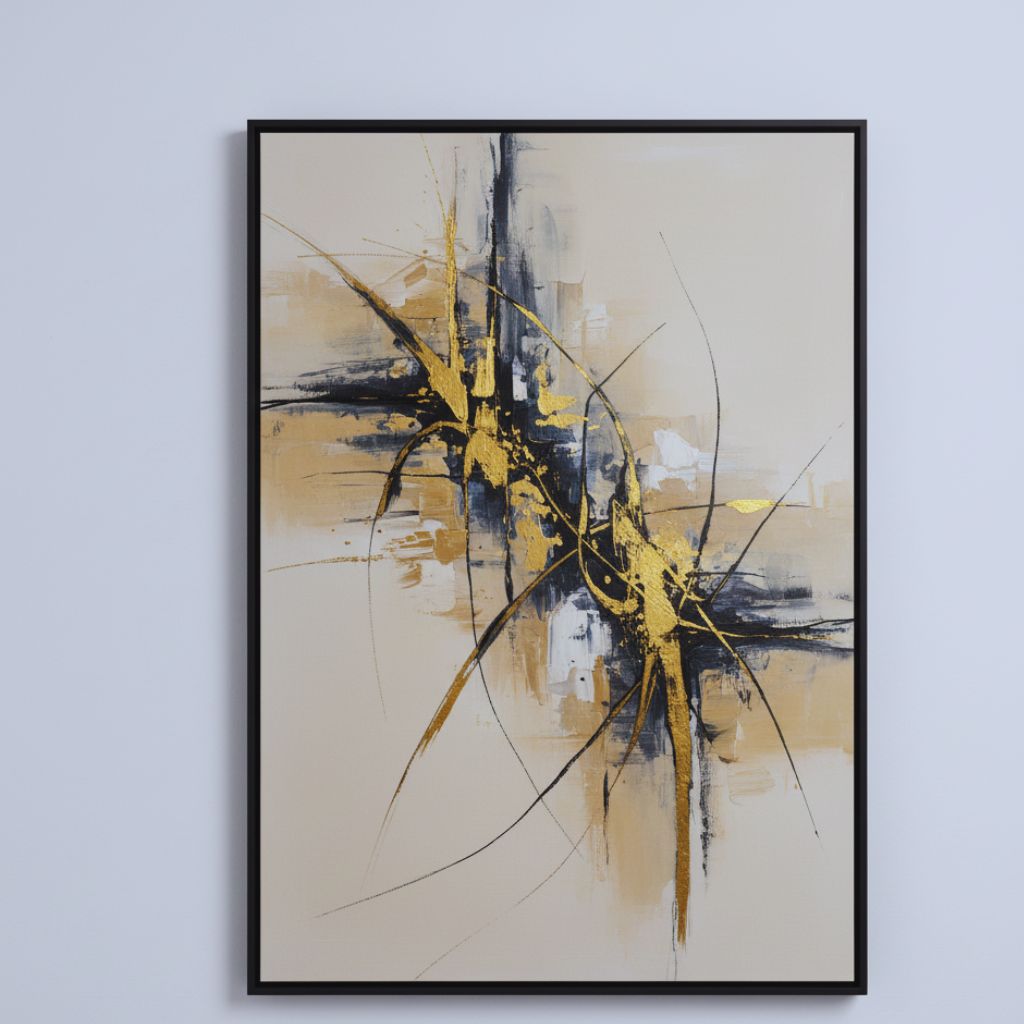
Elegant modern abstract painting with beige, black, and gold tones showing balance and creativity.
“Between chaos and calm lies creativity.”

Use these when you want your post to look elegant and artistic.

  1. “Art is freedom made visible.”
  2. “The abstract world speaks in silence.”
  3. “Between chaos and calm lies creativity.”
  4. “Where color meets emotion.”
  5. “I paint what I cannot say.”
  6. “An artist’s mind is an abstract galaxy.”
  7. “Painting the invisible feelings.”
  8. “Art is my quiet rebellion.”
  9. “Brushstrokes of emotion and thought.”
  10. “Reality fades, imagination stays.”

4. Inspirational Abstract Art Captions

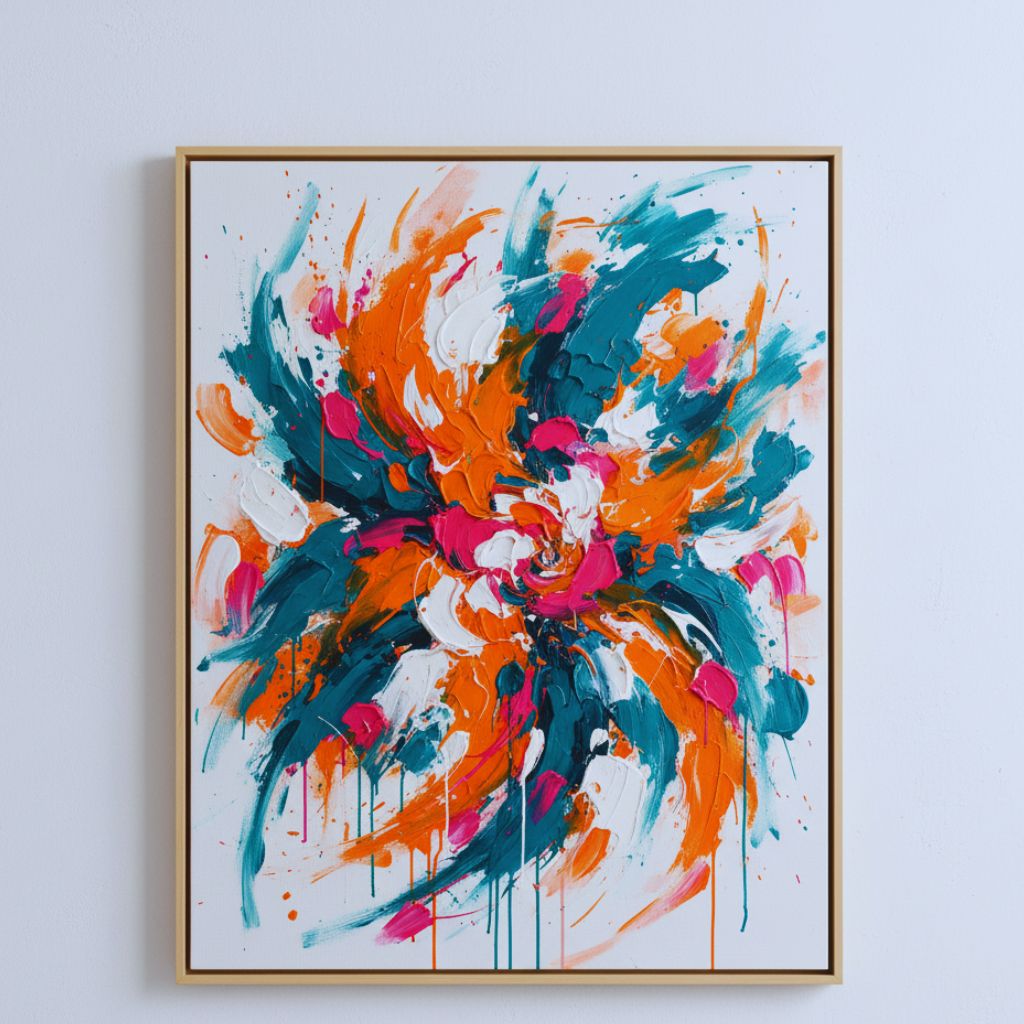
Vibrant abstract painting with energetic brushstrokes in orange, teal, and pink.
“Create what your heart feels, not what your eyes see.”

Motivational quotes that inspire both artists and art lovers.

  1. “Create what your heart feels, not what your eyes see.”
  2. “Art begins where perfection ends.”
  3. “Be bold enough to paint your chaos.”
  4. “Every canvas starts with courage.”
  5. “Let your emotions guide your brush.”
  6. “The magic happens when you stop overthinking.”
  7. “Art doesn’t need rules—it needs passion.”
  8. “Turn your mess into magic.”
  9. “Let your art speak your truth.”
  10. “Don’t explain your art—let it breathe.”

5. Creative Abstract Art Captions for Instagram

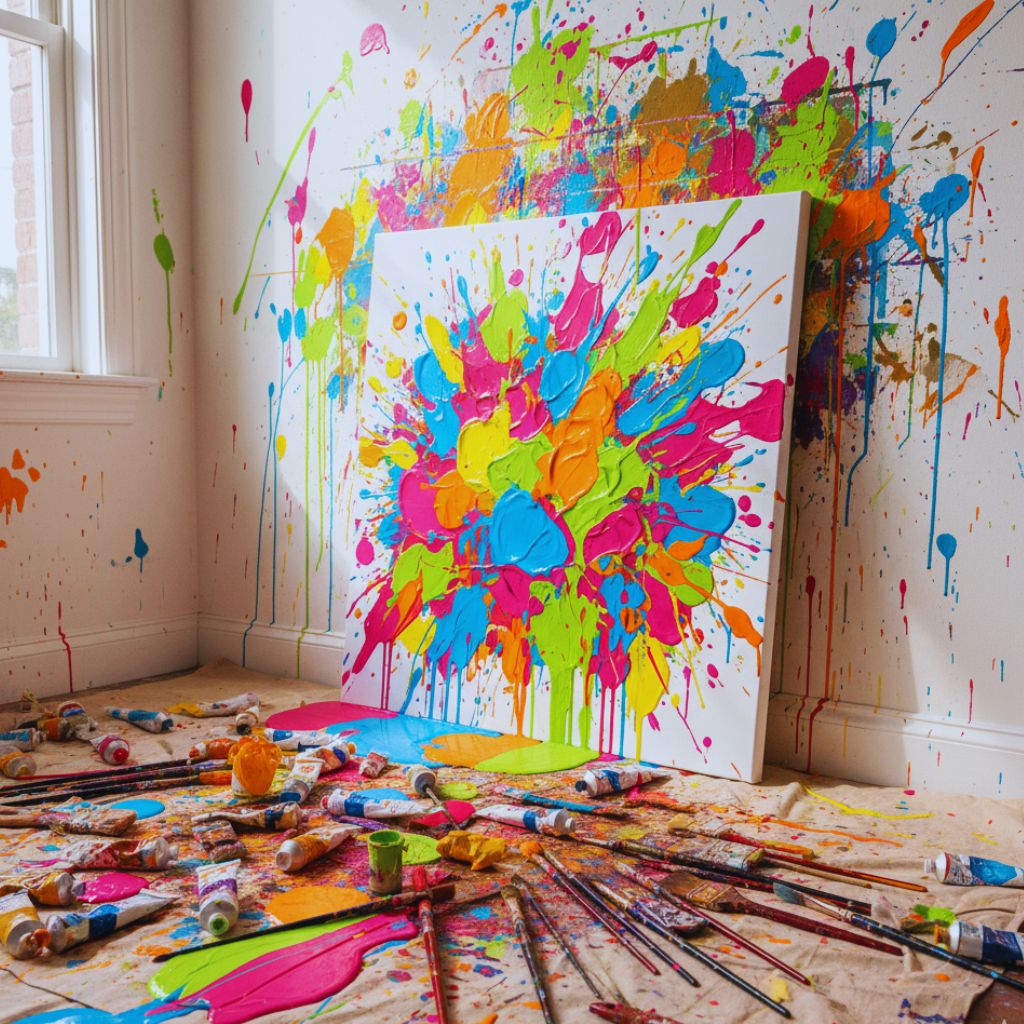
Playful abstract art with splattered paint and creative brushstrokes symbolizing artistic chaos.
“Messy mind, beautiful art.”

These catchy, fun captions will make your post pop.

  1. “Messy mind, beautiful art.”
  2. “Colors are my language.”
  3. “Dancing with brushes and dreams.”
  4. “Abstract thoughts in vivid hues.”
  5. “Chaos has never looked so beautiful.”
  6. “Dripping emotions, one color at a time.”
  7. “Imagination is my favorite shade.”
  8. “Life is better in abstract.”
  9. “A little chaos makes life colorful.”
  10. “When in doubt, paint it out.”

Tips to Make Your Abstract Art Captions Go Viral

Now that you’ve got your list of short and powerful captions, let’s talk about how to make them work harder for your posts.

Here are some proven tips to boost engagement and reach:

1. Use Relevant Hashtags

Pair your captions with trending hashtags like #abstractart, #modernart, #artoftheday, #artinspiration, and #creativeexpression.
Hashtags make your posts visible to art lovers worldwide.

2. Engage in the Comments

When people comment, reply thoughtfully. Instagram rewards engagement—it pushes your posts to more feeds.

3. Write from Emotion

People connect with authentic feelings. Share what inspired you, what the colors mean, or what you were feeling while painting.

4. Pair with Eye-Catching Visuals

Even the best captions need strong visuals. Use contrasting colors, textured layers, or motion-inspired art to grab attention.

5. Experiment with Fonts and Formats

Try adding line breaks, emojis, or bold text (in Stories or Reels captions) to make your words pop.

6. Keep It Real

Don’t just copy captions—make them yours. Authenticity always wins over perfection.

The Power of Words in Abstract Art

Abstract art has no boundaries—it lets imagination flow freely. Similarly, your captions can go beyond simple descriptions. They can transform your posts into artistic expressions of thought, emotion, and identity.

When you post your art, think of your caption as your signature voice. Each word should reflect who you are as an artist. Whether your tone is deep, mysterious, or minimalist, your captions can help people feel your art, not just see it.

As you continue sharing your creative journey, remember this golden rule:

“Art isn’t what you see—it’s what you make others feel.”

When combined with the right words, your art becomes an experience—a silent conversation that lingers long after the scroll.

Bonus: How to Write Your Own Abstract Art Captions

Want to create your own original captions? Here’s a simple formula:

  1. Describe the mood: Think of what the painting feels like—calm, chaotic, mysterious, etc.
    • Example: “A storm of colors finding peace.”
  2. Add emotion: Use powerful emotional words like freedom, silence, passion, chaos, balance, illusion.
  3. Keep it short: Aim for under 10 words for a clean, aesthetic look.
  4. Use sensory words: Words like vivid, fluid, textured, serene, raw enhance the sensory feel.
  5. Let it flow naturally: Don’t overthink it. The best captions are born from pure feeling.

Final Thoughts

Abstract art is an endless playground for imagination—and your Instagram captions are the voice that brings your visuals to life. Whether you’re an artist showcasing your portfolio or an admirer sharing a favorite piece, the right caption can amplify your reach, engage your audience, and inspire emotions that last.

Use these 50 abstract art quotes as your creative toolkit. Mix, match, or tweak them to reflect your style. Keep your feed visually vibrant and your words meaningful.

Remember:

Every post is a piece of your story. Make it colorful, make it emotional, make it unforgettable.

So, go ahead—pair your next masterpiece with one of these captivating captions and watch your Instagram engagement bloom like art on a fresh canvas.

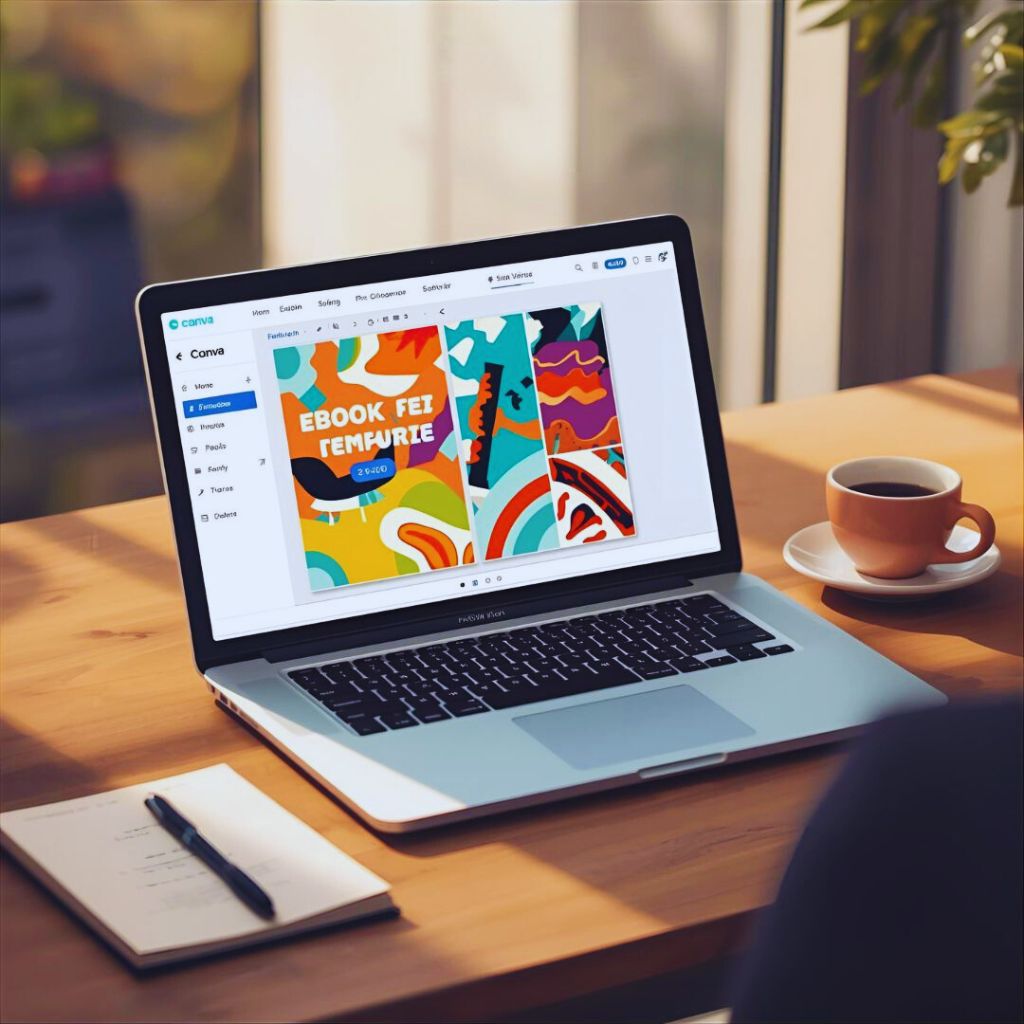
Laptop displaying an editable Canva ebook template, surrounded by printed mockups, sketches, and digital art tools on a creative workspace.

When I first opened my Etsy shop, I had no idea what I was doing. I loved making digital art, but the idea of turning it into income felt impossible. Fast-forward a month — and one simple ebook template changed everything.

In just 30 days, I made $1,000 in digital art sales — all from a single, repeatable product that sells while I sleep.

If you’ve been dreaming about making money from your creativity, this guide will show you exactly how to sell digital art on Etsy, step-by-step — including the ebook template strategy that turned my shop into a profitable side hustle.

Why Etsy Is the Best Place to Sell Digital Art

Etsy is more than just a handmade marketplace — it’s a goldmine for digital creators.

Unlike physical products, digital downloads are:

  • Instantly delivered (no shipping, no handling).
  • Passive — you make the product once and sell it endlessly.
  • Global — anyone in the world can buy your art instantly.
  • Low-cost — zero inventory, minimal investment.

It’s the perfect platform for artists, designers, and writers who want creative freedom and steady income.

Step 1: Understand What Sells on Etsy

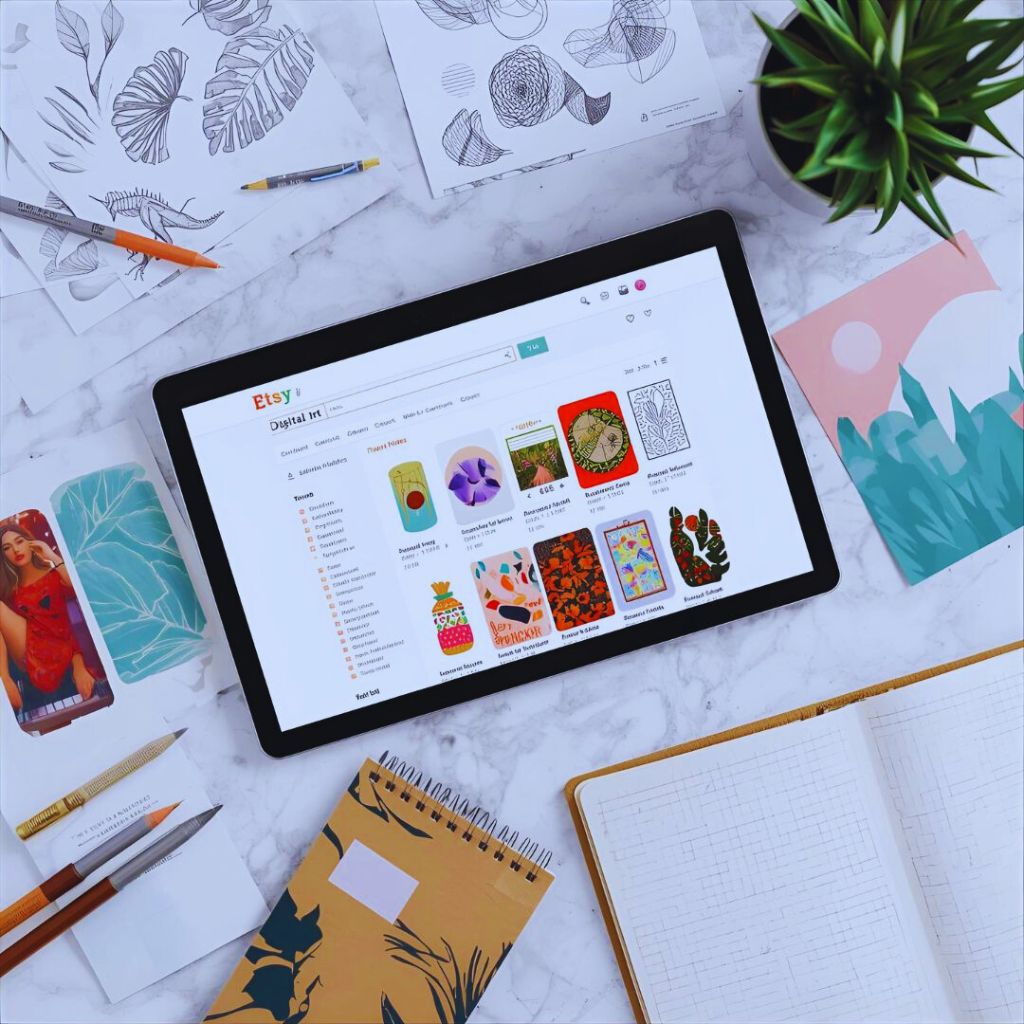
Laptop displaying Etsy search results for digital printables, surrounded by sketches and color swatches.
Research what sells — check Etsy trends for printables, ebook templates, and digital art that buyers love.

Before uploading your first file, you need to know what buyers want.

The Etsy digital marketplace is booming with trends like:

  • Printable wall art
  • Planner templates
  • Digital journals and workbooks
  • Ebook templates and Canva guides
  • Clip art and design elements

Pro Tip: Go to Etsy’s search bar and type “digital art printable” or “ebook template.” Check which listings have lots of reviews — those are your clues to what’s selling right now.

When I noticed how fast ebook templates were trending, I realized — I could merge my art skills with practical design to create something people need and love.

That’s where my $1,000 month began.

Step 2: The Ebook Template Strategy (My Secret Weapon)

Editable ebook template on a laptop screen with a notebook and coffee cup on the desk.
Use the ebook template strategy — create useful digital art that solves a problem and sells passively.

Let’s talk about the product that made me $1,000 — a digital ebook template.

It wasn’t just art — it was useful art.

Here’s What I Did:

I designed a beautiful ebook layout in Canva that customers could edit for their own projects — think creators, coaches, and small business owners who want to publish a professional-looking digital book without hiring a designer.

I turned that design into a downloadable template, uploaded it to Etsy, and wrote a compelling listing description.

Within a week, sales started rolling in.

Step 3: Design a Digital Product That Sells

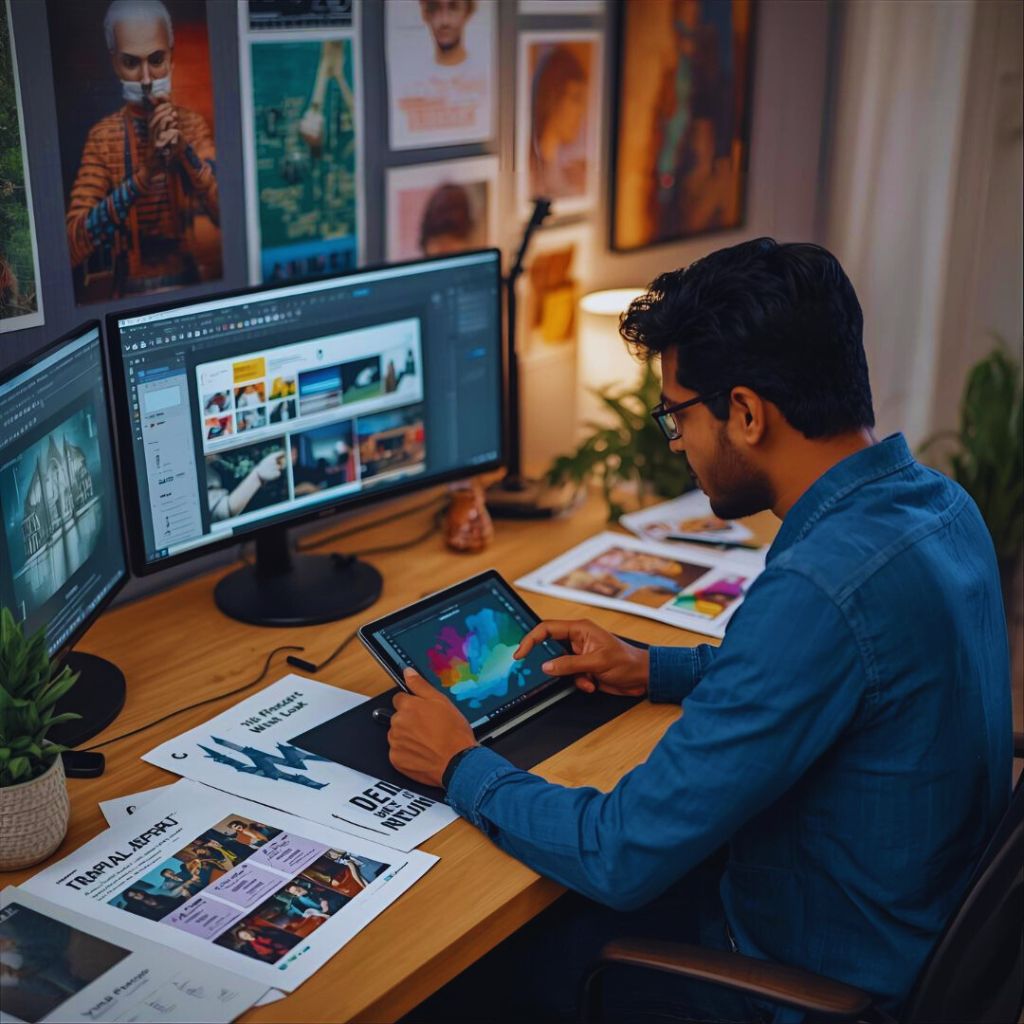
Designer creating high-resolution digital art on a tablet with printed mockups on a desk.
Design digital products that are beautiful and functional — make art that buyers want to use or display.

Whether you’re making an ebook template or digital print, your product should do one thing: solve a problem beautifully.

Ask Yourself:

  • What is my audience looking for?
  • How can my art make their life easier or more beautiful?
  • Would I buy this myself?

If you’re selling ebook templates, make sure they’re:

  • Easy to edit in Canva or PowerPoint.
  • Professionally styled (fonts, color palette, spacing).
  • Sized correctly for digital publishing (e.g., A4, US Letter).

If you’re selling printable art, ensure:

  • High-resolution (300 DPI).
  • Various sizes included (5×7, 8×10, A4).
  • Minimalist, trendy, or thematic designs (like boho, vintage, or modern).

Step 4: Set Up Your Etsy Shop for Success

Etsy shop dashboard on a laptop showing a branded banner, logo, and shop management interface.
Build a professional Etsy shop — strong branding, engaging bio, and clear policies attract buyers.

Your Etsy shop isn’t just a store — it’s your brand.

Here’s How to Build a Professional-Looking Shop:

  1. Choose a Memorable Name: Something that reflects your art (e.g., PixelPalace or The Art Haven).
  2. Add a Stunning Banner and Logo: Use Canva to design these in your color theme.
  3. Write an Engaging Bio: Share your story — buyers love connecting with real creators.
  4. Set Your Policies: Be clear about refunds, downloads, and usage rights.

Pro Tip: Add 10+ listings right away. The Etsy algorithm favors active shops with variety.

Step 5: Craft the Perfect Product Listing

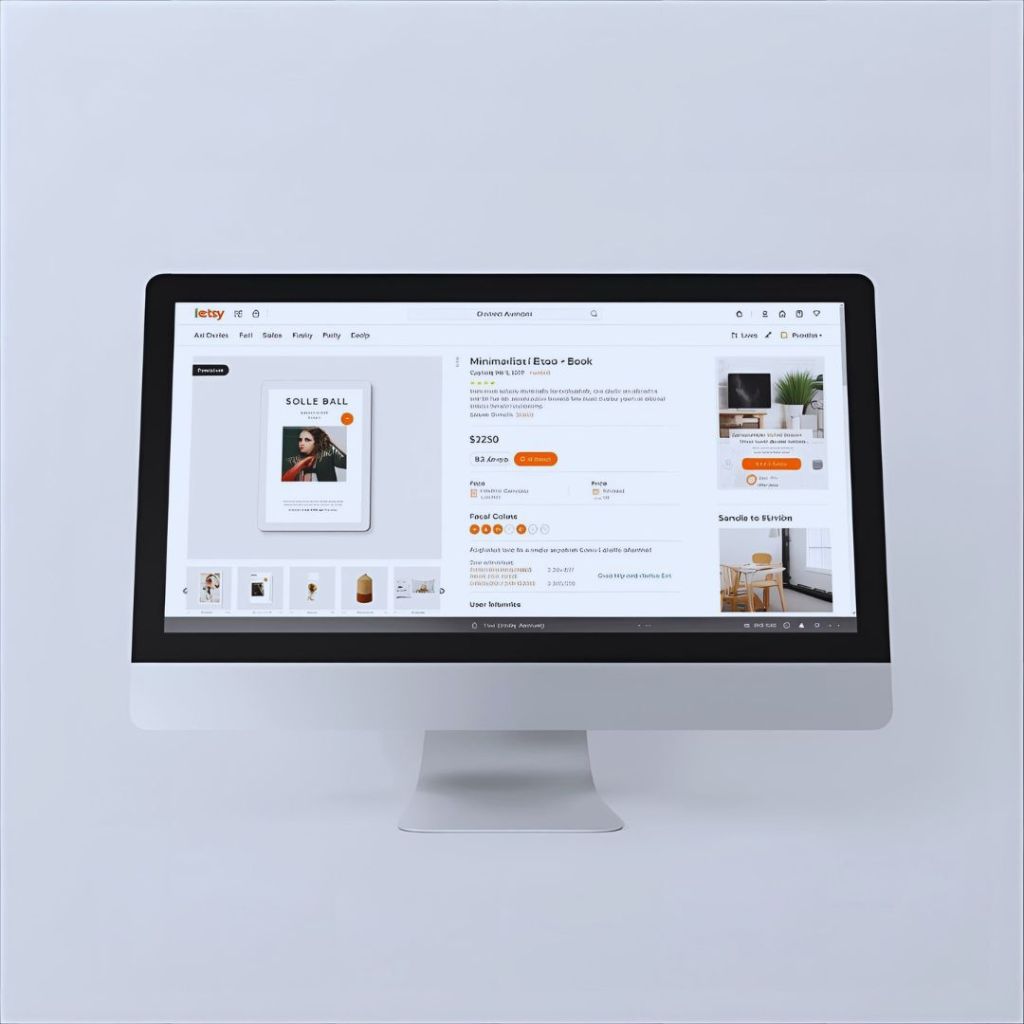
Etsy listing for a digital ebook template displayed on a laptop, showing photos, description, and pricing.
Perfect your product listings — use high-quality mockups, detailed descriptions, and targeted keywords.

Your listing is where browsers become buyers — so make every word count.

Here’s the anatomy of a high-converting Etsy listing:

  • Title: Include strong keywords.
    Example: Minimalist Ebook Template | Editable Canva Ebook Design | Digital Art for Coaches & Creators
  • Photos: Use high-quality mockups (Canva + Smartmockups are perfect).
  • Description: Write like you’re telling a story — explain the benefits and uses.
  • Tags: Use all 13 Etsy tags with targeted keywords like:
    “ebook template,” “digital download,” “editable Canva design,” “Etsy printables,” “digital art.”
  • Price: Start low ($6–$12) to gain traction, then increase once you have reviews.

Step 6: Price Smart and Think Passive

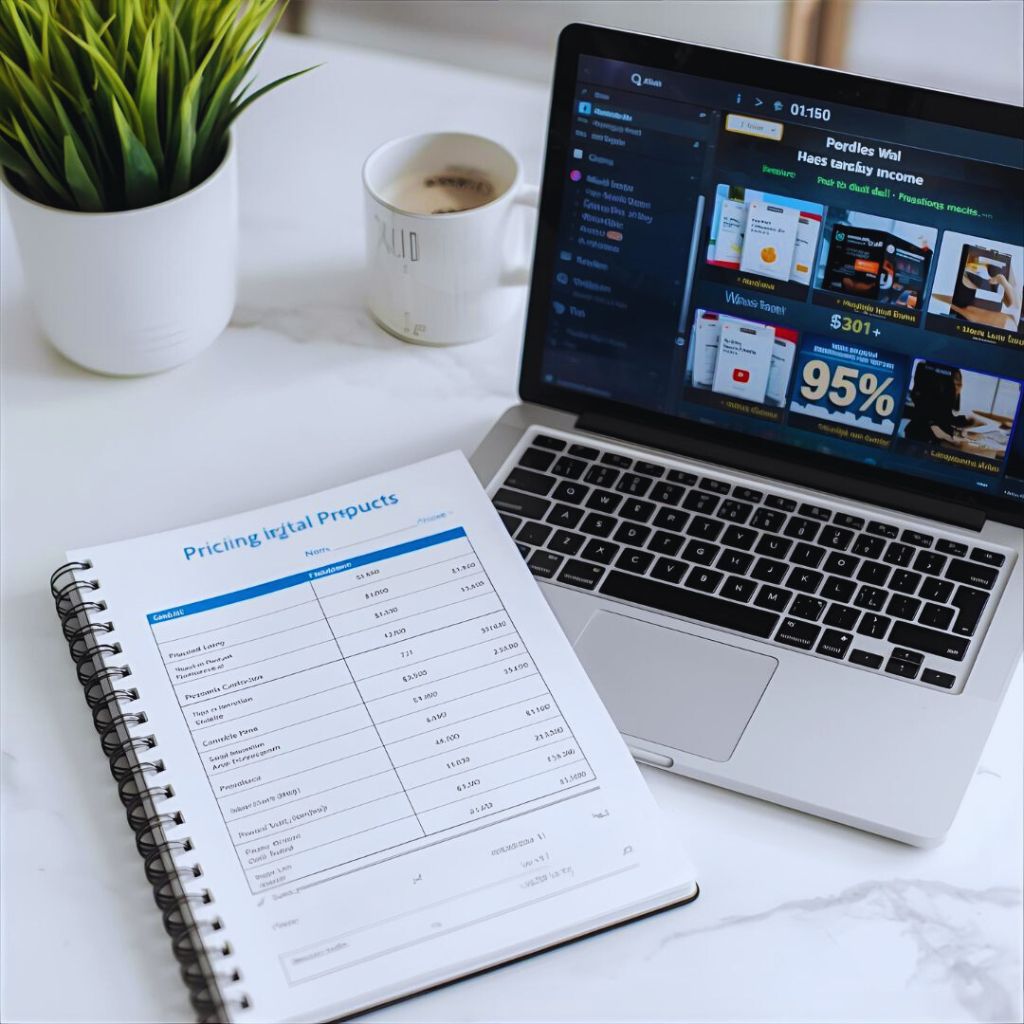
Notebook with pricing chart for digital products next to a laptop displaying Etsy shop analytics.
Price smart — start low, adjust with reviews, and create bundles for higher passive income.

The beauty of selling digital art on Etsy is that your work keeps earning — long after you finish it.

Start by setting competitive prices, then adjust based on:

  • Product quality
  • Competitor pricing
  • Demand and reviews

Example Pricing Strategy:

ProductStarting PriceAfter 20 Sales
Simple Wall Art$5.99$9.99
Ebook Template$8.99$14.99
Digital Journal$10.99$19.99

Passive Income Tip: Create “bundles” — multiple designs sold together at a discount. Bundles often convert 2–3x more buyers.

Step 7: Optimize for Etsy SEO

Laptop screen showing Etsy SEO keyword research and tags for a digital art listing.
Optimize for Etsy SEO — use keywords naturally in titles, tags, and descriptions to boost visibility.

If your product doesn’t show up in search, it won’t sell — no matter how beautiful it is.

Here’s how to dominate Etsy SEO:

1. Use Keywords Naturally

Sprinkle keywords in your title, description, and tags without stuffing.
Example:

“This minimalist ebook template for Canva is perfect for creators looking to sell digital downloads on Etsy or self-publish their own digital art books.”

2. Write for Humans, Optimized for Search

Make sure your descriptions are engaging, readable, and benefit-driven — the algorithm notices time-on-page.

3. Update Regularly

Refresh your listings monthly — tweak keywords, change titles, or upload seasonal variations.

Step 8: Promote Your Etsy Shop Like a Pro

Workspace with phone showing TikTok, Pinterest boards, and digital art mockups for social media promotion.
Promote your shop — share your designs on TikTok, Pinterest, and social media groups for extra exposure.

Even with SEO, a little marketing magic goes a long way.

Promote on Social Media:

  • Share timelapse videos of your design process on TikTok or Instagram Reels.
  • Post mockups on Pinterest with keywords like “Digital Art Template Etsy” or “Ebook Layout for Creators.”
  • Join Facebook or Reddit groups for Etsy sellers and digital artists to gain exposure.

Step 9: Keep Improving and Expanding

Laptop showing an expanding Etsy shop product collection with notebooks and digital art files on the desk.
Keep improving — add new designs, seasonal variations, and complementary products to grow your sales.

Once your first product takes off — don’t stop!

Keep adding new designs, seasonal variations, and complementary products.

For example:

  • If your ebook template sells well, create matching social media kits or lead magnet templates.
  • If your digital wall art does well, launch collections around themes (botanical, celestial, vintage, etc.).

Each new listing expands your reach and boosts your overall visibility.

The Results: How I Hit $1,000 in a Month

I started with just one product — a Canva ebook template priced at $9.99.

By optimizing my listing, using strong keywords, and sharing my mockups on Pinterest, I made my first sale within 48 hours.

Within a month, I had:

  • 50+ sales
  • 10+ 5-star reviews
  • $1,000+ in revenue
  • 100% passive income after setup

Final Thoughts: Your Art Can Be Your Income

Selling digital art on Etsy isn’t just about creativity — it’s about building a sustainable, passive income stream from what you love.

With the right product design, ebook template strategy, and SEO optimization, you can turn your talent into consistent profit.

So open that Etsy shop, upload your first product, and remember — every bestseller starts with one bold listing.

Your art deserves to be seen.
Your time deserves to be paid.
And Etsy is waiting for your masterpiece.

Collection of framed vintage posters, including travel, film, and botanical prints, displayed in a cozy, minimalist setting with warm lighting.

There’s something magical about a vintage poster. The colors, the typography, the nostalgia — every piece tells a story. Whether it’s an old travel advertisement, a 1950s movie poster, or a mid-century art print, these treasures bring warmth and history to any modern space.

But here’s the problem: finding authentic vintage posters online can feel like walking through a maze of replicas, inflated prices, and questionable sellers. So how do you make sure your “authentic” find is the real deal — and worth your money?

Good news: we’ve done the digging for you. Below, you’ll discover 3 reliable online shops that specialize in authentic vintage posters — not cheap knockoffs or reprints. Each of these stores has earned the trust of collectors, interior designers, and art lovers worldwide.

So grab a coffee, and let’s explore where to buy authentic vintage posters that actually live up to the hype.

1. The Poster Club – Curated, Authentic & Aesthetic

Scandinavian-style living room featuring a framed vintage travel poster from The Poster Club above a neutral-toned sofa.
“Bring Scandinavian charm home with The Poster Club’s curated collection of authentic, minimalist vintage prints.”

If you’re looking for a shop that blends authentic vintage art with modern minimalism, The Poster Club is your go-to. Based in Copenhagen, this store is a haven for design-conscious shoppers who appreciate simplicity, quality, and style.

Why It Stands Out:

  • Authenticity first: Every poster is sourced or reproduced from verified archives, with high-quality materials that maintain the original artwork’s charm.
  • Artistic collaborations: They work directly with photographers, illustrators, and graphic designers who specialize in vintage revival art.
  • Minimalist appeal: Perfect for anyone wanting to create a timeless Scandinavian-inspired space.

Style Tip:

Pair a vintage travel poster from The Poster Club with a light oak frame and hang it over a neutral-toned sofa. It creates that effortless “European café” vibe that’s both chic and cozy.

What You’ll Find:

  • Vintage-inspired travel and botanical posters
  • Retro typography art
  • Limited edition prints

2. Original Film Art – For the True Collector

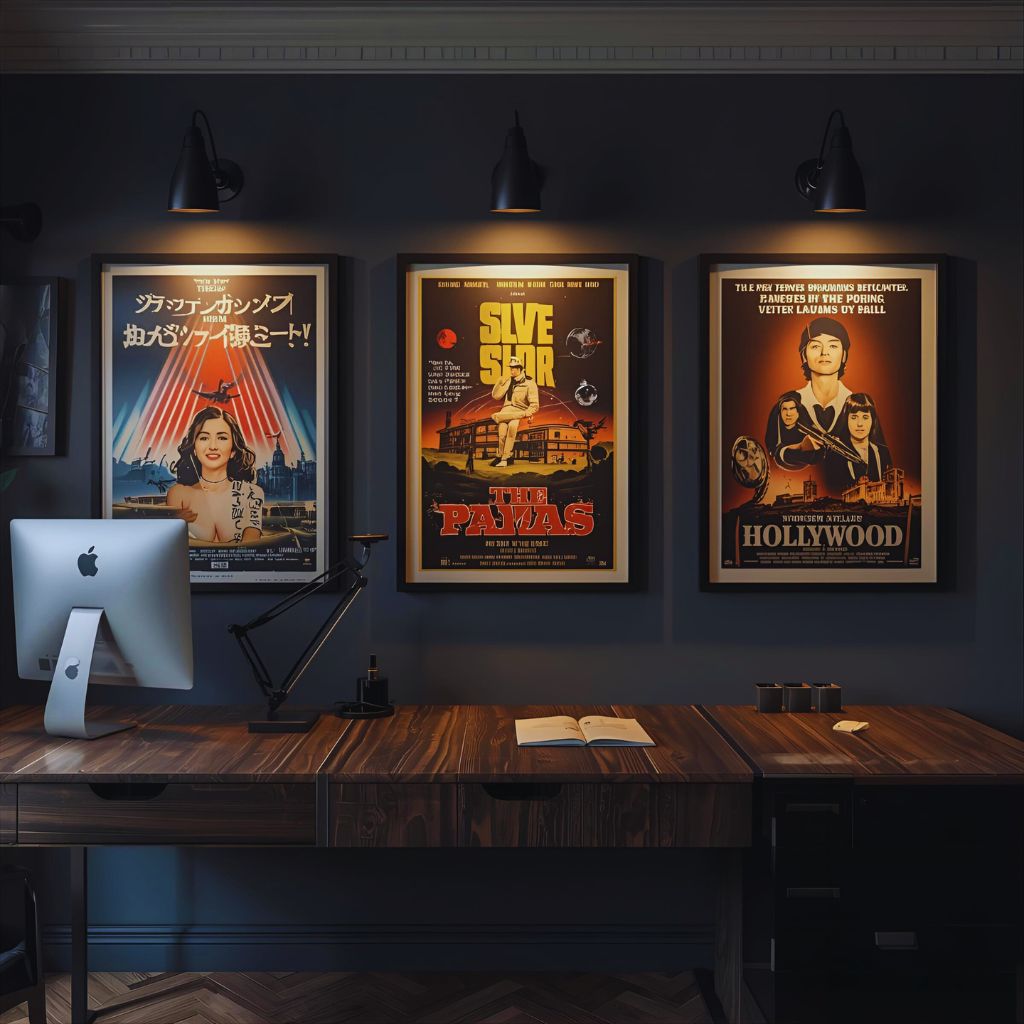
Home office wall featuring authentic framed vintage film posters from the 1960s and 1970s.
“Own a piece of cinematic history with authentic vintage movie posters from Original Film Art.”

For movie buffs, nothing beats the thrill of owning an authentic vintage film poster — one that actually hung in a cinema decades ago. That’s exactly what Original Film Art delivers.

Why It Stands Out:

  • Authentic originals only: They sell genuine posters printed during the movie’s initial release — not reproductions.
  • Certified authenticity: Every poster comes with detailed documentation about its printing year, country of origin, and condition.
  • Restoration services: If you find a rare piece that needs a little love, they offer expert restoration while keeping the integrity of the original print intact.

What You’ll Find:

  • 1960s and 1970s Hollywood classics
  • European cinema posters
  • Japanese and French artwork versions (often more artistic than the American originals!)

3. Etsy Vintage Shops – Unique, Verified, and Global

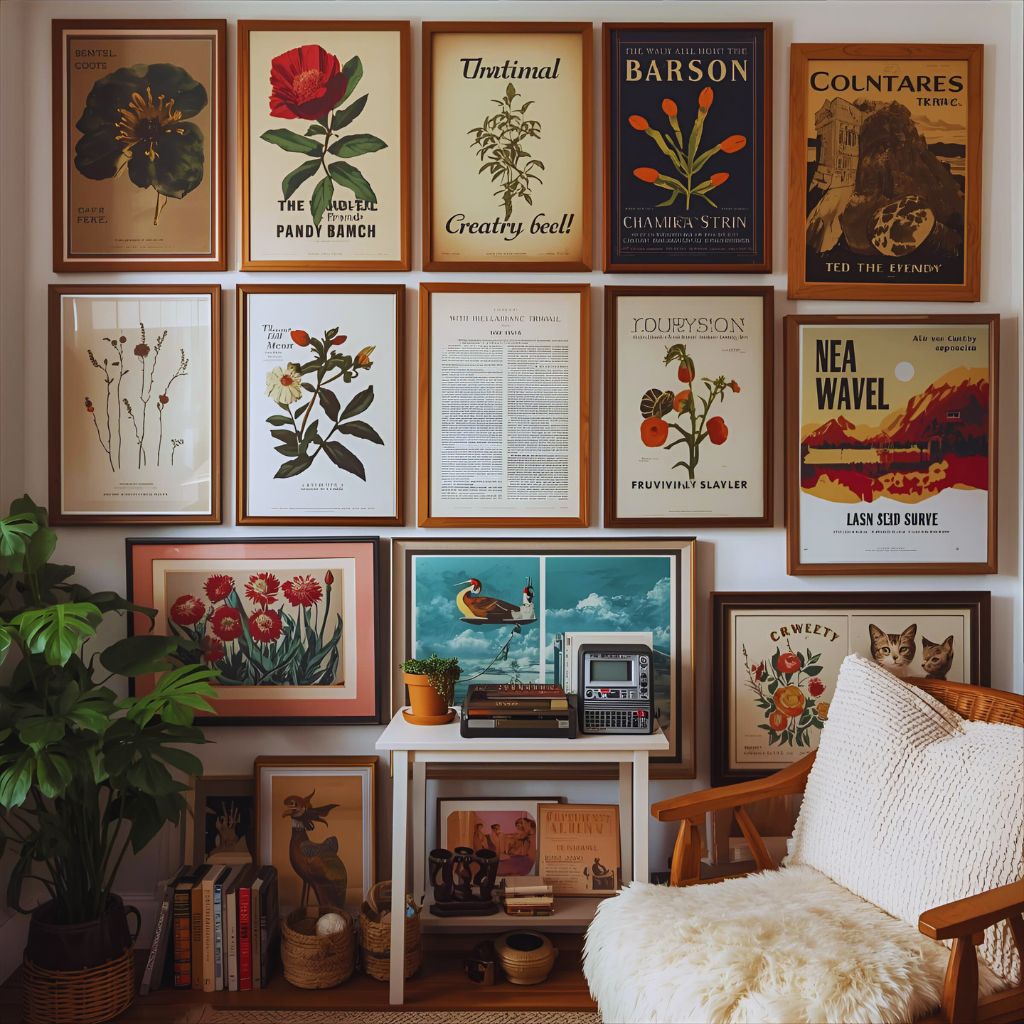
Gallery wall featuring a mix of vintage posters in wooden frames from Etsy vintage shops.
“Explore Etsy’s global community of vintage sellers and discover one-of-a-kind poster treasures from around the world.”

Yes, Etsy can be a goldmine — if you know where to look. The platform’s community of independent sellers includes serious collectors who specialize in authentic vintage posters from around the world.

Why It Stands Out:

  • Global access: You can find rare posters from small vintage stores across Europe, Japan, and the U.S. without leaving your couch.
  • Verified sellers: Look for shops with “star seller” badges and clear photos of poster backs, creases, or stamps — all signs of authenticity.
  • Budget-friendly finds: Unlike auction houses, many Etsy sellers offer authentic pieces for under $100.

What You’ll Find:

  • 1930s to 1980s art prints
  • Vintage travel advertisements
  • Retro typography and concert posters

How to Spot a Fake Vintage Poster (Before You Buy)

Even reliable sites can occasionally host reprints labeled as “vintage.” Protect your investment by learning how to spot the real ones.

Quick Authenticity Checklist:

  1. Check the paper quality: Vintage posters often show minor discoloration or paper texture inconsistencies — a sign of age, not a flaw.
  2. Look for printer’s marks or folds: Most original posters were folded for shipping to theaters or galleries.
  3. Study the typography: Fonts and logos from certain eras can reveal authenticity. For example, early 20th-century posters used serif-heavy typography.
  4. Smell test: Yes, really. Authentic paper has a subtle aged aroma that’s hard to fake.
  5. Avoid “too perfect” listings: If the poster looks brand new with no signs of age or wear, it’s likely a reproduction.

Why Investing in Authentic Vintage Posters Is Worth It

Buying an authentic vintage poster isn’t just decorating — it’s preserving art history. Every crease, every faded edge tells a story that no digital print can replicate.

Here’s why collectors and interior designers alike swear by the real deal:

  • Unique charm: No two vintage posters are exactly alike.
  • Sustainability: Buying vintage supports eco-conscious design by reusing and repurposing existing art.
  • Cultural connection: Each poster reflects the aesthetics, values, and advertising styles of its era.
  • Value appreciation: True originals can increase in value over time, making them both beautiful and smart investments.

Final Thoughts

In a world flooded with replicas and mass-produced prints, owning an authentic vintage poster feels like having a slice of history — something real, rare, and deeply personal.

Whether you’re drawn to the cinematic glamour of Original Film Art, the minimalist beauty of The Poster Club, or the global variety of Etsy’s vintage sellers, one thing’s certain: authenticity never goes out of style.

So, skip the reprints and start curating your own timeless gallery wall — one authentic vintage poster at a time.

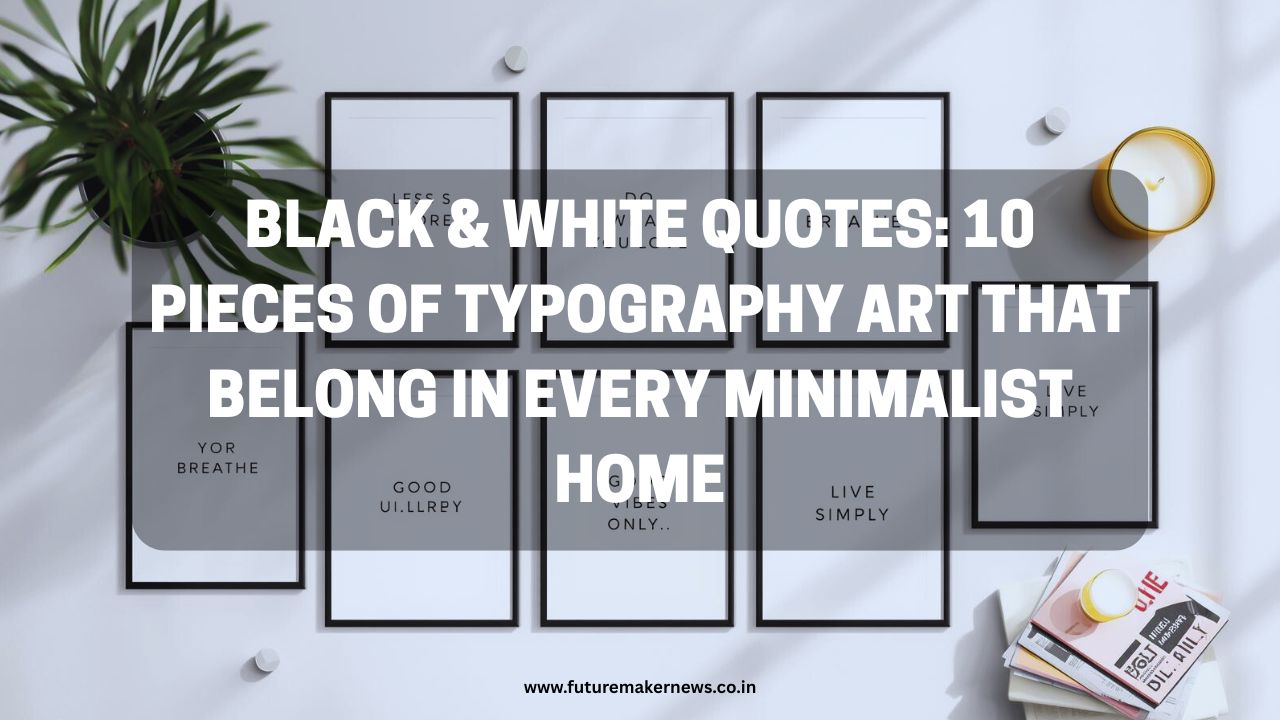
Collection of 10 minimalist black-and-white typography wall art prints with motivational quotes arranged on a neutral wall with simple modern décor.

There’s something timeless about black and white — the perfect balance of contrast and calm. When it comes to home décor, especially in minimalist spaces, nothing captures attention more effortlessly than typography wall art.

Clean lines, bold words, and powerful quotes can speak volumes — without saying too much. And that’s exactly why black and white quote art has become a staple in modern minimalist homes.

Whether you’re styling your first apartment, updating your living room, or curating an inspiring workspace, these 10 typography art pieces bring sophistication, motivation, and serenity to any wall.

Why Black & White Typography Art Works So Well

Before diving into the list, let’s talk about why this style has taken over minimalist design feeds everywhere — from Pinterest to Architectural Digest.

  • Timeless Appeal: Black and white never goes out of style. It’s sleek, balanced, and elegant.
  • Versatile Aesthetic: Pairs perfectly with any interior — from Scandinavian simplicity to urban loft vibes.
  • Visual Clarity: Typography stands out beautifully when it’s stripped to the essentials.
  • Emotional Impact: A few carefully chosen words can inspire, calm, or empower — all without clutter.

Minimalism isn’t about emptiness — it’s about intention. And few décor choices are as intentional as typography art that says exactly what you mean.

1. “Less Is More” — The Minimalist Manifesto

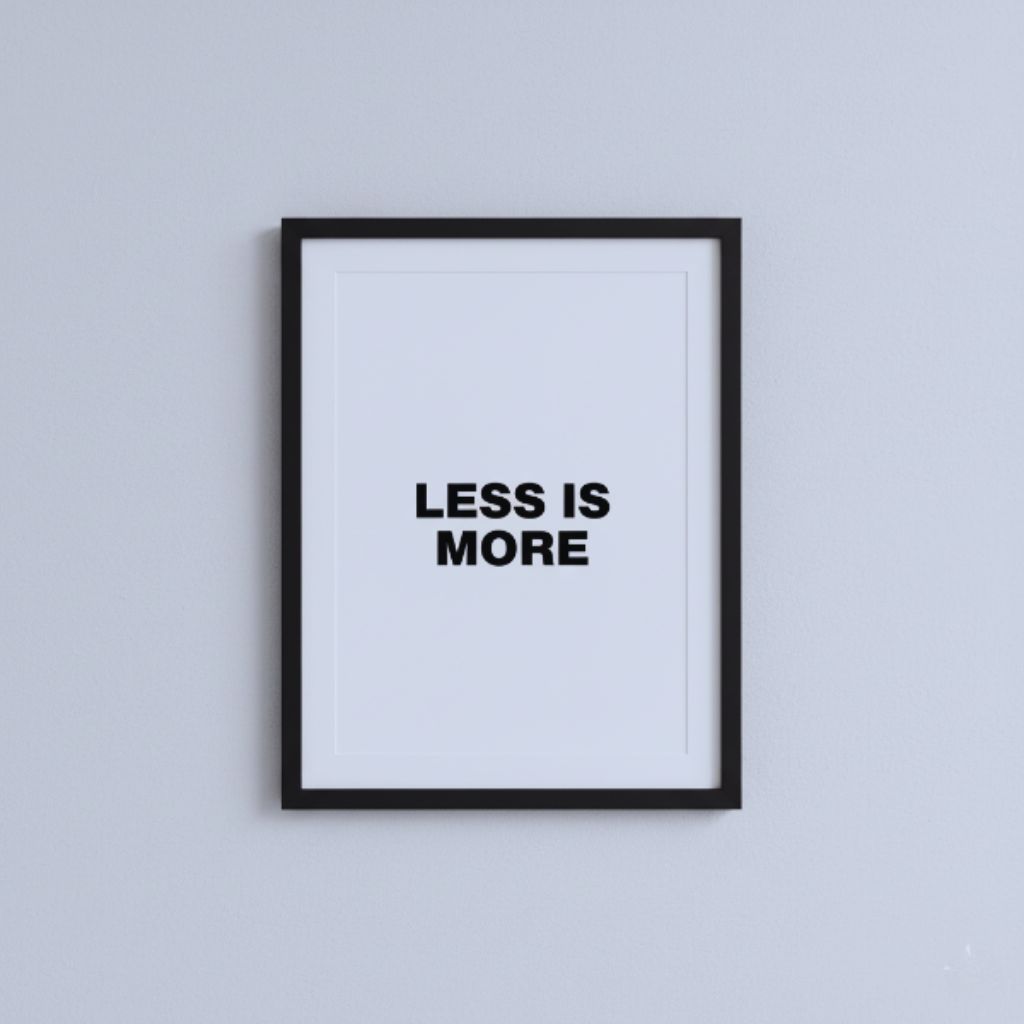
Minimalist black-and-white wall art print with the quote “Less Is More” in bold font.
“Keep your space clutter-free and intentional with this timeless minimalist mantra — ‘Less Is More.’”

Every minimalist home needs a reminder of its golden rule: Less is More. This iconic phrase defines the entire philosophy of modern minimalism.

Why It Belongs in Your Space:

  • It sets the tone for a clutter-free mindset.
  • Perfect above desks, in hallways, or near entryways.
  • Inspires simplicity and mindfulness every day.

Design Tip: Use sans-serif fonts with lots of white space. The emptier the frame, the stronger the statement.

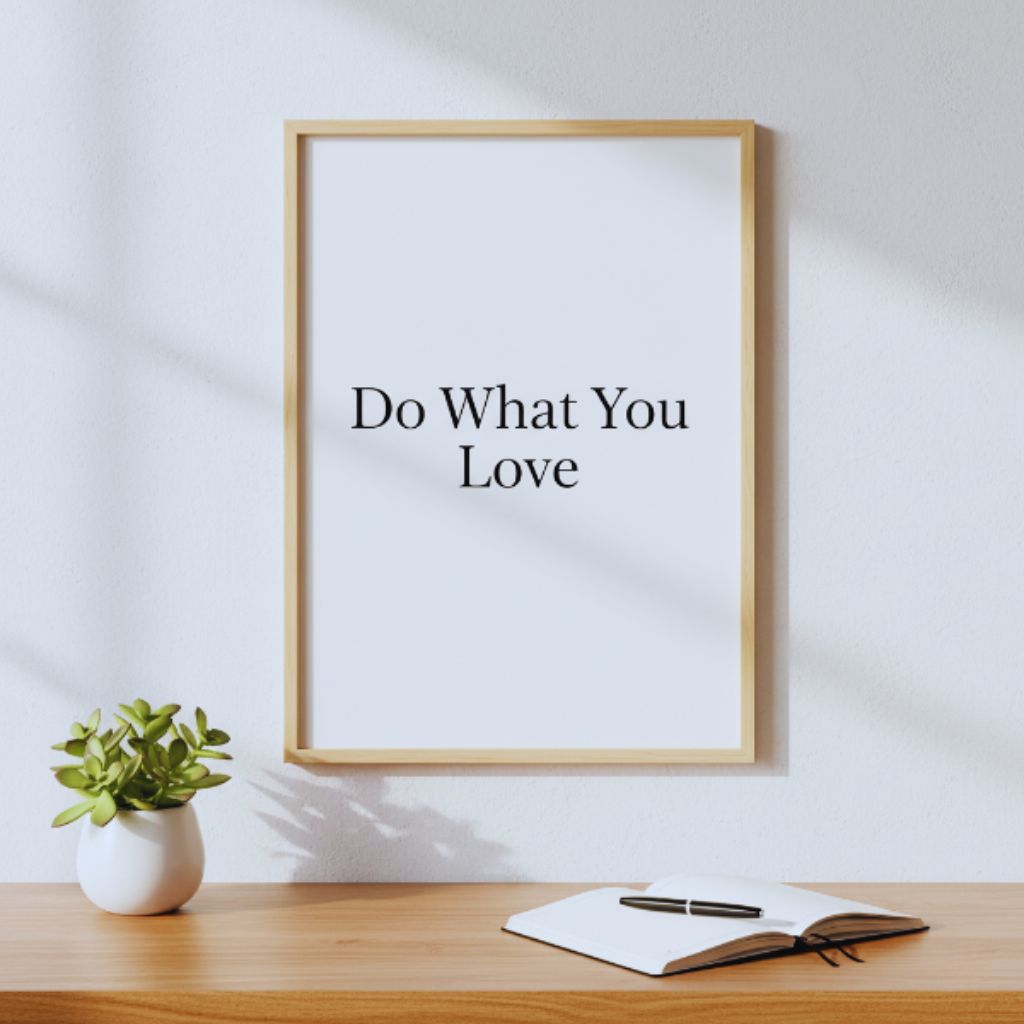
2. “Do What You Love” — The Everyday Motivator

Minimalist wall art print reading “Do What You Love” above a modern desk.
“Motivate your every day with this sleek black-and-white reminder to ‘Do What You Love.’”

A daily boost in black and white form. This typography print works beautifully in offices, studios, or creative corners.

Why It Works:

  • It’s motivational without being loud.
  • A clean, minimal reminder to prioritize passion.
  • Complements modern furniture and neutral walls.

Pair it with: Simple geometric prints or abstract line drawings.

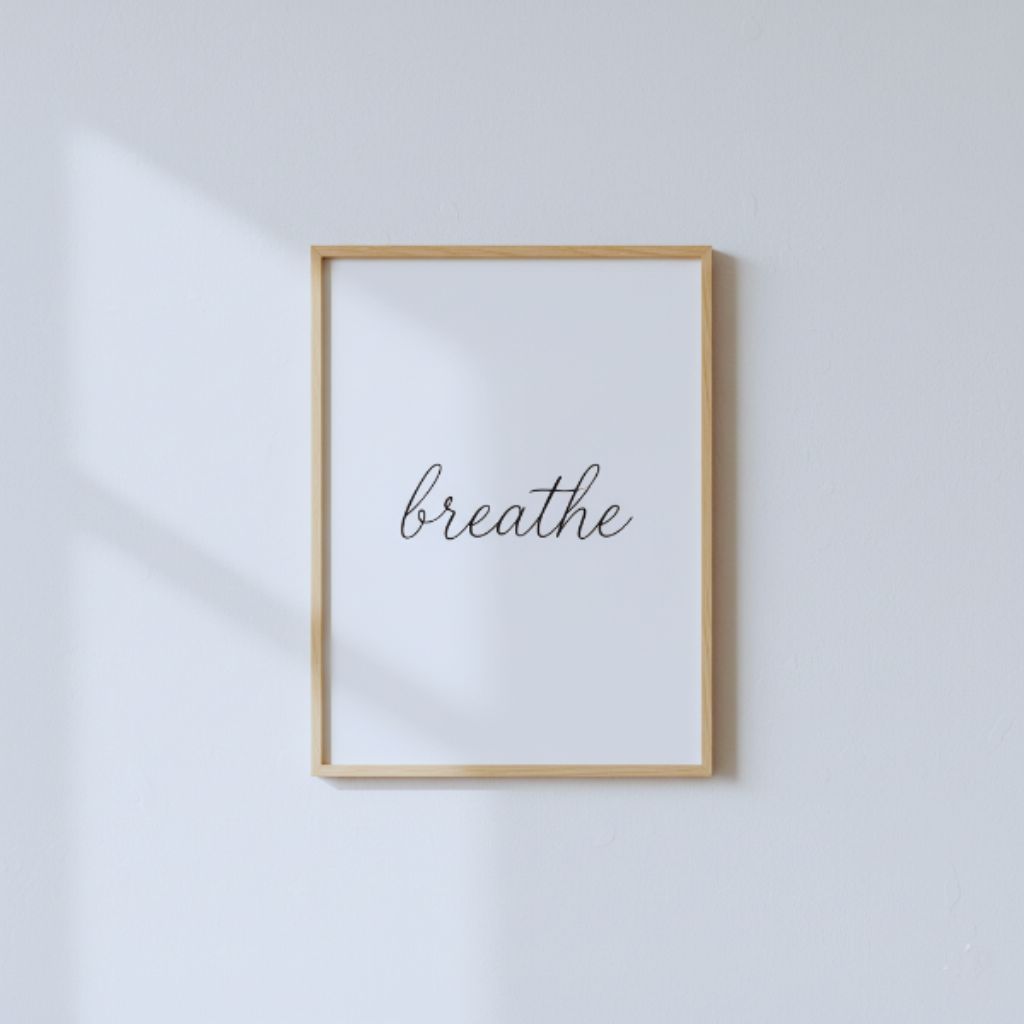
3. “Breathe” — Simplicity in One Word

Minimalist typography wall art with the word “breathe” in cursive font on a white background.
“Add calm and clarity to your space with the peaceful simplicity of ‘breathe.’”

In a world that’s always rushing, this word acts like a pause button.

Why It Belongs in Your Home:

  • Calms the mind instantly.
  • Perfect for bedrooms, bathrooms, or yoga spaces.
  • The simplicity of a single word feels poetic.

Style Tip: Use a lowercase cursive font on a white background — it radiates peace.

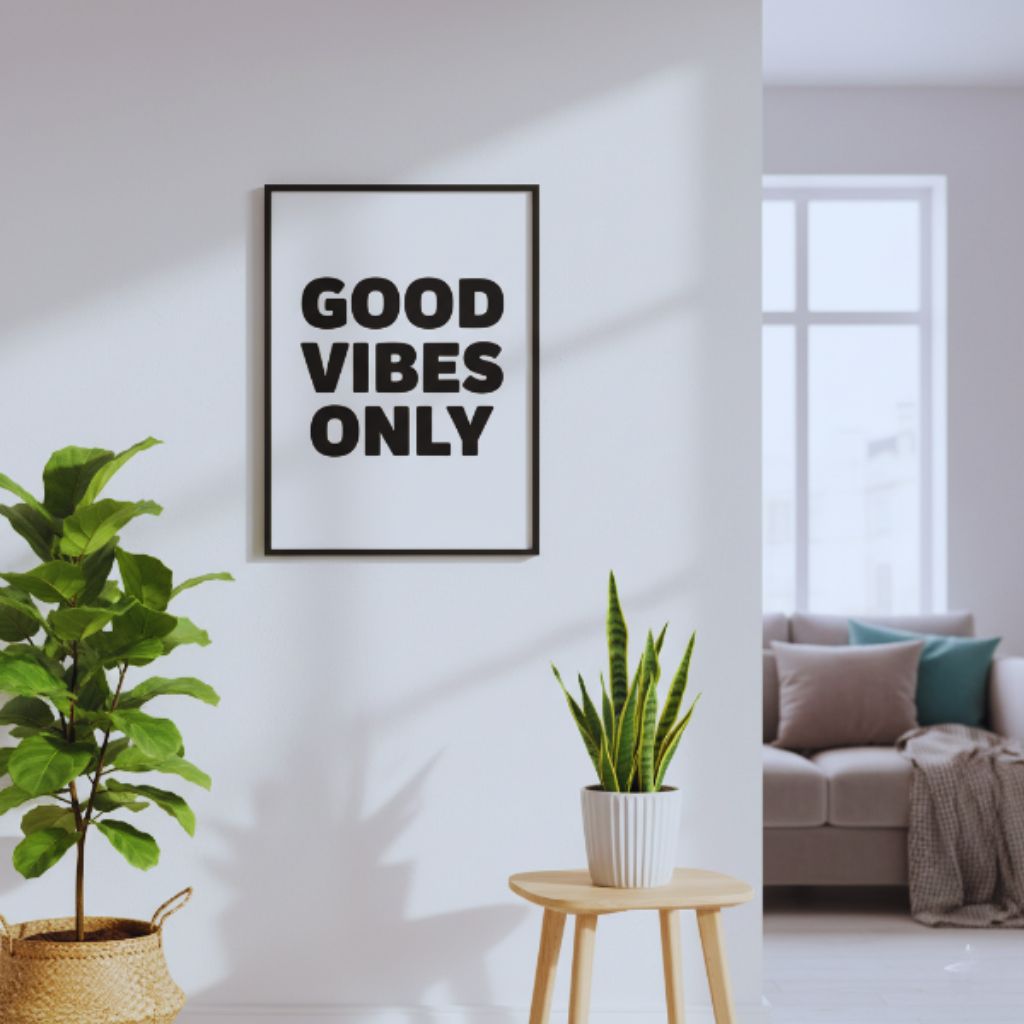
4. “Good Vibes Only” — Positive Energy, Simplified

Black typography wall art with “Good Vibes Only” displayed in a modern living room.
“Invite positivity and warmth into your home with this fun and stylish ‘Good Vibes Only’ print.”

Bring a touch of optimism into your space with this playful, modern quote.

Why It Works:

  • Adds warmth and personality to minimal spaces.
  • Great for entryways or living rooms.
  • Instantly lifts the mood without adding clutter.

Design Tip: Use bold, slightly playful typography — it keeps things light and energetic.

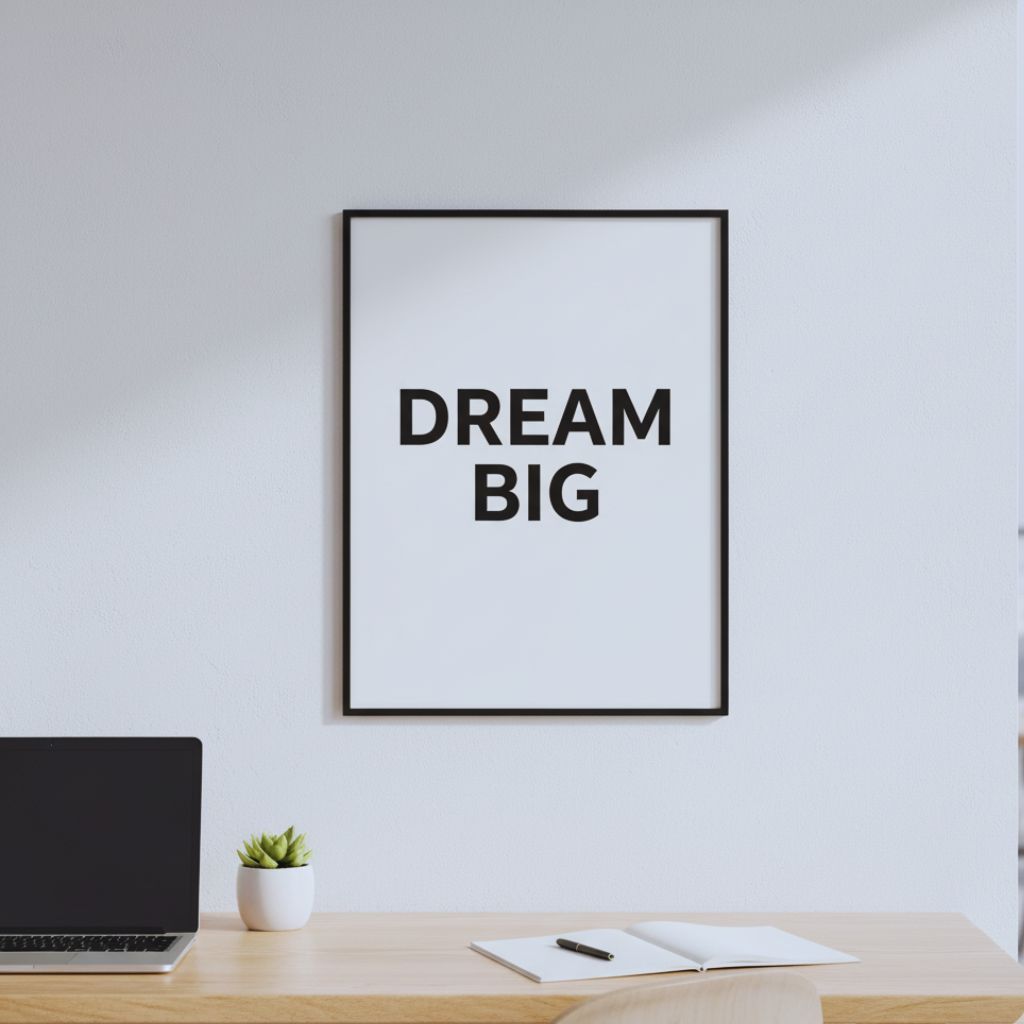
5. “Dream Big” — For the Ambitious Minimalist

Minimalist typography print with the quote “Dream Big” in bold black letters above a desk.
“Fuel your ambition with this elegant minimalist print — ‘Dream Big.’”

Sleek, bold, and purpose-driven — “Dream Big” fits right into your modern workspace or bedroom.

Why It Works:

  • Inspires forward-thinking energy.
  • Blends motivation with elegance.
  • Looks stunning in black frames on white walls.

Pro Styling Tip: Pair with smaller abstract black line drawings for visual harmony.

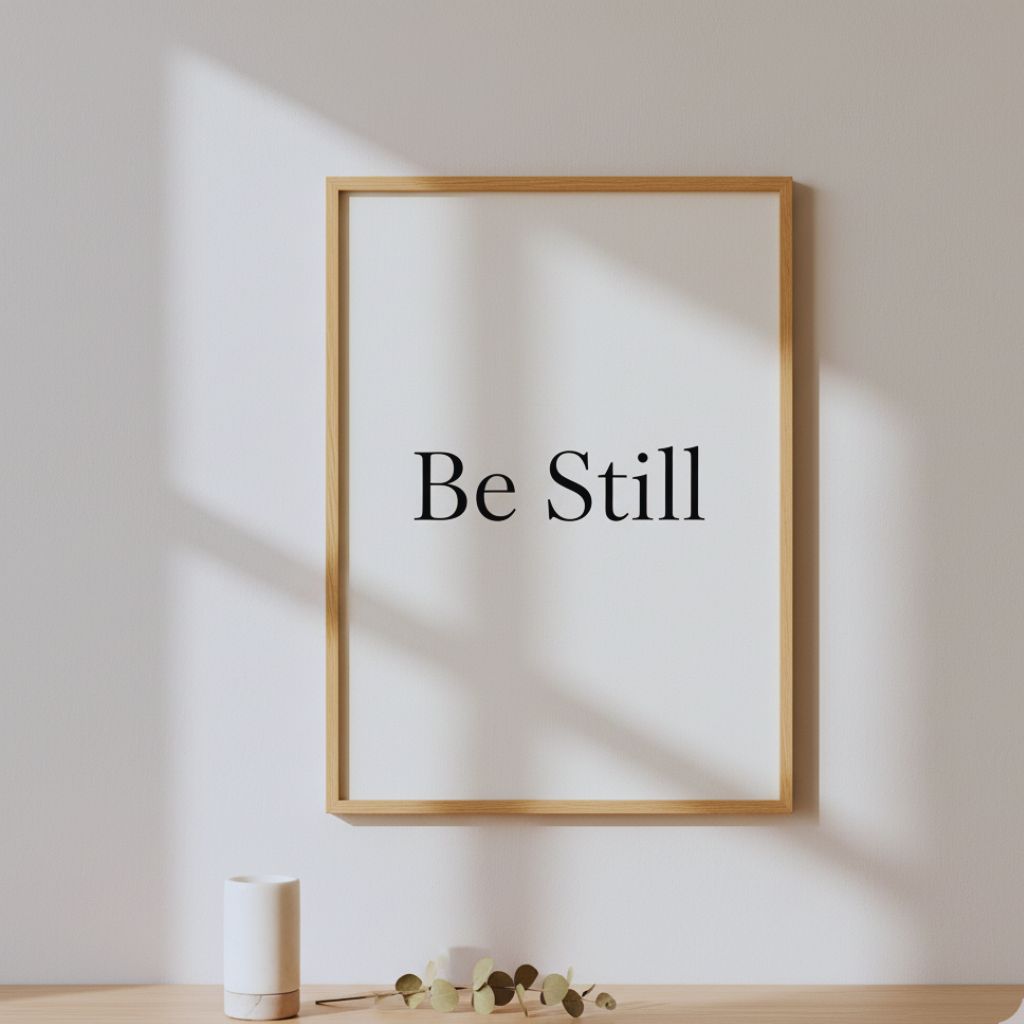
6. “Be Still” — The Quiet Reminder

Minimalist wall art featuring the phrase “Be Still” in elegant serif font on a light background.
“Create a moment of peace in your home with the tranquil reminder — ‘Be Still.’”

Peace doesn’t shout. It whispers.
Why It Belongs in Your Minimalist Home:

  • Encourages mindfulness and presence.
  • Ideal for calm spaces like reading nooks or meditation corners.
  • Subtle, spiritual, and grounding.

Design Idea: Combine serif typography with soft spacing for a tranquil aesthetic.

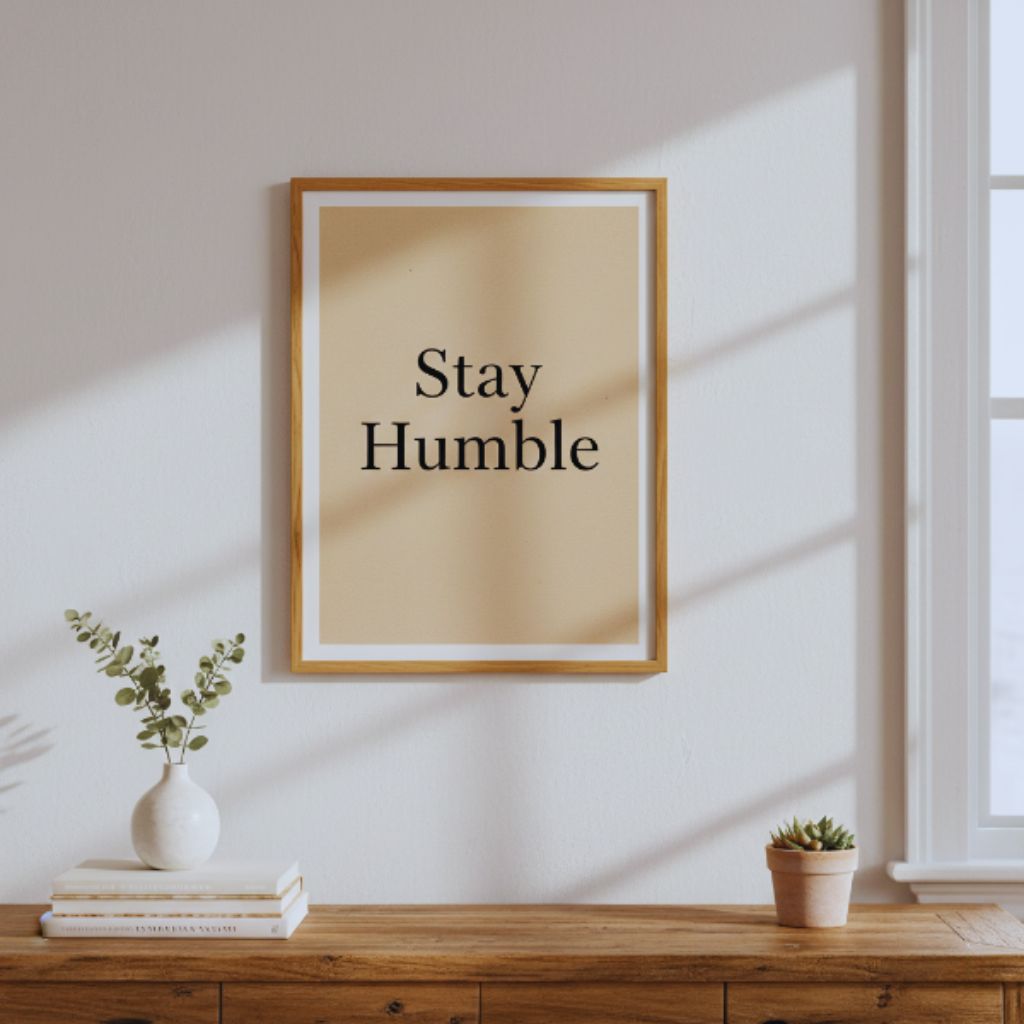
7. “Stay Humble” — Elegant and Grounded

Neutral minimalist poster with “Stay Humble” in black serif font framed in wood.
“Bring grace and gratitude into your space with the gentle reminder — ‘Stay Humble.’”

Minimalism isn’t just about design — it’s a lifestyle. This quote embodies gratitude and grace.

Why It Works:

  • A gentle reminder to stay kind and grounded.
  • Fits beautifully in neutral-toned spaces.
  • Simple but deeply meaningful.

Style It With: Natural wood frames or linen-textured backgrounds.

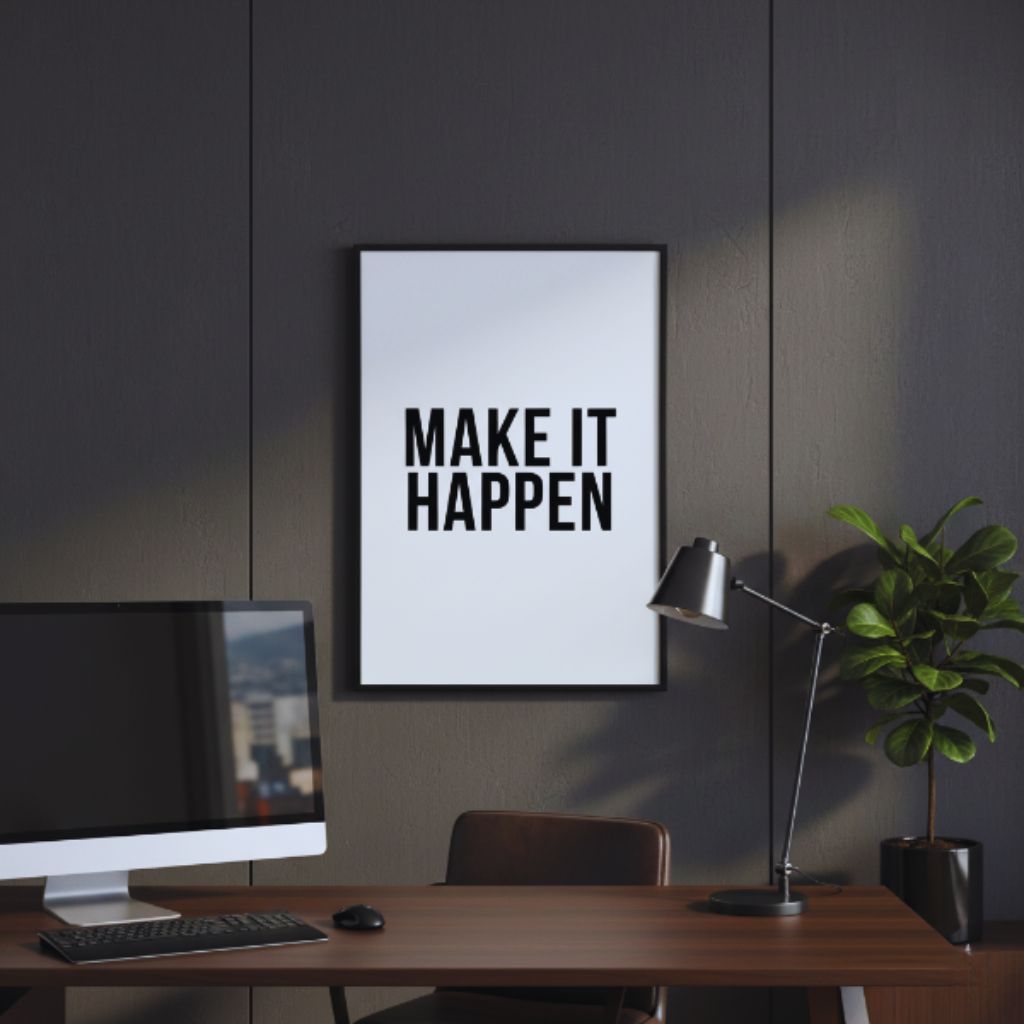
8. “Make It Happen” — The Goal Setter’s Mantra

Minimalist wall print with bold uppercase text reading “MAKE IT HAPPEN.”
“Empower your goals with a simple, powerful statement — ‘Make It Happen.’”

For anyone who believes in action over talk, this quote is pure motivation in monochrome.

Why It Works:

  • Inspires productivity without being aggressive.
  • Ideal for workspaces or gyms.
  • Minimal yet powerful visual impact.

Design Tip: Use uppercase bold fonts — it creates instant authority and focus.

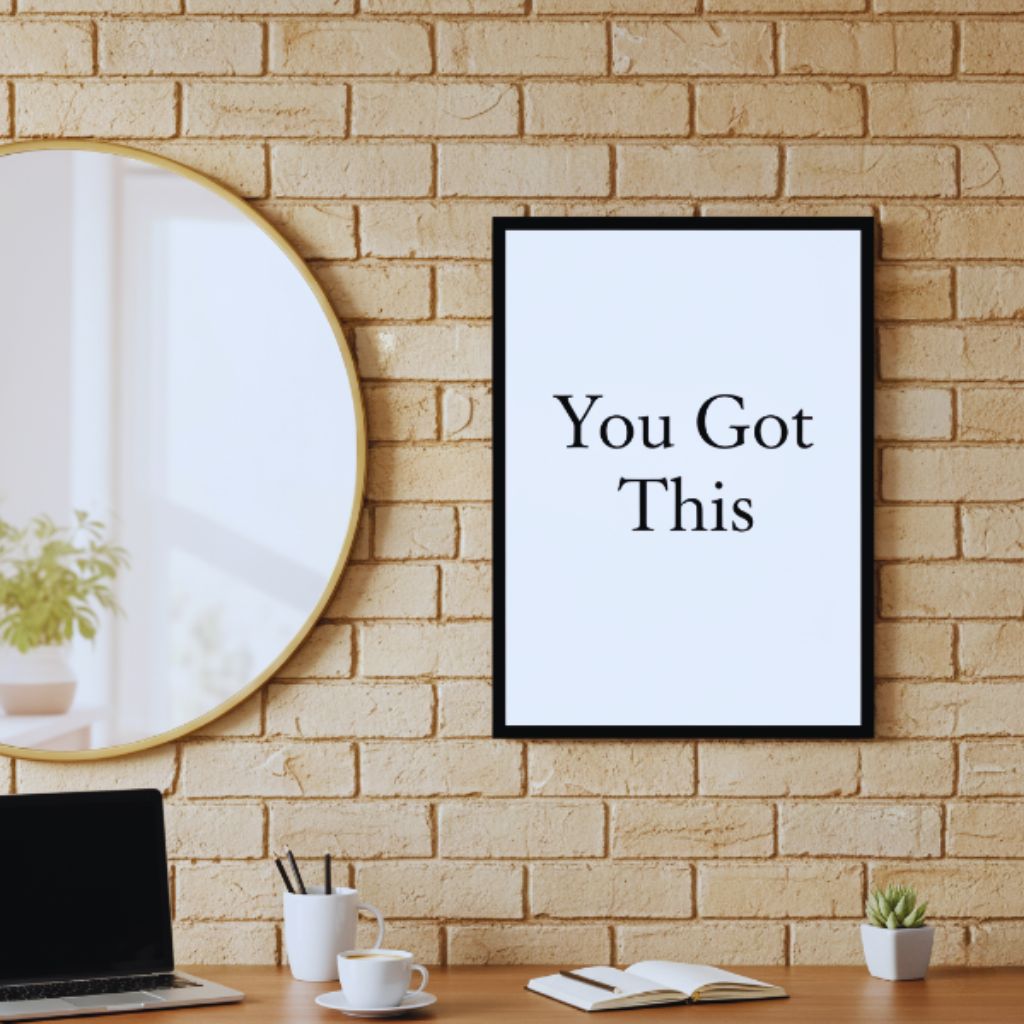
9. “You Got This” — Daily Confidence Boost

Minimalist motivational wall art print with “You Got This” in black and white.
“Start every day with confidence and positivity — ‘You Got This.’”

Sometimes, all you need is a gentle nudge. This quote delivers confidence and positivity in clean typography.

Why It Belongs:

  • Encourages self-belief.
  • Perfect for mirrors, offices, or bedroom walls.
  • Friendly, modern, and relatable.

Styling Tip: Frame it with a black border to add contrast to white walls.

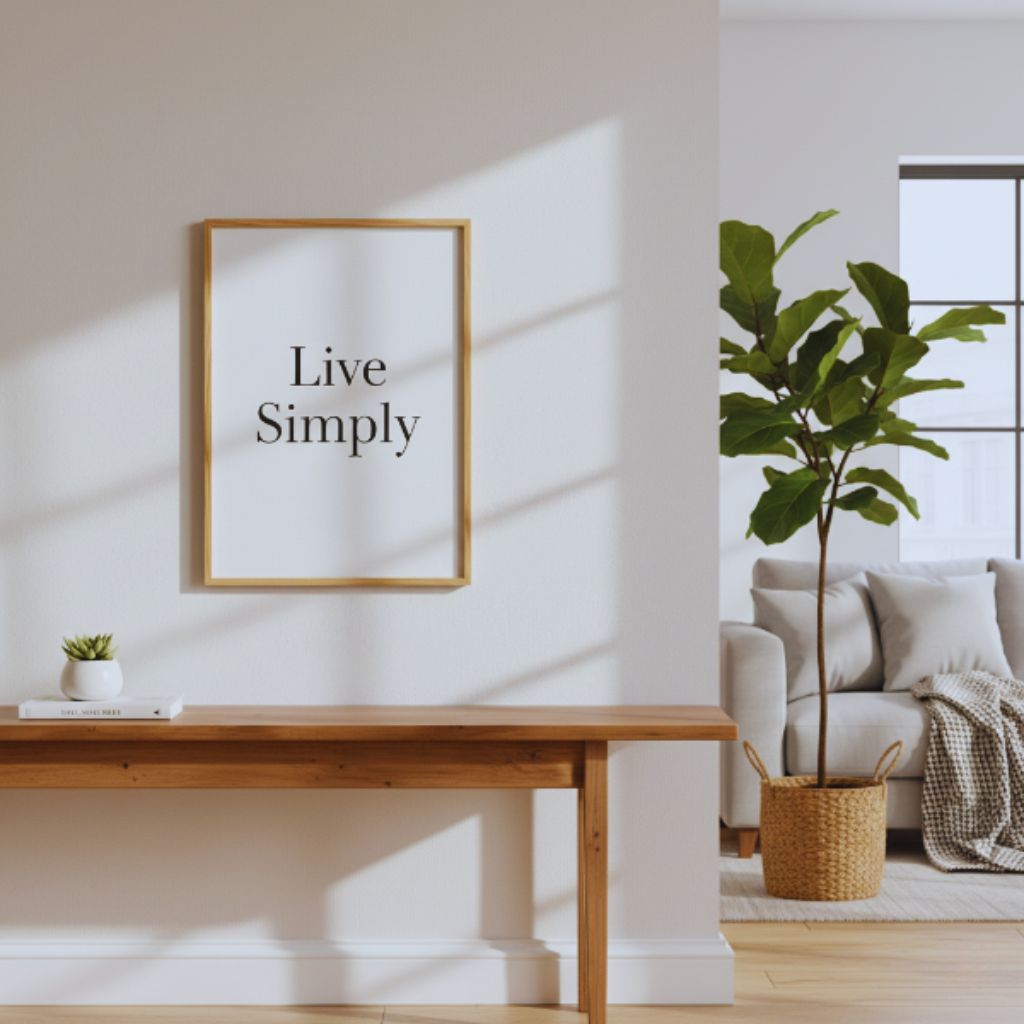
10. “Live Simply” — The Core of Minimalism

Minimalist wall art with the phrase “Live Simply” in black text on a white textured background.
“Embrace intentional living with this beautifully minimalist reminder — ‘Live Simply.’”

If your home embraces minimalist values, this quote is your philosophy framed.

Why It Works:

  • Encapsulates the spirit of intentional living.
  • Adds peace and purpose to everyday spaces.
  • A subtle reminder that less truly means more.

Design Tip: Use natural textures (linen, canvas, or matte paper) to complement the theme.

How to Style Black & White Typography Art

Here’s how to make your typography collection look like it belongs in a design magazine:

1. Create a Gallery Wall

Mix quotes of different sizes and fonts for a curated but clean vibe.
Use consistent black, white, or oak frames for harmony.

2. Keep Space Around Each Piece

White space enhances impact. Don’t overcrowd — let every quote breathe.

3. Match Font Personality to the Room

  • Bold Sans Serif: Offices or gyms.
  • Script Fonts: Bedrooms, living rooms, or cozy corners.
  • All Caps Minimal Fonts: Entryways and modern lofts.
4. Play with Placement
Lean smaller frames on shelves, or stack multiple prints in vertical alignment for a chic, editorial look.

5. Add Texture

Combine typography with linen canvases, matte paper, or floating glass frames to add depth without breaking the minimalist flow.

Why Minimalist Quote Art Never Gets Old

Because minimalism is more than a trend — it’s a state of mind.

Black and white typography reminds us of clarity, balance, and focus.
It’s proof that words alone can create atmosphere, emotion, and identity.

When you decorate with monochrome quotes, you’re not just filling wall space —
you’re filling it with meaning, intention, and calm confidence.

Final Thoughts

Your home should inspire you — quietly, beautifully, and authentically.

These 10 black and white quote prints do exactly that.
They’re modern yet timeless, artistic yet functional, and perfectly suited for anyone who believes that simplicity is the ultimate sophistication.

So, next time you want to elevate your décor, skip the clutter and hang words that matter.
After all, the right typography doesn’t just decorate walls — it defines spaces.