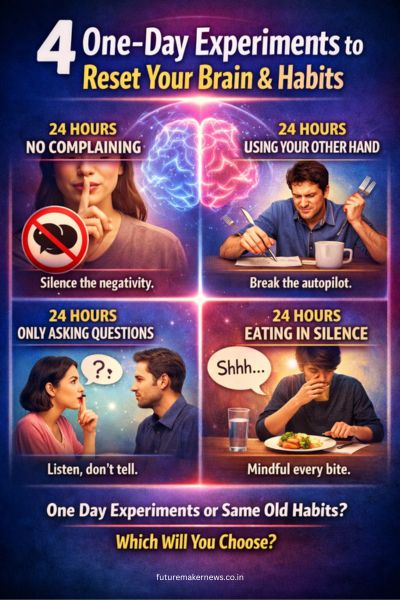
Brain- Most people assume habit change requires months of effort. Neuroscience suggests otherwise. Short, intentional disruptions can activate neuroplasticity, interrupt autopilot behaviors, and increase self-awareness—even in just 24 hours.
These four one-day habit experiments are simple, uncomfortable, and surprisingly effective. Each targets a different mental loop: negativity, automatic behavior, poor listening, and mindless consumption.
1. Go 24 Hours Without Complaining
Complaining is one of the most ingrained mental habits. Studies in cognitive psychology show that repeated negative thought patterns strengthen neural pathways associated with stress and reactivity.
When you stop complaining for one day, you interrupt those loops.
Benefits:
Reduces mental noise
Improves emotional regulation
Increases awareness of negative self-talk
This process is sometimes referred to as neuroplastic silence—when the brain begins to loosen old patterns simply because they are no longer repeated.
2. Stop Using Your Dominant Hand for 24 Hours
Use your non-dominant hand to eat, write, brush your teeth, and perform daily tasks.
This simple disruption forces the brain out of automatic mode. Research on motor learning shows that unfamiliar movements activate new neural pathways and increase focus.
Benefits:
Breaks autopilot behavior
Improves attention and mindfulness
Stimulates neuroplasticity
The goal isn’t skill—it’s awareness.
2. Stop Using Your Dominant Hand for 24 Hours
Use your non-dominant hand to eat, write, brush your teeth, and perform daily tasks.
This simple disruption forces the brain out of automatic mode. Research on motor learning shows that unfamiliar movements activate new neural pathways and increase focus.
Benefits:
Breaks autopilot behavior
Improves attention and mindfulness
Stimulates neuroplasticity
The goal isn’t skill—it’s awareness.
4. Eat in Complete Silence for 24 Hours
No phone. No television. No conversation.
Eating without distractions reveals how often we consume food mindlessly. Mindful eating studies show that silence increases satiety awareness and improves self-control.
Benefits:
Resets relationship with food
Improves digestion awareness
Strengthens discipline through mindfulness
You don’t need a new diet. You need attention.
Why One-Day Experiments Work
A single day functions as a microcosm of long-term behavior. It exposes:
Automatic habits
Emotional triggers
Learned behaviors mistaken for identity
People who resist these experiments often believe habits are fixed. Those who try them treat habits as modifiable systems.
The difference isn’t willpower—it’s experimentation.
Final Thoughts: Are Your Habits Identity—or Experiments?
Some say, “One day can’t change anything.” Others realize one day reveals everything.
You don’t need motivation to run an experiment. You need curiosity.
So ask yourself: Are you defending your habits—or testing them?
Intelligence Programmer – Most of us think we know what “being monitored” looks like — the tiny microphone icon, the green camera dot, or the suspicious app permission. But according to a former intelligence programmer, those symbols are just decoys.
He told me the real warning isn’t a microphone or camera icon at all. It’s something far quieter — and far easier to miss.
1. “The Real Sign Isn’t an Icon — It’s a Freeze.”
“When your phone freezes for a split second, it might be more than bad signal — it could be data rerouting.”
He leaned in and said, “If your network indicator freezes for a split second while nothing is loading, you’re being listened to.”
That tiny hiccup, that momentary pause we blame on poor signal, might actually be the system routing your data through a secondary process.
Most people never notice it — because they’re not looking for it.
2. Background Capture Creates Latency, Not Icons
“Keyboard lag can be a hidden sign of background listening or packet duplication.”
He explained how operating systems behave during background data capture:
No pop-up
No green dot
No new icon
Instead, the OS shows delay.
“The system can hide icons. It can’t hide latency,” he said.
A half-second keyboard stall, or a pause before a voice note starts recording, can mean a secondary listener has been activated.
3. He Discovered It While Debugging Duplicated Packets
“A warm phone during simple texting? Professionals call that a surveillance red flag.”
The unnerving part?
He didn’t learn this from theory — he saw it in the logs.
While debugging packet duplication for intercepted traffic, his team marked duplicated data with a silent internal flag. Users couldn’t see anything…
…but the CPU spike was impossible to hide.
Every time duplication started, the phone froze for roughly 140–220 milliseconds.
A tiny pause. But always there.
4. “Consumers Look for Dots. Professionals Look for Patterns.”
“The real warning sign isn’t an icon — it’s the system stall you weren’t meant to notice.”
We tend to look for obvious signs: permissions, icons, notifications, camera lights.
But he said real surveillance leaves different clues:
Phone heating up during a simple text chat
Battery dropping during idle time
Audio apps taking longer to close
Keyboard lag in encrypted messaging apps
Random half-second freezes with no loading in progress
“Tracking isn’t visible,” he said. “It’s measurable.”
5. “Surveillance Doesn’t Announce Itself. It Interrupts You.”
“Surveillance doesn’t announce itself. It interrupts you.”
His last line was the one that stayed with me:
“Surveillance doesn’t announce itself. It interrupts you.”
So the next time your phone freezes for a split second while absolutely nothing is loading…
Don’t look for an icon. Look for the pattern.
Because that might be the only signal the system can’t hide.
The silent habit that reveals commitment, stability, and long-term reliability.
When people talk about relationships, they obsess over chemistry, confidence, ambition, or passion. But after 30 years of working with couples, a relationship therapist discovered something far more accurate:
“Don’t look at the hobby he talks about — look at the one he repeats when no one praises him for it.”
This insight changes everything you think you know about judging reliability early in a relationship.
1. The “Silent Discipline Test” — How Reliable Men Reveal Themselves Without Knowing It
“A man’s real character shows in what he repeats when no one is watching.”
The therapist called it the silent discipline test.
Reliable men always have one activity they return to consistently — even when:
nobody compliments them,
nobody posts it on social media,
nobody rewards them,
nobody claps for them.
This quiet, private hobby reveals self-discipline, consistency, and inner stability — the traits that make men reliable partners.
She described them:
A man who keeps a small reading log.
A man who fixes things around the house without being asked.
A man who trains at the same hour every day.
A man who tends to plants every morning.
A man who journals consistently.
“It’s the hobby with no audience,” she said. “Whatever a man does without applause is the real blueprint of his character.”
2. Marco: The Man Who Looked Reliable but Lived in Chaos
“His only consistent habit was avoidance — and it showed up everywhere.”
She shared the story of a client named Marco.
On dates, Marco bragged endlessly:
about boxing,
about cars,
about money,
about future plans.
His wife assumed this confidence meant stability.
But the truth?
The only hobby he consistently practiced alone was scrolling on his phone until 3 a.m.
He skipped workouts.
He left projects half-finished.
He made promises he forgot.
He created excitement, not follow-through.
The therapist said:
“His silent hobby was avoidance — and that’s why nothing in their life held together.”
Avoidant men appear fun at first. But chaos is their default mode. And chaos eventually infects the relationship.
A man’s private habits will always leak into his partnership.
3. Daniel: The Man Whose Quiet Hobby Made His Marriage Unbreakable
“The man who returns to a craft returns to people the same way.”
Then there was Daniel — the opposite type.
He never bragged.
He never tried to impress.
He never listed achievements.
But for 14 years, he repaired old radios in his garage.
Same hour.
Same ritual.
Same quiet focus.
Nobody praised him.
Nobody watched him.
Nobody cared.
But that consistency shaped him.
The therapist explained:
“A man who returns to something patiently returns to people the same way.”
Patience in a hobby becomes patience in a marriage. Consistency in routine becomes consistency in commitment. Steadiness in habits becomes steadiness in crises.
Daniel’s marriage survived:
layoffs,
illness,
financial problems,
family stress.
Not because he was strong or brilliant — but because his nervous system was trained for steadiness, not excitement.
Excitement fades. Discipline stays. And disciplined men make reliable partners.
4. The Brutal Truth: His Loud Hobbies Show His Ego — His Quiet Hobby Shows His Future
“His loud hobbies show his ego — his quiet hobby shows his future.”
The therapist ended with a line that should be printed on every dating app:
“A man’s loud hobbies show his ego. His quiet hobby shows his future.”
Anyone can talk about passion.
Anyone can perform stability.
Anyone can promise reliability.
But what a man does when no one is watching reveals:
if he can commit,
if he can stay consistent,
if he can show up even when it’s boring,
if he follows through,
if he builds rather than avoids,
if he can be trusted when life gets hard.
**Don’t ask him what he loves doing.
Ask him what he keeps doing.**
Because that quiet habit — not the bragging, not the performance, not the storytelling — is the behavior you’ll rely on during:
arguments,
bills,
illness,
responsibilities,
parenting,
stress,
real life.
Reliability is not glamorous. It’s not loud. It’s not flashy.
A military instructor once explained that the difference between panic and precision isn’t bravery — it’s mental distance. Fear doesn’t vanish; it just loses the steering wheel. What separates those who freeze from those who stay focused is a simple skill anyone can learn: stepping back in the mind before stepping forward in action.
1. The Soldier’s Word: “Distance”
“Distance — the space where fear loses its grip.”
The word was “distance.” Not from danger — from reaction. He said: “Fear doesn’t come from what’s happening. It comes from how close you stand to it in your mind.” In combat, that distance decides who shoots straight and who shakes.
2. The Daily Practice of Mental Distance
He trains it daily: when his pulse spikes, he doesn’t say “calm down.” He whispers “distance.” Then he imagines moving the scene two meters away — sounds fade, body loosens, vision widens. The body follows where the mind stands.
3. The Neuroscience Behind It
“Step back — let your brain switch from fear to focus.”
Neurologically, it’s called cognitive decoupling — shifting perspective breaks the threat loop. When you “step back” mentally, your brain switches from survival mode (amygdala) to calculation (prefrontal cortex). Breathing and aim stabilize instantly.
4. Using It in Everyday Life
You can use it anywhere: a meeting, a breakup, a panic call. When you feel trapped inside emotion — label it, breathe once, and say “distance.” Picture yourself taking one physical step back. Watch how quickly clarity returns.
5. His Final Lesson on Courage
“Courage isn’t getting closer to fear — it’s standing clear enough to see.”
Before leaving, he said: “People think courage is stepping closer to fear. It’s not. It’s learning how to stand just far enough to see it clearly.” Try it once — and you’ll realize: fear never disappears, it just stops driving.
After 27 years working in public schools, a seasoned child psychologist shared an insight that stunned many parents. It came after a mother complained that her son was “too gentle” and was getting pick on.
The psychologist shook her head. “Bullying isn’t trigger by weakness. It’s trigger by children who never learned how to signal boundaries at home — because their parents override every emotion for them.”
This wasn’t an opinion; it was a pattern she had watched unfold thousands of times.
The Hidden Pattern Behind Who Gets Bullied
Kids don’t bully because someone is weak — they react to children who were never allowed to express boundaries.
According to her, the most frequent targets of bullying aren’t necessarily the shy or introvert children — but the ones whose emotional instincts have been repeatedly softened, redirected, or shut down by well-meaning parents.
Many parents unintentionally train their children not to defend themselves. It happens in small moments at home:
“Don’t make a fuss.”
“Be nice.”
“Let it go.”
“Don’t say that, it’s rude.”
These phrases seem harmless, even polite. But over time, they teach a child that expressing anger, discomfort, or disagreement is unacceptable.
“These kids never learn the micro-muscles of pushback,” the psychologist explained. “Their face shows hesitation. Their body shows permission.”
And children, who are surprisingly accurate at reading social cues, pick up on that instantly.
Case Study 1: Leo — The “Too Kind” Boy
Leo wasn’t weak — he was trained not to defend himself.
One of her most memorable cases involved a boy named Leo. At home, his mother corrected every negative emotion he expressed. She called it “teaching kindness.”
But at school, Leo’s classmates sensed something different: he didn’t protest. Not when someone took his seat, his pencils, or even his lunch.
To other children, that wasn’t kindness — it was a signal.
“Kids don’t look for victims,” the psychologist said. “They look for signals of someone who won’t retaliate. Leo wasn’t weak — he was train not to defend himself.”
Case Study 2: The Overprotected Girl
When parents handle every conflict, children never learn to handle their own.
Another case involved a girl whose father handled every conflict on her behalf — with teachers, coaches, even other parents. Every time a problem arose, he stepped in before she could learn to handle it herself.
As a result, she never learned the basic tools of boundary-setting: tone, posture, a firm “stop,” or the confidence to say no.
“Children sniff out overprotected kids,” the psychologist noted, “the same way animals sense suppressed instincts.”
And they tested her every day.
The Hard Truth Parents Need to Hear
The psychologist’s final line was blunt — and unforgettable:
“If you teach your child to avoid conflict, you teach the world to give them conflict.”
Parents often think they’re protecting their children by shielding them from discomfort or by discouraging strong emotions. But in reality, they may be removing the very experiences children need to develop resilience and boundaries.
What Children Actually Need: Practice, Not Toughness
Building a child’s inner strength doesn’t require harshness or forcing them to “stand up for themselves” in unrealistic ways. What they need is simple, consistent practice at home:
Let your child say “stop” — and respect it.
Let them negotiate.
Let them disagree.
Let them express anger without shaming them.
Let them experience small conflicts and resolve them themselves.
These moments teach children that their feelings matter and that they have the right to take up space in the world.
And that confidence — more than toughness — is what helps protect them from becoming easy targets.
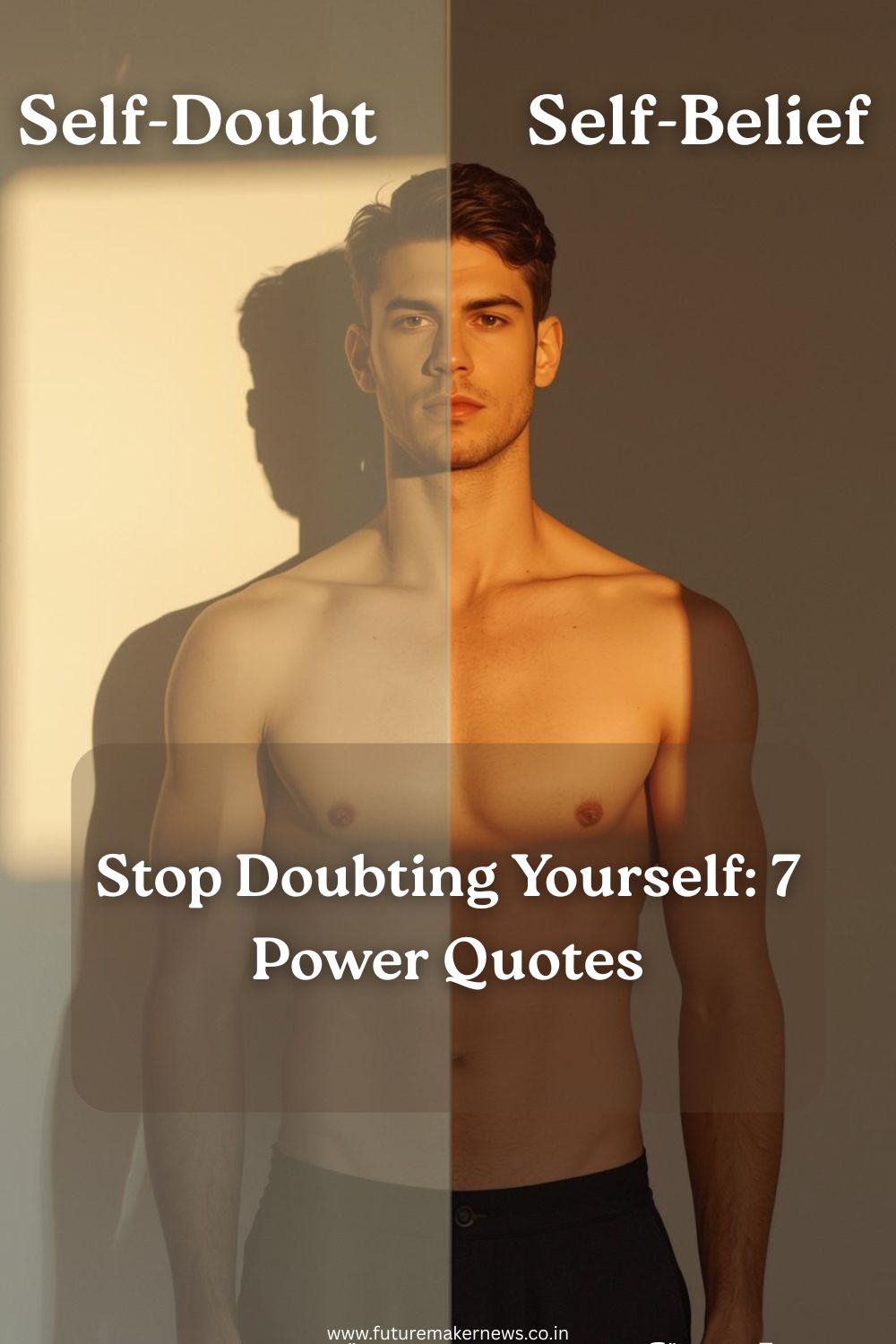
Have you ever noticed how the loudest voice in your head is often the one that criticizes you? That voice that whispers, “You’re not good enough.” Or reminds you of every mistake you’ve ever made?
That’s your inner critic — and while it may sound like it’s trying to “help” you avoid failure, it’s actually the biggest obstacle standing between you and your confidence.
Here’s the truth: You don’t need to silence your inner critic — you just need to retrain it.
And the best way to do that is by using affirmations — simple, science-backed statements that can rewire your brain, build self-compassion, and replace negative self-talk with empowering beliefs.
In this guide, you’ll learn how to shut down your inner critic and 10 powerful affirmations that can help you reshape your mindset from the inside out.
What Is the Inner Critic — and Why Does It Exist?
The inner critic is that internal voice that constantly evaluates, judges, and compares. It might say things like:
“You’re not talented enough.”
“You’ll mess this up.”
“Why even try?”
Sound familiar?
This voice comes from your brain’s survival mechanism — an old mental system designed to protect you from rejection, embarrassment, and failure. But while it helped ancient humans avoid danger, today it mostly causes anxiety, self-doubt, and paralysis.
When left unchecked, your inner critic can:
Crush your motivation
Sabotage opportunities
Trigger perfectionism
Cause emotional burnout
But here’s the good news: your brain is flexible. Through a process called neuroplasticity, you can literally reprogram how you think and speak to yourself.
That’s where affirmations come in.
How Affirmations Rewire Your Brain
Affirmations aren’t “fluffy” or fake positivity — they’re a form of cognitive reprogramming.
When you repeat positive affirmations consistently, your brain begins to create new neural pathways that support those beliefs. It’s like updating your mental software from self-doubt version 1.0 to self-trust version 2.0.
Here’s what happens scientifically:
Old Beliefs Fade: Negative self-talk weakens as new thought patterns strengthen.
Confidence Grows: You start to believe the positive statements you repeat.
Behavior Shifts: Your new mindset inspires healthier actions and resilience.
Emotional Regulation Improves: You become calmer and less reactive to criticism or mistakes.
Over time, affirmations help transform your inner critic into your inner coach.
How to Use Affirmations to Silence the Inner Critic
Before we dive into the 10 affirmations, here’s how to make them truly work for you.
1. Say Them Daily
Consistency is everything. Repeat your affirmations every morning or before bed — or whenever self-doubt sneaks in.
2. Say Them Aloud
Your brain responds strongly to the sound of your own voice. Saying affirmations out loud makes them more powerful.
3. Feel the Emotion
Don’t just repeat the words — feel what they mean. Let your body and emotions align with the statement.
4. Write Them Down
Writing strengthens neural imprinting. Use sticky notes, journals, or your phone’s wallpaper.
5. Replace, Don’t Resist
When your inner critic starts speaking, don’t argue — replace the thought. For example, instead of “I’m not good enough,” say, “I am capable and learning every day.”
10 Affirmations That Rewire Your Brain and Silence Self-Doubt
These affirmations are designed to quiet your inner critic, strengthen your self-belief, and help you move forward with confidence.
1. “I am doing my best, and that is enough.”
You don’t need to be perfect — just present.
Your inner critic loves to demand perfection. This affirmation reminds you that progress, not perfection, is what truly matters. Every small effort counts — and that’s worth celebrating.
2. “I release the need to be perfect.”
Perfection isn’t peace. Release it.
Perfection is an illusion that keeps you stuck. When you repeat this affirmation, you give yourself permission to be human — flawed, growing, and still worthy.
3. “My mistakes are stepping stones to growth.”
Every mistake is a step forward.
Your inner critic sees mistakes as proof of failure. Your higher self knows they’re lessons. Every mistake brings you closer to wisdom, strength, and self-awareness.
4. “I am worthy of love and respect exactly as I am.”
You are already enough — exactly as you are.
Many of our inner wounds come from believing we must earn love or validation. This affirmation cuts through that lie and reminds you: your worth is unconditional.
5. “I choose thoughts that empower me.”
Choose thoughts that lift you, not limit you.
Your inner critic thrives on fear and doubt. This statement helps you take back control of your mental dialogue. You can’t always control your first thought — but you can choose the next one.
6. “I am proud of how far I’ve come.”
Every step you’ve taken matters.
We often underestimate our own resilience. This affirmation honors your journey, your growth, and every challenge you’ve overcome. Gratitude for progress builds unshakable confidence.
7. “I speak to myself with kindness and compassion.”
Let your inner voice sound like love.
If you wouldn’t say it to a loved one, don’t say it to yourself. This affirmation rewires your inner voice to sound like a friend, not a critic. Kindness is the fastest way to heal self-judgment.
8. “I am learning to trust myself.”
Your intuition is wiser than your fear.
Self-trust is the antidote to insecurity. Each time you repeat this, you strengthen your belief that your intuition and judgment can be trusted.
9. “I can handle whatever comes my way.”
You’ve handled everything before — you can handle this too.
This powerful affirmation builds mental resilience. When life feels uncertain, remind yourself that you’ve survived 100% of your hardest days. You are stronger than your fears.
10. “I am enough.”
You are enough. You always have been.
Three simple words. One life-changing truth. Your inner critic feeds on “not enough.” Repeating this daily helps your brain rewire the deepest limiting belief of all — that you must do more or be more to be valuable.
How to Create Your Own Custom Affirmations
Want to make your affirmations even more personal and powerful? Try this:
1. Identify Your Inner Critic’s Favorite Lines
Write down 3–5 of the most common negative thoughts you hear. For example:
“I’m not smart enough.”
“I always mess things up.”
“I’ll never succeed.”
2. Flip the Script
Turn each one into a positive, believable statement. Example:
“I’m learning new things every day.”
“I’m allowed to grow and improve.”
“Success is something I’m creating step by step.”
3. Keep It Present and Simple
Affirmations work best in the present tense. Say “I am” instead of “I will be.”
4. Repeat and Reinforce
Use visual reminders, affirmations apps, or sticky notes where you’ll see them daily — on your mirror, desk, or fridge.
Over time, these words become your truth.
The Ripple Effect: What Happens When You Quiet the Inner Critic
Once you start retraining your mind, you’ll notice changes — both subtle and profound.
You’ll feel lighter.
Your mental energy will shift from criticism to curiosity.
You’ll take more action.
Without fear of failure holding you back, you’ll start moving toward your goals.
You’ll attract positivity.
Your self-talk sets the tone for your relationships, energy, and overall happiness.
You’ll finally feel free.
Free from comparison, guilt, and the unrealistic standards that kept you small.
The voice in your head won’t disappear overnight — but it will lose its power. Because every time you choose kindness over criticism, you rewrite your mental story.
Final Thoughts: Rewiring Your Inner Voice
Your inner critic isn’t the enemy — it’s just a scared part of you that wants to be seen and guided. When you replace its harsh words with compassion, you start a lifelong transformation.
Remember: You’re not your thoughts. You’re the one who chooses them.
So the next time your inner critic whispers, “You can’t,” answer softly but firmly:
“Watch me. I am enough. I am learning. I am becoming.”
Have you ever had one of those days where everything feels heavy? The to-do list never ends, the notifications don’t stop, and even your favorite coffee doesn’t taste quite right? We’ve all been there.
But here’s the truth: your day doesn’t have to control your mood — you do. And you don’t need an hour-long meditation session or a fancy journal to shift your energy. All you need is one minute and one thought of gratitude.
Let’s talk about the simple yet powerful concept of the “One Thing Gratitude List” — a mindset tool so small and effective that it can transform your mood in 60 seconds.
This isn’t about toxic positivity or ignoring your struggles. It’s about retraining your brain to focus on the good that already exists, even when life feels tough.
What Is the “One Thing” Gratitude List?
The “One Thing Gratitude List” is the easiest gratitude practice you’ll ever try. You don’t need a fancy notebook or ten minutes of quiet reflection.
You simply pause — right where you are — and ask yourself:
“What’s one thing I’m grateful for right now?”
That’s it. You’re not listing twenty blessings or rewriting your day. You’re focusing on just one thing — and letting it anchor you in the present.
Maybe it’s the smell of your morning coffee.
Maybe it’s the softness of your blanket.
Maybe it’s the fact that you woke up healthy today.
It doesn’t have to be big. In fact, the smaller, the better. Because the magic isn’t in what you list — it’s in how your brain responds to the act of gratitude.
Why Gratitude Works So Powerfully
Gratitude isn’t just a feel-good trend. Science shows it actually rewires your brain to see more positives and less stress.
When you focus on what’s going right instead of what’s going wrong, your brain releases dopamine and serotonin — the “happiness chemicals.”
In other words, gratitude changes your mood chemically and mentally.
According to neuroscience:
It interrupts negative thought loops.
It shifts your focus from lack to abundance.
It creates emotional balance, even in stressful moments.
It reduces anxiety and depression over time.
And here’s the best part — you don’t need to be an expert meditator or writer to feel the effects. Just one minute of intentional gratitude can reset your emotional state. That’s why the One Thing Gratitude List is so effective — it’s fast, realistic, and doable anytime.
How the “One Thing” Gratitude List Transforms Your Mood in 60 Seconds
Let’s break down exactly how this tiny practice works.
1. It Interrupts Negative Momentum
Gratitude acts as a mental “stop button” when your thoughts spiral.
When your thoughts spiral into stress, a single moment of gratitude acts as a mental stop button. You can’t feel genuine appreciation and negativity at the same time — your brain won’t allow it.
2. It Brings You Back to the Present
Gratitude pulls your focus back to the only moment that matters — now.
Anxiety lives in the future. Regret lives in the past. Gratitude lives in the present. When you name one thing you’re grateful for, your focus shifts from worrying to being.
3. It Trains Your Brain for Positivity
Daily gratitude rewires your brain to notice the good automatically.
Over time, your brain learns to look for the good automatically. That means fewer emotional dips, more mental resilience, and higher daily satisfaction.
4. It Creates an Instant Mood Shift
Just one thankful thought can lift your mood in seconds.
Because gratitude activates the same part of your brain as happiness, you literally feel better within seconds.
No external change required — just one internal thought.
How to Practice the “One Thing” Gratitude List (In 60 Seconds)
You don’t need a journal, a routine, or even silence. All you need is a moment.
Here’s how to do it effectively:
Step 1: Pause.
Take a deep breath. Close your eyes if you can. Let yourself disconnect from the noise for a few seconds.
Step 2: Ask One Simple Question.
“What’s one thing I can be grateful for right now?”
It can be as simple as:
“I’m grateful for my warm tea.”
“I’m grateful that I have a job.”
“I’m grateful for my body carrying me today.”
“I’m grateful for this quiet minute.”
Step 3: Feel It.
Don’t just think it — feel it. Let that gratitude wash over you for a few seconds. Smile. Breathe it in.
That’s your 60-second transformation.
The Secret to Making It Work: Consistency
The beauty of the One Thing Gratitude List is that it’s easy enough to repeat every day — even multiple times a day.
You can practice it:
Before getting out of bed in the morning.
While waiting in traffic.
During your coffee break.
Before going to sleep.
The key is repetition. Each time you do it, you reinforce a new pattern — one that naturally steers your thoughts toward appreciation instead of frustration.
Soon, gratitude won’t just be a practice — it’ll become your default mindset.
10 Examples to Get You Started
If you’re not sure where to start, here are a few ideas for your One Thing Gratitude List:
The sunlight streaming through your window.
The ability to read and learn.
A friend who always makes you laugh.
The sound of rain outside your room.
A delicious meal you enjoyed.
A challenge that made you stronger.
Your favorite music.
Someone who believes in you.
A small act of kindness you witnessed.
The fact that you made it through another day.
Start simple. The smallest things often carry the biggest emotional impact.
Why the “One Thing” Approach Beats Long Gratitude Lists
Most people stop journaling or practicing gratitude because it feels like work. Writing ten things a day can start to feel like a chore — not an act of joy.
That’s why the One Thing method is so powerful. It’s not about quantity. It’s about intentional quality.
By focusing on just one meaningful thought, you create a deeper emotional response — and that’s where the transformation happens.
One genuine “thank you” outweighs ten forced ones.
Real Talk: Gratitude Doesn’t Mean Ignoring Pain
Let’s be honest — some days, gratitude feels impossible. You might be grieving, struggling, or mentally exhausted.
And that’s okay. Gratitude isn’t about pretending everything is perfect.
It’s about saying:
“Even though things are hard, there’s still one thing I can hold onto.”
It’s a small but powerful shift — from hopelessness to resilience.
And that’s where your strength grows.
Bonus Tip: Stack Gratitude with Breathing
Want to make your gratitude practice even more powerful? Combine it with conscious breathing.
Try this:
Inhale deeply for 3 seconds.
Exhale slowly for 3 seconds.
As you exhale, say in your mind: “I’m grateful for _______.”
It instantly connects your mind and body, grounding you in calm appreciation.
This combination is a natural mood reset tool — fast, free, and deeply healing.
Final Thoughts: The Power of One Thought
We often think transformation requires big action. But in truth, change begins with one thought.
The “One Thing Gratitude List” is proof that joy doesn’t live in the extraordinary — it’s hidden in the ordinary moments we overlook every day.
So next time your mind feels cluttered or your day feels heavy, pause and ask:
“What’s one thing I’m grateful for right now?”
Because in that one small moment, your heart will remember something powerful — you already have so much.
Have you ever noticed how anxiety always arrives uninvited — tightening your chest, racing your thoughts, and making even simple tasks feel impossible? You’re not alone.
Millions of people struggle with anxiety daily. We try meditation, affirmations, or long breathing sessions — but sometimes, the real solution is shockingly simple.
Enter the 3-Second Breathing Technique for Anxiety — a quick, science-backed method that can calm your nervous system, quiet your thoughts, and ground you in the moment — all in just three seconds.
This isn’t another “just breathe” cliché. It’s a practical, proven way to stop anxiety fast and bring your mind back to peace.
Understanding Why Anxiety Feels So Overwhelming
“Anxiety makes your body believe it’s under threat — fast heart, shallow breath, racing mind.”
Before diving into the technique, it helps to know why anxiety feels so overpowering.
Anxiety triggers your body’s fight-or-flight response — an ancient mechanism designed to protect you from danger. The problem? Modern life constantly activates that system — deadlines, social pressure, overthinking, and endless screens.
What Happens When Anxiety Strikes
Breathing becomes shallow and rapid
Heart rate increases, preparing for “action”
Thoughts spiral out of control, making small issues feel huge
Here’s the secret: your breath is the remote control for your body. When you control your breath, you send a powerful signal to your brain — “I’m safe. You can relax now.”
And that’s where the 3-Second Breathing Technique comes in.three seconds to begin.
What Is the 3-Second Breathing Technique?
The 3-Second Breathing Technique is a short, mindful breathing pattern designed to relieve anxiety quickly.
Here’s the simple formula:
Inhale for 3 seconds → Hold for 3 seconds → Exhale for 3 seconds.
That’s it. Just nine seconds total — and your body starts switching from stress mode to calm mode.
When you’re anxious, complex breathing methods can feel overwhelming. But three seconds? That’s doable anytime — in your car, at work, or lying awake at night.
This short technique activates your parasympathetic nervous system, responsible for relaxation and balance. Within moments, your heartbeat slows, your thoughts clear, and your tension starts to melt away.tivates the parasympathetic nervous system — the part of your body responsible for rest and relaxation — helping your heart rate slow and your mind clear.
How the 3-Second Breathing Technique Works
“Slow, steady breathing sends a message to your brain — you’re safe.”
Every breath you take sends messages between your body and brain. When you breathe slowly and intentionally, you rewire your stress response.
The Science Behind It
Breaks the anxiety loop: Interrupts racing thoughts and resets focus.
Balances oxygen levels: Shallow breathing disrupts oxygen flow — this restores it.
Restores control: When everything feels chaotic, controlled breathing reminds you that you’re still in charge.
In just three seconds, your body begins to shift from tension to tranquility.
How to Practice the 3-Second Breathing Technique
You can do this technique anywhere, anytime — no equipment, no silence, no pressure.
Step-by-Step Guide
Step 1: Inhale for 3 Seconds
Breathe in slowly through your nose. Feel the air expand your lungs and chest. Focus on how the air feels — cool, calm, cleansing. Count: 1… 2… 3…
Step 2: Hold for 3 Seconds
Pause. Don’t strain — just hold gently. This moment of stillness resets your nervous system. Count: 1… 2… 3…
Step 3: Exhale for 3 Seconds
Breathe out slowly through your mouth. Release every ounce of tension and negative energy. Count: 1… 2… 3…
Repeat this 5–10 times until you start to feel grounded and lighter.
When to Use the 3-Second Breathing Technique
“Person taking a mindful breath at their work desk.”
This simple technique can be your emotional first-aid kit for any stressful situation.
Use it when:
You feel panic or anxiety coming on
You’re about to enter a meeting or tough conversation
You’re lying in bed and can’t quiet your thoughts
You’re overwhelmed during work or study
You’re emotionally drained and need to reset
Because it takes only seconds, it’s perfect for on-the-go anxiety relief.
Grounding + Breathing = Double Calm
To make your practice even more effective, combine it with grounding techniques — simple ways to bring your mind back to the present.
Try This Combo:
While breathing, say softly in your mind:
“I’m safe right now.”
“This moment is enough.”
“I’m breathing. I’m okay.”
Or engage your senses:
Name 3 things you see
Notice 2 sounds you hear
Feel 1 physical sensation (your hands, feet, or heartbeat)
This strengthens your focus and anchors your mind in the now, breaking the anxiety cycle faster.th + grounding) helps your brain disconnect from panic and reconnect with reality.
Common Mistakes to Avoid
“Don’t overthink your breathing — gentle rhythm matters more than perfection.”
Even though this breathing technique is simple, a few missteps can reduce its impact.
Avoid These Mistakes:
Breathing too fast — the point is calm, not control.
Tight breath-holds — gentle pause, not strain.
Expecting instant perfection — it’s a practice, not a test.
Using it only in crisis — consistency builds resilience.
Make it a daily ritual, and your body will naturally remember the calm rhythm even in stressful moments.
What Happens When You Do It Right
After a few rounds, you’ll likely notice:
Softer breathing and relaxed shoulders
Slower heart rate
Fewer racing thoughts
A subtle sense of peace
These are physical signs your parasympathetic nervous system is active — your body’s natural calm mode is taking over.alance.
Turn It into a Daily Practice
“End your day with a few mindful breaths to release tension.”
Breathing isn’t just a reaction — it can become a ritual of renewal.
Simple Daily Uses:
Morning Reset: Use it right after waking to start calm and clear-headed.
Midday Pause: Practice between tasks to recharge focus.
Night Wind-Down: Use before sleep to release tension.
Even 3–5 minutes a day can dramatically improve how your mind handles stress.eed hours of meditation — just a few mindful breaths can shift your entire emotional landscape.
Stop Searching, Start Breathing
It’s easy to fall into the trap of searching for relief instead of actually practicing it. We chase new apps, new methods, new “fixes,” forgetting that the simplest answer is already within us.
Your breath is the bridge between chaos and calm. The more you use it intentionally, the less power anxiety holds over you.
So the next time you feel overwhelmed, stop scrolling and start breathing:
Inhale 3… Hold 3… Exhale 3…
That’s all it takes to reclaim your peace — one breath at a time.
Final Thoughts: Calm Is Already Within You
You don’t have to wait for the perfect environment, playlist, or therapy session to find peace. Peace begins with a single, mindful breath — your personal anchor in every storm.
Every inhale reminds you of life. Every exhale reminds you that it’s okay to let go.
So breathe deeply and remind yourself:
“In this breath, I am safe. In this moment, I am enough.”
The 3-Second Breathing Technique isn’t just a stress hack — it’s a daily reminder that relief doesn’t come from searching. It comes from doing.
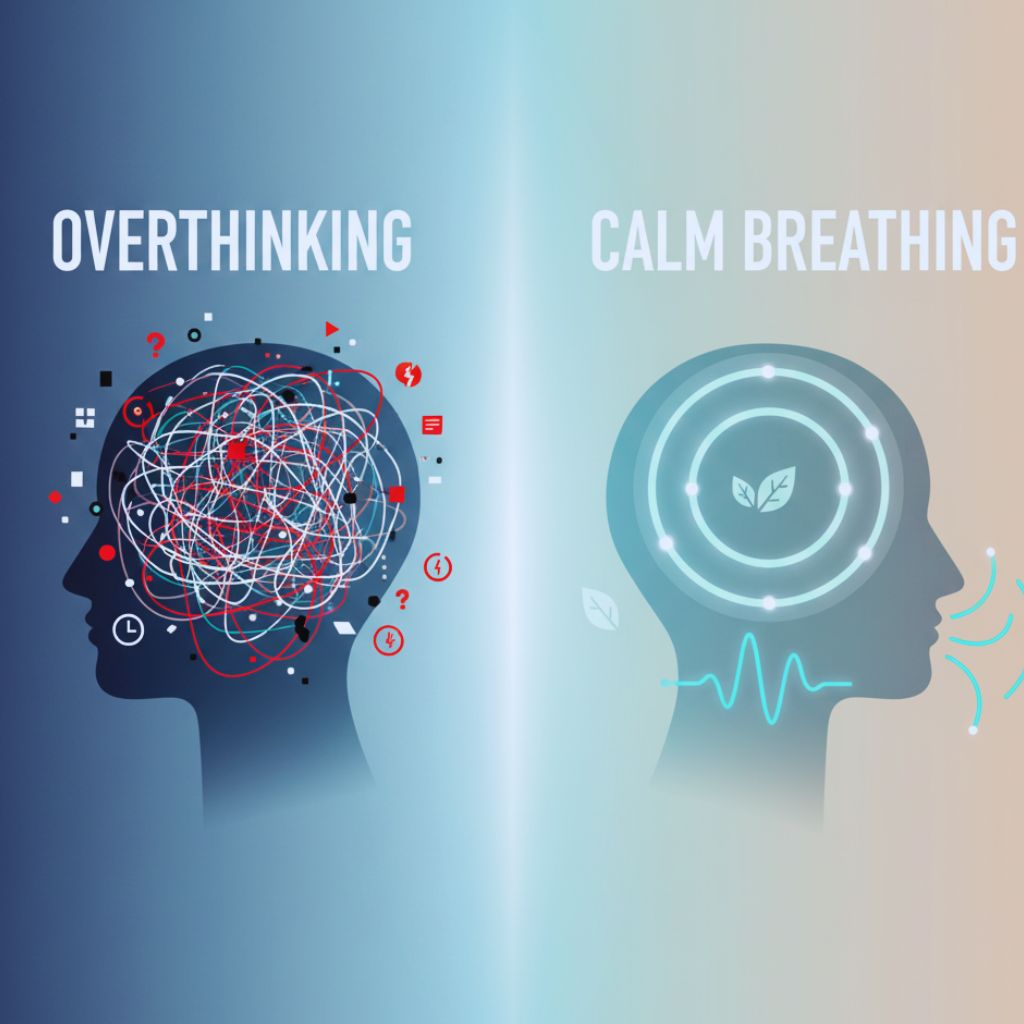
If your mind feels like a hamster wheel that just won’t stop spinning, you’re not alone. We’ve all been there — lying awake at night, replaying a conversation for the 10th time, worrying about things that haven’t even happened yet. That’s the heavy weight of overthinking — and it can quietly drain your energy, focus, and peace.
But here’s the truth: your thoughts are not the enemy. The trick is learning how to slow them down, observe them, and gently bring yourself back to the present moment.
And sometimes, all it takes is the right calming quote — just one powerful line that reminds you to breathe, release control, and return to yourself.
So, if your mind has been racing lately, this one’s for you. Here are 10 grounding quotes that will calm your overthinking brain and help you find stillness again — even on your most anxious days.
What Overthinking Really Does to You
Overthinking isn’t just “thinking too much.” It’s thinking without direction — replaying scenarios, analyzing every detail, and imagining outcomes you can’t control.
You know the pattern:
“What if I said the wrong thing?”
“What if something goes wrong?”
“What if I fail?”
Your brain tries to protect you by predicting the future. But instead, it ends up creating problems that don’t exist yet.
And while it feels like you’re preparing for the worst, what you’re really doing is robbing yourself of peace in the present.
But don’t worry — you can break that cycle.
By slowing down, grounding your thoughts, and repeating simple reminders like the ones below, you can shift from chaos to calm.
10 Calming Quotes to Ground You When Your Mind is Racing
Each of these quotes is a small anchor — something you can hold onto when your thoughts start spiraling. Read slowly. Breathe deeply. Let the words sink in.
1. “You don’t have to figure it all out today.” – Unknown
You don’t need all the answers — just the courage to keep going, one day at a time.
How often do you demand instant answers from yourself?
You try to solve every problem, every “what if,” in one sitting — as if peace depends on perfect clarity.
But it doesn’t. Peace comes from giving yourself permission to not know everything yet.
Let this be your reminder: You are allowed to take things one day at a time.
2. “Worrying means you suffer twice.” – J.K. Rowling
Don’t let worry make you live the same pain twice. Choose peace over panic.
Every time you replay a potential problem, you’re living it before it even happens.
That’s the cost of overthinking — you experience pain that isn’t even real yet.
Shift your perspective: What if, instead of worrying, you chose to trust that you’ll handle whatever comes when it comes?
3. “You are not your thoughts.” – Eckhart Tolle
You are the sky — calm and steady — not the storm that passes through.
This quote is simple but life-changing.
When your mind races, it’s easy to identify with every thought — to believe every fear or doubt is true. But your thoughts are like passing clouds; you are the sky beneath them.
Say this to yourself: “I am the observer, not the storm.”
4. “Be where your feet are.” – Anonymous
Peace begins when you come back to the present moment — right where you are.
One of the best antidotes to overthinking is presence.
Look down. Where are your feet right now? What can you see, hear, or touch in this moment?
When you focus on what’s real now, your mind has less room to wander into imaginary fears.
Try this mini reset:
Feel your breath.
Wiggle your fingers.
Notice your surroundings.
Remind yourself: “I’m safe right now.”
5. “Relax. Nothing is under control.” – Adyashanti
Let go of control. You don’t need to manage everything to be at peace.
Yes, you read that right.
This quote flips the usual narrative. We spend so much time trying to control everything — our future, other people’s opinions, outcomes we can’t predict.
But control is an illusion. The moment you accept that, you free yourself.
Mantra: “I release what I can’t control, and I trust what I can handle.”
6. “It’s okay to not be okay.” – Unknown
You don’t need to fix every feeling. It’s okay to simply feel.
Sometimes overthinking comes from wanting to “fix” every uncomfortable emotion right away.
But healing isn’t linear. You don’t have to be calm all the time to be okay.
Feel what you feel. Let your emotions flow without judgment. The calm will follow once you stop fighting your feelings.
7. “Don’t believe everything you think.” – Unknown
Your mind tells stories — not all of them are true. Choose peace over panic.
Your mind lies sometimes. It exaggerates, imagines, and overanalyzes.
So when that voice says, “You’re not good enough” or “It’s going to fall apart” — pause and ask:
“Is this fact, or is this fear?”
You’ll be surprised how often the answer is fear.
Tip: Speak to your mind like you would to a scared friend — with calm reassurance, not anger.
8. “Overthinking is the art of creating problems that don’t exist.” – Anonymous
Your mind is creative — don’t let it imagine fears that aren’t real.
This quote is a mirror.
When you catch yourself spiraling, remember — your brain is creating stories that may never happen.
Grounding question: “Is this actually happening right now, or am I imagining it?”
Once you separate thoughts from truth, peace starts to return.
9. “Sometimes the most productive thing you can do is relax.” – Mark Black
Rest isn’t laziness — it’s recovery. Sometimes stillness is strength.
We often mistake busyness for progress. But constant thinking and doing can actually push you further from clarity.
When your mind is racing, the best thing you can do is pause. Step back. Rest.
Stillness creates space for clarity.
10. “You can’t control the waves, but you can learn to surf.” – Jon Kabat-Zinn
You can’t calm the storm, but you can ride it with grace.
Life will always have uncertainty. You can’t stop the waves of change, but you can learn to ride them with grace.
Overthinking tries to control the ocean. Grounding yourself helps you float.
Affirmation: “I can handle this moment, one breath at a time.”
Quick Grounding Routine for Overthinkers
Whenever your thoughts start spinning, try this 60-second grounding practice:
Stop. Notice what’s happening in your body.
Name 3 things you can see, 2 things you can feel, 1 thing you can hear.
Breathe in deeply for four seconds, exhale slowly for six.
Whisper your mantra: “I’m safe in this moment. I don’t need to solve everything right now.”
Do this daily, and watch your nervous system slowly learn peace again.
Why Calming Quotes Work
Words can be medicine.
When you repeat soothing, grounding phrases, they remind your mind of what’s true — not what your fears are telling you.
Each time you read a calming quote, your nervous system gets a tiny reset. It’s not about forcing positivity; it’s about finding a gentle pause between thoughts.
Over time, those pauses become peaceful spaces where anxiety loses its grip.
Final Thoughts: You Can Quiet Your Mind
Overthinking doesn’t mean you’re broken — it means you care deeply. You want to do things right. You want to feel safe.
But remember: the goal isn’t to stop thinking. It’s to think less about the future and live more in the now.
So the next time your mind races, pick one quote from this list and breathe it in. Let it be your anchor. Let it remind you that calm isn’t something you chase — it’s something you return to.
You’ve done hard things before. You can handle this moment, too.
Ever had that gut-twisting moment where you accomplish something great… and instead of celebrating, your first thought is “I just got lucky” or “I don’t really deserve this”? That, my friend, is imposter syndrome — and it’s more common than you think.
Even the most successful people — from writers and entrepreneurs to doctors and artists — struggle with this sneaky inner critic that whispers, “You’re not enough.” But here’s the truth: you are more than enough.
In this article, we’ll explore 7 powerful quotes that will help you silence your imposter syndrome once and for all. Each quote isn’t just inspirational fluff — it’s a reminder, a mindset shift, and a tool to help you reclaim your confidence and stop feeling like a fraud.
So, grab your coffee (or tea), take a deep breath, and let’s dive into some words that might just change how you see yourself forever.
What Is Imposter Syndrome (And Why You’re Not Alone)?
Before we jump into the quotes, let’s understand what imposter syndrome really is.
Imposter syndrome is the feeling that you’re not as competent as others think you are — that you’re somehow faking your success. It’s that internal voice saying, “You’re going to get found out any minute now.”
The irony? Most people who feel like imposters are high-achievers. The more successful they become, the louder that inner critic gets.
But here’s the twist: imposter syndrome isn’t proof of incompetence — it’s proof that you care deeply about what you do.
Why Imposter Syndrome Feels So Real
Imposter syndrome thrives in comparison.
You scroll through social media, see others achieving big things, and suddenly, your accomplishments seem small. Or maybe you got a promotion and think, “They’ll realize I’m not that good.”
This cycle of self-doubt drains your energy and keeps you from celebrating your wins.
But remember — everyone has moments of doubt. The difference between those who grow and those who stay stuck is learning to question the voice of fear instead of obeying it.
7 Quotes to Silence Your Imposter Syndrome Today
Each of these powerful quotes serves as a reminder that your worth isn’t defined by perfection, but by persistence, passion, and authenticity.
1. “Doubt kills more dreams than failure ever will.” – Suzy Kassem
Your biggest obstacle isn’t failure — it’s hesitation. Believe in your power to start.
This quote hits deep because it’s true.
Most people don’t fail because they’re incapable — they fail because they never start, held back by doubt. Imposter syndrome thrives on hesitation, whispering that you’re not ready yet.
2. “You are not a fraud. You are learning, growing, and earning your place every single day.”
You’re not an imposter — you’re a work in progress, and that’s powerful.
Read that again.
Everyone starts somewhere. The most confident people you know once questioned themselves too — the difference is, they kept showing up.
3. “The people you compare yourself to are just as scared as you are.” – Unknown
Everyone feels fear — even the people who seem confident. Keep going anyway.
Comparison is the biggest fuel for imposter syndrome. But here’s a truth bomb — everyone else is just figuring things out too.
That person who looks confident in meetings? Probably rehearsed their points 10 times. That entrepreneur crushing it online? Likely failed a dozen times before one success.
4. “You deserve to take up space.” – Unknown
Stop shrinking to fit in — you belong exactly where you are.
How many times have you downplayed your ideas or achievements because you didn’t want to “sound arrogant”?
Stop shrinking yourself. The world doesn’t need a smaller version of you — it needs your full, authentic presence.
5. “Don’t fake it till you make it. Believe it till you become it.” – Unknown
You don’t have to fake confidence — you just have to believe in your becoming.
This twist on the classic phrase changes everything.
“Fake it” suggests pretending — which can feed your imposter syndrome. But believing it shifts your energy. You’re not pretending; you’re preparing for the version of yourself you’re becoming.
6. “Your work speaks for itself. Stop explaining your worth to people who can’t see it.”
You don’t need to prove your value. Your consistency already does.
If you constantly feel the need to justify your success or explain your abilities, this quote is for you.
People who doubt your abilities don’t define your worth — your consistency does. Let your results and your resilience do the talking.
7. “Even if you don’t feel confident, act like you do — your mind will catch up.” – Amy Cuddy
Confidence isn’t a feeling — it’s a habit. Walk like you already belong.
Harvard psychologist Amy Cuddy’s research shows that body language and behavior can actually change your brain chemistry.
In other words, confidence isn’t a feeling — it’s a habit. The more you act like you belong, the more your mind will start to believe it.
How to Stop Feeling Like a Fraud: 5-Minute Daily Reset
Here’s a quick mindset routine that helps silence your imposter syndrome whenever it creeps in:
Pause and breathe. Ground yourself in the present moment.
Acknowledge your feelings — don’t judge them. Say, “I’m feeling insecure, and that’s okay.”
List 3 things you’ve done well today or this week.
Repeat an affirmation: “I belong here. I am capable. I am enough.”
Take one small action toward your goal. Action dissolves doubt.
Do this daily. Watch your confidence rise — not from ego, but from truth.
The Truth About Success (Nobody Talks About This)
Success isn’t about never doubting yourself — it’s about continuing despite the doubt.
Every writer, artist, teacher, parent, and entrepreneur you admire has battled the same inner critic. The difference is, they learned not to take it seriously.
Imposter syndrome will whisper, “Who are you to do this?” You answer, “Who am I not to?”
Because the world doesn’t need perfect people. It needs real ones — people like you who show up even when they’re scared.
Final Thoughts: You Are Not an Imposter — You Are Evolving
Here’s your reminder: You are not a fraud. You are a work in progress — and that’s powerful.
Feeling uncertain doesn’t mean you’re unqualified; it means you’re expanding beyond your comfort zone. And that’s exactly where growth happens.
Every time you take a risk, raise your hand, or try something new, you’re proving your worth — not because you’re flawless, but because you’re brave.
So the next time imposter syndrome tries to whisper lies, smile and say: “I belong here. I’ve earned this. And I’m just getting started.”