
 By Frank Lucasale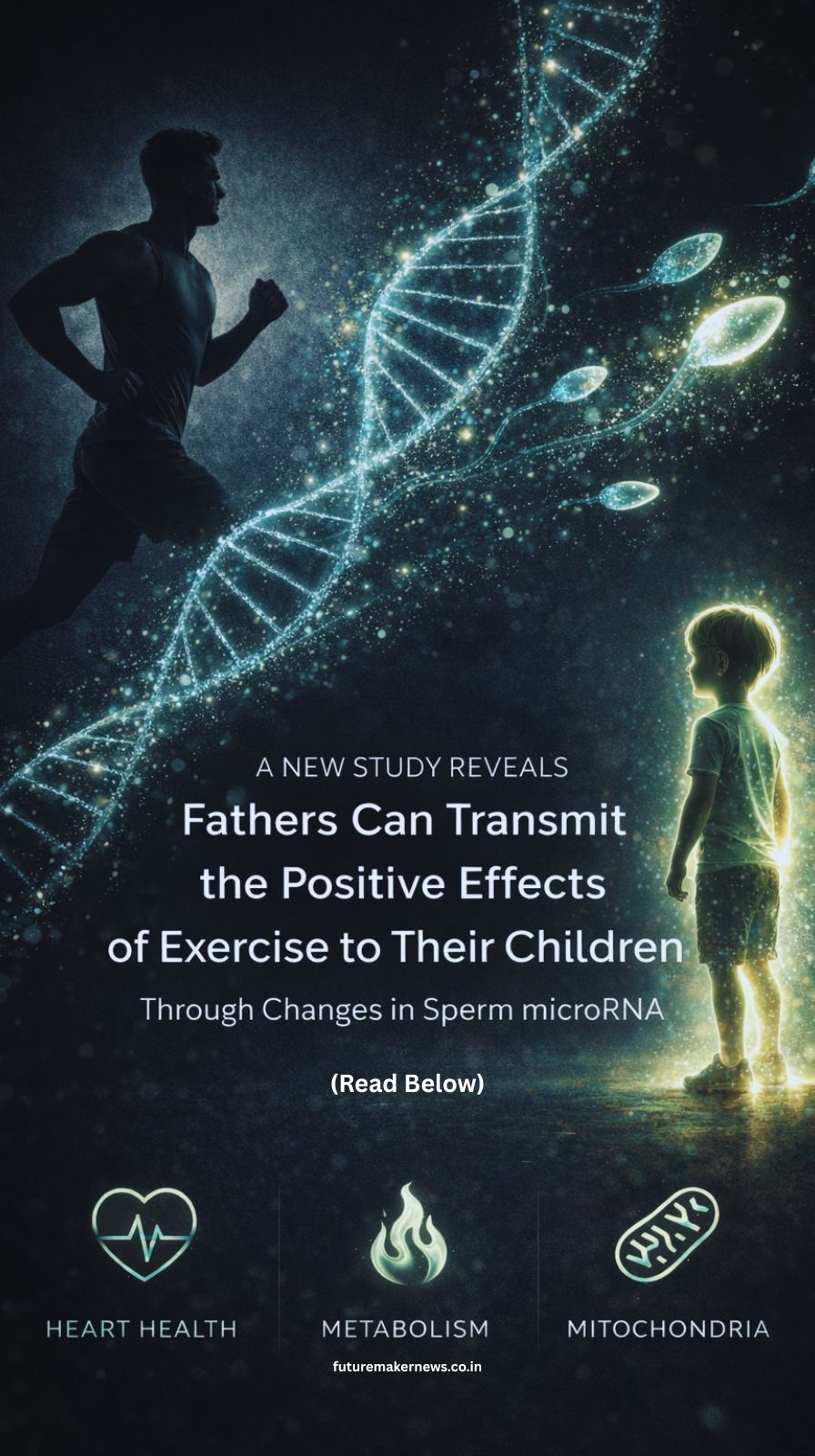
For decades, people believed discipline couldn’t be inherited.
Character, strength, and resilience were thought to be learned—not passed down.
Science is now challenging that belief.
New research suggests that a father’s exercise habits can biologically influence his children, even before they are born. And the mechanism isn’t traditional genetics—it’s epigenetics.
In simple terms: how you live can shape how your children are built.
This Isn’t Genetics — It’s Epigenetics
Your DNA sequence doesn’t change when you exercise.
What changes is how certain genes are switch on or off.
This regulation happens through molecular messengers called microRNAs—tiny strands that help control gene expression.
Researchers have found that:
- Exercise alters microRNA profiles in sperm
- These changes influence how genes related to energy, metabolism, and heart health are expressed in offspring
Your behavior doesn’t rewrite DNA—it rewrites the instructions that tell DNA how to behave.
What the Research Found
In controlled studies, scientists observed that:
- Children of physically active fathers showed stronger cardiovascular function
- They had better metabolic efficiency
- They displayed higher endurance and improved energy regulation
In a striking experiment, researchers transferred sperm RNA from trained fathers into eggs from sedentary mothers.
The offspring still showed the benefits—despite never being expose to exercise themselves.
The conclusion was clear:
The physiological advantages were transmitt through sperm microRNA.
How Exercise Becomes a Biological Legacy
The pathway looks like this:
Exercise → microRNA changes in sperm → activation of energy-related genes → improved endurance and metabolism in offspring
These are not temporary boosts.
They act more like biological blueprints.
Reported benefits included:
- Improved endurance capacity
- More efficient metabolism
- Increased mitochondrial function (the cell’s energy engines)
This suggests that a father’s physical habits help shape how efficiently a child’s body produces and uses energy.
The Bigger Question: What Else Transfers?
If exercise can influence future generations, it raises a deeper question:
What about:
- Chronic stress?
- Poor sleep?
- Long-term diet habits?
Epigenetic research increasingly shows that the body records patterns, not just traits.
Those patterns can echo across generations.
Your habits may be whispering instructions long after you’re gone.
The Takeaway
This research doesn’t say children are guarantee success—or that effort replaces parenting.
It says something quieter, but more powerful:
Preparation for the next generation begins before they exist.
Before you raise a child, you raise your standard.
Before you pass on advice, you pass on biology.
Train with intention.
Rest with discipline.
Live like someone’s future depends on it.
Because it does.