
 By Frank Lucasale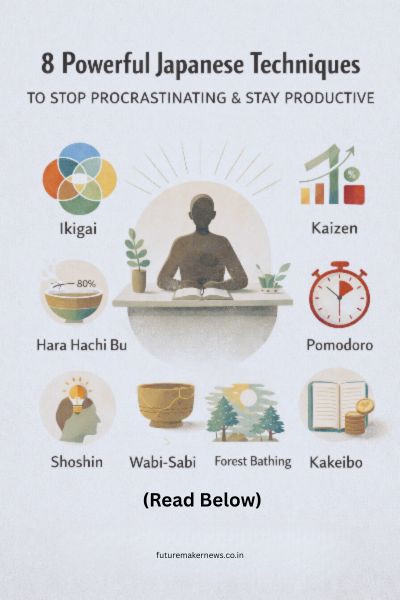
Japanese Techniques- Procrastination isn’t a time problem.
It’s a mindset problem.
Japanese culture approaches productivity differently—not through pressure or hustle, but through balance, purpose, and intentional living. These time-tested concepts don’t force motivation. They reshape how you think about action itself.
Here are eight powerful Japanese techniques that can permanently shift your relationship with work, focus, and discipline.
1. Ikigai — Find Your Reason to Begin
Ikigai means “reason for being.”
It sits at the intersection of:
- What you love
- What you’re good at
- What the world needs
- What gives your life meaning
When your work connects to purpose, procrastination fades naturally. You stop forcing yourself to start—because you want to.
Key insight: Motivation lasts when meaning comes first.
2. Kaizen — Improve by 1% Each Day
Kaizen is the philosophy of small, continuous improvement.
Instead of chasing dramatic change:
- Improve slightly
- Repeat consistently
- Let momentum compound
Big goals paralyze. Small steps activate.
Key insight: Consistency beats intensity.
3. Pomodoro Technique — Work in Focused Bursts
This method uses structured focus:
- 25 minutes of deep work
- 5 minutes of rest
The brain works best in short sprints, not endless marathons. Pomodoro reduces overwhelm and increases completion.
Key insight: Focus thrives inside boundaries.
4. Hara Hachi Bu — Practice Self-Control Daily
This Okinawan principle means eating until you’re 80% full.
Why it matters for productivity:
- Builds discipline through small restraint
- Strengthens mind–body awareness
- Reinforces intentional living
Control in one habit trains control everywhere else.
Key insight: Discipline grows from daily choices, not willpower spikes.
5. Shoshin — Keep a Beginner’s Mind
Shoshin means approaching life with openness and curiosity.
Instead of:
- Perfectionism
- Fear of failure
- Overthinking
You adopt:
- Willingness to learn
- Openness to mistakes
- Lightness toward progress
Key insight: Beginners start. Experts hesitate.
6. Wabi-Sabi — Embrace Imperfection
Wabi-sabi finds beauty in flaws, impermanence, and incompleteness.
Perfectionism fuels procrastination.
Acceptance fuels progress.
When you allow imperfect action, work actually gets done.
Key insight: Finished is better than flawless.
7. Forest Bathing — Reset Your Nervous System
Known as Shinrin-yoku, forest bathing involves intentional time in nature.
Benefits include:
- Lower cortisol
- Improved focus
- Reduced mental fatigue
A calm nervous system is a productive one.
Key insight: Rest is a productivity tool, not a reward.
8. Kakeibo — Be Intentional With Money
Kakeibo is mindful budgeting:
- Track spending
- Set clear goals
- Reflect regularly
Financial clarity reduces mental noise. Less anxiety = more focus.
Key insight: Order in finances creates order in thought.
Final Thought: Productivity Is a Way of Living
Japanese productivity isn’t about doing more.
It’s about living better.
Purpose over pressure.
Consistency over extremes.
Awareness over autopilot.
Adopt even one of these principles—and procrastination starts losing its grip.