The dream of earning a passive income without ever stepping in front of a camera is no longer just a pipe dream. Recently, a creator made waves by documenting her journey of hitting $3,000 per month on Pinterest—all while remaining completely anonymous.
Pinterest isn’t just a place for wedding inspiration or sourdough recipes; it is a high-intent visual search engine. Unlike Instagram, where users follow people, Pinterest users follow interests. This makes it the perfect playground for faceless content creators to build a digital empire.
In this guide, we will break down the exact framework used to generate these results, from choosing the right profitable niche to building a high-converting blog funnel using simple AI tools.
1. High-Converting Faceless Niches
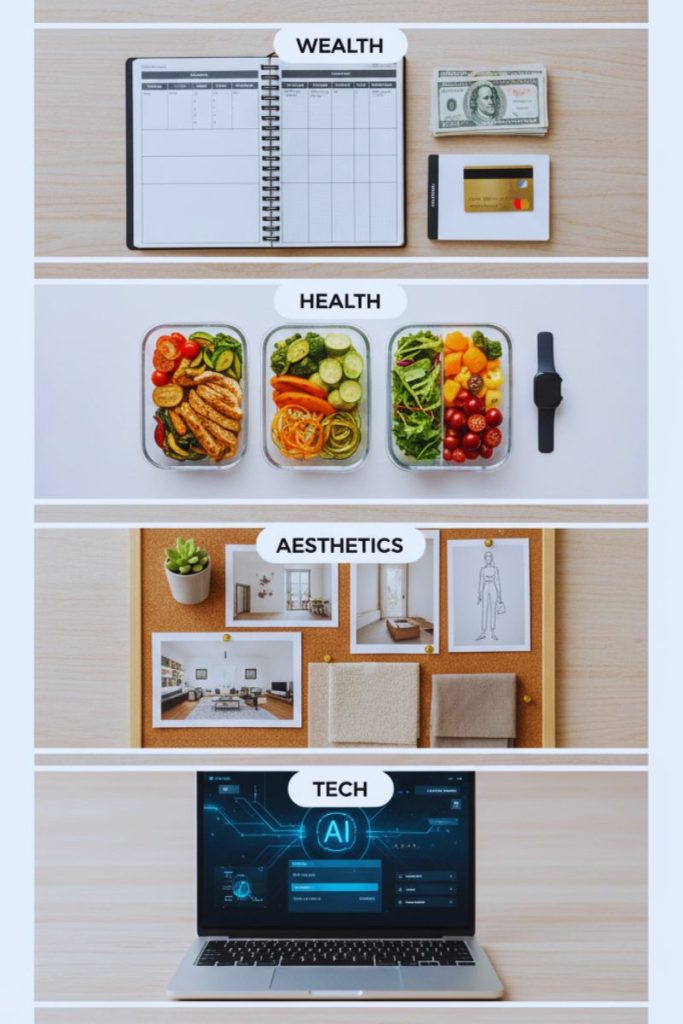
To make money on Pinterest, you need to go where the money is already flowing. You don’t need a “personal brand” to dominate these categories; you just need high-quality visuals and helpful information.
The “Wealth” Niche
People are constantly searching for ways to save, invest, or make money.
- Budgeting printables and debt payoff trackers.
- Side hustle ideas for students or stay-at-home parents.
- Cryptocurrency guides or stock market basics for beginners.
The “Health & Wellness” Niche
This is a perennial favorite on the platform.
- Keto recipes or meal prep plans.
- Mental health journals and self-care routines.
- Home workout challenges that don’t require expensive equipment.
The “Aesthetics & Lifestyle” Niche
Pinterest is a visual-first platform, making this niche highly viral.
- Home decor transitions and DIY room makeovers.
- Outfit mood boards and capsule wardrobe planning.
- Organizing tips and “Clean Girl” aesthetic checklists.
The “Tech & AI” Niche
With the explosion of AI technology, users are searching for tools to make their lives easier.
- ChatGPT prompts for productivity.
- AI art tutorials and digital design tips.
- Automating your workflow with simple software solutions.
2. The Power of Affiliate Links
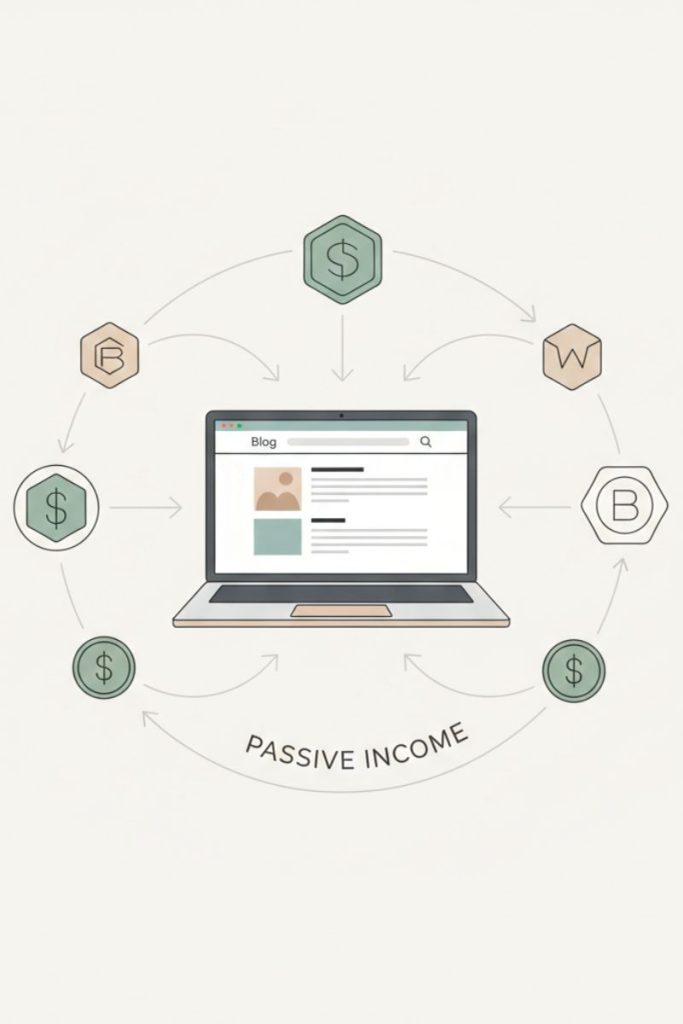
The secret sauce to that $3,000 paycheck is Affiliate Marketing. Instead of creating your own products (which takes time), you promote existing products and earn a commission.
Choosing the Right Programs
Look for high-ticket affiliate programs or those with recurring commissions. Common choices include:
- Amazon Associates: Great for physical goods and home decor.
- ShareASale & CJ Affiliate: Massive marketplaces for various brands.
- Software Affiliates: These often offer 30% to 50% recurring monthly commissions.
The “Golden Rule” of Linking
Pinterest has a love-hate relationship with direct affiliate links. To stay safe and maximize your conversion rate, never link directly from a Pin to a sales page. Instead, use a bridge page or a blog post. This adds value, builds trust, and prevents your account from being flagged as spam.
3. The Blog Funnel Setup: Your 24/7 Salesperson
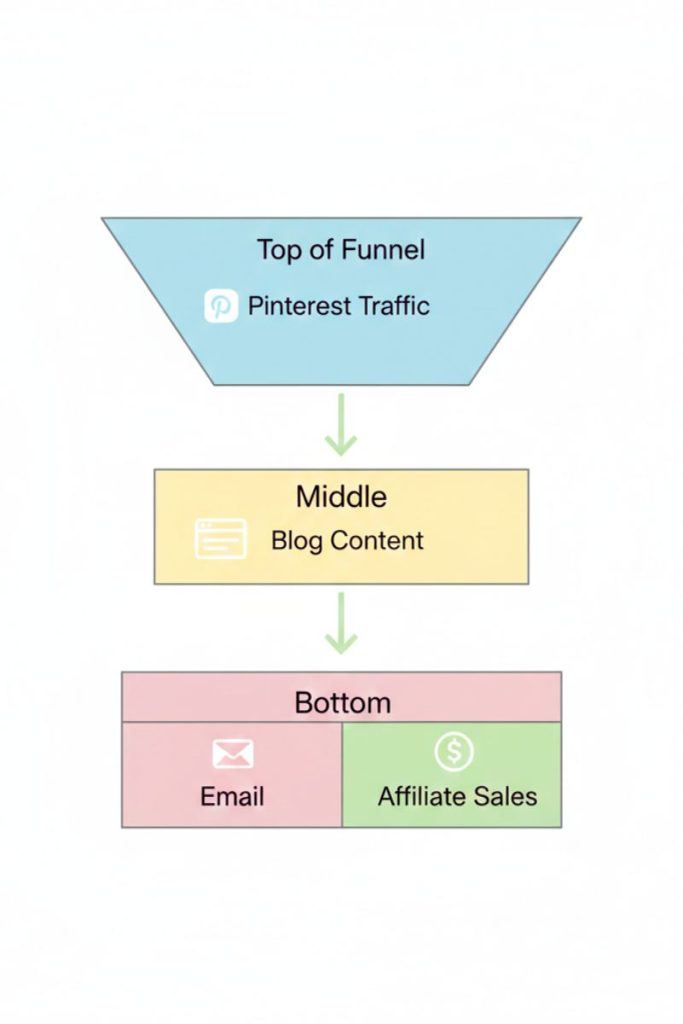
To reach $3,000, you need a system that works while you sleep. This is where the Blog Funnel comes in. Think of Pinterest as the “Top of the Funnel” (Traffic) and your blog as the “Bottom of the Funnel” (Conversion).
Step 1: The Magnetic Pin
You create a high-quality Pin in Canva that addresses a specific pain point (e.g., “How to Save $1,000 in 30 Days”).
Step 2: The Educational Blog Post
When the user clicks the Pin, they arrive at a 1,000-word article on your site. This article provides genuine value but also naturally weaves in your affiliate links.
Step 3: The Email Opt-in
Inside the blog post, offer a “Freebie” (like a PDF checklist) in exchange for their email address. Now, even if they don’t buy today, you can market to them via an automated email sequence forever. This is how you build a long-term digital business.
4. Simple AI Tools for Content Creation
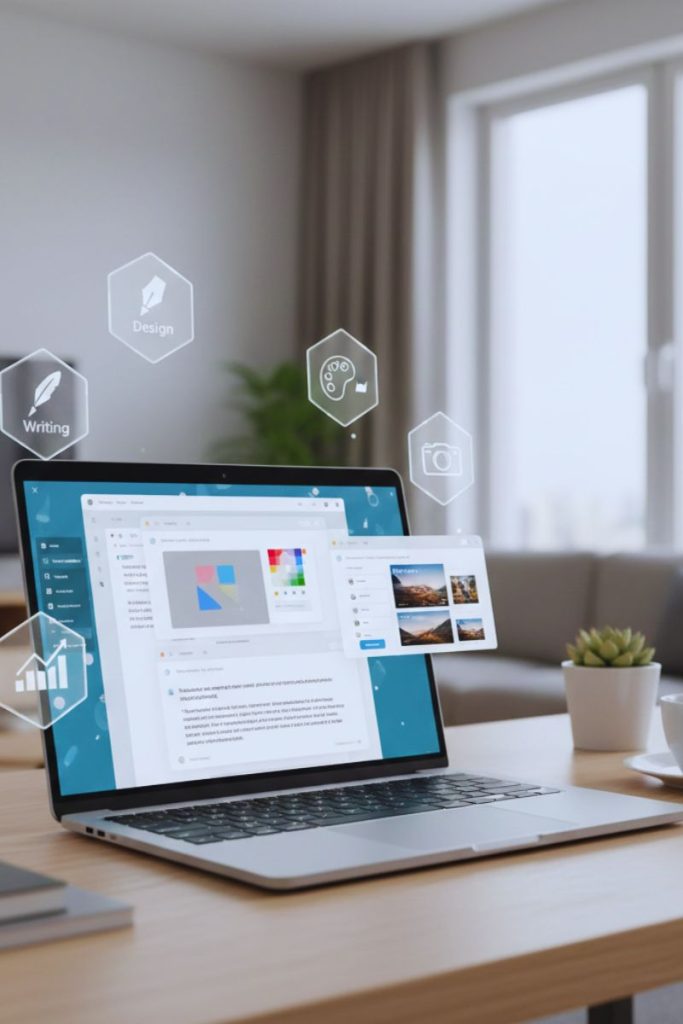
Efficiency is the difference between a hobby and a business. Use these AI tools to do 90% of the heavy lifting.
ChatGPT (The Brain)
Use this for keyword research, generating catchy Pin titles, and drafting entire blog posts. Simply ask: “Give me 10 viral Pinterest titles for a blog post about minimalist living.”
Canva & Bulk Create (The Designer)
You don’t need to be a graphic designer. Use Canva’s templates. You can even use their Bulk Create feature to turn a CSV file of tips into 50 different Pins in under five minutes.
Midjourney or DALL-E (The Photographer)
Since you aren’t showing your face, you need high-quality stock imagery. AI image generators can create unique, high-definition photos for your Pinterest Marketing strategy that no one else is using.
Pinterest Trends (The Compass)
This is a free tool provided by Pinterest. It tells you exactly what people are searching for right now. Use it to stay ahead of the curve and create content that is virtually guaranteed to get organic reach.
5. The Realistic 60-Day Roadmap
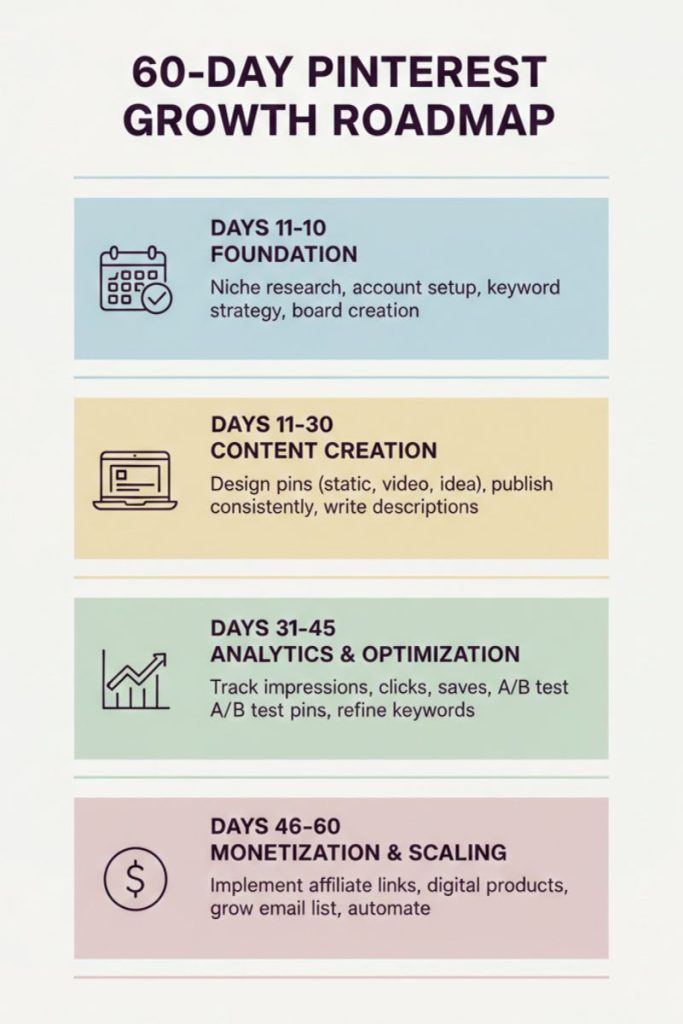
Don’t expect $3,000 overnight. Pinterest is a “slow burn” platform that rewards consistency. Here is your step-by-step plan.
- Days 1–10: The Foundation
- Niche Research: Pick one niche and stick to it.
- Setup: Create a Pinterest Business account and a simple WordPress or Ghost blog.
- SEO Setup: Optimize your Pinterest profile with target keywords in your bio and board titles.
- Days 11–30: The Content Blitz
- Create 5–10 Pillar Blog Posts: These should be deep dives into your niche.
- Pinning Schedule: Start pinning 3–5 high-quality Pins per day.
- Automation: Use a tool like Tailwind to schedule your Pins so you don’t have to be online 24/7.
- Days 31–45: Analyzing & Pivoting
- Check Analytics: See which Pins are getting the most “Outbound Clicks.”
- Double Down: Create 10 more Pins for your best-performing blog post.
- Split Testing: Try different colors, fonts, and call-to-actions (CTAs) on your Pins.
- Days 46–60: Monetization & Scaling
- Affiliate Optimization: Replace low-performing links with better offers.
- Email Marketing: Set up your first 5-day automated email sequence to welcome new subscribers.
- Growth: Look into “Idea Pins” (now integrated into standard Pins) to boost your brand awareness and follower count.
Why Faceless Pinterest is the Best Side Hustle
The beauty of this model is the low barrier to entry. You don’t need a fancy camera, you don’t need to spend thousands on ads, and you certainly don’t need to be an extrovert.
By focusing on SEO optimization, high-quality visuals, and a solid funnel, you are building a digital asset. Unlike a TikTok video that dies after 24 hours, a Pin can continue to drive traffic and sales to your blog for years.
Success on Pinterest is about patience and data. If you provide the solution to a problem someone is searching for, the money will naturally follow.
The Bottom Line
Generating $3,000 on Pinterest faceless is about working smarter, not harder. Use AI content creation to scale your output and focus on niches with high commercial intent.