Online Hustles- The internet is flooded with “gurus” showing off rented Lamborghinis and promising that you can make $10,000 a month by clicking a few buttons. In 2026, the digital landscape has shifted. What worked in 2020 is now a ghost town.
I decided to stop listening to the noise and actually test the five most popular online side hustles. I spent months tracking my time vs income results to see which one is actually a viable path to financial freedom and which one is just a glorified hobby.
Spoiler alert: Out of the five, only one consistently put real profit into my bank account without burning me out. Here is the honest breakdown.
1. Dropshipping: The High-Stress Money Pit

Dropshipping is often sold as the ultimate hands-off business. The reality? It’s a high-stakes game of digital arbitrage that requires a massive upfront investment in testing.
- The Time Investment: I spent 30+ hours a week hunting for “winning products,” building a Shopify store, and managing frustrated customers.
- The Reality Check: In 2026, ad costs on platforms like TikTok and Meta have skyrocketed. To find one successful product, I had to burn through $1,500 in ad spend.
- The Income Result: I made $3,200 in revenue, but after product costs, shipping, and ads, my net profit was negative $200.
- The Verdict: Unless you have a huge budget for paid advertising and a brand-first mentality, the “cheap AliExpress” era of dropshipping is officially dead.
2. Freelancing: The Modern Day Hamster Wheel

Freelancing (specifically content writing and graphic design) is the fastest way to make your first dollar, but it comes with a massive “time ceiling.”
- The Time Investment: 40 hours a week. Most of my time wasn’t spent doing the work—it was spent on client acquisition, sending proposals, and chasing invoices.
- The Reality Check: Platforms like Upwork and Fiverr are more competitive than ever. I was constantly underbid by people or AI-assisted agencies.
- The Income Result: I earned $2,500 in a month. While this sounds good, the moment I stopped working, the money stopped. There is zero passive income potential here.
- The Verdict: Great for quick cash, but it’s just a job with a different boss. You are still trading time for money.
3. Blogging: The Slow-Burn Asset

I’ve always loved the idea of evergreen blog posts generating traffic while I sleep. But blogging is a marathon, not a sprint.
- The Time Investment: 15 hours a week for 6 months.
- The Reality Check: SEO is a long game. Even with low-competition keywords, it takes months for Google to trust a new site. In 2026, you also have to compete with AI-generated search results.
- The Income Result: $45 total from display ads. The compounding traffic hadn’t kicked in yet.
- The Verdict: Blogging is a powerful long-term asset, but it’s not a “hustle” that will pay your rent this month. It requires extreme patience and content strategy.
4. UGC (User-Generated Content): The Fame Trap
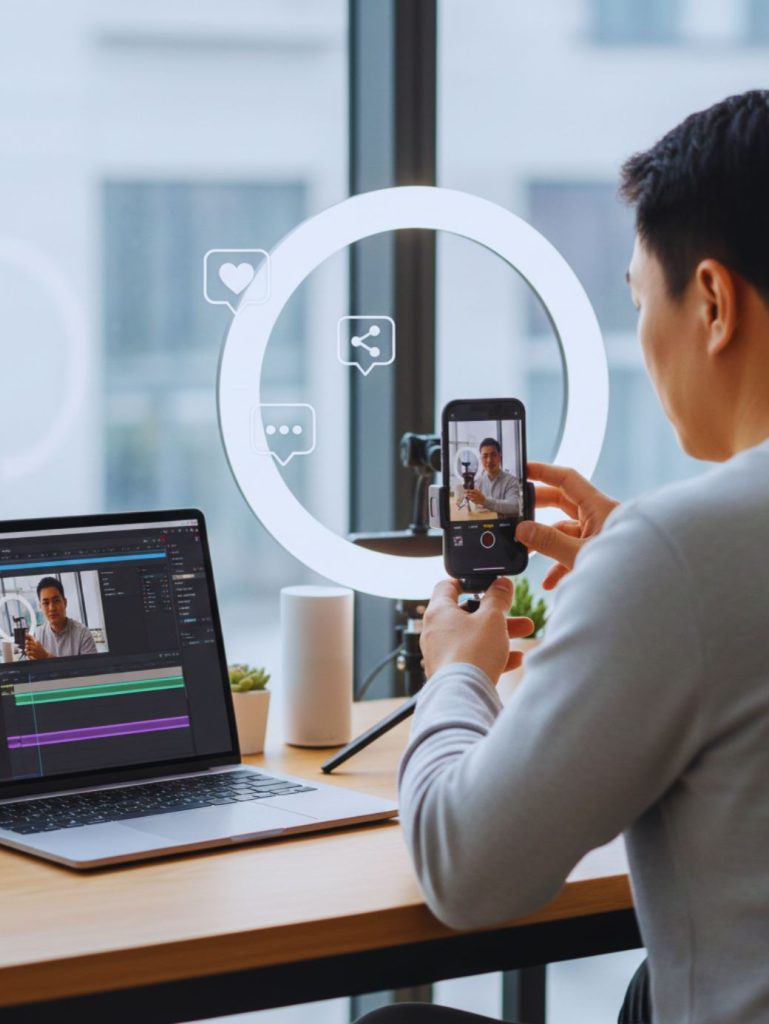
UGC creator roles are the newest trend. Brands pay you to film “authentic” videos for their social media ads.
- The Time Investment: 20 hours a week filming, editing, and pitching to brands.
- The Reality Check: You need to be “on” all the time. Your income depends on your ability to stay trendy. If your engagement drops, your brand deals vanish.
- The Income Result: I landed two deals for $200 each. Total: $400.
- The Verdict: It’s fun if you love being on camera, but the income stability is nonexistent. You are at the mercy of the algorithm.
5. Digital Printables: The Winner That Actually Paid
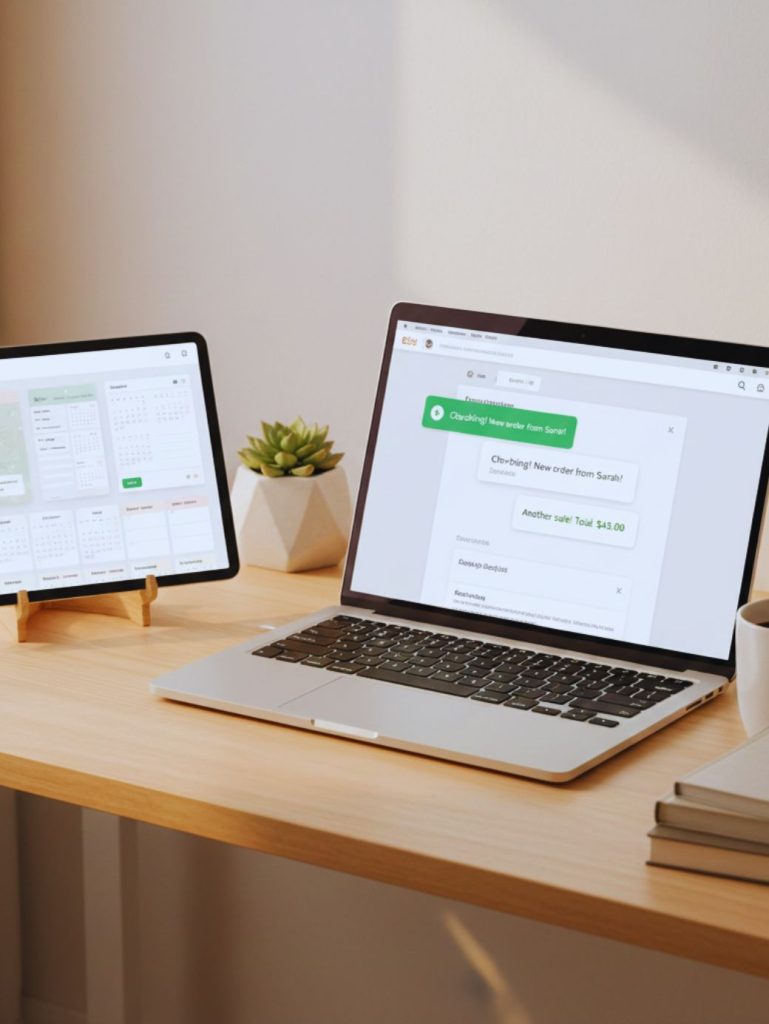
This was the “boring” hustle I almost didn’t try. Selling printables on marketplaces like Etsy or through a niche Shopify store turned out to be the goldmine.
- The Time Investment: 10 hours a week.
- The Reality Check: Unlike dropshipping, there is no inventory risk. Unlike freelancing, I created the product once and sold it 500 times.
- The Income Result: $1,800 in month three, with a 95% profit margin.
- The Verdict: This is the only hustle that combined low-competition keywords with a product that scales. It is the ultimate form of passive income.
Why Digital Printables Crushed the Competition
You might be wondering why a $7 digital planner outperformed a $1,000 freelance contract. It comes down to scalability and leverage.
1. High Profit Margins
In dropshipping, your margin is slim (15-20%). With digital printables, your only cost is your time and a small platform fee. When I sold a “Budget Tracker for Freelancers,” almost every cent stayed in my pocket.
2. Automated Sales
With freelancing, I had to attend Zoom calls. With printables, the customer buys, the file is delivered automatically, and I get a notification while I’m at the gym. This is true automated income.
3. SEO-Driven Traffic
By targeting low-competition keywords like “homeschooling schedule for toddlers” or “ADHD daily planner,” I bypassed the massive competition. These are high-intent buyers who are ready to purchase immediately.
Comparison Table: Time vs. Income (Month 3 Results)
| Side Hustle | Weekly Hours | Monthly Profit | Scalability | Stress Level |
| Dropshipping | 35+ | -$200 (Loss) | High | Extreme |
| Freelancing | 40 | $2,500 | Low | Medium |
| Blogging | 15 | $45 | Extreme | Low |
| UGC Creator | 20 | $400 | Medium | High |
| Digital Printables | 10 | $1,800 | High | Low |
How to Start the Only Hustle That Works
If you want to skip the failures I went through, focus on digital assets. Here is the 3-step blueprint I used to make digital printables work:
- Step 1: Find the Gap. Don’t just make a “to-do list.” Use tools to find low-competition keywords where people are searching for a solution but the existing options are ugly or outdated.
- Step 2: Solve a Specific Problem. My best seller was a very niche “Small Business Inventory Log.” It wasn’t pretty, but it was functional.
- Step 3: Optimize for Search. Treat your product listing like an SEO-friendly blog post. Use your keywords in the title, description, and tags.
Final Thoughts: Stop Chasing Hype
The reason most people fail to make money online is that they chase the hustle with the most “hype” rather than the one with the best math.
Freelancing will always be limited by your clock. Dropshipping will always be limited by your ad budget. But digital products—backed by evergreen traffic—allow you to decouple your income from your time.
I stopped trying to be a “jack of all trades” and doubled down on the one that actually paid. The results speak for themselves. In a world of digital noise, the most “boring” products often yield the most exciting bank accounts.