
 By Frank Lucasale
After 27 years working in public schools, a seasoned child psychologist shared an insight that stunned many parents. It came after a mother complained that her son was “too gentle” and was getting pick on.
The psychologist shook her head.
“Bullying isn’t trigger by weakness. It’s trigger by children who never learned how to signal boundaries at home — because their parents override every emotion for them.”
This wasn’t an opinion; it was a pattern she had watched unfold thousands of times.
The Hidden Pattern Behind Who Gets Bullied

According to her, the most frequent targets of bullying aren’t necessarily the shy or introvert children — but the ones whose emotional instincts have been repeatedly softened, redirected, or shut down by well-meaning parents.
Many parents unintentionally train their children not to defend themselves. It happens in small moments at home:
- “Don’t make a fuss.”
- “Be nice.”
- “Let it go.”
- “Don’t say that, it’s rude.”
These phrases seem harmless, even polite. But over time, they teach a child that expressing anger, discomfort, or disagreement is unacceptable.
“These kids never learn the micro-muscles of pushback,” the psychologist explained.
“Their face shows hesitation. Their body shows permission.”
And children, who are surprisingly accurate at reading social cues, pick up on that instantly.
Case Study 1: Leo — The “Too Kind” Boy
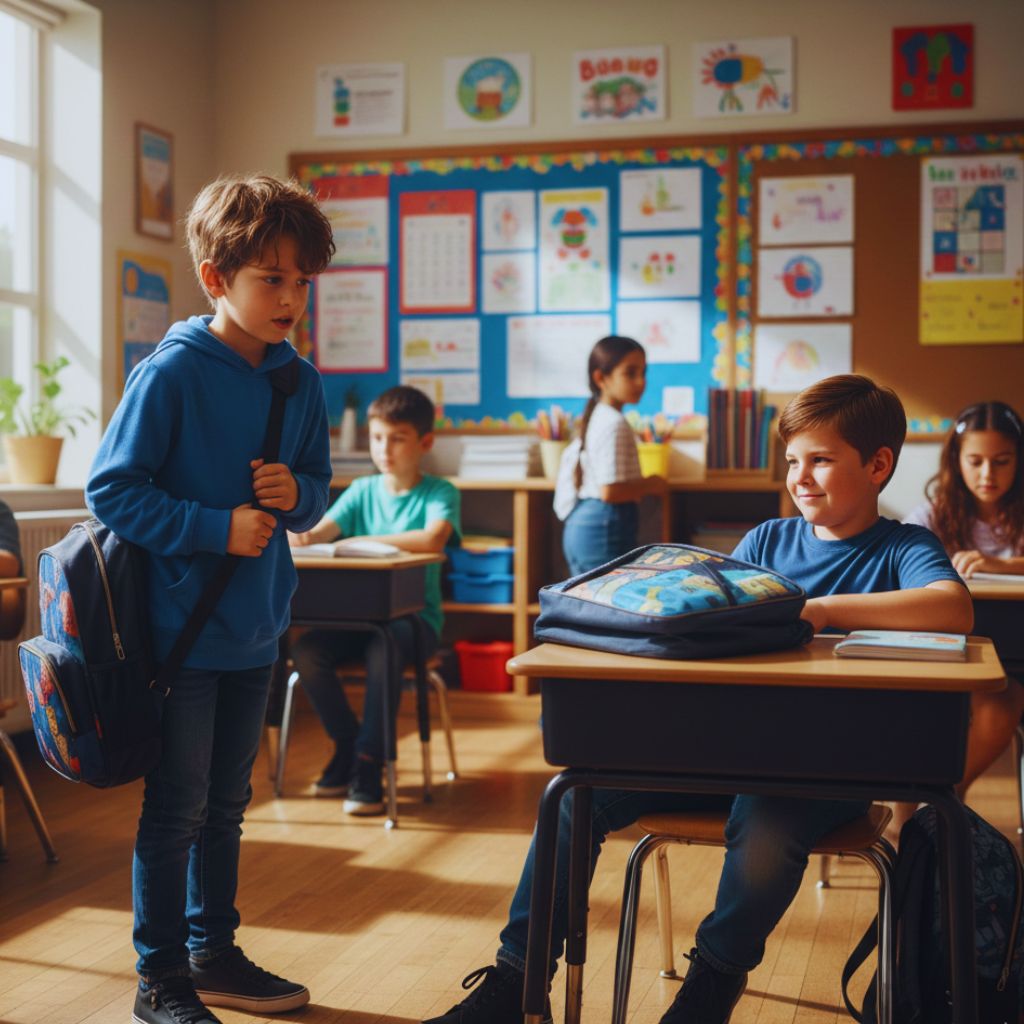
One of her most memorable cases involved a boy named Leo. At home, his mother corrected every negative emotion he expressed. She called it “teaching kindness.”
But at school, Leo’s classmates sensed something different: he didn’t protest. Not when someone took his seat, his pencils, or even his lunch.
To other children, that wasn’t kindness — it was a signal.
“Kids don’t look for victims,” the psychologist said.
“They look for signals of someone who won’t retaliate. Leo wasn’t weak — he was train not to defend himself.”
Case Study 2: The Overprotected Girl

Another case involved a girl whose father handled every conflict on her behalf — with teachers, coaches, even other parents. Every time a problem arose, he stepped in before she could learn to handle it herself.
As a result, she never learned the basic tools of boundary-setting: tone, posture, a firm “stop,” or the confidence to say no.
“Children sniff out overprotected kids,” the psychologist noted, “the same way animals sense suppressed instincts.”
And they tested her every day.
The Hard Truth Parents Need to Hear
The psychologist’s final line was blunt — and unforgettable:
“If you teach your child to avoid conflict, you teach the world to give them conflict.”
Parents often think they’re protecting their children by shielding them from discomfort or by discouraging strong emotions.
But in reality, they may be removing the very experiences children need to develop resilience and boundaries.
What Children Actually Need: Practice, Not Toughness
Building a child’s inner strength doesn’t require harshness or forcing them to “stand up for themselves” in unrealistic ways. What they need is simple, consistent practice at home:
- Let your child say “stop” — and respect it.
- Let them negotiate.
- Let them disagree.
- Let them express anger without shaming them.
- Let them experience small conflicts and resolve them themselves.
These moments teach children that their feelings matter and that they have the right to take up space in the world.
And that confidence — more than toughness — is what helps protect them from becoming easy targets.