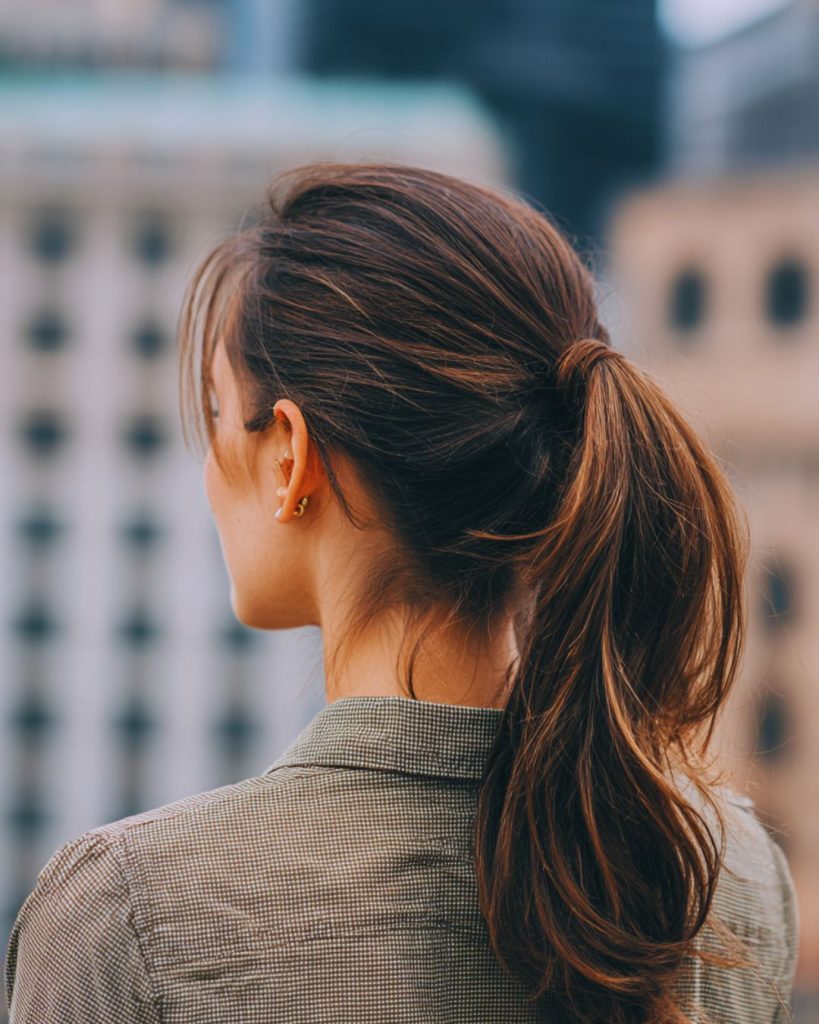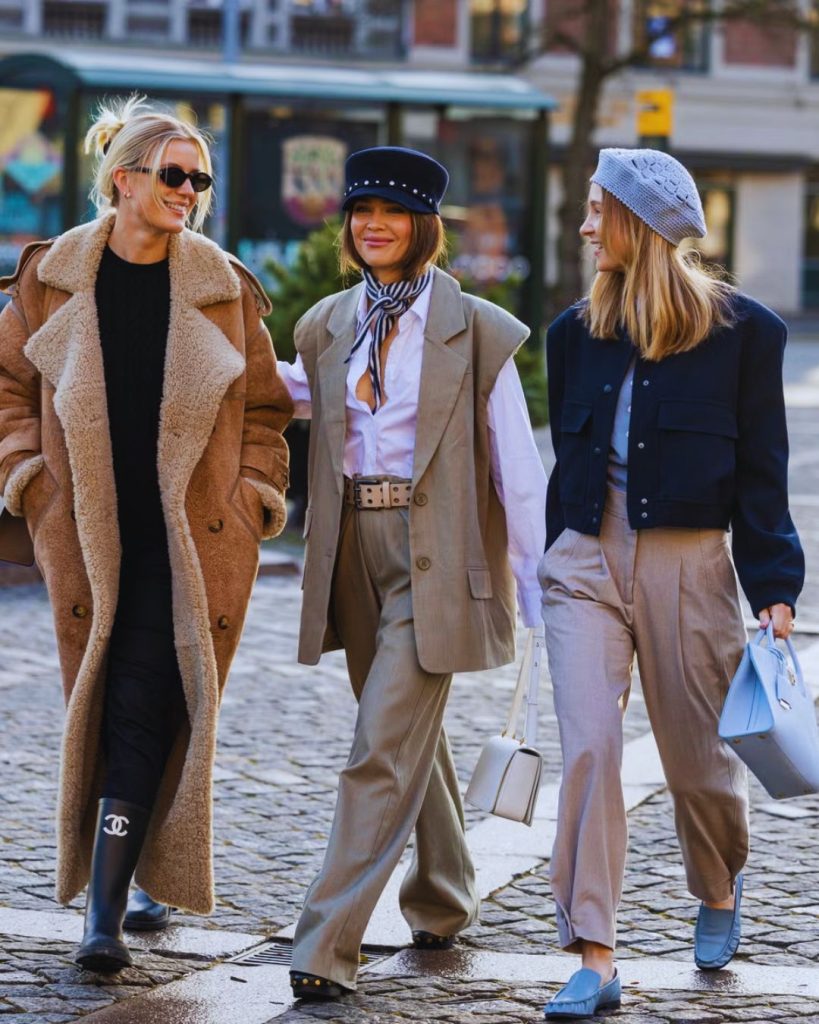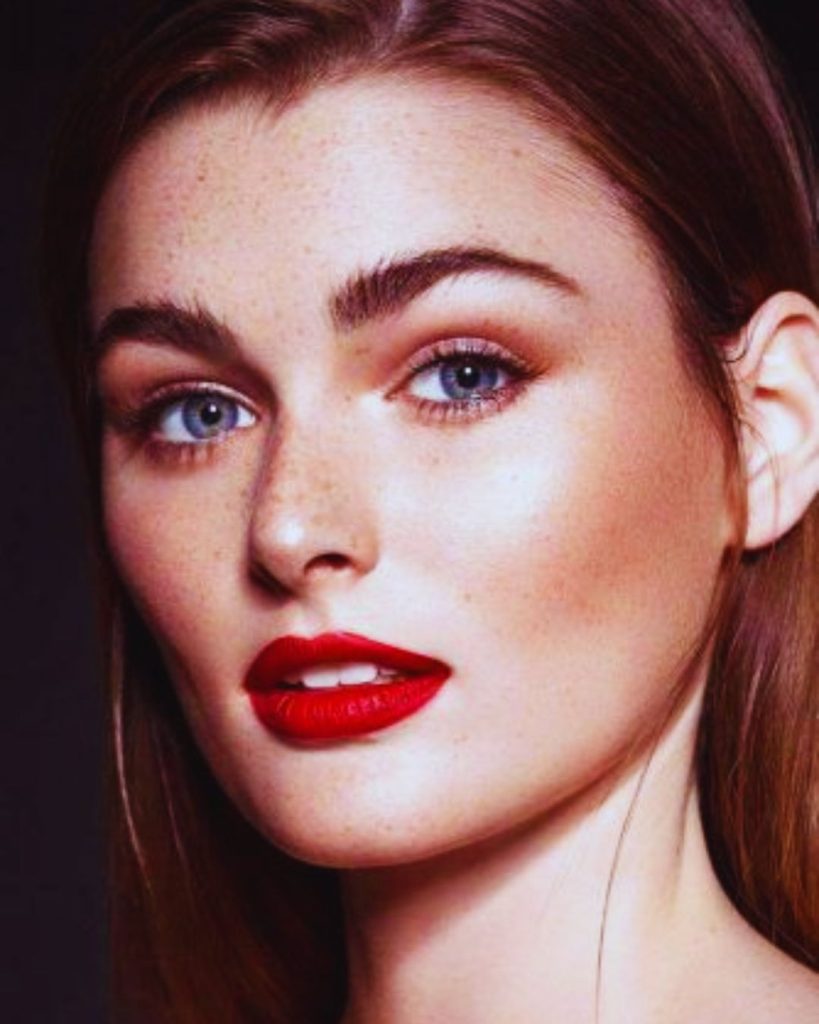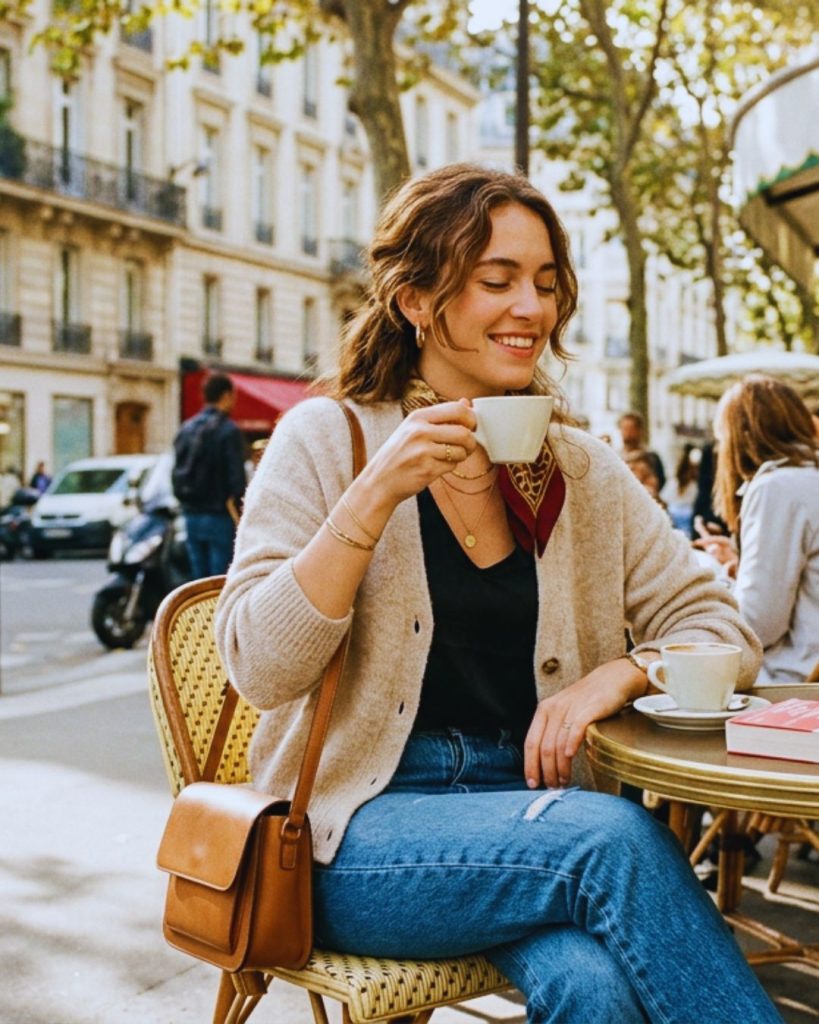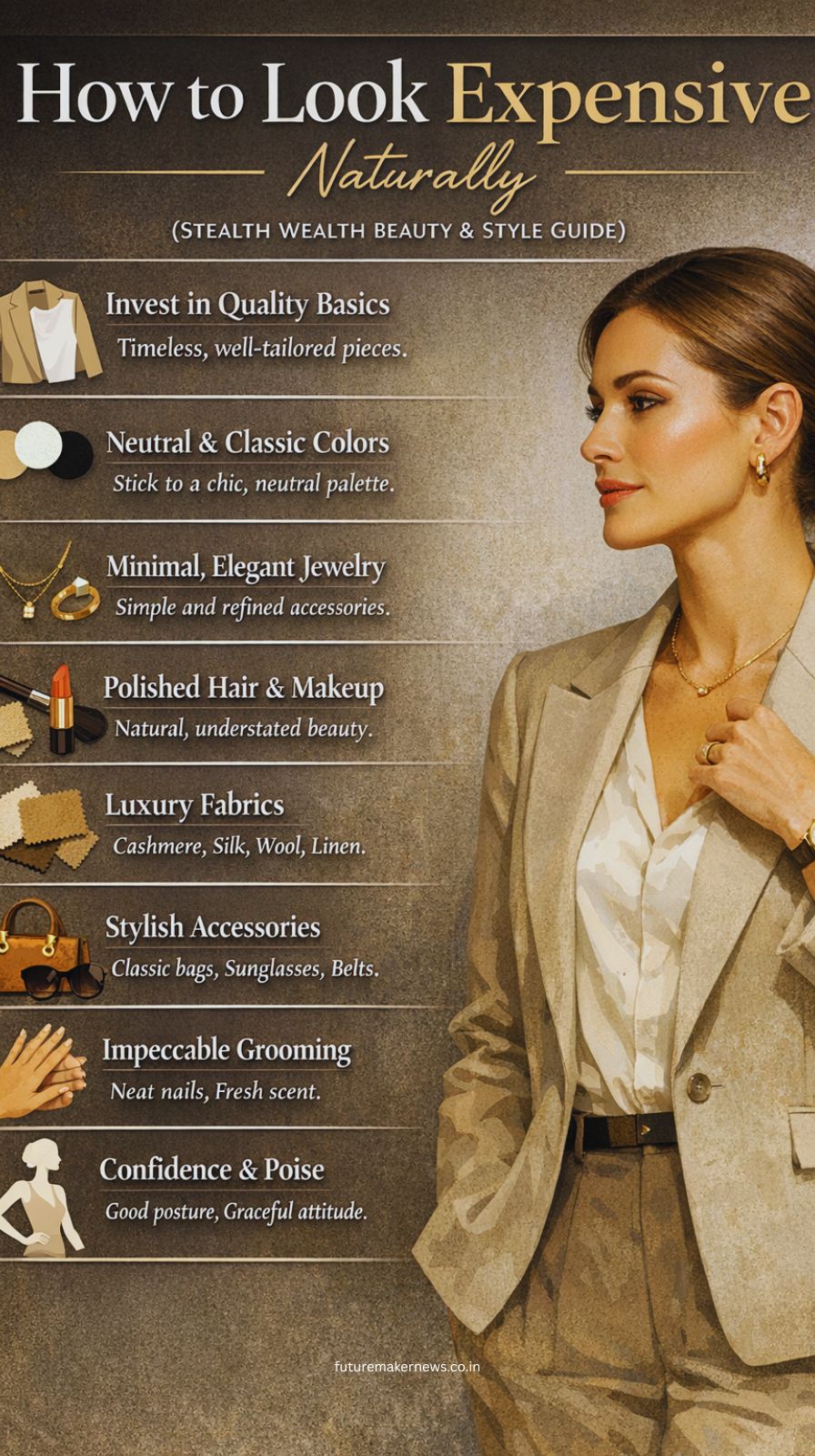
Woman with glowing skin, sleek hair, and minimalist outfit representing stealth wealth style and natural expensive look.

In a world obsessed with fleeting trends and “logomania,” there is a shift toward a more refined aesthetic: Quiet Luxury. Looking “expensive” isn’t about the price tag on your handbag; it’s about a meticulous commitment to personal grooming, radiant health, and understated elegance.

The secret to an upscale appearance is the transition from “decorated” to “polished.” When you focus on the canvas—your skin, hair, and nails—the clothes you wear become secondary to the aura you project.

1. The Foundation: Mastering Skin Basics
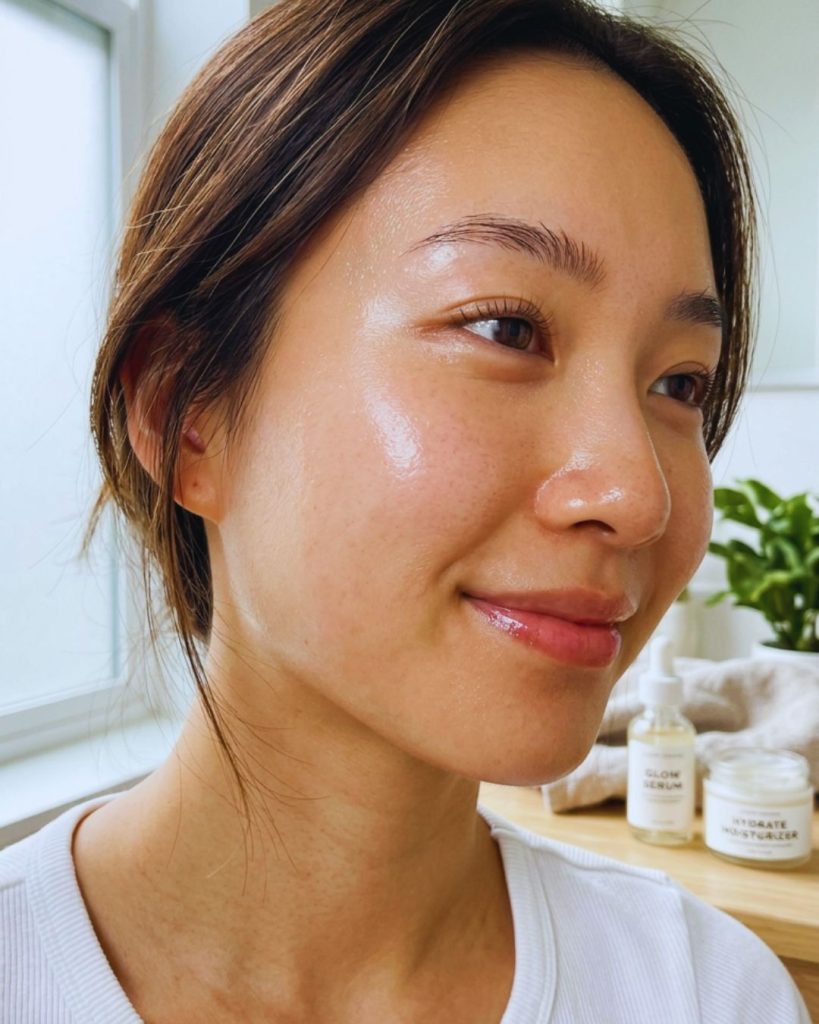
Expensive beauty starts with skin—hydrate, protect, and glow from within.

To look expensive, your skin shouldn’t look like it’s covered in makeup; it should look like it’s covered in wealthy hydration.

  • The Glass Skin Effect: High-end beauty is synonymous with a dewy complexion. This is achieved through layers of hydration rather than heavy creams. Think hyaluronic acid and squalane to plump the skin cells.
  • Consistency over Intensity: An expensive look requires a consistent skincare routine. It’s better to use a gentle cleanser and moisturizer every day than to do a harsh chemical peel once a month.
  • Sun Protection is Non-Negotiable: Nothing ages the skin faster than UV damage. Wearing a broad-spectrum SPF 50 daily prevents sunspots and fine lines, maintaining that “ageless” look.
  • Exfoliation for Radiance: Use AHA/BHA exfoliants twice a week. Removing dead skin cells ensures that light reflects off your face evenly, giving you that coveted natural glow.
  • Targeted Eye Care: The skin around the eyes is thin and prone to puffiness. Using a caffeine-infused eye cream can depuff and brighten, making you look well-rested and alert.

2. The Frame: Groomed Brows and Facial Harmony
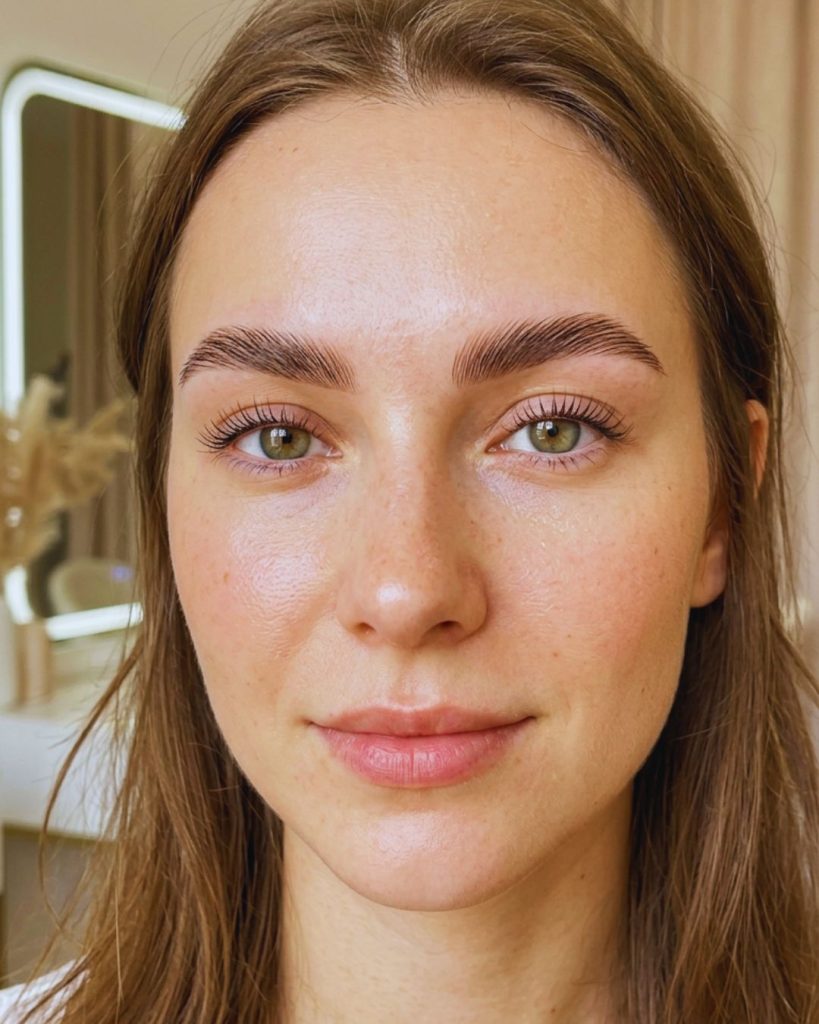
Close-up of natural feathered brows and lifted lashes enhancing facial harmony and creating a polished look.
Well-groomed brows can lift your entire face—keep them natural, soft, and perfectly shaped.

Your eyebrows are the most important structural feature of your face. They frame your eyes and can literally “lift” your entire countenance if handled correctly.

  • The “Feathered” Look: Move away from heavily filled-in, blocky brows. The expensive aesthetic favors natural brow lamination or a simple clear gel that shows individual hairs.
  • Professional Shaping: Even if you DIY most things, see a professional for an initial brow mapping. This ensures your brows are symmetrical and suited to your specific bone structure.
  • Color Matching: Your brow shade should never be more than one shade darker than your hair. A subtle tint creates depth without looking harsh.
  • The Upper Lip Secret: Unwanted facial hair can dull the complexion. Keeping the upper lip and chin area smooth ensures that your foundation application looks seamless and invisible.
  • Lash Care: Instead of dramatic extensions, opt for a lash lift and tint. It defines the eyes while maintaining the illusion that you “just woke up like this.”

3. The Crown: Achieving Smooth, Expensive Hair
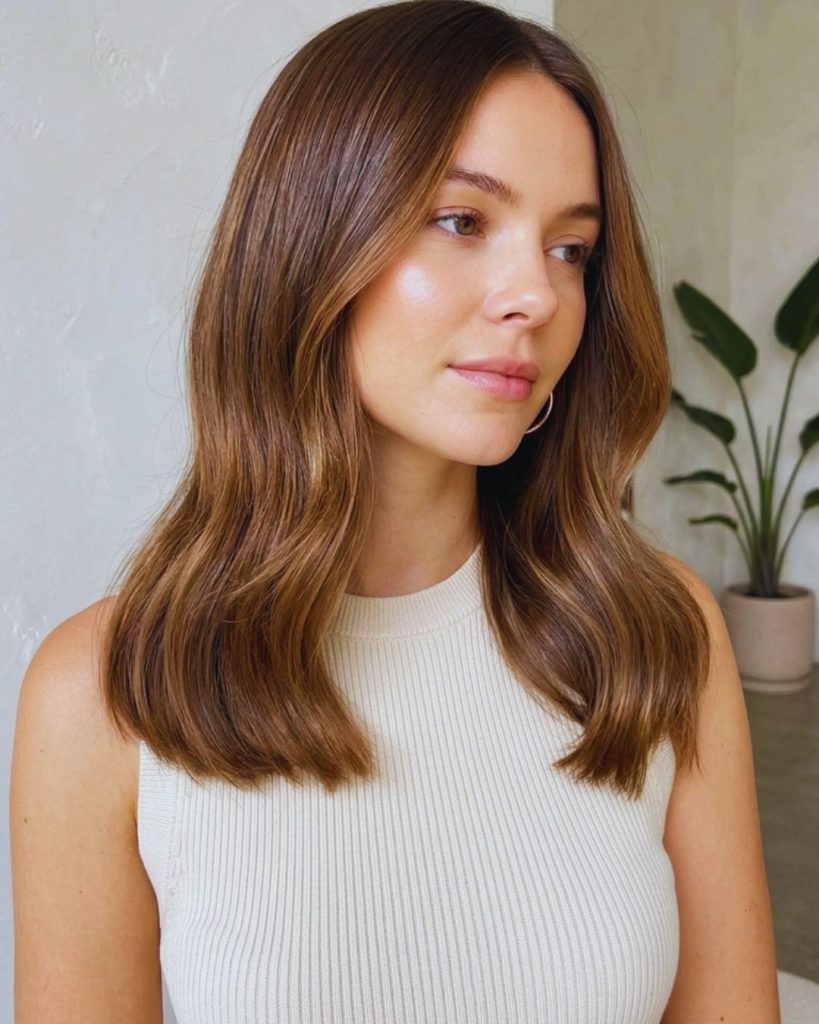
Woman with smooth glossy hair showing healthy shine and rich girl hair aesthetic with minimal styling.
Shiny, healthy hair is the ultimate sign of quiet luxury—smooth, soft, and effortlessly polished.

In the beauty world, “rich girl hair” is a specific term. It refers to hair that looks healthy, vibrant, and incredibly smooth, regardless of the style.

  • The Power of the Trim: Split ends are the enemy of an expensive look. A regular trim every 8–10 weeks keeps the ends blunt and healthy, which makes the hair look thicker.
  • Gloss Treatments: You don’t need a new color to look high-end. A clear hair gloss or “glaze” adds a reflective shine that mimics the look of a professional salon blowout.
  • Scalp Health: Great hair starts at the root. Use a scalp scrub once a week to remove product buildup, ensuring your hair has natural volume and movement.
  • Satin and Silk: Switch to a silk pillowcase. This reduces friction while you sleep, preventing frizz and keeping your hair cuticle smooth.
  • The Low-Heat Rule: Excessive heat creates “fried” textures. Embrace heatless curls or use high-quality ionic blow dryers that seal the cuticle rather than stripping it of moisture.

4. The Silent Language: Manicured Hands and Feet
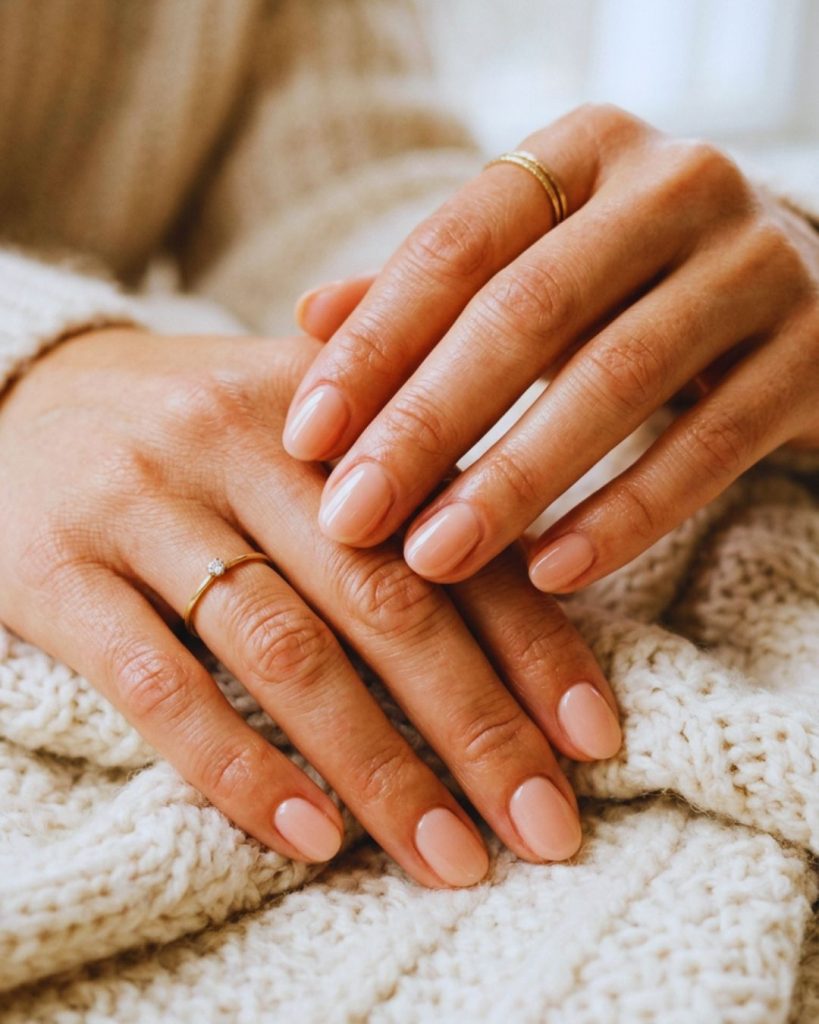
Close-up of neatly manicured hands with nude nails and soft skin representing minimalist luxury grooming.
Clean, polished hands speak louder than any luxury accessory.

Hands are often the first place people notice a lack of grooming. You don’t need long acrylics; in fact, the “expensive” look leans toward the minimalist manicure.

  • The “Old Money” Palette: Stick to nude tones, sheer pinks, or a classic rich red. These colors are timeless and don’t clash with your outfit.
  • Cuticle Care: Dry, ragged cuticles are a giveaway of neglect. Apply cuticle oil every night before bed to keep the nail bed looking clean and hydrated.
  • Uniform Length: It is better to have short, uniform nails than long ones with one or two breaks. A short, oval shape is the hallmark of sophisticated grooming.
  • Soft Skin Texture: Use a urea-based hand cream to keep the skin on your hands soft and youthful. Remember, your hands age as fast as your face.
  • The Pedicure Standard: Even in winter, keeping your toenails groomed is a psychological boost that translates into confident body language.

5. The Invisible Accessory: Posture and Presence
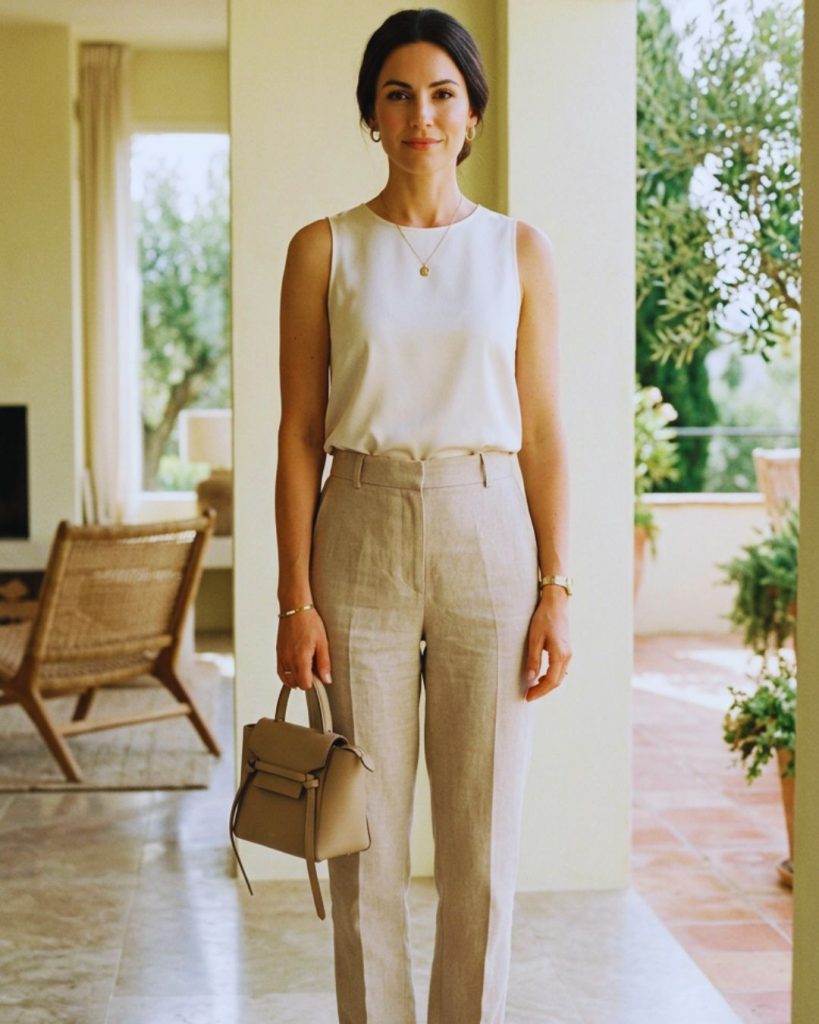
Elegant woman with straight posture and confident stance representing quiet luxury and polished presence.
Confidence, posture, and presence—the true markers of an expensive aura.

You can have the best skin and hair in the world, but if you slouch, the “expensive” illusion breaks.

  • The Alignment Hack: Imagine a string pulling you up from the crown of your head. This creates an elongated neck and open shoulders, which signals high status and confidence.
  • Mindful Movement: People who project wealth move with deliberate grace. Avoid rushing or fidgeting. Slow, controlled movements suggest you are in control of your environment.
  • The Power of Scent: To look expensive, you must smell expensive. Opt for linear fragrances (scents that stay consistent) with notes of sandalwood, bergamot, or white tea. Apply to pulse points so the scent is discovered, not announced.
  • The Smile Factor: Oral hygiene is a massive part of the beauty basics. Naturally white teeth (not blindingly artificial) and healthy gums contribute to a “polished” face.

6. The Wardrobe of a Minimalist
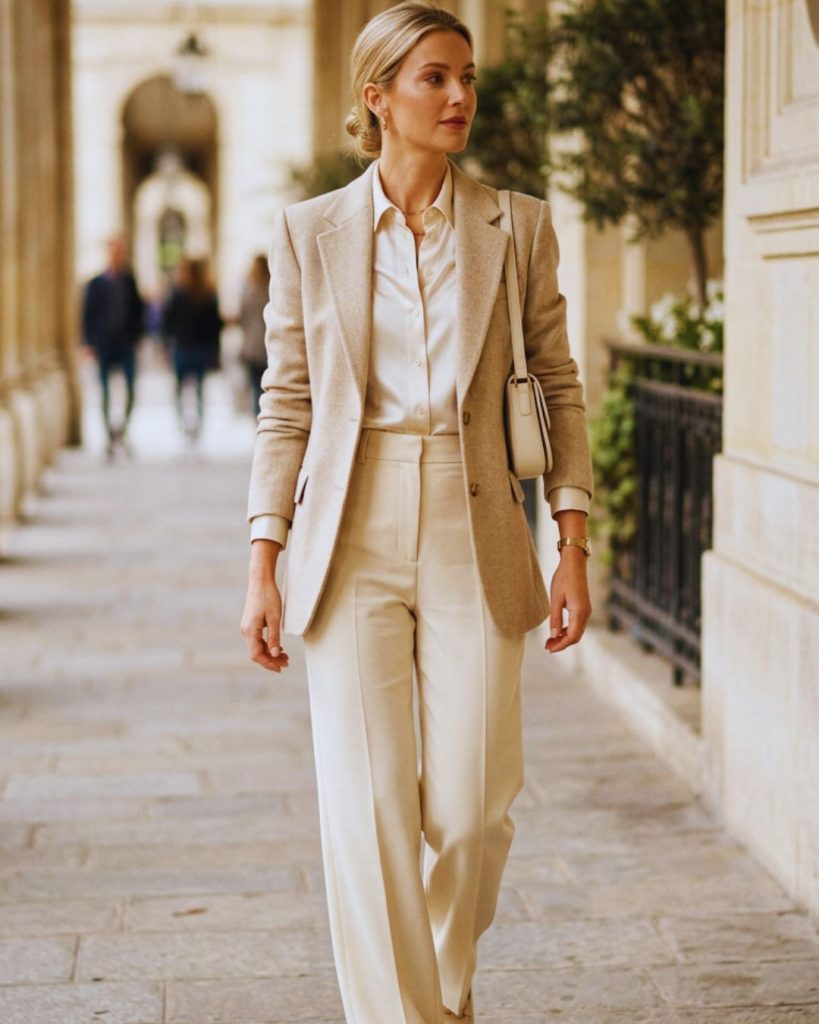
Woman wearing a tailored monochrome outfit in neutral tones representing minimalist luxury fashion and expensive style.
Expensive style isn’t about brands—it’s about fit, fabric, and simplicity.

Looking expensive naturally extends to how you “package” your groomed self. It’s about the fit and fabric, not the brand.

  • Monochromatic Dressing: Wearing varying shades of the same color (like cream, beige, or camel) creates a streamlined silhouette that looks instantly high-end.
  • Tailoring is Key: A $20 shirt that is tailored to your body will always look more expensive than a $200 shirt that fits poorly.
  • Natural Fibers: Choose linen, silk, wool, and cotton. These materials breathe better, drape better, and age more gracefully than synthetic polyesters.
  • The De-Piller: Keep a fabric shaver handy. Removing “pills” from a sweater or coat instantly restores its luxury appearance.
  • Steam, Don’t Iron: Steaming your clothes removes wrinkles without the risk of “shiny” iron marks, keeping the fabric looking brand new.

7. Holistic Habits: The “Inside-Out” Glow
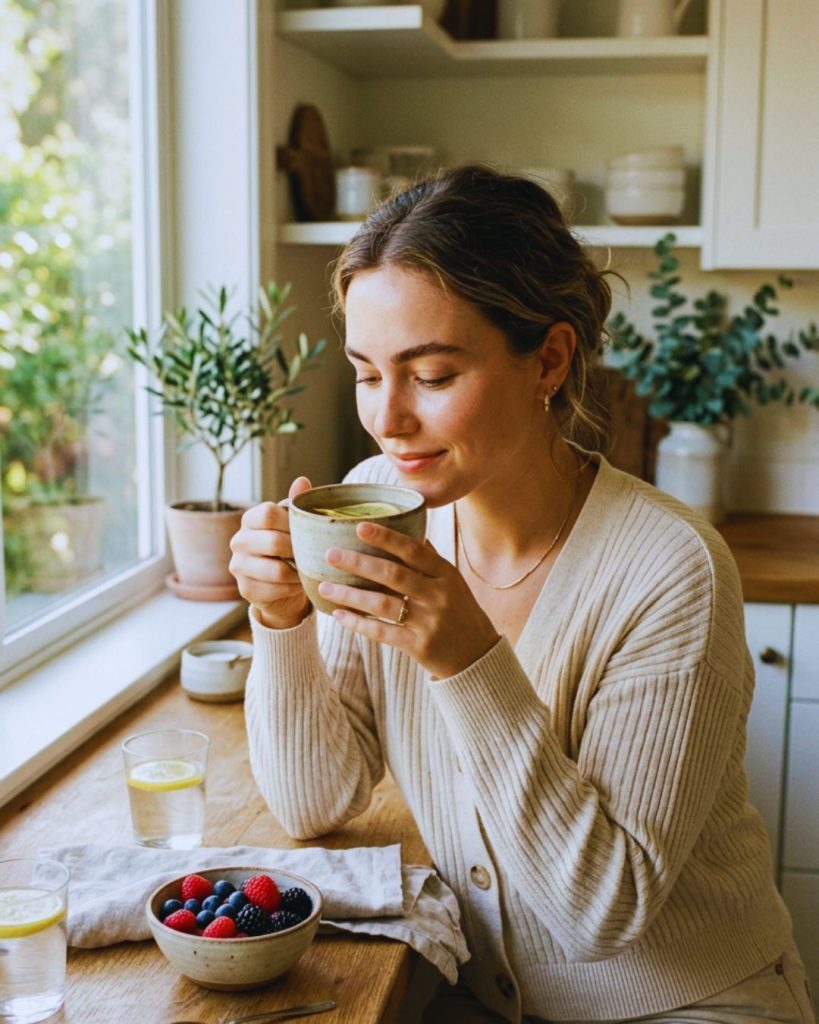
Woman with glowing skin enjoying a healthy morning routine with water and fresh fruits representing natural beauty and wellness.
True luxury starts within—hydration, sleep, and balance create a natural glow no makeup can replace.

Finally, the most expensive look comes from a body that is functioning at its peak. This is the natural beauty that money can’t buy, but discipline can.

  • Hydration from Within: Drinking 2–3 liters of water daily keeps the skin plump and the eyes bright.
  • Sleep Hygiene: They call it “beauty sleep” for a reason. 7–9 hours of quality sleep allows for cellular repair, reducing the need for heavy concealers.
  • Nutrient-Dense Diet: Focus on omega-3 fatty acids (found in walnuts and salmon) for hair shine and antioxidants (berries and greens) for skin clarity.
  • Confidence as a Tool: The ultimate “expensive” trait is a lack of desperation. When you are comfortable in your groomed, natural state, you project an effortless sophistication that is magnetic.

Summary Table: The “Expensive” Checklist

CategoryThe GoalKey Action
SkinRadiance & ClarityDaily SPF & Hyaluronic Acid
HairSmoothness & ShineRegular trims & Silk pillowcases
BrowsDefinition & LiftClear brow gel & Professional mapping
NailsCleanlinessNude tones & Cuticle oil
LifestyleVitality8 hours of sleep & Posture awareness

Conclusion

Looking expensive is a marathon, not a sprint. It’s the result of small, daily investments in yourself. By mastering your skin basics, maintaining groomed brows, and ensuring smooth hair, you create a foundation of beauty that doesn’t rely on logos or labels. You become the luxury.
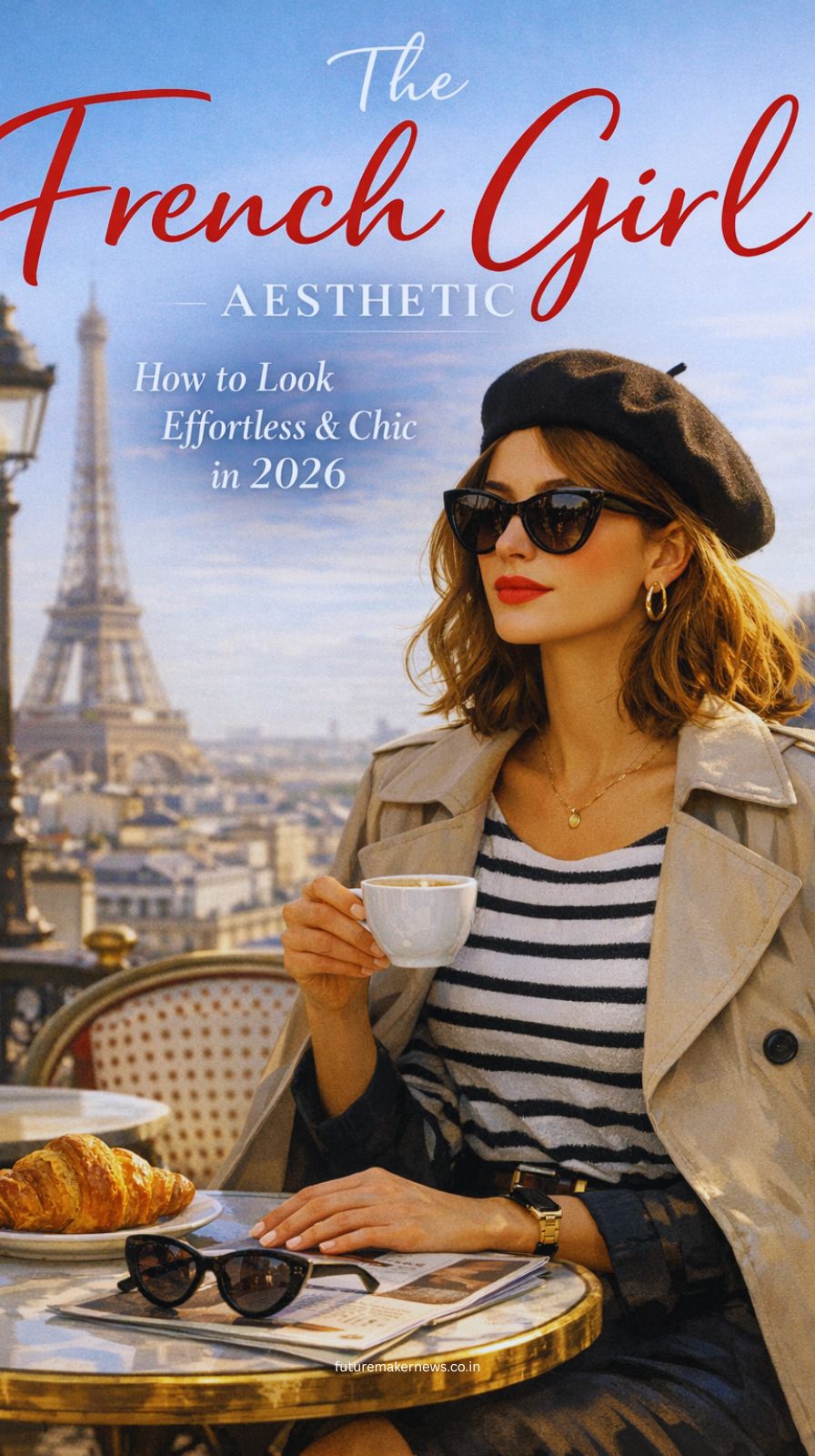
Parisian woman in a chic minimalist outfit walking through the city with effortless French girl style.

There is a global fascination with Je Ne Sais Quoi—that indefinable “something” that allows a French woman to look like she just stepped out of a high-fashion editorial, even when she’s just buying a baguette. It isn’t about being born with “better” genes; it is a calculated, culturally ingrained minimal glam philosophy.

The French approach to beauty and fashion is the antithesis of the “more is more” trend. While the rest of the world is layering heavy foundations and chasing fast-fashion fads, the French girl is investing in a simple wardrobe and skin-first grooming. Here is how you can decode the mystery and master the art of looking expensive without trying.

1. The “Skin First, Makeup Second” Mandate

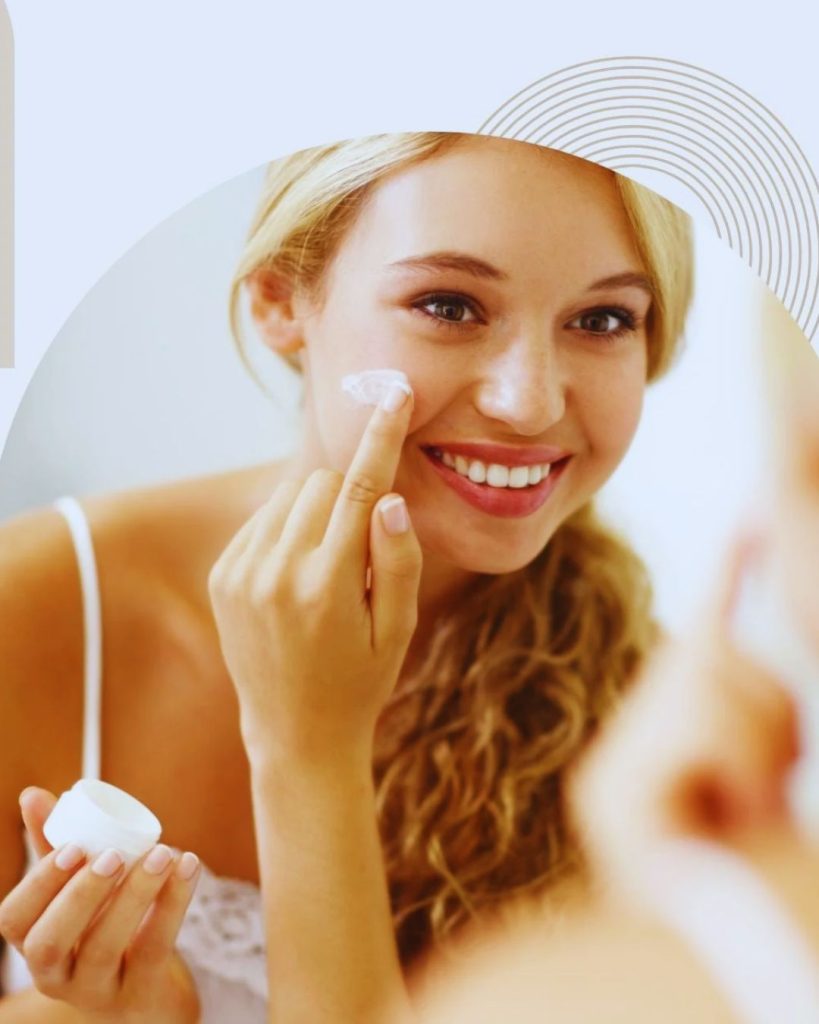
Woman applying minimal skincare routine with glowing natural skin in soft light.
French beauty starts with skincare—healthy, glowing skin over heavy makeup.

In France, beauty starts at the pharmacy, not the makeup counter. The goal is to have skin so healthy that makeup becomes a choice, not a necessity.

  • The Pharmacy Cult: French women swear by “cult” pharmacy brands like La Roche-Posay and Caulie. These products focus on the skin barrier and soothing inflammation rather than harsh stripping.
  • Minimal Coverage: You will rarely see a French girl in a full-coverage foundation. They prefer a tinted moisturizer or just a bit of concealer on redness, allowing their natural freckles and skin texture to breathe.
  • The Power of Thermal Water: A quick spritz of mineral-rich thermal water throughout the day keeps the skin hydrated and gives that “lived-in” glow that looks authentic, not oily.
  • Sun Protection Over Tans: While they love the sun, they prioritize broad-spectrum SPF. A French girl knows that a “sun-kissed” look is better achieved with a light bronzer than with permanent UV damage.
  • Gentle Cleansing: Double cleansing is a ritual. Using micellar water to remove the day ensures the skin is never scrubbed or irritated, maintaining a soft, youthful canvas.

2. The Art of the “Undone” Mane

Woman with natural messy bun and soft waves showing effortless French girl hairstyle.
Perfectly imperfect hair is the signature of effortless French beauty.

French hair never looks “done.” There are no stiff hairsprays or overly perfect pageant curls. The secret is hair that looks like it has been air-dried by a Mediterranean breeze.

  • The Day-Two Secret: Most French women believe hair looks best the day after it’s washed. The natural oils provide a gritty texture that is the hallmark of the effortless look.
  • The French Fringe: A soft, “curtain bang” or Jane Birkin-style fringe adds instant style to a simple ponytail. It frames the face and hides forehead lines without the need for Botox.
  • Air-Drying is King: Blowouts are rare. They prefer to apply a nourishing hair oil to damp ends and let the natural wave take over.
  • Discreet Highlights: They opt for balayage—hand-painted highlights that mimic where the sun would naturally hit. This means no “root regrowth” lines and fewer trips to the salon.
  • Embracing Imperfection: If a few strands fall out of a bun, they leave them. It’s that “accidental” beauty that makes the look approachable and chic.

3. The Capsule Wardrobe: Quality Over Quantity

Minimalist capsule wardrobe with neutral clothing pieces like blazer, white shirt, and jeans.
A small wardrobe of high-quality basics creates endless chic outfits.

The French closet is famously small but incredibly high-quality. They don’t shop for “outfits”; they shop for investment pieces that last decades.

  • The “Le Smoking” Blazer: A perfectly tailored black blazer is the ultimate weapon. It can be thrown over a silk slip dress for dinner or paired with jeans for a meeting.
  • The Neutral Palette: By sticking to navy, black, white, and camel, every item in their wardrobe matches. This makes getting dressed in the morning a five-minute task.
  • The White Button-Down: A crisp, slightly oversized poplin shirt is a staple. It’s tucked in loosely to create a relaxed yet professional silhouette.
  • Denim Perfection: French girls don’t chase denim trends. They find one pair of high-waisted, straight-leg jeans that fits their body perfectly and wear them until they fall apart.
  • Strategic Accessories: One high-quality leather handbag and a pair of gold hoop earrings are often the only accessories. They follow the rule: “Before you leave the house, take one thing off.”

4. The Signature “One-Feature” Rule

French beauty is all about balance—highlight one feature, keep the rest natural.

The French glam philosophy is built on balance. If they emphasize one feature, they leave the rest of the face completely “nude.”

  • The Red Lip: A classic matte red lipstick is a French girl’s best friend. When worn with a clean face and messy hair, it looks like a fashion statement rather than “heavy makeup.”
  • The Smudged Liner: If they choose eyes over lips, they use a soft kohl pencil and smudge it with their finger. It should look like you wore it yesterday—perfectly imperfect.
  • Groomed, Not Carved Brows: They brush their brows up with a clear gel but never fill them in so much that they look “stamped on.”
  • Skip the Contour: You won’t find heavy contouring in Paris. They prefer a cream blush on the apples of the cheeks to look “en plein air” (in the open air).
  • Nails are Short and Clean: Long acrylics are a rarity. A short, rounded nail with a clear coat or a deep burgundy is the standard for sophisticated hands.

5. The Lifestyle: Beauty as a Result of Joy

Woman enjoying a relaxed coffee moment in a chic Parisian setting with effortless style.
Effortless beauty comes from a lifestyle of balance, confidence, and simplicity.

Effortless beauty is also a psychological state. The French believe that if you enjoy your life, you will naturally look better.

  • The “Slow” Philosophy: They don’t rush. Rushing creates stress, and stress creates wrinkles. There is beauty in the slow coffee and the long walk.
  • Wine and Water Balance: They enjoy life’s pleasures—cheese, wine, chocolate—but in moderation. This prevents the “puffy” look associated with overindulgence.
  • Posture and Poise: A French girl carries herself with a certain inner confidence. She doesn’t seek external validation for her look; she dresses for herself.
  • The Signature Scent: They don’t switch perfumes based on trends. A French woman finds her scent identity and sticks to it, leaving a trail of “her” wherever she goes.

Comparison: Effortless vs. High-Maintenance

FeatureThe “Effortless” WayThe “High-Maintenance” Way
FoundationSpot concealer / Tinted moisturizerFull-coverage / Baking
HairAir-dried / Natural textureFrequent heat styling / Hairspray
ShoppingInvestment basics / Natural fibersFast fashion / Synthetic trends
LipsOne bold color / Blotted edgesOver-lined / Glossy toppers
AttitudeRelaxed / ConfidentPerceived perfectionism

How to Transition Your Routine

Moving toward an effortless aesthetic requires a “decluttering” of your beauty cabinet and your mind.

  1. Audit Your Wardrobe: Remove anything that doesn’t fit perfectly or isn’t made of a breathable fabric like cotton, silk, or wool.
  2. Focus on Health: Spend your “makeup budget” on a high-quality vitamin C serum or a professional facial instead.
  3. Learn Your Angles: Understand how your hair naturally falls and work with it rather than fighting it with a flat iron every morning.
  4. Buy the Blazer: If you buy one thing this year, make it a high-quality, structured blazer. It is the “instant chic” button for any outfit.

Conclusion

Looking “French-girl effortless” is actually an act of rebellion. It’s a rebellion against the pressure to be perfect and the constant need to buy more. By focusing on simple wardrobe staples, minimal glam, and a “skin-first” mindset, you don’t just look better—you feel freer. The most expensive thing you can wear is the confidence that you are “enough” just as you are.

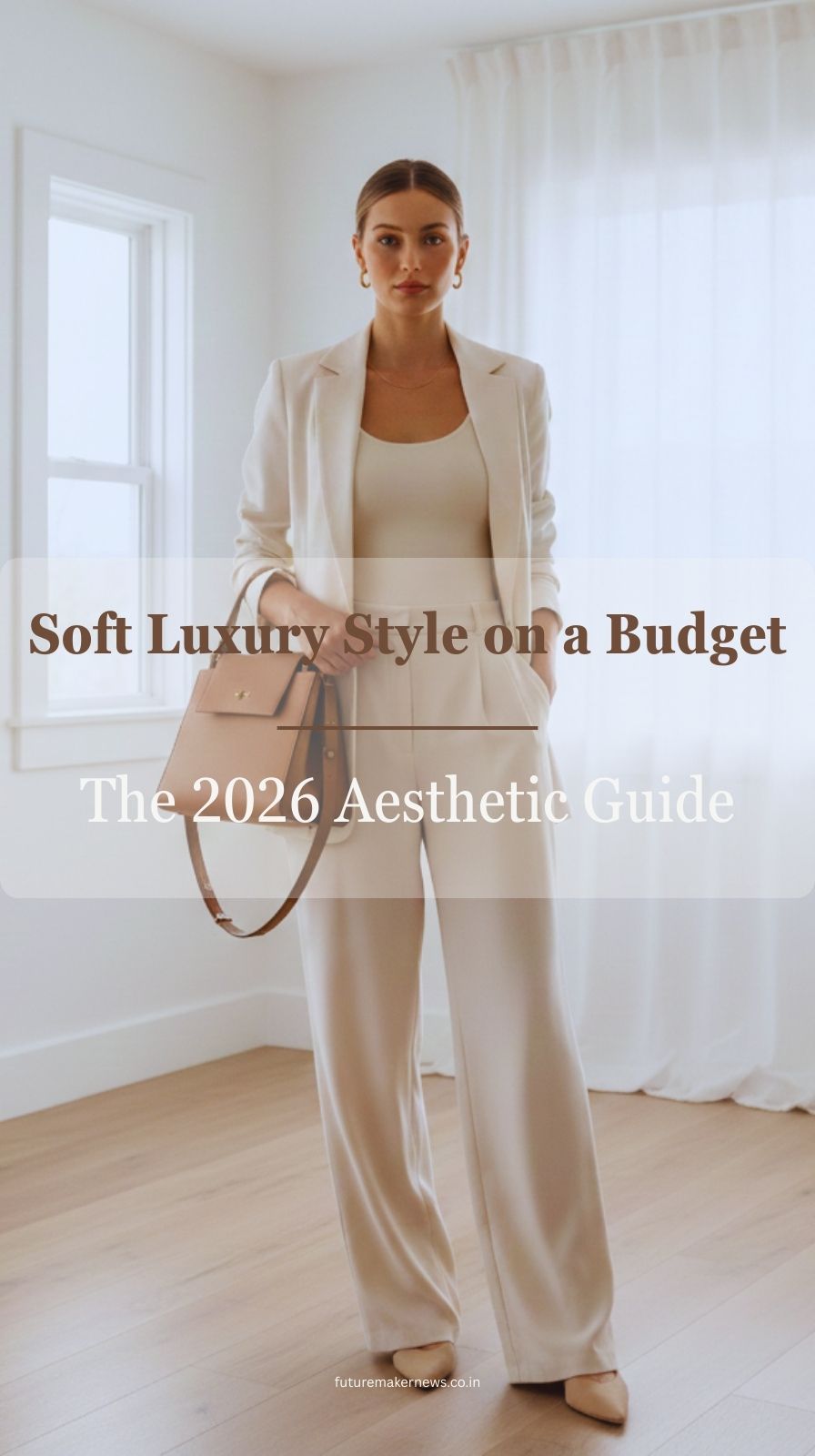
Woman wearing off-white blazer and wide-leg trousers in neutral minimalist setting representing soft luxury style on a budget.

In 2026, the fashion world has officially moved past the era of “logomania” and “loud luxury.” We are entering the age of Soft Luxury—a refined, tactile aesthetic that prioritizes comfort, quality, and a sense of calm sophistication. Unlike the rigid “Quiet Luxury” of years past, Soft Luxury is approachable, incorporating fluid silhouettes and a gentle color palette that feels like a warm embrace.

The best part? You don’t need a designer’s salary to achieve this look. True luxury isn’t a price tag; it’s an intentional approach to fabric selection, color harmony, and garment care. If you want to look like you spend your weekends at a coastal retreat while sticking to a realistic budget, this is your ultimate guide.

1. The Soft Luxury Color Palette: 2026 Edition

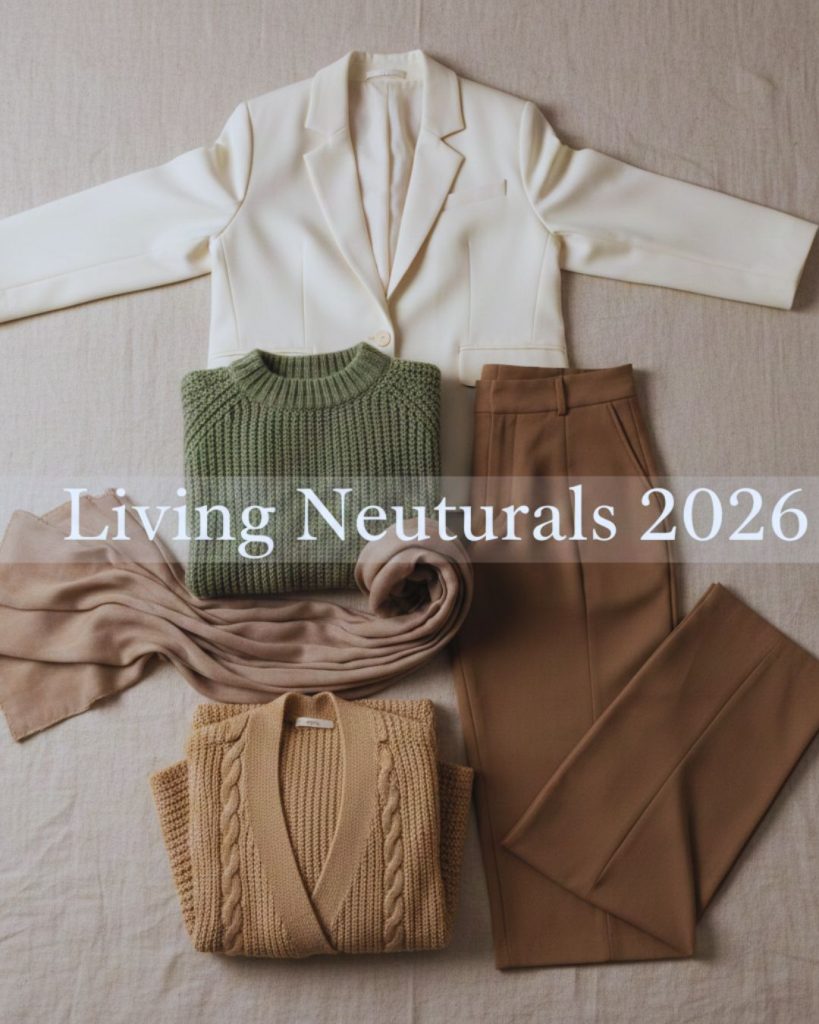
Flat lay of off-white, sage, and cocoa neutral clothing pieces representing soft luxury color palette for 2026.
Soft Luxury starts with living neutrals—Cloud Dancer, sage, cocoa, and oat tones that naturally harmonize.

Color is the most immediate way to signal luxury. For 2026, the palette has shifted from stark whites to “living neutrals.”

  • The Hero Shade: Cloud Dancer. This soft, airy off-white (Pantone’s 2026 favorite) is the foundation of Soft Luxury. It’s warmer than pure white and more modern than beige.
  • Earthy Pastels: Think Sage Green, Angora, and Cocoa Powder. These colors look expensive because they mimic the natural world.
  • The Monochromatic Magic: Dressing in varying shades of the same color (e.g., a cream knit with oat-colored trousers) creates a long, expensive-looking line. It removes the “choppiness” of an outfit and makes even budget pieces look like a coordinated set.

By sticking to this neutral palette, every piece in your wardrobe will naturally match, giving you that effortless “curated” vibe.

2. Fabric Hacks: Seeking the “Touch of Wealth”

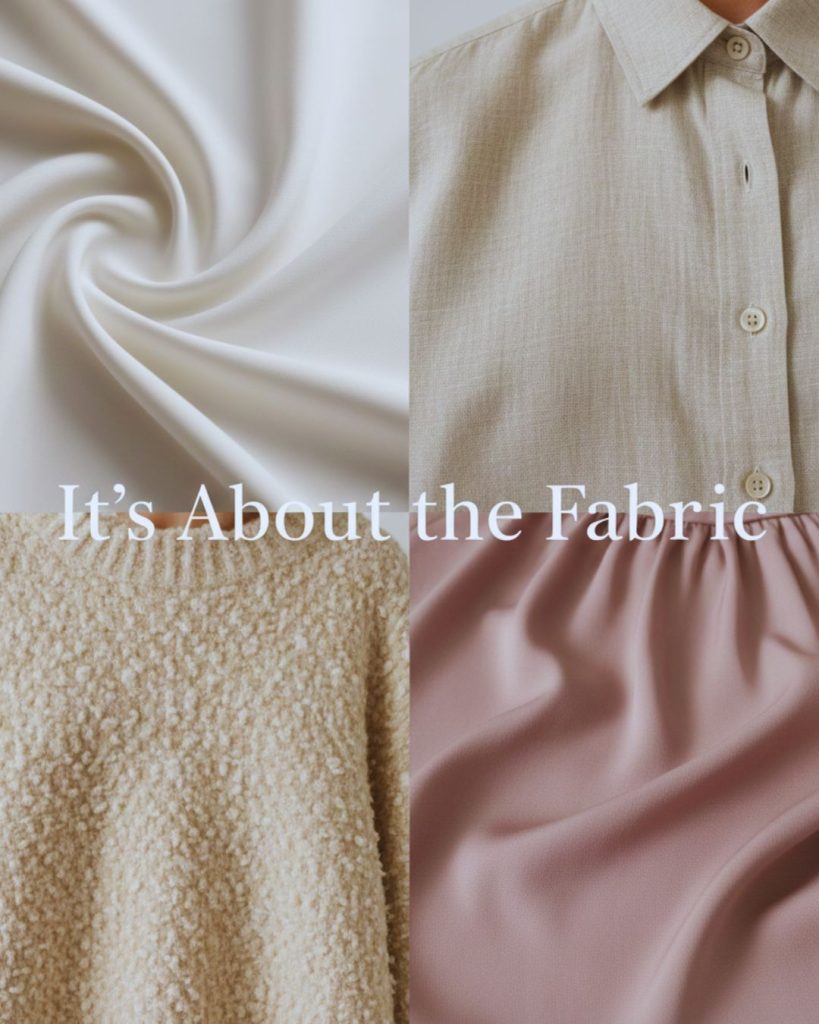
Close-up of cotton-modal knit, linen blend fabric and textured sweater representing affordable luxury fabrics.
Cotton-modal, linen blends, and textured knits create the illusion of luxury without the designer price.

In Soft Luxury, the way a fabric moves is more important than the brand on the label. High-end brands use natural fibers because they drape beautifully and last for decades.

  • The Cotton-Modal Blend: Pure polyester often has a “plastic” shine. Instead, look for cotton-modal or viscose blends. These affordable alternatives mimic the drape of silk and the softness of cashmere at a fraction of the cost.
  • Linen Blends: While pure linen can be pricey and prone to harsh wrinkling, a linen-cotton blend offers that “wealthy coastal” texture with more durability and a lower price point.
  • Textured Knits: Look for bouclé or “shaved” knits. Texture adds depth to an outfit, making it look more complex and expensive. A textured sweater in a neutral tone will always outshine a flat, synthetic one.

3. Styling Hacks: The Art of the “Soft Silhouette”

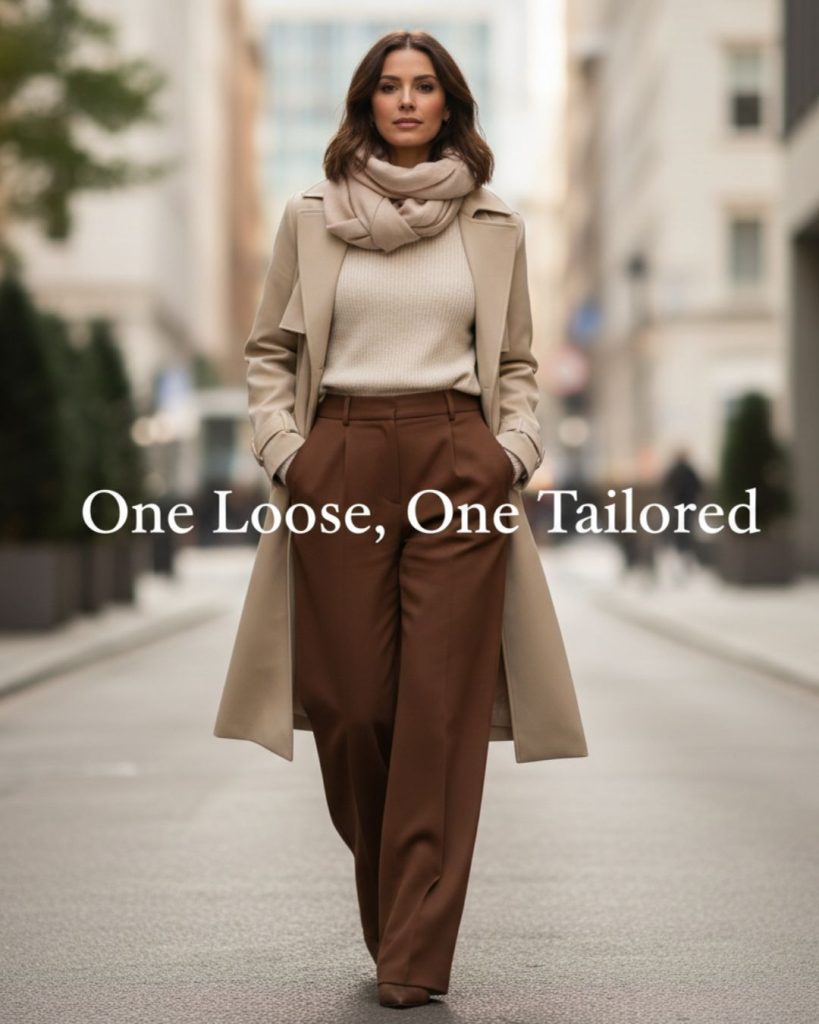
Woman wearing wide-leg trousers with fitted knit and trench coat demonstrating soft luxury silhouette balance.
Pair flowy trousers with a fitted top to create a soft, balanced silhouette that looks effortlessly luxe.

The silhouette of 2026 is all about proportional flow. The goal is to look polished but never “stiff.”

  • The Half-Tuck: A full tuck can look too formal; leaving a shirt out can look messy. The “French tuck” (tucking just the front) creates a waistline while keeping that soft, relaxed vibe.
  • Layering with Purpose: Layer a lightweight knit over your shoulders or a crisp trench coat over a casual tee. Layering adds “visual volume,” which is a key indicator of sophisticated style.
  • The “One Loose, One Tailored” Rule: To master silhouette balance, pair a voluminous wide-leg trouser with a more fitted (but not tight) top. This ensures you don’t look swallowed by your clothes.

4. Affordable Alternatives: Where to Shop

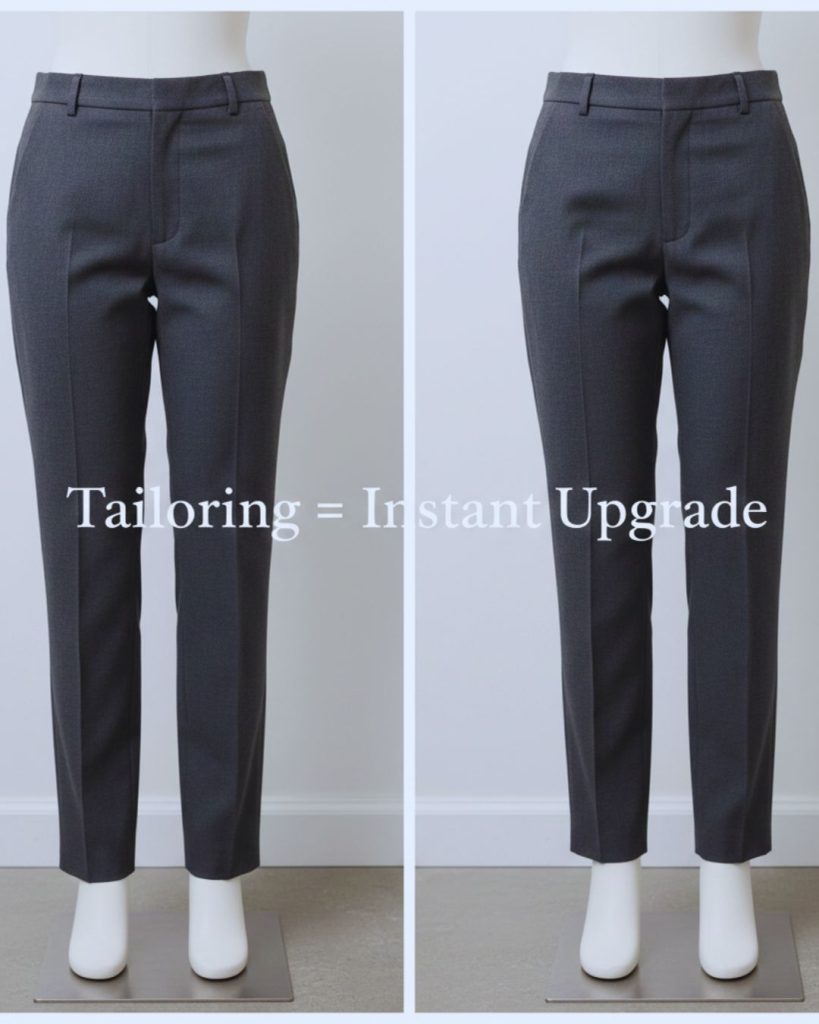
Comparison of untailored trousers versus hemmed tailored trousers showing difference in fit and polish.
A $30 pair of trousers can look like $300 with simple tailoring. Fit is the real luxury.

You don’t need to visit high-end boutiques to find Soft Luxury staples. You just need to know what to look for in everyday stores.

  • Thrifting for Natural Fibers: Thrift stores are goldmines for 100% wool blazers or silk scarves. Look past the style and focus on the fabric tag. A vintage wool blazer can be tailored to fit you perfectly for under $50.
  • High-Street “Premium” Lines: Many budget-friendly retailers now have “Premium” or “Heritage” collections that focus on linen, leather, and wool. These are the sweet spot for affordable luxury.
  • The Tailoring Secret: This is the #1 hack. A $30 pair of trousers from a fast-fashion brand can look like $300 trousers if you spend $15 to have the hem shortened and the waist nipped. Tailoring importance cannot be overstated.

5. The Invisible Details of Luxury

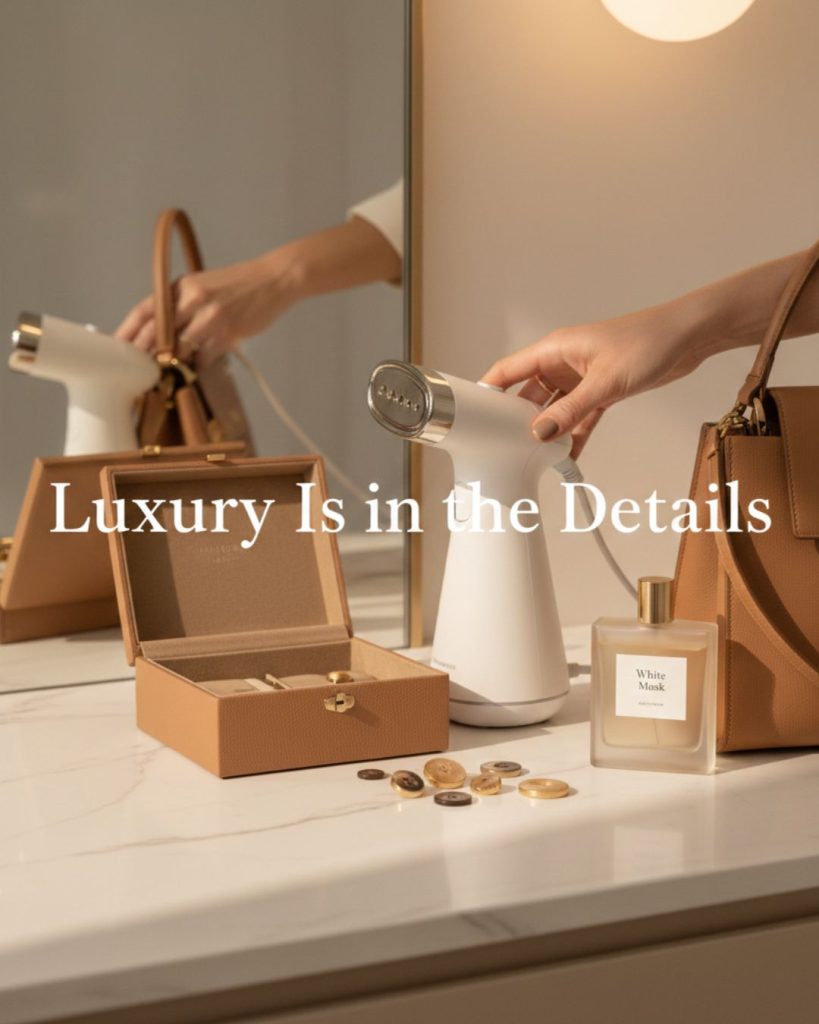
Flat lay of garment steamer, matte buttons and leather tote representing invisible details of soft luxury style.
Steamed clothes, matte hardware, neutral nails—the small details create the soft luxury effect.

The “Soft Luxury” woman always looks “finished.” This isn’t about expensive jewelry; it’s about impeccable grooming and maintenance.

  • The Handheld Steamer: Wrinkles are the ultimate luxury-killer. A perfectly steamed cotton shirt looks ten times more expensive than a wrinkled designer one.
  • Mind the Hardware: Cheap, shiny gold buttons on a blazer are a giveaway. Swap them for matte gold, horn, or mother-of-pearl buttons to instantly elevate the piece.
  • Signature Scent & Grooming: A clean, “skin-scent” perfume (think white musk or soft sandalwood) complements the Soft Luxury aesthetic. Keep nails short and neutral; chipped polish is the opposite of luxury.

6. The “Investment” Strategy

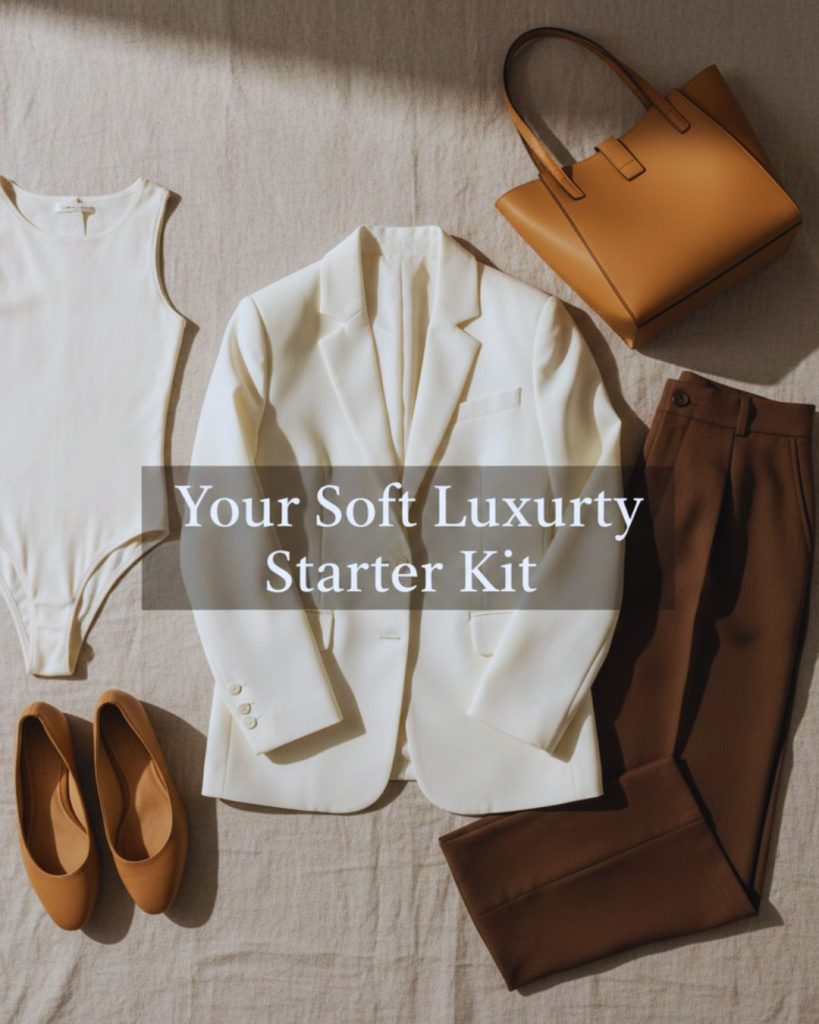
Capsule wardrobe featuring off-white blazer, wide-leg trousers, leather tote and pointed-toe flats representing soft luxury starter kit.
Build your soft luxury wardrobe with just five elevated staples that anchor everything else.

Even on a budget, you should aim for Quality Over Quantity. Instead of five trendy tops, buy one high-quality structured blazer or a pair of leather loafers. These “hero pieces” anchor your cheaper items, “pulling up” the value of the entire outfit.

Your 5-Piece Soft Luxury Starter Kit:

  1. A Cloud Dancer (Off-White) Blazer: Instantly polishes any look.
  2. Wide-Leg Trousers: Look for a high-waisted fit in a flowy fabric.
  3. A Seamless Bodysuit: The perfect base for layering.
  4. A Leather Tote: Avoid logos; focus on a structured silhouette.
  5. Pointed-Toe Flats: They elongate the leg and look more “luxe” than rounded toes.

Conclusion: Luxury is a State of Mind

The Soft Luxury aesthetic is proof that style is about intentionality, not income. By focusing on natural-looking fabrics, a neutral color palette, and the perfect fit, you create a wardrobe that feels as good as it looks.

In 2026, the most stylish person isn’t the one wearing the most expensive outfit—it’s the one who looks the most at ease in their clothes. Stop chasing “loud” trends and start building a wardrobe that whispers.

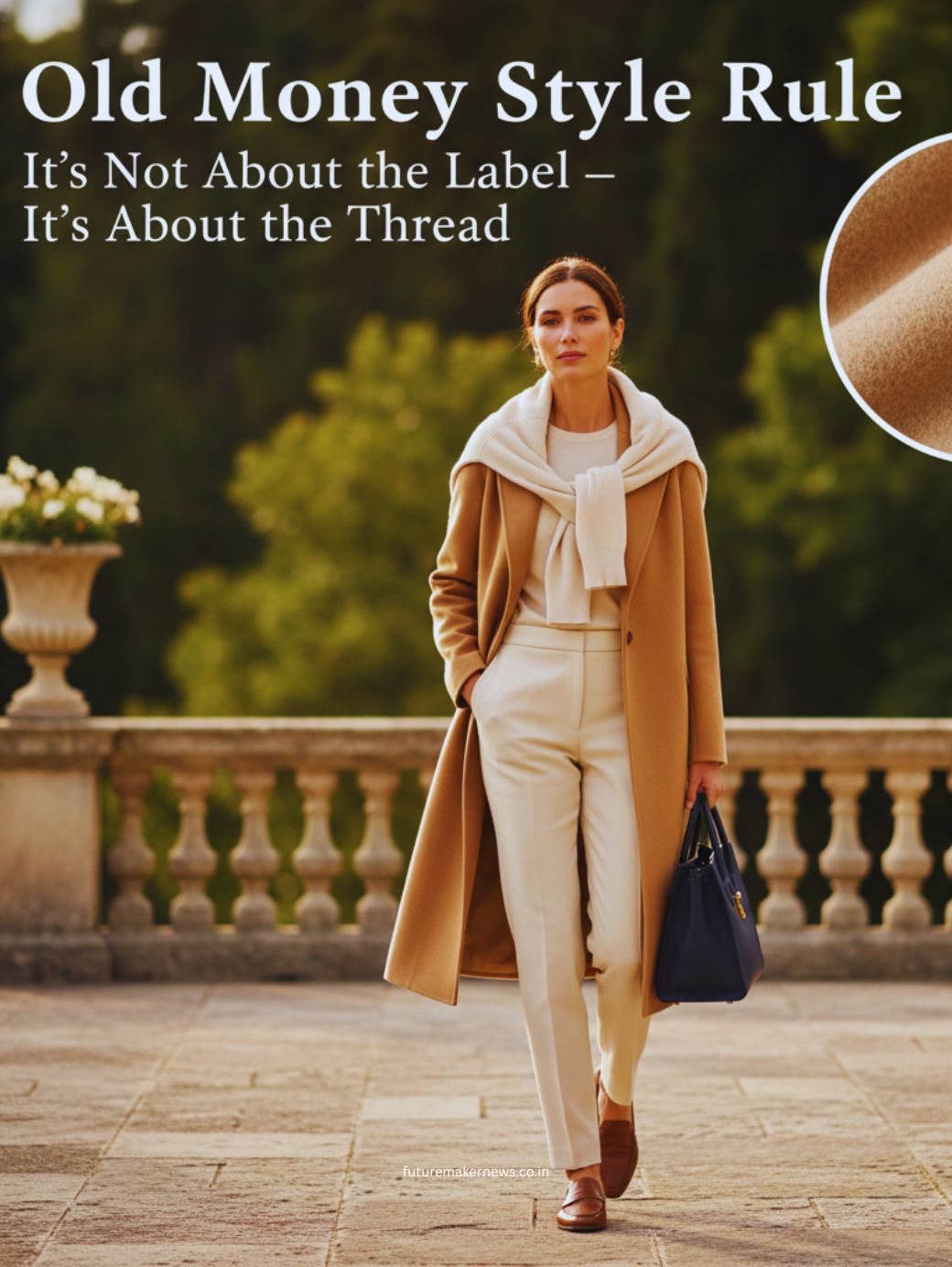
Woman wearing camel wool coat and cashmere sweater in neutral luxury setting highlighting old money style aesthetic.

The “Old Money” aesthetic has taken the digital world by storm in 2026. You’ve seen the images: neutral linen sets on the Amalfi Coast, structured navy blazers in London, and cashmere sweaters draped over shoulders in the Hamptons. But most people chasing this look make a fatal mistake—they focus on the brand name rather than the structural integrity of the garment.

The true old money style rule that rarely gets mentioned is the tactile hierarchy. In elite circles, wealth isn’t seen; it is felt. It is a language of fabric quality and bespoke tailoring that whispers while “new money” trends shout. If you want to master this look, you have to stop shopping for “vibes” and start shopping for fibers.

1. The Fabric Manifesto: Natural Over Synthetic

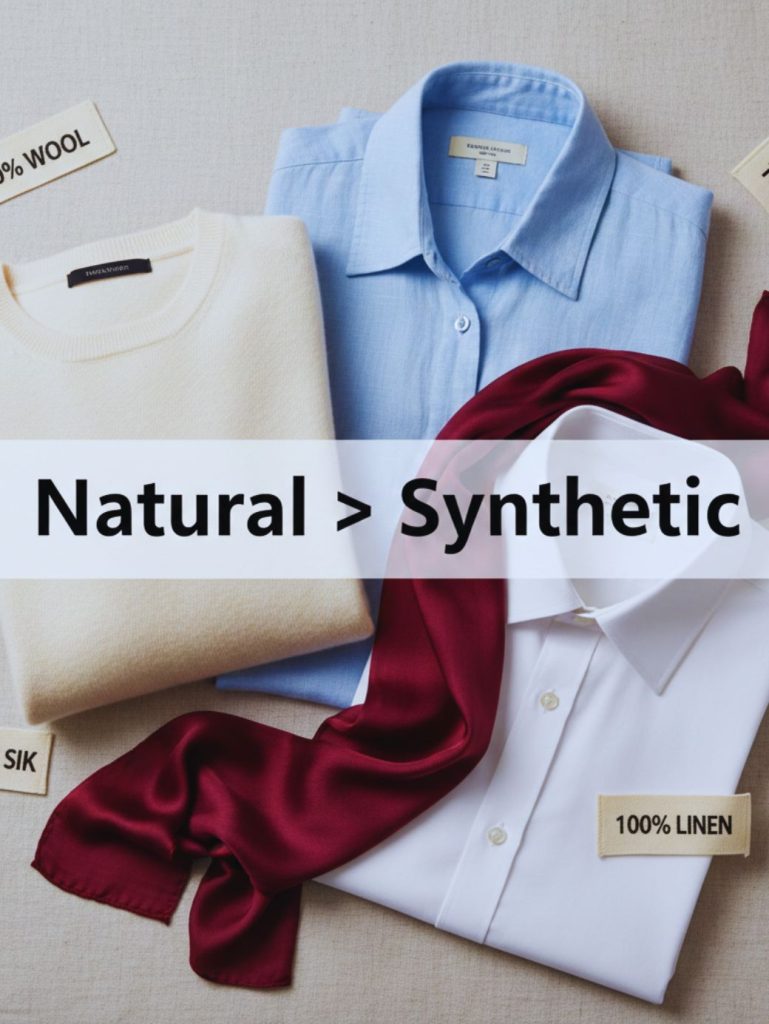
Flat lay of cashmere, linen, silk and Egyptian cotton garments representing natural fabrics for old money style.
The real old money rule: always choose natural fibers like wool, silk, linen, and Egyptian cotton.

The most important rule of the old money aesthetic is a total rejection of polyester, nylon, and acrylic. Synthetic fabrics have a “shiny” finish and a static-prone drape that instantly cheapens an outfit, regardless of the price tag.

  • Cashmere & Wool: These are the twin pillars of a high-end winter wardrobe. Look for “two-ply” cashmere, which offers a denser, more luxurious weight that resists pilling.
  • Linen: The aristocrat’s summer fabric. Many avoid it because it wrinkles, but in old money circles, a few natural creases are seen as a sign of authenticity—it shows you are wearing real, breathable fibers.
  • Silk: Use silk for blouses and scarves. It has a natural luster that catches the light without looking “glittery.”
  • Egyptian Cotton: For shirting, the thread count and the staple length of the cotton determine the “crispness.” A high-quality cotton shirt will hold its collar shape all day.

When you prioritize natural fibers, your clothes age “with character” rather than wearing out. They breathe, they drape, and they feel significantly more high-end against the skin.

2. The Tailoring Importance: The “One-Inch” Rule

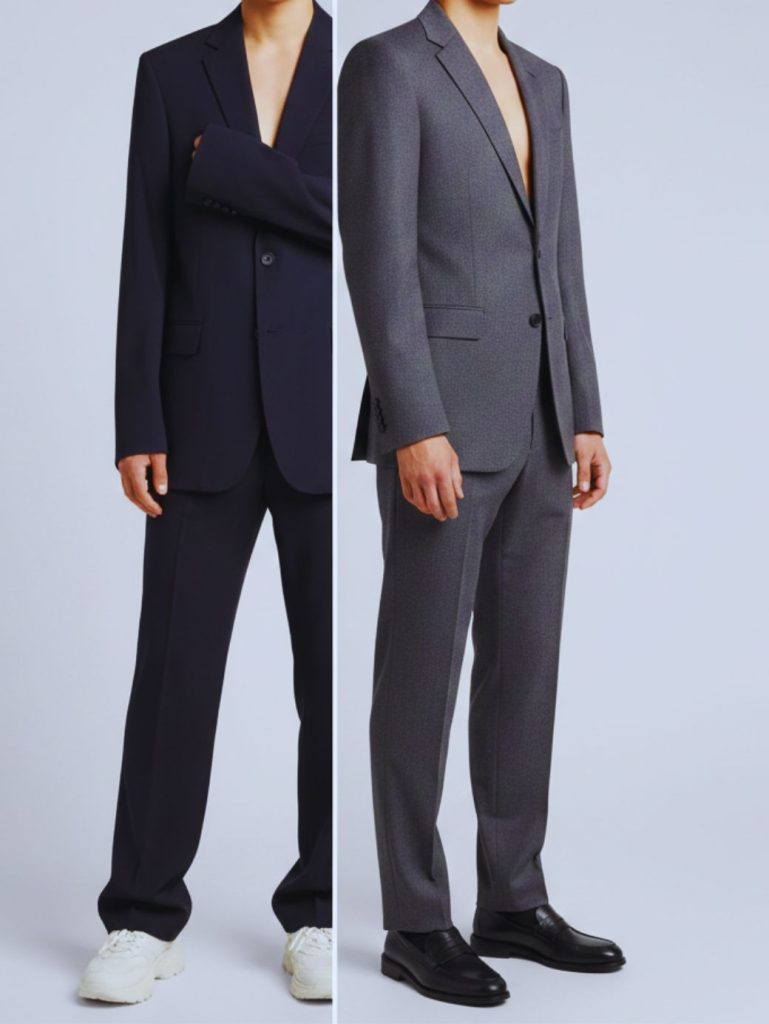
Comparison of poorly fitted blazer versus tailored blazer showing proper shoulder alignment and trouser break.
A half-inch makes the difference between rental and refined. Tailoring is non-negotiable in old money style.

You could buy a $5,000 suit off the rack, but if the sleeves are half an inch too long, it will look like a rental. The silent rule of the wealthy is that nothing fits perfectly until it’s been altered.

  • Shoulder Alignment: The seam of your blazer or shirt should sit exactly where your arm meets your shoulder. If it droops, the silhouette balance is ruined.
  • The Trouser Break: Old money style favors a “slight break” or “no break.” Your trousers should graze the top of your shoes, creating a clean, vertical line that elongates the leg.
  • The Waist Taper: Even a “relaxed” shirt should have a slight taper. A tailor can add “darts” to the back of a shirt to remove excess fabric, making a $30 thrifted find look like a bespoke masterpiece.

Tailoring tips aren’t just for formal wear. Tailoring your casual chinos or even your heavy wool overcoat is the difference between looking like you’re wearing a costume and looking like you own the room.

3. Silhouette Balance and “Sprezzatura”

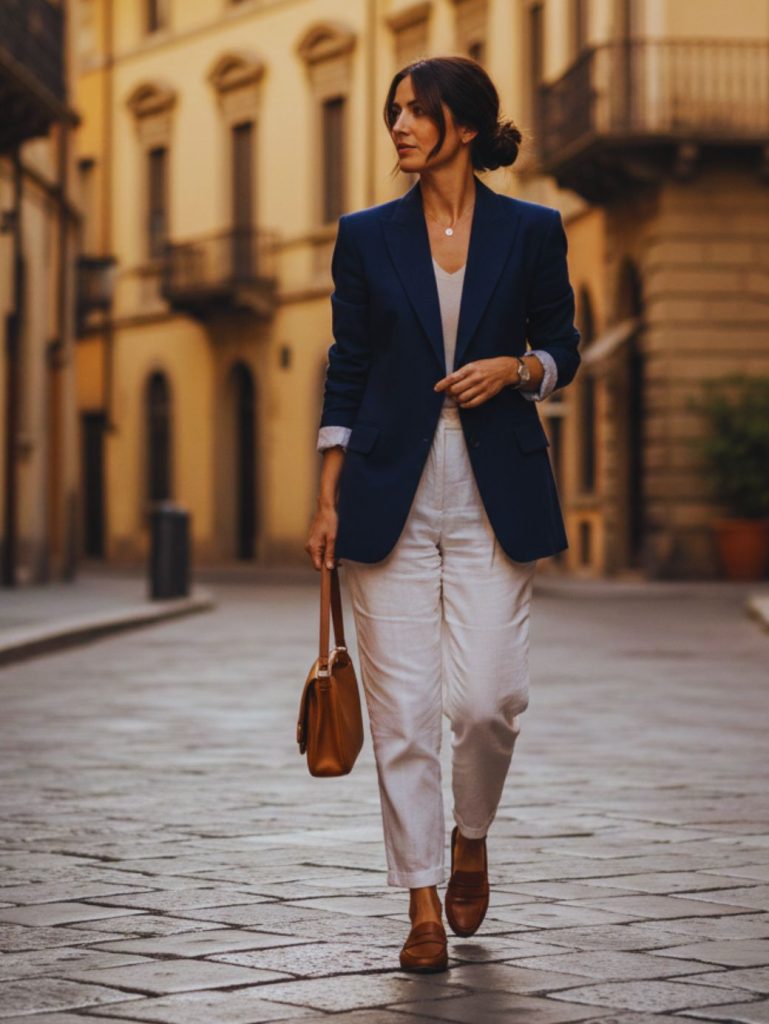
Woman wearing structured blazer with relaxed linen trousers demonstrating effortless old money silhouette balance.
Old money style is about balance — structured pieces paired with relaxed elements for effortless elegance.

The Italians have a word for the old money way of dressing: Sprezzatura. it means “a certain nonchalance, so as to conceal all art and make whatever one does or says appear to be without effort.”

  • Intentional Mismatching: Don’t be too “perfect.” A perfectly tailored blazer paired with slightly “rumpled” linen trousers creates a balanced, lived-in luxury.
  • The Rule of Proportions: If your coat is heavy and structured, keep your base layers light. This maintains a sophisticated silhouette that doesn’t overwhelm your frame.
  • Color Conversations: In this aesthetic, colors don’t “match”—they “converse.” Pair neutral tones like oatmeal and camel with “accent” colors like forest green or burgundy. These colors naturally complement each other without looking like a uniform.

4. Hardware and Hidden Details

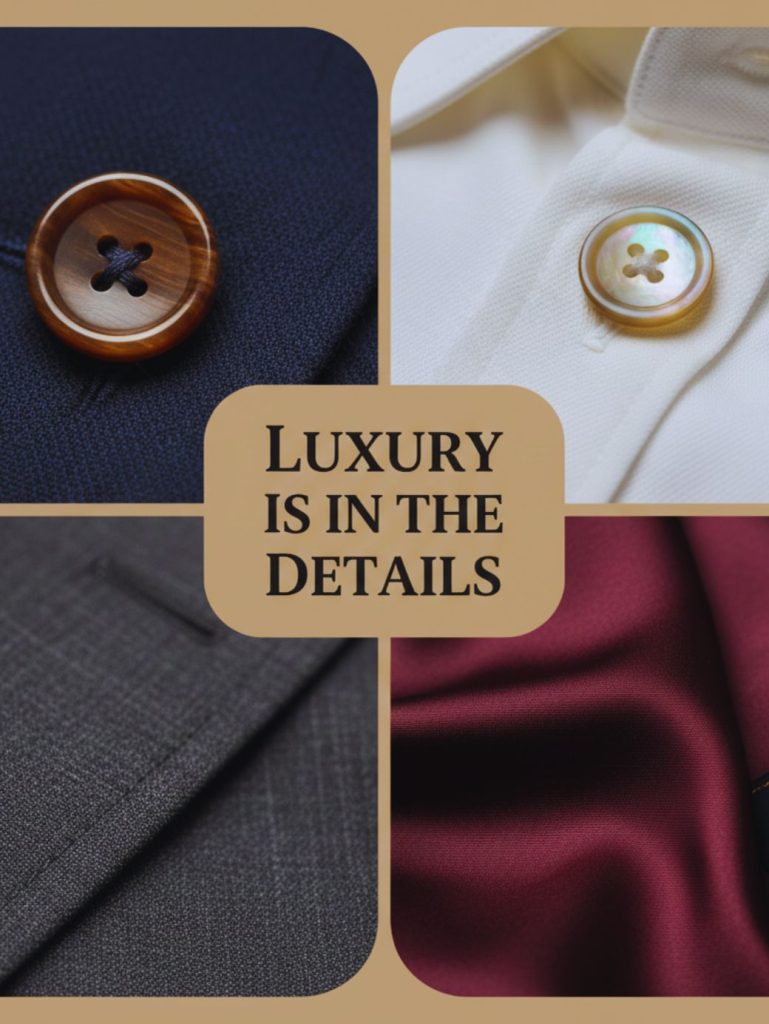
Close-up of horn buttons, silk lining and pick stitching on blazer representing understated luxury details.
Horn buttons, silk lining, and hand-finished stitching — the quiet signals of real quality.

The “trick” nobody mentions is that the wealth is in the details that 99% of people miss. This is what creates understated luxury.

  • Buttons: Fast-fashion brands use plastic buttons. Old money pieces use horn, mother-of-pearl, or brass. Swapping the buttons on a cheap blazer is the fastest fashion hack to triple its perceived value.
  • Stitching: Look for “pick-stitching” on lapels—a small, hand-done looking stitch that signals a garment was crafted with care rather than mass-produced.
  • Lining: A truly expensive coat is fully lined in Bemberg or silk, not cheap polyester that makes a “swish” sound when you move.

5. The “Cost Per Wear” Investment Mindset

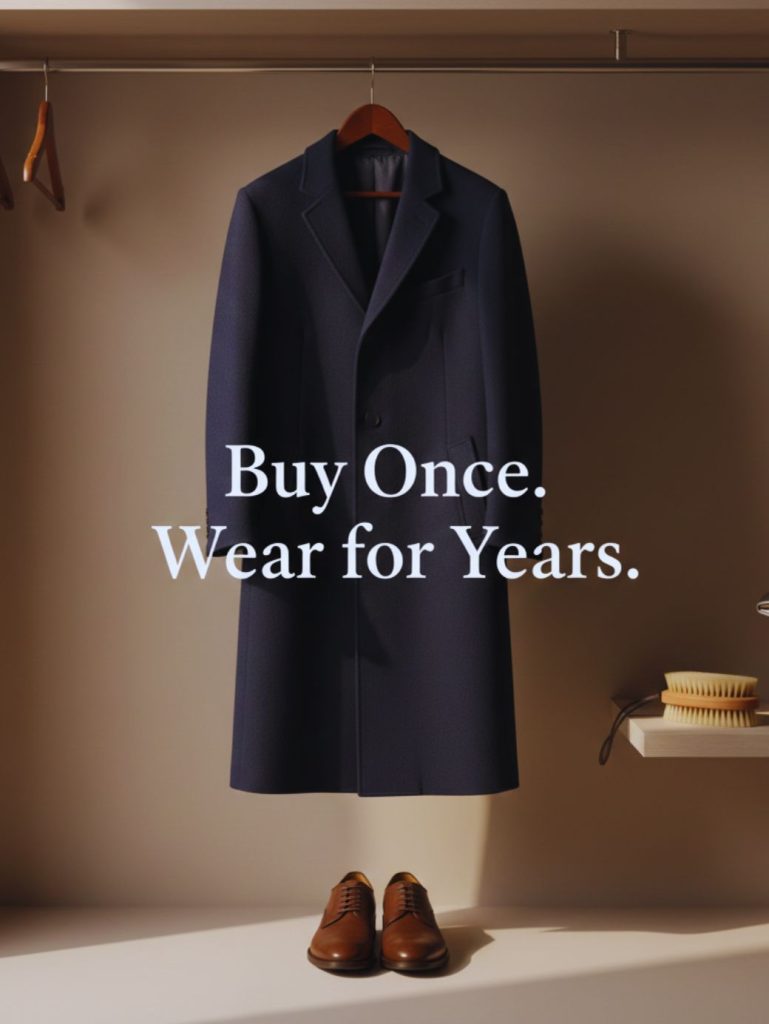
Minimalist wardrobe featuring wool coat and polished leather shoes representing cost per wear investment fashion.
Old money style is sustainable by nature. Invest in timeless pieces that age with character.

Old money style is fundamentally sustainable because it prioritizes investment over impulse. Instead of buying five trendy jackets that will fall apart in a year, you buy one timeless wool coat that you will wear for a decade.

  • Durability: Natural fibers like tweed and heavy cotton improve with age. They mold to your body, becoming more comfortable the more you wear them.
  • Heritage Patterns: Stick to pinstripes, herringbone, and houndstooth. These patterns have been in style for 100 years and will be in style for 100 more.
  • Maintenance: Part of the style is the care. Polished shoes, brushed wool, and steamed linens are the “invisible” accessories that complete the sophisticated look.

Conclusion: Wealth is Quiet, Style is Consistent

The old money style rule nobody mentions is that you cannot “buy” the aesthetic—you have to curate it. It is a commitment to quality over quantity and a deep respect for craftsmanship.

By focusing on fabric quality, mastering tailoring, and sticking to a neutral palette, you aren’t just following a trend. You are adopting a way of dressing that transcends time. In a world of fast fashion and fleeting “cores,” the person in the perfectly fitted, high-quality wool sweater will always be the best-dressed person in the room.

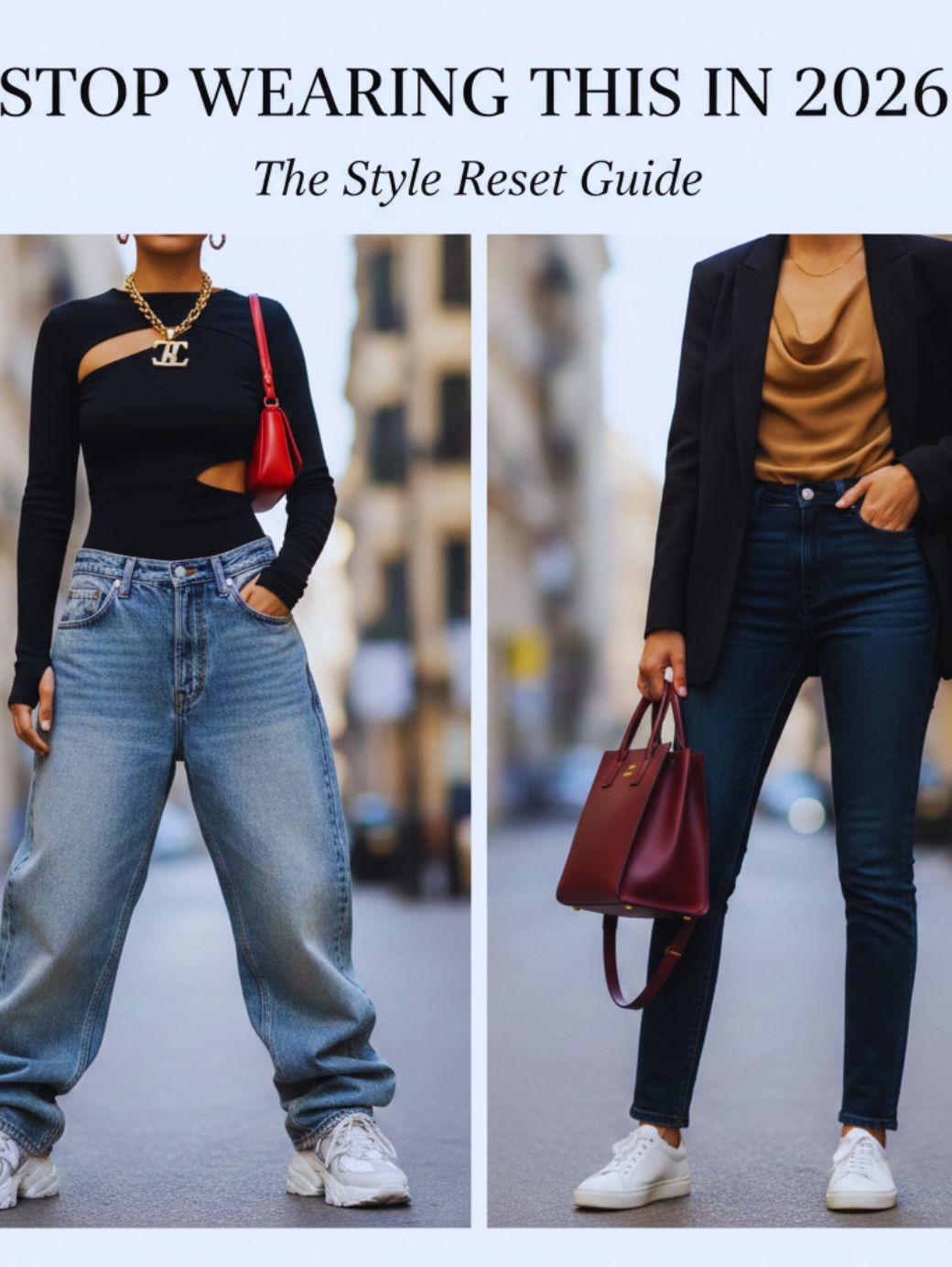
Side-by-side fashion comparison showing outdated baggy jeans and chunky sneakers versus refined 2026 tailored denim and structured tote.

The fashion cycle has shifted. In 2026, the era of “disposable trends” has finally hit a wall. We are moving away from the loud, chaotic aesthetics of the early 2020s and leaning into a period of refined minimalism and intentional dressing.

If you want to keep your wardrobe fresh, it’s time to perform a closet audit. Looking “dated” isn’t about the age of your clothes—it’s about clinging to silhouettes and styles that no longer serve the modern aesthetic. Here is exactly what you should stop wearing in 2026 and the timeless fashion pieces you should reach for instead.

1. The Death of the Ultra-Baggy Jean

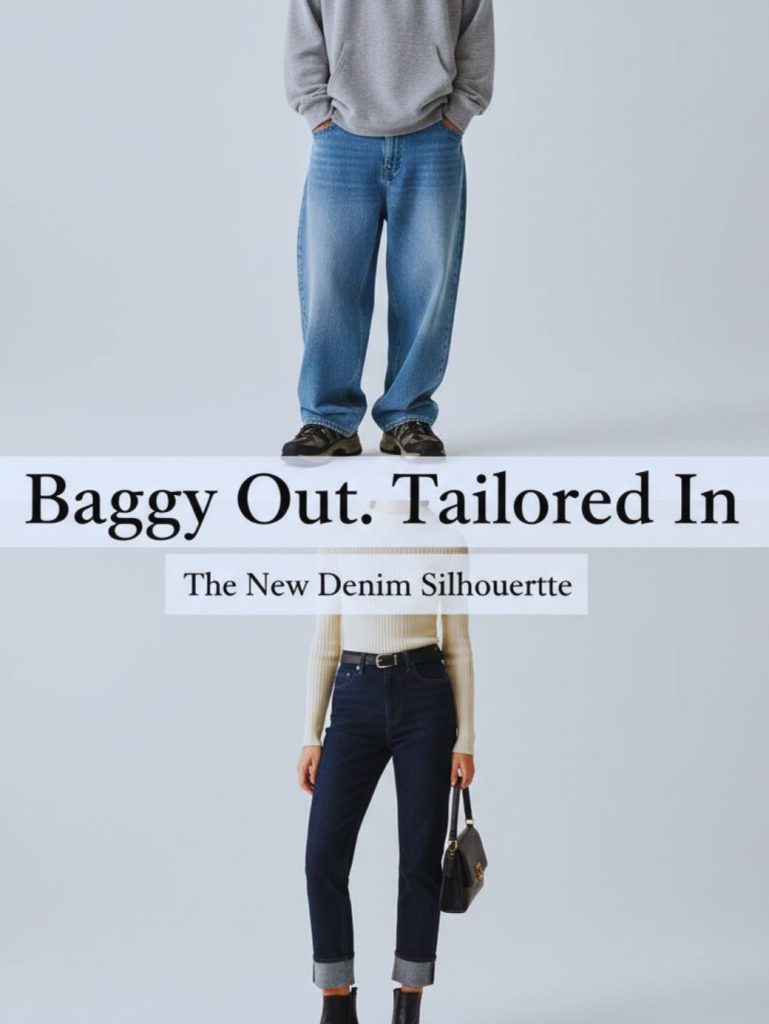
Comparison of ultra-baggy puddle jeans versus stovepipe jeans styled with boots in modern minimalist outfit.
2026 denim is structured, balanced, and ankle-length. Stovepipe jeans are the grown-up upgrade.

For years, “the baggier, the better” was the denim mantra. But in 2026, we are officially over the “puddling” fabric that swallows your shoes and hides your frame.

  • The Outdated Trend: Low-rise, ultra-baggy “puddle” jeans that drag on the floor.
  • The 2026 Winner: Stovepipe jeans and cigarette pants. We are returning to a more balanced silhouette. These cuts provide the comfort of a straight leg but with a cleaner, more tailored line that hits exactly at the ankle.
  • Why it Works: Stovepipe jeans create a “grown-up” look that works with everything from a pointed-toe boot to a sleek loafer.

2. Farewell to Micro-Handbags

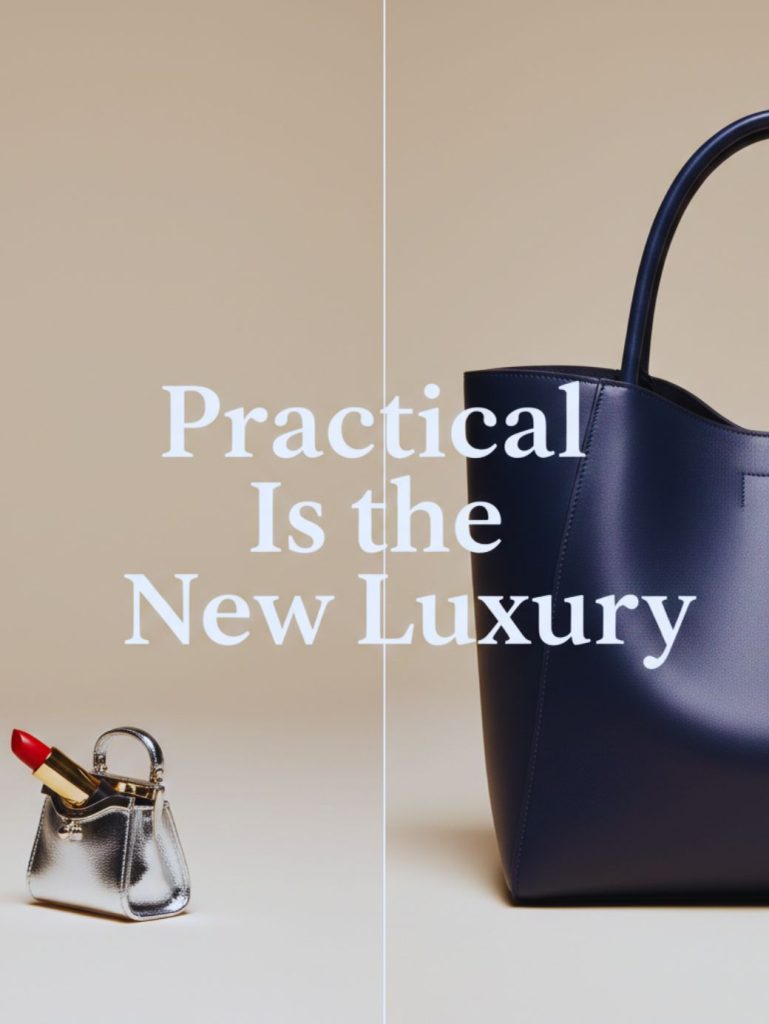
Small micro handbag compared with large structured leather tote in burgundy representing 2026 handbag trend.
Micro-bags are out. Structured workhorse totes are the power move for 2026.

We’ve all had our fun with the “decorative” bags that couldn’t even fit a smartphone. In 2026, practicality is the new luxury.

  • The Outdated Trend: Micro-bags that serve zero functional purpose.
  • The 2026 Winner: The workhorse tote. We are seeing a massive resurgence in large, structured leather totes.
  • The Key Detail: Look for “architectural” shapes rather than slouchy ones. A structured tote in a rich burgundy or deep navy signals that you are a woman of business and style.

3. Retiring the “Chunky Dad” Sneaker

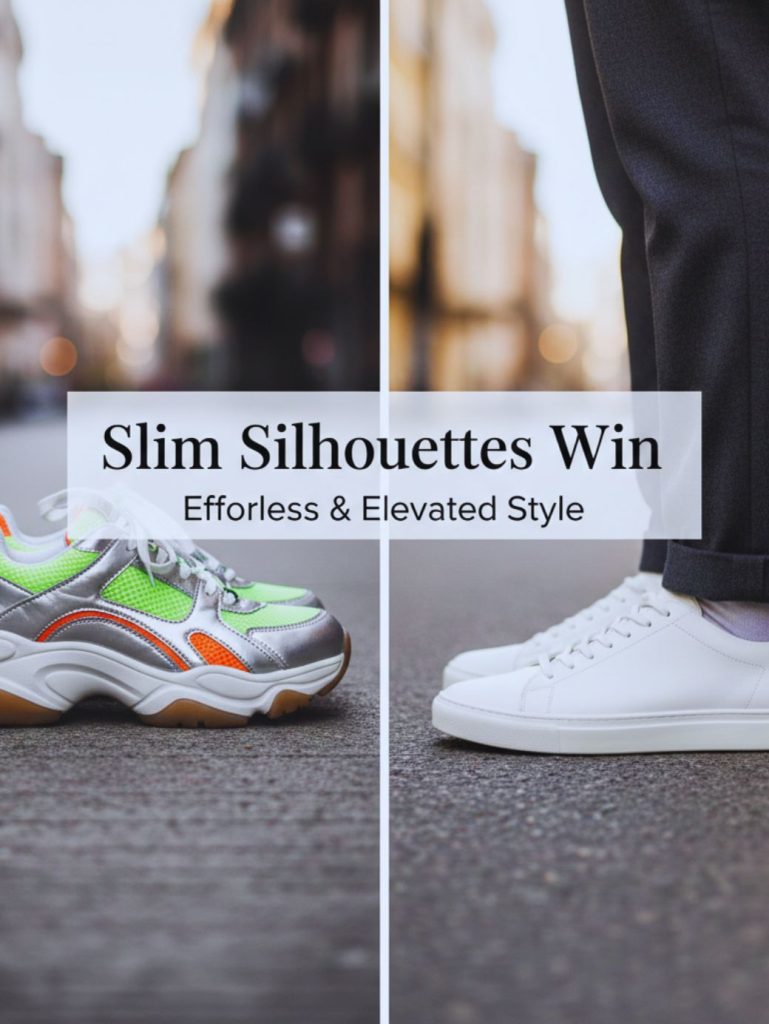
Chunky dad sneakers compared to slim low-profile leather trainers styled with tailored trousers.
Heavy dad sneakers feel dated. Low-profile trainers create a cleaner silhouette for 2026.

The “clunky” sneaker trend had a massive run, but the heavy, orthopedic-looking soles now feel clunky and “costumey” rather than edgy.

  • The Outdated Trend: Triple-S style platforms and “Dad” sneakers with excessive mesh and neon.
  • The 2026 Winner: Low-profile trainers and slim-line sneakers. Think of the sleekness of a racing shoe or a classic indoor soccer trainer.
  • Style Note: A slim-profile sneaker allows your trousers to take center stage and maintains a sophisticated silhouette balance.

4. Moving Past Excessive Cut-Outs

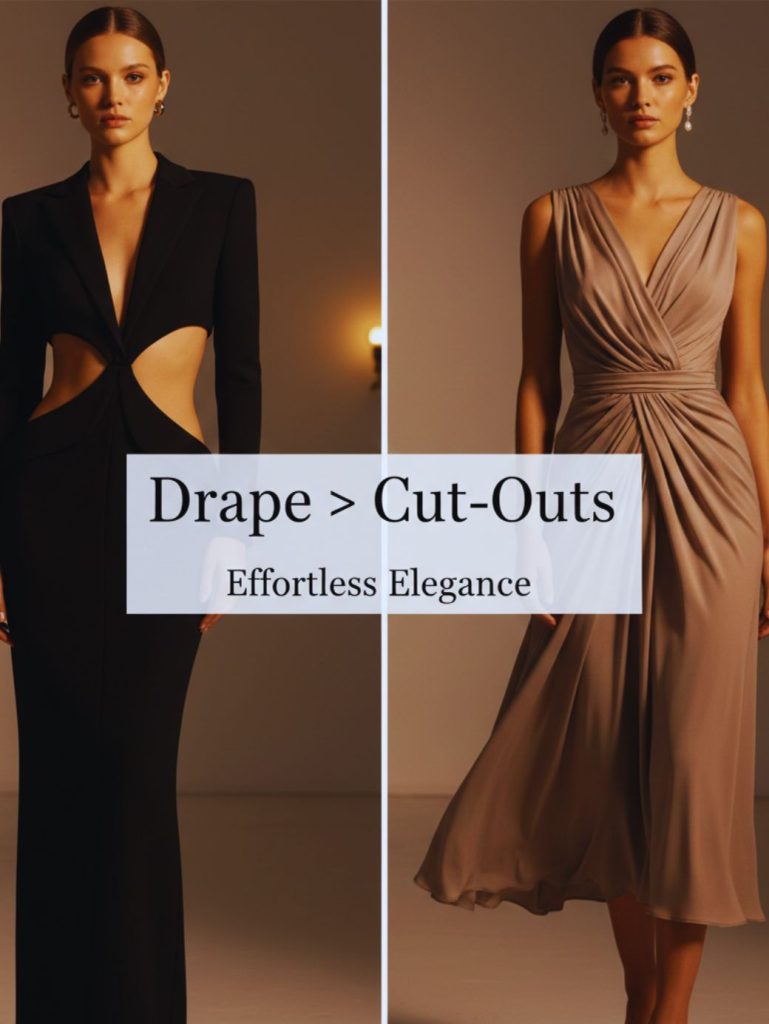
Cut-out dress compared to draped midi dress in neutral tone representing refined 2026 fashion trend.
2026 is about sculptural draping, not exposed cut-outs. Quiet luxury always wins.

The “Main Character” era of 2023-2024 was defined by clothes with holes in the most unexpected places. In 2026, we are choosing sculptural draping over exposed skin.

  • The Outdated Trend: Midriff-baring cut-outs and “asymmetrical” holes in dresses.
  • The 2026 Winner: Draped midi dresses and bias-cut skirts. Instead of showing skin through holes, we are using the fabric itself to create movement and interest.
  • The Vibe: This is “Quiet Luxury” at its finest. A draped silhouette looks more expensive and photographs beautifully from every angle.

5. Ditching Loud Logo Pendants

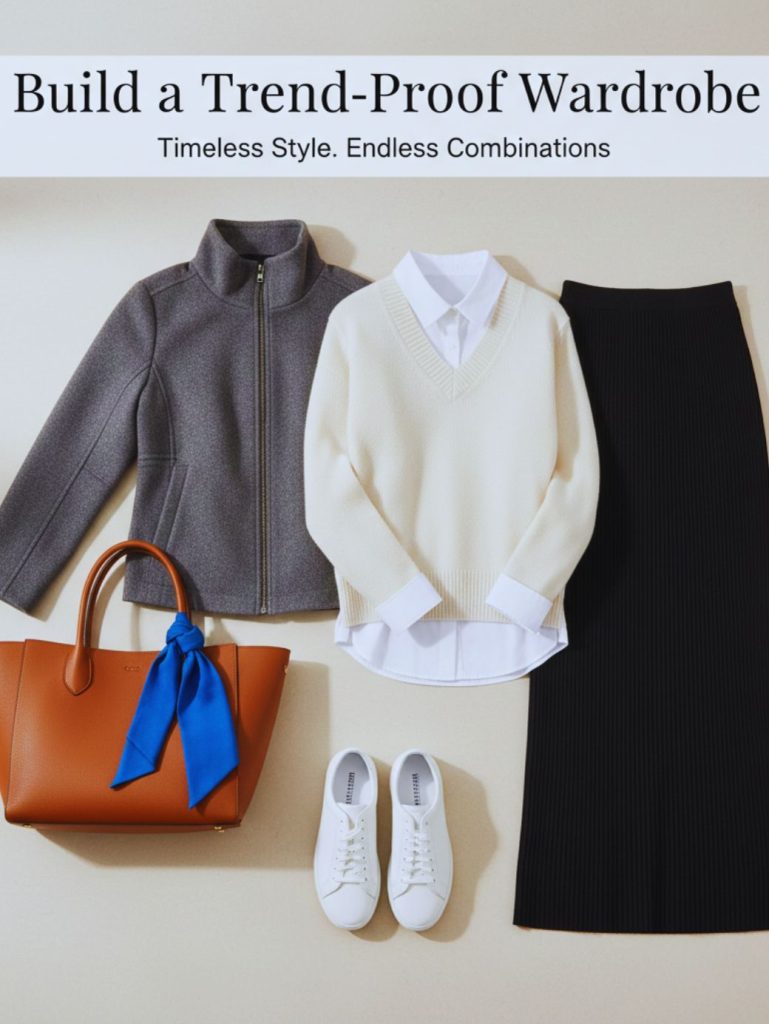
Flat lay of funnel-neck jacket, v-neck knit, column skirt and structured tote representing trend-proof 2026 wardrobe essentials.
Instead of chasing trends, invest in tailored staples like funnel-neck jackets and column skirts for a modern 2026 wardrobe.

Loud, “logomania” jewelry is officially taking a back seat. Wearing a giant brand logo around your neck now feels like a lack of personal style.

  • The Outdated Trend: Chunky gold necklaces with massive brand initials.
  • The 2026 Winner: Artistic pendants and sculptural gold. We are seeing a move toward “found object” jewelry—abstract shapes, organic metals, and unique stones that look like pieces of art.
  • Investment Tip: Switch to brushed gold or vintage-inspired silver to give your outfit a curated, “one-of-a-kind” feel.

The 2026 Replacement Strategy: Timeless Staples

If you’re clearing out the trends above, you need to fill those gaps with pieces that won’t go out of style by next season. These are the foundational pieces of a 2026 wardrobe.

The Funnel-Neck Jacket

While the “shacket” is officially dead, the funnel-neck jacket has taken its place. It provides a sharp, architectural neckline that frames the face and adds instant polish to even a simple t-shirt and jeans combo.

The V-Neck Knit

For a long time, the crew neck was king. But the V-neck sweater is making a huge comeback. It offers a more refined, elongating line that is perfect for layering over a crisp white shirt.

The Column Skirt

Move over, micro-minis. The column maxi skirt is the silhouette of the year. Whether in denim, wool, or silk, its straight, vertical line provides the perfect silhouette balance when paired with a boxy, cropped jacket.

How to Stay “Trend-Proof” in 2026

The most stylish people in 2026 aren’t the ones following a TikTok “Core” aesthetic. They are the ones who follow three simple rules of timeless fashion:

  1. Tailoring is Non-Negotiable: A $20 pair of trousers that has been tailored to fit your waist and length will always look more expensive than a $500 pair that is dragging on the ground.
  2. Fabric Over Brand: In 2026, we are checking labels for natural fibers. 100% wool, organic cotton, and real silk have a “sheen” and “drape” that synthetic polyesters simply cannot replicate.
  3. Neutral-Plus: Build your base in neutral tones (Vanilla, Navy, Slate, Camel), but add one “power color.” For 2026, that color is Cobalt Blue or Transformative Teal.

Conclusion: Edit Your Style, Not Your Budget

Looking current in 2026 isn’t about buying a whole new wardrobe; it’s about editing. By removing the pieces that scream “fast fashion trend” and replacing them with tailored staples, you create a look that is both modern and eternal.

Fashion should be a tool that serves you, not a set of rules that stresses you out. When you stop chasing the “viral” and start investing in the “versatile,” you’ll find that getting dressed becomes the easiest part of your day.