
 By Frank Lucasale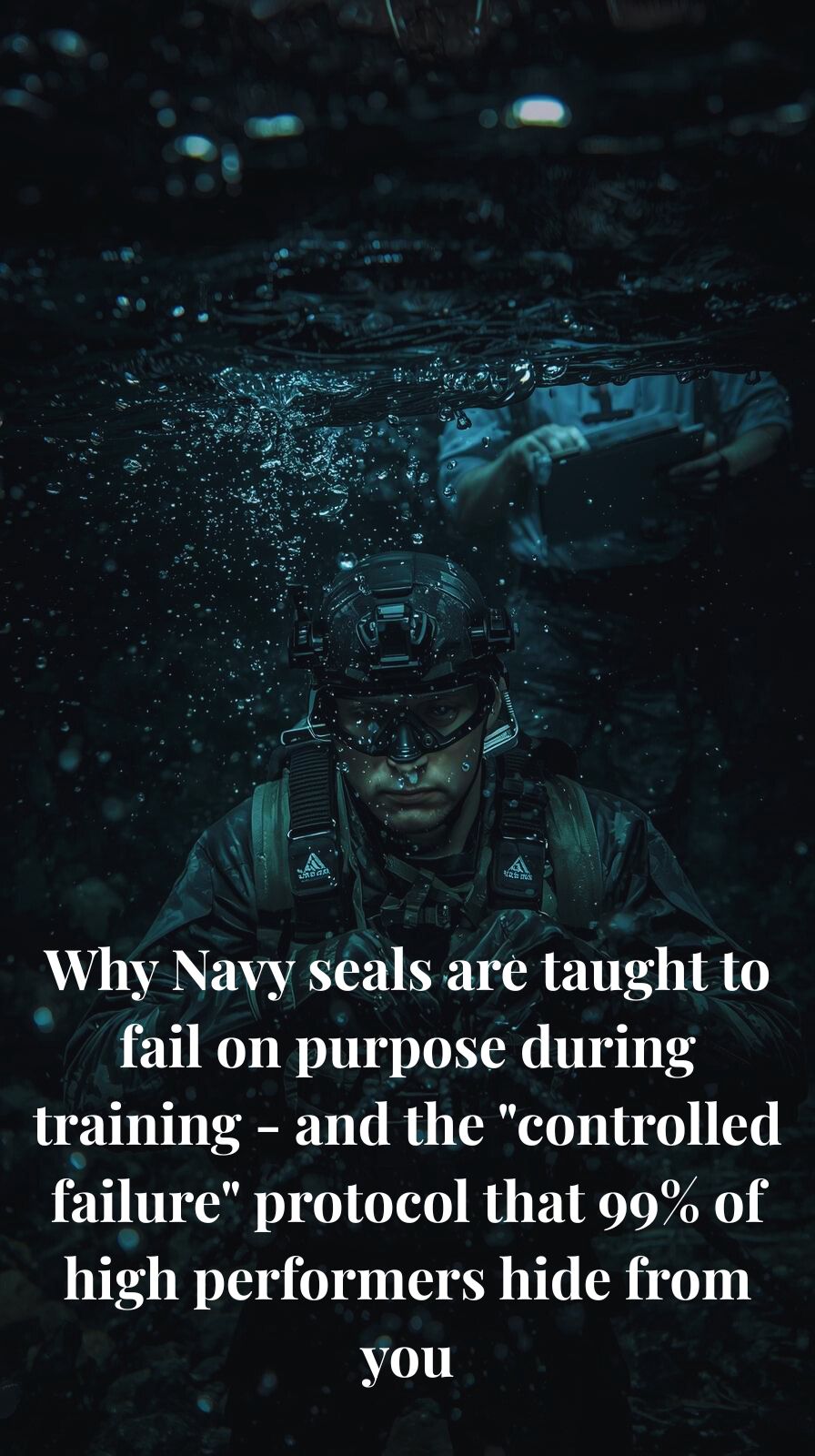
Elite soldiers aren’t built by winning.
They’re built by breaking — and learning to rise without hesitation.
Declassified insights from Navy SEAL training reveal a truth most high performers never hear: failure is engineered into the system. Not as punishment, but as psychological conditioning.
Here’s the science and strategy behind the protocol:
1. Failure Isn’t an Accident — It’s Designed Into the Training
Navy SEAL instructors create scenarios where success is literally impossible.
Underwater knot-tying in chaotic surf.
Night navigation with intentionally wrong coordinates.
Timed drills no human could complete.
Not hazing.
Not cruelty.
But inoculation.
Military psychologists found that when highly capable people encounter their first real failure under lethal pressure, they mentally collapse. So SEALs learn early — in a controlled environment — that failure is a state you move through, not a dead end.
2. The “Failure Inoculation Protocol” Rewires the Nervous System
Each engineered failure is followed by one crucial step: recovery.
Candidates repeat the cycle:
- Attempt
- Fail
- Regroup
- Execute again
The nervous system adapts.
The brain stops interpreting failure as identity damage and starts treating it as routine friction.
This is why SEAL operators remain functional in chaos while others freeze:
they’ve neutralized the fear of failure long before the mission begins.
3. The Numbers Don’t Lie: 340% More Resilience
Performance psychology research shows that controlled-failure training increases stress resilience by up to 340% compared to success-only paths.
When failure is familiar, it becomes:
- non-threatening
- non-emotional
- non-paralyzing
People who never fail early become psychologically fragile.
One real setback breaks them.
People trained through failure become unshakeable.
4. Military Records Reveal a Pattern: Success-Only Trainees Freeze
SEALs who went through failure-inclusive phases stayed mission-effective when:
- plans collapsed
- equipment malfunctioned
- information changed
- chaos hit
Those who trained in “always-win” environments panicked or froze.
They simply had no cognitive script for what to do after failure.
Early success, it turns out, is a hidden liability.
5. Two Types of High Performers Exist — Only One Survives Pressure
There are two mindsets:
The Avoiders
“Don’t attempt what you might fail.”
Stick to comfort zones.
Preserve confidence.
Protect ego.
These people collapse when the inevitable failure finally arrives.
The Builders
Seek controlled difficulty.
Embrace small losses.
Train the reset reflex.
Fail and recover — on purpose.
These people scale, adapt, and excel through adversity.
The Lesson?
Failure Isn’t the Enemy — Inexperience With It Is.**
If you avoid failure to protect your confidence, you’re fragile.
If you practice failing to strengthen your recovery, you’re unstoppable.
Navy SEALs don’t rise because they’re fearless.
They rise because they’re failure-proofed.