
 By Frank Lucasale
We often treat our hair like an indestructible accessory, but in reality, each strand is a delicate fiber, similar to fine silk or wool. Most of us are trapped in a cycle of “damage and disguise”—we inadvertently destroy our hair health with aggressive habits and then spend a fortune on masks and oils to hide the resulting frizz and breakage.
If your hair has stopped growing at a certain length, feels like straw, or lacks its natural shine, the problem likely isn’t your genetics. It is your daily routine. To achieve silky hair, you don’t necessarily need more products; you need fewer bad habits.
Here are the three most destructive things you are doing to your hair right now and the simple, low-maintenance fixes to restore your crowning glory.
1. The Heat Damage Trap
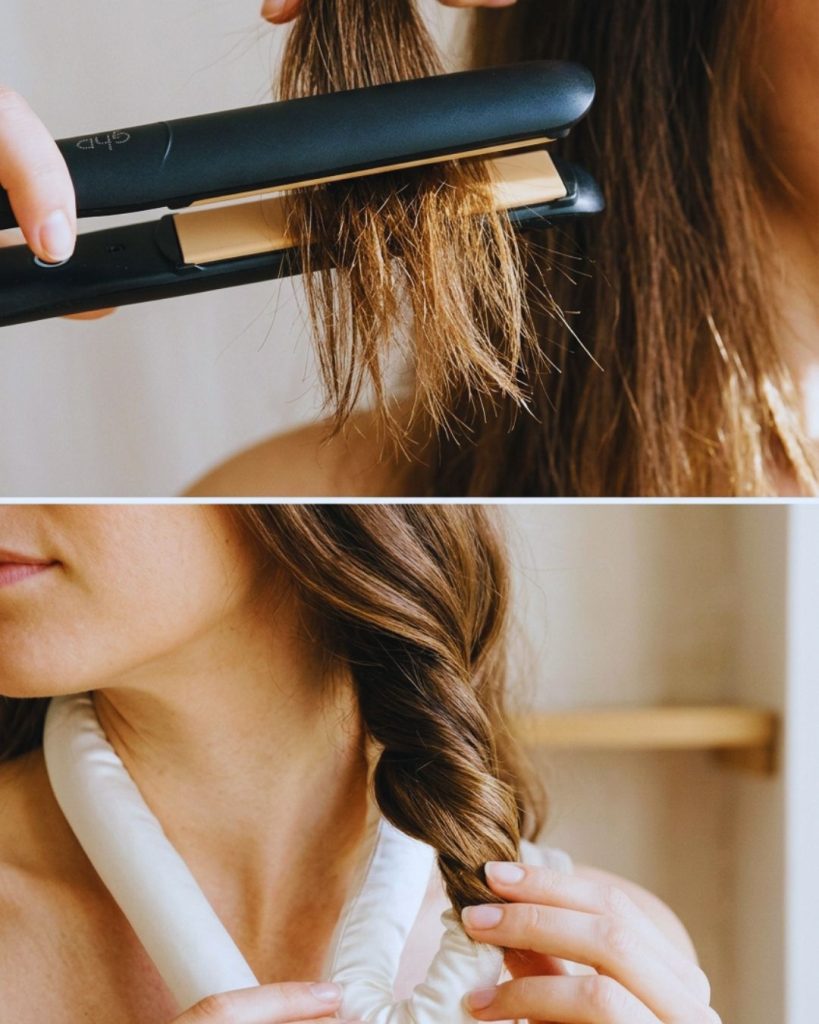
We’ve become addicted to the “instant gratification” of flat irons and curling wands. While they make your hair look perfect for the day, they are essentially “cooking” the keratin proteins that give your hair its structure.
What’s Happening Under the Surface?
- High heat (anything over 180°C) causes the moisture inside the hair shaft to turn into steam, creating “bubble hair” syndrome where the shaft actually blisters and snaps.
- Constant heat styling strips the protective cuticle, leaving the inner core exposed to split ends and environmental pollution.
The Fix: The “80% Rule” and Heatless Styling
- Air Dry First: Never apply a blow dryer to soaking wet hair. Let it air dry to 80% first, then use the dryer on a “cool” or “medium” setting for the final polish.
- Heatless Curls: Embrace the heatless waves trend using silk rods or even a robe tie. You get the volume without the “thermal trauma.”
- Always Shield: If you must use heat, a heat protectant spray is non-negotiable. It acts as a sacrificial barrier so the heat burns the product, not your hair.
2. The Over-Washing Epidemic

Many of us were raised to believe that “squeaky clean” is the goal. In reality, squeaky hair is stripped hair. Over-washing is the leading cause of both a dry scalp and paradoxically, excessively oily hair.
The Rebound Effect
- When you wash your hair every day, you strip away the sebum (natural oils) produced by your scalp.
- Your scalp panics and goes into “overdrive,” producing even more oil to compensate. This creates a vicious cycle of greasiness.
- Furthermore, hair is most fragile when wet. Frequent washing means frequent swelling of the hair fiber, leading to hygral fatigue and loss of elasticity.
The Fix: Training Your Hair
- Gradually increase the time between washes. Aim for 2–3 times a week.
- Use a sulfate-free shampoo to cleanse without harsh detergents.
- Dry Shampoo Strategy: Use dry shampoo on night two before the oil becomes visible. This allows the powder to absorb sebum as it’s produced, keeping your volume intact.
3. The Violence of Harsh Brushing
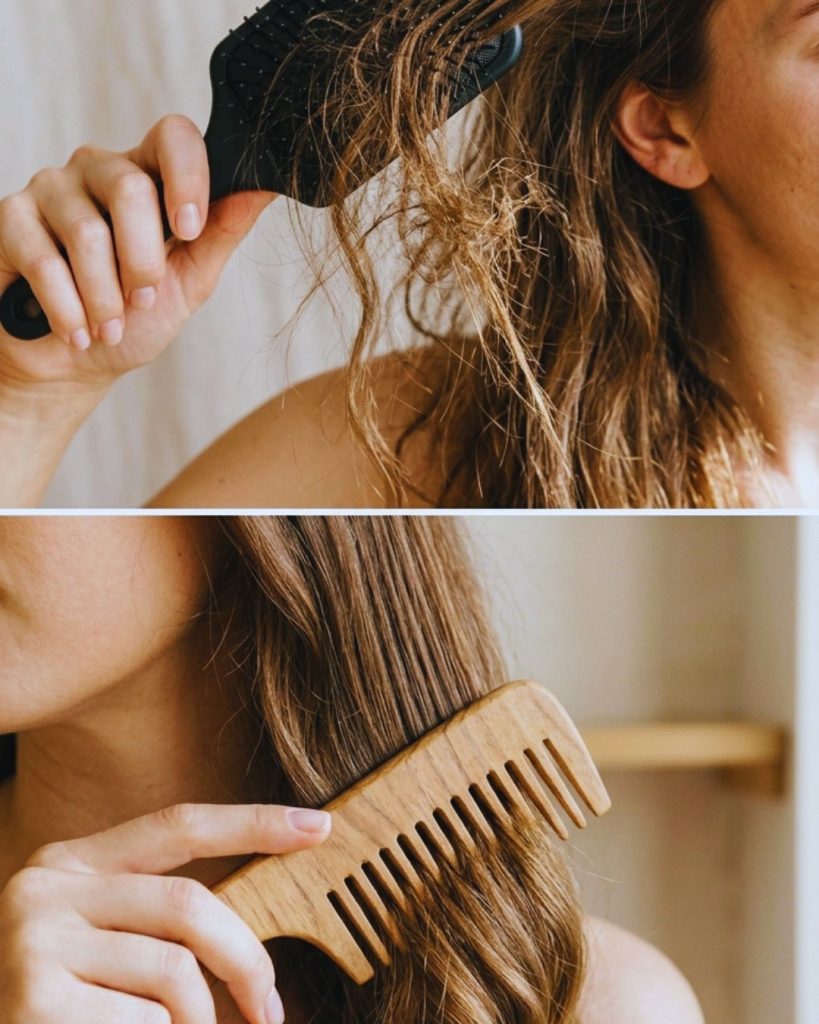
Most people treat knots like an enemy to be conquered with force. Brushing your hair aggressively, especially when it’s wet, is the primary cause of “mechanical damage” and mid-shaft breakage.
Why Wet Hair is Vulnerable
- When hair is wet, the hydrogen bonds are broken, making it significantly more “stretchy” and prone to snapping.
- Using a standard plastic brush on wet hair acts like a saw, tearing through the cuticle layers.
The Fix: The “Bottom-Up” Technique
- The Tools: Switch to a wide-tooth comb or a dedicated detangling brush with flexible bristles.
- The Direction: Always start detangling at the tips and work your way up to the roots. This prevents “compacting” the knots into a giant nest.
- The Silk Habit: Swap your cotton pillowcase for a silk or satin pillowcase. This reduces friction overnight, preventing “morning tangles” before they even start.
4. Neglecting the Scalp “Soil”
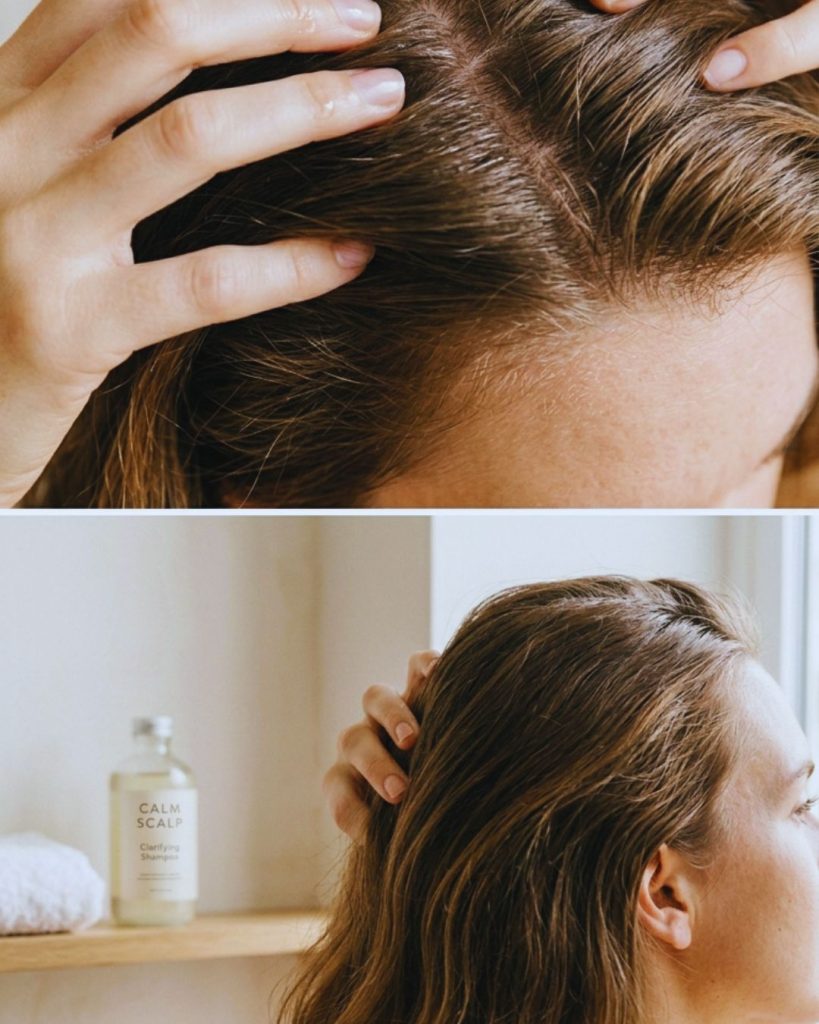
We often focus on the dead ends of our hair while ignoring the only part that is actually alive: the scalp. You cannot have healthy hair growth if your “soil” is congested and inflamed.
Scalp Buildup
- Product buildup, dead skin, and sweat can clog hair follicles, leading to thinning and slow growth.
- If your scalp feels itchy or “sore,” it’s a sign of follicle inflammation.
The Fix: Scalp Massage and Clarification
- Once a month, use a clarifying shampoo or a DIY apple cider vinegar rinse to remove mineral deposits and product residue.
- Dedicate 5 minutes a day to a scalp massage. This increases blood flow to the follicles, delivering the nutrients needed for thick hair.
Summary of the “Hair Healing” Protocol
Transforming your hair texture takes time, but these three shifts will show results within 30 days:
| Bad Habit | The Healthy Alternative |
| High-Heat Styling | Heatless waves and air-drying to 80%. |
| Daily Shampooing | Washing 2-3x per week with sulfate-free formulas. |
| Aggressive Brushing | Using a wide-tooth comb from ends to roots. |
| Cotton Pillowcases | Switching to silk or satin to stop friction. |
| Towel Rubbing | Patting dry with a microfiber towel or old T-shirt. |
The Secret Ingredient: Patience
Unlike your skin, which regenerates every month, your hair is a record of your past. The ends of long hair have been with you for years. You cannot “fix” a split end; you can only prevent new ones.
By stopping these damaging hair habits, you are allowing your new growth to emerge strong, hydrated, and resilient. Within six months, you’ll notice that your hair feels heavier, looks shinier, and requires far less “styling” because its natural texture is finally healthy.
Your hair is your crowning glory—stop fighting it and start nurturing it.