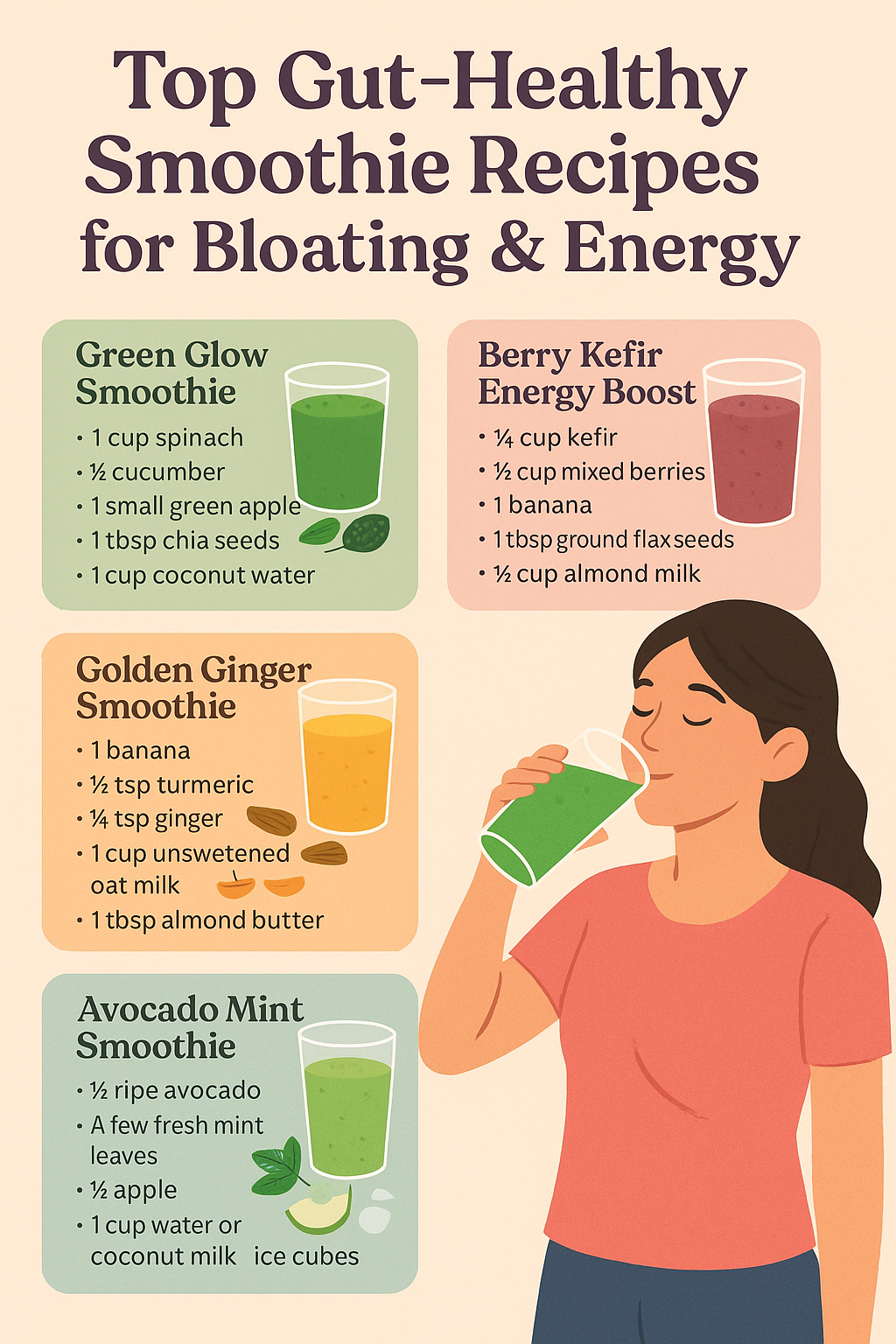
Top Gut-Healthy Smoothie Recipes for Bloating & Energy

If you often feel bloated or tired, your gut might need a little extra love. Smoothies are an easy and delicious way to support digestion, reduce bloating, and boost your energy naturally. By blending gut-friendly ingredients like fiber, probiotics, and healthy fats, you can give your body a refreshing reset.

Here are some of the best gut-healthy smoothie recipes that are perfect for women who want to feel light, active, and nourished.

Green Glow Smoothie (for Bloating Relief)

This smoothie is full of fiber and enzymes that calm the stomach and support digestion.

Ingredients:

  1. 1 cup spinach
  2. ½ cucumber
  3. 1 small green apple
  4. 1 tbsp chia seeds
  5. 1 cup coconut water
  6. Juice of ½ lemon

Why it works: Spinach and cucumber reduce bloating, lemon boosts digestion, and chia adds fiber to cleanse the gut.

Berry Kefir Energy Boost (for Gut + Mood)

A probiotic-packed option that fuels your morning and keeps your gut bacteria happy.

Ingredients:

  • ½ cup kefir (or plain yogurt)
  • ½ cup mixed berries (blueberry, strawberry, raspberry)
  • 1 banana
  • 1 tbsp ground flaxseeds
  • ½ cup almond milk

Why it works: Berries are anti-inflammatory, kefir gives good bacteria, and banana offers natural energy and sweetness.

Golden Ginger Smoothie (for Inflammation & Digestion)

This warm, spiced smoothie is perfect for calming the belly and reducing gas.

Ingredients:

  • 1 banana
  • ½ tsp turmeric
  • ¼ tsp ginger powder or fresh ginger
  • 1 cup unsweetened oat milk
  • 1 tbsp almond butter

Why it works: Turmeric and ginger are natural anti-inflammatory ingredients that also ease bloating and gas.

Avocado Mint Smoothie (for Long-Lasting Energy)

Creamy and refreshing — perfect for staying full and focused.

Ingredients:

  • ½ ripe avocado
  • A few fresh mint leaves
  • ½ apple
  • 1 cup water or coconut milk
  • Ice cubes

Why it works: Avocado has healthy fats for energy, while mint calms the stomach.

Best tip

Drink your smoothie slowly, preferably in the morning or mid-day. Don’t gulp it down. Let your body absorb the nutrients fully for best gut benefits.

Really read this

These smoothies aren’t just tasty — they’re a gentle way to support your gut, reduce bloating, and boost natural energy without caffeine or heavy meals. With just a blender and simple ingredients, you can feel lighter and more energized every day!
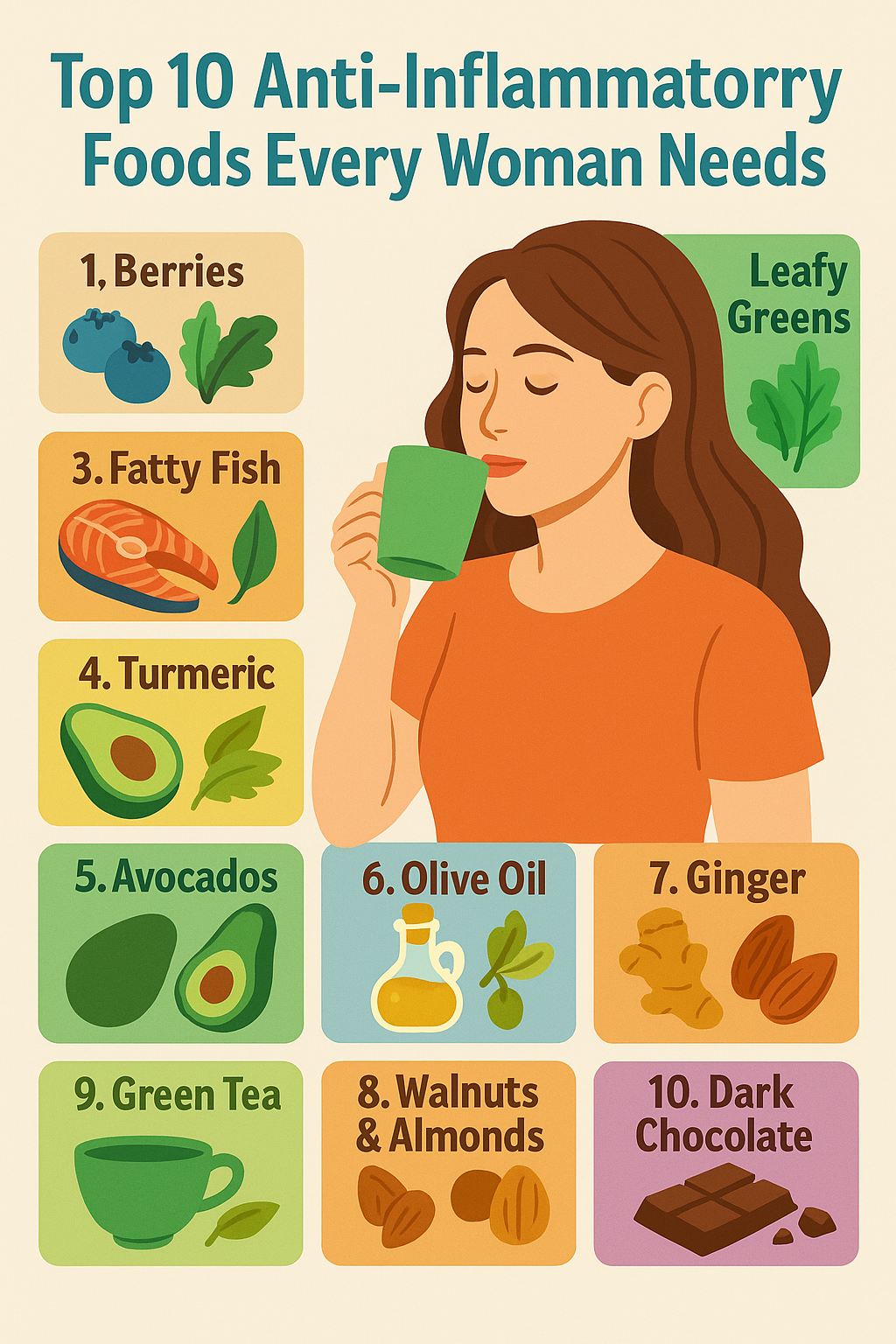
Top 10 Anti-Inflammatory Foods Every Woman Needs

Inflammation is your body’s natural response to injury or stress, but too much of it can lead to chronic problems like joint pain, acne, bloating, fatigue, or hormone imbalance. Luckily, food can be powerful medicine. Certain foods help cool down inflammation and support your body from the inside out.

Here are the top 10 anti-inflammatory foods every woman should include in her weekly meals to feel lighter, stronger, and more balanced

1. Berries (Blueberries, Strawberries, Raspberries)

Packed with antioxidants and fiber, berries help reduce inflammation and protect your skin and heart.
Try in: Smoothies, yogurt bowls, or oatmeal.

2. Leafy Greens (Spinach, Kale, Swiss Chard)

These greens are rich in vitamins A, C, and K — all great for reducing inflammation and detoxing the body.
Try in: Salads, wraps, or smoothies.

3. Fatty Fish (Salmon, Sardines, Mackerel)

Loaded with omega-3s, these help lower inflammation and support brain, heart, and hormone health.
Try in: Grilled with veggies or in a salad.

4. Turmeric

This golden spice contains curcumin, a powerful anti-inflammatory compound that helps ease joint pain and PMS symptoms.
Try in: Warm turmeric milk, curries, or soups.

5. Avocados

Full of healthy fats and potassium, avocados help fight bloating and nourish your skin from within.
Try in: Toast, smoothies, or salads.

6. Olive Oil

Extra virgin olive oil is rich in antioxidants and supports heart and hormone balance.
Try in: Salad dressings or drizzled over cooked veggies.

7. Ginger

Ginger is great for digestion, bloating, and calming the body during stress or cramps.
Try in: Herbal tea, soups, or stir-fries.

8. Walnuts & Almonds

These nuts are a great source of omega-3s, vitamin E, and protein — all of which reduce inflammation.
Try in: Snack packs or yogurt toppers.

9. Green Tea

Known for its calming effect and antioxidants, green tea supports metabolism and reduces body inflammation.
Try in: Morning or mid-afternoon.

10. Dark Chocolate

Yes — in moderation, dark chocolate (70% or more) is full of antioxidants that help protect your cells and fight inflammation.
Try in: A square after dinner or in a smoothie.

Read carefully

Adding anti-inflammatory foods into your everyday meals doesn’t need to be complicated. Just a few simple swaps — like olive oil instead of butter, berries instead of sugar, or tea instead of soda — can make a huge difference. Nourish your body with love and feel the benefits from the inside out.

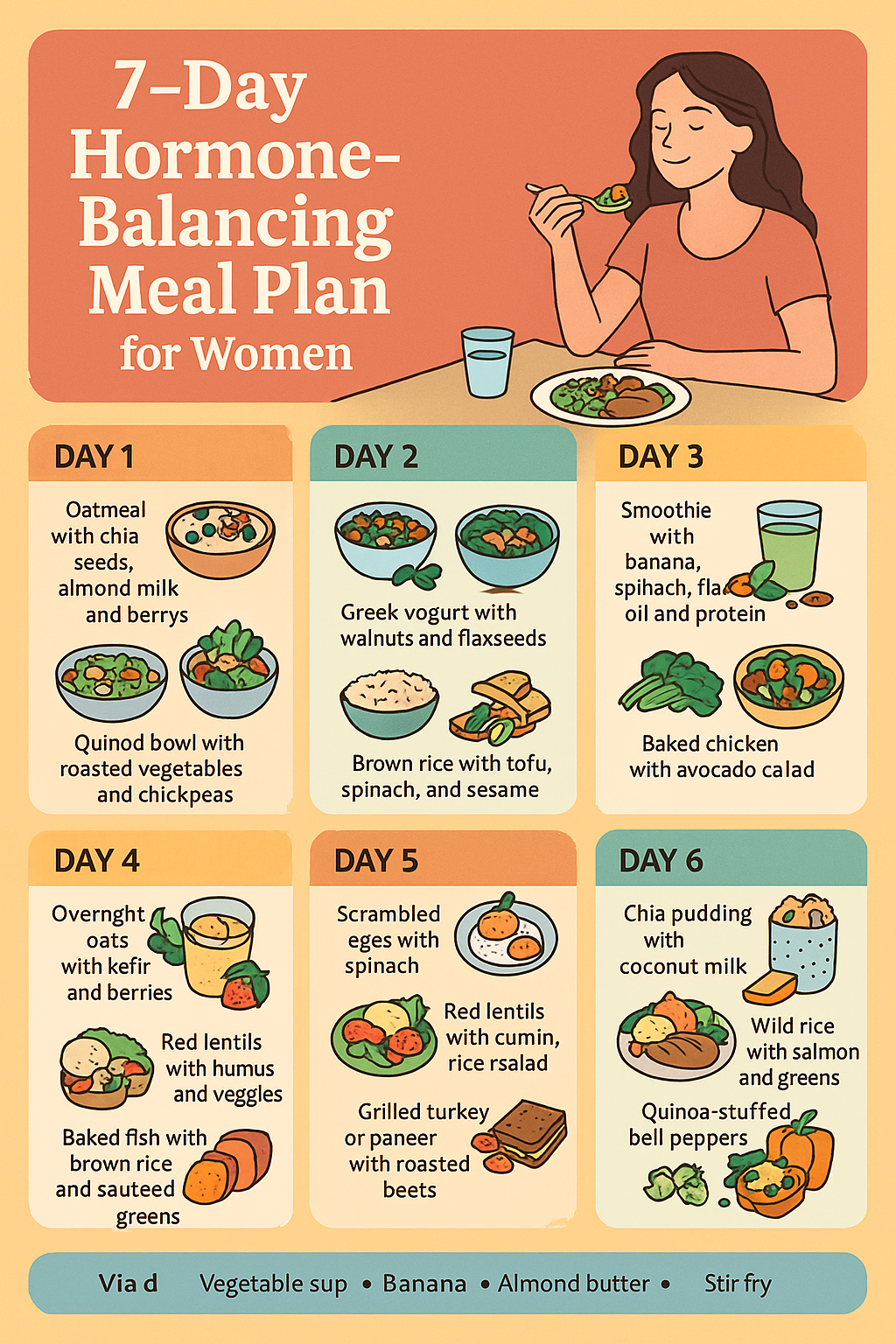
7-Day Hormone-Balancing Meal Plan for Women

Hormones affect everything — your energy, mood, sleep, weight, and even skin. The right food can support your hormones naturally and bring your body back into balance. This 7-day meal plan is designed to help women feel better by using simple, nourishing ingredients that support hormone health.

Each day includes meals that are rich in healthy fats, fiber, lean proteins, and essential vitamins to help keep your hormones happy and stable.

Day 1 – Focus on Fiber and Healthy Fats

  • Breakfast: Oatmeal with chia seeds, almond milk, and berries
  • Lunch: Quinoa bowl with roasted vegetables and chickpeas
  • Dinner: Grilled salmon with steamed broccoli and sweet potato
    Fiber helps your body clear out extra estrogen, while healthy fats support hormone production.

Day 2 – Keep Blood Sugar Steady

  • Breakfast: Greek yogurt with walnuts and flaxseeds
  • Lunch: Brown rice with tofu, spinach, and sesame dressing
  • Dinner: Baked chicken with avocado salad
    Balanced meals reduce sugar spikes and mood swings.

Day 3 – Add Anti-Inflammatory Foods

  • Breakfast: Smoothie with banana, spinach, flax oil, and protein
  • Lunch: Lentil soup with carrots and celery
  • Dinner: Stir-fried veggies with turmeric and grilled paneer
    These foods calm your body’s stress levels and support hormone detox.

Day 4 – Support Your Gut Health

  • Breakfast: Overnight oats with kefir and berries
  • Lunch: Whole wheat wrap with hummus and veggies
  • Dinner: Baked fish with brown rice and sautéed greens
    Good gut health = better hormone balance and improved mood.

Day 5 – Nourish with Protein and Iron

  • Breakfast: Scrambled eggs with spinach
  • Lunch: Red lentils with cumin, rice, and salad
  • Dinner: Grilled turkey or paneer with roasted beets
    Iron-rich foods help during your menstrual phase to prevent fatigue.

Day 6 – Boost Omega-3 and Magnesium

  • Breakfast: Chia pudding with coconut milk
  • Lunch: Wild rice with salmon and greens
  • Dinner: Quinoa-stuffed bell peppers with pumpkin seeds
    Omega-3s and magnesium reduce cramps and improve hormone function.

Day 7 – Light, Balanced, and Relaxing

  • Breakfast: Herbal tea with banana and almond butter toast
  • Lunch: Vegetable soup with beans
  • Dinner: Stir-fry with tofu, brown rice, and ginger
    This day focuses on digestion and calm before restarting your next cycle.

Read carefully

This meal plan is not about strict rules — it’s about eating whole, nourishing foods that support your body’s natural rhythm. By adding these hormone-friendly meals to your week, you’ll feel more balanced, energized, and in tune with your body.

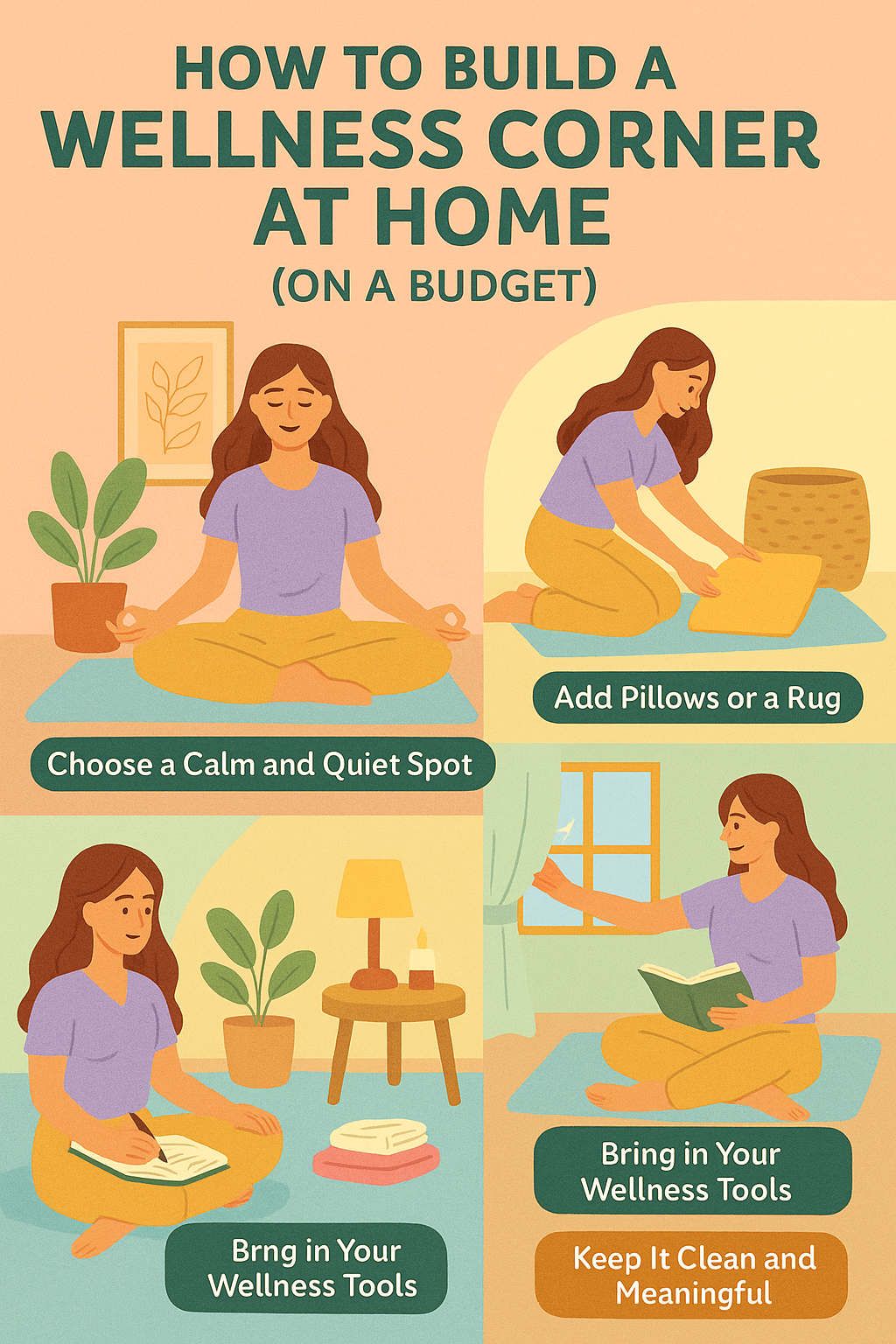
Easy Ways to Create a Wellness Corner at Home Without Spending Much

A wellness corner is your personal space to relax, reflect, and recharge — and the good news is, you don’t need a big room or big money to make one. Whether it’s for yoga, journaling, meditation, or simply taking a break, a cozy wellness nook can help you feel calmer and more grounded. Here’s how to build your own wellness corner at home, even if you’re on a tight budget.

Choose a Calm and Quiet Spot

Find a small corner in your room, balcony, or near a window. You don’t need a whole room — just a peaceful space with natural light or good air. The idea is to create a spot that feels separate from the busyness of the rest of your home.

Add Soft Comfort with Pillows or a Rug

Use what you already have! A floor mat, yoga mat, old blanket, or a few cushions can instantly make the area cozy and comfortable. Soft textures make the space feel relaxing and warm without needing expensive furniture.Use what you already have! A floor mat, yoga mat, old blanket, or a few cushions can instantly make the area cozy and comfortable. Soft textures make the space feel relaxing and warm without needing expensive furniture.

Use Calming Colors and Lights

Hang a light curtain or place a soft lamp or fairy lights. If possible, use neutral or pastel colors like beige, mint, or lavender. These colors help your mind relax. Even a small plant can add freshness and beauty to your space.

Bring in Your Wellness Tools

Gather simple things like a journal, a candle, essential oil, your favorite book, or even a speaker for soft music. Keep them in a small basket or tray nearby so it’s easy to access them when you need a wellness break.

Keep It Clean and Meaningful

Declutter the space and keep only what brings you peace. You can add a motivational quote, a picture frame, or something that inspires calm. This makes the space feel personal, intentional, and truly yours.

Read carefully

You don’t need to spend much to feel better. A wellness corner is all about creating a peaceful vibe using what you already have. With a little creativity and love, your home can have the perfect corner to relax your mind, body, and soul — every day

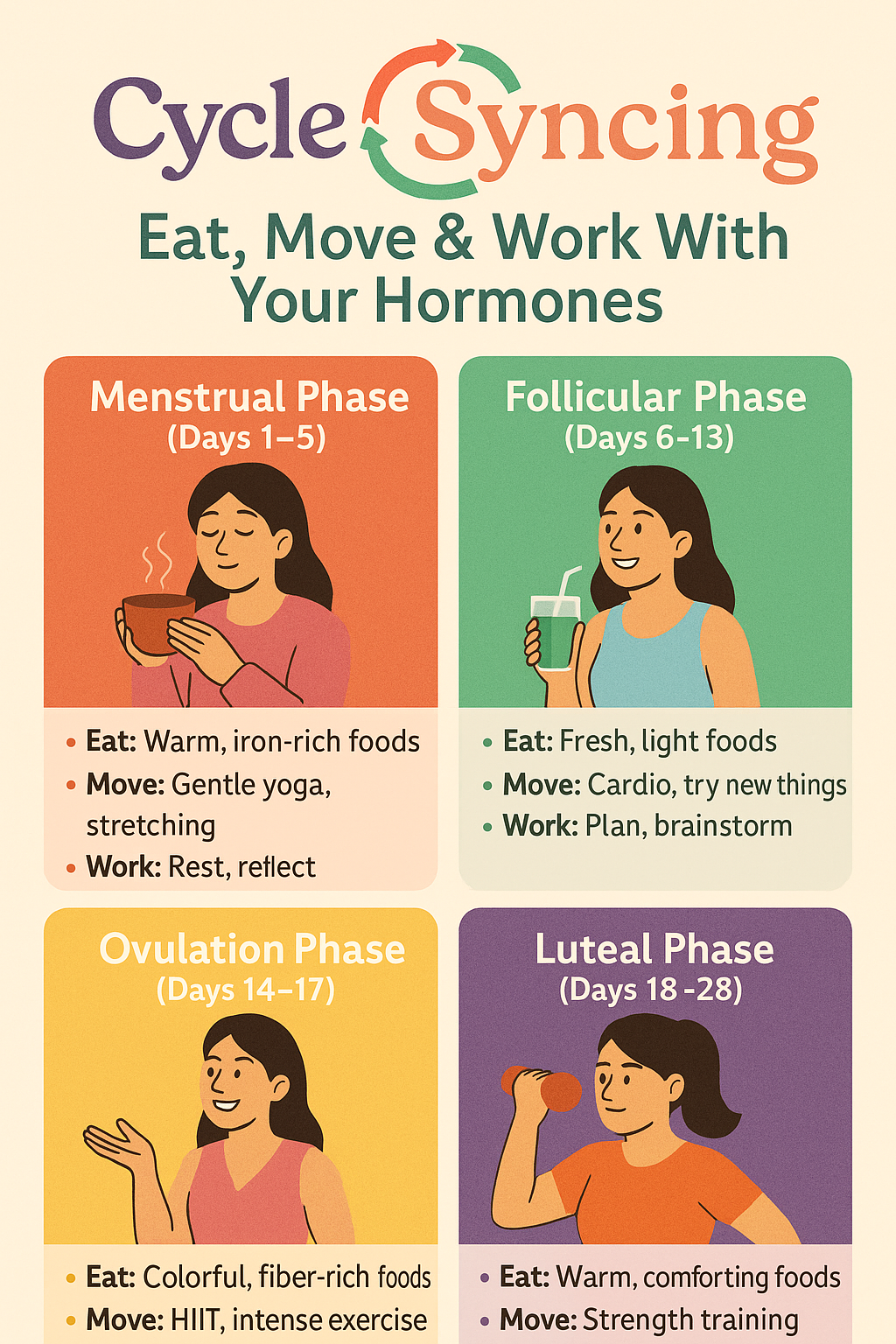
Simple Ways to Sync Your Cycle with Your Food, Fitness & Focus

Cycle syncing means living in rhythm with your body’s natural hormone changes throughout your monthly cycle. By adjusting how you eat, move, and work during each phase, you can feel more balanced, energetic, and in control. It’s not about doing more — it’s about doing what feels right for your body at the right time. Here’s how you can start syncing with your cycle in simple ways.

Menstrual Phase (Days 1–5): Rest and Recharge

This is when your period begins. Your energy is at its lowest, and it’s a good time to slow down.

  • Eat: Warm, iron-rich foods like soups, leafy greens, and root vegetables.
  • Move: Gentle yoga, light stretching, or simple walks.
  • Work: Focus on rest, reflection, and quiet planning.

Your body needs care and comfort — give it space to heal and reset.

Follicular Phase (Days 6–13): Fresh Start and Energy Boost

Hormones begin rising and you start to feel energized and creative.

  • Eat: Light, fresh foods like salads, smoothies, and lean proteins.
  • Move: Try new workouts like cycling, cardio, or dance.
  • Work: Plan projects, brainstorm ideas, and start new things.

This is a great time to explore, learn, and take on exciting tasks.

Ovulation Phase (Days 14–17): Peak Energy and Confidence

This is your most energetic and social phase. Estrogen is high and you feel your best.

  • Eat: Add colorful veggies, antioxidant-rich fruits, and high-fiber foods.
  • Move: High-intensity workouts like HIIT or group classes.
  • Work: Schedule meetings, public speaking, or big decisions.

Make the most of your confidence and connection with others.

Luteal Phase (Days 18–28): Slow Down and Reflect

Your energy begins to dip, and you may feel more sensitive or moody.

  • Eat: Warm, comforting foods like cooked grains, roasted veggies, and dark chocolate.
  • Move: Focus on strength training, Pilates, or slow flow yoga.
  • Work: Tie up loose ends, complete tasks, and avoid overload.

Listen to your body — this is the time to wind down, not push harder.

Read carefully

Cycle syncing helps you work with your body, not against it. By adjusting your routine throughout the month, you can reduce PMS, boost productivity, and feel more in tune with yourself. Start small, stay consistent, and feel the change — naturally.

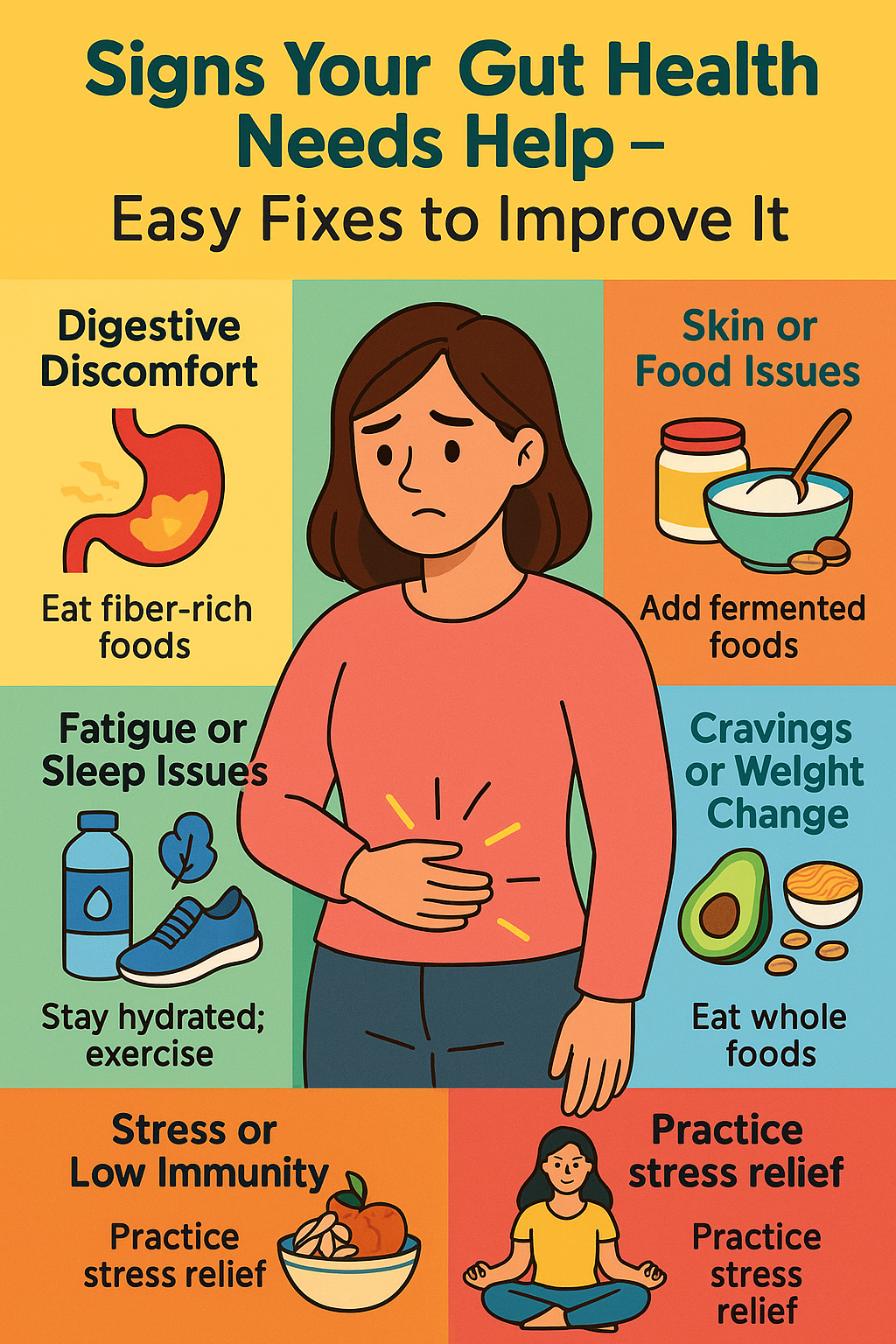
Signs Your Gut Health Needs Help — and Easy Fixes to Improve It

Your gut plays a key role in digestion, immunity, and even mood. If your gut isn’t happy, you might notice signs beyond just tummy troubles. But don’t worry — with some simple daily habits, you can help your gut feel better. Here’s how to spot gut issues and easy steps to fix them naturally.

Gut Clues: Watch for Digestive Discomfort

If you often feel bloated, gassy, constipated, or have diarrhea and heartburn, these are your gut’s red flags. Frequent stomach discomfort means your digestion needs support

Easy Fix: Eat slowly and chew your food well. Choose fiber-rich whole foods like fruits, vegetables, beans, and whole grains. Fiber nourishes good gut bacteria and keeps everything moving smoothly .

Feel Drained or Sleepy? Your Gut Might Be to Blame

Fatigue, poor sleep, and mood issues like irritability may not seem gut-related — but they can be. Most of your body’s serotonin (which affects mood and sleep) is made in your gut

Easy Fix: Drink plenty of water, move your body gently, and finish meals at least a couple hours before bed. Good hydration, exercise, and timing support digestion and help you sleep better .

Unexpected Skin or Food Issues?

Skin breakouts, eczema, or new food intolerances might surprise you. These can be linked to gut imbalances

Easy Fix: Add probiotic or fermented foods such as yogurt, kefir, sauerkraut, or kimchi. They help rebalance your gut bacteria .

Strong Sugar Cravings or Sudden Weight Changes

Craving sweets or noticing sudden weight gain — or loss — may show gut trouble. These cravings can alter your gut bacteria and affect your appetite .

Easy Fix: Focus on high-fiber, whole foods and healthy fats like avocados, nuts, olive oil, and oats. These support a balanced gut and help curb urges .

Stress, Mood Swings, or Frequent Illness

If you’re stressed, feeling low, or catching colds often, it might be time to support your gut. Your gut and brain are closely connected — stress and gut issues affect each other

Easy Fix: Practice stress relief — try meditation, deep breathing, or gentle walks in nature. These habits are good for both your mind and gut .

Quick Fix Summary

Gut SignEasy Fix
Bloating, gas, indigestionEat fiber-rich foods; chew slowly
Fatigue, poor sleep, mood issuesStay hydrated; exercise; avoid late eating
Skin problems, food intolerancesAdd fermented/probiotic foods
Sugar cravings or weight changeEat whole foods with healthy fats
Stress, low immunityPractice stress relief & healthy habits

Listen carefully

Your gut is a key part of your well-being. By noticing simple signs and adding easy, natural habits—like fiber, hydration, probiotics, movement, and calm—you can support gut health and feel your best from the inside out.

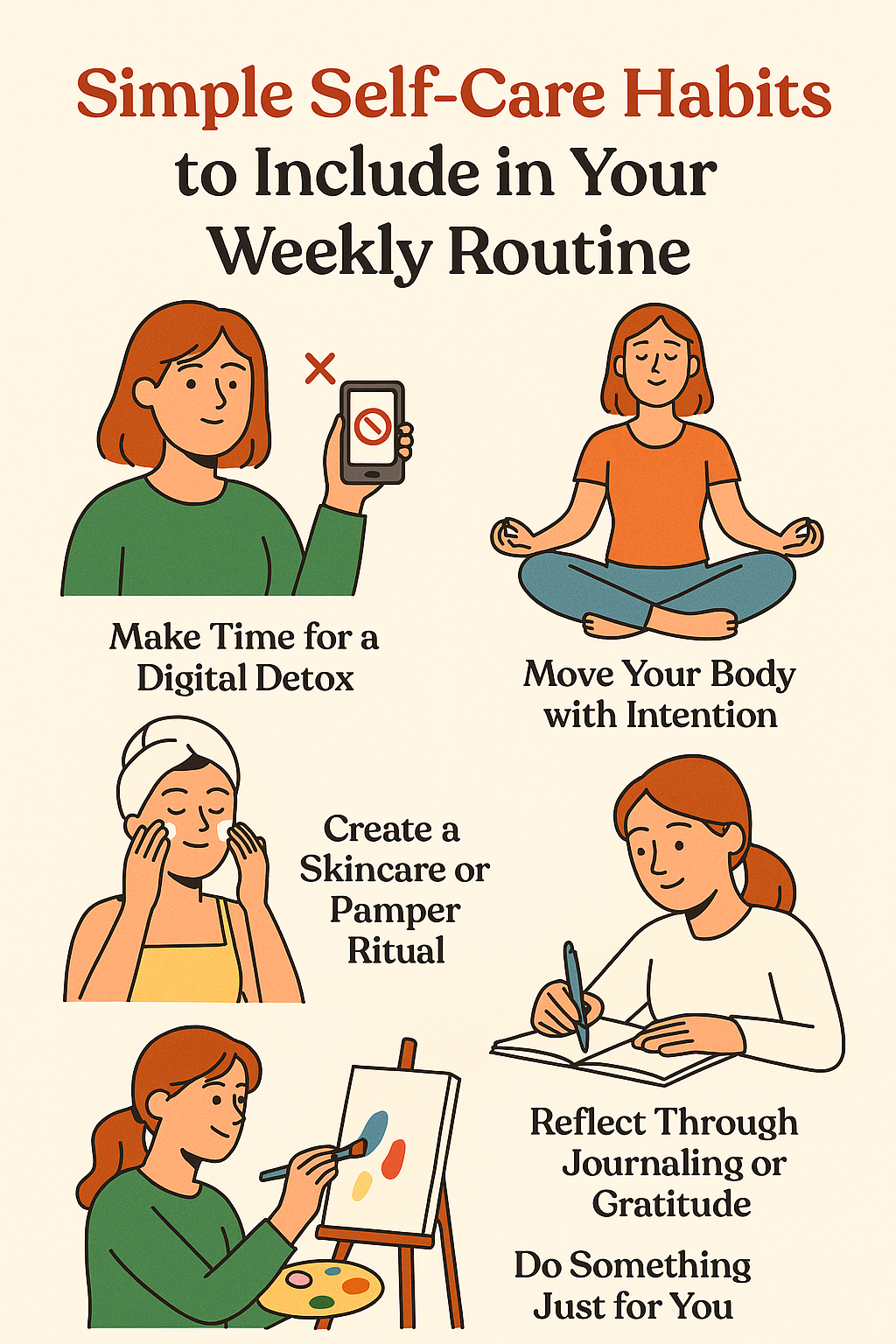
Simple Self-Care Habits to Include in Your Weekly Routine

Taking care of yourself isn’t selfish — it’s a necessity. Self-care helps you stay mentally strong, physically well, and emotionally balanced. You don’t need expensive products or long spa days to feel good. Just a few small habits, done weekly, can improve your mood and energy. Here are some simple self-care ideas to add to your weekly routine that will truly make a difference.

Make Time for a Digital Detox

Once or twice a week, take a break from screens — no social media, no emails. Go for a walk, read a book, or just sit with your thoughts. Giving your mind a break from constant notifications can help reduce stress and improve focus.

Move Your Body with Intention

Add gentle physical activity to your week — not just for fitness but for joy. Try yoga, a dance class, or even stretching at home. Moving your body regularly keeps your energy high and your mind calm.

Create a Skincare or Pamper Ritual

Pick one day to treat yourself to a face mask, warm bath, or simple skincare routine. These small acts remind you to slow down and care for your body with love. It’s not about beauty — it’s about feeling refreshed and cared for.

Reflect Through Journaling or Gratitude

Spend 10–15 minutes writing your thoughts, feelings, or things you’re grateful for. This clears mental clutter and helps you feel more grounded. It also brings clarity and calm to your week.

Do Something Just for You

Make time to do one thing you enjoy — painting, cooking, gardening, or listening to music. Doing what you love brings happiness and helps you reconnect with yourself outside of your daily responsibilities.

Things I Stopped Saying to My Kids (And What I Say Instead)

Parenting doesn’t come with a manual, but words matter more than we realize. The things we say in tough moments shape how our kids see themselves and the world. I didn’t change overnight — but when I became more mindful of how I spoke, everything began to feel lighter.

Here are 20 common phrases I stopped using with my children — and what I’ve started saying instead:


1. “Stop crying.”
What I say now: “It’s okay to feel sad. I’m here with you.”
Crying is communication. Dismissing it teaches kids to hide emotions instead of understanding them.

2. “You’re fine.”
What I say now: “That looked like it hurt. Want to talk about it?”
Even if it seems minor to me, it’s big for them. Empathy builds trust.

3. “Because I said so.”
What I say now: “Here’s why this is important.”
Kids are more likely to listen when they understand the reason behind a rule.

4. “Good job.”
What I say now: “You really focused hard on that. How did you do it?”
Praising effort instead of outcome helps build a growth mindset.

5. “Hurry up.”
What I say now: “We have five minutes. Let’s do this together.”
Rushing creates stress. Collaborating builds cooperation.

6. “Be quiet.”
What I say now: “I need a softer voice right now. I’m still listening.”
Kids don’t need silence — they need guidance on how and when to use their voice.

7. “Don’t be scared.”
What I say now: “It’s okay to be scared. I’m with you.”
Validating fear helps kids move through it, not avoid it.

8. “What’s wrong with you?”
What I say now: “Looks like something’s bothering you. Want to talk?”
Shame shuts kids down. Curiosity opens up connection.

9. “You always mess up.”
What I say now: “Everyone makes mistakes. Let’s try again together.”
Mistakes are learning moments, not character flaws.

10. “You’re too sensitive.”
What I say now: “You feel things deeply, and that’s okay.”
Sensitivity is not a weakness. It’s often a superpower.

11. “I’m disappointed in you.”
What I say now: “That choice didn’t work out well. What can we do differently next time?”
Focusing on the behavior — not the child — teaches accountability.

12. “You’re being bad.”
What I say now: “That choice wasn’t safe. Let’s talk about a better way.”
Labeling a child as “bad” leads to shame. Addressing the action teaches responsibility.

13. “Don’t make me count to three.”
What I say now: “I need you to do this now. Can I help you get started?”
Clear, direct instructions work better than threats.

14. “I said no. End of story.”
What I say now: “I’ve thought about it and my answer is no, but I understand you’re disappointed.”
Acknowledging feelings doesn’t weaken authority — it strengthens respect.

15. “Big kids don’t cry.”
What I say now: “Everyone cries sometimes. It helps us feel better.”
Feelings are human, no matter the age.

16. “Act your age.”
What I say now: “I can see you’re having a hard time. Let’s figure this out together.”
Regulation takes time to learn. Guidance is better than guilt.

17. “Don’t embarrass me.”
What I say now: “Let’s talk quietly. I want to help you through this.”
Public correction can cause shame. Private support builds self-awareness.

18. “Stop being dramatic.”
What I say now: “I see this feels really big right now. Let’s talk through it.”
Every emotion is valid. Helping kids process it gives them tools for life.

19. “You never listen.”
What I say now: “I need your full attention right now. Can we try again?”
Labeling becomes a self-fulfilling prophecy. Direct connection brings better results.

20. “Go to your room!”
What I say now: “Let’s take a break to calm down and we’ll talk when we’re both ready.”
Time-outs don’t teach. Calm connection does.

I’m Raising Emotionally Smart Kids — These 7 Daily Habits Are Why

Emotional intelligence is not something you teach in one talk.
It’s built through daily habits.

Here are seven things I do on purpose to raise emotionally smart kids.

Habit 1: I label my own feelings out loud.

“I’m feeling overwhelmed right now, so I’m going to step outside for a minute.”

Habit 2: I ask about their feelings at bedtime.

“What was the hardest part of your day? What made you feel happy today?”

Habit 3: I pause and breathe when they’re upset.

I model calm, instead of telling them to calm down.

Habit 4: I validate their feelings before correcting behavior.

“You’re upset about sharing. That’s hard. We can still share safely.”

Habit 5: I repair when I yell or overreact.

“I wish I had spoken more kindly. I’ll try again tomorrow.”

Habit 6: I allow space for sadness, not just joy.

They can cry in my home without being told to stop.

Habit 7: I show them how to make things right, not just say “I’m sorry.”

We practice apologies with action, not just words.

When kids grow up in homes like this, emotional intelligence becomes their default — not something they have to search for later.

How I Set Boundaries Without Yelling — 5 Scripts That Actually Work

Setting boundaries doesn’t require volume. It requires clarity.
I used to think if I wasn’t firm or loud, my kids wouldn’t listen. But when I stopped yelling and started speaking with calm consistency, everything changed.

Here are five scripts that helped me set boundaries without raising my voice.

Script 1: “I won’t let you hit me. I’ll help you find another way to show your big feelings.”

Why it works: It stops the behavior while acknowledging the emotion. You become a guide, not a threat.

Script 2: “You don’t have to like this boundary, but it still stays.”

Why it works: You validate their feelings without changing the rule.

Script 3: “It’s hard to stop playing. You can choose to put the toy away, or I will do it for you.”

Why it works: You offer a choice within a firm limit. No empty threats. No yelling.

Script 4: “I won’t talk to you when you speak to me like that. I’ll wait until you’re ready.”

Why it works: It models self-respect and teaches that connection comes with kindness.

Script 5: “It’s okay to feel angry. It’s not okay to throw things. I’ll help you calm your body.”

Why it works: You separate feelings from unsafe actions.

Boundaries don’t need to sound like threats. They need to sound like safety.