Elegant luxury skincare setup on marble vanity representing rich women beauty habits

Whether it is a high-powered CEO or a woman of quiet luxury, the “rich girl glow” isn’t just about expensive serums—it is about unwavering discipline and a level of consistency that most people find difficult to maintain. To the wealthy, beauty is not a luxury; it is a strategic asset and a form of personal branding.

While the average person treats skincare as a “treat” or an occasional indulgence, affluent women treat it as non-negotiable maintenance. They understand that it is far easier (and cheaper in the long run) to maintain a glow than to try and “fix” damaged skin or a neglected body.

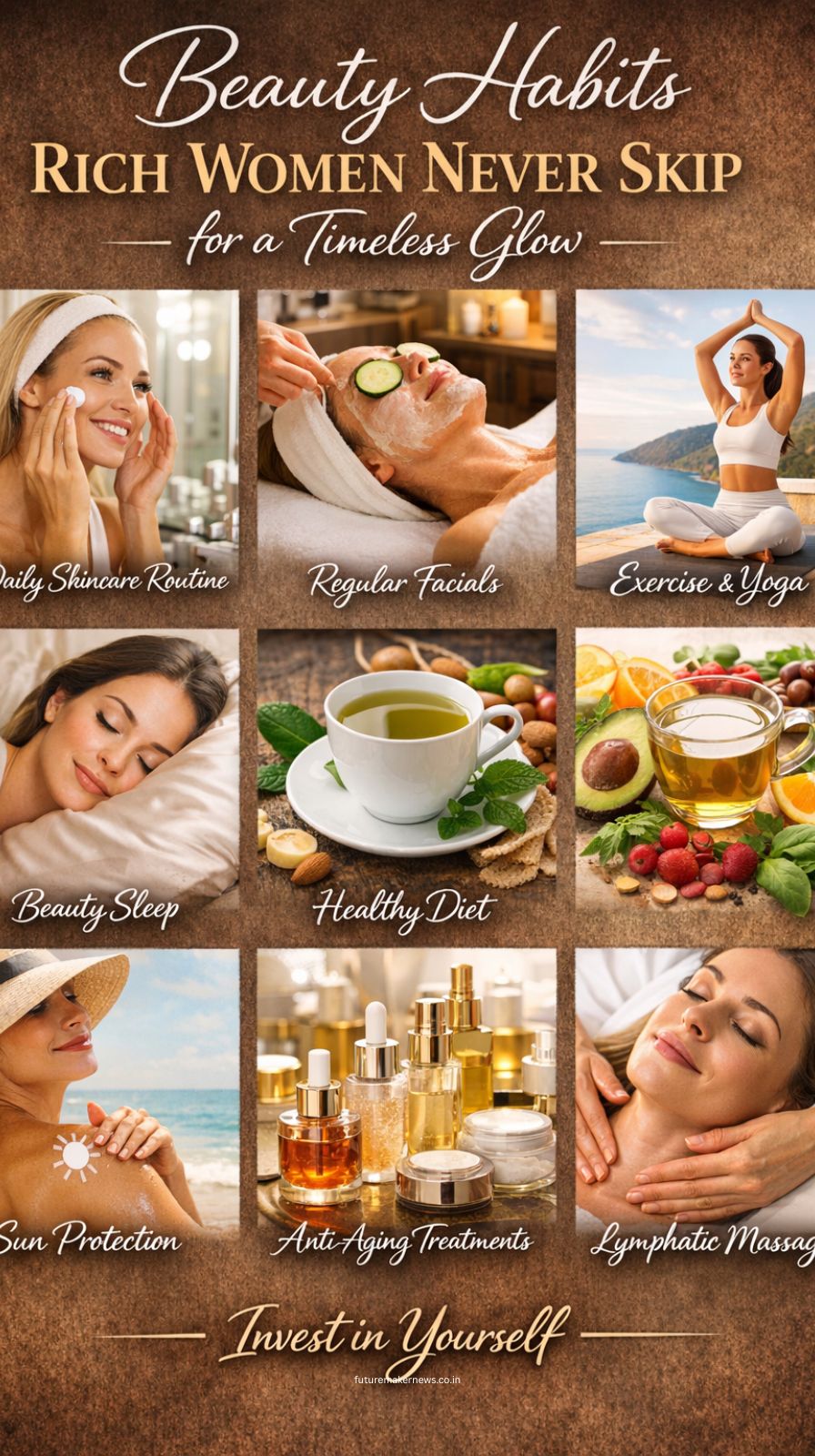
If you want to elevate your life and look like you belong in the top 1%, you need to adopt the rituals that define the elite. Here are the beauty habits rich women never skip.

1. The Power of “Preventative” Maintenance
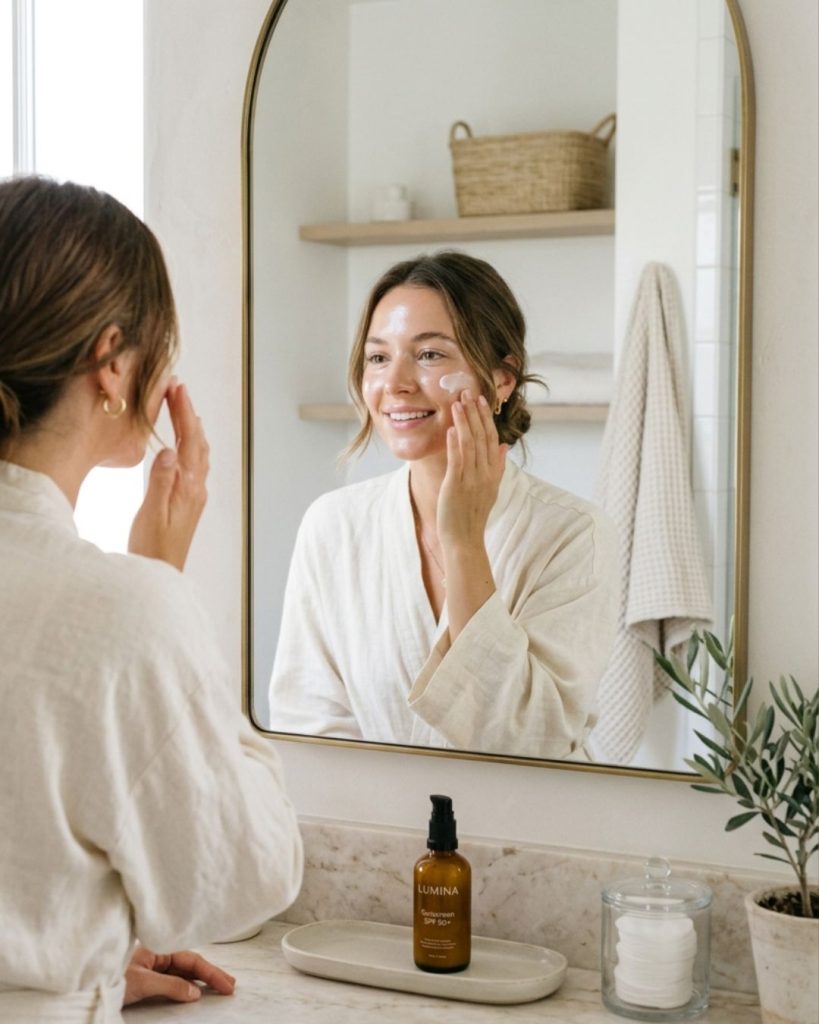
Woman applying sunscreen as part of preventative luxury skincare routine
Prevent today what others try to fix tomorrow—SPF is the ultimate rich girl secret.

Wealthy women don’t wait for a wrinkle to appear before they start using anti-aging treatments. Their secret lies in proactive skincare.

  • Dermatologist-on-speed-dial: They don’t guess what their skin needs; they get professional analysis. Regular skin checks and custom-tailored routines are standard.
  • The “Maintenance” Calendar: Facials, chemical peels, and laser treatments are scheduled months in advance. To them, these aren’t “pampering” sessions; they are scheduled tune-ups for the skin.
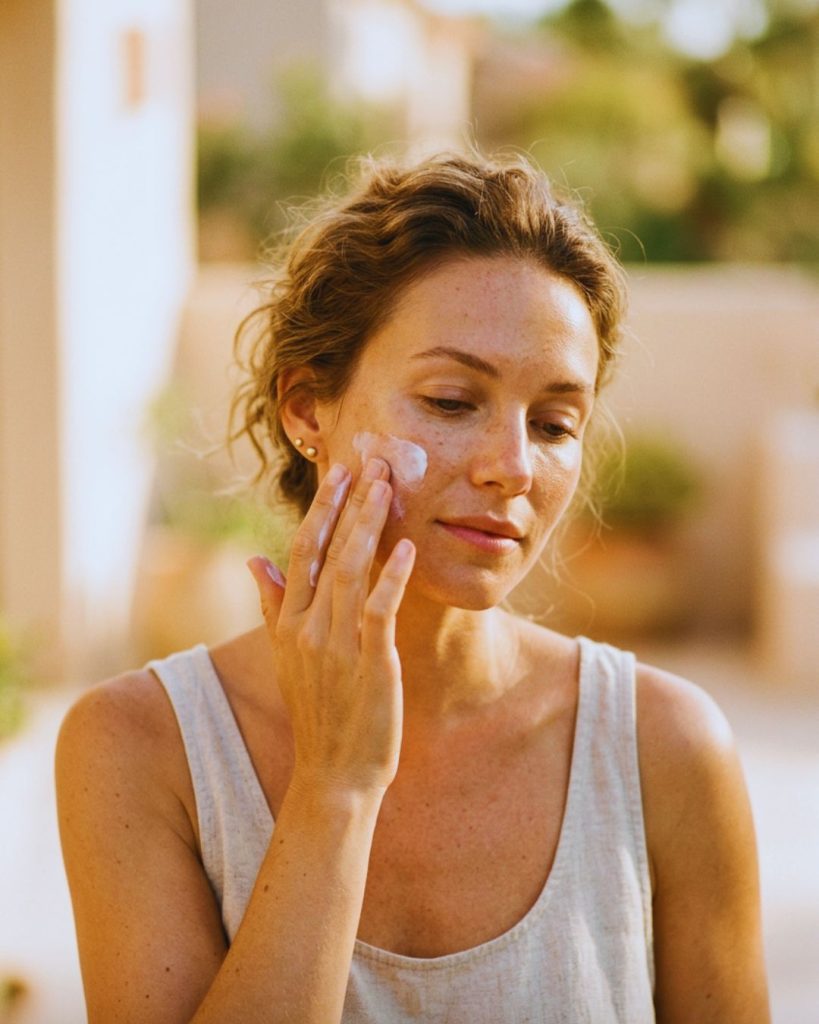
  • Sun Protection as a Religion: You will never see a wealthy, polished woman without SPF 50. They know that 90% of skin aging comes from UV rays, making sunscreen the most important “rich girl” product in their cabinet.

2. Hair That Looks Like an “Investment”

Shiny well-maintained hair representing high-end grooming habits
Healthy, glossy hair is the ultimate sign of quiet luxury.

Have you noticed that rich women never seem to have a “bad hair day”? It’s not luck; it’s strategic grooming.

  • The Weekly Blowout: Many high-net-worth women treat a professional blowout as a weekly necessity. It ensures their hair is sleek, voluminous, and “expensive-looking” at all times.
  • Trims Over Trends: Instead of jumping on every viral haircut, they stick to timeless styles and get frequent trims to prevent split ends. Healthy, glossy hair is the ultimate status symbol.
  • Scalp Health: They invest in scalp serums and treatments. They understand that beautiful hair starts with a healthy “soil” (the scalp).

3. High-Maintenance to be Low-Maintenance

Natural beauty look with groomed brows and lashes showing low maintenance routine
Invest once, glow daily—effortless beauty is planned, not accidental.

There is a concept in the world of luxury called “High-Maintenance to be Low-Maintenance.” This means spending more time and money on semi-permanent treatments so that your daily routine is effortless.

  • Lash and Brow Grooming: Instead of spending 20 minutes on mascara and brow pencils, they opt for brow lamination, tinting, or subtle lash lifts.
  • Laser Hair Removal: They don’t waste time with daily shaving. Laser hair removal is an upfront investment that saves thousands of hours over a lifetime.
  • The “Everything” Manicure: A rich woman’s hands are never neglected. Whether it’s a classic neutral gel or a professional buff, their nails are always clean and shaped. It signals a life of order and attention to detail.

4. The “Inside-Out” Beauty Philosophy
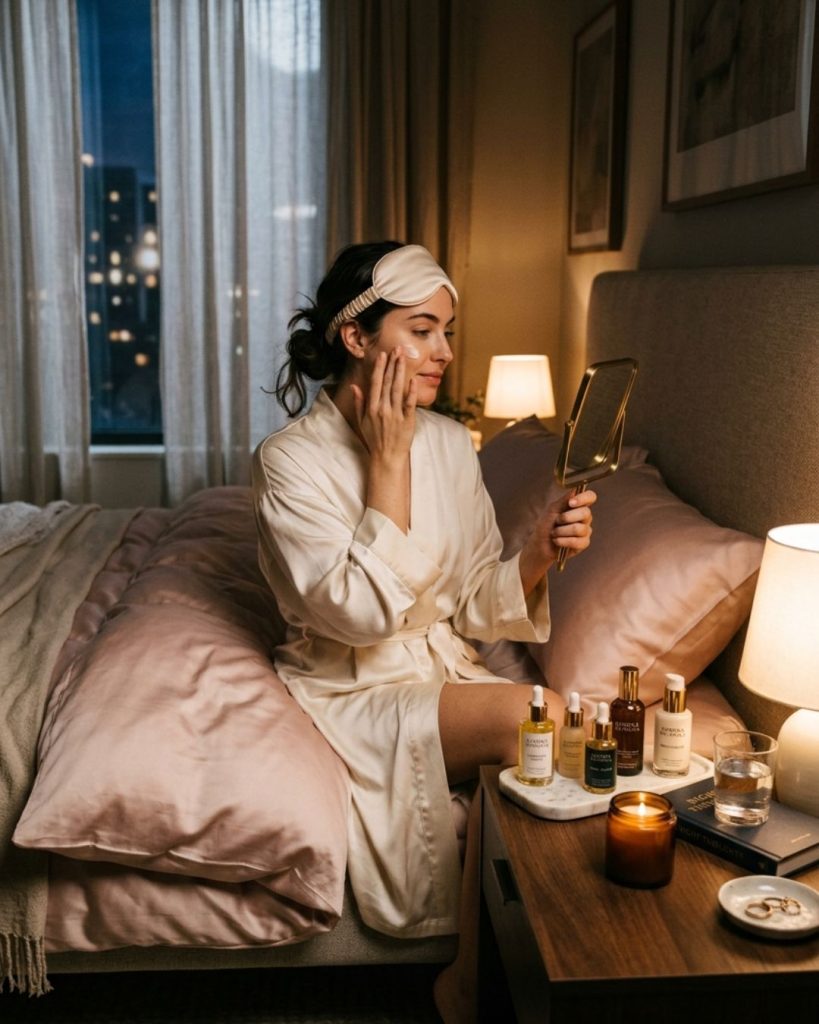
Night skincare routine setup with silk pillowcase and luxury products
Your glow is built at night—never skip your routine.

The wealthy know that no amount of cream can hide a poor diet or lack of sleep. They view wellness as the foundation of beauty.

  • Bio-Individual Nutrition: Many wealthy women work with nutritionists to eat for their specific blood type or gut health. They prioritize anti-inflammatory foods that keep the skin clear.
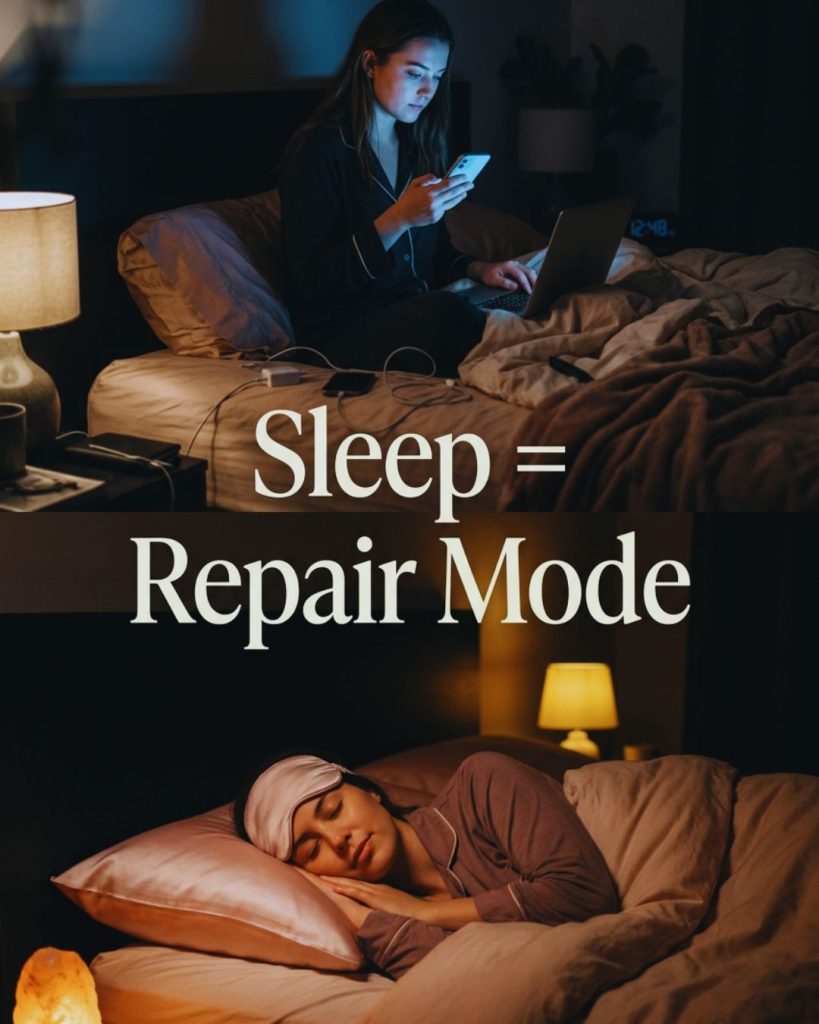
  • The Sleep Sanctuary: Sleep is treated as a business recovery tool. They invest in silk pillowcases, blackout curtains, and high-end magnesium supplements to ensure deep REM sleep.
  • Hydration Discipline: They don’t just “try” to drink water. They carry high-quality electrolyte drops and structured water to ensure every cell is hydrated from the inside out.

5. Signature Scents and Sensory Details
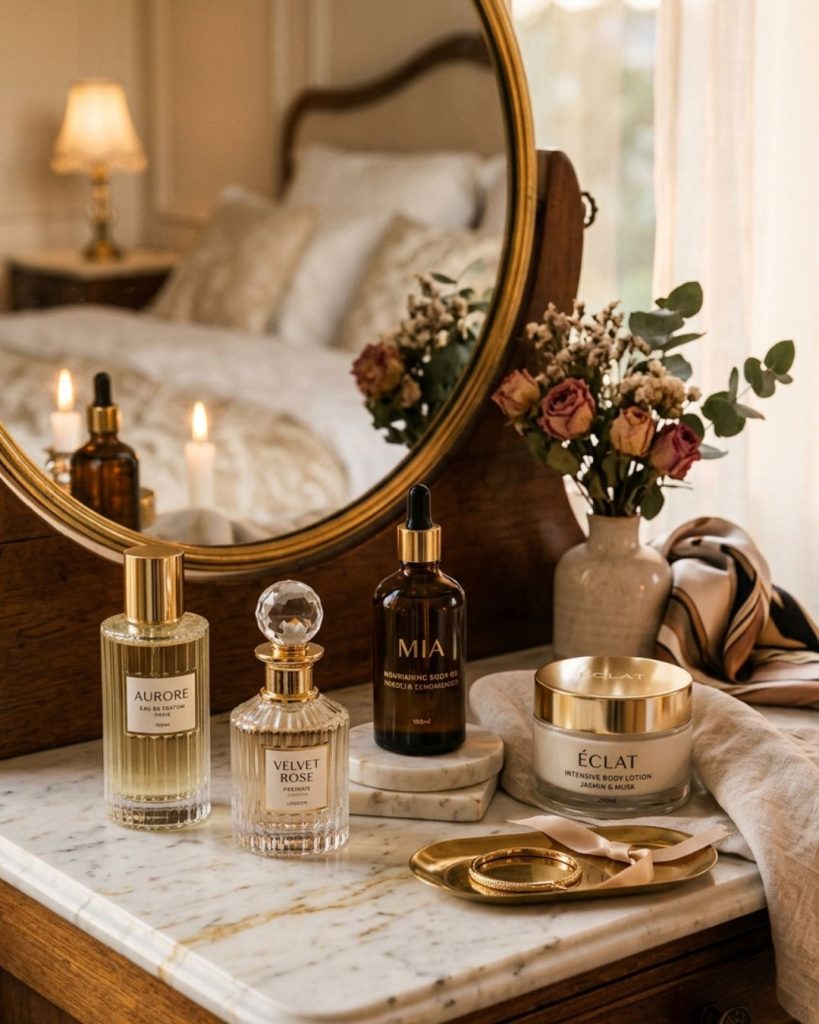
Luxury perfume and body care products arranged for scent layering routine
A signature scent is the invisible detail that defines elegance.

A rich woman’s presence is felt before she even speaks. This is due to a meticulous focus on sensory details.

  • Signature Fragrance: They don’t change their perfume every week based on what’s trending on TikTok. They find a luxury niche fragrance that becomes their “scent identity.”
  • Body Care Beyond the Face: While most people stop at the neck, the wealthy use retinol body lotions and oils. Their skin is soft and hydrated from head to toe.
  • The Fragrance Layering: They layer their scent—using the matching body wash, lotion, and then the perfume—to ensure it lasts all day without being overpowering.

6. Movement as a Beauty Treatment

Woman practicing Pilates in a bright studio representing beauty through movement and wellness
Movement isn’t just fitness—it’s circulation, posture, and the foundation of a natural glow.

In the world of the elite, exercise isn’t just about weight loss; it’s about lymphatic drainage and circulation.

  • Pilates and Yoga: These are the favorites of the affluent because they create long, lean muscles and improve posture. Good posture is a silent “rich” cue.
  • The Daily Walk: Wealthy women often swear by a “morning light” walk. This regulates their circadian rhythm, reduces cortisol, and keeps the face from looking “puffy.”
  • Lymphatic Massage: Whether it’s a professional manual drainage or using a Gua Sha at home, they prioritize moving toxins out of the body to keep their jawline snatched.

7. The Discipline of the “Night Ritual”
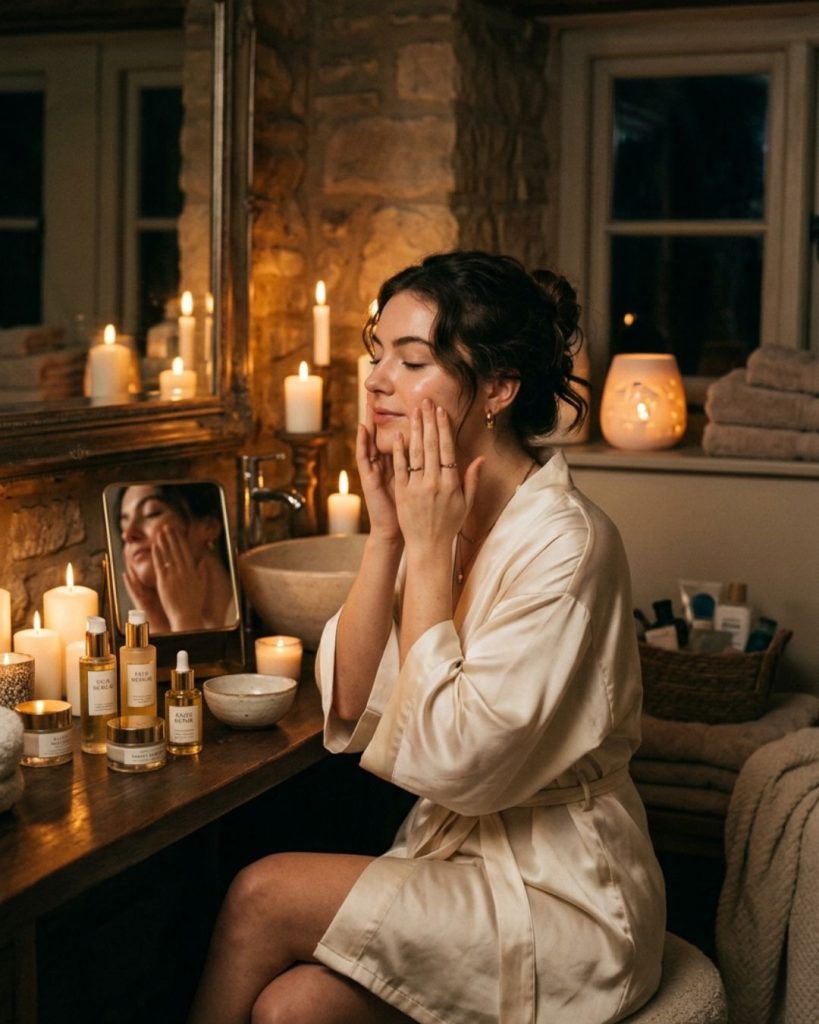
Night skincare routine with serum application in a calm luxury setting
Your skin repairs while you sleep—discipline at night creates effortless beauty by morning.

The difference between looking tired and looking “rested” is what happens between 9 PM and 11 PM. Rich women have a nightly discipline that they never break.

  • Double Cleansing: They never, ever sleep in makeup. They use an oil-based cleanser followed by a water-based one to ensure their skin can breathe and repair.
  • Active Ingredients: This is when they use their retinoids, peptides, and growth factors. They let the science do the heavy lifting while they sleep.
  • Digital Detox: Blue light is the enemy of beauty. They put their phones away an hour before bed to prevent digital aging and ensure better sleep quality.

8. Curating a “Uniform” Aesthetic
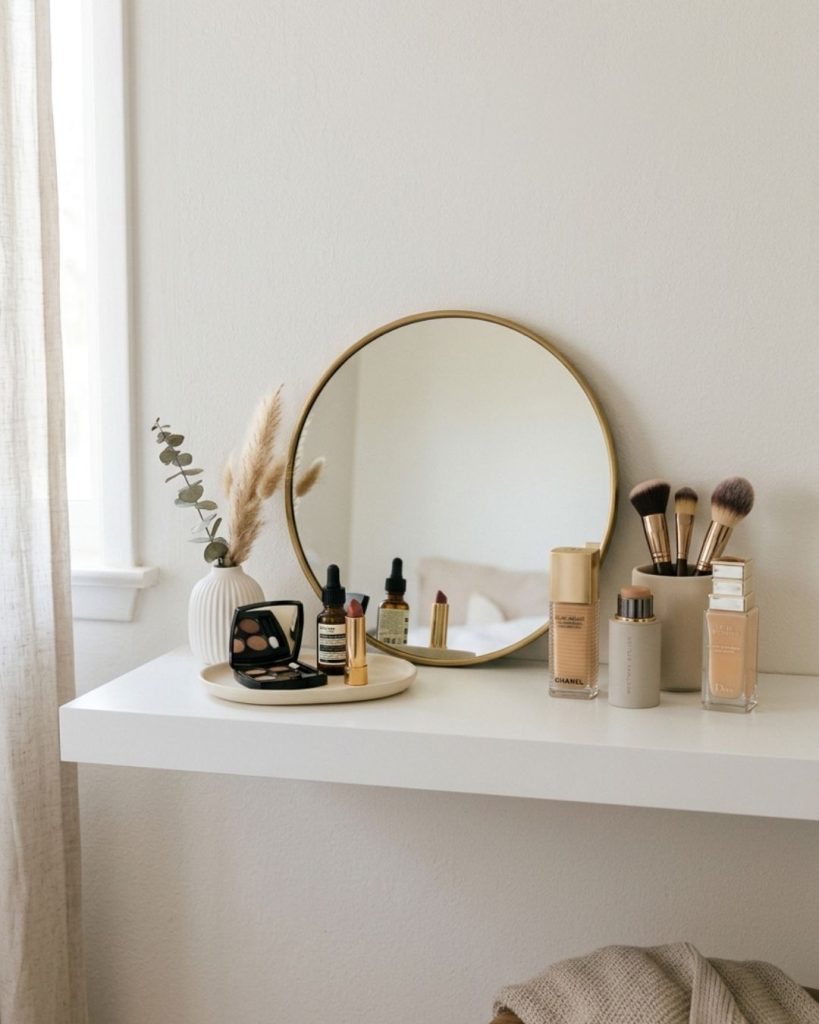
Minimalist vanity with luxury makeup products showing curated beauty routine
Elegance is edited—fewer products, better choices, timeless results.

Wealthy women don’t clutter their minds or their vanities with too many options. They choose quality over quantity.

  • The Edited Vanity: You won’t find 50 cheap lipsticks. You’ll find five high-end lipsticks in shades that perfectly complement their skin tone.
  • Quiet Luxury Makeup: Their makeup style is usually “no-makeup makeup.” It focuses on flawless skin, groomed brows, and a touch of color. It looks expensive because it looks natural.
  • Seasonal Audits: Every season, they audit their beauty products and wardrobe. They discard anything that is expired or no longer serves their “look.”

9. The Mindset of Consistency
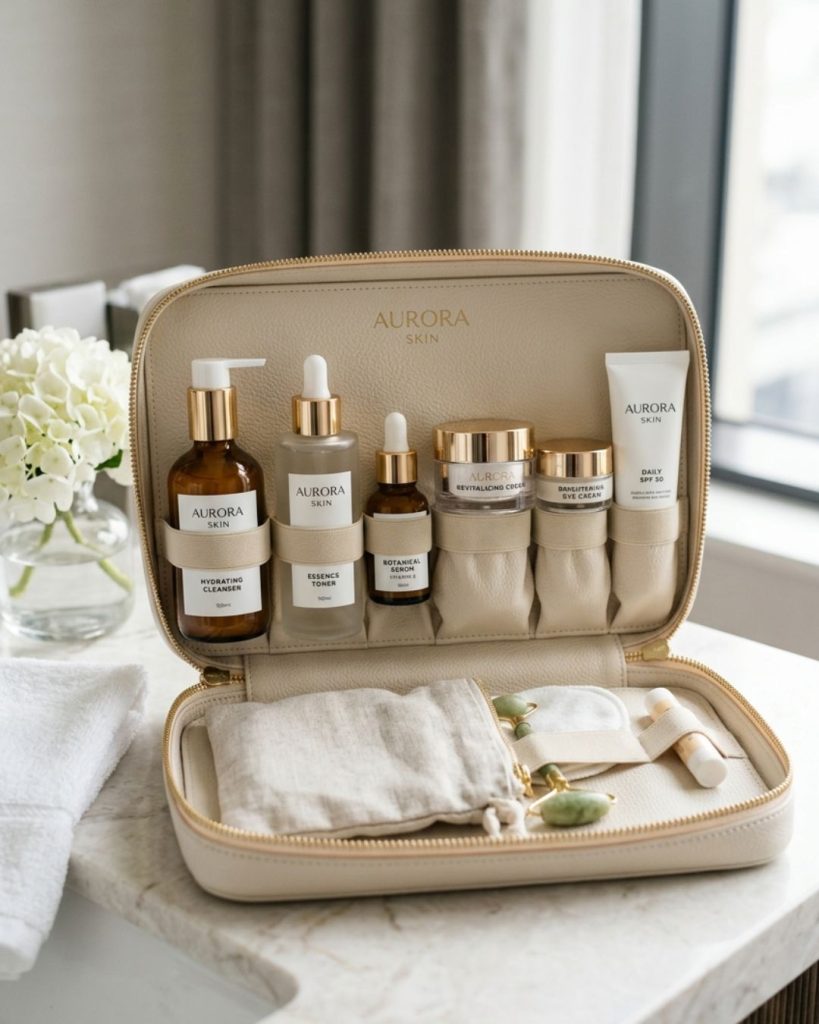
Luxury travel skincare kit organized neatly for consistent beauty routine
Consistency is the real luxury—your routine travels with you, no matter where life goes.

The most “impressive” habit of all is their consistency. They don’t skip their routine because they are tired, traveling, or busy.

  • Travel Kits: They have pre-packed travel skincare kits so that their routine isn’t disrupted by a flight or a hotel stay.
  • Professional Accountability: They pay for trainers and aestheticians not just for the service, but for the accountability. When you have an appointment, you show up.
  • Self-Respect: Ultimately, they see beauty habits as an act of self-respect. Taking care of one’s appearance is seen as a duty to oneself.

Conclusion

Becoming a “rich” woman is less about the balance in your bank account and more about the discipline in your daily habits. By shifting your mindset from “emergency fixes” to consistent maintenance, you can achieve a level of polish that radiates confidence and luxury.

Start with one habit—perhaps the daily SPF or the nightly double cleanse—and build your beauty empire one day at a time. After all, elegance is a marathon, not a sprint.
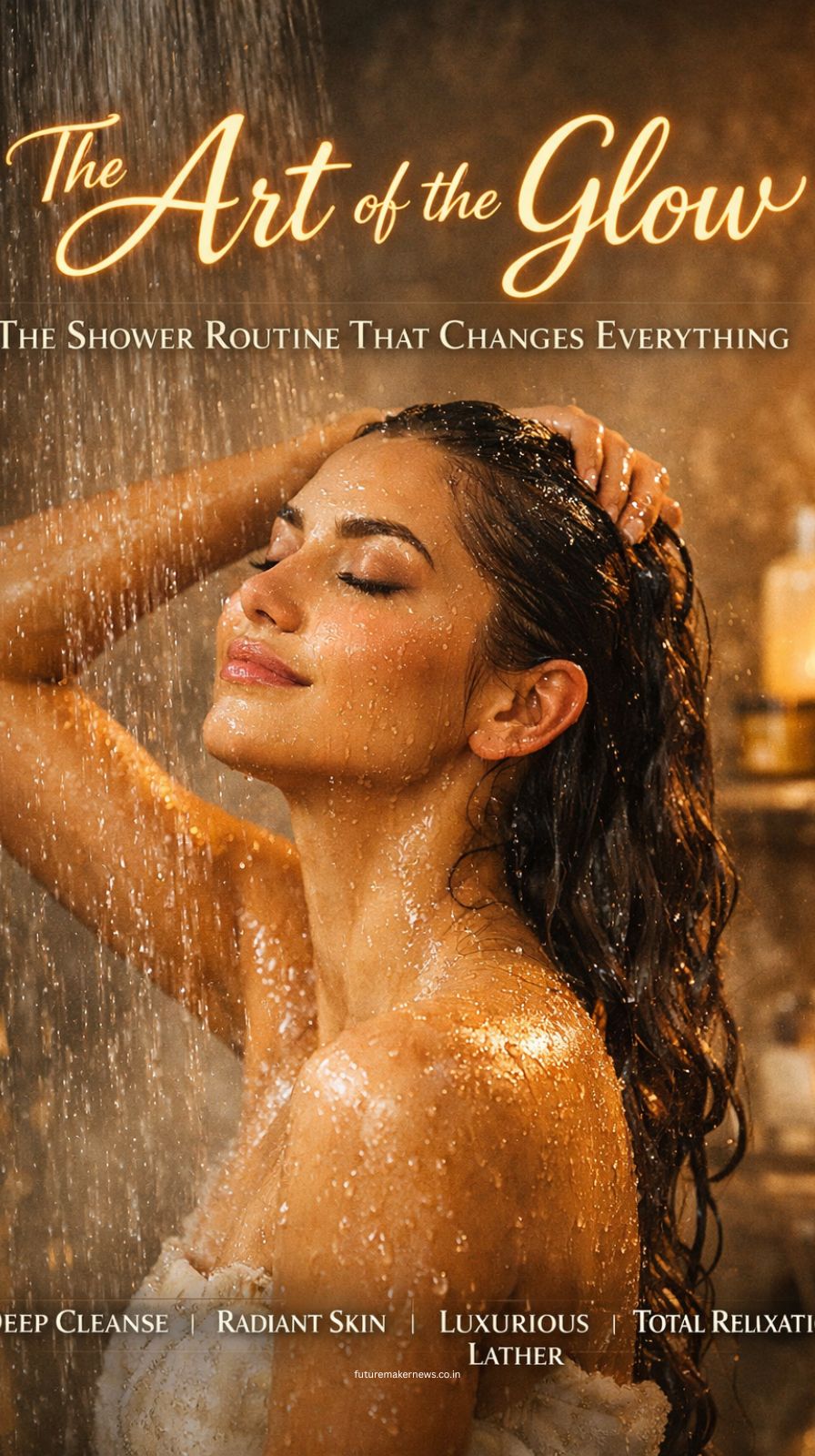
Woman with glowing skin stepping out of a steamy shower in a luxury bathroom

Most people treat a shower as a mundane task—a quick five-minute rinse to wake up or wash off the day. But if you want glowing skin, a strong skin barrier, and a scent that lingers for hours, you need to stop “washing” and start body care layering.

Think of your body care like your facial skincare. You wouldn’t just splash water on your face and call it a day, right? Your body deserves that same level of intention. This is the definitive guide to the ultimate shower routine that will transform your skin texture, tone, and overall confidence.

Phase 1: The Pre-Shower Preparation

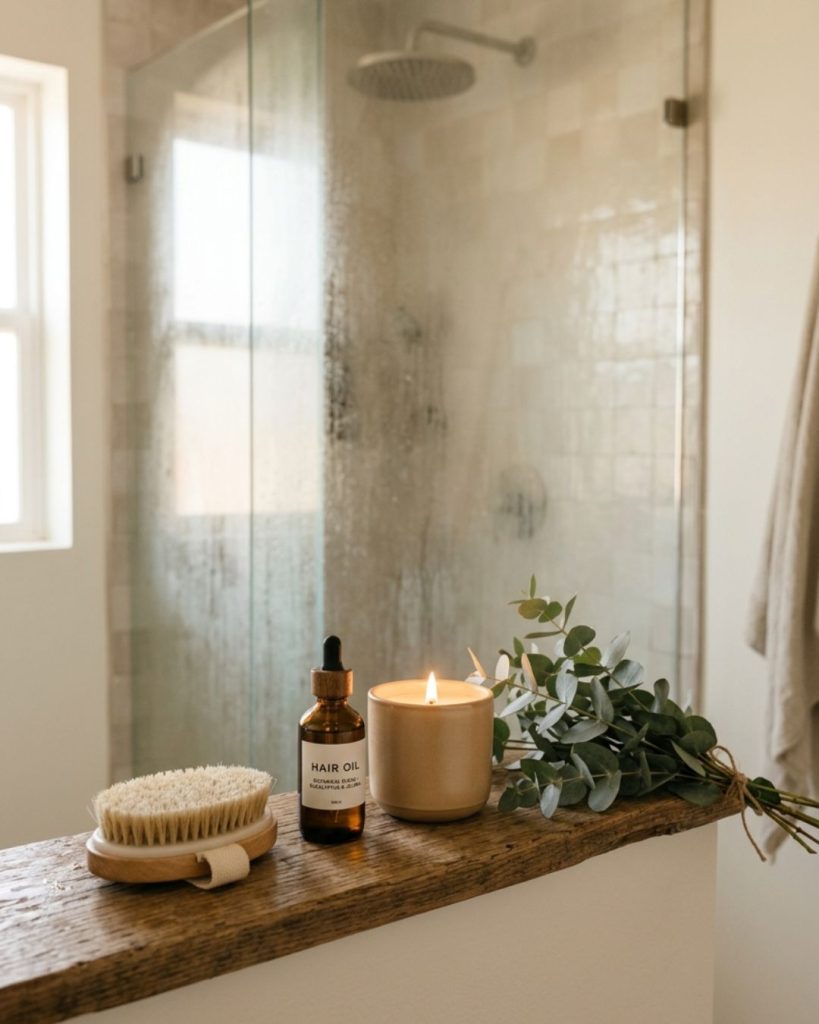
Dry brush, hair oil, and candle arranged in a spa-like bathroom for pre-shower routine
Your glow starts before the shower—prep your body and mind.

The secret to a successful shower routine starts before you even turn on the faucet.

  • Dry Brushing: Use a natural bristle brush on dry skin before entering the water. Use long, upward strokes toward the heart. This boosts lymphatic drainage and helps with cellulite reduction by stimulating blood flow.
  • Scalp Oil Treatment: If it’s a hair-wash day, apply a rosemary or jojoba oil to your scalp 20 minutes before. This protects your scalp from the stripping effects of hot water.
  • Setting the Vibe: Light a candle or drop a few drops of eucalyptus essential oil on the shower floor. The steam will create a spa-like aromatherapy experience.

Phase 2: The Cleanse (Double Cleansing Isn’t Just For Your Face)

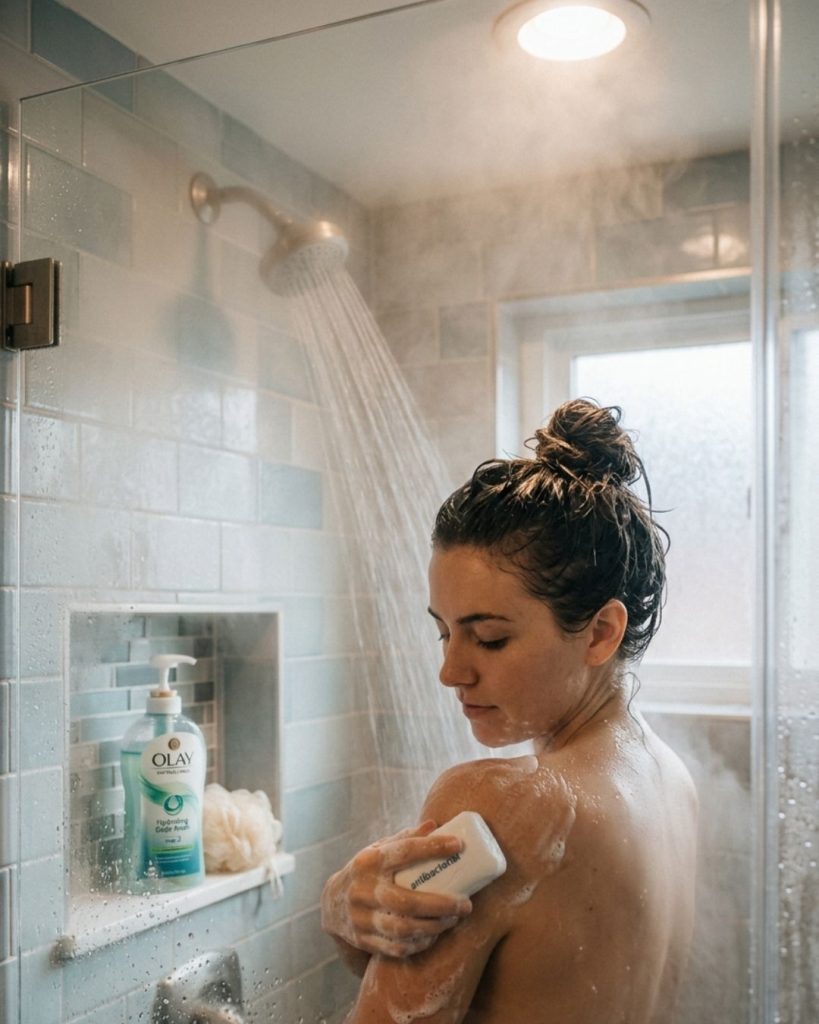
Two-step body cleansing routine with antibacterial soap and hydrating body wash in a steamy shower
Cleanse smart, not harsh—double cleansing keeps your skin fresh and hydrated.

One of the biggest mistakes in body care is using a harsh bar soap that strips your natural oils. To get truly clean without the “squeaky” (read: dry) feeling, try the double cleanse.

  • Step 1: The Antibacterial Wash. Use a gentle, unscented antibacterial soap on the “high-sweat” areas (underarms, feet, etc.). This eliminates body odor at the source.
  • Step 2: The Hydrating Body Wash. Now, apply a creamy body wash or a shower oil all over. Look for ingredients like shea butter, niacinamide, or glycerin. This replenishes the moisture you just lost and starts the skin hydration process early.

Phase 3: The Exfoliation Strategy

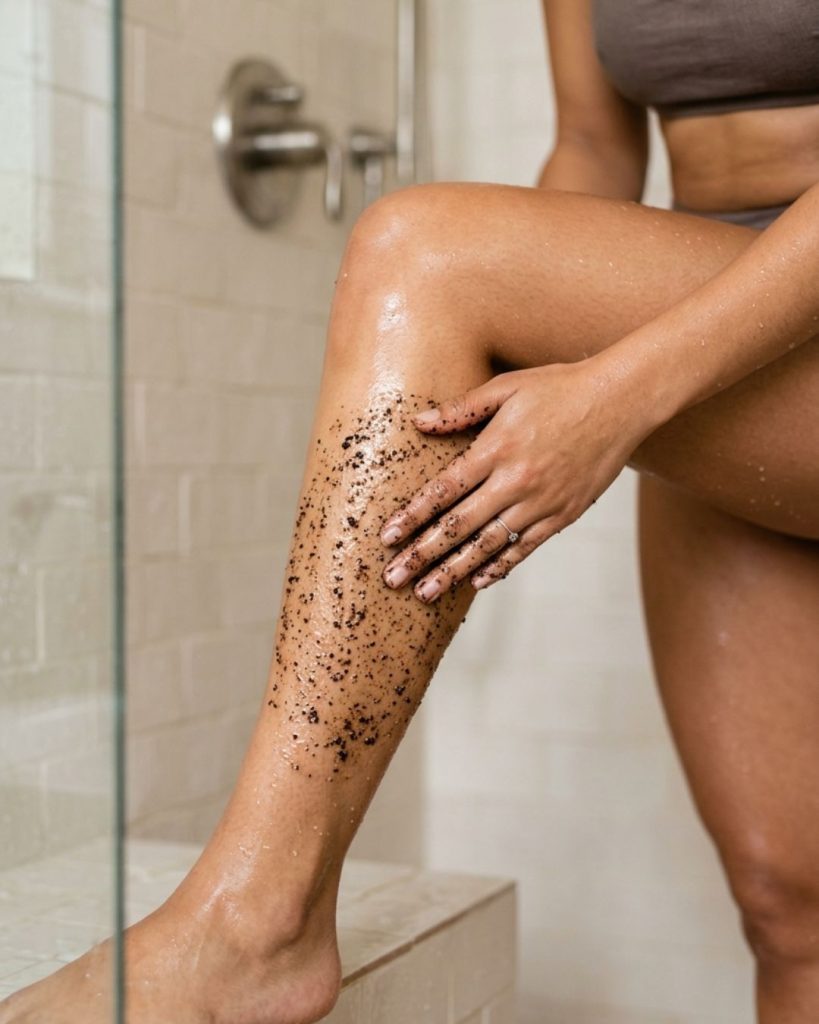
Applying body scrub on skin to remove dead cells and improve smoothness
Exfoliate smart—not more—to reveal smooth, radiant skin.

You cannot achieve smooth skin without removing dead skin cells. However, over-exfoliating is a recipe for irritation.

  • Physical Exfoliants: Use a sugar scrub or a coffee scrub twice a week. Focus on rough areas like elbows, knees, and heels.
  • Chemical Exfoliants: For those dealing with strawberry legs (keratosis pilaris) or body acne, look for a body wash containing salicylic acid (BHA) or glycolic acid (AHA).
  • The Golden Rule: Never exfoliate immediately after shaving. It will sting and cause razor burn.

Phase 4: The Strategic Shave

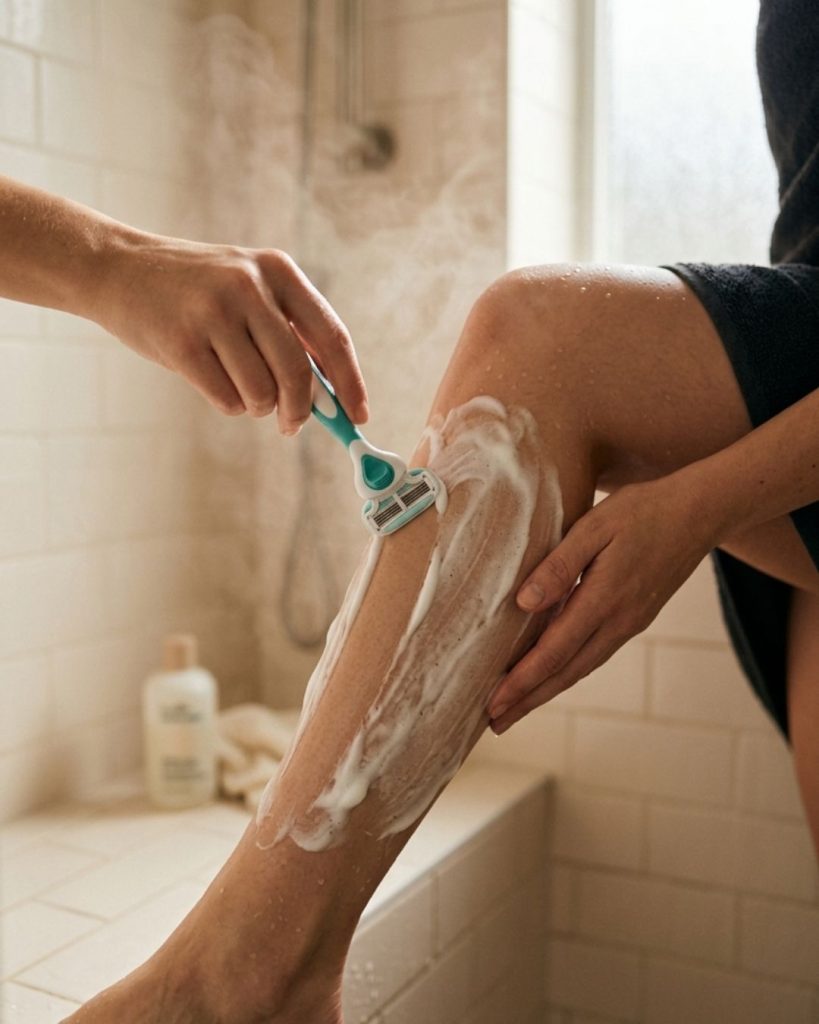
Woman shaving her leg with shaving cream in a shower for smooth skin routine
A proper shave routine is the secret to smooth, irritation-free skin.

If you choose to shave, doing it correctly is the difference between silky legs and itchy red bumps.

  1. Wait 5-10 minutes: Let the steam soften the hair follicles first.
  2. Use a Shave Oil or Cream: Never shave with just water or regular soap. A moisturizing shave cream provides a barrier that prevents micro-tears.
  3. Fresh Blades Only: A dull razor is the primary cause of ingrown hairs. Change your blade every 3–5 uses.
  4. Direction Matters: Shave in the direction of hair growth first, then go against it only if you need a closer finish.

Phase 5: The Rinse & Temperature Control

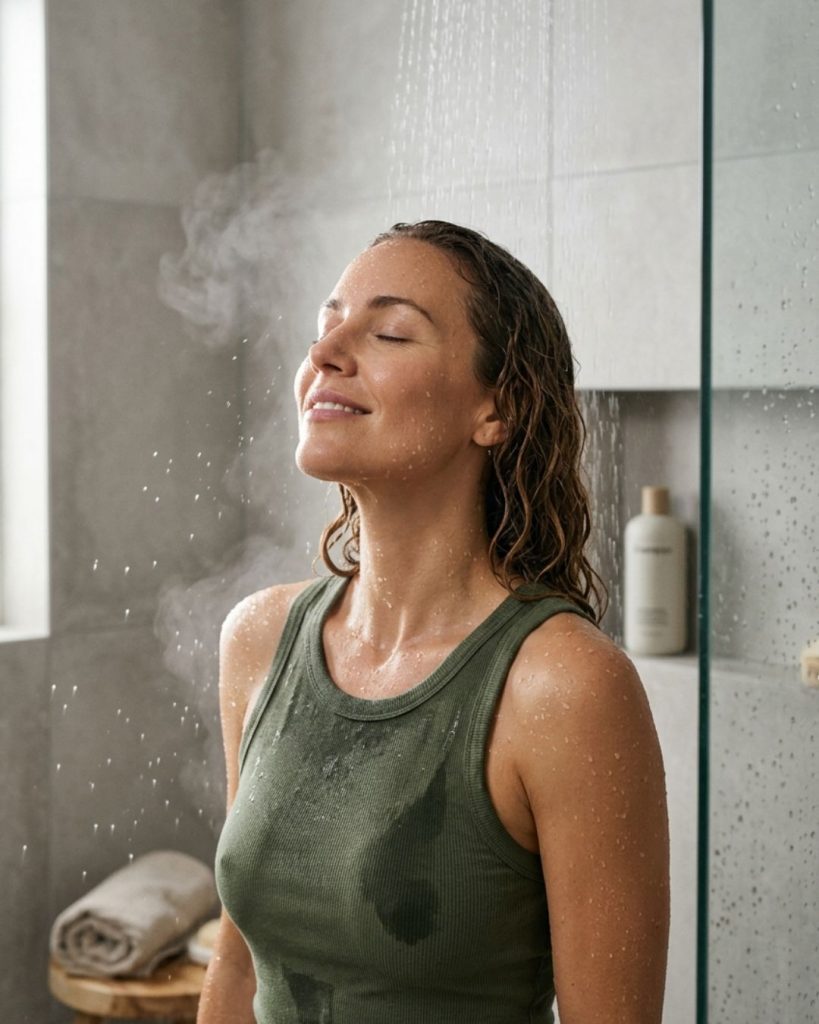
Woman rinsing under a shower with cool water for healthy skin and hair shine
Finish cool to lock in shine, boost glow, and refresh your skin.

While a steaming hot shower feels incredible, it is the enemy of healthy skin.

  • Lukewarm is Best: Hot water melts away your skin’s natural lipid barrier, leading to dry, itchy skin.
  • The Cold Finish: For the last 30 seconds, turn the water to a cool or cold setting. This helps seal the hair cuticle for extra shine and wakes up your nervous system for an instant mood boost.

Phase 6: Body Care Layering (The Post-Shower Glow)

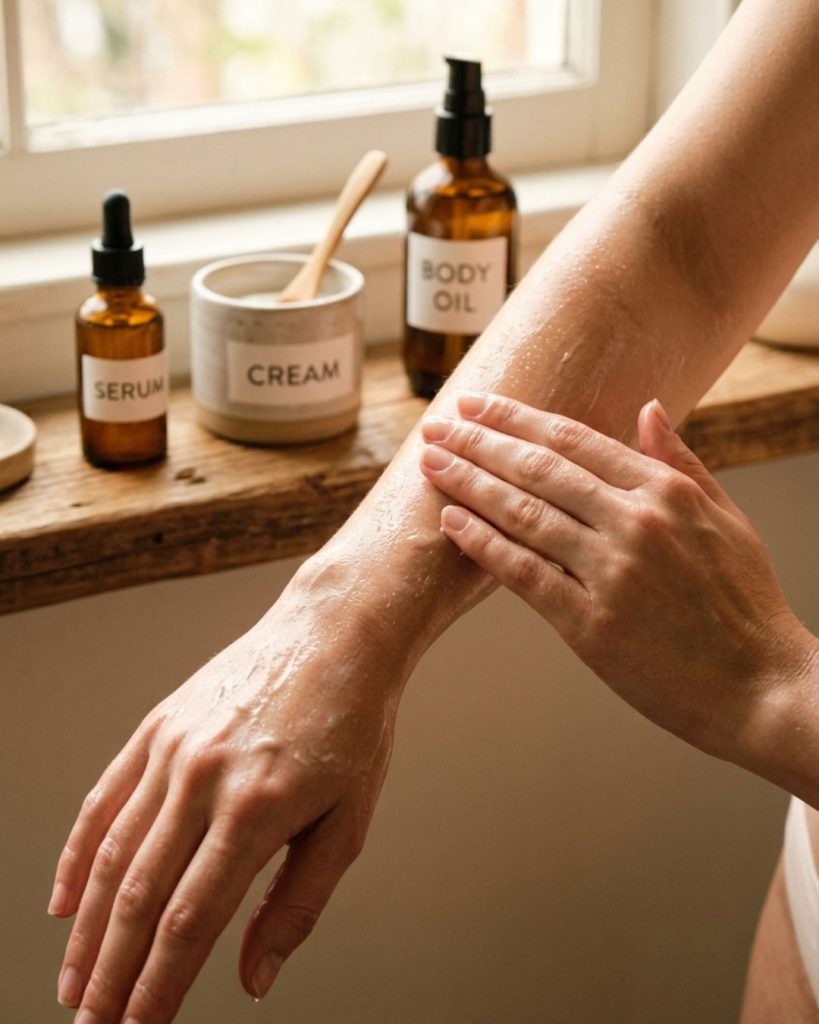
Applying lotion and body oil on damp skin for hydration and glowing effect
Layer your body care on damp skin to lock in hydration and achieve a lasting glow.

This is where the magic happens. The goal is to trap the moisture currently sitting on your skin before it evaporates. This is known as moisture sandwiching.

Step 1: Damp Skin Application

Do not towel dry completely. Pat your skin so it is “damp,” not dripping. Applying products to damp skin increases absorption by up to 10x.

Step 2: The Body Serum or Active Treatment

If you have specific concerns like hyperpigmentation or aging skin, apply a body serum first.

  • Vitamin C body serums brighten dull skin.
  • Retinol body lotions help with skin elasticity and firming.
  • Hyaluronic acid provides a deep drink of water for dehydrated cells.

Step 3: The Body Cream or Lotion

Layer a thick, high-quality body butter or moisturizer over your serum. Look for ceramides and fatty acids to repair the skin barrier. This acts as your “humectant” layer, pulling moisture into the skin.

Step 4: The Body Oil (The Sealant)

This is the step most people skip, but it is the most important for that “glass skin” body effect. An occlusive body oil (like almond, argan, or grape seed oil) seals in all the previous layers.

  • It creates a physical barrier that prevents transepidermal water loss.
  • It gives your skin that irresistible, healthy sheen.

Phase 7: Scent Layering (How to Smell Good All Day)

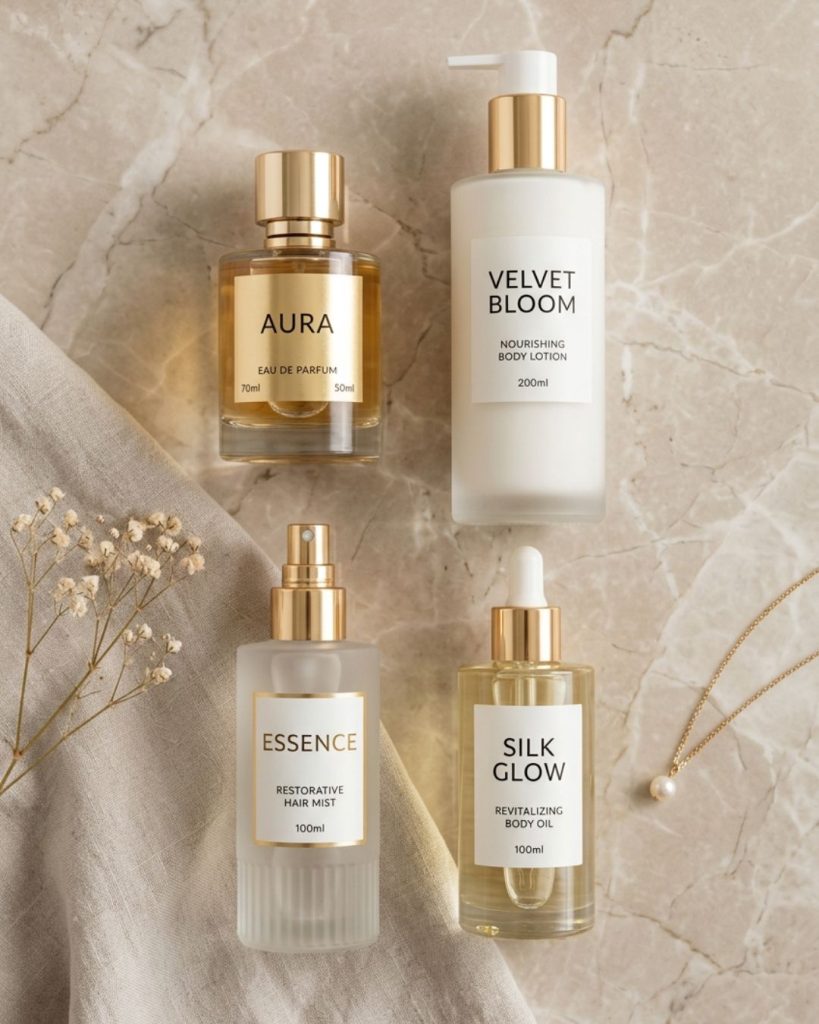
Perfume, body lotion, and oil arranged for scent layering routine on a vanity
Layer your scents to create a signature fragrance that lasts all day.

If you want to be the person who leaves a trail of amazing scent everywhere they go, you must layer your fragrances.

  • Match Your Scents: Use a body wash, lotion, and oil that share similar notes (e.g., vanilla, sandalwood, or citrus).
  • The Pulse Points: Apply your perfume or body mist immediately after your body oil. The oil gives the fragrance molecules something to “stick” to, making the scent last 3x longer than it would on dry skin.
  • Don’t Forget the Hair: A quick spritz of hair mist ensures that every time you move, a subtle breeze of your signature scent follows.

Weekly Maintenance: The “Everything Shower”

Once a week, dedicate time to an “Everything Shower.” This is a longer ritual where you perform all the steps above, plus:

  • A deep-conditioning hair mask.
  • Foot filing for callus removal.
  • Face masking while you wait for your hair treatments to set.

Common Body Care Mistakes to Avoid

  • Using the same loofah for months: These are breeding grounds for bacteria. Switch to a silicone body scrubber or wash your washcloths after every single use.
  • Ignoring your back: Use a long-handled brush to ensure you aren’t leaving soap residue on your back, which causes “bacne.”
  • Rubbing with a towel: Aggressive drying causes friction and irritation. Always pat dry.

Summary Table: The Layering Order

StepProduct TypePurpose
1Dry BrushLymphatic drainage & exfoliation
2Cleansing Oil/SoapRemove dirt and sweat
3ExfoliantRemove dead skin cells
4Shave CreamProtect skin during hair removal
5Body SerumTarget specific skin concerns
6Body ButterDeep hydration
7Body OilSeal in moisture & add glow

The Result: A New You

By following this step-by-step body care routine, you aren’t just cleaning yourself; you are performing an act of self-care. Within just one week of consistent body care layering, you will notice your skin feels softer, looks brighter, and holds moisture much better throughout the day.

Stop settling for basic hygiene. Elevate your shower into a transformative beauty ritual and watch how your skin—and your confidence—starts to glow from the inside out. Your skin is your largest organ; treat it with the luxury it deserves.

Elegant woman with natural glowing skin and minimal makeup in old money style

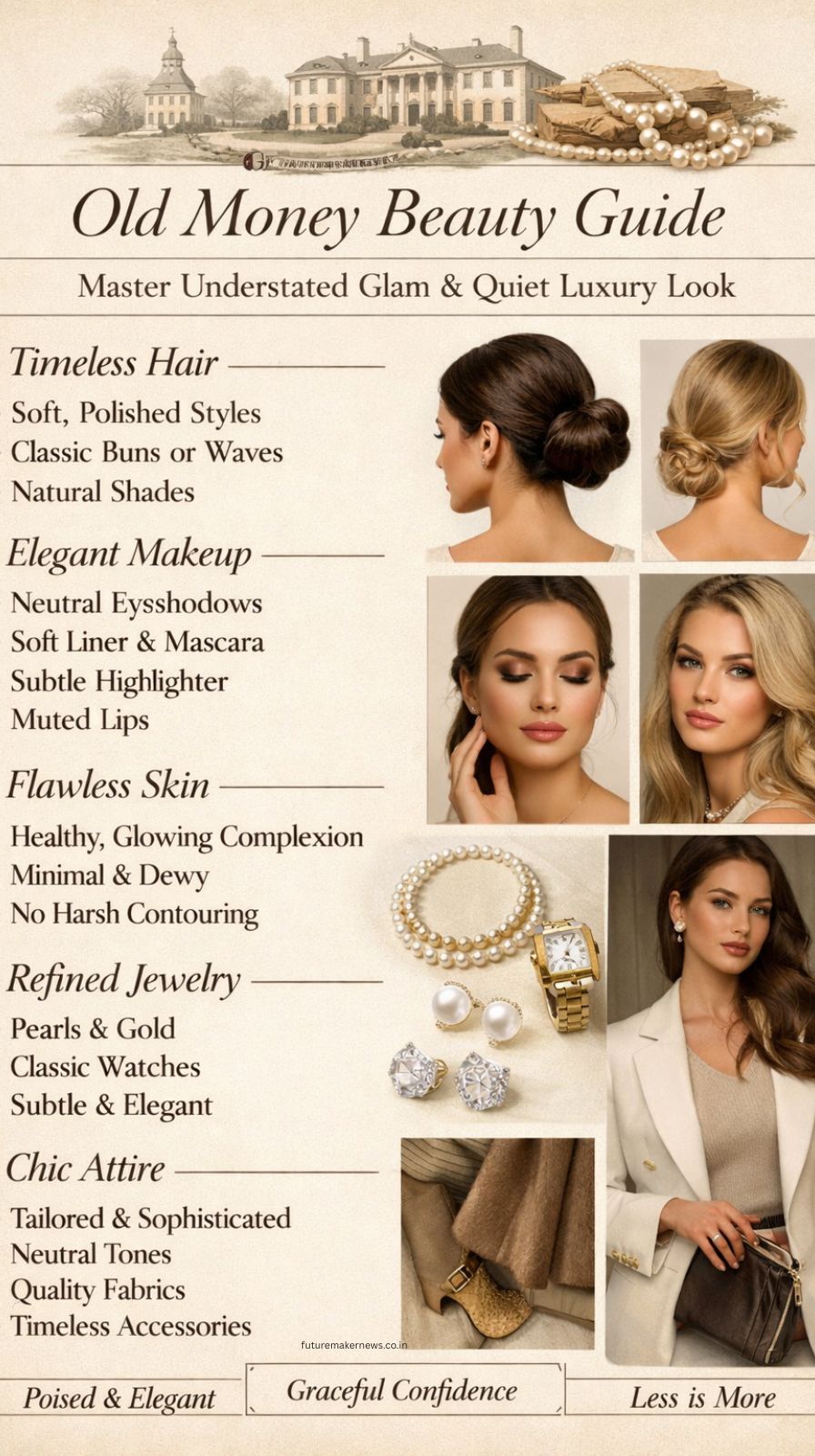
In a world obsessed with fleeting “core” trends and over-the-top filters, a timeless aesthetic has reclaimed its throne: Old Money Beauty. This isn’t just a makeup style; it’s a philosophy of quiet luxury, refinement, and the art of looking like you’ve never had a bad day in your life.

The Old Money aesthetic focuses on quality over quantity, favoring understated glam and neutral tones that enhance rather than mask. It’s the “born with it” glow that suggests a life of equestrian lessons, summering in the Hamptons, and an impeccable skincare routine.

The Philosophy: Less is Always More

The core of Old Money Beauty is restraint. It rejects the heavy “Instagram face” of the 2010s—no harsh contouring, no blinding highlighters, and no blocky brows. Instead, it leans into:
  • Radiant, healthy skin that looks expensive.
  • Monochromatic palettes that create harmony across the face.
  • Meticulous grooming where every hair is intentionally placed.

Phase 1: The Canvas (Skincare and Prep)

Close-up of glowing hydrated skin with natural texture and minimal makeup
Flawless skin is the foundation of Old Money beauty.

You cannot achieve Old Money Glam without a flawless base. In this aesthetic, skincare is the makeup. The goal is a dewy complexion that looks hydrated from within.

  • Hydration is Key: Use serums rich in hyaluronic acid and niacinamide to plump the skin.
  • The Silk Finish: Always apply a lightweight, luminizing primer. Avoid anything too “glittery”; you want a pearlescent glow, not a disco ball effect.
  • Sun Protection: Nothing says “new money” like a sunburn. A high-quality SPF 50 is the ultimate status symbol for longevity and skin health.

Phase 2: The Complexion (The “No-Makeup” Base)

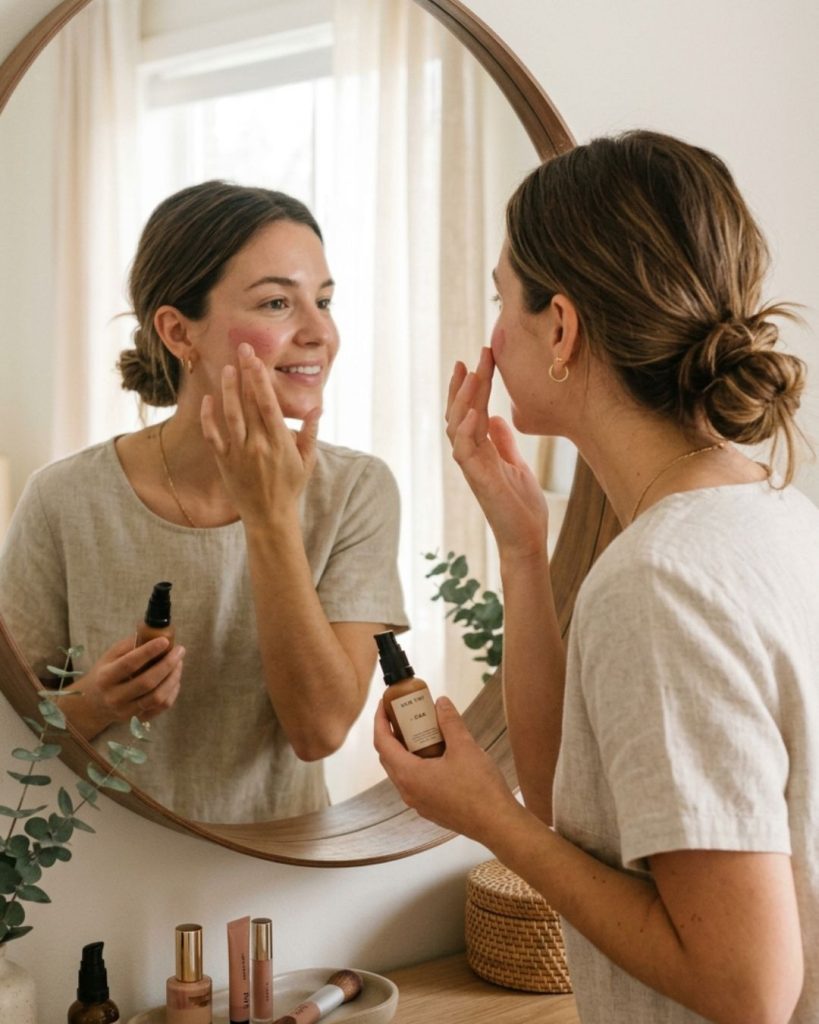
Woman applying cream blush and light foundation for a natural makeup look
A skin-first approach creates a seamless, natural complexion.

The Old Money look requires a “skin-first” approach. We want to blur imperfections while letting natural freckles or textures peek through.

  • Skin Tints over Foundations: Swap heavy matte foundations for a breathable skin tint or a sheer luminous foundation.
  • Strategic Concealing: Only apply concealer where absolutely necessary—under the eyes, the corners of the nose, and on blemishes. Blend with your fingers for a seamless finish.
  • The Cream Secret: Use cream bronzer and cream blush. These melt into the skin, mimicking a natural flush rather than sitting on top of the pores.
  • Soft Sculpting: Instead of harsh contouring, use a neutral-toned bronzer to lightly “warm” the perimeter of the face. Think of it as a “sun-kissed” glow from a weekend in St. Tropez.

Phase 3: The Eyes (Understated Sophiteness)

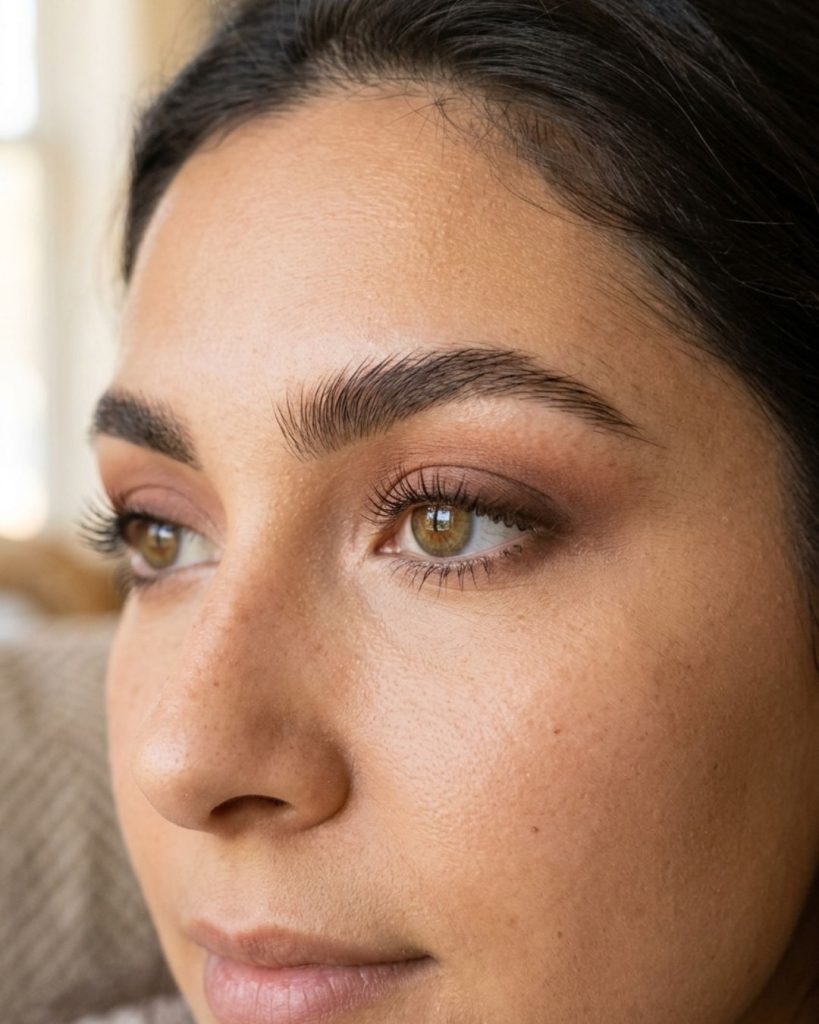
Close-up of natural eye makeup with neutral tones and well-groomed brows
Soft neutrals and groomed brows define effortless sophistication.

For the eyes, we lean heavily into neutral tones—beiges, taupes, soft browns, and creams. The goal is to define the eye shape without it looking like “eye makeup.”

  • The Matte Wash: Apply a taupe eyeshadow across the lid and blend it softly into the crease. This adds depth without drama.
  • Tightlining: Instead of thick winged liner, use a dark brown kohl pencil to tightline the upper lash line. This makes lashes look thicker while remaining discreet.
  • Lashes: Skip the lash extensions. Opt for a lengthening mascara in soft black or espresso brown. The look should be “fluttery,” not “spider-like.”
  • The Brows: The Old Money brow is groomed but natural. Use a clear brow gel to brush hairs upward and a fine-tip pencil to fill in sparse gaps. Avoid the “laminated” look; keep them soft and feathery.

Phase 4: The Lips (The Perfect Nude)

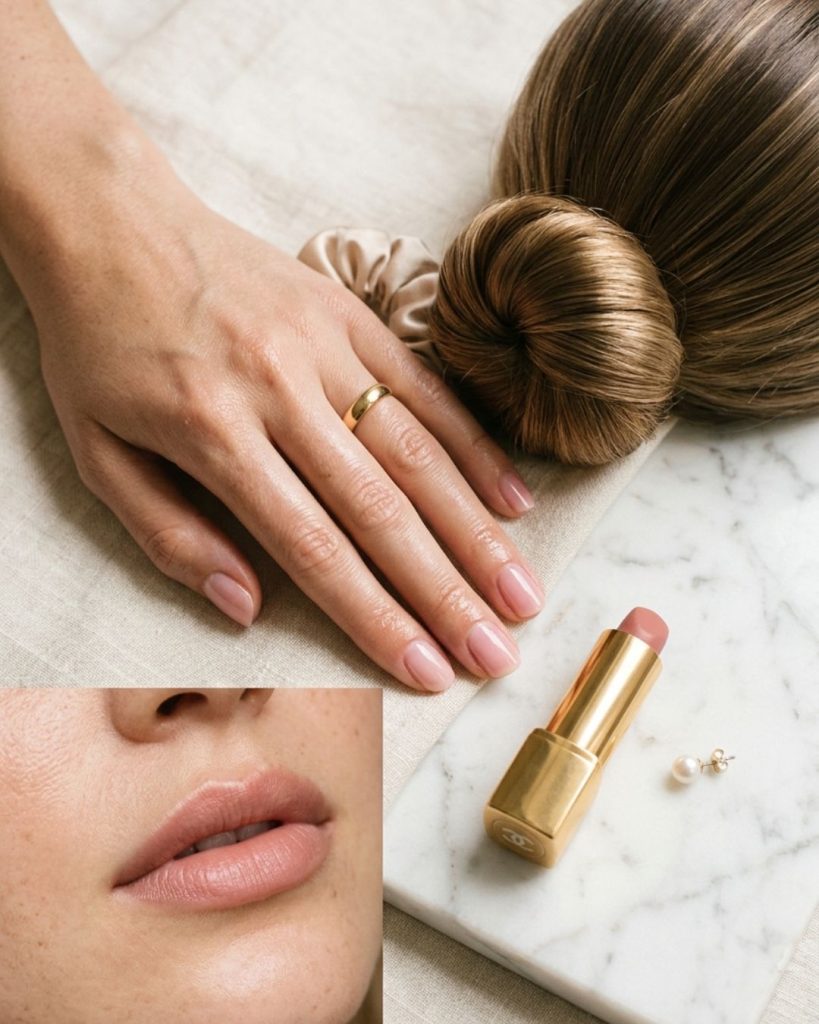
Minimal beauty details including nude lips, natural nails, and sleek hairstyle
It’s the refined details that complete the quiet luxury look.

The Old Money lip is never loud. Even when wearing red, it’s a classic, muted brick rather than a neon scarlet. For the daily look, neutral tones are your best friend.

  • Lip Contouring: Use a lip liner that is exactly one shade darker than your natural lip color. Define the edges and blend inward.
  • Satin Finishes: Move away from ultra-matte liquids. Use a satin lipstick or a tinted lip balm for a healthy, hydrated sheen.
  • Shades to Covet: Look for dusty rose, nude-beige, and soft apricot. These shades brighten the face without being distracting.

Phase 5: The Finishing Touches (The Details Matter)

Woman with sleek bun hairstyle and natural manicure in elegant style
Polished details elevate your look from simple to sophisticated.

The difference between “trying hard” and “effortless” lies in the details. Old Money Beauty extends beyond the face.

1. The Manicure (The “Rich Girl” Nail)

Loud colors and long acrylics are out. The Old Money manicure consists of:

  • Short, oval, or almond shapes.
  • Sheer pinks (like the iconic “Ballet Slippers” look).
  • Classic French tips or a simple milky white.
  • Impeccable cuticles.

2. The Hair (Polished and Bouncy)

Hair should look healthy, shiny, and “done.”

  • The 90s Blowout: Volume at the roots and soft curls at the ends suggest you’ve just stepped out of a salon.
  • Sleek Low Bun: For a more formal understated glam look, a center-parted low bun secured with a silk scrunchie is the height of sophistication.
  • The Shine Factor: Use a lightweight hair oil to tame flyaways and add a reflective, expensive-looking sheen.

3. The Fragrance (The Invisible Accessory)

An Old Money woman is remembered by her scent. Avoid overly sweet or “candy” perfumes. Instead, opt for:
  • Woody florals (Sandalwood, Rose, Iris).
  • Crisp citruses (Bergamot, Neroli).
  • Musky linens that smell like clean laundry and fresh air.

Why the Old Money Look is Dominating 2026

In a digital age, there is a deep craving for authenticity and timelessness. The Old Money Beauty movement is a rebellion against the “fast fashion” of the makeup world.

By investing in quality products and mastering blending techniques, you create a look that doesn’t age. Whether you are 20 or 60, neutral tones and understated glam work universally to highlight your best features.

Key Takeaways for Your Routine:

  • Prioritize Skin Health: A glowy base makes everything else look better.
  • Stick to Neutrals: Browns, creams, and roses create a sophisticated palette.
  • Blend Until You Can’t: There should be no harsh lines in Old Money Beauty.
  • Confidence is the Goal: This look is designed to make you look like the best version of yourself, not a different person.

Final Thoughts: The Wealth of Minimalism

Ultimately, the Old Money Beauty look is about a quiet confidence. It’s the realization that you don’t need to shout to be noticed. By focusing on refined details, neutral tones, and a healthy glow, you embody an aura of elegance that transcends seasons.

Embrace the understated glam. Invest in your skin. Wear your neutrals with pride. Because true luxury isn’t about being seen—it’s about being remembered for your grace and your timeless aesthetic.

Woman with naturally glowing skin and no makeup in soft morning light

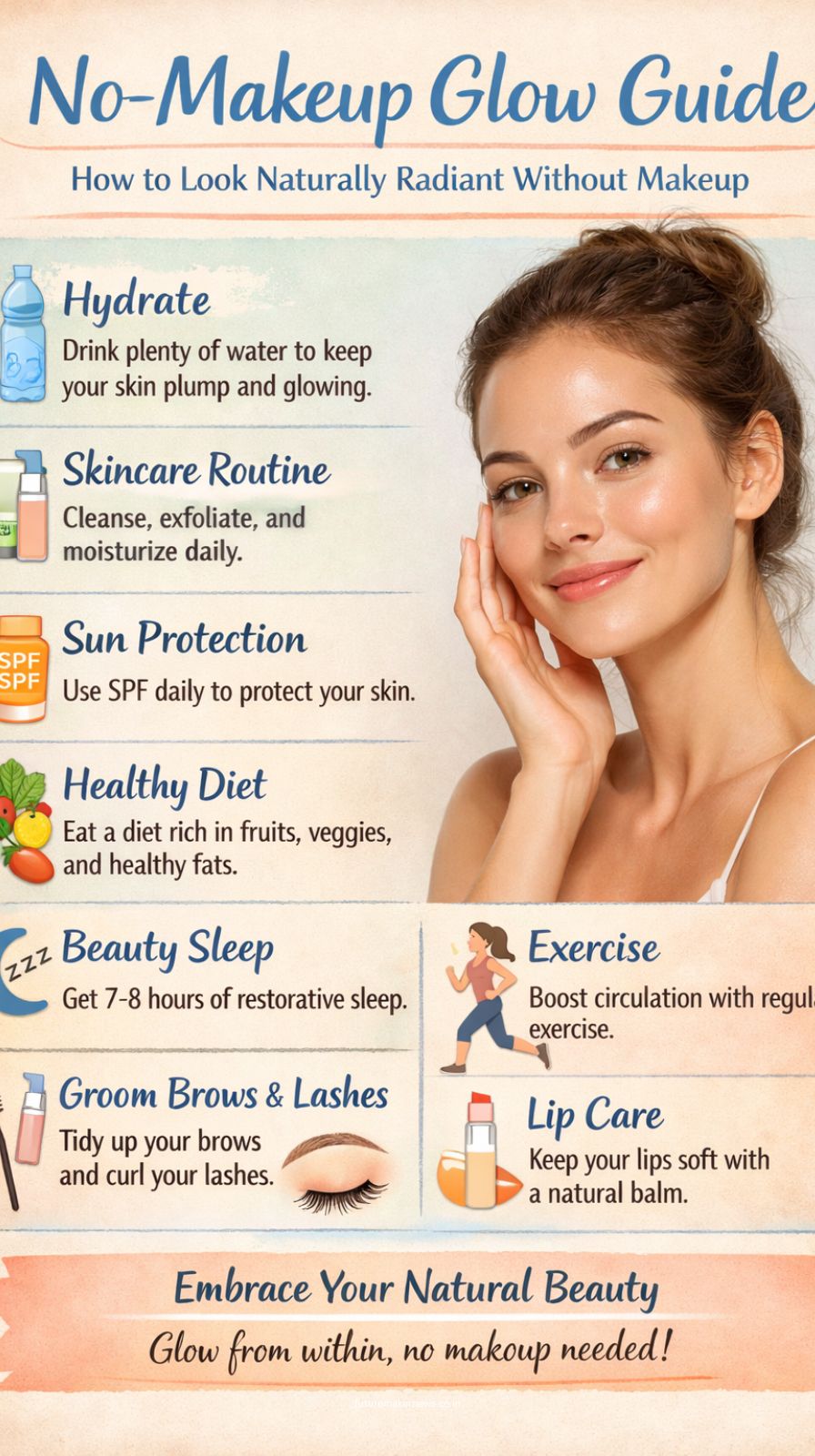
In a world obsessed with full-coverage foundations and intricate contouring, there is a growing movement toward minimalism and natural beauty. Looking fresh without a drop of makeup isn’t about being “perfect”—it’s about optimizing your natural features so you feel confident and energized from the moment you wake up.

Achieving a dewy complexion and a polished look without cosmetics relies on three pillars: skin preparation, brow grooming, and lip health. When you master these, you won’t just look “awake”; you’ll look like the best version of yourself.

1. The Foundation: Advanced Skin Prep

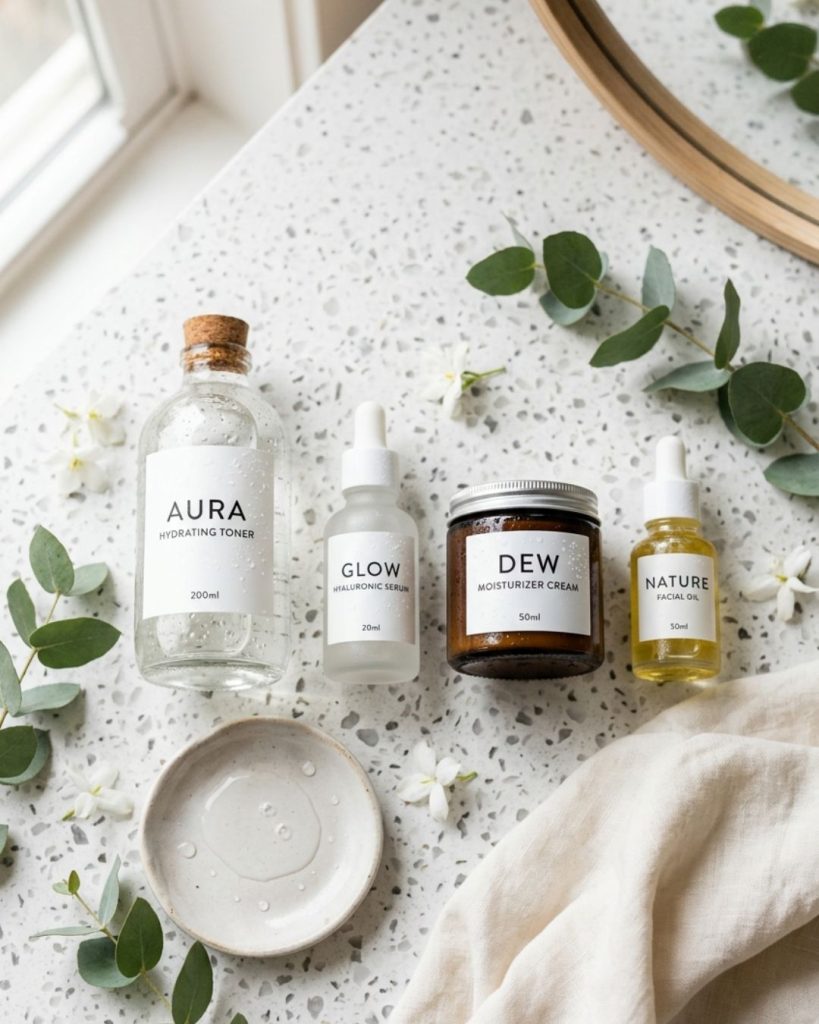
Minimal skincare routine with hydrating products on a clean surface
Healthy skin starts with the right prep and hydration layers.

Your skin is the canvas. If the canvas is healthy, hydrated, and smooth, you don’t need to hide it behind layers of product. Skin prep is the most critical step in looking fresh.
Master the Double Cleanse

To achieve that luminous skin look, you must start with a truly clean base. Using a gentle oil-based cleanser followed by a water-based one ensures that deep-seated pollutants and excess sebum are removed. This prevents the dullness that often makes us reach for concealer.

Exfoliation for Instant Brightness

Dead skin cells act like a dusty veil over your face. Use a chemical exfoliant (like AHA or BHA) twice a week. These acids dissolve the “glue” holding dead cells together, revealing the baby-soft, light-reflecting skin underneath. This is the secret to a natural glow.

Hydration Layering (The 7-Skin Method)

Instead of one thick cream, try layering thin mists or toners. This creates a “plumping” effect from within. When your skin is saturated with moisture, fine lines disappear, and your face catches the light naturally. Look for ingredients like Hyaluronic Acid and Glycerin.

Vitamin C for Radiance

If you want to combat hyperpigmentation and uneven skin tone, Vitamin C is your best friend. This powerful antioxidant brightens the skin and protects it from environmental damage, giving you a “lit-from-within” appearance that makeup can only mimic.

The Magic of Facial Massage

Before you leave the house, spend two minutes massaging your face. Use a Gua Sha or just your fingertips to perform lymphatic drainage. This de-puffs the eyes and defines the jawline, providing an instant natural facelift.

2. The Power of Frame: Brow Grooming

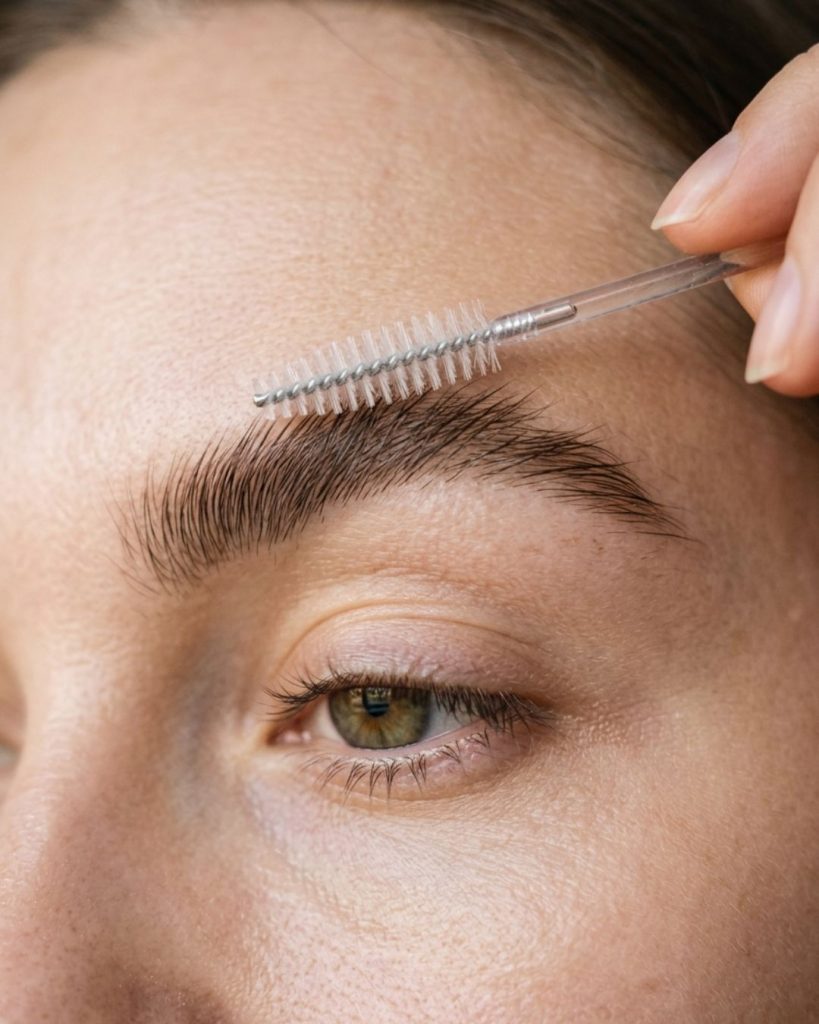
Natural eyebrows being brushed upward for a clean and fresh look
Well-groomed brows frame your face effortlessly.

Brows are the most important feature for structural balance. Even without eyeshadow or liner, well-groomed brows “lift” the face and make you look put-together.

The Art of the Shape

You don’t need a pencil to define your brows. Focus on brow mapping to find your natural arch. Removing just a few stray hairs underneath the tail of the brow can open up the entire eye area, making you look more rested.

Brow Health and Growth

If your brows are sparse, invest in a brow serum containing peptides. Alternatively, a tiny drop of castor oil applied at night can encourage thickness over time. Fuller brows are a hallmark of youthful beauty.

The Clear Gel Trick

Instead of colored pomades, use a clear brow gel or a clean spoolie with a bit of hairspray. Brush the hairs upward and outward. This “fluffy” brow look creates a youthful, modern aesthetic that looks intentional rather than neglected.

Tinting for Definition

If your brow hairs are light, consider a professional brow tint. This dyes the fine, invisible hairs, making your brows look twice as thick without needing any daily maintenance. It provides a frame for your eyes that lasts for weeks.

3. The Finishing Touch: Lip Care and Color

Close-up of naturally tinted healthy lips with hydration shine
Smooth, hydrated lips complete the no-makeup glow.

Dry, flaky lips can make a healthy face look tired. Keeping your lips smooth and slightly flushed is the final step to looking effortlessly fresh.

Exfoliation is Key

Just like your face, your lips need exfoliation. Use a gentle sugar scrub or a damp washcloth once a day to remove dry skin. This increases circulation, giving your lips a natural, healthy pink tint.

Deep Hydration Over Wax

Many cheap lip balms contain waxes that just sit on the surface. Look for lip oils or treatments with Shea Butter and Ceramides. These penetrate the skin to heal cracks and create a smooth, reflective surface.

The Natural Flush

If you want a hint of color without “lipstick,” look for pH-balanced lip balms. These react with your skin’s chemistry to create a custom pink shade that looks like your natural lip color, only better.

Sun Protection for Lips

The skin on your lips is incredibly thin and prone to sun damage, which causes thinning and loss of color. Always use a lip balm with SPF to maintain your natural volume and prevent dark spots.

4. Lifestyle Habits for a Fresh Face

Woman refreshing her face with water in a morning skincare routine
Simple habits create long-lasting natural radiance.

Beauty isn’t just topical; it’s systemic. To truly thrive without makeup, your internal habits must support your skincare routine.

The Hydration Rule

It sounds cliché, but drinking enough water is non-negotiable. Dehydration leads to sunken eyes and sallow skin. Aim for at least two liters a day to maintain skin elasticity.

Beauty Sleep is Real

During sleep, your body repairs skin cells and produces collagen. Lack of sleep increases cortisol, which leads to breakouts and inflammation. Aim for 7–9 hours to ensure you wake up with a fresh complexion.

Cold Water Therapy

Splashing your face with ice-cold water in the morning constricts blood vessels and reduces redness and puffiness. It’s the fastest way to “wake up” your skin and tighten your pores naturally.

Silk Pillowcases

Switching to a silk pillowcase prevents friction. This means fewer sleep creases on your face and less breakage for your eyelashes and brows. It’s a passive way to maintain your beauty overnight.

Summary Checklist for Daily Freshness

To make this routine easy to follow, here is a quick summary of how to optimize your no-makeup look:

CategoryAction ItemBenefit
Skin PrepUse a Vitamin C SerumBrightens and evens skin tone.
Skin PrepApply Broad-Spectrum SPFPrevents aging and maintains clarity.
BrowsBrush upward with a spoolieOpens the eyes and adds structure.
LipsApply a nourishing lip maskCreates a plump, healthy pout.
EyesUse eye drops & curl lashesMakes eyes look bright and clear.

Final Thoughts on Natural Beauty

Looking fresh without makeup is a testament to how well you treat your body. When you focus on deep hydration, consistent exfoliation, and feature definition, you find that you don’t need to “fix” your face—you just need to highlight what’s already there.

Embracing your natural texture, your freckles, and your unique features is the ultimate confidence booster. By following this skincare-first approach, you’ll save time in the morning and project an aura of effortless, healthy vitality.

Remember, the goal isn’t to look like a filtered image; it’s to look like you’ve just returned from a relaxing vacation—vibrant, rested, and glowing. Start focusing on your skin health today, and you’ll find that the “no-makeup” look becomes your favorite way to face the world.

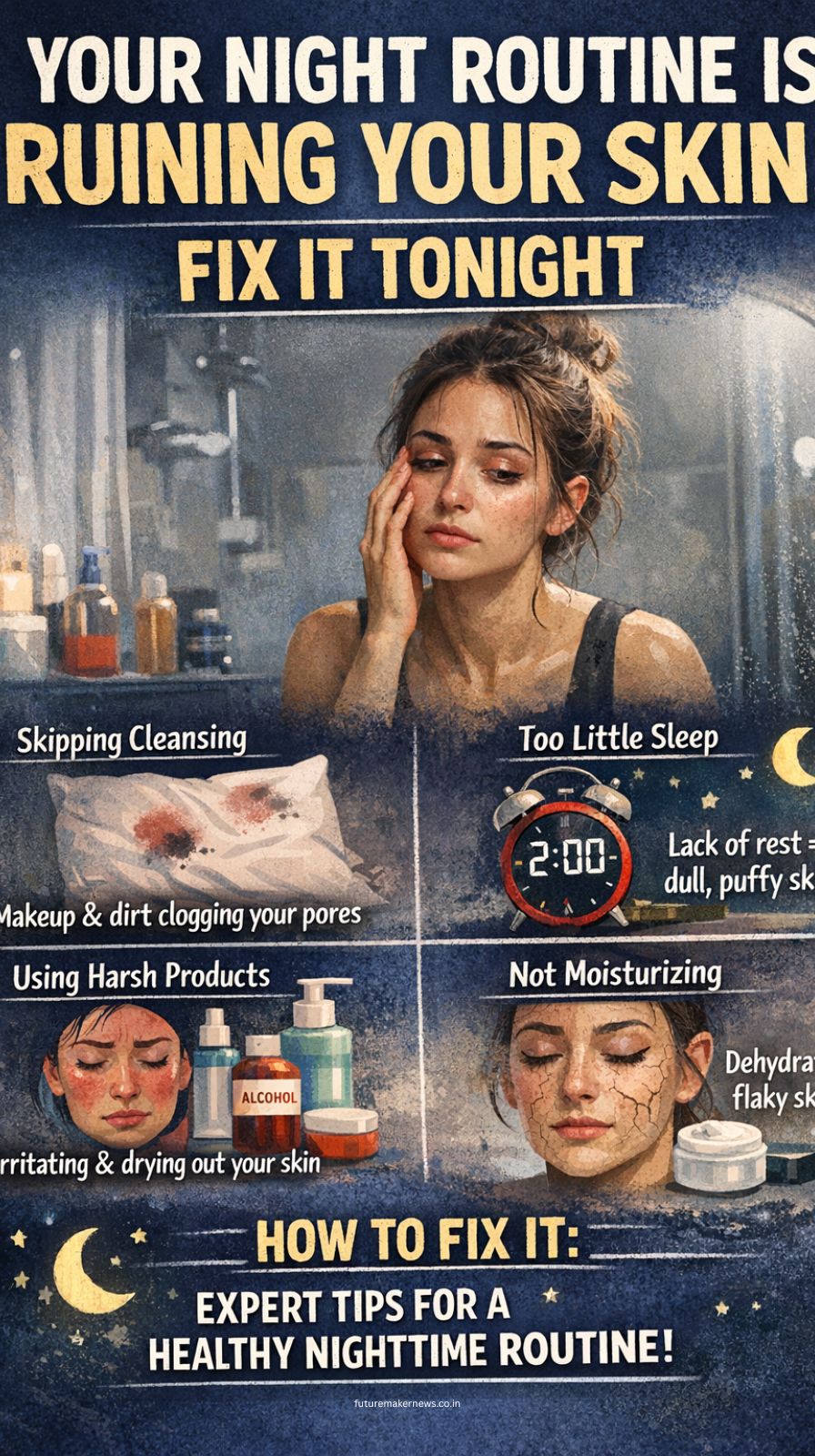
Comparison of bad vs good night skincare routine showing habits affecting skin health

We spend a fortune on luxury serums, retinol creams, and high-end moisturizers, yet we often wake up wondering why our skin looks dull, congested, or prematurely aged. If you are doing everything “right” but still battling breakouts and inflammation, the culprit isn’t your products—it’s your habits.

Your nighttime ritual is supposed to be a period of cellular repair and regeneration. However, for many, it has become a series of accidental sabotages. From the fabric you sleep on to the way you wash your face, you might be unknowingly damaging your skin barrier.

Let’s dive deep into why your current night routine is ruining your skin and how you can fix it tonight.

1. The Silent Saboteur: Pillowcase Hygiene

Clean vs dirty pillowcase showing bacteria impact on acne-prone skin
Your pillowcase can either heal your skin—or break it out.

You might think your bed is a sanctuary, but your pillowcase is often a breeding ground for bacteria, dead skin cells, and residual hair products.

The “Petri Dish” Effect

Every night, your skin sheds thousands of cells. When you press your face against a week-old pillowcase, you are essentially marinating your pores in sebum and microbes. This leads to what dermatologists call acne mechanica—breakouts caused by friction and trapped bacteria.

  • The Solution: Change your pillowcase every two to three days. If you have acne-prone skin, consider a fresh one every night.
  • Fabric Matters: Switch to mulberry silk or satin. Unlike cotton, which absorbs your expensive night creams and tugs at the skin, silk allows your face to glide, reducing sleep wrinkles and keeping hydration where it belongs—on your face.

2. The Sin of Improper Cleansing

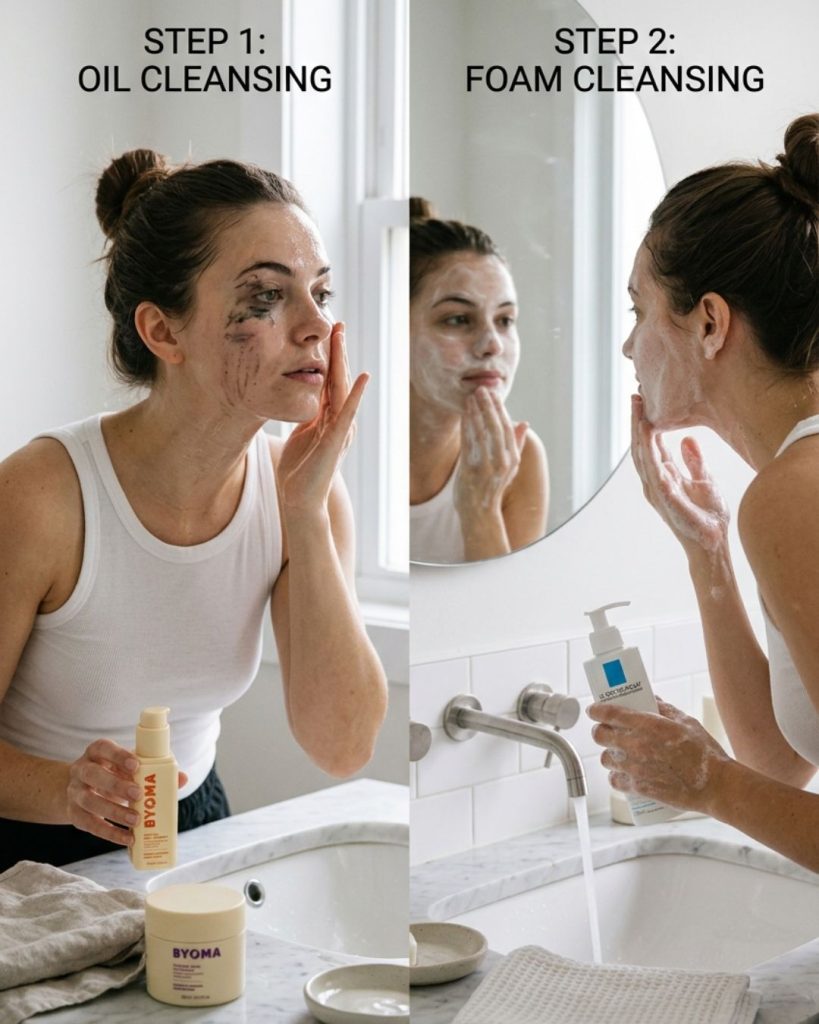
Double cleansing routine removing makeup and impurities from skin
A single cleanse isn’t enough—your skin needs a proper reset.

If you think a quick splash of water or a single makeup wipe counts as “clean,” your skin is screaming for help. Improper cleansing is the leading cause of clogged pores and dullness.

The Double Cleanse Revolution

Throughout the day, your face collects pollutants, SPF, and excess oil. A standard water-based cleanser cannot fully break down oil-based impurities.

  • Step 1: Use an oil-based cleanser or micellar water to dissolve stubborn makeup and sunscreen.
  • Step 2: Follow up with a gentle water-based cleanser to actually clean the skin surface.
  • The Danger of Over-Cleansing: While you want to be thorough, using harsh, “squeaky clean” cleansers strips your natural lipids. If your skin feels tight after washing, you’ve gone too far and damaged your moisture barrier.

3. The “Wet Face” Mistake

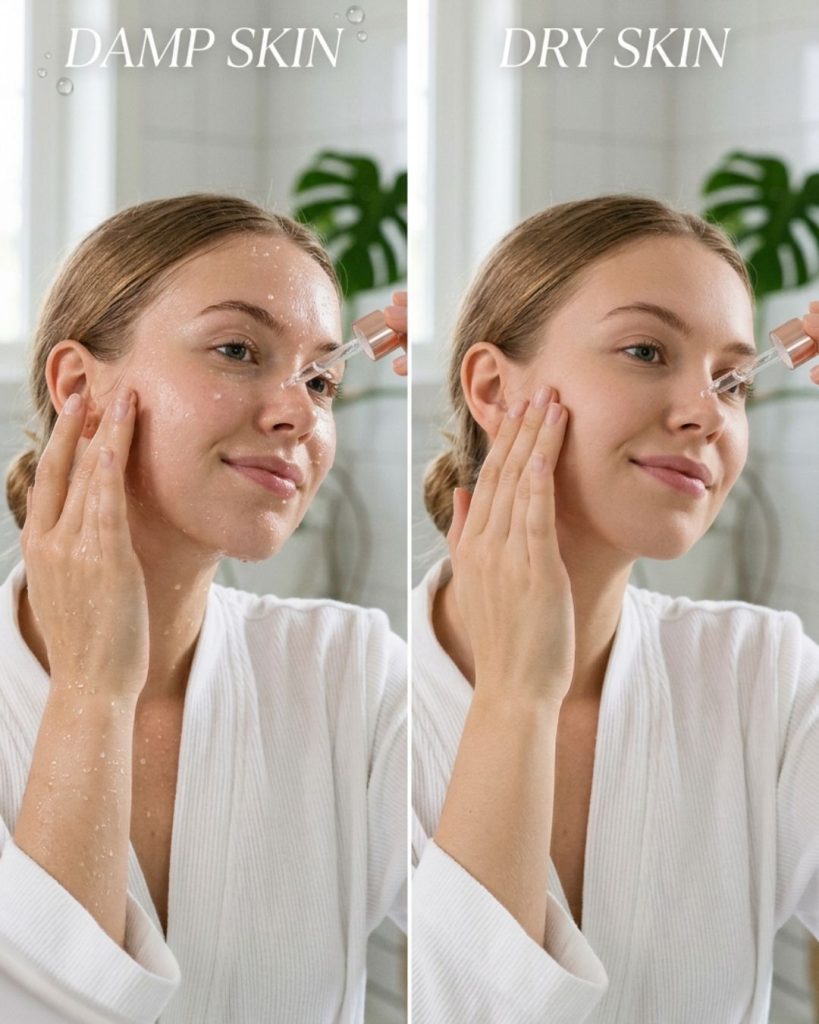
Applying skincare products on damp vs dry skin for better absorption
Timing matters—some ingredients need damp skin, others don’t.

Timing is everything in skincare. Applying certain active ingredients to damp skin can either be a miracle or a disaster.

When to Dry, When to Apply

  • Hyaluronic Acid: This should always be applied to damp skin. It acts as a humectant, pulling moisture into the skin. On dry skin, it can actually pull moisture out from deeper layers, leaving you more dehydrated.
  • Retinol and Actives: Applying retinol or strong acids to wet skin increases their penetration too rapidly, often leading to peeling, redness, and irritation. Always wait until your skin is completely dry before applying potent anti-aging treatments.

4. Neglecting the “Skincare Perimeter”

Applying skincare to jawline neck and hairline areas for complete routine
Your skincare shouldn’t stop at your cheeks—extend it everywhere.

Most people focus on the “T-zone” and cheeks, completely forgetting the jawline, hairline, and neck.

  • Hairline Breakouts: Residual shampoo or conditioner can sit on the edge of your face, leading to comedones. Ensure you rinse your face after you’ve finished your hair routine.
  • The Neck is Part of Your Face: The skin on your neck is thinner and has fewer oil glands. If you aren’t extending your hydration and SPF (during the day) down to your décolletage, your neck will show signs of aging much faster than your face.

5. Over-Exfoliation: The Trend That Hurts

Damaged skin barrier caused by over exfoliation with acids
Too much exfoliation doesn’t glow—it damages.

In the quest for “glass skin,” many have fallen into the trap of using chemical exfoliants (AHAs and BHAs) every single night.

Signs Your Barrier is Broken

  • A persistent “shiny” look that isn’t oil.
  • Stinging when you apply basic moisturizer.
  • Increased sensitivity and random red patches.

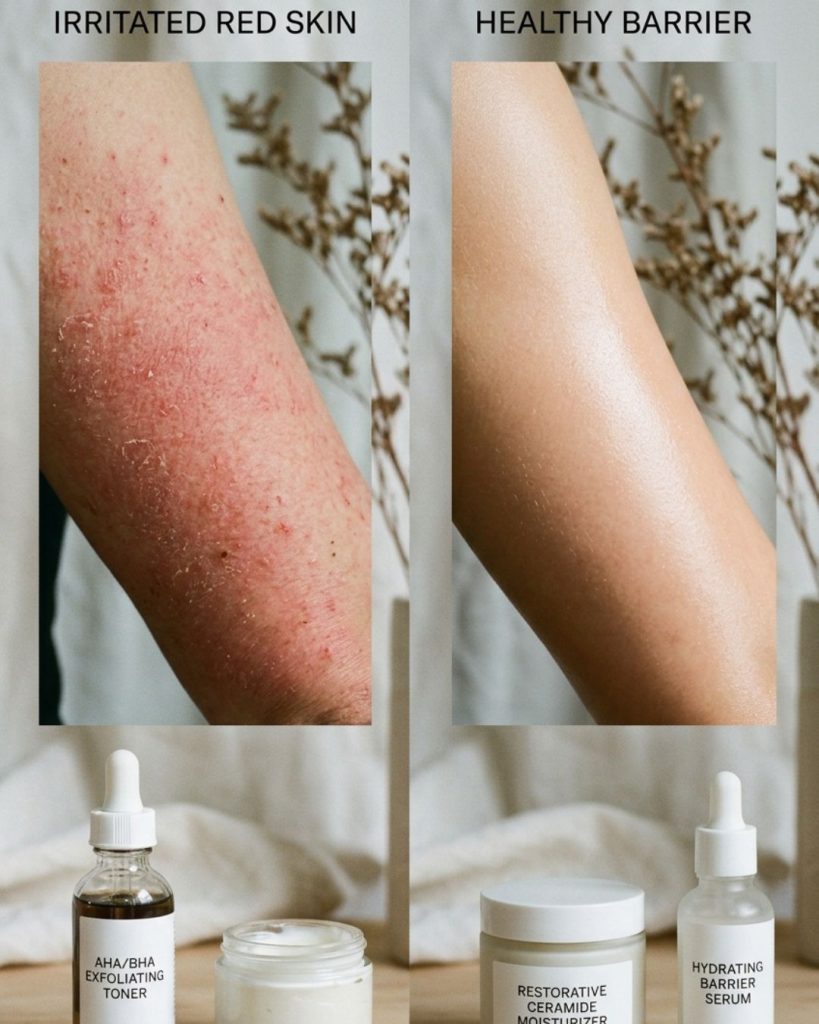
Exfoliation should happen 2–3 times a week, maximum. On other nights, focus on barrier repair using ingredients like ceramides, squalane, and niacinamide.

6. The “Dirty Phone” and Hand Contact

Smartphone bacteria transferring to skin causing breakouts
Your phone might be dirtier than you think—and it shows on your skin.

We often do our skincare, then spend 30 minutes scrolling through social media in bed. Your phone screen is statistically dirtier than a toilet seat.

  • The Transfer: You touch your phone, then you touch your face, or worse, you rest your phone against your cheek. You are transferring E. coli and other bacteria directly onto your freshly cleaned skin.
  • Blue Light: Beyond the bacteria, the HEV (Blue Light) emitted from devices can contribute to oxidative stress and hyperpigmentation.

7. Sleeping on Your Stomach or Side

Side sleeping vs back sleeping impact on wrinkles and skin health
How you sleep can shape your skin over time.

Gravity is not always your friend. If you wake up with “sleep lines,” those are precursors to permanent wrinkles.

  • The Compression: Smashing your face into a pillow for eight hours compresses the skin, breaking down collagen over time.
  • The Back-Sleeping Benefit: Training yourself to sleep on your back is the cheapest anti-aging hack available. It prevents fluid retention (puffiness) and keeps your skin from being tugged by fabric.

8. Temperature Extremes

Washing face with hot vs lukewarm water and its effect on skin barrier
Hot water feels good—but your skin disagrees.

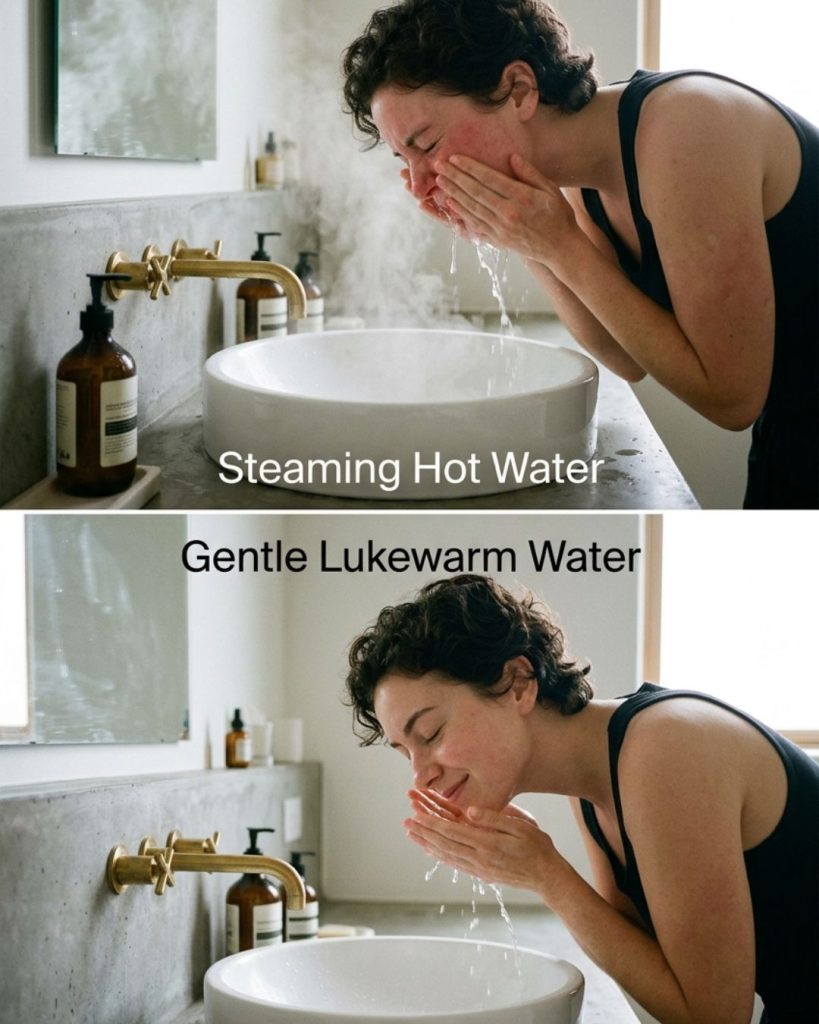
Washing your face with hot water feels relaxing, but it is devastating for rosacea-prone or dry skin.

  • The Goldilocks Zone: Hot water dilates blood vessels and strips away the acid mantle. Use lukewarm water instead. It’s effective enough to open pores slightly for cleaning without causing thermal trauma.

9. Ignoring Your Environment: Humidity Matters

Humidifier in bedroom improving skin hydration while sleeping
Your environment can hydrate—or dehydrate—your skin overnight.

During winter or in air-conditioned rooms, the air is incredibly dry. This creates a concentration gradient that sucks moisture out of your skin while you sleep.

  • The Humidifier Hack: Using a humidifier in your bedroom keeps the air moist, allowing your humectants to work effectively.
  • Occlusives: If you have very dry skin, consider “slugging”—applying a thin layer of an occlusive balm (like petroleum jelly) over your moisturizer to lock everything in.

10. The Lifestyle Factors: Diet and Stress

Healthy vs unhealthy night habits affecting skin condition and glow
What you eat and feel before bed shows up on your skin.

Your night routine doesn’t start at the sink; it starts at the dinner table.

  • High-Sugar Diets: Consuming sugar late at night can lead to glycation, a process where sugar molecules attach to collagen fibers, making them brittle and causing premature aging.
  • Cortisol: High stress levels before bed keep your cortisol levels spiked. Cortisol breaks down collagen and increases oil production, leading to hormonal acne.

Summary Checklist for a Flawless Night

To ensure your routine is helping rather than hurting, follow this streamlined approach:

  1. Cleanse Twice: First with oil, then with a gentle foaming or cream cleanser.
  2. Sanitize: Clean your phone and wash your hands before touching your face.
  3. Fabric Swap: Use a silk pillowcase and change it frequently.
  4. Dry Down: Wait for the skin to dry before applying retinoids.
  5. Hydrate: Use ceramides to protect your skin barrier.
  6. Sleep Position: Try to stay on your back to avoid friction.

Final Thoughts

Consistency is the key to radiant skin. You don’t need a 10-step routine; you need a smart routine. By removing these common errors, you allow your skin to do what it does best: heal. Stop ruining your progress with bad habits and start waking up to the glow you deserve.

Comparison of luxury and affordable skincare products showing that effective skincare is not based on price.

For decades, the beauty industry has whispered a persuasive lie: if it costs more, it works better. We’ve been conditioned to believe that a $200 cream contains mystical youth-preserving secrets, while the $15 drugstore alternative is merely “basic.”

In 2026, the veil is finally lifting. Savvy consumers are shifting from brand loyalty to ingredient literacy. We are realizing that your skin doesn’t have a price sensor; it has biological receptors. Whether a molecule of Hyaluronic Acid comes from a gold-trimmed jar or a simple plastic tube, its chemical structure—and its effect on your dermis—remains exactly the same.

This guide will dismantle the marketing hype and arm you with the ingredient knowledge needed to build a world-class routine without the “luxury” tax.

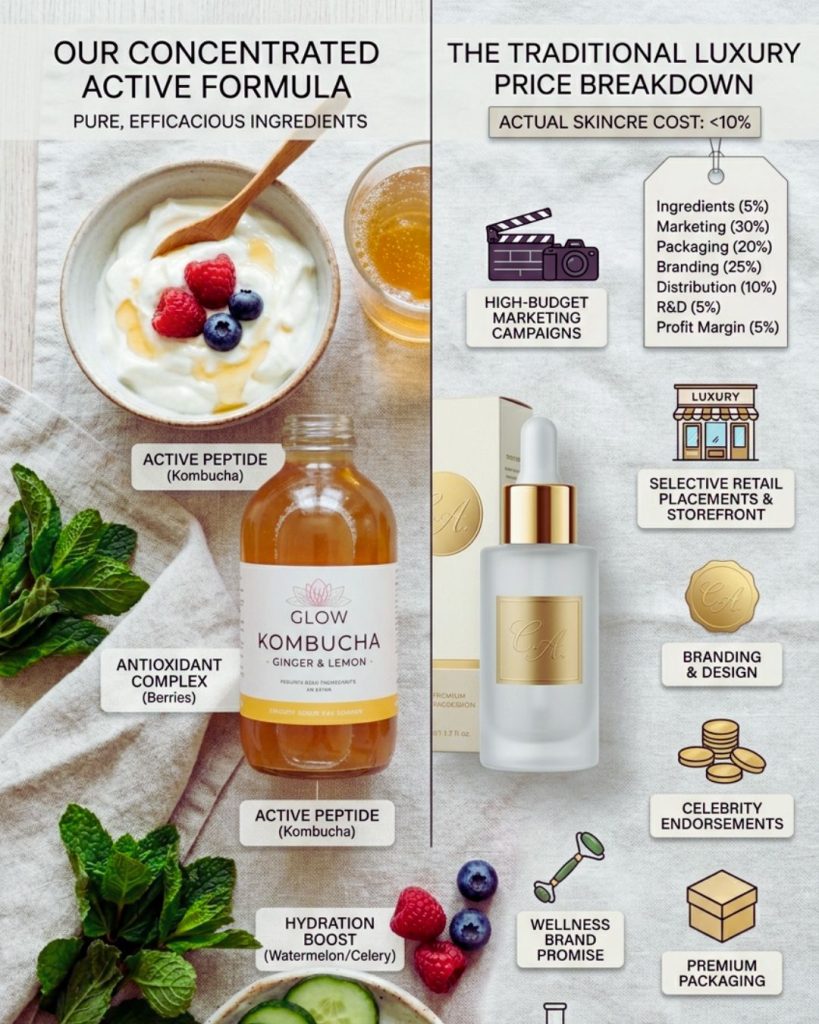
1. The Anatomy of a Price Tag: What Are You Actually Paying For?

You’re not just paying for skincare—you’re paying for the story around it.
Luxury skincare price breakdown showing costs of packaging, marketing, and branding versus actual product value.

When you buy a luxury serum, the actual “juice” inside the bottle often accounts for less than 10% of the retail price. So, where does the rest of your money go?

  • Opulent Packaging: Heavy glass, magnetic caps, and embossed boxes create a “prestige” experience but do zero for your fine lines.
  • Celebrity Endorsements: Multi-million dollar contracts with A-list actors are funded directly by your purchase.
  • Prime Real Estate: Maintaining counters in high-end department stores requires massive overhead.
  • Fragrance & Texture: Significant R&D goes into making a cream smell like a French garden and feel like silk—sensory details that often increase the risk of skin irritation.

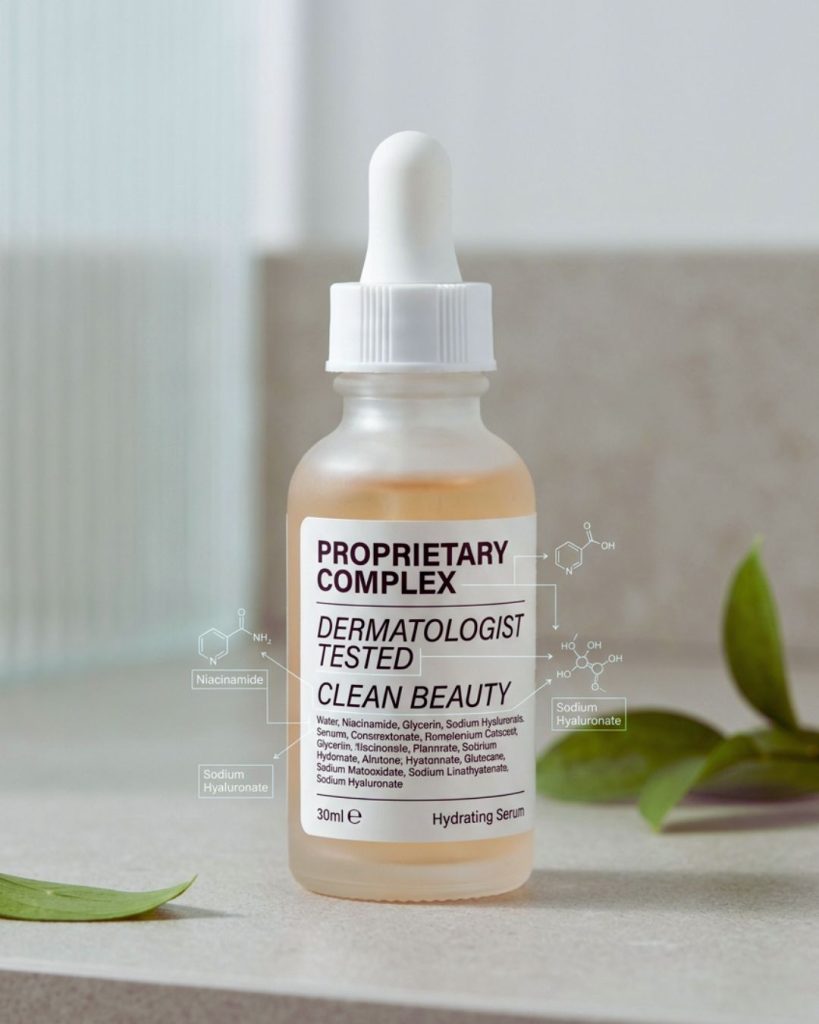
2. Marketing Hype vs. Clinical Reality

Skincare marketing terms like proprietary complex and dermatologist tested compared with real ingredient science.
Don’t be fooled by fancy words—understand what your skincare is really saying.

Marketing departments are masters of “pseudoscientific” language. They use terms designed to sound revolutionary while remaining legally vague.

  • “Proprietary Complexes”: This usually just means a standard blend of common ingredients given a fancy trademarked name to prevent you from price-shopping.
  • “Dermatologist Tested”: This sounds impressive, but it only means one doctor checked it. It is not the same as Dermatologist Recommended or peer-reviewed clinical trials.
  • “Clean Beauty”: A non-regulated term often used to fear-monger against safe, synthetic preservatives that actually keep your products shelf-stable.

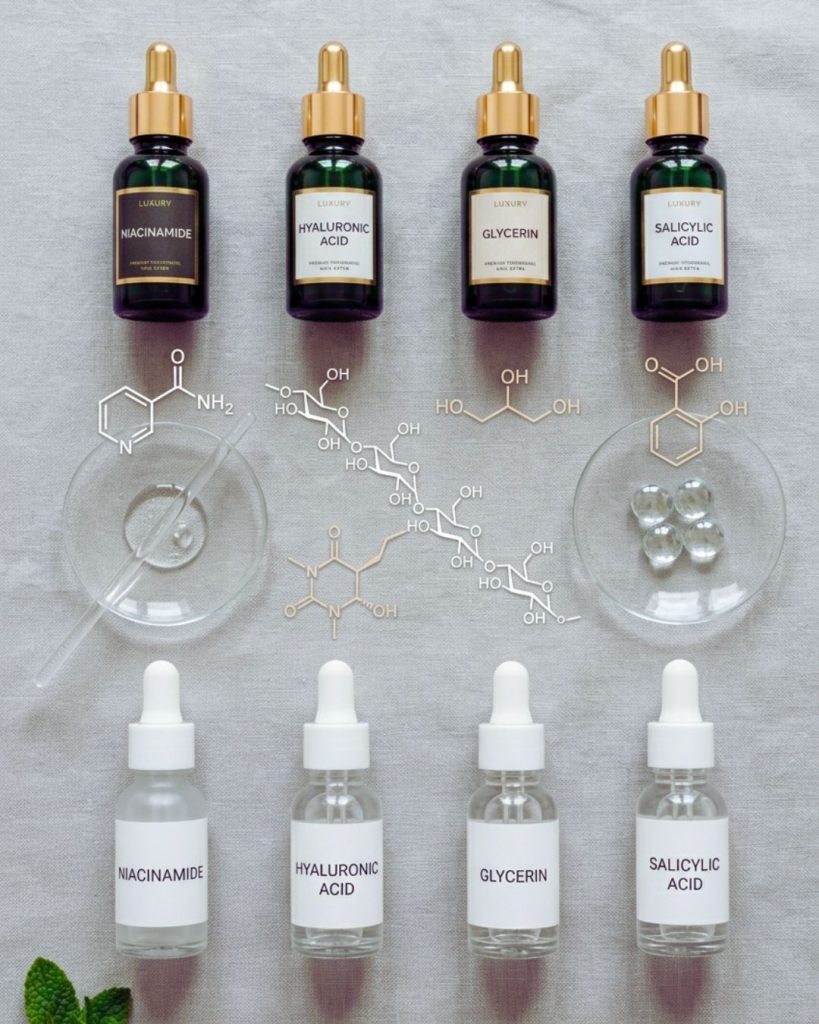
3. The “Identity” Ingredients: Actives That Are Identical at Every Price Point

Skincare ingredients niacinamide, hyaluronic acid, glycerin, and salicylic acid shown in both luxury and affordable products.
Same ingredients, different price—your skin only recognizes the science.

There are certain “workhorse” ingredients where the chemistry is so standardized that paying a premium is scientifically unnecessary.

  • Niacinamide (Vitamin B3): A powerhouse for pore refinement and barrier repair. Whether it’s from a budget brand or a luxury house, the molecule is identical.
  • Hyaluronic Acid: This humectant draws moisture into the skin. Look for multi-molecular weight versions in affordable serums to ensure deep hydration.
  • Glycerin: The unsung hero of hydration. It is one of the most effective humectants in existence and costs pennies to formulate.
  • Salicylic Acid: The gold standard for acne-prone skin. The USP (United States Pharmacopeia) grade used in a $10 cleanser is the same as that in a $90 exfoliant.

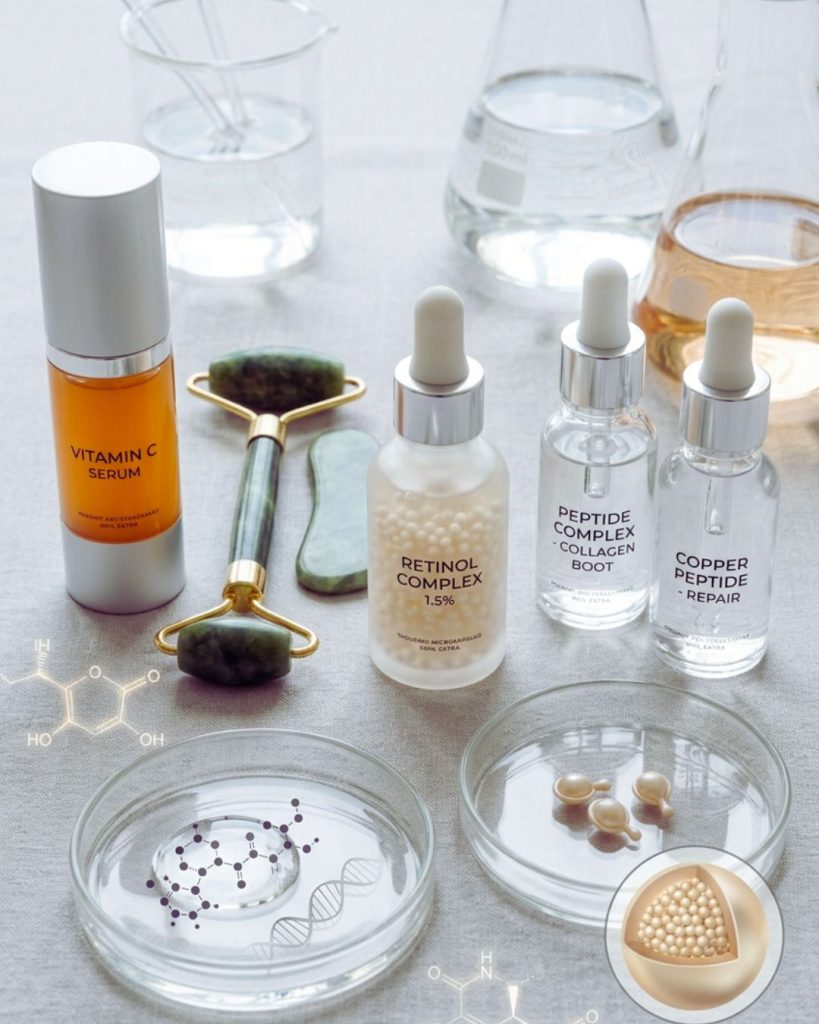
4. When Does a Higher Price Actually Make Sense?

Advanced skincare products with vitamin C airless pump, encapsulated retinol, and peptide serums showing formulation technology.
Sometimes you’re not paying more for hype—you’re paying for smarter formulation.

While many expensive products are overhyped, price can sometimes be justified by formulation stability and delivery systems.

  • Vitamin C (L-Ascorbic Acid): This molecule is notoriously unstable. It oxidizes (turns brown) quickly when exposed to light and air. Brands that invest in airless pumps and stabilized delivery often charge more, and in this case, it’s worth it.
  • Encapsulated Retinol: Pure Retinol can be irritating. Luxury or medical-grade brands often use “encapsulation” technology, which releases the active slowly into the skin, reducing redness while maximizing collagen production.
  • Curation of Peptides: Sophisticated peptide chains (like Copper Peptides or Matrixyl 3000) are expensive to manufacture and require precise pH levels to remain effective.

5. How to Read an Ingredient List (INCI) Like a Pro

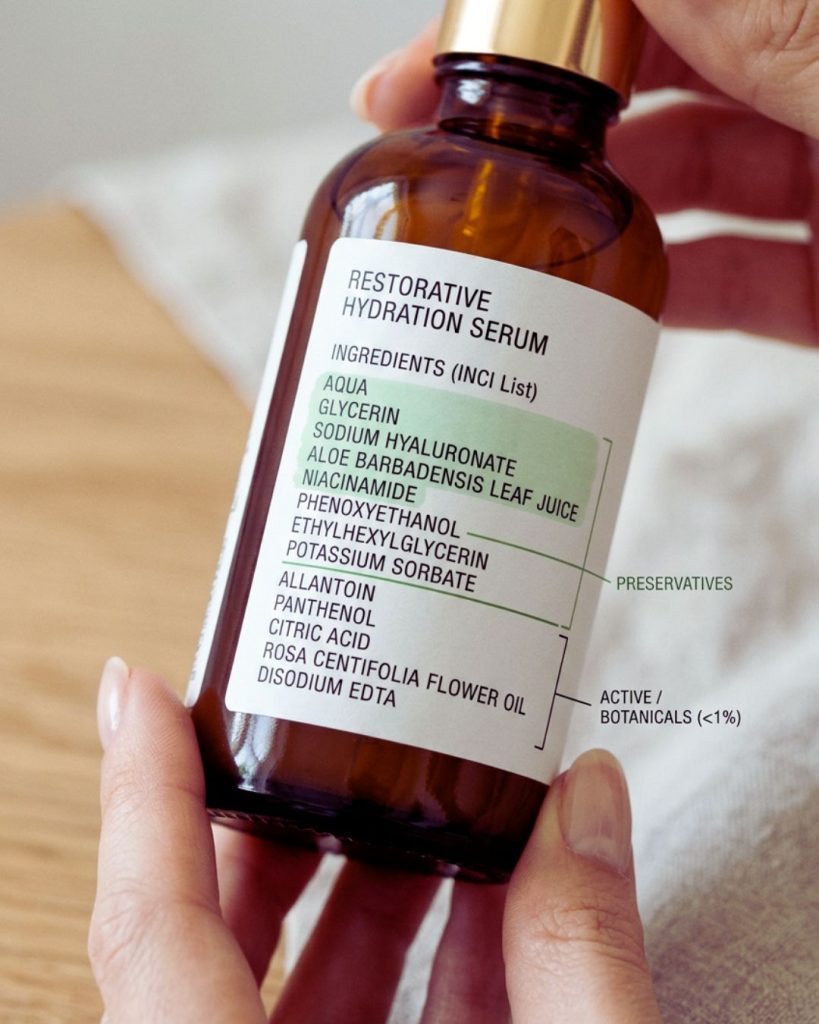
Reading skincare ingredient list INCI on product label to understand active ingredients and concentrations.
Flip the bottle—your skincare truth is written on the back.

To beat the marketing hype, you must stop looking at the front of the bottle and start reading the back.

  • The 1% Rule: Ingredients are listed from highest concentration to lowest. However, once you hit the preservative (usually Phenoxyethanol), everything listed after it is present at less than 1%.
  • Active Concentration: If a brand screams about “24K Gold” or “Rare Orchid Extract” but lists them after the fragrance or preservatives, they are “fairy-dusted”—added in tiny amounts just for marketing claims.
  • Avoid Irritants: High prices often come with high fragrance loads. Look for Fragrance-Free labels if you have sensitive skin, regardless of the price.

The “Goldilocks” Routine: Investing Where It Counts

You don’t need an all-luxury or all-budget routine. The secret to glowing skin is a hybrid approach.

Product TypeSpend or Save?Why?
CleanserSaveIt stays on your face for 60 seconds. A basic, pH-balanced cleanser is all you need.
Vitamin CSpendStability is key. Cheap versions often oxidize before you finish the bottle.
MoisturizerSaveIts main job is to seal in moisture. Ingredients like Ceramides and Squalane are now affordable.
RetinoidsSpend/MidBetter formulation equals less peeling and better long-term anti-aging results.
SunscreenSaveThe best SPF is the one you aren’t afraid to use generously because of the cost.

The Myth of “Instant Results”

Luxury marketing often promises a “miracle in a bottle.” The biological truth is that skin cells take roughly 28 to 40 days to turn over.

  • No $500 cream can change your DNA or mimic the results of Botox or fillers.
  • Consistency beats intensity every single time. A $20 routine used every night will outperform a $200 serum used sporadically because you’re “saving” it.
  • True skin health is about barrier support, protection from UV damage, and patience.

Budget Brands That Are Disrupting the Industry

The rise of “Transparent Beauty” has given us brands that prioritize science-backed skincare over fancy ads.

  • The Ordinary: Pioneered the concept of single-active serums at disruptive prices.
  • The Inkey List: Focuses on consumer education and simple, effective formulations.
  • CeraVe: A dermatologist favorite that focuses on Ceramides to rebuild the skin barrier.
  • Korean Beauty (K-Beauty): Brands like Beauty of Joseon offer incredibly advanced formulations (especially sunscreens) at a fraction of Western luxury prices.

Breaking the Cycle of Consumerism

The “more is better” mentality often leads to over-exfoliation and a compromised skin barrier. When we buy into the hype, we often end up with a 10-step routine that our skin never asked for.

  • Skin Streaming: The 2026 trend of simplifying your routine to 3–4 essential products.
  • Quality over Quantity: One well-formulated multi-tasking serum is better than five cheap, single-ingredient bottles that don’t play well together.
  • Listen to Your Skin: If your face feels tight, red, or “squeaky clean,” you are likely overdoing it—no matter how much you spent on the products.

Final Verdict: Knowledge is the Ultimate Luxury

In the modern world of beauty, Ingredient knowledge is your superpower. When you understand what Peptides, Antioxidants, and AHAs actually do, you become immune to the lure of a pretty glass jar.

Expensive skincare isn’t the answer to perfect skin—formulation integrity and sun protection are. Spend your money on ingredients that have decades of clinical backing, and leave the “miracle” marketing on the shelf. Your skin, and your bank account, will thank you.

Reset your routine, simplify your skincare, and rediscover your natural glow.

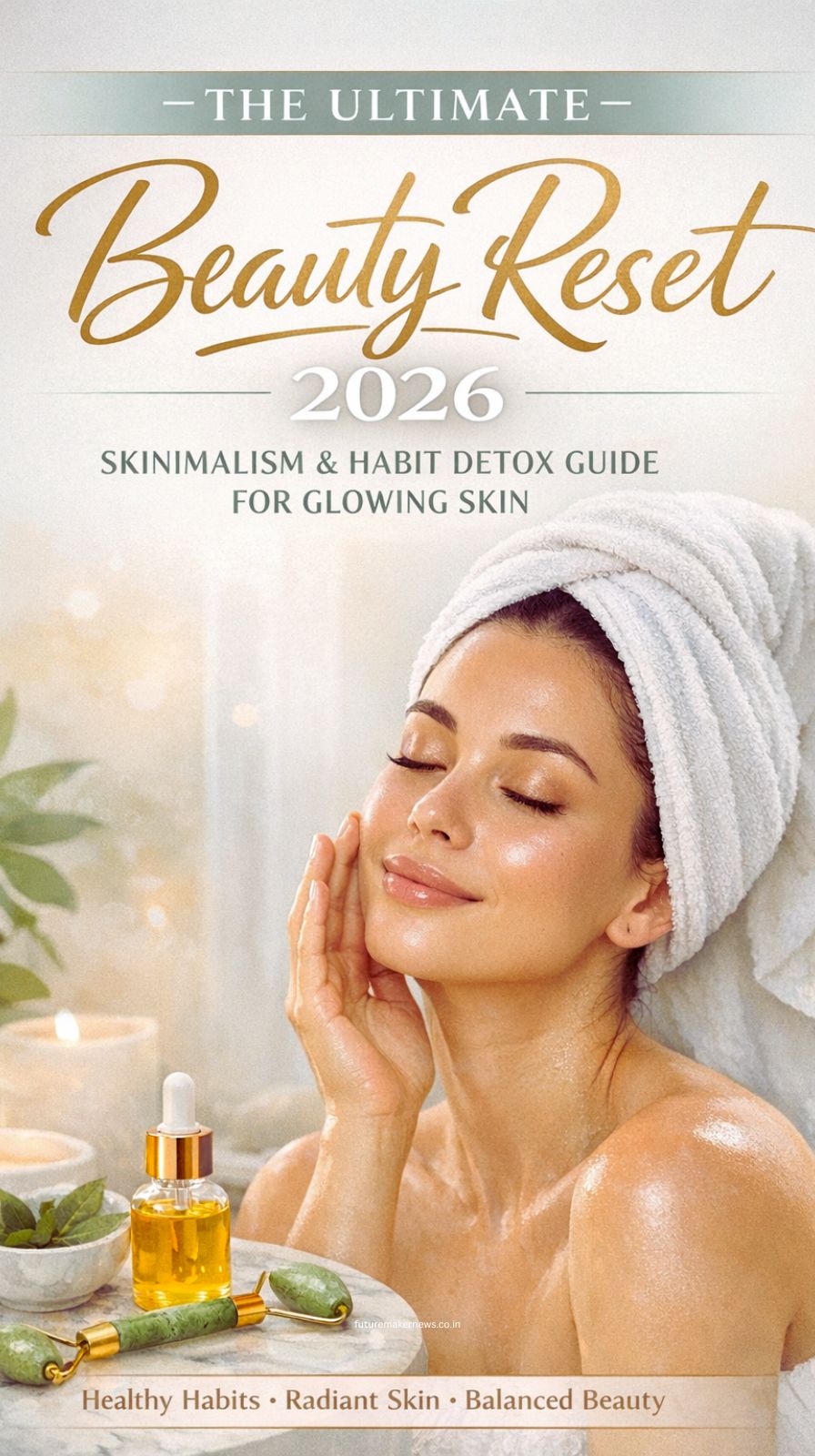
In an era of 12-step routines and endless “holy grail” product hauls, our skin is often shouting for one thing: simplicity. We’ve reached a tipping point where more isn’t better—it’s just more. A Beauty Reset isn’t about throwing away everything you own; it’s about auditing your habits, detoxing the “noise,” and returning to a routine that actually works.

If your skin feels perpetually irritated, your vanity is overflowing, and your morning routine feels like a chore, you’re in the right place. This is your comprehensive beauty checklist to reclaim your glow, your time, and your bathroom counter.

Phase 1: The Habit Detox

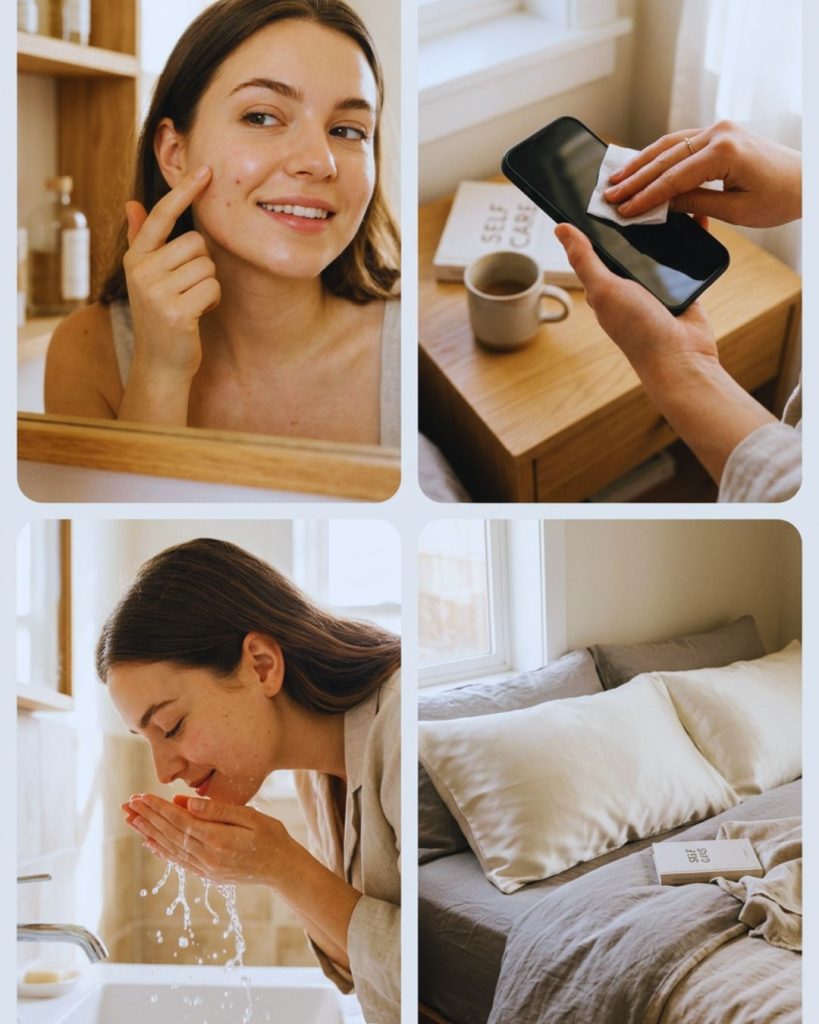
Skincare habit detox including pimple patch use, cleaning phone, gentle face washing, and silk pillowcase for healthy skin.
Healthy skin starts with better habits—small changes, big results.

Before we touch a single bottle of serum, we have to look at the daily behaviors that sabotage our results. No amount of expensive hyaluronic acid can fix a foundation of poor habits.

1. Stop the “Skin Picking” Cycle

It’s tempting to perform “bathroom surgery” on a blemish, but trauma to the skin leads to post-inflammatory hyperpigmentation (PIH) and scarring.

  • The Fix: Use hydrocolloid patches (pimple patches). They create a physical barrier so you can’t pick and speed up the healing process.

2. Ditch the Scalding Water

We love a hot shower, but your face does not. Hot water strips the natural lipid barrier, leading to dehydrated, flaky skin.

  • The Fix: Switch to lukewarm water. If it’s too hot for a baby, it’s too hot for your face.

3. Sanitize Your Tech

Your smartphone screen is a breeding ground for bacteria. Every time you take a call, you’re pressing that bacteria into your pores.

  • The Fix: Use alcohol wipes on your phone daily, or switch to wireless earbuds to keep your screen away from your cheeks.

4. Optimize Your Sleep Hygiene

It’s called “beauty sleep” for a reason. During sleep, your body’s cortisol levels drop, and skin repair goes into overdrive.

  • The Fix: Swap your cotton pillowcase for mulberry silk. Silk reduces friction, preventing “sleep wrinkles” and hair breakage.

Phase 2: The Product Purge (The Great De-Clutter)

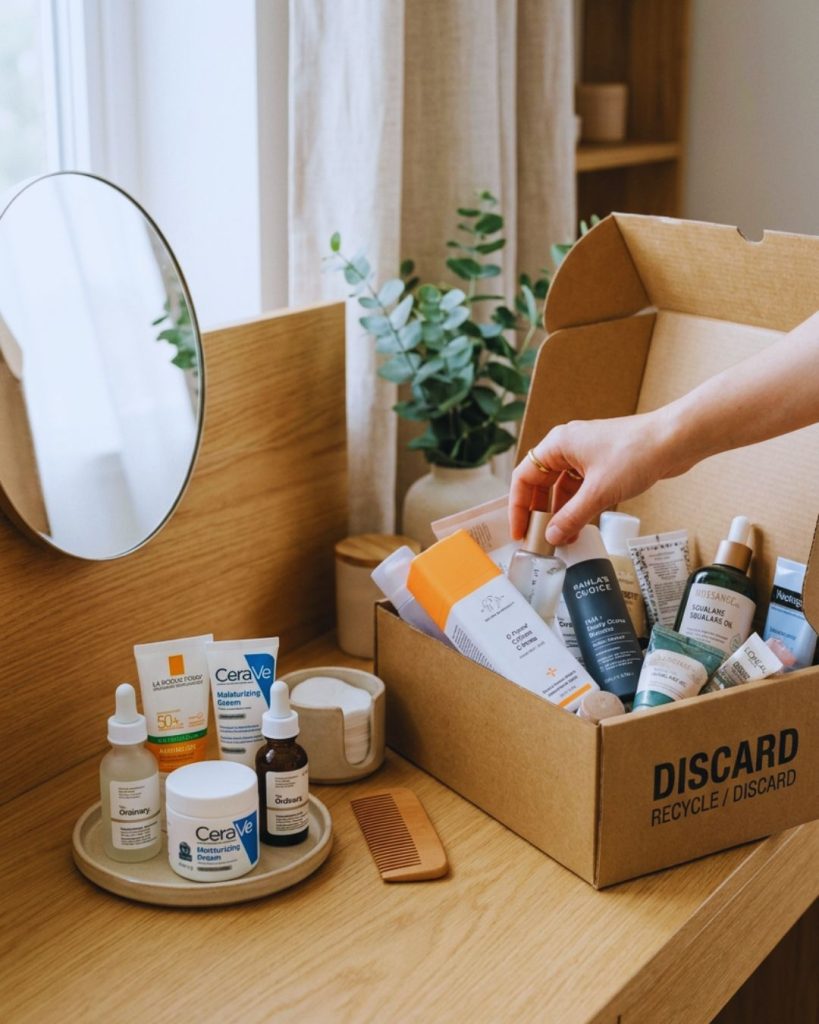
Minimal skincare routine with decluttered products and removal of expired and unnecessary items from vanity.
Declutter your routine—fewer products, better results.

A cluttered vanity leads to a cluttered mind. Most of us use only 20% of our products 80% of the time. It’s time to be ruthless.

1. Check the PAO (Period After Opening)

Look for the tiny “open jar” icon on your packaging. If it says “12M” and you bought it in 2024, it’s time to say goodbye.

  • The Danger: Expired products lose their active ingredient potency and can harbor harmful bacteria.

2. Eliminate “Redundant” Steps

Do you really need a separate eye cream, a neck cream, and a décolletage serum? Often, a high-quality moisturizer can do the job of all three.

  • The Reset: Focus on products that offer multitasking benefits, like a tinted SPF that also contains niacinamide.

3. The Scent Audit

Fragrance is the number one sensitizer in skincare. If your skin is often red or itchy, look for fragrance-free labels. Note: “Unscented” often contains masking fragrances; “fragrance-free” is the safer bet.

Phase 3: Simplifying the Routine (Skin Minimalism)

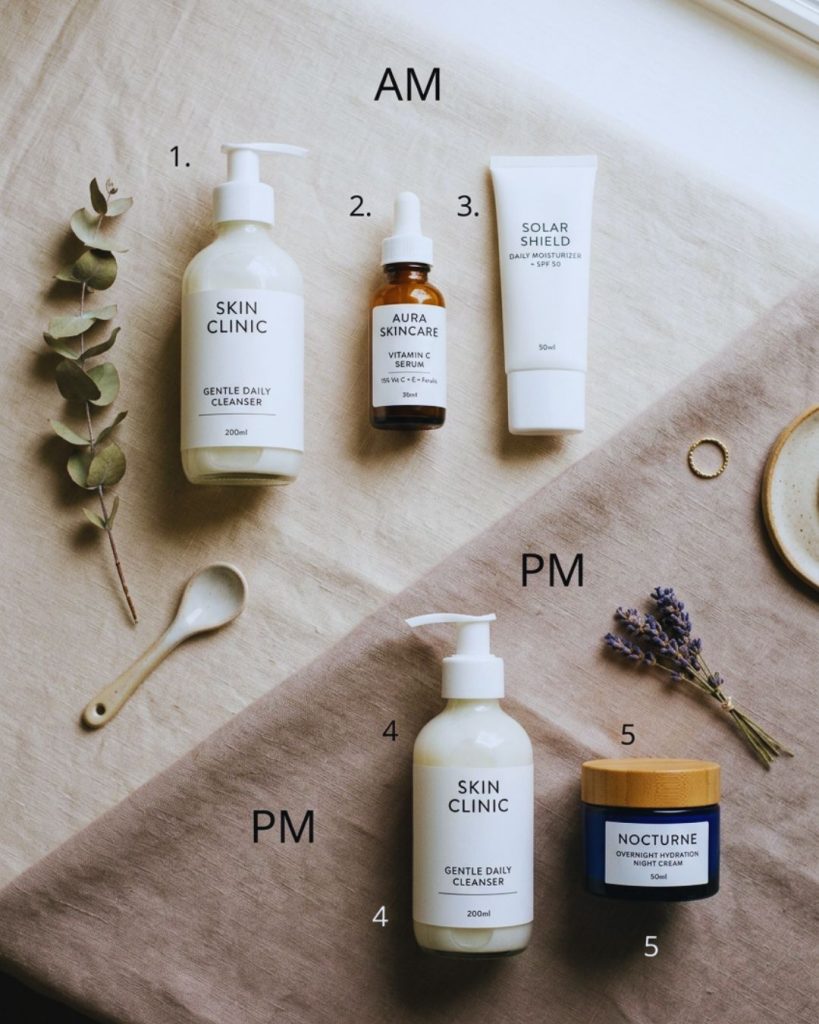
Minimal skincare routine with cleanser, vitamin C serum, moisturizer, sunscreen, and night treatment for morning and evening use.
Simplify your routine—just the essentials for healthy, glowing skin.

Skinimalism is the philosophy that a lean, potent routine outperforms a complex, diluted one. Here is the “Reset” framework for a glowing complexion.

The Essential Morning Routine

  1. Gentle Cleanser: You don’t always need a deep scrub in the morning. A gentle milk or water-based cleanser preserves your acid mantle.
  2. Antioxidant Serum: Use a Vitamin C serum to protect against environmental stressors and pollution.
  3. Moisturizer: Even oily skin needs hydration to prevent overcompensation of oil production.
  4. Broad-Spectrum SPF: This is non-negotiable. Sunscreen is the best anti-aging product on the market. Period.

The Essential Evening Routine

  1. Double Cleanse: Use an oil-based cleanser or micellar water to break down makeup and SPF, followed by your regular cleanser to clean the skin.
  2. Targeted Treatment: This is where you use your retinoids, AHAs, or BHAs. Pick one “powerhouse” per night to avoid irritation.
  3. Barrier Repair Cream: Look for ingredients like ceramides, squalane, and fatty acids to “seal” the skin overnight.

Phase 4: Inner Beauty & Nutrient Reset

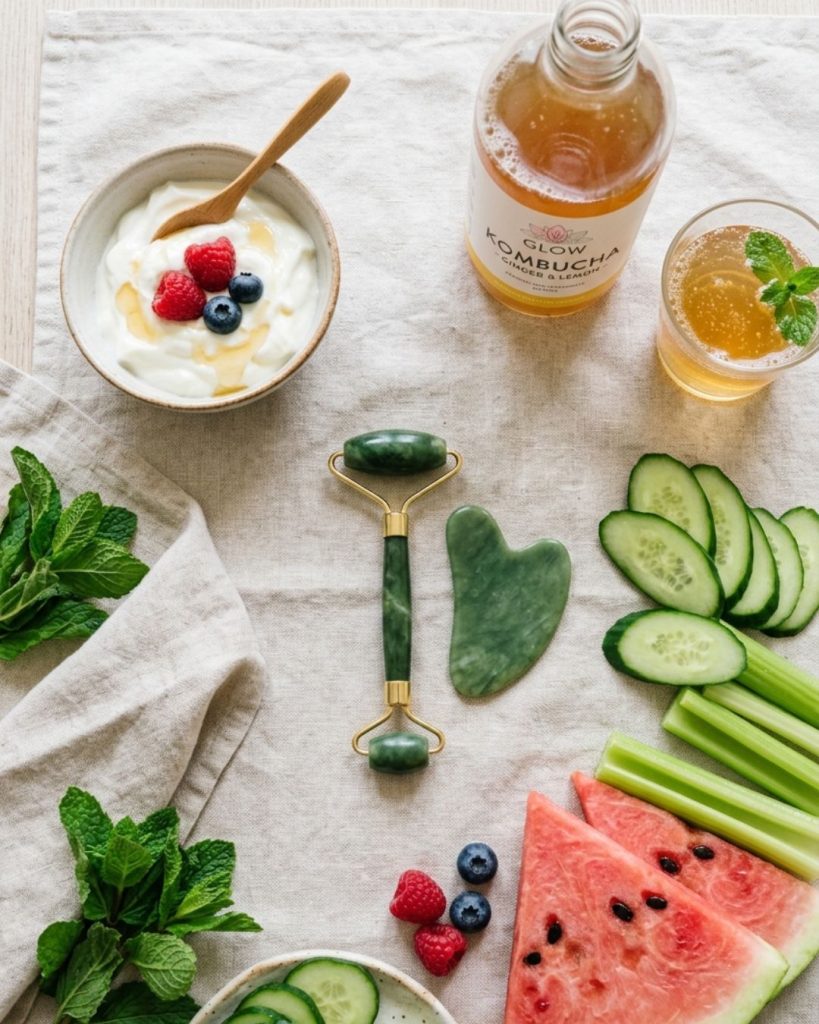
Healthy foods and skincare tools for inner beauty including cucumber, yogurt, and gua sha for glowing skin.
True glow starts within—nourish your body, calm your mind, and your skin will follow.

Topical products only reach the outer layers of the epidermis. True radiance is a systemic effort.

1. Hydration Beyond the Bottle

Drinking water is great, but “eating” your water is better.

  • The Goal: Consume water-rich foods like cucumber, watermelon, and celery. These contain structured water and minerals that help your cells stay plump.

2. Focus on Gut Health

The gut-skin axis is a real scientific connection. Chronic inflammation in the gut often manifests as acne or eczema on the skin.

  • The Habit: Incorporate probiotics (kombucha, kimchi, yogurt) and high-fiber foods to keep your digestive system—and your skin—clear.

3. Manage Stress-Induced Cortisol

High stress triggers sebum production, leading to “stress breakouts.”

  • The Reset: Dedicate 5 minutes a day to facial massage or Gua Sha. Not only does it aid lymphatic drainage, but it also lowers your heart rate and relaxes facial tension.

Phase 5: The Sustainable Beauty Mindset

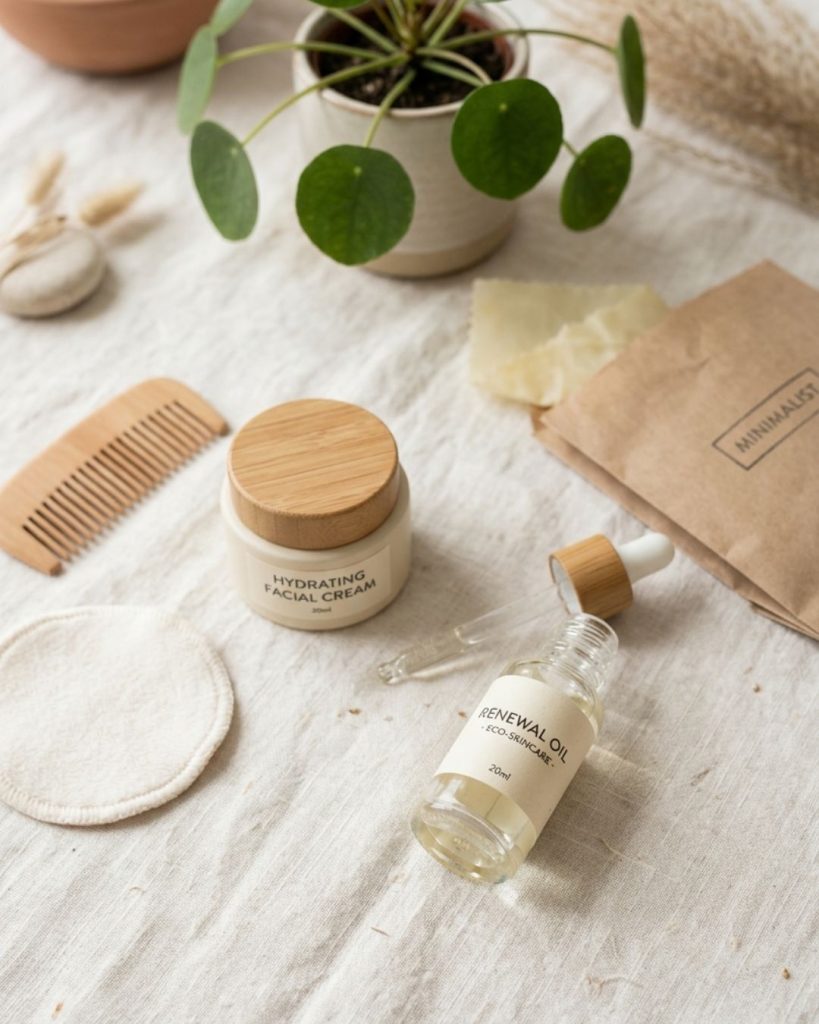
Minimal sustainable skincare routine with empty product bottle and eco-friendly beauty setup.
Buy less, use more—sustainable beauty starts with mindful choices.

The final step in a beauty reset is changing how you consume. The most “impressive” beauty routine is one that is sustainable for your wallet and the planet.

  • Wait 48 Hours: Before clicking “Buy” on a new viral product, wait two days. Most “cravings” for new products are driven by marketing, not skin need.
  • Focus on Bioavailability: Look for brands that prioritize bioavailable ingredients—substances your skin can actually recognize and utilize.
  • Empty Before You Buy: Make it a rule to finish a product completely before replacing it. This reduces waste and allows you to see the long-term effects of a single formula.

The Reset Checklist Summary

CategoryAction ItemFrequency
HabitsSanitize phone & makeup brushesWeekly
HabitsChange silk pillowcaseEvery 3 days
ProductsCheck expiration dates & PAO iconsMonthly
RoutineApply Broad-Spectrum SPF 30+Daily (No exceptions)
Inner10 minutes of “Tech-Free” morning lightDaily
BodyFull-body exfoliation & hydrationWeekly

Why This Works

By stripping away the excess, you allow your skin’s natural barrier to heal. Many people find that once they stop over-exfoliating and using ten different serums, their “sensitive skin” actually disappears. It wasn’t sensitive; it was just overwhelmed.

A Beauty Reset isn’t a one-time event; it’s a seasonal recalibration. As the weather changes, your skin’s needs change. By keeping your foundation simple, you can easily swap one or two items to adapt without crashing your entire system.

Final Thoughts

Embrace the glow that comes from health, not just highlighters. When you detox your habits and simplify your products, you stop “fixing” your face and start caring for it. Your skin is your largest organ—treat it with the respect, simplicity, and consistency it deserves.

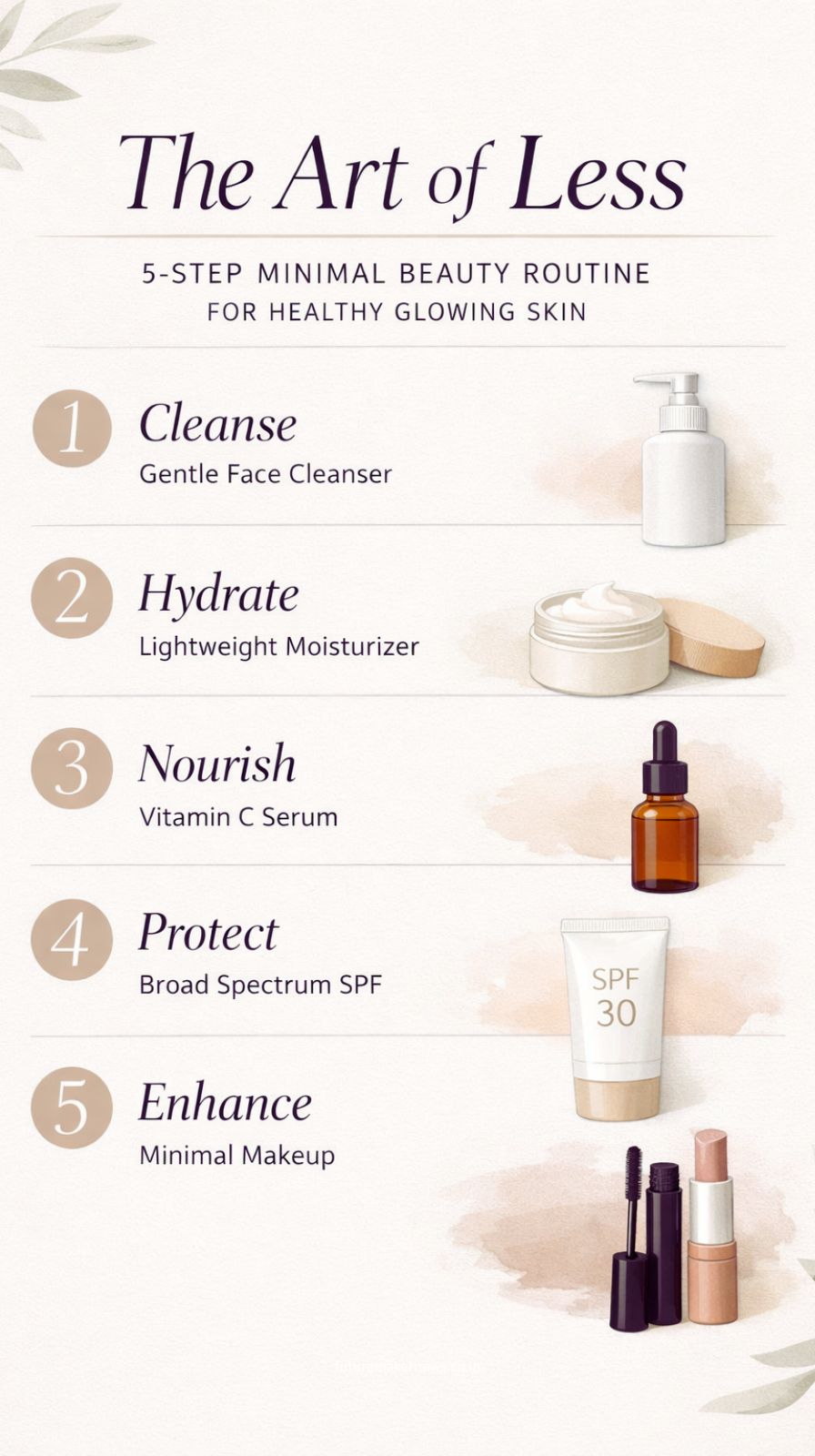
Minimalist skincare routine with cleanser, serum, moisturizer, and sunscreen arranged on a clean neutral background.

In an era of 12-step routines and bathroom counters overflowing with glass bottles, the concept of minimalist skincare feels like a breath of fresh air. We’ve been conditioned to believe that more is better, but the truth is often the opposite. Your skin is a living organ, not a chemistry experiment. Over-treating it can lead to a compromised skin barrier, sensitivity, and breakouts.

The secret to a glowing, healthy complexion isn’t found in the quantity of products, but in the quality of your daily structure. By stripping back to the essentials, you allow your skin to breathe and regenerate.

This guide breaks down a 5-step daily structure designed to deliver maximum results with minimum effort. Whether you are a busy professional or a skincare enthusiast looking to simplify, this minimal beauty routine is your roadmap to effortless radiance.

Step 1: The Foundation — Gentle Cleansing

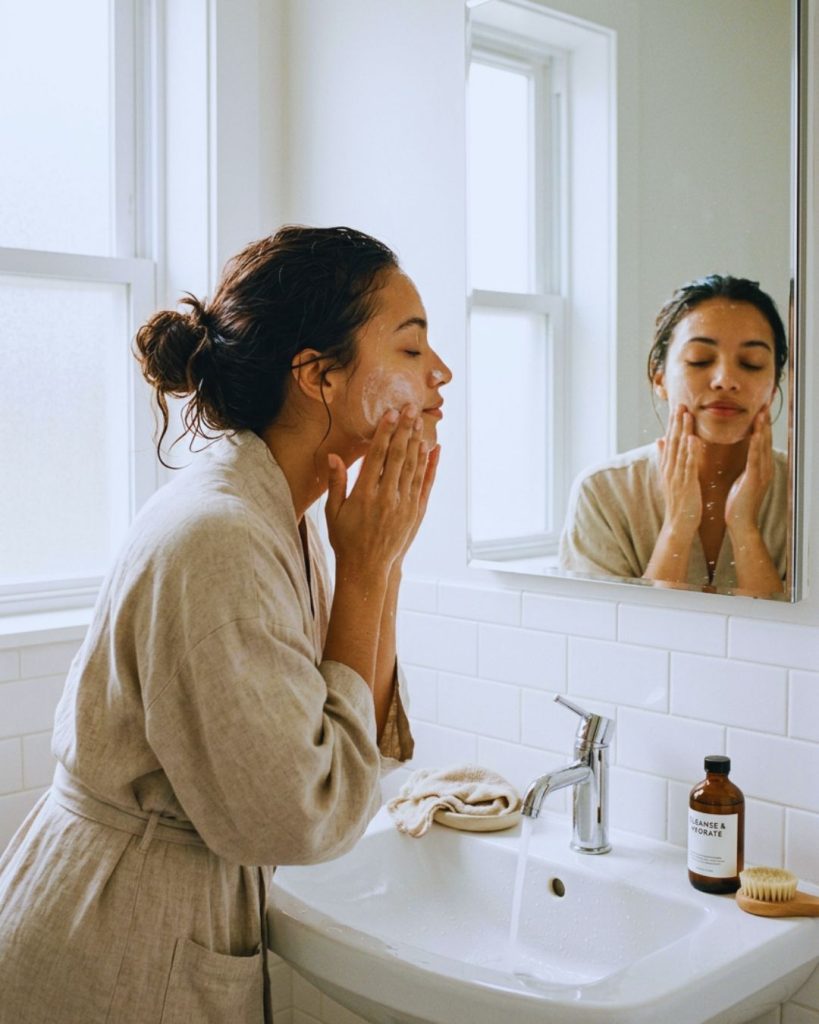
Person gently washing face with a mild cleanser in a minimalist skincare routine setting.
Gentle cleansing is the foundation of healthy, balanced skin.

The first rule of a minimalist routine is to never strip your skin. Many people over-cleanse, using harsh sulfates that remove the natural oils necessary for a healthy acid mantle.

  • Morning Cleansing: For many, a simple splash of lukewarm water is enough in the morning. This preserves the natural lipids produced overnight.
  • Evening Cleansing: This is non-negotiable. You must remove SPF, environmental pollutants, and excess sebum.
  • The Goal: Use a pH-balanced cleanser that leaves your skin feeling soft, not “squeaky clean.”
  • Texture Matters: If you have dry skin, opt for a milky or cream cleanser. If you are oily or acne-prone, a gentle foaming gel is your best friend.

A clean canvas is the prerequisite for everything that follows. Without proper cleansing, your active ingredients won’t penetrate, and you’ll likely face clogged pores and dullness.

Step 2: The Treatment — Targeted Serums

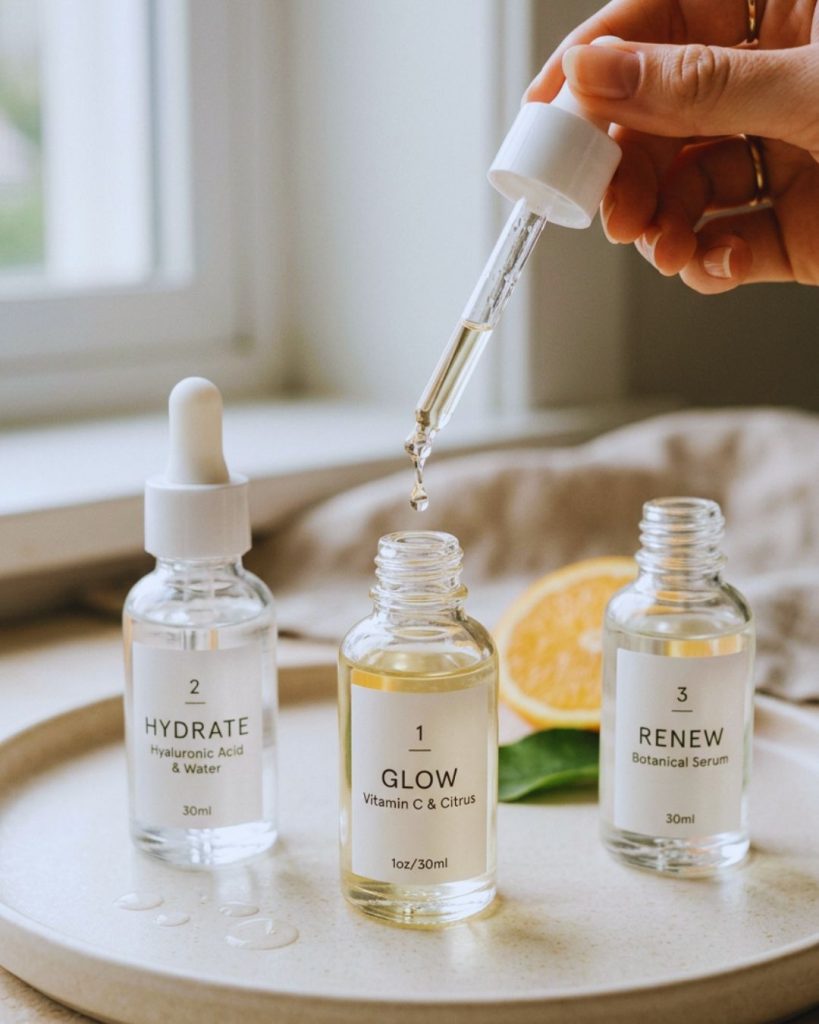
Minimalist skincare serums including vitamin C, retinol, and hyaluronic acid on a clean background.
Powerful results with fewer steps—targeted serums that work smarter, not harder.

In a minimal beauty routine, we don’t use five serums; we use one or two “powerhouse” ingredients that address your specific concerns. This is where you get the most “bang for your buck.”

  • Daytime Antioxidants: Look for a Vitamin C serum. It neutralizes free radicals from UV rays and pollution while brightening your skin tone.
  • Nighttime Repair: This is the time for Retinoids or Bakuchiol. These ingredients speed up cell turnover and boost collagen production.
  • Hydration Boosters: If your skin feels tight, a Hyaluronic Acid serum can be layered under your moisturizer to lock in moisture.
  • Less is More: Use only a pea-sized amount. Over-applying active ingredients doesn’t make them work faster; it only increases the risk of irritation.

By focusing on one high-quality treatment step, you reduce the risk of ingredient conflicts that can cause redness or “pilling” of products.

Step 3: The Seal — Nutrient-Rich Moisturizing

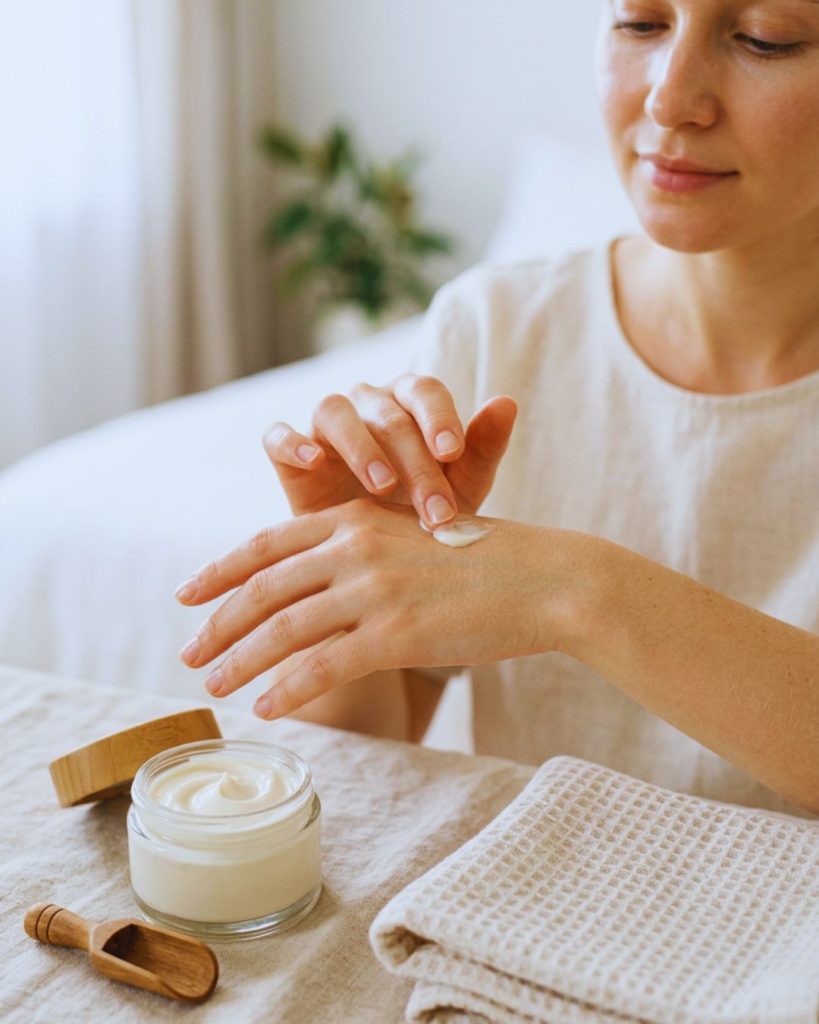
Moisturizer cream being applied on skin with a minimal skincare setup for hydration and glowing skin.
Seal in hydration and strengthen your skin barrier for a naturally radiant glow.

Moisturizer is the “sealant” of your routine. Its primary job is to prevent transepidermal water loss (TEWL)—the process where moisture evaporates from your skin into the air.

  • Barrier Support: Look for formulas containing ceramides, fatty acids, and cholesterol. These are the building blocks of a healthy skin barrier.
  • Seasonal Adjustments: Use a lightweight oil-free moisturizer in the summer and a richer, emollient cream in the winter.
  • Application Tip: Apply your moisturizer while your skin is still slightly damp from your serum. This helps “trap” the hydration into the deeper layers of the epidermis.
  • Eye Cream? In a truly minimalist routine, your face moisturizer can often double as an eye cream, provided it is fragrance-free and gentle.

A well-moisturized face reflects light better, immediately giving you that coveted healthy glow without the need for makeup.

Step 4: The Shield — Broad-Spectrum Protection

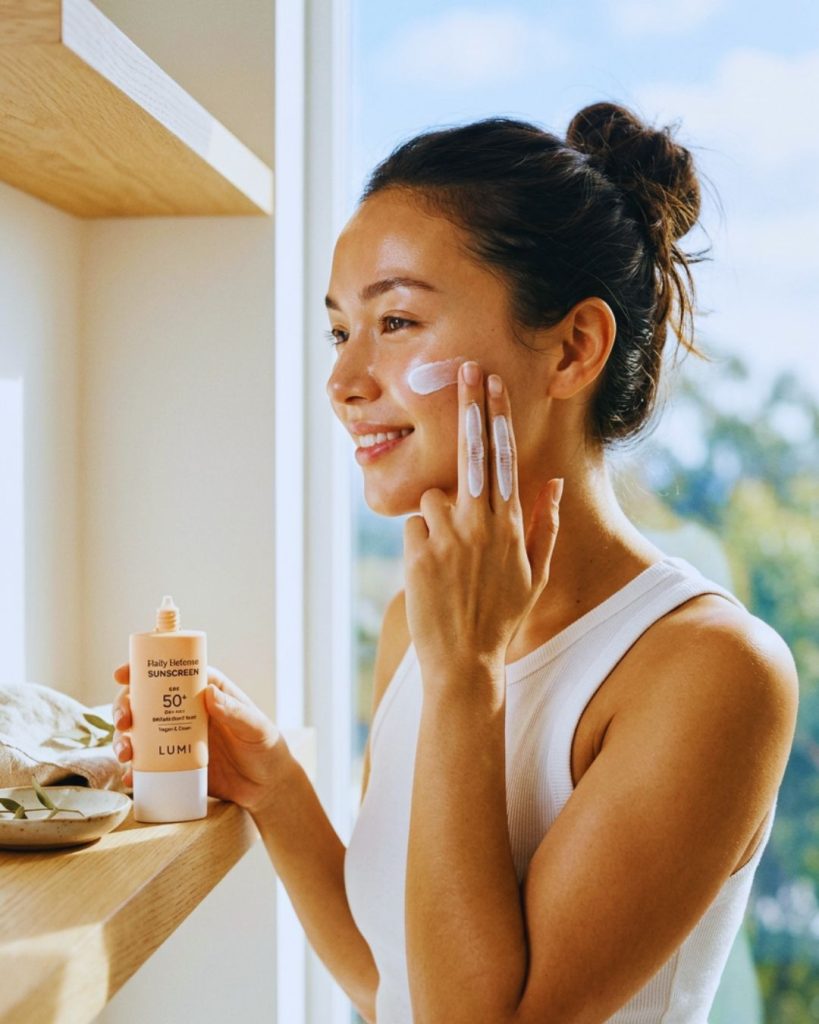
Applying sunscreen using the two-finger rule with SPF 30 for daily sun protection and anti-aging skincare.
Your daily shield—sunscreen is the most powerful step in preventing premature aging.

If you only do one step, let it be this one. Sunscreen is the ultimate anti-aging product. No amount of expensive serum can undo the damage caused by unprotected sun exposure.

  • Daily Commitment: UV rays are present even on cloudy days and can penetrate through windows. SPF 30 or higher is a daily requirement.
  • Mineral vs. Chemical: Mineral sunscreens (Zinc Oxide/Titanium Dioxide) are great for sensitive skin, while chemical sunscreens often offer a more invisible finish for deeper skin tones.
  • The Two-Finger Rule: To get the advertised protection, you need to use enough product. Apply two strips of sunscreen on your index and middle fingers for your face and neck.
  • Prevention: Consistent use of broad-spectrum SPF prevents hyperpigmentation, fine lines, and the breakdown of elasticity.

Think of sunscreen as your insurance policy. It protects the “investment” you’ve made in the previous steps.

Step 5: The Ritual — Conscious Consistency

Nighttime skincare routine with a person applying products consistently for healthy glowing skin.
Consistency is the real secret—small daily rituals create lasting skin health.

The final step isn’t a product; it’s a mindset. A minimal beauty routine only works if you actually do it. The most expensive cream in the world won’t work if it stays in the jar.

  • Nightly Reset: Use these five minutes to decompress. Massaging your products into your skin improves lymphatic drainage and reduces puffiness.
  • Listen to Your Skin: Some days your skin might need extra hydration; other days it might need a break from actives. A minimal routine makes it easier to spot these changes.
  • Patience is Key: Skin cells take about 28 to 40 days to renew. Give your skincare routine at least a month before deciding if it’s working.
  • The Glow from Within: Remember that sleep, hydration, and a balanced diet are the silent partners of your topical routine.

Consistency beats intensity every single time. By sticking to these five steps, you create a sustainable habit that yields long-term skin health.

Why the 5-Step Structure Wins

The beauty industry often thrives on our insecurities, suggesting we need a “new” miracle product every week. However, the 5-step daily structure wins because it focuses on the physiological needs of the skin:

  1. Cleansing (Hygiene)
  2. Treating (Correction)
  3. Moisturizing (Hydration)
  4. Protecting (Prevention)
  5. Consistency (Results)

When you simplify, you lower the “friction” of your routine. You are more likely to complete it when you’re tired, you save money, and you reduce plastic waste. Most importantly, you stop guessing. You know exactly what is touching your face and how it reacts.

Common Pitfalls to Avoid

Even with a minimalist approach, there are a few traps to watch out for:

  • Skipping the Neck: Your neck and chest (the décolletage) show age just as fast as your face. Extend all five steps downward.
  • Using Expired Products: Skincare has a shelf life. Check the little “open jar” icon on your packaging to see how many months the product is good for after opening.
  • Mixing Too Many Actives: Don’t use Retinol and Vitamin C at the same time unless they are formulated together. Use C in the morning and Retinol at night.
  • Neglecting Sleep: No cream can replace 7–9 hours of restorative sleep.

The Future of Your Skin

As you transition to this minimal beauty routine, you’ll likely notice that your skin becomes more resilient. Without the constant barrage of conflicting chemicals, your skin can return to its natural state of balance. You’ll spend less time in front of the mirror and more time feeling confident in your own skin.

Beauty shouldn’t be a chore. It should be a simple, effective ritual that honors your body. By adopting this 5-step daily structure, you aren’t just saving time—you’re choosing a philosophy of intentional living.

Your skin is unique, and while this structure provides the framework, the specific products you choose will be your personal touch. Focus on high-quality, non-comedogenic ingredients, and let the simplicity do the heavy lifting.

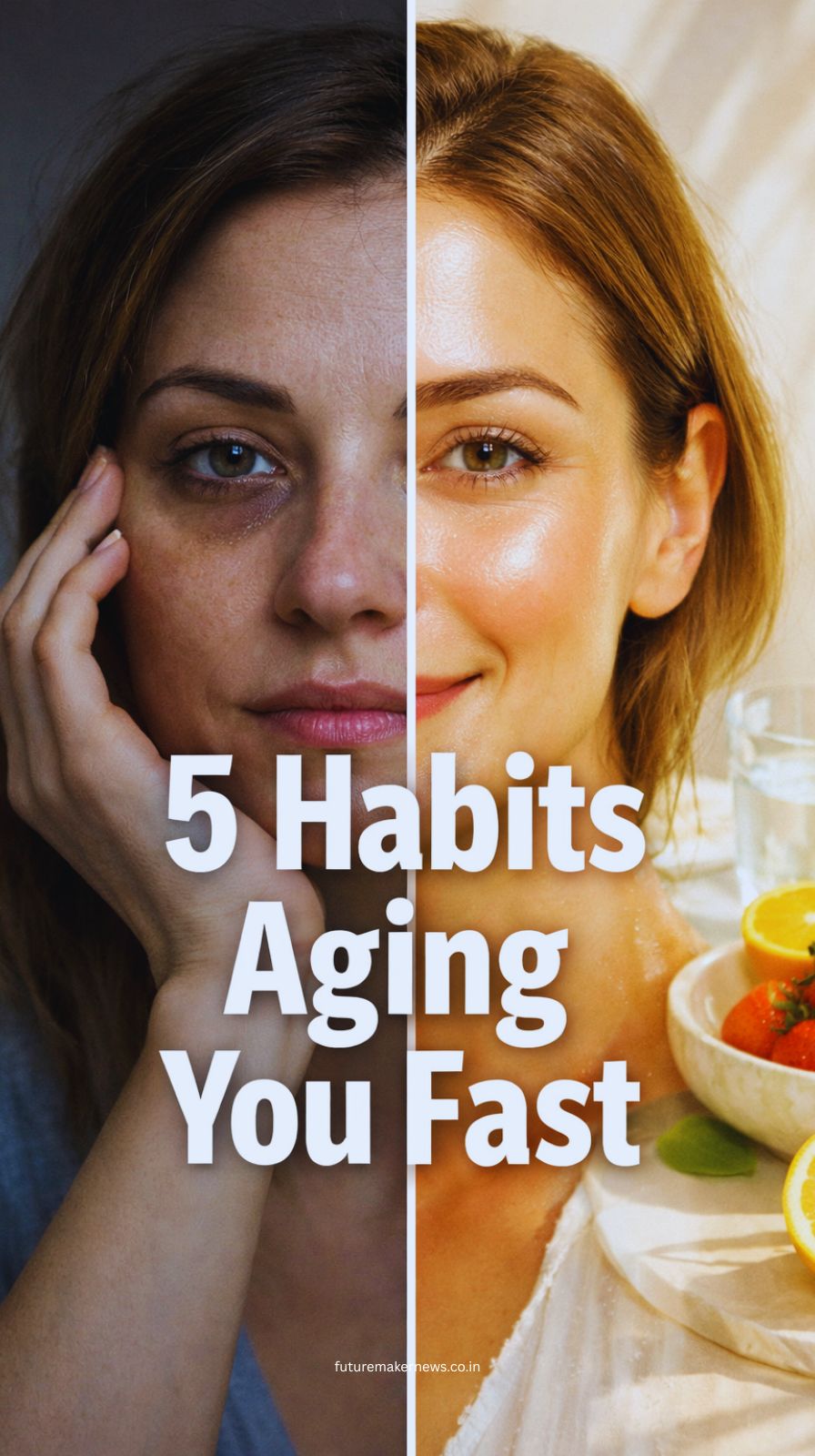
Before and after comparison showing effects of aging habits versus healthy lifestyle on skin and appearance.

We’ve all seen them: the people who seem to have found a glitch in the matrix, possessing skin that glows and energy that never flags, regardless of their birth certificate. While genetics play a role, the truth is that longevity and youthful radiance are largely dictated by the daily choices you make.

The modern world is designed to age us. Between the blue light of our screens, the convenience of processed snacks, and the “hustle culture” that demands our every waking hour, we are inadvertently accelerating our biological clocks.

If you want to protect your collagen, maintain your cognitive function, and ensure your metabolic health remains peak, you need to identify the culprits. Here are the five habits that are aging you faster than you realize—and exactly how to reverse the damage.

1. The Sweet Saboteur: Excessive Sugar Consumption

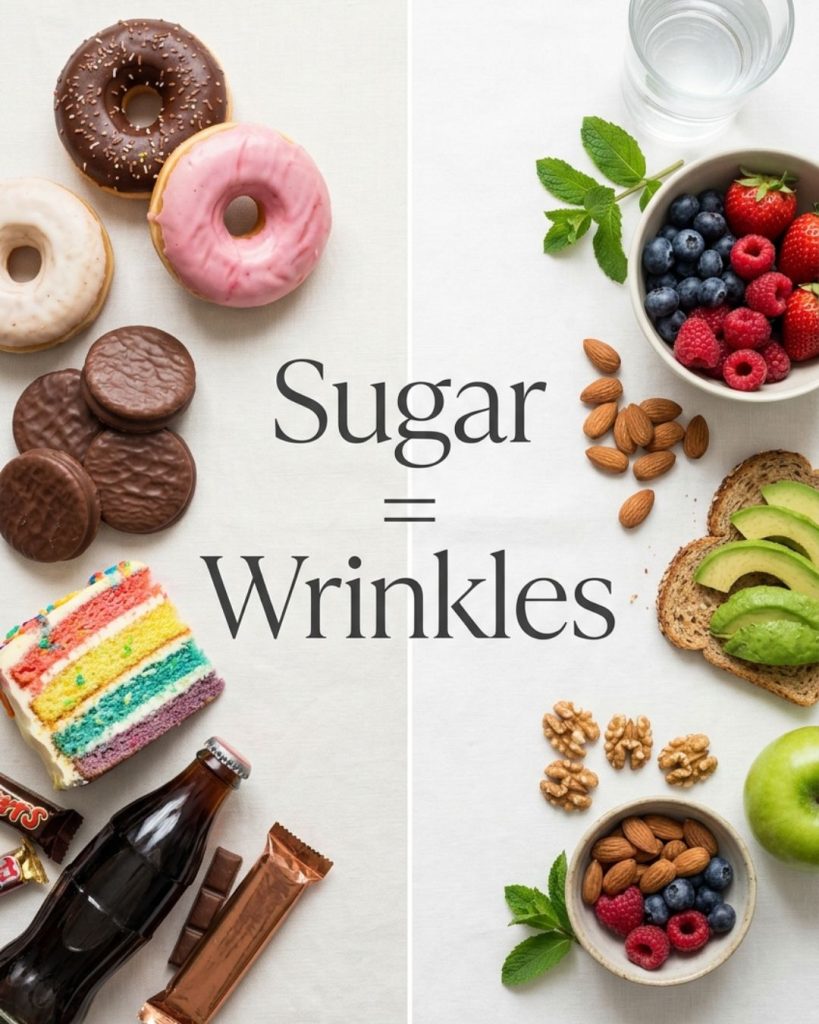
Sugary foods compared with healthy snacks showing impact of sugar on skin aging and collagen damage.
That sugar hit? It’s aging your skin

Sugar isn’t just bad for your waistline; it is a primary driver of premature aging. When you consume excess sugar, a process called glycation occurs in your bloodstream.

  • What is Glycation? This happens when sugar molecules attach to proteins like collagen and elastin.
  • The Result: These vital fibers become stiff, malformed, and brittle. Think of it like “caramelizing” your skin from the inside out.
  • Visual Impact: This leads to deep wrinkles, loss of elasticity (sagging), and a dull, sallow complexion.

Beyond the skin, high sugar intake triggers insulin spikes, which lead to systemic chronic inflammation. This inflammation attacks your cells at a molecular level, increasing the risk of age-related diseases. To combat this, focus on low-glycemic index foods and natural antioxidants that protect your cells from oxidative stress.

2. The Internal Acid: Chronic Stress and Cortisol

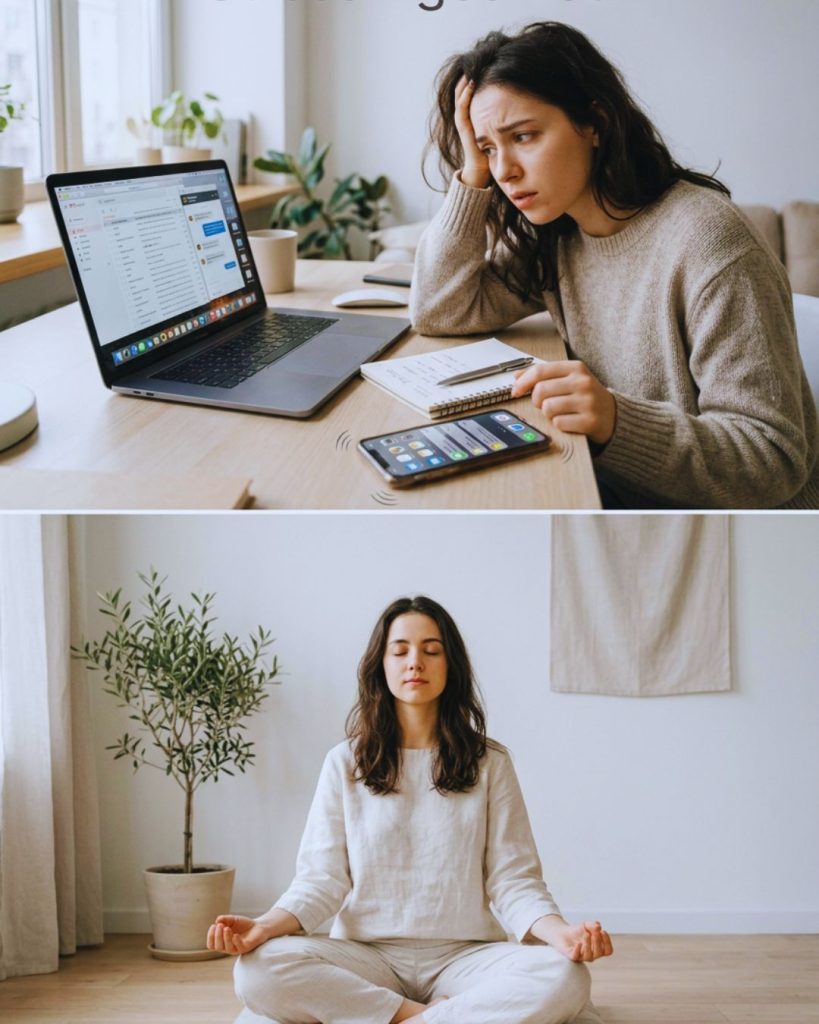
Comparison of stressed lifestyle versus calm meditation showing impact of cortisol on aging.
Chronic stress = silent aging trigger

We often wear “being busy” as a badge of honor, but your body perceives chronic stress as a constant state of emergency. When you are perpetually stressed, your adrenal glands pump out cortisol, often called the “aging hormone.”

  • Telomere Shortening: Research shows that chronic stress shortens telomeres, the protective caps on the ends of your chromosomes. When telomeres get too short, cells can no longer divide, leading to cellular senescence (cell death).
  • Immune Suppression: High cortisol levels weaken your immune system, making it harder for your body to repair everyday cellular damage.
  • The “Stress Face”: Cortisol breaks down protein, leading to muscle loss and a hollowed-out, tired appearance in the face.

Adopting mindfulness practices, such as deep breathing or daily meditation, isn’t just “self-care”—it is an essential anti-aging strategy. Lowering your stress levels literally preserves your DNA.

3. The Great Neglect: Sleep Deprivation

Comparison between sleep deprivation and healthy sleep showing effects on skin and energy levels.
No sleep = no glow

They don’t call it “beauty sleep” for nothing. Sleep is the only time your body enters a state of deep cellular repair and detoxification. When you cut corners on your rest, you are essentially skipping your body’s maintenance cycle.

  • Human Growth Hormone (HGH): During deep sleep, your body releases HGH, which is responsible for tissue repair and muscle growth. Without it, your skin becomes thinner and your muscles weaker.
  • Brain Detox: The glymphatic system flushes out metabolic waste (like amyloid-beta plaques) from the brain while you sleep. Lack of sleep is a fast track to cognitive decline and “brain fog.”
  • The Eye Factor: Sleep deprivation causes blood vessels to dilate, leading to the dreaded dark circles and puffiness that instantly add years to your appearance.

Prioritize sleep hygiene by maintaining a cool room temperature, avoiding screens an hour before bed, and aiming for 7–9 hours of quality rest. Consistency is the key to mitochondrial health.

4. Environmental Overexposure: The Sun and Pollution

Applying sunscreen outdoors to protect skin from UV damage and premature aging.
SPF isn’t optional—it’s your best anti-aging tool

While Vitamin D is essential, unprotected exposure to ultraviolet (UV) radiation is responsible for up to 80% of visible facial aging. This process is known as photoaging.

  • Free Radical Damage: UV rays generate free radicals, unstable molecules that scavenge your healthy cells, breaking down the structures that keep your skin firm.
  • Hyperpigmentation: Over time, the sun triggers an overproduction of melanin, resulting in “age spots” or “liver spots” that are difficult to reverse.
  • Blue Light & Pollution: It’s not just the sun anymore. Emerging studies suggest that High-Energy Visible (HEV) light from smartphones and urban pollution can also penetrate the skin and trigger oxidative damage.

The most effective anti-aging product in existence is a broad-spectrum SPF 30+ sunscreen. Wearing it daily, regardless of the weather, is a non-negotiable habit for anyone serious about skin longevity.

5. Sedentary Lifestyle: The Muscle-Wasting Trap

Comparison of sedentary lifestyle versus active movement and its effect on overall aging and health.
Your body needs movement to stay young

“Sitting is the new smoking.” A sedentary lifestyle doesn’t just make you feel sluggish; it accelerates biological aging by slowing down your metabolism and decreasing circulation.

  • Sarcopenia: This is the age-related loss of muscle mass. If you don’t use your muscles, you lose them, leading to a frailer frame and a slower metabolism.
  • Poor Circulation: Without movement, your blood and lymph fluid don’t circulate efficiently. This means nutrients aren’t reaching your skin and organs, and toxins aren’t being moved out.
  • Bone Density: Weight-bearing exercise is crucial for maintaining bone density. A loss of facial bone structure is a major reason why the face “collapses” or sags as we age.

Incorporating resistance training and daily movement (like a 30-minute brisk walk) keeps your metabolic rate high and ensures your cells remain oxygenated and vibrant.

The Blueprint for Age-Reversal

The good news? Your body is incredibly resilient. By shifting these five habits, you can significantly slow down your biological clock and improve your healthspan.

HabitThe Aging EffectThe Youthful Pivot
SugarGlycation & InflammationFiber, Protein, & Antioxidants
StressTelomere ShorteningMeditation & Boundaries
SleepZero Cellular Repair8 Hours of Dark, Cool Rest
SunPhotoaging & SpotsDaily SPF & Vitamin C
InactivityMuscle & Bone LossStrength Training & Movement

Final Thoughts for Your Longevity Journey

True beauty and vitality start at the cellular level. You cannot “cream” your way out of a bad diet, nor can you “mask” away the effects of chronic exhaustion. By focusing on nutrient-dense foods, stress management, and consistent movement, you aren’t just looking better—you are literally becoming a younger version of yourself on the inside.

Aging is inevitable, but fast aging is optional. Which of these habits will you tackle first? Start small, be consistent, and watch as the glow returns to your skin and the fire returns to your spirit.