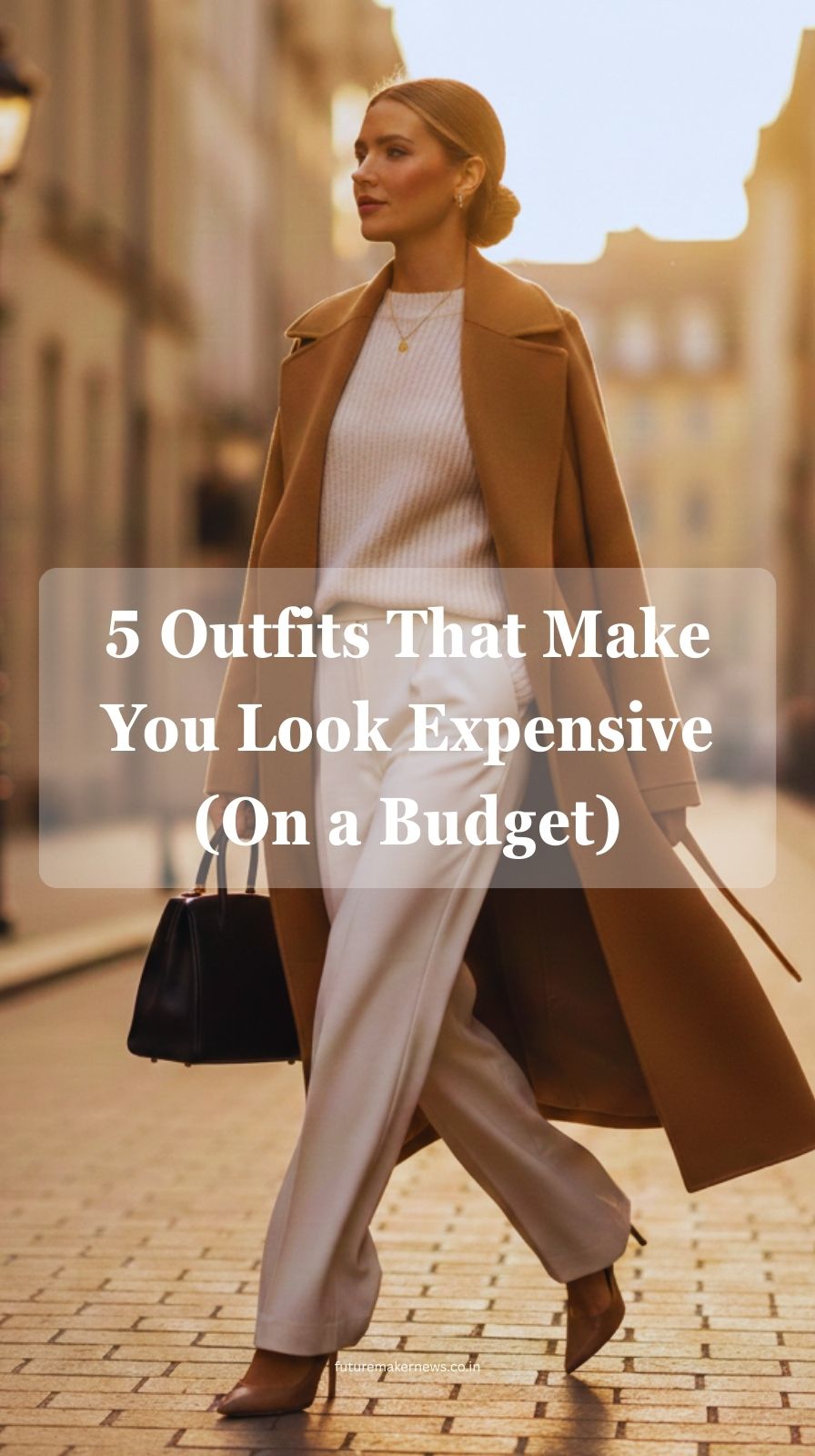
In 2026, the definition of “luxury” has shifted. It is no longer about flaunting loud logos or chasing every micro-trend on social media. True elegance is found in the “Quiet Luxury” aesthetic—a look that signals wealth through silhouette balance, impeccable tailoring tips, and a mastery of neutral tones.
Looking expensive is a skill, not a bank balance. It is about how you curate your pieces and how they sit on your body. If you want to transform your wardrobe into a high-end collection, these five outfit formulas are your roadmap to a sophisticated style that commands respect in any room.
1. The Power of Monochromatic Neutrals
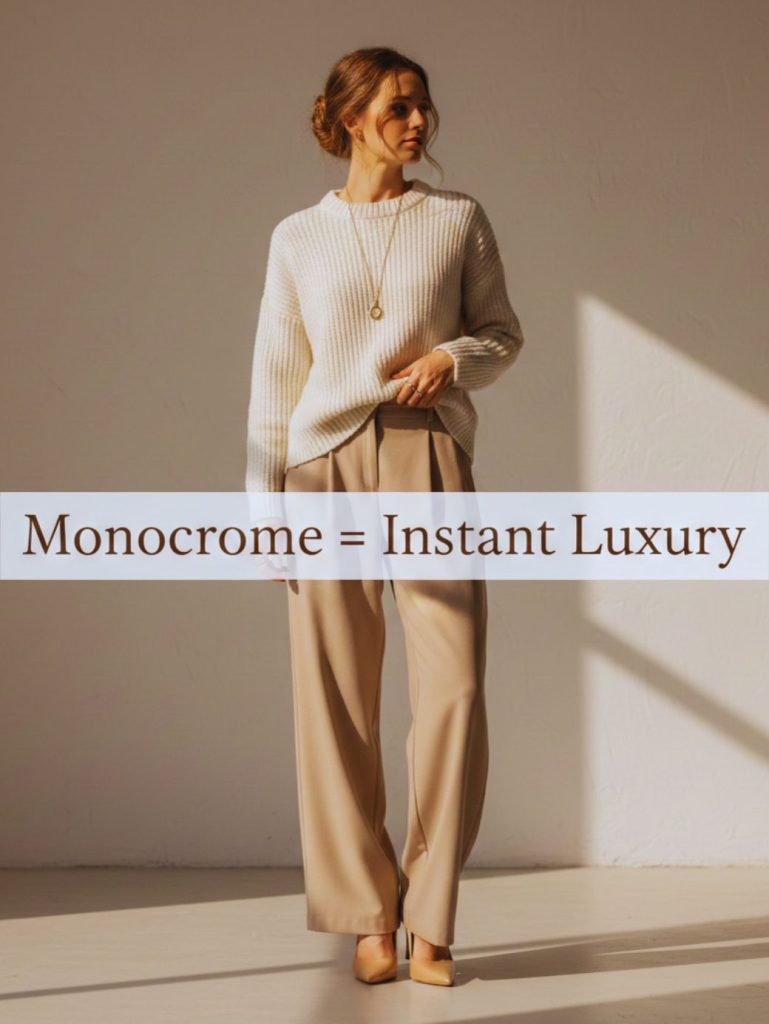
There is nothing that says “I have my life together” quite like a head-to-toe monochromatic look. When you dress in a single color family, you create a seamless vertical line that makes you look taller, slimmer, and significantly more polished.
- The Palette: Stick to neutral tones like cream, camel, slate grey, or chocolate brown. Avoid stark whites in favor of “expensive” looking off-whites and ecru.
- The Texture Trick: To prevent a monochrome outfit from looking flat, mix your fabrics. Pair a silk slip skirt with a chunky cashmere knit, or wool trousers with a crisp poplin shirt.
- The Silhouette: Ensure your silhouette balance is intentional. If you are wearing a voluminous wide-leg trouser, keep the top more fitted to define your frame.
By removing the distraction of multiple colors, the eye focuses on the quality of your fabrics and the tailoring of your garments. This is the ultimate “old money” secret.
2. The Tailored Blazer and Straight-Leg Denim
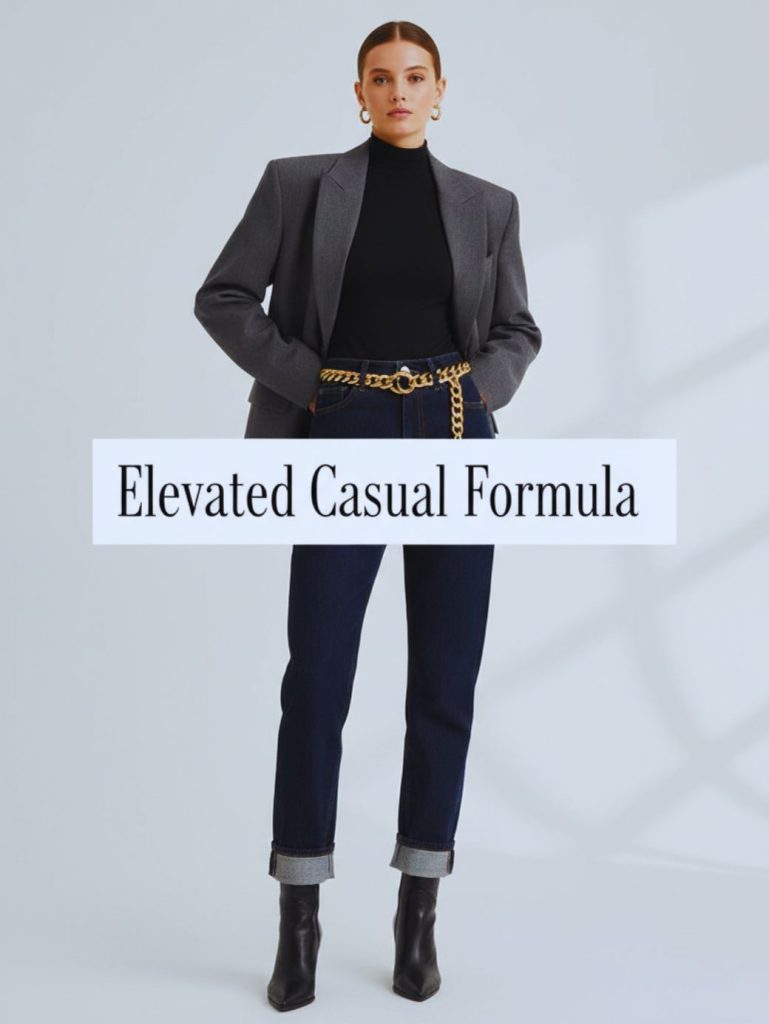
Can denim actually look expensive? Absolutely, but only if you follow the rules of structured dressing. This outfit is the gold standard for “Elevated Casual.”
- The Dark Wash Rule: For an expensive look, opt for dark indigo or solid black denim with zero distressing. Rips and faded washes instantly cheapen an outfit.
- The Oversized Blazer: A structured blazer is the most important investment piece in your closet. Look for shoulder pads that provide a sharp line and a lapel that holds its shape.
- Tailoring Tips: Ensure the blazer sleeves hit exactly at your wrist bone. If they are too long, you look like you’re wearing a borrowed suit; if they are too short, the proportions are off.
Pair this with a simple high-neck bodysuit and a leather belt. The contrast between the casual denim and the formal tailoring creates an effortless, high-end vibe.
3. The “Sandwich” Method: Silhouette Balance
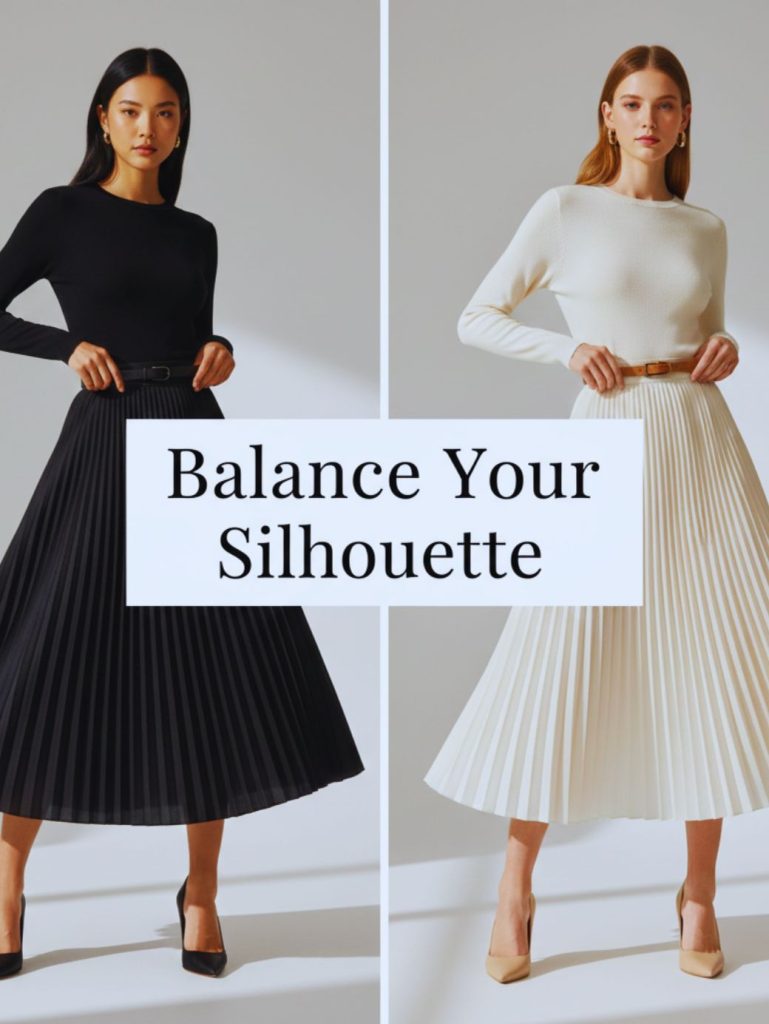
One of the biggest mistakes people make when trying to look expensive is wearing clothes that are either too tight or too baggy all over. High-end fashion is built on the principle of silhouette balance.
- The Formula: Use the “Sandwich Method.” If you wear a voluminous bottom (like a pleated midi skirt), wear a sleek, fitted top. If you wear an oversized “dad” shirt, pair it with slim-fit cigarette pants.
- Visual Weight: Expensive outfits manage “visual weight” perfectly. A heavy wool coat should be balanced with a delicate pointed-toe heel or a slim leather boot.
- The Waistline: Always define your waist. Even in oversized looks, a subtle tuck or a high-quality leather belt tells the world that the “oversized” look was a choice, not an accident of poor fit.
Mastering your body proportions through balance is what separates a “mall outfit” from a “runway look.”
4. The Tonal Suit: Masculine Meets Feminine
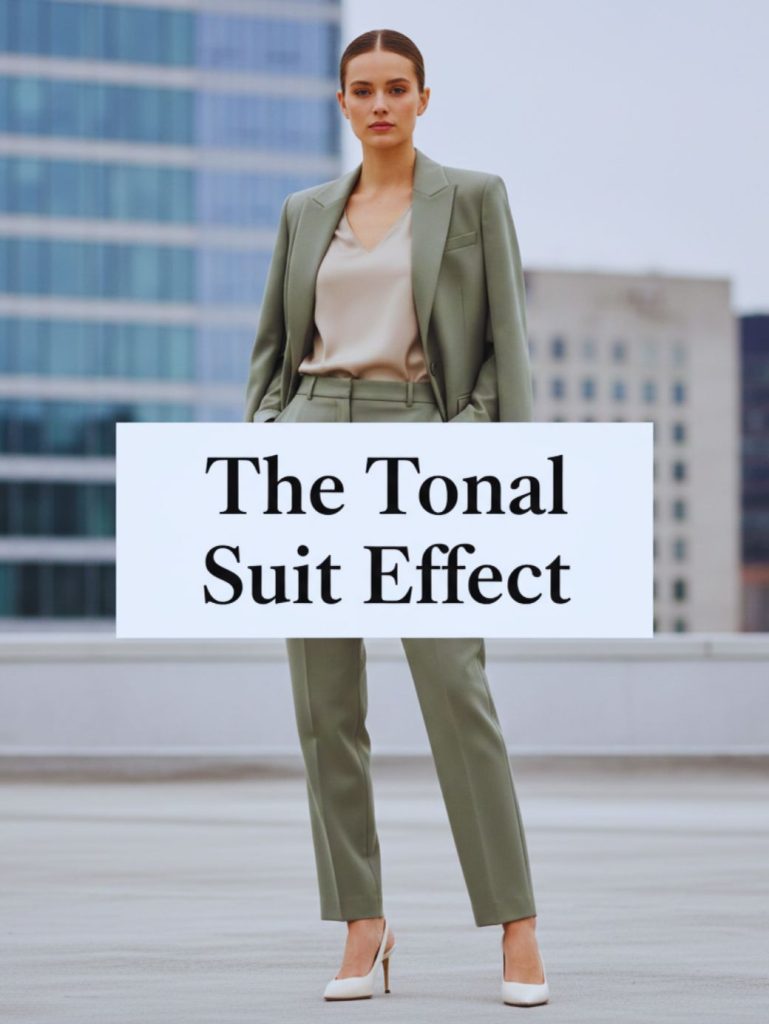
Traditional tailoring for women has evolved. In 2026, the most expensive-looking women are leaning into masculine-inspired suiting with feminine styling.
- The Fit: This is where tailoring tips are non-negotiable. Your trousers should graze the floor when wearing heels, or hit right at the ankle if wearing loafers. There should be no “puddling” of fabric at the bottom.
- The Colorway: A sage green, soft taupe, or navy blue suit looks significantly more expensive than a basic black one. These neutral tones feel curated and intentional.
- The Styling: Wear the blazer draped over your shoulders (the “editor’s drape”) for an air of nonchalance that screams “I don’t need to try too hard.”
A well-fitted suit functions as a suit of armor. It boosts your confidence and instantly elevates your professional aesthetic.
5. The Knitwear Set and Longline Coat
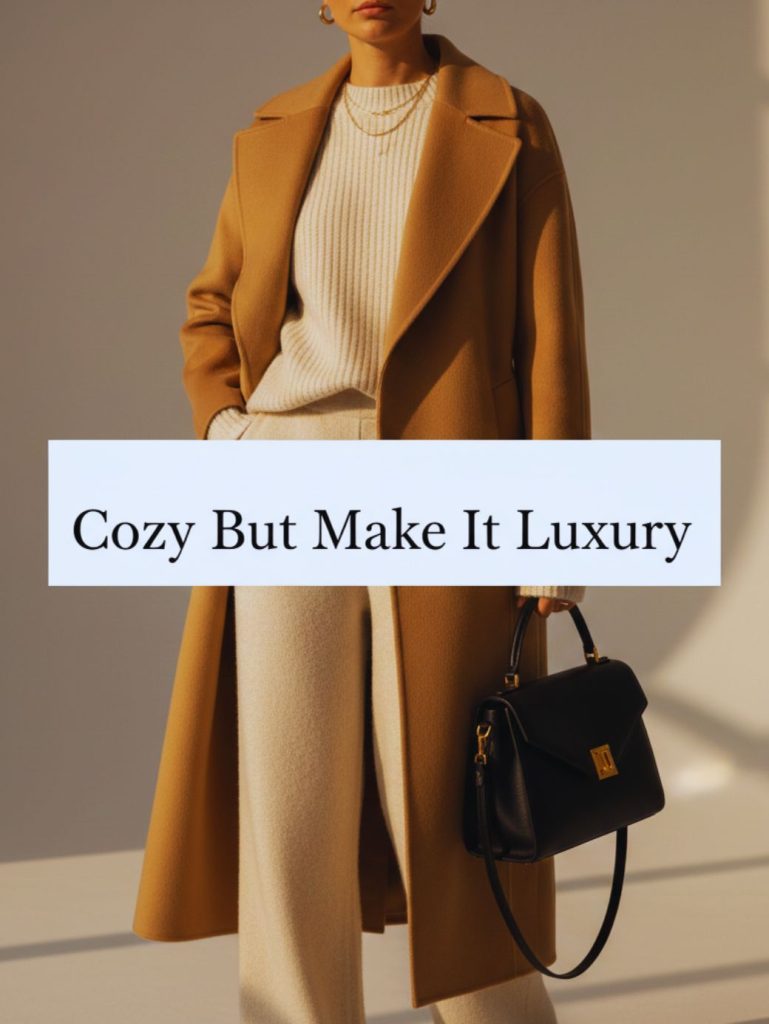
Comfort doesn’t have to look cheap. The “Aesthetic Page” look often features high-quality knitwear that looks incredibly cozy yet undeniably rich.
- The Fabric: Look for natural fibers like merino wool, alpaca, or heavy-weight cotton. Synthetic “shiny” knits are a giveaway of low-quality fast fashion.
- The Longline Coat: A coat that hits below the knee or at the mid-calf adds an instant layer of “drama” and luxury. A camel-colored wrap coat is a timeless fashion staple that never goes out of style.
- The Accessories: Keep your jewelry minimal. A pair of gold chunky hoops and a structured leather handbag (with no visible branding) will complete the look.
This outfit works because it relies on the compounding effect of clean lines and soft, expensive-looking textures.
The Golden Rules of Looking Expensive
Beyond the specific outfits, there are three “invisible” factors that determine if you look high-end or high-street.
Proper Tailoring is Everything
No matter how much you spend, if the garment doesn’t fit your specific measurements, it will look cheap. Find a local tailor. Shortening a hem or taking in a waist by one inch can turn a $50 dress into a $500-looking masterpiece. Tailoring tips are the best-kept secret of the fashion elite.
Steam Your Clothes
Wrinkles are the enemy of luxury. An expensive look is a crisp look. Investing in a high-quality steamer will do more for your style than buying another pair of shoes. A perfectly steamed linen shirt looks ten times more expensive than a wrinkled silk one.
Mind the Hardware
Check the buttons and zippers on your clothes. Cheap, shiny plastic buttons can ruin a beautiful coat. One of the best fashion hacks is to buy an affordable blazer and replace the buttons with high-quality horn or brass ones. It’s a small detail that makes a massive difference in perceived value.
Building an Expensive Wardrobe on a Budget
You don’t need a designer budget to achieve this look. You need a curated wardrobe strategy.
- Audit Your Closet: Remove anything that is pilling, faded, or doesn’t fit your current silhouette.
- Focus on Foundations: Spend your money on the “outer” layers (coats, blazers, shoes) and save on the “inner” layers (tees, tanks, bodysuits).
- Shop Second-Hand: Use resale apps to find high-end neutral tones and designer fabrics at a fraction of the cost.
The goal is to create a capsule wardrobe where every piece can be mixed and matched. When your clothes are cohesive in color and quality, you never have “nothing to wear.”
Conclusion: Confidence is the Final Accessory
The ultimate “expensive” look comes from the way you carry yourself. When you follow these tailoring tips, master your silhouette balance, and lean into neutral tones, you remove the stress of dressing. You know you look good, so you can focus on being your most productive and confident self.
Fashion is a language. What is your current wardrobe saying about you? By shifting your focus from “more” to “better,” you can build a signature style that looks like a million dollars—without actually spending it.