Career Glow-Up- In the modern professional landscape of 2026, we often hear about “hard work” and “grit.” But there is a silent, potent force that often dictates who gets the promotion, who closes the six-figure deal, and who stays stuck in entry-level limbo. That force is personal branding.
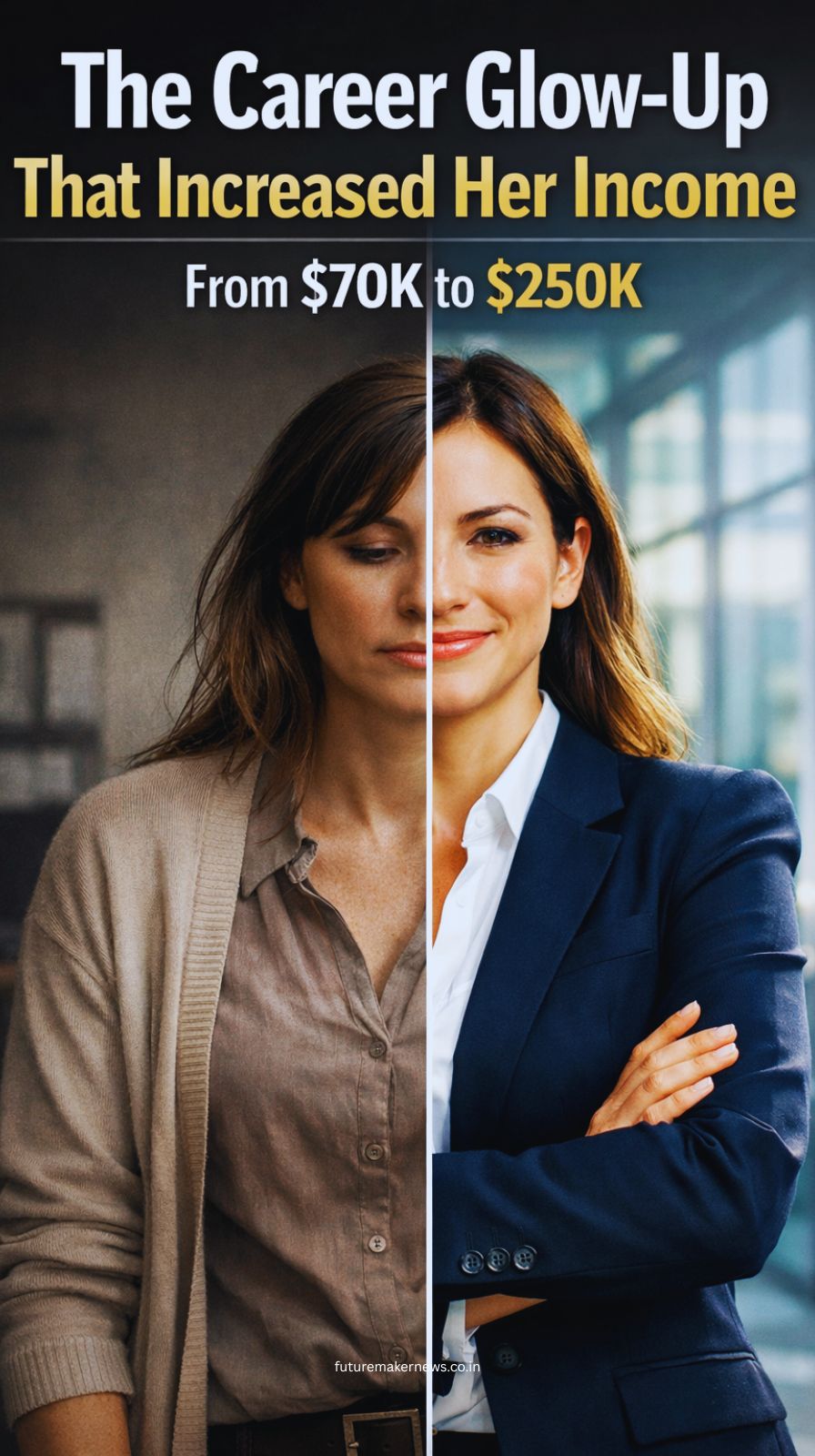
This is the story of Sarah—a brilliant consultant who was stuck at a $70k salary for four years despite being the hardest worker in her firm. Her transformation wasn’t just about a new wardrobe; it was a calculated psychological glow-up that shifted her income from five figures to multiple six figures in less than twelve months.
If you’ve ever felt “invisible” in your industry, this breakdown of self-presentation and visual authority is for you.
The Starting Point: The “Invisible” Professional
Sarah was the “workhorse.” She arrived early, left late, and wore neutral, ill-fitting clothes because she believed her “work should speak for itself.” Unfortunately, the corporate world doesn’t always have time to listen.
- The Perception Gap: Because Sarah looked tired and unpolished, her superiors subconsciously perceived her as “overwhelmed” rather than “in control.”
- The Salary Ceiling: When she asked for a raise, she was told she “wasn’t ready for a client-facing role.”
- The Reality Check: Sarah realized that while she had the technical skills, she lacked the visual vocabulary of a leader.
Step 1: The Psychology of High-Status Branding

Sarah didn’t just go shopping; she studied behavioral psychology. She learned that humans categorize others in milliseconds. To change her income, she had to change her perceived value.
- The Authority Color Palette: She moved away from muddled pastels and toward “high-contrast” combinations (like navy and crisp white). Research shows high contrast is associated with decisiveness and power.
- Signature Style: She developed a “uniform.” A signature look reduces decision fatigue and makes you more memorable in a sea of generic office wear.
- The Quality Over Quantity Rule: She replaced ten cheap blazers with two high-quality, tailored pieces. Fabric quality is a subtle social cue for wealth and attention to detail.
Step 2: Mastering the “Digital Glow-Up”

In 2026, your online presence is your 24/7 lobby. Sarah’s LinkedIn was outdated, featuring a cropped photo from a wedding. She treated her digital footprint like a luxury brand.
- The Professional Headshot: She invested in a photographer who understood lighting psychology. Warm, soft light suggests approachability, while sharp, directional light suggests analytical prowess.
- Content Authority: She began posting “thought leadership” snippets. By aligning her new visual brand with high-value insights, she created a “Halo Effect” that made her advice seem more expensive.
- Video Call Optimization: She invested in a 4K webcam and a ring light. On Zoom, she suddenly looked like a news anchor rather than a basement dweller. Her perceived competence skyrocketed instantly.
Step 3: The “Enclothed Cognition” Breakthrough

One of the most fascinating parts of Sarah’s journey was how her clothes changed her. This is known in psychology as enclothed cognition.
- The Confidence Shift: When Sarah wore her “power suit,” her posture improved. Her voice dropped a half-octave, sounding more authoritative.
- Hormonal Impact: Studies show that dressing in high-status clothing can actually lower cortisol (stress) and increase testosterone (dominance) in professional settings.
- The Mirror Effect: Seeing a “high-earner” in the mirror every morning convinced Sarah’s subconscious that she was already successful. She stopped asking for permission and started making demands.
Step 4: Decoding the “Beauty Premium” in Negotiations

Once Sarah’s self-presentation was aligned, she went back to the negotiating table. The results were startling. The same managers who ignored her a year prior were now leaning in.
- The Halo Effect in Action: Because she looked like a “top-tier” consultant, her firm assumed her ideas were more innovative.
- Negotiation Leverage: Sarah found that when she looked “expensive,” clients were less likely to haggle over her fees. Visual excellence acts as a barrier to low-ball offers.
- The “Likability” Factor: By combining polished grooming with a warm, confident demeanor, she triggered the “What is Beautiful is Good” stereotype, making stakeholders want to agree with her.
The Result: From $70k to $250k
By the end of the year, Sarah hadn’t just received a raise; she had been headhunted by a competitor for a Director-level position.
- The Income Jump: Her new total compensation package hit $250,000.
- The Social Capital: She was invited to speak at industry conferences. Her personal brand had become an asset that generated leads while she slept.
- The Lifestyle Shift: The “glow-up” wasn’t just about the money—it was about the sovereignty and respect she commanded in every room.
How You Can Replicate the Sarah Strategy
You don’t need a million dollars to start your income-shifting glow-up. You just need a strategic approach to personal aesthetics and behavioral cues.
1. Audit Your Current “Brand”
Ask three honest friends what three words come to mind when they see your LinkedIn profile or your daily work attire. If “powerful,” “competent,” or “expensive” aren’t in the mix, it’s time for a shift.
2. Focus on “The Big Three”
- Grooming: Neat hair and healthy skin are universal signs of self-discipline.
- Fit: A $50 shirt that is tailored will always look more “high-income” than a $500 shirt that is too big.
- Posture: Your “physical footprint” tells the world how much space you think you deserve to occupy.
3. Invest in “Visual Assets”
Your professional headshot, your website, and your Zoom background are your “sales team.” Make sure they are telling a story of success and reliability.
4. Align Your Inner and Outer Worlds
A glow-up is hollow without competence. Use the “pretty privilege” to get in the door, but use your expert knowledge to stay there. The goal is to make your outside match the brilliance of your inside.
The Final Verdict: Is it “Fake”?
Some might argue that focusing on physical attractiveness or branding is superficial. But in a world driven by behavioral psychology, ignoring your visual impact is a form of self-sabotage.
Sarah didn’t change who she was; she simply stopped hiding who she was. By mastering the art of self-presentation, she gave the world permission to see her value.
Pretty privilege and brand authority are tools. You can either let them work against you, or you can pick them up and build the life you’ve always wanted.