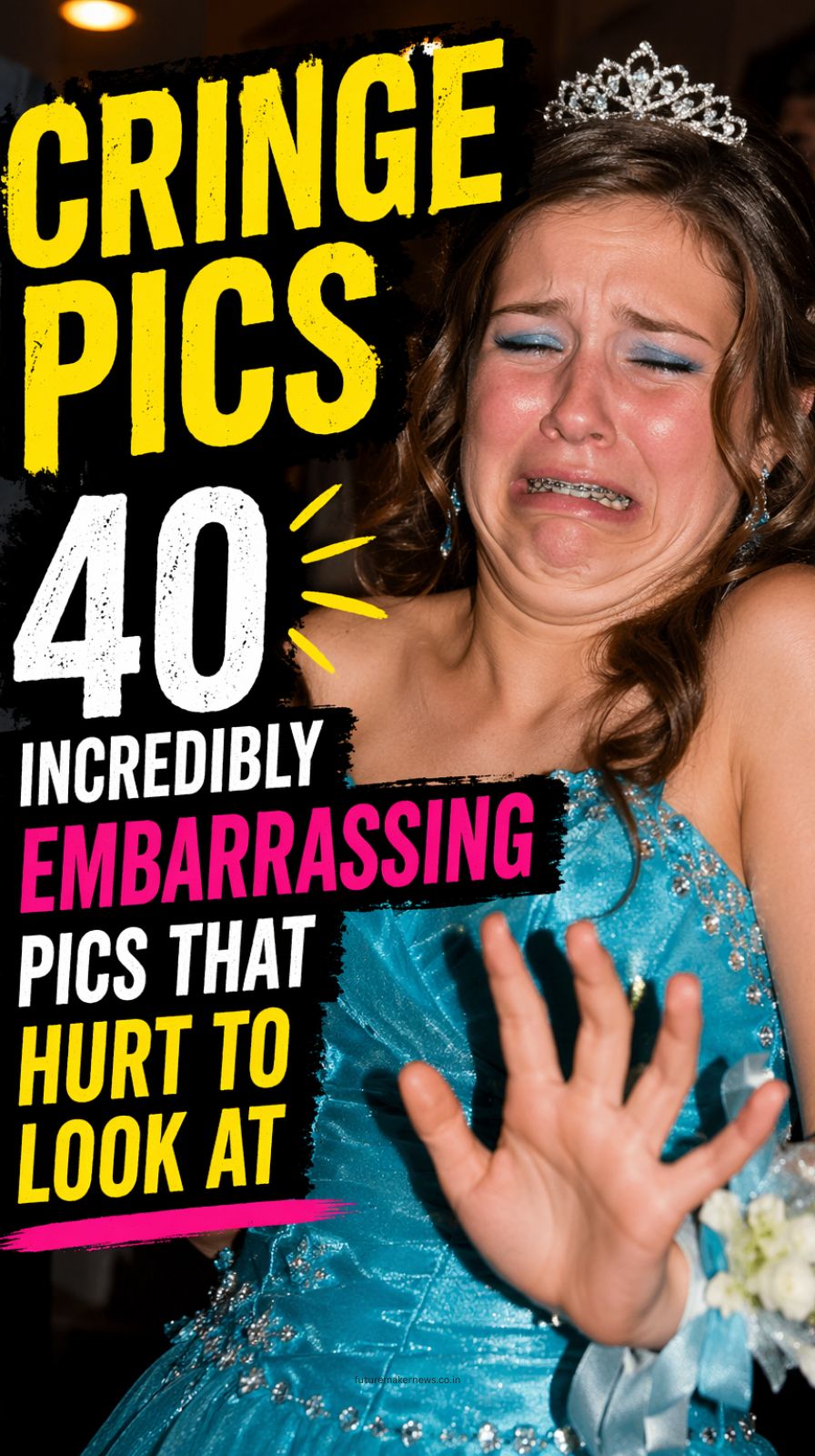
We have all been there. That sudden, cold shiver that runs down your spine when you remember something embarrassing you said three years ago at a party. But there is a specific, modern phenomenon that takes this feeling to a global scale: the Cringe Pic.
In the digital age, our most mortifying moments aren’t just memories; they are digital artifacts. Whether it is a failed attempt at looking “cool,” a public display of social unawareness, or a fashion disaster caught on camera, cringe culture has become a cornerstone of internet entertainment.
But why do we seek out these embarrassing photos? Why does it feel so good to feel so bad? Let’s dive into the psychology of the cringe and explore 40 layers of awkwardness that define the human experience.
The Science of Vicarious Embarrassment
When we look at cringe-worthy images, our brains are doing more than just laughing. We are experiencing vicarious embarrassment.
- Mirror Neurons: Our brains are wired to empathize. When we see someone in a socially painful situation, our mirror neurons fire as if we are the ones standing in the middle of the mall in a neon spandex suit.
- The “Thank God It’s Not Me” Factor: There is a subtle sense of relief. Viewing second-hand embarrassment reinforces our own social boundaries.
- Social Learning: Believe it or not, cringe pics act as a “what-not-to-do” guide for social survival.
Category 1: The “Main Character” Energy Gone Wrong
We all want to be the star of our own story, but some people take the spotlight a bit too literally. These are the photos of people acting like the world is their personal photoshoot—usually in the most inappropriate places.
- The Public Transport Diva: Doing a full yoga routine on a crowded subway.
- The Gym Poseur: Spending 20 minutes setting up a tripod and zero minutes lifting weights.
- The Historical Site Selfie: Taking a “duck face” photo at a somber memorial.
These social media fails remind us that there is a very thin line between confidence and complete lack of self-awareness.
Category 2: Failed Romantic Gestures
Nothing stings quite like romantic cringe. When the heart is involved, the potential for a viral fail triples.
- The Over-the-Top Promposal: Complete with a flash mob that no one asked for and a “No” at the end.
- The Tattoo of a Three-Week Relationship: Nothing says “forever” like a portrait of someone who blocked you on Instagram yesterday.
- The Public Serenade: Watching someone play an acoustic guitar at a girl who clearly wants to be anywhere else on Earth.
These moments are painful because we’ve all felt that desperation to be loved. We just didn’t record it and post it for internet points.
Category 3: The “Edgy” Phase We All Regret
If you didn’t have a phase where you thought you were the deepest person in the room, did you even grow up?
- Deep Quotes on Low-Res Backgrounds: “I’m the joker, you’re just the cards.”
- The Mirror Selfie with a Knife: Usually a kitchen knife. Usually in a bathroom with a pile of laundry in the background.
- Extreme Filters: The 2012 era of sepia and vignettes that made everyone look like they were living in a dusty attic.
These throwback fails are a rite of passage. We laugh at them because they represent a universal truth: we were all once trying way too hard.
Category 4: The Workplace “Team Building” Fails
Corporate culture is a breeding ground for high-tier cringe. When HR tries to be “fun,” the results are often haunting.
- The Corporate Rap Video: White-collar executives trying to rhyme about “synergy” and “quarterly goals.”
- Mandatory Fun Days: Photos of grown adults in business casual doing a three-legged race with visible misery in their eyes.
- The LinkedIn “Hustle” Post: A 500-word essay on how a leaf falling in a park taught someone about B2B sales strategy.
Why We Love “Hurt-To-Look-At” Content
There is a specific subgenre of cringe pics known as “hurt to look at.” These aren’t just funny; they physically make you squint.
- Visual Tension: A photo of someone’s phone screen with 4,000 unread notifications.
- Social Disharmony: A group photo where one person is clearly being excluded, yet they are smiling the hardest.
- The “Nice Guy” Text: Screenshots of someone being overly polite until they are rejected, at which point they turn into a different person entirely.
This content thrives because it taps into our social anxieties. We are terrified of being the person in the photo, so we look at the photo to make sure we aren’t.
The Evolutionary Benefit of Cringe
Believe it or not, cringe is an evolutionary superpower.
- Group Cohesion: By laughing at social faux pas, we reinforce the “rules” of our tribe.
- Humility: Seeing others fail—and failing ourselves—keeps our egos in check.
- Bonding: Sharing a cringe-worthy meme with a friend is a high-speed way to say, “I’m glad we both know better than this.”
How to Handle Your Own Cringe Moments
If you find yourself becoming a viral sensation for the wrong reasons, or if you simply woke up in a cold sweat thinking about a middle-school memory, here is how to cope:
- Own the Narrative: The fastest way to kill cringe is to laugh at it yourself. If you’re in on the joke, no one can use it against you.
- The 5-Year Rule: Ask yourself: “Will this matter in five years?” Usually, the answer is no.
- Digital Hygiene: Every few months, go back and look at your social media history. If you feel a “sting” of embarrassment, that’s actually a good sign—it means you’ve grown as a person.
The Bottom Line: Cringe is Human
The reason 40 incredibly embarrassing pics can garner millions of views is that they represent the raw, unpolished, and often messy reality of being a human being in a digital world. We are all trying to navigate social hierarchies, find love, and look cool while doing it.
Most of the time, we fail. And that’s okay.
The next time you see a cringe pic that makes you want to crawl under your desk, remember: that person is just a mirror of our own imperfections. We are all one bad haircut or one “deep” Facebook post away from being the next internet meme.
Embrace the awkwardness. It’s the only thing that proves we’re actually living.