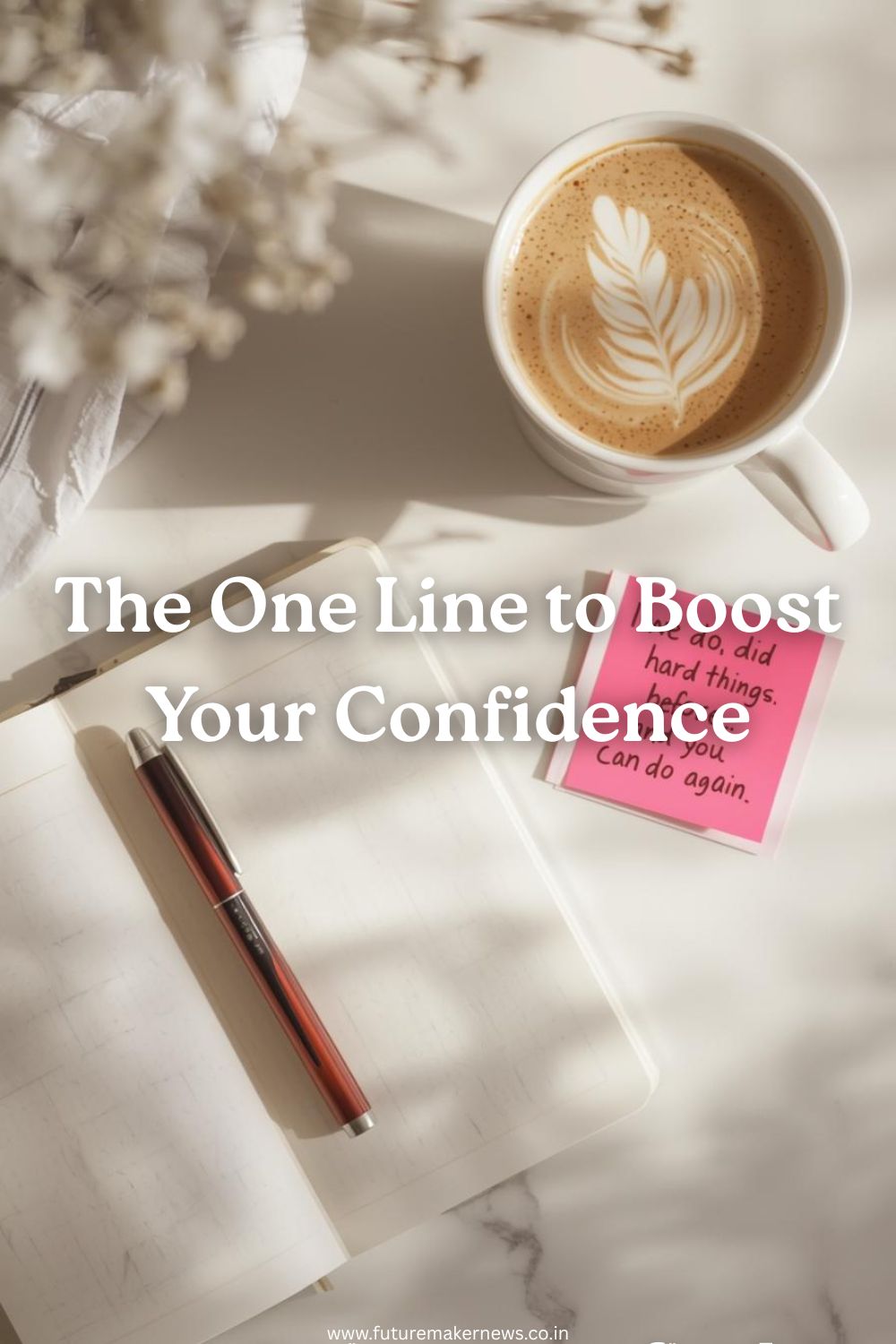
A cozy morning flat lay with a journal, coffee, and a motivational quote written on a sticky note that says “I’ve done hard things before, and I can do them again.”

Confidence. That magical energy that makes people seem unstoppable, calm under pressure, and radiant even when everything isn’t perfect. We all crave it. We chase it through self-help books, pep talks, and late-night journaling sessions. But what if the real secret to confidence isn’t in a routine, a new outfit, or a motivational podcast?

What if it’s just one line — a simple, powerful sentence you can tell yourself that instantly changes how you feel?

This isn’t just another “think positive” cliché. This is about rewiring your thoughts, calming your doubts, and giving yourself permission to believe again. Because here’s the truth: real confidence doesn’t come from pretending — it comes from remembering who you already are.

So grab a notebook, open your Notes app, or just sit with this for a minute. Because once you internalize this one line, you’ll never see yourself the same way again.

The Real Reason You Struggle with Confidence

Before we get to the magic line, let’s talk about why so many people — even successful ones — secretly battle low confidence.

Confidence isn’t something you either have or don’t. It’s something you build. And the main reason most of us don’t feel confident isn’t that we’re unqualified — it’s that we’re constantly comparing ourselves to others or replaying our mistakes.

That endless cycle of:

  • “She’s more talented than me.”
  • “I’m not ready yet.”
  • “What if I fail?”

Sound familiar?

It’s exhausting. And worst of all, it keeps you stuck in the waiting room of your own life, convinced that confidence will come after success — when in reality, it comes before it.

Confidence isn’t a reward; it’s a decision.

The One Line That Changes Everything

Here it is. The line you need to repeat to yourself whenever doubt creeps in:

“I’ve done hard things before, and I can do them again.”

That’s it.

Simple. Grounded. Powerful.

It’s not toxic positivity. It’s truth.

Because even when you don’t feel capable, this sentence reminds you that you’ve already proven your strength. It’s not a promise about the future — it’s a reminder of your past resilience.

Why it works:
Your brain believes what it can prove. When you tell yourself, “I can do this,” your mind argues back with fear and doubt. But when you remind yourself, “I’ve done hard things before,” your mind can’t argue. It knows you’re right.

This one line gives you something stronger than confidence — it gives you evidence.

The Psychology Behind the Line

Confidence is a memory, not a mystery.

When you face something new — an interview, a presentation, a conversation, a goal — your brain tries to protect you from failure. It pulls up fears, worst-case scenarios, and limiting beliefs.

That’s why this one line works: it bypasses fear by pointing to something undeniable.

  • You have handled challenges.
  • You have survived tough moments.
  • You have grown from your failures.

When you say “I’ve done hard things before, and I can do them again,” you’re reminding your brain of your track record — not your worries.

And confidence thrives on proof.

How to Use This Line Daily

Repeating this sentence once isn’t enough. You have to train your brain to believe it. Here’s how:

1. Morning mantra

Person saying a positive affirmation in the mirror with “I can do hard things” written on it in lipstick or marker.
Say it every morning: “I’ve done hard things before, and I can do them again.” Confidence starts with repetition.

Start your day by saying it out loud:

“I’ve done hard things before, and I can do them again.”

Say it while brushing your teeth, making coffee, or looking in the mirror. Make it part of your morning routine — like mental armor.

2. Write it everywhere

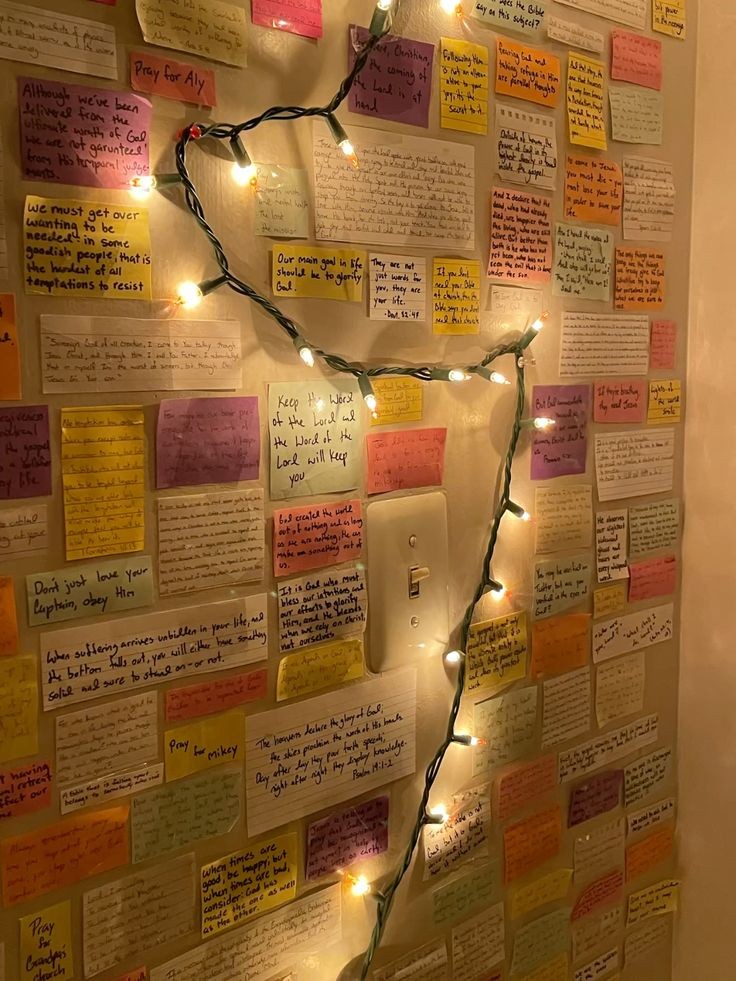
Colorful sticky notes with motivational affirmations on a workspace wall and mirror.
Surround yourself with proof. Write it everywhere you’ll see it — until it becomes your truth.

Sticky notes. Journal covers. Your phone wallpaper.

Visual reminders rewire your subconscious. Every time you see those words, you’re reinforcing confidence as a habit, not a mood.

3. Use it in moments of panic

Close-up of a person taking a deep breath before a stressful event, focusing on calming self-talk.
Before the nerves hit — pause. Breathe. Repeat: “I’ve done hard things before, and I can do them again.”

Before a big meeting. A presentation. A test. A first date.

Take a deep breath and repeat the line slowly until your heartbeat calms. You’ll feel your focus shift from fear to strength.

4. Pair it with gratitude

An open gratitude journal with an affirmation written inside: “I’ve done hard things before, and I can do them again.”
Turn your mantra into gratitude. Remind yourself of the hard things you’ve already conquered.

After repeating it, name one hard thing you overcame in the past.

For example:

“I’ve done hard things before — like finishing that project I thought I’d fail — and I can do them again.”

This turns the line into a fact, not a wish.

Why Most Confidence Tips Don’t Work (But This Does)

A lot of “confidence advice” focuses on faking it — “stand tall,” “speak up,” “act like you belong.”

While those tips have value, they’re surface-level. Real confidence starts deeper — in your mind.

This one line works because it rewires the root thought behind your anxiety. Instead of:

  • “What if I can’t?” → it becomes “I’ve done this before.”
  • “What if I fail?” → it becomes “I’ll handle it like I always do.”
  • “What if I’m not good enough?” → it becomes “I’ve grown through every challenge.”

It’s not pretending — it’s remembering.

And when you remember your power, you stop needing external validation to feel worthy.

Confidence Isn’t Loud — It’s Steady

When you see truly confident people, notice this: they’re not the loudest in the room. They’re calm. Grounded. Centered.

That’s what this one line gives you — inner steadiness.

It reminds you that you don’t need to prove anything to anyone. You’re not chasing confidence; you’re embodying it.

Confidence isn’t about being fearless — it’s about moving forward despite fear.

And this sentence is the anchor that keeps you steady through the waves.

Write This Down (Literally)

Let’s do a small exercise:

Take a blank page and write this sentence five times:

“I’ve done hard things before, and I can do them again.”

Now underneath, list three examples of when you’ve done something difficult — even small things like:

  • “I spoke up when I was nervous.”
  • “I finished a project I thought I couldn’t.”
  • “I got through a bad week and still showed up.”

When you see it in writing, it’s impossible to deny your strength.

Small Steps That Build Big Confidence
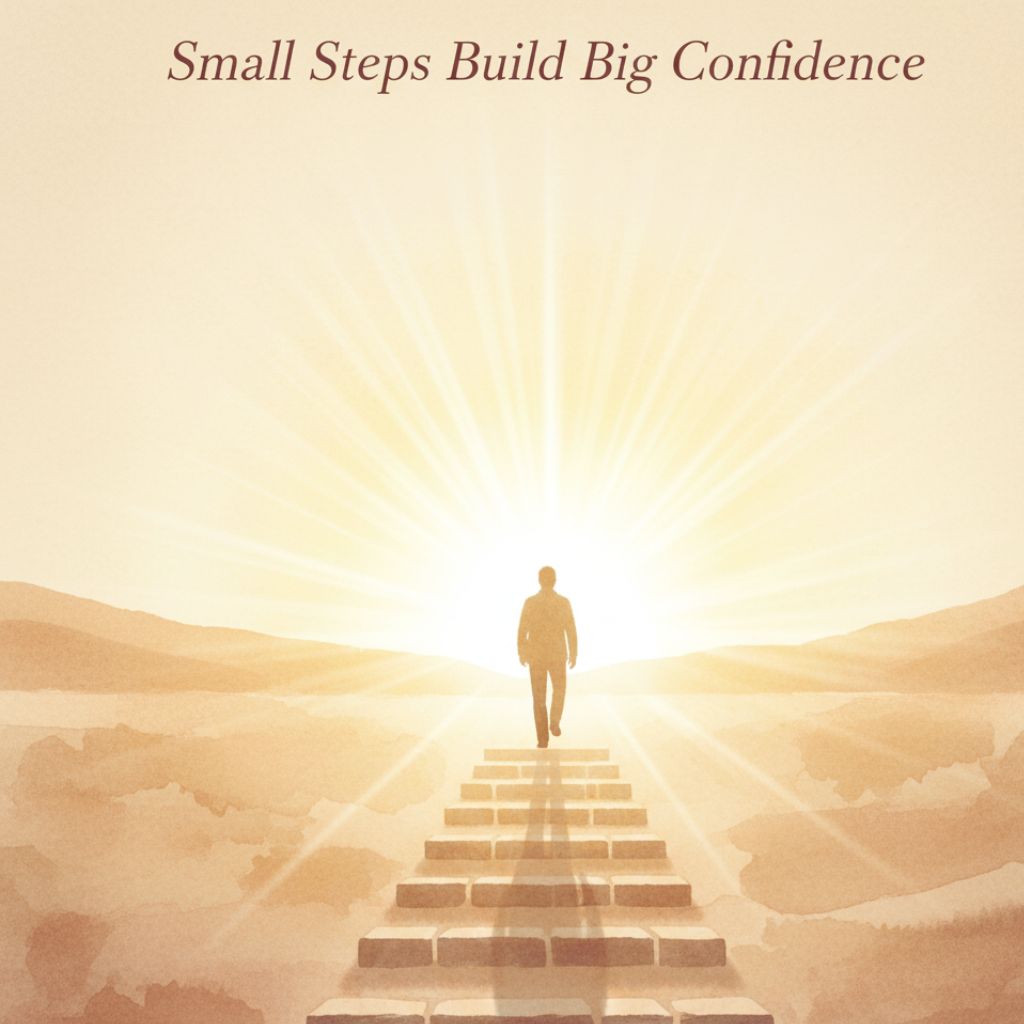
Person walking up small steps toward sunlight, representing personal growth, progress, and confidence built through small daily actions.
Confidence doesn’t come from giant leaps — it’s built one small step at a time. Keep going, you’re getting stronger every day.

Confidence isn’t built overnight — it’s a daily practice. Here are a few small habits that reinforce this one line every day:

  1. Celebrate small wins. Stop brushing off your efforts. Acknowledge progress.
  2. Speak kindly to yourself. Replace “I can’t” with “I’m learning to.”
  3. Surround yourself with encouragement. Limit time with people who drain your energy.
  4. Take small risks daily. Confidence grows with repetition, not perfection.
  5. Reflect before bed. Write one hard thing you did that day and how you handled it.

Each step reminds your brain: I’m capable. I’m consistent. I’m strong.

When You Forget Your Power

There will be days when you forget this line — when fear, failure, or rejection hit harder than usual. That’s okay.

Confidence doesn’t mean never doubting yourself. It means coming back to truth faster.

When the doubts whisper, “You can’t,” answer with:

“Maybe not yet — but I’ve done hard things before, and I can do them again.”

That’s the voice of resilience.

That’s the voice of growth.

The voice of you becoming your most confident self.

Final Thought: Confidence Is Remembering

Confidence isn’t arrogance. It’s not pretending to know it all. It’s remembering that you’ve been through storms and survived every single one.

You’re not broken; you’re becoming.

So the next time you feel small, scared, or unready, whisper this one line. Write it down. Live it. Believe it:

“I’ve done hard things before, and I can do them again.”

Because you have — and you will.
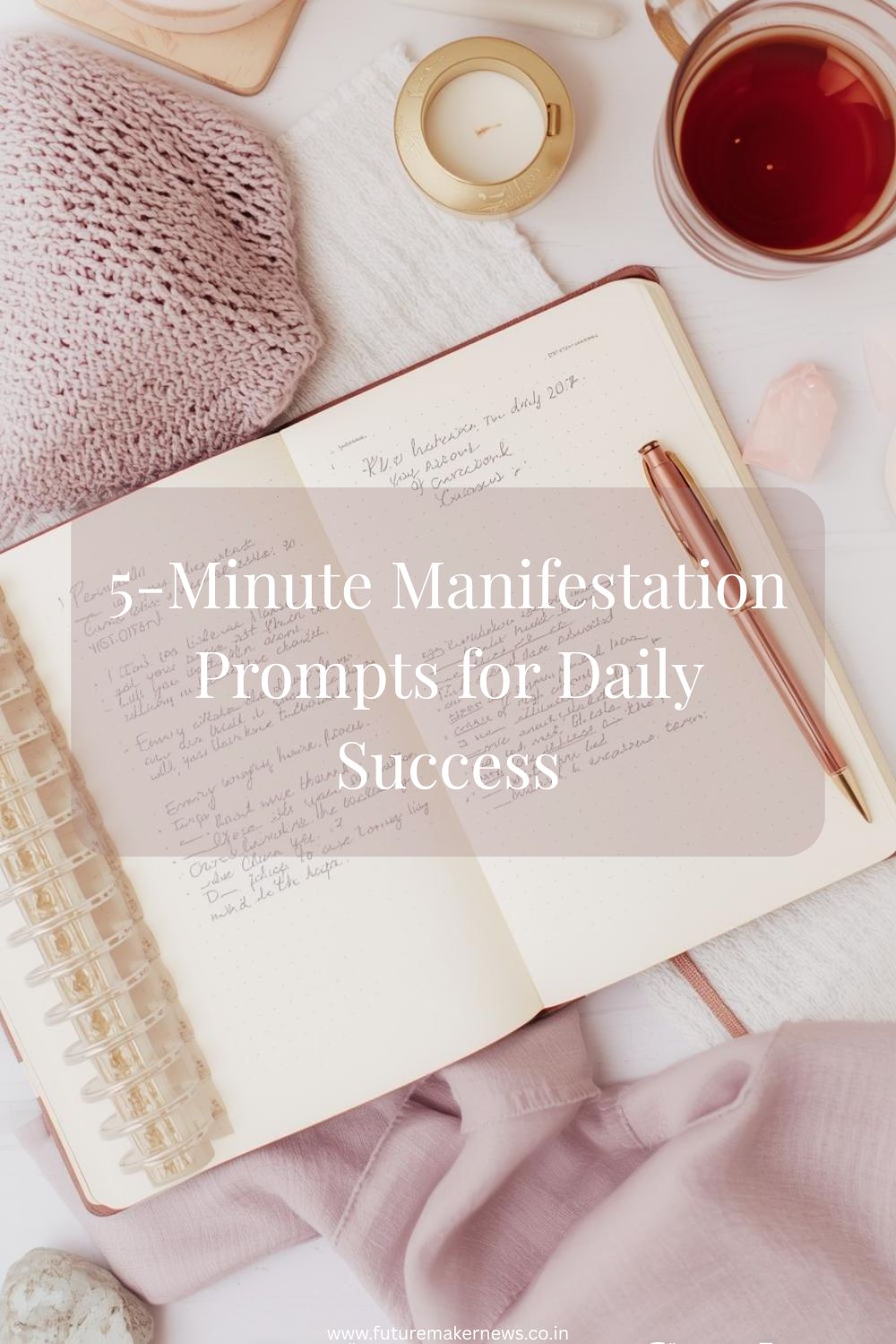
Aesthetic manifestation journal flat lay with crystals, pen, and quote title text in soft pastel tones.

Let’s be honest — most of us have heard about manifestation a hundred times. We’ve seen the quotes, the affirmations, and maybe even watched a few videos about “attracting abundance.” But how many of us are actually doing it consistently?

For a long time, I wasn’t. I loved the idea of manifestation, but it always felt… vague. I didn’t know how to start or what to write. Then, I discovered a simple 5-minute journaling routine — and it completely changed how I approach my goals, mindset, and energy.

This isn’t another fluffy “think positive” routine. It’s a practical, grounded manifestation method that anyone can do — even if you’re skeptical. All you need is a notebook, five minutes, and a willingness to believe that your thoughts shape your reality.

So, if you’ve ever said “I wish things would finally work out for me,” this is your sign to keep reading. Because this is the exact manifestation journaling practice that’s genuinely transforming my life.

What Is Manifestation (and Why Journaling Works)?

Before diving into the prompts, let’s quickly get real about what manifestation actually means.

Manifestation isn’t magic. It’s mindset. It’s about training your thoughts, emotions, and beliefs to align with what you want — so your actions naturally follow.

In simple terms:

  • You don’t attract what you want.
  • You attract what you believe you deserve.

That’s where manifestation journaling comes in. Writing forces you to focus — to turn abstract dreams into clear, specific visions. When you write consistently, you’re not just daydreaming; you’re programming your subconscious mind to see opportunities, act with confidence, and create momentum.

In other words: your journal becomes your roadmap to your reality.

The 5-Minute Manifestation Routine

You don’t need an hour of meditation or fancy notebooks. This 5-minute routine is easy, powerful, and fits into any schedule.

Here’s how it works:

  1. Find a quiet spot (morning or night — whichever feels right).
  2. Take a few deep breaths.
  3. Open your journal.
  4. Spend just five minutes writing using the prompts below.
  5. Reread your words and feel them as if they’re already true.

That’s it. Five minutes. But do it daily — and watch your perspective (and reality) begin to shift.

10 Manifestation Journal Prompts That Are Changing My Life

These are the exact manifestation journal prompts I use every day. They’re simple but incredibly effective at resetting your mindset and calling in what you truly want.

Each one is paired with a reflection so you understand why it works.

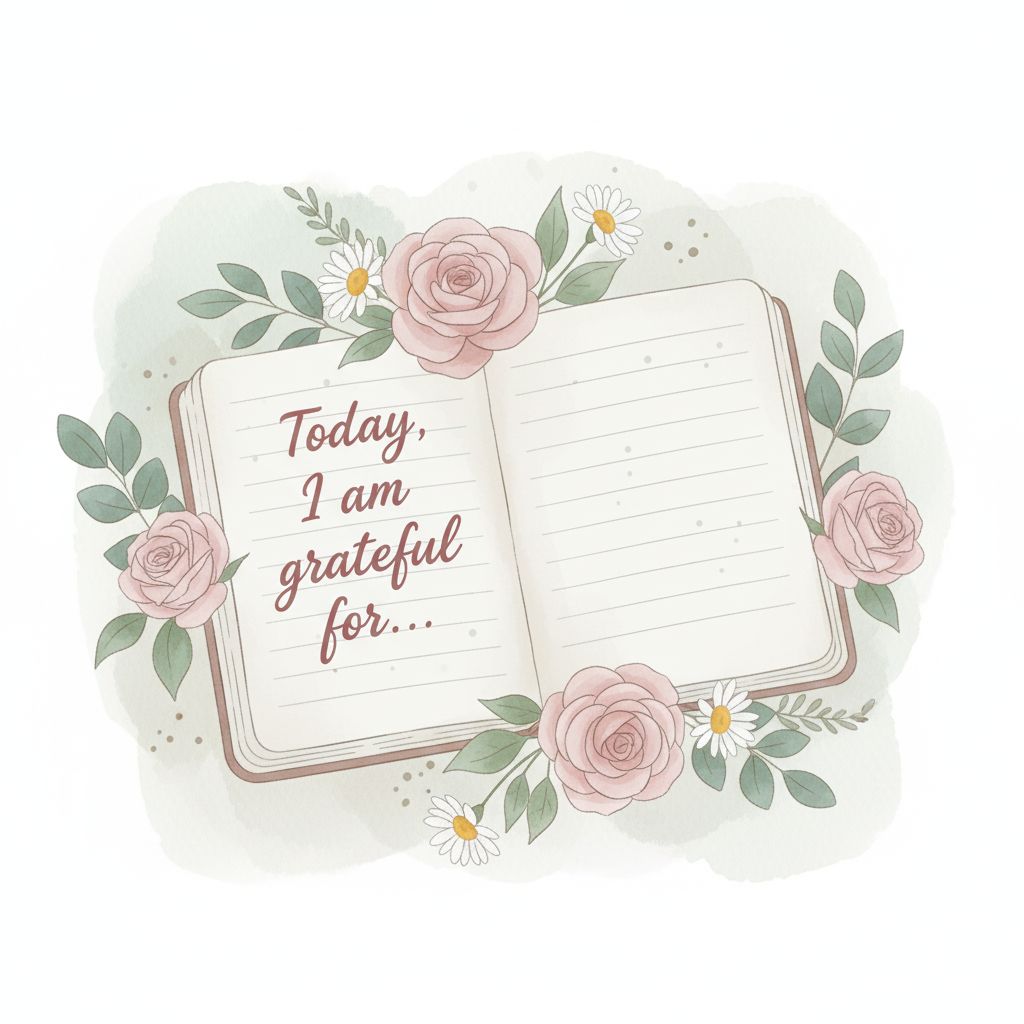
1. “Today, I am grateful for…”

Gratitude journal page with elegant handwriting and flowers.
Start every day with gratitude — it’s your highest frequency.

Start every entry with gratitude. It’s the fastest way to raise your vibration and attract more good things.

Why it works: Gratitude focuses your energy on abundance, not lack. You instantly shift from “I don’t have enough” to “I already have so much.”

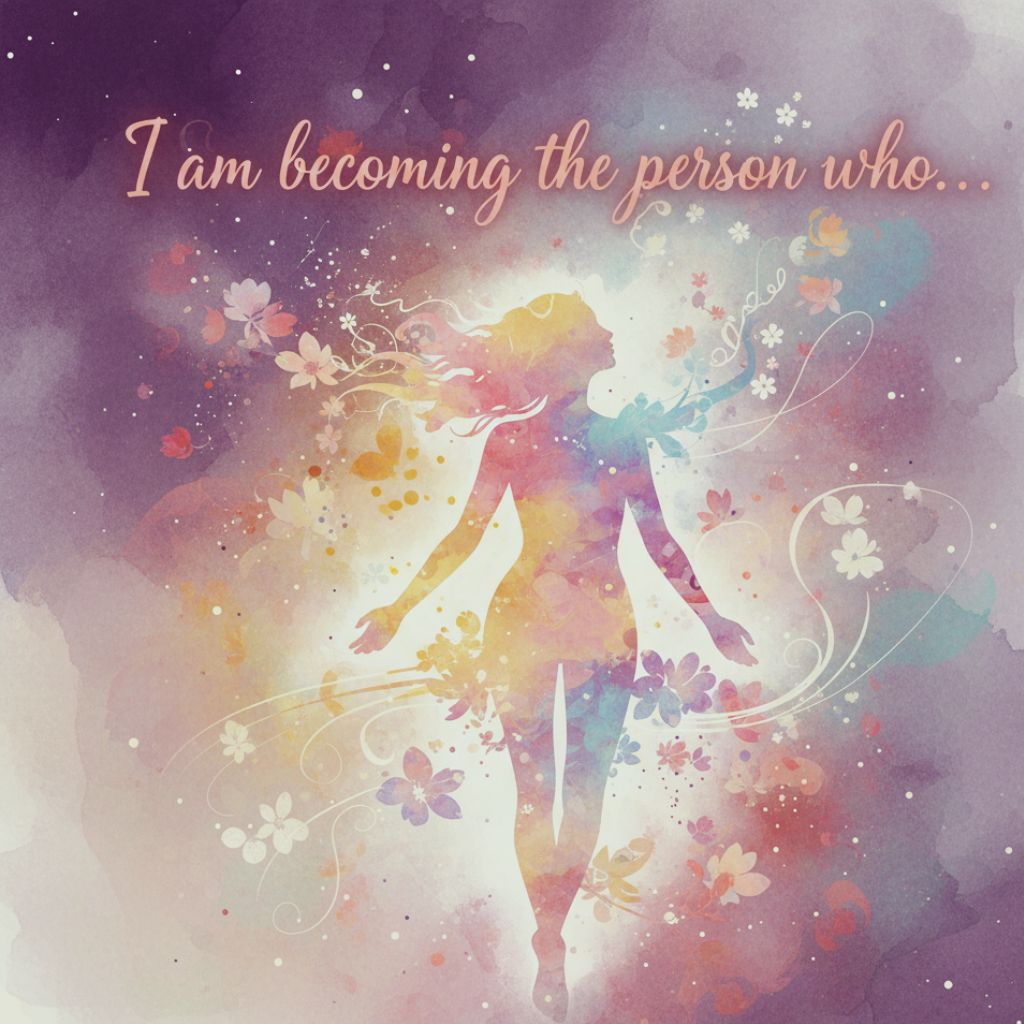
2. “I am becoming the person who…”

Inspirational manifestation quote about self-growth and becoming your higher self.
You’re not chasing your dreams — you’re becoming them.

This prompt bridges the gap between who you are and who you’re becoming. It reminds you that you’re always evolving.

Why it works: It activates identity-based manifestation. You stop chasing goals and start embodying the version of you who already has them.

3. “My dream life feels like…”

Manifestation quote about visualizing your dream life with calm sky imagery.
Feel it. See it. Live it.

Write in detail what your ideal life looks and feels like — not just what you want, but how it feels to live it.

Why it works: Emotion is the energy that fuels manifestation. The more real it feels, the faster your subconscious aligns with it.

4. “I am proud of myself for…”

Motivational quote image about self-pride and celebrating progress.
Celebrate every win — big or small.

Acknowledging your progress builds confidence and magnetism. Every small win matters.

Why it works: You train your brain to focus on progress, not perfection — which attracts even more progress.

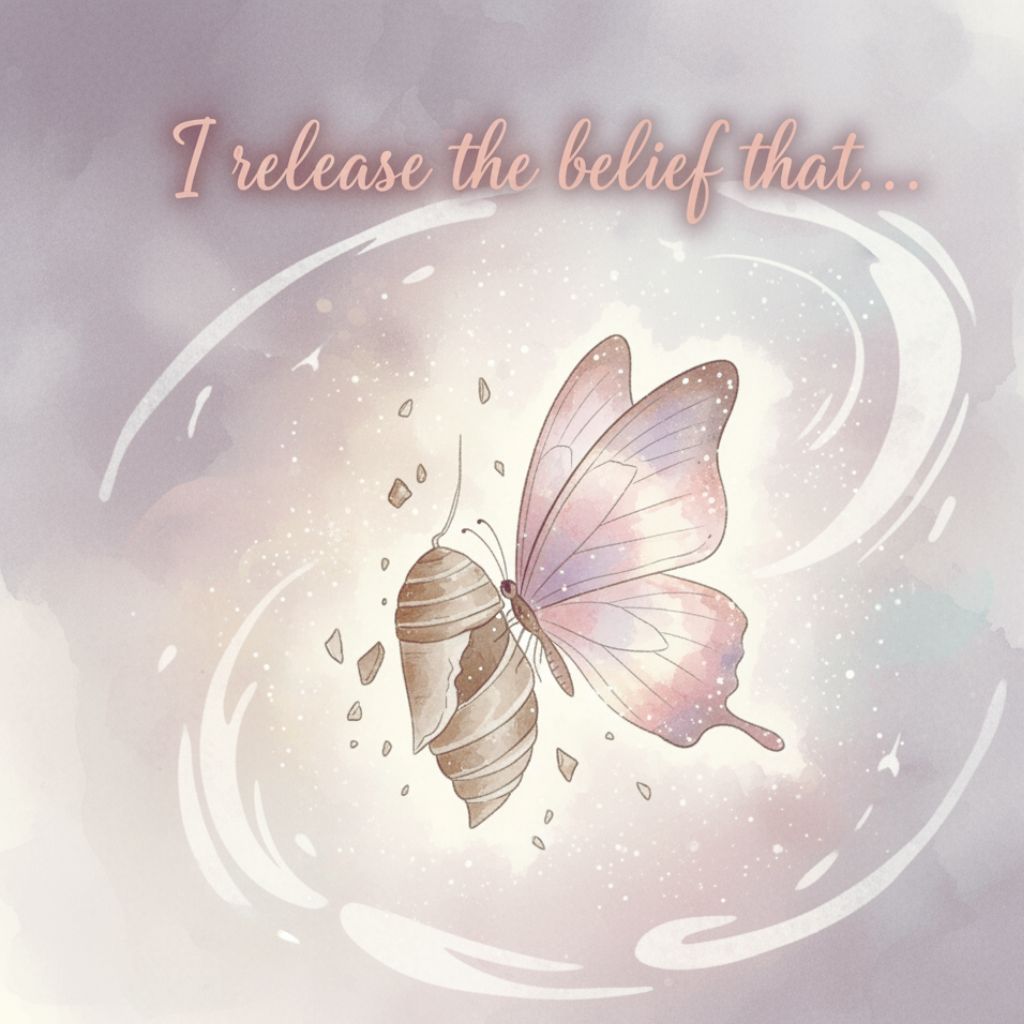
5. “I release the belief that…”

Transformational quote about letting go of limiting beliefs in manifestation.
Release. Renew. Rise.

Manifestation isn’t just about attracting — it’s also about letting go. Identify old beliefs that hold you back (like “I’m not good enough” or “Money is hard to earn”).

Why it works: When you release mental clutter, you create space for new opportunities to flow in.

6. “I attract people and opportunities that…”

Manifestation quote about attracting positive people and opportunities.
You attract what you believe you deserve.

Set the tone for who and what you allow into your life. Be specific — describe the kind of people, energy, and connections you want around you.

Why it works: The universe matches your vibration. When you define your standards clearly, you stop settling for less.

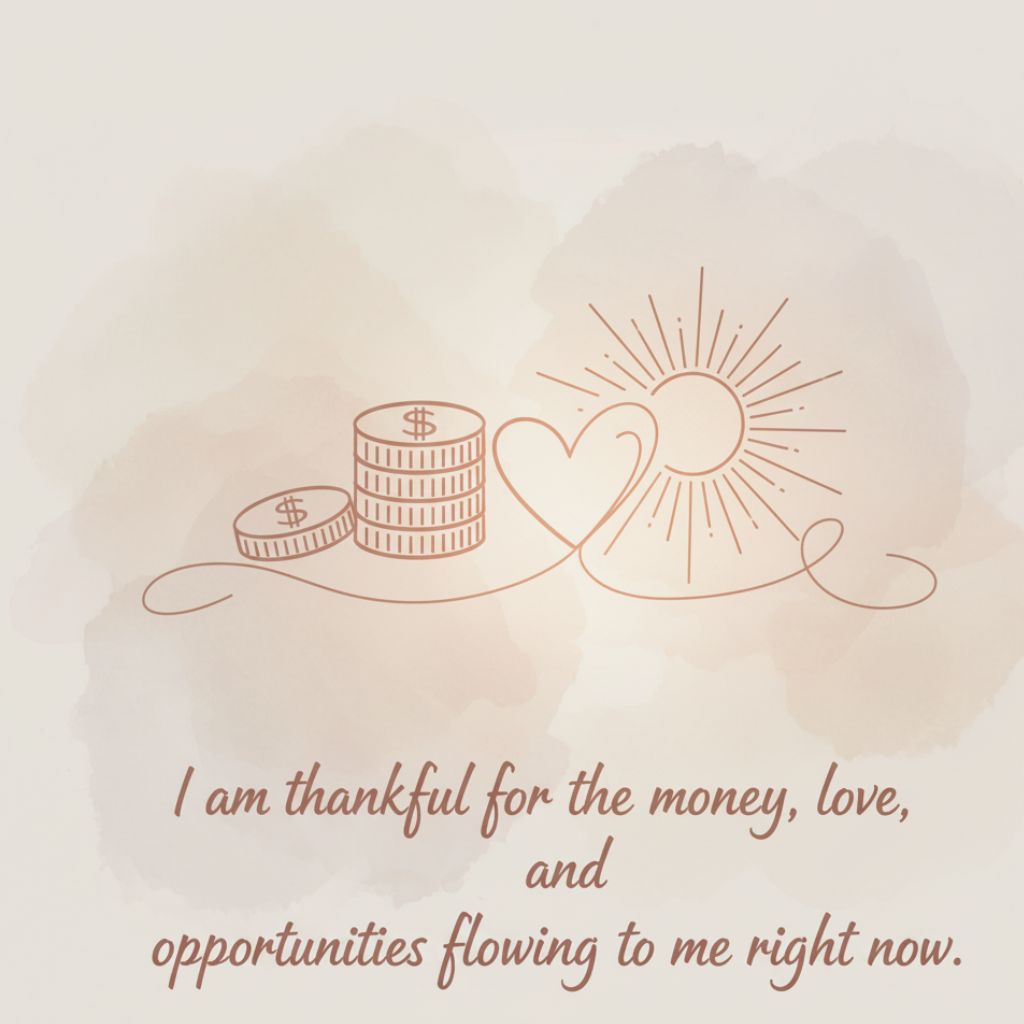
7. “I am thankful for the money, love, and opportunities flowing to me right now.”

Manifestation affirmation about gratitude for abundance and love.
Act like it’s already yours — because it is.

Write it as if it’s already happening. This is the essence of manifestation — embodying the energy of “already having.”

Why it works: Present-tense writing tricks your brain into believing your desires are real, and your actions start reflecting that belief.

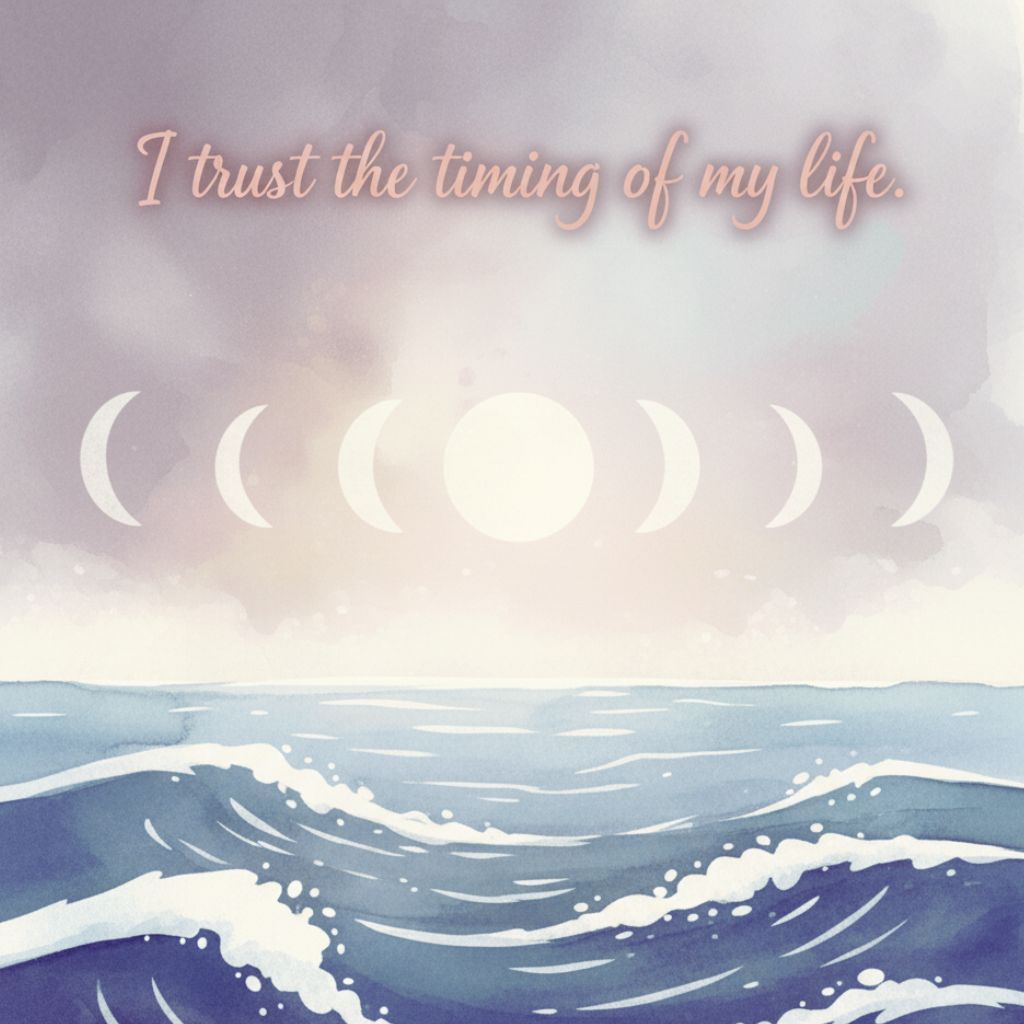
8. “I trust the timing of my life.”

Spiritual quote about trusting divine timing with serene imagery.
Patience is powerful. Trust your timing.


Not everything will unfold overnight. This prompt helps you surrender control and develop faith in divine timing.

Why it works: When you stop forcing outcomes, you create space for miracles to happen naturally.

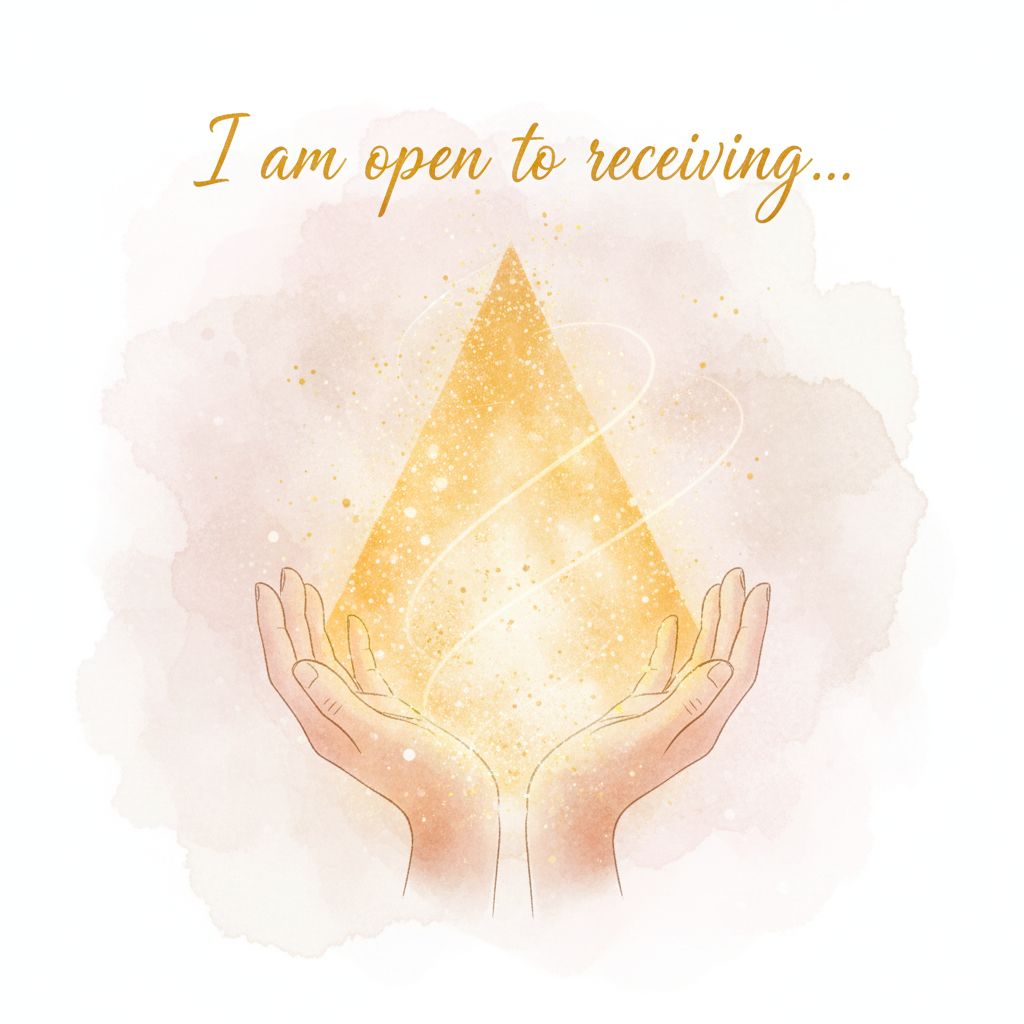
9. “I am open to receiving…”

Manifestation quote about receiving abundance and opportunities.
Open hands, open heart, open energy.

State exactly what you’re ready to receive — love, peace, clarity, financial growth, or healing.

Why it works: Many people block manifestations because they subconsciously believe they don’t deserve it. This prompt opens you up to receiving fully.

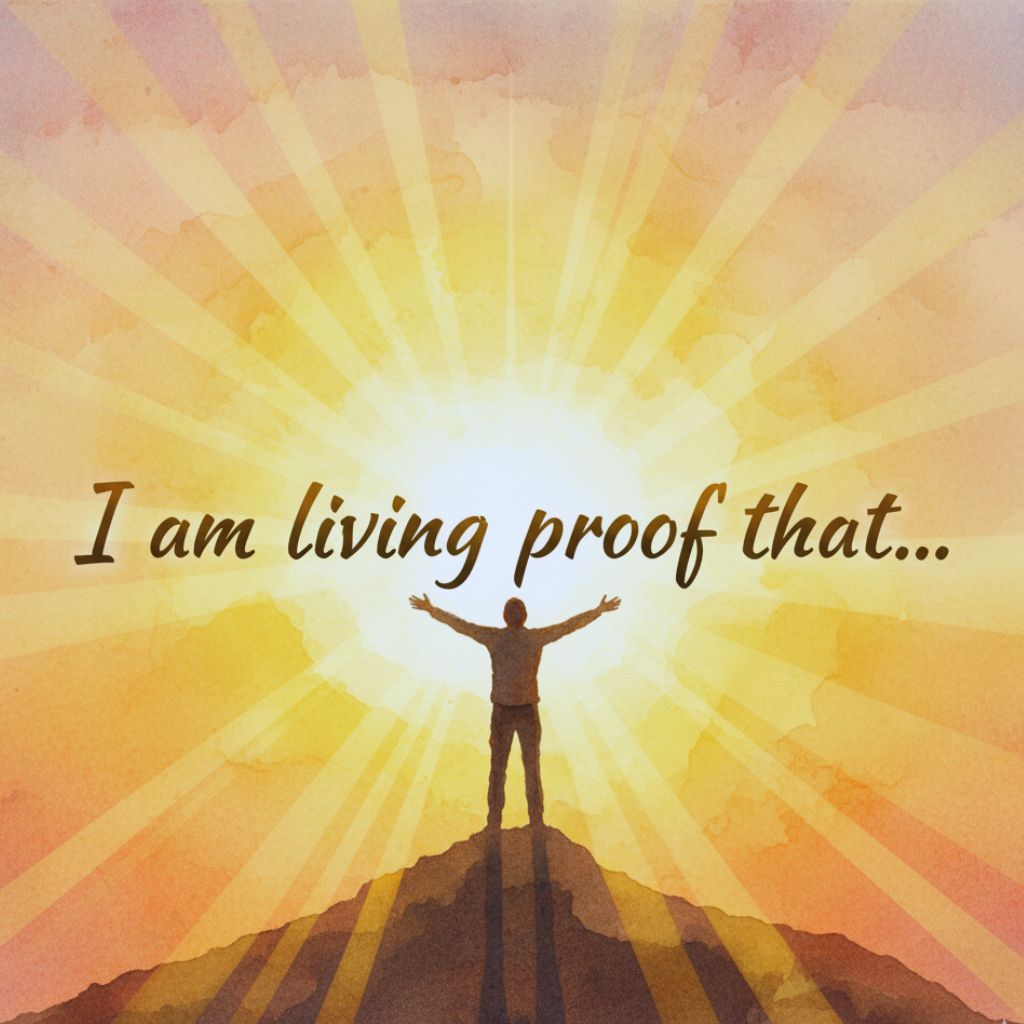
10. “I am living proof that…”

Inspirational manifestation quote about embodying your dream life.
You are already becoming your vision.

This one is my favorite. Write as if your dream life has already manifested and you’re reflecting on how it happened.

Why it works: It’s a mental rehearsal that primes your brain for success. You’re not just visualizing — you’re embodying.

How This 5-Minute Routine Changed My Life

When I started this practice, I wasn’t expecting much. But within weeks, I noticed subtle — then powerful — shifts.

Here’s what changed:

  1. Clarity: I stopped overthinking my goals. They felt clear, simple, achievable.
  2. Confidence: I began making decisions from abundance, not fear.
  3. Opportunities: The right people and chances started showing up — almost like magic (but really, it was mindset).
  4. Calm: Journaling became my grounding ritual. Even five minutes of stillness changed my mood for the entire day.
  5. Momentum: Writing daily turned my dreams from “someday” into “I’m working toward it right now.”

And the best part? It doesn’t require perfection. Even if you skip a day or two, every time you return to your journal, you’re reconnecting with your higher self.

Pro Tips for Manifestation Journaling Success

If you want to take your journaling practice to the next level, here are some simple but powerful tips:

Write in the present tense.
Instead of “I want,” say “I have.” This reinforces belief.

Feel it deeply.
Don’t just write — visualize. Feel what it’s like to live that reality.

Stay consistent.
Five minutes daily is more powerful than one hour once a week.

Keep your energy clean.
Avoid complaining or writing from frustration. Your journal is sacred space.

Revisit old entries.
You’ll be amazed to see how many things you’ve manifested without even realizing it.

Why This Works (The Science Behind It)

Manifestation may sound mystical, but there’s science behind it.

Neuroscience: Writing goals in the present tense activates your reticular activating system (RAS) — a filter in your brain that helps you notice opportunities related to your focus.

Energy: Gratitude and positive visualization shift your vibration, attracting experiences that match your emotional state.

Psychology: Journaling boosts self-awareness, helps regulate emotions, and rewires limiting beliefs.

So whether you call it manifestation or mindset training, the results are very real.

Final Thoughts: You Create What You Believe

Here’s the truth: your journal isn’t just a notebook — it’s a mirror of your future.

Every word you write, every belief you reinforce, is a seed planted in your subconscious. Over time, those seeds bloom into reality.

So stop waiting for “luck.” Start scripting your life.

Five minutes. Ten prompts. Infinite possibilities.

Because when you decide to believe in your power — your life starts to change in ways you never imagined.

You don’t manifest what you wish for — you manifest what you believe.

Motivational collage with sunrise, notebooks, and quote typography encouraging productivity and consistency.

Let’s be honest — sticking to your goals is hard. You start January 1st full of energy, new notebooks, and the world’s most ambitious to-do list. But by February, motivation fades, Netflix wins, and suddenly your “new habit” becomes “maybe next year.”

Sound familiar? You’re not alone.

Whether it’s going to the gym, starting a side hustle, saving money, or simply waking up earlier — motivation never stays constant. That’s why learning how to stay consistent even when you’re unmotivated is the real secret to success.

This guide — powered by 10 powerful motivational quotes — will help you reignite your drive, silence the inner critic, and finally stick to your goals. Each line is more than just inspiration — it’s a practical mindset shift to help you stay the course.

Why Motivation Fades (and What to Do About It)

Before diving into the quotes, let’s address the big question: why is it so hard to stay motivated?

Here’s the truth — motivation isn’t the problem. It’s how we rely on it.

You see, motivation is a feeling, not a plan. Feelings fluctuate. Some days you wake up inspired; other days you’d rather scroll Instagram. That’s normal.

Here’s why most people lose motivation fast:

  1. They set unrealistic goals.
    You try to change everything at once — instead of mastering one small habit.
  2. They expect instant results.
    When progress feels slow, you assume you’re failing.
  3. They rely on emotion instead of structure.
    You won’t always feel motivated — but systems and routines keep you moving anyway.

So if you’ve been struggling, stop beating yourself up. You’re not lazy — you just need a different strategy. And these quotes will help shift your mindset from “I’ll start someday” to “I’m doing it today.”

10 Motivational Quotes for the Unmotivated (and How to Apply Them)

Each quote below isn’t just feel-good fluff — it’s a reminder that progress happens when you commit, even when it’s hard. Let’s dive in.

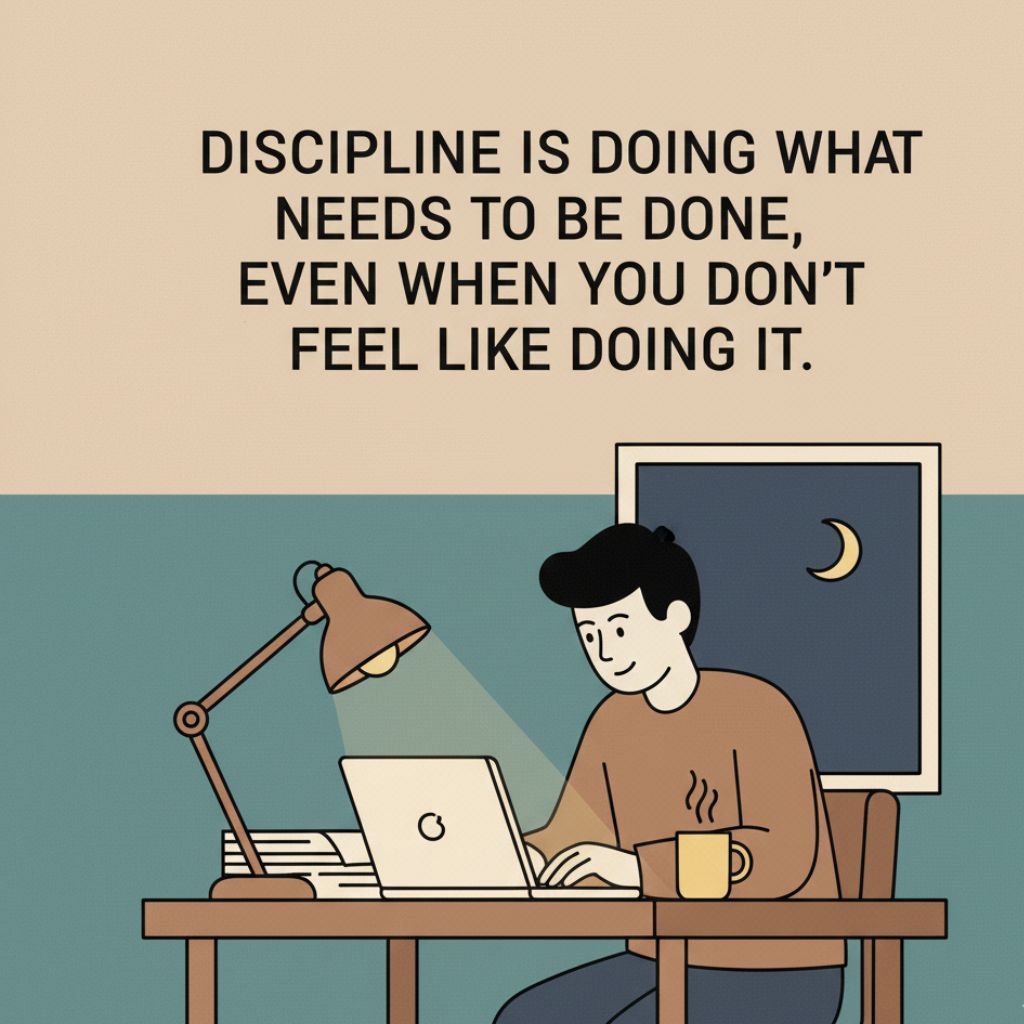
1. “Discipline is doing what needs to be done, even when you don’t feel like doing it.” — Unknown

Inspirational quote about discipline and staying consistent when unmotivated.
Discipline beats motivation — every time.

Motivation may start the journey, but discipline keeps it going. You won’t always feel excited, but showing up — especially on the tough days — builds the momentum you’re looking for.

Action Tip: Instead of waiting for the “perfect moment,” take one small action today. Progress creates motivation, not the other way around.

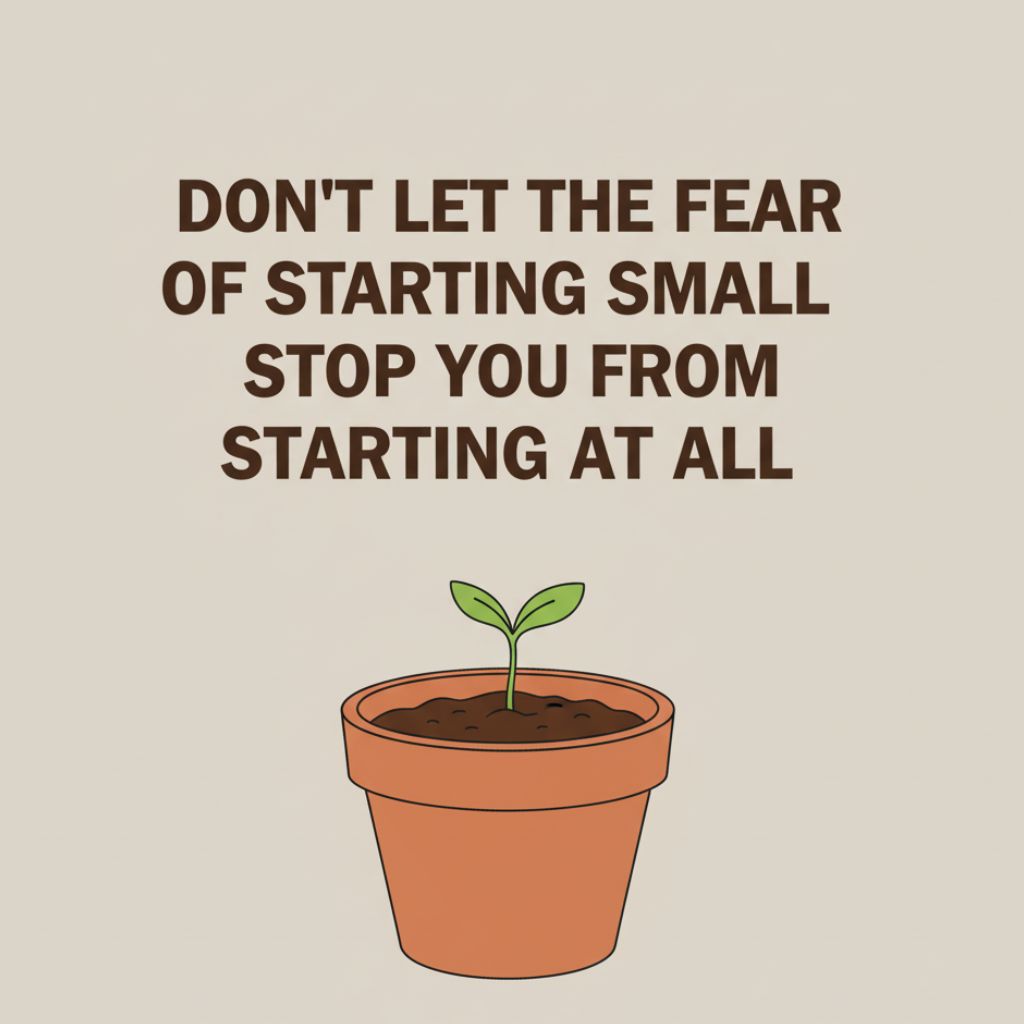
2. “Don’t let the fear of starting small stop you from starting at all.” — Unknown

Motivational quote about starting small and overcoming fear.
Start small — that’s where big things begin

We often think we need everything figured out before we begin — the perfect plan, perfect timing, perfect mindset. But perfection is just procrastination in disguise.

Action Tip: Start tiny. Want to write a book? Write 100 words. Want to work out? Do 10 minutes. Small steps compound into massive wins.

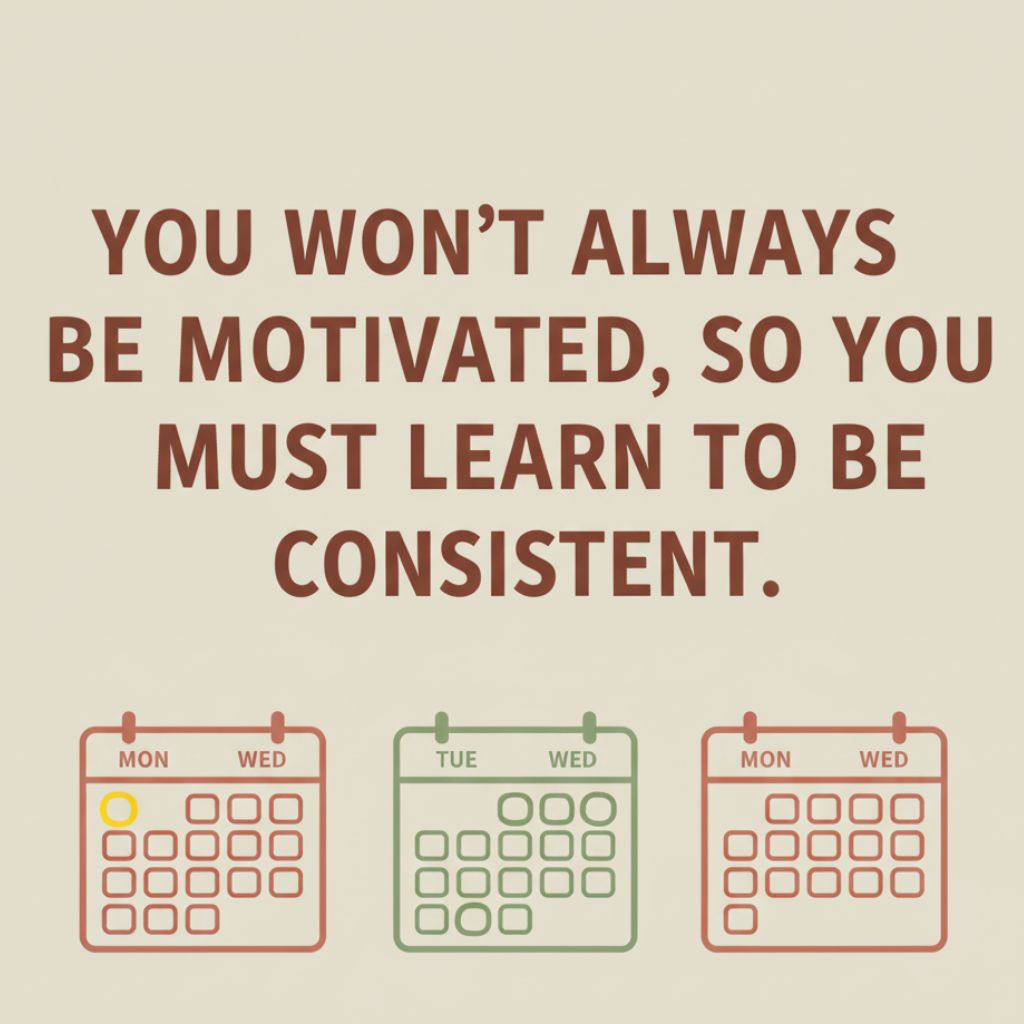
3. “You won’t always be motivated, so you must learn to be consistent.” — Unknown

Inspirational consistency quote by Marie Forleo about daily effort.
Show up — even when no one’s watching.

Consistency is what separates dreamers from doers. It’s not about how excited you feel — it’s about how often you show up.

Action Tip: Build micro-habits that feel too easy to skip. When you make it simple, consistency becomes second nature.

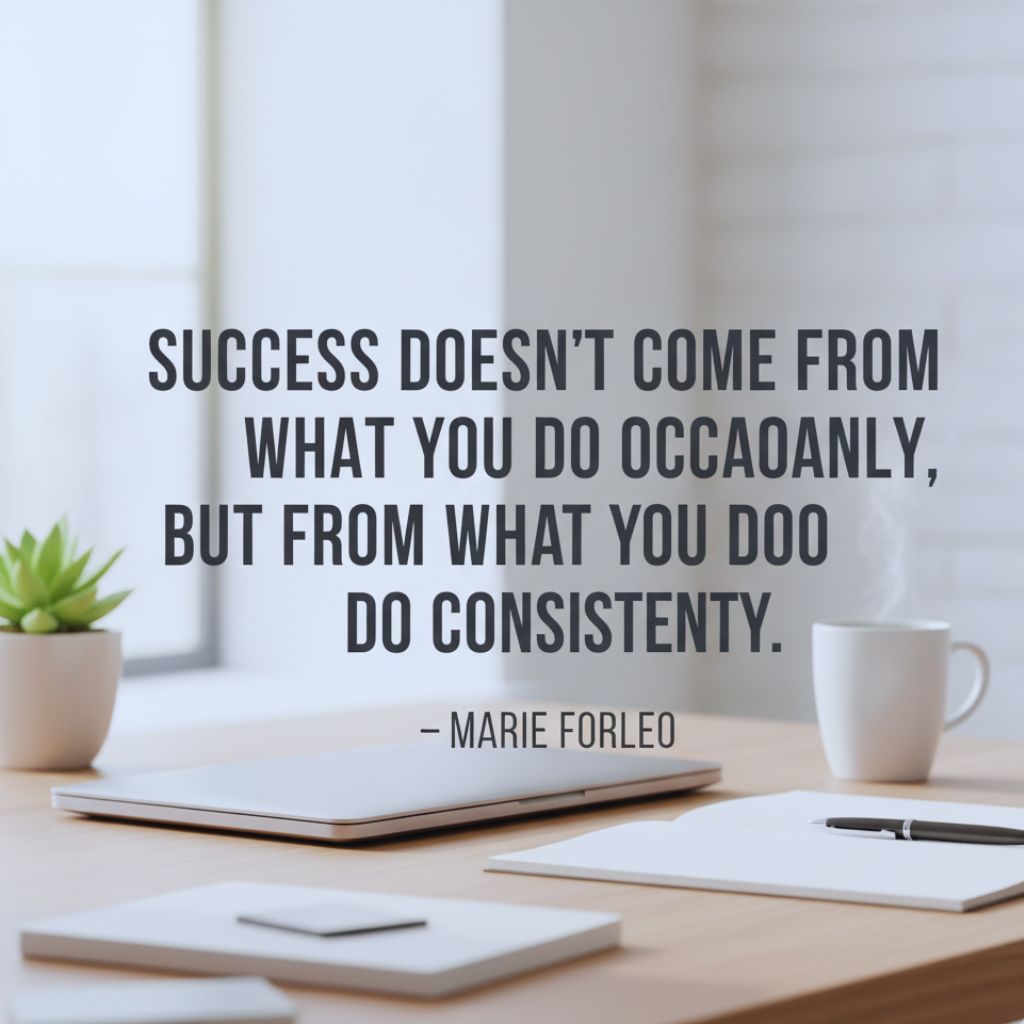
4. “Success doesn’t come from what you do occasionally, but from what you do consistently.” — Marie Forleo

Inspirational consistency quote by Marie Forleo about daily effort.
Show up — even when no one’s watching.

It’s easy to push hard for one week and burn out the next. But real growth happens in the quiet, repetitive effort — when no one’s clapping, and you’re still showing up.

Action Tip: Track your streaks, not just results. Seeing visual progress (like a calendar or habit tracker) keeps your motivation alive.

5. “Don’t compare your beginning to someone else’s middle.” — Jon Acuff

Motivational quote about avoiding comparison and focusing on your own journey.
Stay in your lane. Your pace. Your story.

Comparison is motivation’s worst enemy. The moment you start measuring your progress against others, you forget how far you’ve come.

Action Tip: Focus on your lane. Celebrate small wins — they’re the building blocks of big success.

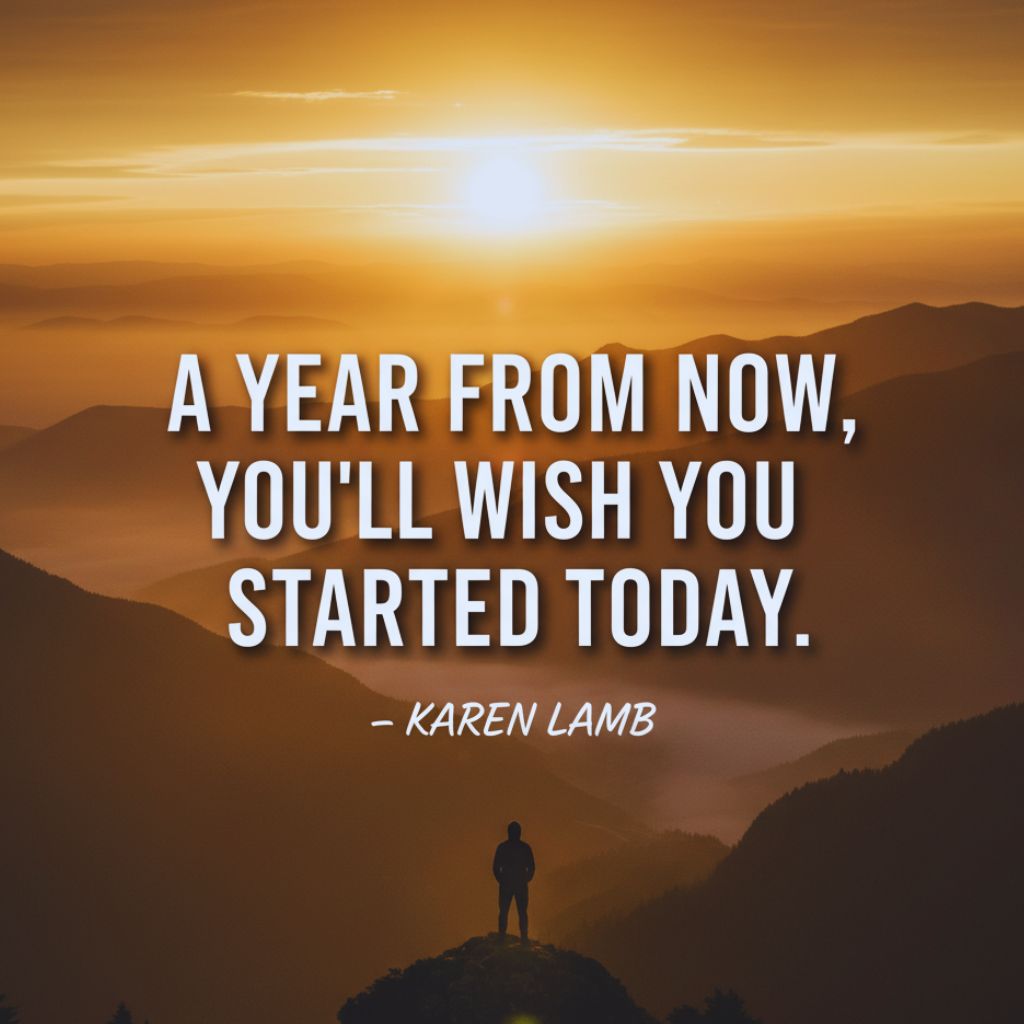
6. “A year from now, you’ll wish you started today.” — Karen Lamb

Motivational quote about starting today with sunrise imagery.
Your future self is cheering for you.

There’s no such thing as the “perfect time.” The truth is, the longer you wait, the further your goals drift away.

Action Tip: Ask yourself, “What’s one thing I can do today my future self will thank me for?” Then do that thing — right now.

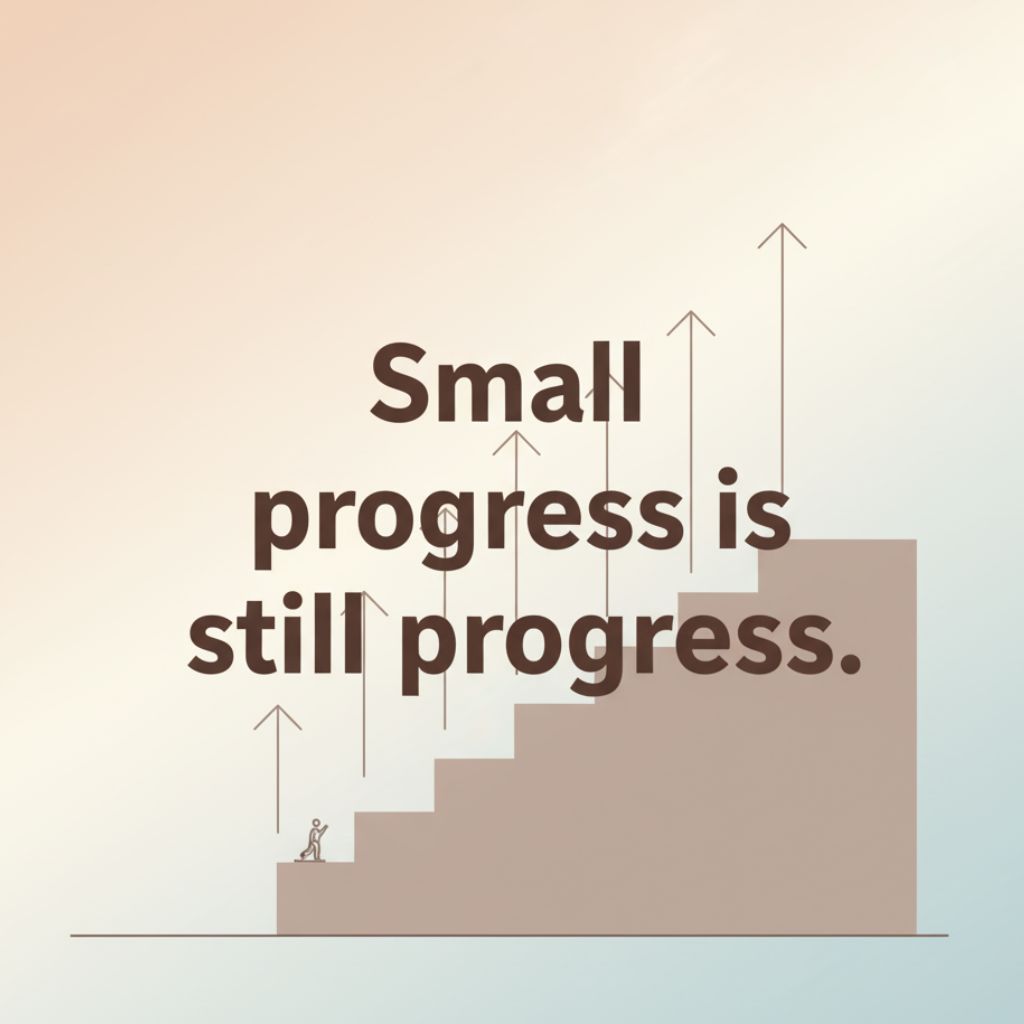
7. “Small progress is still progress.” — Unknown

Inspirational quote about appreciating small progress.
Tiny steps still move you forward.

You won’t always see results right away. But every small action counts — even the ones that seem insignificant.

Action Tip: Keep a success journal. Write down one thing you did well each day. Over time, you’ll realize you’re building momentum.

8. “Motivation gets you started. Habit keeps you going.” — Jim Ryun

Motivational quote by Jim Ryun about habits and motivation.
Habits > Hype

Motivation fades, but habits stick. Once something becomes routine, it stops feeling like effort — and starts feeling like identity.

Action Tip: Attach your habit to an existing one. For example, “After I make coffee, I’ll read one page of my book.” This creates a natural routine.

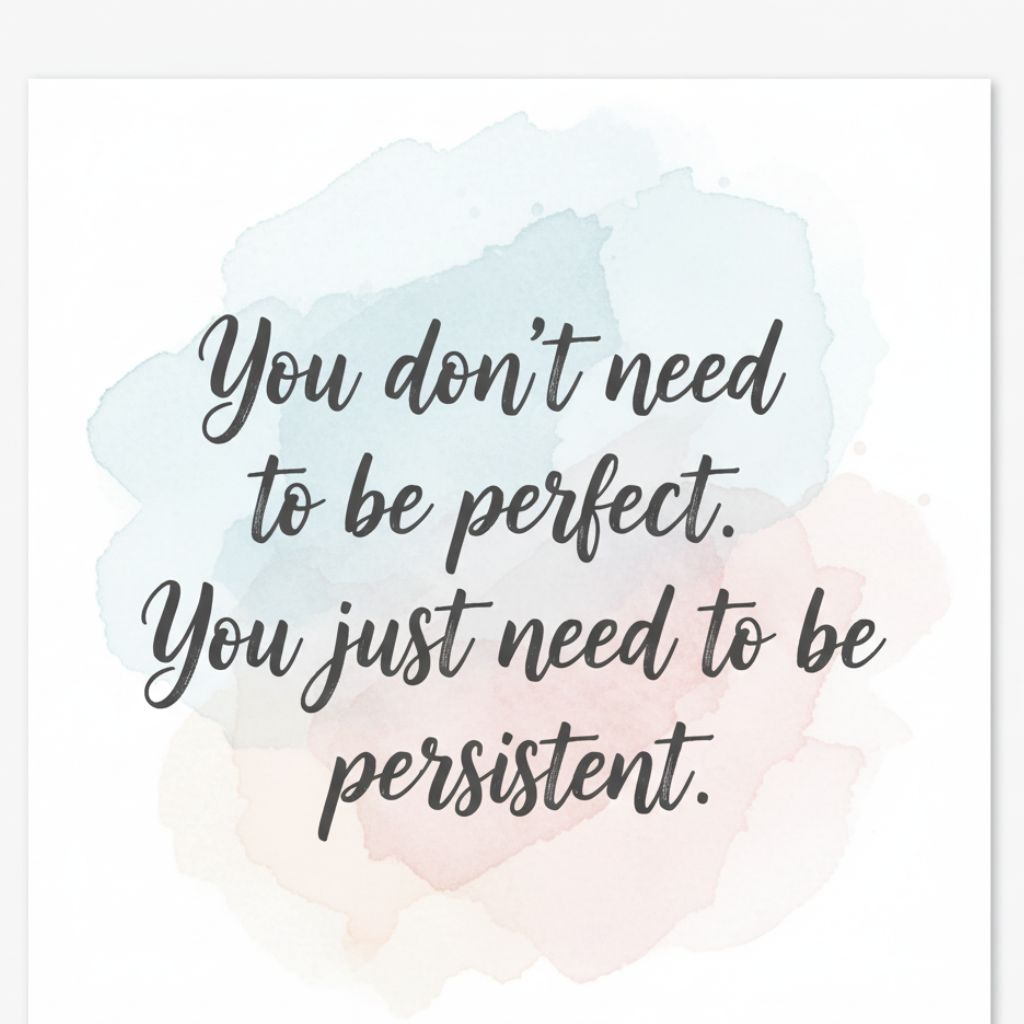
9. “You don’t need to be perfect. You just need to be persistent.” — Unknown

Motivational quote about persistence and imperfect progress.
Progress over perfection — always.

Perfection is a trap that kills momentum. The goal isn’t to do everything flawlessly — it’s to keep going, even when things go wrong.

Action Tip: Embrace “imperfect progress.” Instead of quitting after missing one day, pick right back up the next.

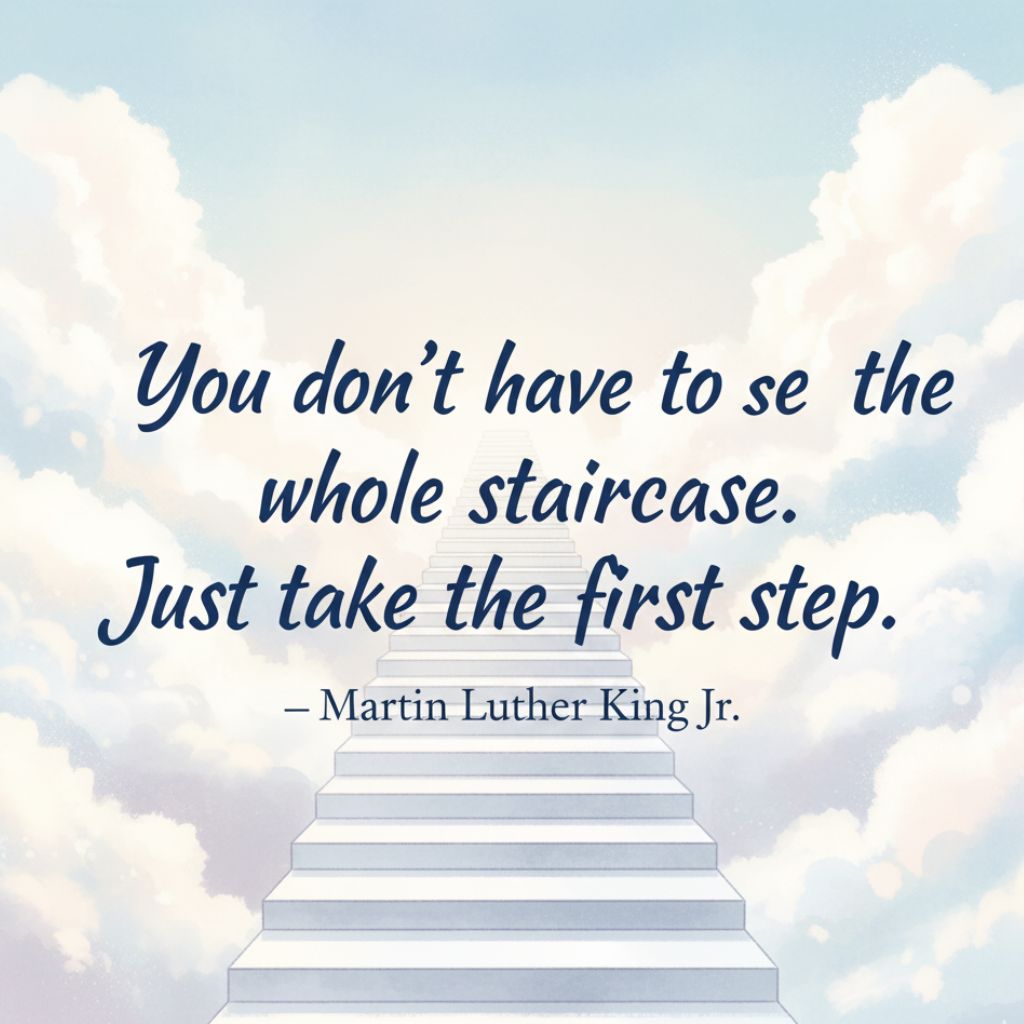
10. “You don’t have to see the whole staircase. Just take the first step.” — Martin Luther King Jr.

Inspirational quote about taking the first step with staircase and sky imagery.
One step today = closer tomorrow.

You don’t need to know exactly how it all unfolds — just trust that each small step leads you closer.

Action Tip: Focus on the next actionable thing, not the entire plan. Overthinking creates fear — action creates clarity.

The Real Secret: Build Systems, Not Just Motivation

Motivation is like Wi-Fi — sometimes strong, sometimes nonexistent. That’s why systems are your best backup plan.

Here’s how to stay consistent even when motivation disappears:

  1. Use the “2-Minute Rule.”
    If a task takes less than two minutes to start, do it now. Starting is the hardest part.
  2. Reward progress.
    Treat yourself for consistency, not perfection. Finished a full week of workouts? Celebrate!
  3. Track your habits visually.
    Seeing a streak grow keeps your brain hooked on success.
  4. Simplify your environment.
    Remove friction — keep your running shoes near the door, or your journal on the nightstand.
  5. Find accountability.
    Tell a friend or share your progress online. External accountability doubles your consistency.

When you build systems around your goals, you don’t rely on “feeling motivated.” You rely on structure — and that’s what creates long-term change.

Motivation Mindset: Think Long Game, Not Quick Fix

Most people quit because they expect instant results. But success isn’t overnight — it’s over time.

Here’s a mindset shift to remember:

  • Your goal is not speed; it’s sustainability.
  • Your goal is not perfection; it’s progress.
  • Your goal is not to finish fast; it’s to keep going.

The most successful people in any field didn’t “feel motivated” every day — they just refused to quit.

Final Thoughts: Motivation Fades, but Momentum Lasts

When you feel unmotivated, remember — you don’t need to move mountains. You just need to move forward.

Motivation might start the fire, but discipline, consistency, and belief keep it burning. Every small choice you make — every time you show up even when you don’t want to — is proof that you’re capable of more than you think.

So, the next time your mind whispers, “I’ll start tomorrow,” answer back:
“No. I’m starting right now.”

Because the only thing standing between you and your goals — is that one small action you choose to take today.

A serene minimalist setup with tea, journal, and soft morning light symbolizing calm and mental peace.

Sometimes life moves too fast. Your mind starts racing, your heart feels heavy, and suddenly, even small tasks feel impossible. We’ve all been there — caught in the storm of stress, worry, and overthinking. But here’s the truth: you are not alone, and you don’t need to have it all figured out right now.

Whether you’re scrolling late at night, feeling anxious before work, or simply need a mental pause — these 20 powerful mental health quotes will bring calm, comfort, and perspective. Think of this as your emotional reset button — a safe space to breathe, reflect, and remind yourself that healing isn’t linear, but it’s always possible.

Why Mental Health Quotes Can Be So Healing

Words have power — especially during moments when your mind feels cluttered. A good quote isn’t just something to read; it’s something to feel.

Here’s why mental health quotes truly help during anxious times:

  1. They validate your emotions.
    You realize your feelings aren’t weird or wrong — they’re human.
  2. They remind you to pause.
    A simple line like “You are enough” can slow your thoughts and bring you back to the present.
  3. They offer perspective.
    Reading someone else’s wisdom reminds you that everything — even this feeling — will pass.
  4. They promote mindfulness.
    Words can anchor you, just like deep breathing or meditation.

So, let’s dive into these quotes designed to soothe anxiety, spark peace, and help you reset mentally right now.

20 Calming Mental Health Quotes for When You Need to Breathe Again

Each quote below is like a gentle reminder from a friend — one that encourages stillness, self-love, and strength. Save the ones that speak to your heart.

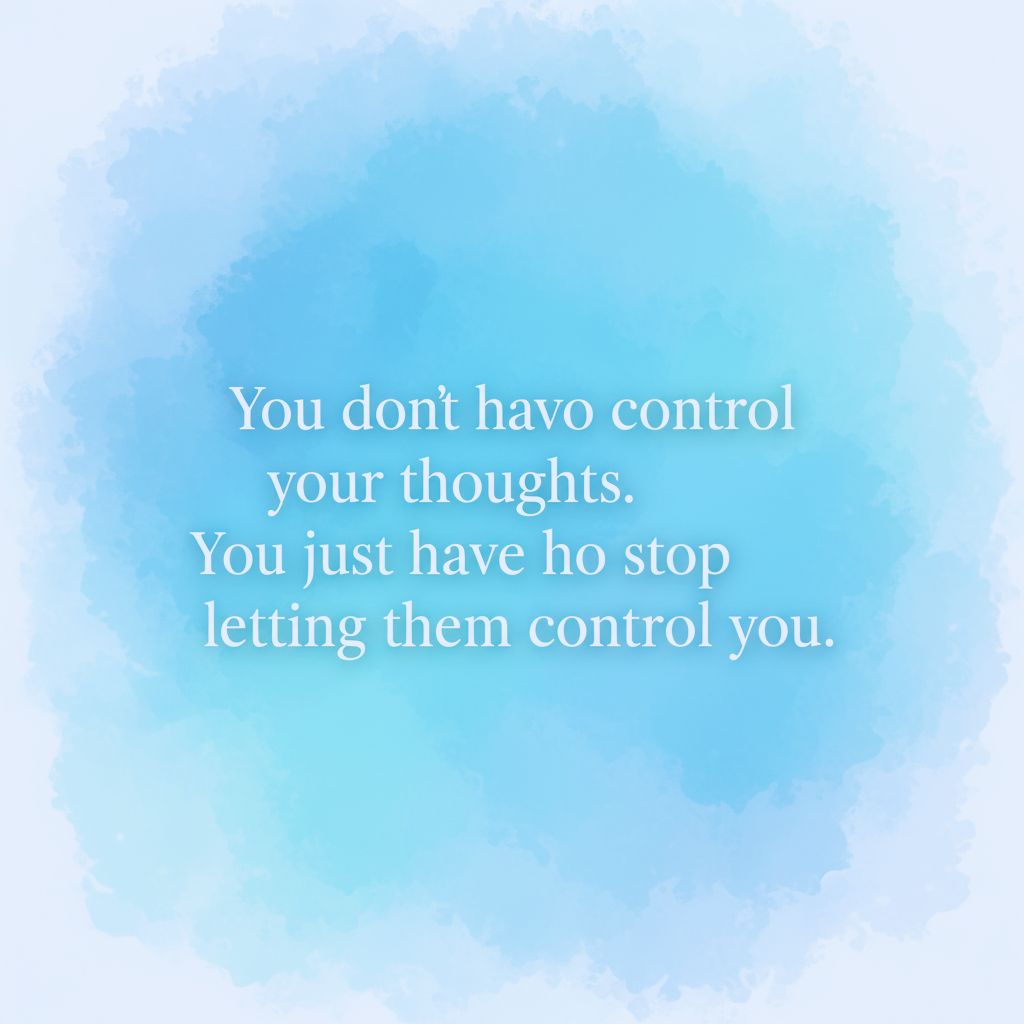
1. “You don’t have to control your thoughts. You just have to stop letting them control you.” — Dan Millman

Minimal blue watercolor quote background encouraging mindfulness.
Stop letting your thoughts run the show — they’re just clouds passing through, not the whole sky.

This quote is a perfect reminder that your thoughts are just thoughts — not facts. Let them pass without judgment.

2. “It’s okay to not be okay. Just don’t give up.” — Unknown

Simple. Honest. Sometimes, acceptance is the first step toward healing.

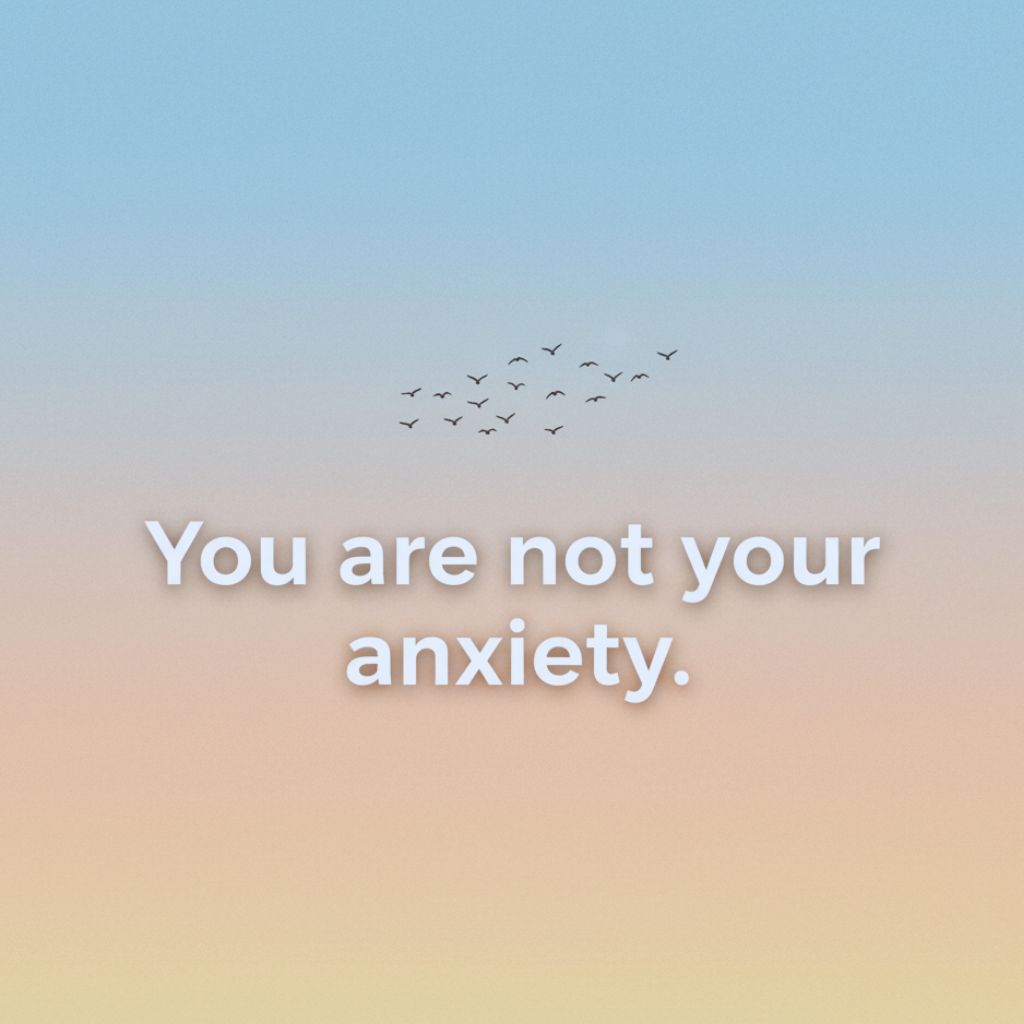
3. “You are not your anxiety.” — Unknown

Peaceful sky with birds and text reminding separation from anxiety.
Your anxiety is not your identity.

Your anxiety is something you experience — not something that defines you.

4. “Nothing can dim the light that shines from within.” — Maya Angelou

Even on your hardest days, that spark of hope inside you never goes out.

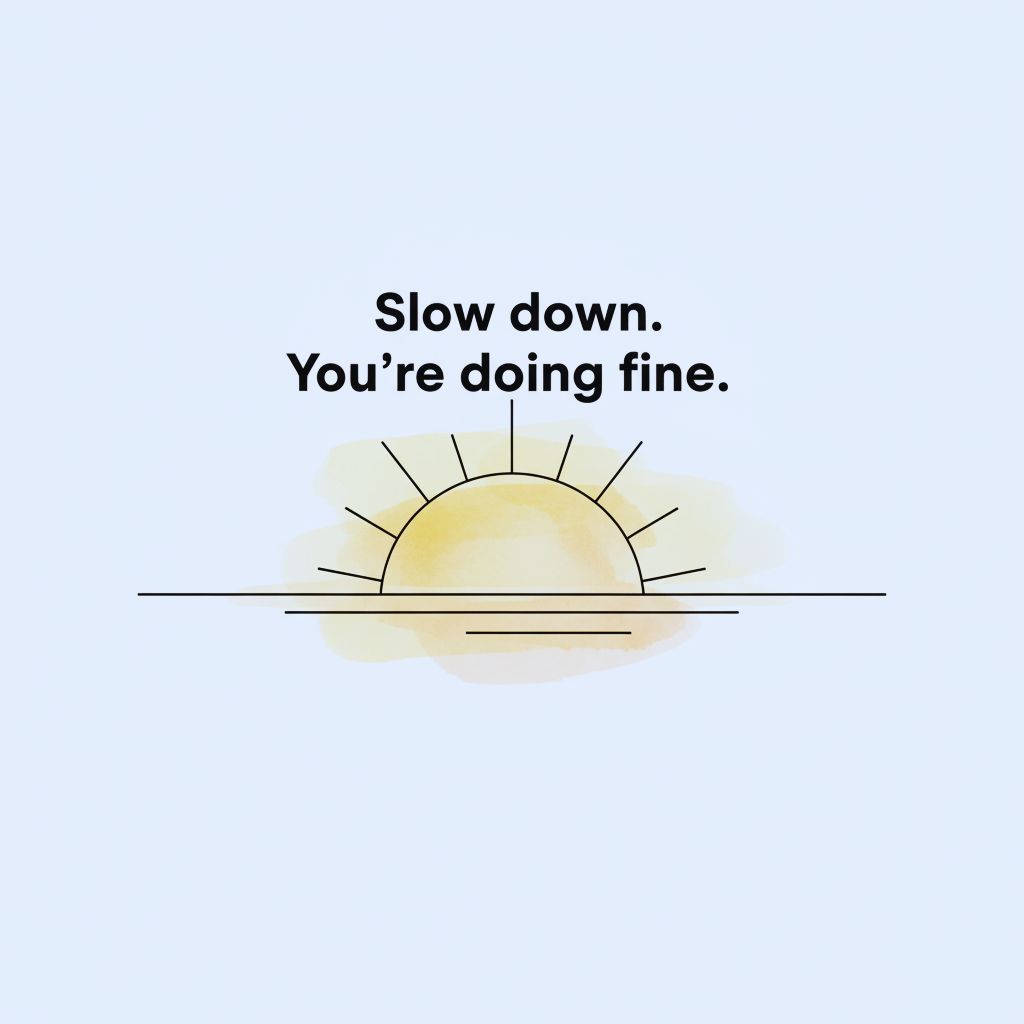
5. “Slow down. You’re doing fine.” — Billy Joel

Calming sunrise art with motivational quote.
Take a breath — you’re exactly where you should be.

Yes, even small progress is still progress. Take a breath.

6. “Give yourself the same grace you’d give to someone you love.” — Unknown

If you wouldn’t speak harshly to a friend in pain, don’t speak that way to yourself.

7. “Your calm mind is the ultimate weapon against your challenges.” — Bryant McGill

Blue wave design representing calm strength.
Stay calm — it’s your strongest power.

Inner peace is power. Protect it fiercely.

8. “Rest is productive.” — Unknown

Resting doesn’t mean giving up — it means recharging so you can rise stronger.

9. “Feelings are just visitors. Let them come and go.” — Mooji

Gentle cloud art symbolizing emotional flow.
Emotions pass. Peace stays.

This gentle truth reminds you: emotions are temporary. Don’t build a home in them.

10. “Healing isn’t about changing who you are. It’s about becoming who you were meant to be.” — Unknown

Every hard day, every setback — it’s shaping you, not breaking you.

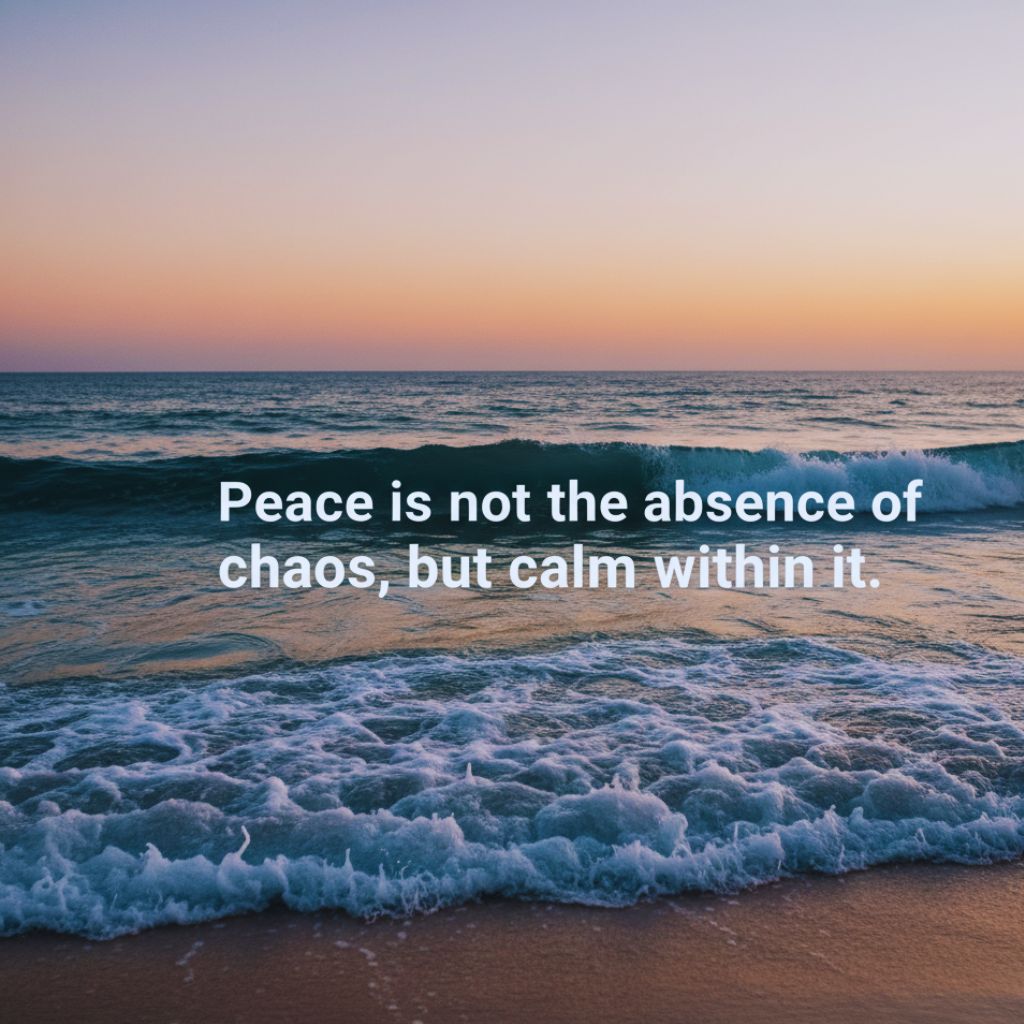
11. “Peace is not the absence of chaos, but the ability to remain calm within it.” — Unknown

Ocean waves with peaceful mindset quote.
Inner peace over outer perfection.

Life doesn’t get easier — you get stronger and more centered.

12. “One small positive thought in the morning can change your whole day.” — Dalai Lama

Start each day with something uplifting — even if it’s just one word: hope.

13. “You owe yourself the love you so freely give to others.” — Unknown

Love yourself the way you love others.

Self-love isn’t selfish; it’s survival.

14. “Be where your feet are.” — Unknown

When anxiety pulls you into the future, ground yourself in the present moment.

15. “You are allowed to take up space, to rest, and to heal.” — Unknown

Calm abstract art affirming rest and self-acceptance.
You belong here, just as you are.

Never feel guilty for needing time to reset or simply breathe.

17. “Healing is not linear.” — Unknown

Some days will feel like setbacks — they’re not. They’re just part of the process.

18. “You survived 100% of your hardest days.” — Unknown

Tunnel-to-light artwork with perseverance quote.
Keep moving — you’re getting there.

Proof that you are stronger than every moment that tried to break you.

19. “The best way out is always through.” — Robert Frost

You can’t bypass the hard stuff. But you can grow through it.

20. “Even the darkest night will end and the sun will rise.” — Victor Hugo

Minimal calming typography reminding to breathe.
Inhale calm. Exhale chaos.

A perfect closing reminder that no storm — emotional or otherwise — lasts forever.

Bonus: Affirmations to Pair with These Quotes

To amplify your calm, try repeating these positive affirmations out loud or in your journal:

  • “I am safe in this moment.”
  • “I release what I cannot control.”
  • “I am learning to trust the process.”
  • “Peace is within me.”
  • “I am enough.”

Repeating affirmations is like training your brain to choose peace — one gentle thought at a time.

How to Use These Quotes in Your Daily Life

Don’t just read — live these quotes. Turn them into small, soothing rituals that remind you to pause and breathe.

Here’s how to make them part of your day:

  • Save them as phone wallpapers. Every unlock = a reminder to stay calm.
  • Print and pin them to your mirror or workspace.
  • Use them as journal prompts. Reflect on what each quote means to you.
  • Share them on Pinterest or Instagram. You never know who else might need them.
  • Turn them into sticky notes for your planner or fridge.

Remember This When Anxiety Hits

It’s easy to feel like you’re losing control when anxiety flares up, but these truths can help ground you:

  • You’re not behind.
  • You’re not broken.
  • You’re not weak for feeling this way.
  • You’re learning, healing, and growing every single day.

Every breath you take in this moment is proof — you’re doing the best you can, and that’s enough.

Final Thoughts: You Deserve Peace

Your worth isn’t measured by your productivity, your emotions, or your ability to “hold it together.”

You deserve peace, rest, and gentle days — even when the world feels loud. These mental health quotes aren’t just for reading; they’re reminders to come home to yourself.

So next time anxiety creeps in, remember:
Take a breath.
You are safe.
You are strong.
And this moment — no matter how heavy — will pass.

A diverse group of people in activewear doing different workouts like yoga, running, and strength training, representing a balanced and positive fitness mindset.

Let’s face it — the phrase “No pain, no gain” has been drilled into our heads for decades. It’s intense, it’s powerful, and for some, it’s motivating. But for many of us, it can feel more like pressure than inspiration. The truth is, fitness doesn’t have to be about punishment or guilt — it should be about empowerment, progress, and joy.

If you’ve ever struggled to stay consistent with your workouts, or felt like skipping a day made you a failure, this article is for you. We’re going beyond “no pain, no gain” to explore 10 powerful fitness quotes that will inspire you to move your body — not because you have to, but because you want to.

Each quote below will help you see fitness in a new light — one that’s built on self-love, balance, and genuine motivation.

1. “Discipline is choosing between what you want now and what you want most.”

Person tying running shoes at sunrise, representing focus and consistency in fitness.
showing up even when it’s hard.

This quote perfectly sums up the heart of sustainable fitness motivation. You don’t need to push yourself to exhaustion — you just need consistency.

When you choose a short-term comfort (like skipping a workout or staying in bed), you trade away a long-term reward (better health, confidence, and strength). But when you train your mind to focus on what you truly want most — a strong, capable body — discipline becomes natural, not forced.

Fitness tip: Instead of overtraining, focus on consistency over intensity. A 20-minute workout five times a week beats one brutal session followed by burnout.

2. “Your body can stand almost anything. It’s your mind you have to convince.”

Focused athlete pushing through an intense workout, symbolizing mental strength.
your mind just needs proof.

This one hits deep. The hardest part of fitness isn’t the physical act of lifting weights or running a mile — it’s getting started.

Your mind will always come up with excuses: “I’m tired.” “I’ll start tomorrow.” “It’s too late.” But when you realize that your body is capable of more than you think, you unlock a whole new level of strength.

Mindset shift: Every time you work out, you’re not just training your muscles — you’re training your mind to overcome resistance. That’s true progress.

3. “Movement is a celebration, not a punishment.”

Group of people joyfully dancing or doing yoga outdoors, celebrating movement.
“Move because it feels good — not because you have to.”

Forget “burning calories” or “earning your food.” Exercise isn’t about guilt — it’s about gratitude.

Your body lets you move, stretch, jump, and breathe. It carries you through life. So rather than punishing it for not being perfect, celebrate it for what it can do.
Fitness philosophy: Choose workouts that make you happy — whether it’s yoga, dancing, cycling, or walking. The best workout is the one that feels joyful, not dreadful.

4. “Progress, not perfection.”

Smiling person recording workout progress, focusing on small achievements.
“Perfection fades — progress lasts.”

This quote might sound simple, but it’s one of the most powerful principles in fitness and personal growth.

You don’t need to have a perfect workout routine or eat perfectly clean every day. Progress is about showing up — even when you’re not in the mood, even when life gets messy.

Pro tip: Track your progress in small wins — like how many reps you added, how much better you feel, or how long you stuck with your routine. These micro victories are what create lasting change.

5. “You don’t have to go fast. You just have to go.”

Person jogging slowly at sunrise in a park, symbolizing steady fitness progress.
“Every step counts — forward is forward.”

When it comes to fitness, comparison kills consistency. It doesn’t matter how fast or strong someone else is — what matters is that you’re moving forward.

Whether you’re jogging at a snail’s pace, lifting light weights, or doing five pushups — it all counts. Fitness isn’t a race; it’s a lifelong relationship with your body.

Motivational reminder: Every rep, every walk, every stretch is progress. Don’t underestimate the power of simply showing up.

6. “Rest is part of the process.”

Person doing gentle yoga at home, promoting mindful and balanced exercise.
“Fitness should empower you — not exhaust you.”

In the fitness world, rest is often overlooked — but it’s just as important as the workout itself. Your body grows stronger during recovery, not during exhaustion.

Burnout, injuries, and fatigue all come from ignoring the body’s signals. True strength comes from listening — not just pushing.

Wellness advice: Schedule rest days. Get quality sleep. Stretch, hydrate, and let your body heal. That’s how real athletes build endurance — through balance, not burnout.

7. “Strive for progress that feels good, not pressure that hurts.”

Person doing gentle yoga at home, promoting mindful and balanced exercise.
“Fitness should empower you — not exhaust you.”

Modern fitness culture sometimes glorifies extremes — “go hard or go home,” “push till you drop.” But this quote flips that script beautifully.

You should feel empowered, not punished by your fitness routine. Workouts that leave you energized and proud are far more effective than those that leave you sore and defeated.

Practical tip: Create a workout plan based on how you want to feel, not just how you want to look. Confidence and energy are results, too.

8.“Strong looks different on everyone.”

Diverse individuals showing different forms of strength through various exercises.
“Strength isn’t one look — it’s your unique power.”

There’s no single definition of “fit.” Strength comes in many forms — physical, emotional, and mental.

For some, it’s running marathons; for others, it’s lifting weights, mastering yoga, or recovering from burnout. Don’t let social media’s idea of fitness define yours.

Body-positive reminder: Celebrate your unique journey. Whether you’re building endurance, flexibility, or mental resilience, you’re getting stronger every day — in your own way.

9. “Small steps every day lead to big results.”

Workout planner with checkmarks and water bottle, representing consistent daily effort.
“Tiny habits build unstoppable results.”

One of the biggest reasons people quit their fitness goals is impatience. We live in a world of instant results, but real transformation takes time.

Think of fitness like planting a tree — you water it daily, and one day, you’ll be amazed by how far it’s grown.
Long-term mindset: Instead of obsessing over the mirror, focus on daily habits — drinking water, moving your body, getting enough sleep, and staying consistent. These small steps compound into lasting success.

10. “You’re one workout away from a better mood.”

Person smiling while working out, showing the mood-boosting benefits of exercise.
“Move your body, lift your mood.”

Fitness isn’t just about looking good — it’s about feeling good. Science backs this up: exercise releases endorphins, reduces stress, and boosts mental clarity.

Whenever you feel low, anxious, or unmotivated, remind yourself that one short workout can shift your entire mood. It’s not punishment — it’s medicine for your mind.

Mood boost tip: On tough days, don’t chase intensity. Go for a gentle walk, stretch, or dance to your favorite song. Movement is therapy.

The New Fitness Mindset: Kindness Over Criticism

The era of guilt-driven fitness is over. Today, the best athletes, coaches, and health experts agree that self-compassion drives long-term success.

Working out should never be about hating your body — it should be about honoring it. When you move from a place of love, everything changes. You stop fighting your body and start working with it.

So next time you lace up your shoes, remember — you don’t have to push harder, lift heavier, or sweat more than anyone else. You just have to show up with intention and care.

Final Thoughts: Beyond “No Pain, No Gain”

The truth is, you don’t need pain to make progress. You just need passion, patience, and persistence.

Fitness isn’t about punishing yourself — it’s about becoming the strongest version of yourself, inside and out.

When you move from love, your workouts stop being chores and start being celebrations. You’ll no longer dread the gym or feel guilty for resting — you’ll see every moment as part of your growth.

So go ahead — move your body today, not because you have to, but because it deserves it.

Because beyond “No Pain, No Gain” lies the real secret to fitness: joy, balance, and freedom.

Flat lay of art therapy supplies and completed prompts, including abstract drawings, collage, painting, calm sketches, and a gratitude garden, set on a cozy, well-lit table.

In today’s fast-paced world, it’s easy to feel overwhelmed. Deadlines, social pressures, uncertainty — they all pile up and leave us mentally exhausted. But what if the secret to reducing anxiety and stress wasn’t another pill or productivity hack… but simply picking up a pencil, paintbrush, or even a crayon?

Welcome to the soothing world of art therapy — a creative, evidence-based practice that helps you express emotions, quiet your mind, and rediscover inner peace.

Whether you’re an artist or haven’t touched a paintbrush since childhood, these 5 simple art therapy prompts are designed to help you release stress, reduce anxiety, and reconnect with yourself — right from where you are.

What Is Art Therapy?

Art therapy is the process of using creative expression — such as drawing, painting, collage, or sculpting — to explore emotions, relieve stress, and enhance self-awareness.

You don’t need to be “good at art” to benefit. The goal isn’t to make something perfect; it’s to make something honest.

When you create art, you access parts of your brain that words can’t reach. Colors, shapes, and textures become a language for emotions that are often difficult to express verbally.

Benefits of art therapy include:

  • Reduces anxiety and promotes relaxation
  • Helps process emotions safely
  • Boosts mood and creativity
  • Improves focus and mindfulness
  • Enhances emotional resilience

It’s not about talent — it’s about healing through creativity.

Why Art Therapy Works for Anxiety & Stress

Art therapy works because it shifts your focus away from stressors and into a state of mindful flow — similar to meditation.

When you’re creating:

  • Your breathing slows down.
  • Your thoughts become quieter.
  • Your body releases tension.
  • Your mind enters the “present moment.”

Essentially, art therapy transforms overwhelming emotions into visual form, allowing you to see them, understand them, and let them go.

Whether you draw with markers or sculpt with clay, the process becomes a gentle form of emotional release — one that’s grounding, comforting, and deeply personal.

How to Begin Your Art Therapy Practice

You don’t need expensive materials or special skills. Just grab what you have — pens, colored pencils, markers, watercolors, or even a notebook.

Here are a few tips before you start:

  • Create a safe space: Sit somewhere calm and comfortable.
  • Set an intention: “I want to release stress,” or “I want to feel peace.”
  • Let go of judgment: There’s no right or wrong way to create.
  • Focus on the process, not the result.

Now, let’s explore the 5 simple art therapy prompts that can help you find relief and reconnect with your inner calm.

1. Draw Your Emotions

Abstract colorful drawings on a sheet of paper with markers and colored pencils nearby, representing emotions.
“Externalize your feelings with color and shape — let your emotions flow freely onto paper.”

This is one of the simplest yet most powerful art therapy activities for stress relief.

How to do it:

  • Take a blank sheet of paper.
  • Choose a color that represents how you feel right now — anxious, sad, tired, hopeful, or peaceful.
  • Begin drawing abstract shapes, lines, or patterns that express that emotion.

You don’t need to draw anything specific — let your hand move freely. Maybe your anxiety looks like sharp zigzags, or your sadness feels like flowing blue waves.

Why it helps:
Translating your emotions into colors and shapes helps your brain externalize them — so they no longer stay trapped inside. It’s a form of emotional detox.

Pro Tip: After finishing, take a moment to look at your artwork and ask yourself, “What does this emotion want me to know?” The answers might surprise you.

2. Create a Safe Place Collage

A mixed-media collage with nature images, cozy interiors, and calming words on a poster board with art supplies nearby.
“Build your visual sanctuary — a safe place collage to calm your mind whenever anxiety strikes.”

When anxiety strikes, it often feels like there’s no escape. This art therapy prompt for anxiety helps you create a visual sanctuary — a place of calm you can return to anytime.

How to do it:

  • Gather magazines, photos, or printouts of images that make you feel peaceful (nature, cozy rooms, oceans, etc.).
  • Cut them out and glue them onto a blank page or poster board.
  • Add colors, doodles, or words that describe calmness — “breathe,” “peace,” “stillness.”

Why it helps:
By visually creating your safe space, you’re teaching your brain to recognize what calm looks and feels like. Every time you feel anxious, you can look at your collage to ground yourself.

Optional twist:
Draw or paint your own safe space — real or imagined — and fill it with soothing colors.

3. The “Letting Go” Painting

Abstract painting covering scribbled words with bright colors on a canvas, surrounded by paintbrushes and paints.
“Release stress and transform your worries into vibrant colors — a painting for letting go.”

If stress feels like it’s weighing you down, this art prompt is about release and renewal.

How to do it:

  • Write or scribble stressful words, thoughts, or worries onto a piece of paper.
  • Now, paint or draw over them.
  • Use bright, healing colors — blues, greens, pinks, or golds — to completely cover the words.

As you paint, imagine your stress dissolving into the colors, becoming lighter and softer.

Why it helps:
This exercise is both symbolic and psychological. You’re literally painting over your stress, signaling to your mind that you’re ready to move forward.

Bonus tip:
If you prefer digital art, try this in a drawing app — use layers to write and then paint over your thoughts. The act of covering and transforming still works beautifully.

4. Draw Your Inner Calm

Pastel drawing of waves, feathers, and sunlight on paper, symbolizing inner calm, with cozy surroundings.
“Visualize serenity — draw your inner calm and let tranquility take shape on paper.”

This art therapy prompt for relaxation invites you to explore what peace looks like to you.

How to do it:

  • Close your eyes and take three deep breaths.
  • Imagine a place, color, or image that feels peaceful.
  • Open your eyes and draw it — without worrying about accuracy.

Maybe your calm looks like gentle waves, floating feathers, or sunlight through trees. There’s no wrong answer — this is your version of tranquility.

Why it helps:
By visually representing calmness, you’re reinforcing it in your mind. The more you revisit this image, the stronger your sense of inner peace becomes.

Try this: Hang your drawing somewhere visible as a reminder to breathe and slow down.

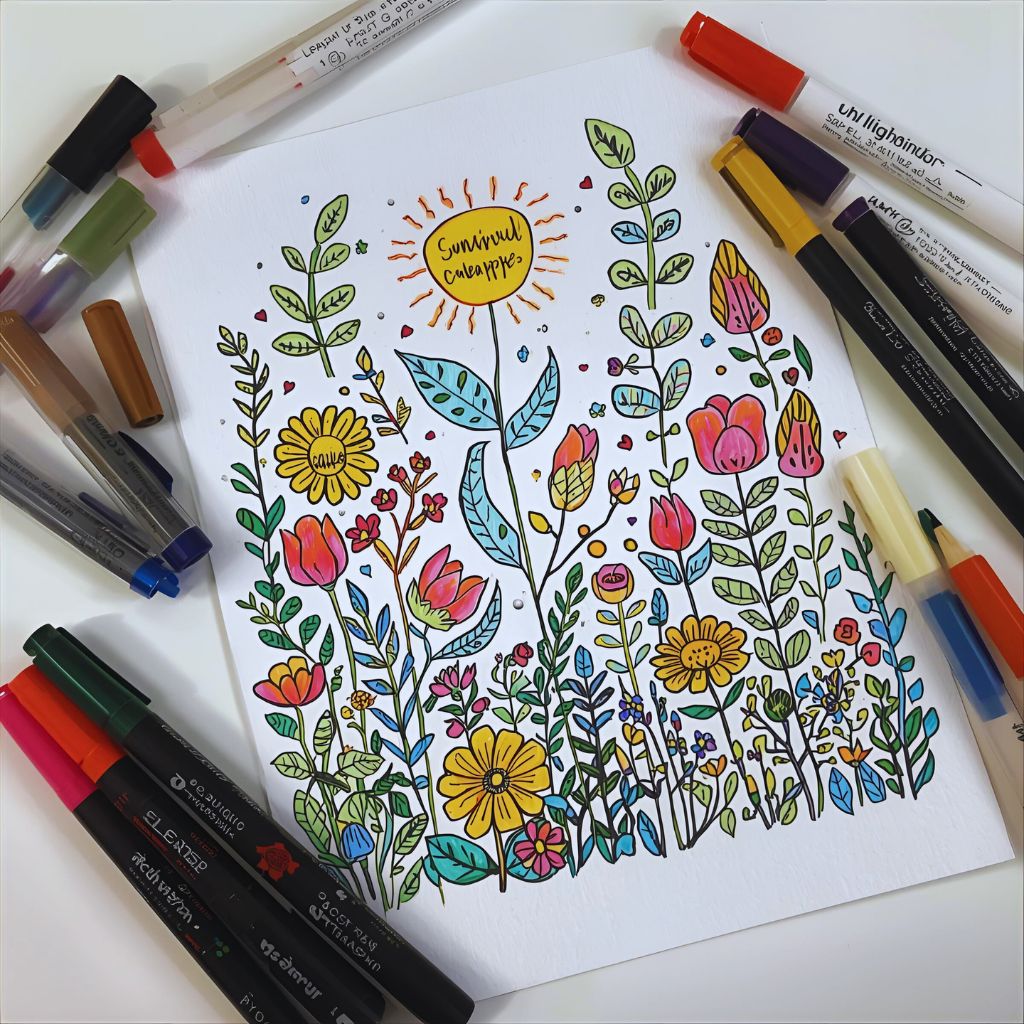
5. “Gratitude Garden” Drawing

Hand-drawn garden with flowers and leaves, each labeled with things the artist is grateful for, surrounded by markers.
“Grow positivity with a gratitude garden — visually celebrate the people and things that bring joy.”

Gratitude is one of the most powerful antidotes to stress and anxiety. This prompt combines mindfulness with creative expression.

How to do it:

  • Draw a garden or tree.
  • Inside each flower, leaf, or branch, write something or someone you’re grateful for.
  • Add colors and patterns that bring you joy.

It could be simple things — morning sunlight, your pet, your favorite song, or the smell of coffee.

Why it helps:
Practicing gratitude visually rewires your brain toward positivity. It helps you shift focus from what’s wrong to what’s right — creating a sense of balance and peace.

Pro tip: Make this a weekly ritual. Add a new flower or leaf every time you feel thankful for something new.

The Healing Power of Creative Expression

Art therapy is more than just drawing — it’s a way of understanding yourself without words. It connects you to your emotions, grounds your energy, and gives you permission to just be.

You don’t need perfection — you need presence.

Every stroke, every color, every tear or smile during the process matters. That’s where healing begins.

The next time anxiety or stress feels heavy, remember this:

You don’t have to fight your feelings — you can paint them, draw them, or color them into peace.

Final Thoughts

Whether you spend 5 minutes or an hour, these art therapy prompts for anxiety and stress relief can become your creative sanctuary — a space where your mind can breathe and your heart can rest.

So grab your colors, put on some soft music, and let your hands speak for your soul. The beauty you create will not just be on paper — it will be within you.

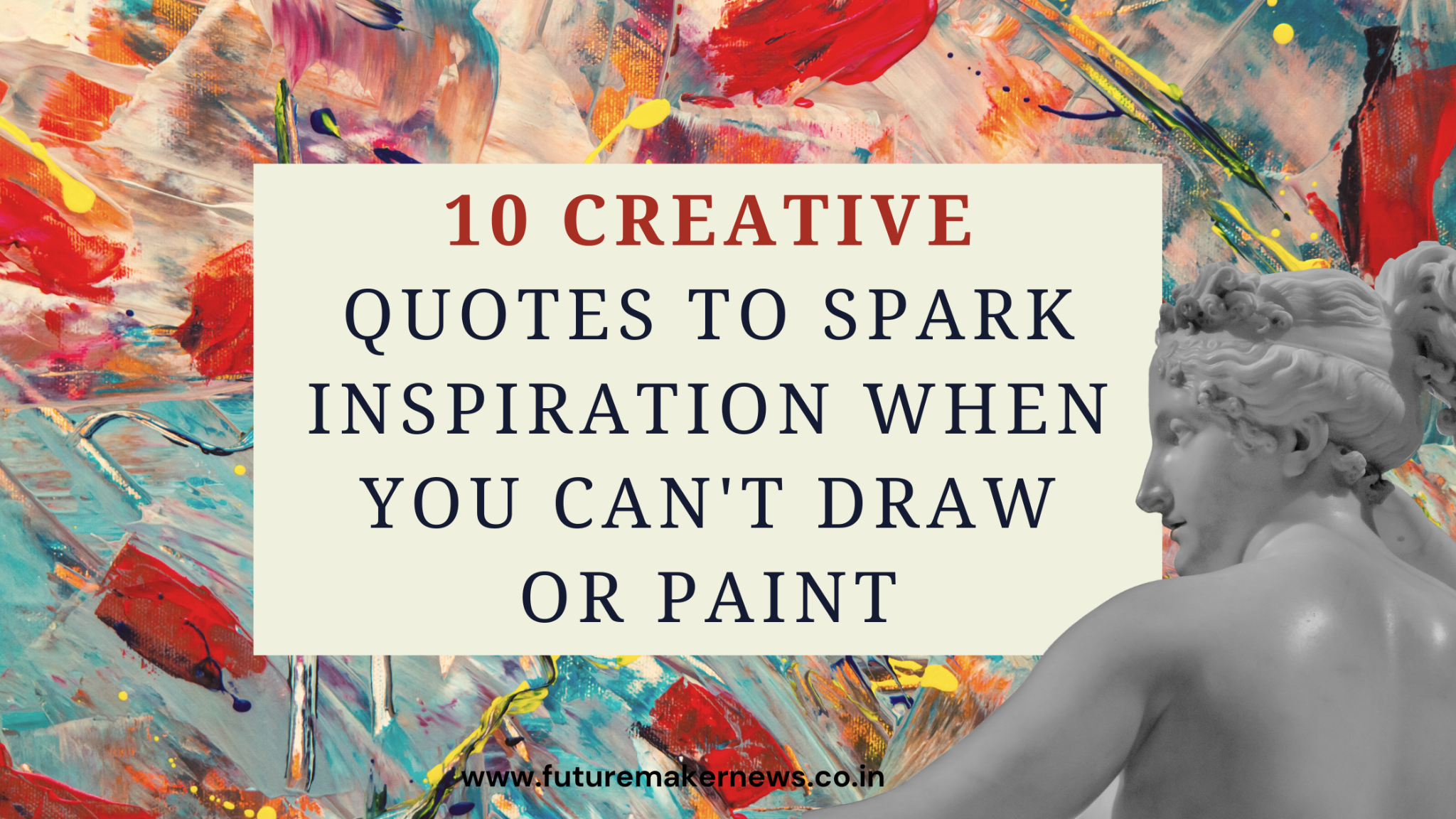
Abstract colorful paint strokes with text “10 Creative Quotes to Spark Inspiration When You Can’t Draw or Paint” and a classical statue on the right side.

We’ve all been there — blank page staring us down, pencil suspended mid-air, asking “why can’t I paint or draw like I used to?” That internalized panic creeps in, telling us maybe the spark’s fizzled. But here’s a truth: you’re not broken — you’re paused.

All artists experience that strange creative haze. It has nothing to do with skill, and everything to do with being disconnected from your curiosity. So, this isn’t another “10 inspirational quotes to get you going” list. Consider it a gentle prod from one artist to another — words that genuinely assist you in overcoming creative block and kindling your artistic flame when your hands just won’t go.

Let’s take a breath, get ourselves a coffee (or a brush), and begin small.

“Inspiration exists, but it has to find you working.” – Pablo Picasso

    Even Picasso understood: inspiration waits like rain in the time of drought. It arrives after you show up.

    Personal Take: Some of my finest sketches were born out of random doodles that began badly. The magic occurred in mid-process, not prior to when I started.

    Actionable Takeaway: Begin drawing poorly on purpose. Blurry lines, no pressure — just move your hand. That’s how you overcome art block.

    “You can’t use up creativity. The more you use, the more you have.” – Maya Angelou

    Creativity is not a gas tank; it is a muscle. The more you stretch it, the more powerful it is.

    Personal Take: There were weeks that I pushed myself to paint every day, even small color swatches. By the end, ideas began flowing again — not because I was inspired, but because I kept coming back.

    Actionable Takeaway: Create a five-minute rule. Draw something for five minutes a day. The secret is consistency, not quality.

    “Art is not what you see, but what you make others see.” – Edgar Degas

    When you get stuck, it’s because you’re too concerned with perfection — not expression.

    Personal Take: I used to throw away entire paintings because they didn’t look like my reference. When I began painting emotion rather than accuracy, my paintings came to life again.

    Actionable Takeaway: Don’t care about the result. Paint something for how it feels rather than for how it looks. It’s the cheat code to inspiration for artist block.

    “The worst enemy to creativity is self-doubt.” – Sylvia Plath

    That voice in your head? The one telling you your art is not good enough? That’s not honesty — it’s fear masquerading as logic.

    Personal Take: I’d hold back posting my work online because I didn’t feel it was “professional.” The second I did, I realized we’re all just winging it too.

    Actionable Takeaway: Publish or post your work-in-progress today. Better is the enemy of good — for you and your fans.

    “Every artist was first an amateur.” – Ralph Waldo Emerson

    We tend to forget that even icons were rough starters. Each masterpiece begins as a wobbly line.

    Personal Take: When I dug out my old sketchbooks, I saw how far I’d gotten — but only because I hadn’t stopped when things were ugly.

    Actionable Takeaway: Look through your oldest artwork. Recreate one of them today. It’s the quickest way to re-ignite your creative passion.

    “Creativity takes courage.” – Henri Matisse

    It takes bravery to create something out of nothing. The world doesn’t reward with applause for effort, but you must continue to do it anyway.

    Personal Take: Once I wasted weeks fearful of beginning a large painting. When I finally began, I understood the fear disappeared only after I had done the thing.
    Actionable Takeaway: Select one idea you’ve been fearful to begin — and just begin. Even a test of color is worth it. That’s how you overcome creative stasis.

    “The greater the artist, the greater the doubt.” – Robert Hughes

    If you’re doubting your work, well done — you’re developing. Doubt is a sign that standards are increasing.

    Personal Take: I came to understand my “bad” drawings weren’t bad; they were simply beyond my technical ability. That disparity compelled me to learn more.

    Actionable Takeaway: The next time you feel frustrated, learn something new — lighting, anatomy, composition. Doubt is your signal to learn, not quit.

    “Don’t think about making art, just get it done.” – Andy Warhol

    Overthinking kills creativity faster than any lack of skill ever could.

    Personal Take: I used to over-plan every painting — color palette, brush size, everything. Now, I pick one constraint (like only 3 colors) and just go.

    Actionable Takeaway: Set a timer for 15 minutes and paint without judgment. No erasing, no undo. Just flow. That’s real creative slump help.

    “The object isn’t to make art, it’s to be in that wonderful state which makes art inevitable.” – Robert Henri

    Art happens when you’re connected — not to your tools, but to your curiosity.

    Personal Take: At times my finest ideas did not occur during painting, but while strolling, cooking, or even cleansing my brushes.

    Actionable Takeaway: Walk away from your workspace. Engage in something mundane and soothing — your mind will begin to draw out ideas in the background.

    “Every child is an artist. The problem is how to remain one once we grow up.” – Pablo Picasso

    That bold, risk-taking you — the one who cared not for perspective or likes — is still present. You just entombed them in “shoulds.”

    Personal Take: I once colored with my niece — crayons everywhere, no plan. I left that day more creatively charged than from any online tutorial.

    Actionable Takeaway: Get out the crayons, the fingers, or the markers and revisit your inner child. Art isn’t ever supposed to be “good” — just you.

    When “Stuck” Is More Than Just Art

    There are times when the block has nothing to do with art. It’s burnout, comparison, or exhaustion masquerading as creativity. In those moments, what you really need isn’t more drawing — it’s rest, play, and a little inner nurturing.

    You can explore more on mental rest and emotional recharge here:
    [ LINK TO MENTAL HEALING/WELLNESS BLOG POST HERE]

    Final Brushstroke

    Feeling blocked doesn’t mean you’ve lost your creativity — it just means your mind’s asking for a different kind of attention. Try one quote, one idea, one sketch. Don’t aim to be inspired; aim to show up.

    Now it’s your turn — which quote resonated with you? Leave it in the comments and let’s remind ourselves that the blank page isn’t intimidating… it’s waiting for us to put the first mark on it

    Illustration of a person standing near a car at sunset with text “Overthinking? 10 Soothing Quotes to Center You When Your Brain is Spinning.”

    You recognize the sensation.
    It’s late at night, the house is still, and yet your mind is as awake as it is wired — racing marathons through what happened or what may never occur. The “what-ifs,” the “should-haves,” the whole mental merry-go-round just refuses to slow down.

    I’ve lost count of how many times I’ve been there.
    Lying in bed, gazing up at the ceiling, replaying arguments that ended hours before. My body is tired, but my mind? They’re hosting an all-night conference.

    What I’ve picked up on over the years is that there are times when you don’t need to struggle against your thoughts — you just need to find a pause long enough to catch your breath.
    And of all the gentle ways to do that, one of them is through words. Not forced mantras or affirmations, but simple, earthy truths that remind you to return to now.

    And so here are ten quotations that serve as soft brakes — little anchors to calm your frantic thoughts, reboot your brain from fear, and silence that inner critic that never seems to sleep.

    The Anchor: 10 Quotes to Silence Your Inner Critic

    “You must live in the present, launch yourself on every wave, find your eternity in each moment.”

    — Henry David Thoreau

    Each time I read this, it is like taking a deep breath.
    You don’t have to manage tomorrow or repair yesterday. Just take this one wave. That’s how to immediately bring yourself back to earth — by returning to where your feet are.

    “I’ve had a lot of worries in my life, most of which never happened.”

    — Mark Twain

    This one hurts because it’s true.
    We construct whole catastrophe films in our minds, and 99% of them never make it to the cinema of real life. Take this to heart when you find yourself spiraling — it’s how you end the mental carousel before it spins around again.

    “Feelings come and go like clouds in a windy sky. Conscious breathing is my anchor.”

    — Thích Nhất Hạnh

    When I feel the anxiety start to rise, I return to my breath.
    It’s not about fleeing the storm; it’s about knowing you’re the sky, not the cloud. Take a few deep inhales, and you’ll sense it — that quiet calm that starts to settle my racing mind.

    “You are not your mind.”

    — Eckhart Tolle

    This quote revolutionized my life.
    There’s a point when you catch your thoughts instead of being overwhelmed by them — and all of a sudden, you’re liberated. This is the most peaceful means of silencing the inner critic: by understanding it’s not really you speaking.

    “The most difficult thing is the decision to act; the rest is merely tenacity.”

    — Amelia Earhart

    Excessive thinking usually masquerades as preparation.
    But occasionally the best exit from fretting is through action — one tiny, gentle step in a new direction. That’s the easy mental adjustment for fretting: doing instead of cogitating endlessly.

    “Attachment is the root of suffering.”

    — Buddha

    Each time I cling too hard — to schedules, to people, to results — my worries constrict along with them.
    When I release my hold, peace returns. This is the most authentic way to restore brain from fear — by letting go of what you can’t control.

    “Do not be satisfied with the stories that come before you. Unfold your own myth.”

    — Rumi

    Rumi reminds me always to be kind to myself.
    It’s fine that you’re still learning to live slower, softer. Self-kindness isn’t excess — it’s the source of strength. That’s how to ground yourself in an instant when life gets too loud.

    “You gain strength, courage, and confidence by every experience in which you really stop to look fear in the face.”

    — Eleanor Roosevelt

    At times, I reread this on the days my fear is louder than logic.
    Every time you decide to breathe through it rather than fleeing, you deepen your roots. That’s how you end the mental merry-go-round — not by sidestepping fear, but by acquainting yourself with it.

    “If you can’t feed a hundred people, feed just one.”

    — Mother Teresa

    When the world gets too big, begin small.
    Send a text, water a plant, breathe once. Small, actual things ground you back to earth. They soothe my frantic thoughts quicker than any elaborate scheme ever could.

    “When I let go of what I am, I become what I might be.”

    — Lao Tzu

    This one is like a slow breath.
    It’s a reminder that peace doesn’t come from control — it comes from surrender. The next time your brain won’t stop listing what-ifs, quiet the inner critic by whispering: “I’m allowed to let go.”

    How to Use These Anchors

    Here’s something simple I started doing last year:
    I stuck my favorite quote on a Post-it note and placed it on my computer. Whenever my mind begins to spin, I look at it — a little reminder to switch channels.

    That’s basically the idea. You’re not shutting off your thoughts. You’re simply redirecting them gently — like turning down the volume when a song turns too loud.
    It’s an easy mind flip for anxiety: rather than “How do I prevent thinking?” try “What thought do I wish to water?”

    You may even take a photo of one quote and set it as your phone background, or begin your day by reading one aloud. It’s amazing how some real-word sentences can flip your entire mood.

    Your Mind Deserves Quiet

    Serene night landscape with a full moon reflecting over a calm lake and palm trees in the distance.
    The night doesn’t overthink. It just reflects.

    Overthinking is not a weakness; it’s simply your brain attempting a little too hard to guard you.
    You may thank it — and then instruct it to rest.

    Even if all feels knotted up and noisy, keep in mind: you always possess an anchor. A break. A breath. A passage that waits quietly for you to return to it.

    So, take a deep breath.
    Which one of these quotes spoke to you most today?
    Share it in the comments — because your words might be the anchor someone else needs tonight.

    “Aesthetic blog banner featuring a glowing golden moon with book illustrations and stars, text overlay reads ‘7 DIY Journaling Prompts for Mental Clarity’.”

    There’s something about pen and paper that clears the noise in your head. When your mind feels foggy, journaling works like a reset button—helping you release emotions, sort through stress, and create space for fresh ideas.

    The truth is, you don’t need a perfect notebook or fancy system. What you need are the right DIY journaling prompts for mental clarity—simple yet powerful questions that guide your thoughts toward healing and focus.

    Here are 7 journaling prompts you can try at home to create calm and clarity.


    # 1. Write Down What’s Taking Up Space in Your Mind

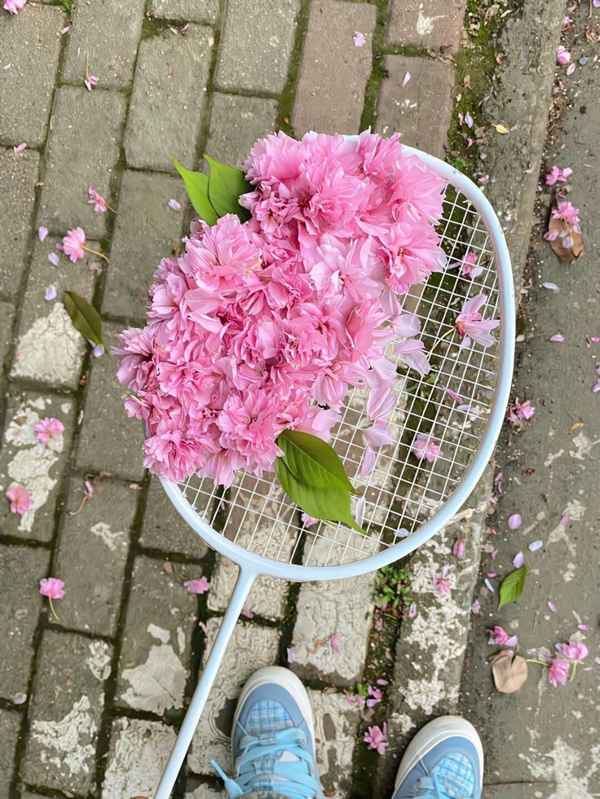
    Pink flowers on a white racket placed on the ground with scattered petals.
    A calming symbol of mindfulness—small details reminding us to slow down.

    This is a “mental dump.” List everything circling in your thoughts—unfinished tasks, worries, random reminders. Seeing them on paper immediately lightens your mental load.


    #2. Describe How You’re Feeling in This Exact Moment

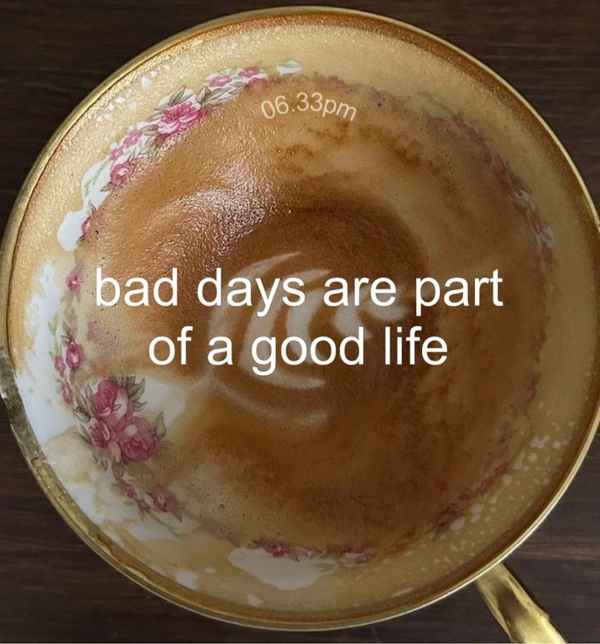
    Empty coffee cup with quote “bad days are part of a good life.”
    Journaling inspiration: even difficult days belong to a bigger, brighter life.

    Self-care journaling starts with awareness. Label your emotions, no matter how messy they feel. Even a line like “I feel restless because…” begins untangling what’s inside.


    #3. What’s One Thing I Can Control Today?

    : Close-up of a fresh lemon slice glowing under light.
    A refreshing visual reminder that clarity often comes in small, simple things.

    When anxiety builds, clarity comes from narrowing focus. Write down one single thing you can influence today. It may be as small as preparing a meal or stepping outside for fresh air.


    #4. Gratitude in Three Lines

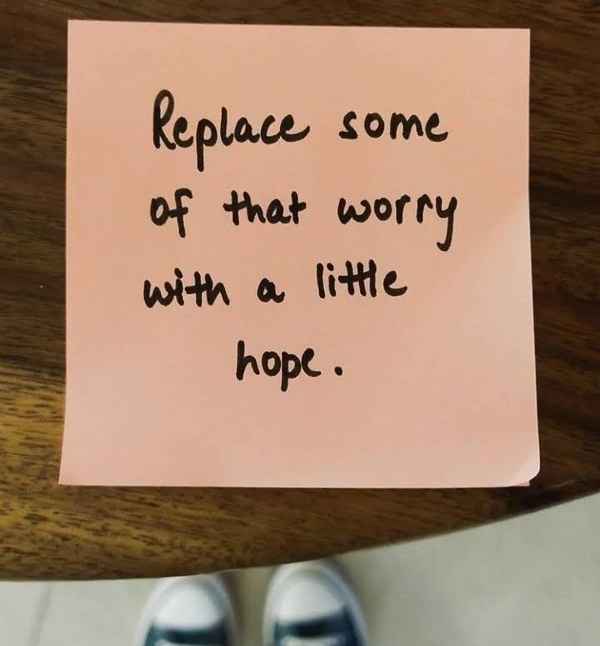
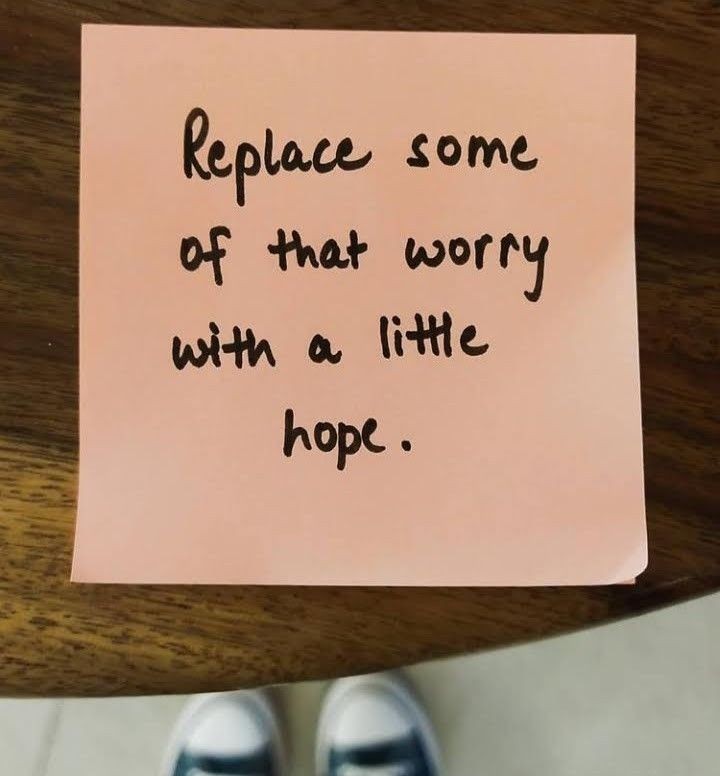
    Alt: Sticky note with handwritten words: “Replace some of that worry with a little hope.”
    Healing words worth journaling when the mind feels heavy.

    Journaling for clarity doesn’t need to be long. Write three short sentences of gratitude daily. Over time, this tiny ritual reshapes how your mind scans for positivity.


    #5. Rewrite a Negative Thought Into a Kinder One

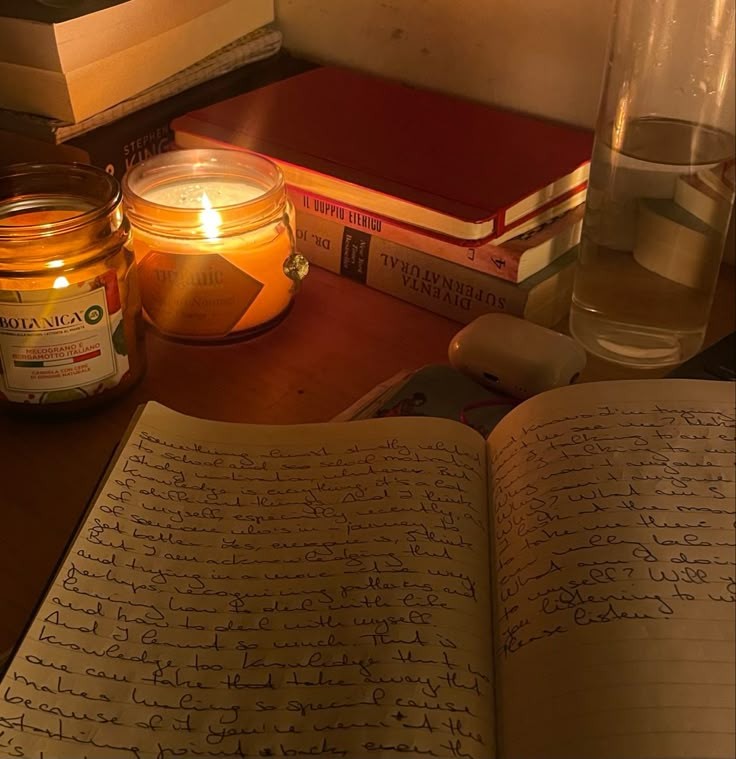
    Open journal with candlelight and books in a cozy setup.
    Late-night journaling with candles—turning thoughts into calm.

    We all carry harsh self-talk. Pick one negative thought, write it down, and reframe it as if you were speaking to a friend. This practice softens inner criticism and supports emotional healing.


    #6. What Do I Need to Let Go of Right Now?

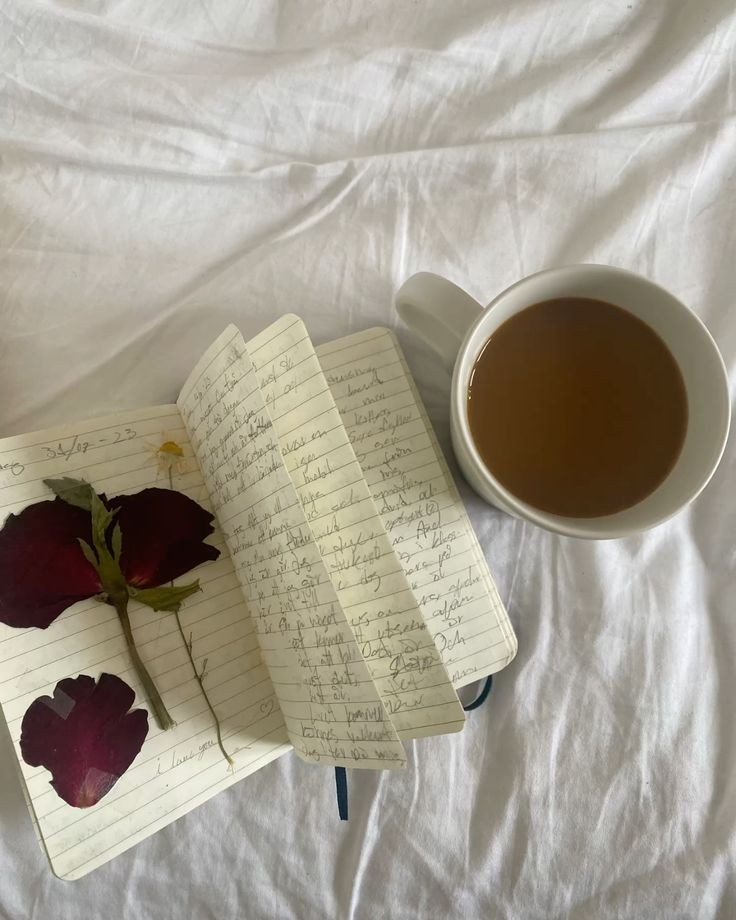
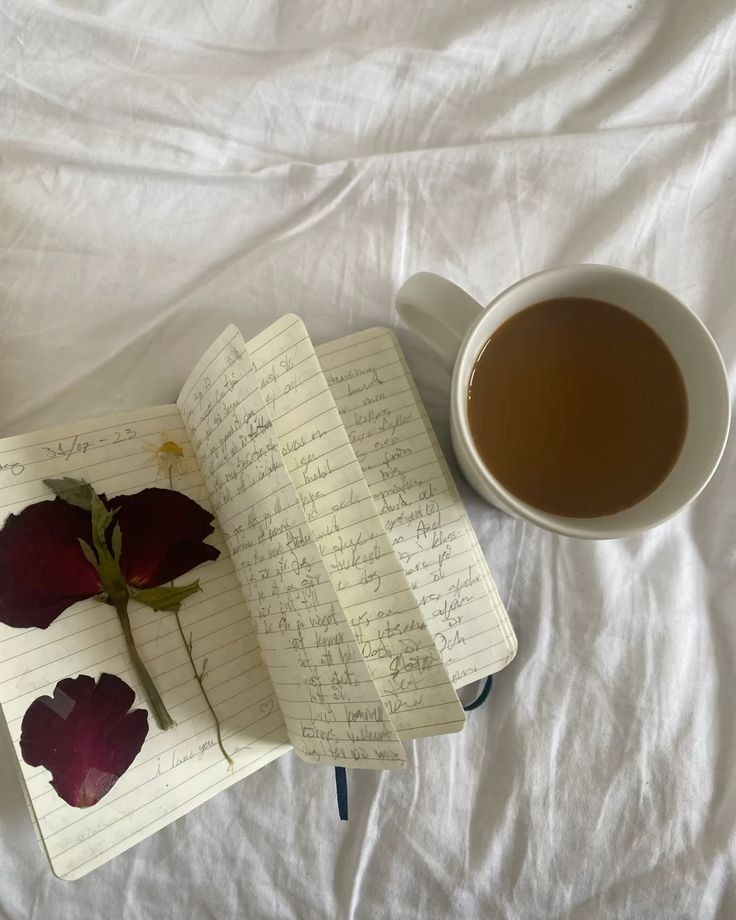
    Open journal with rose petals and a cup of tea on a bed.
    Journaling practice paired with tea—rituals that heal the heart.

    Clarity often comes from release. It could be an expectation, guilt from yesterday, or pressure to be perfect. Naming it in your journal is the first step toward letting go.


    #7. Visualize Your Tomorrow Morning

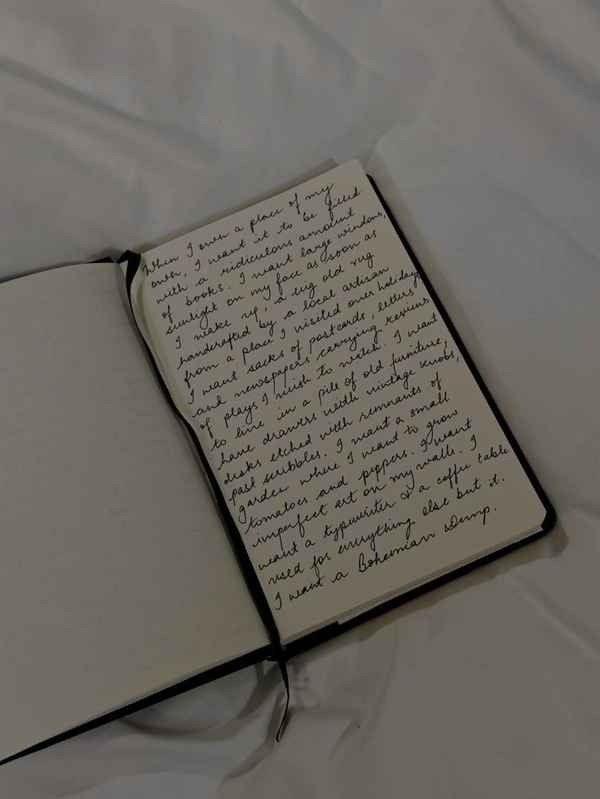
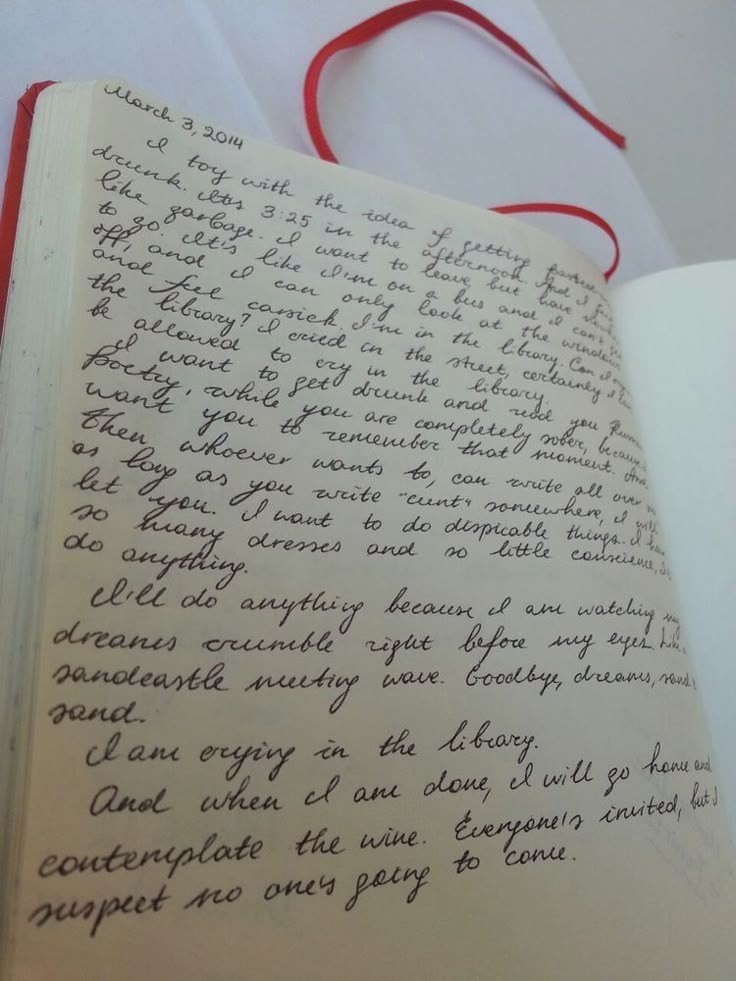
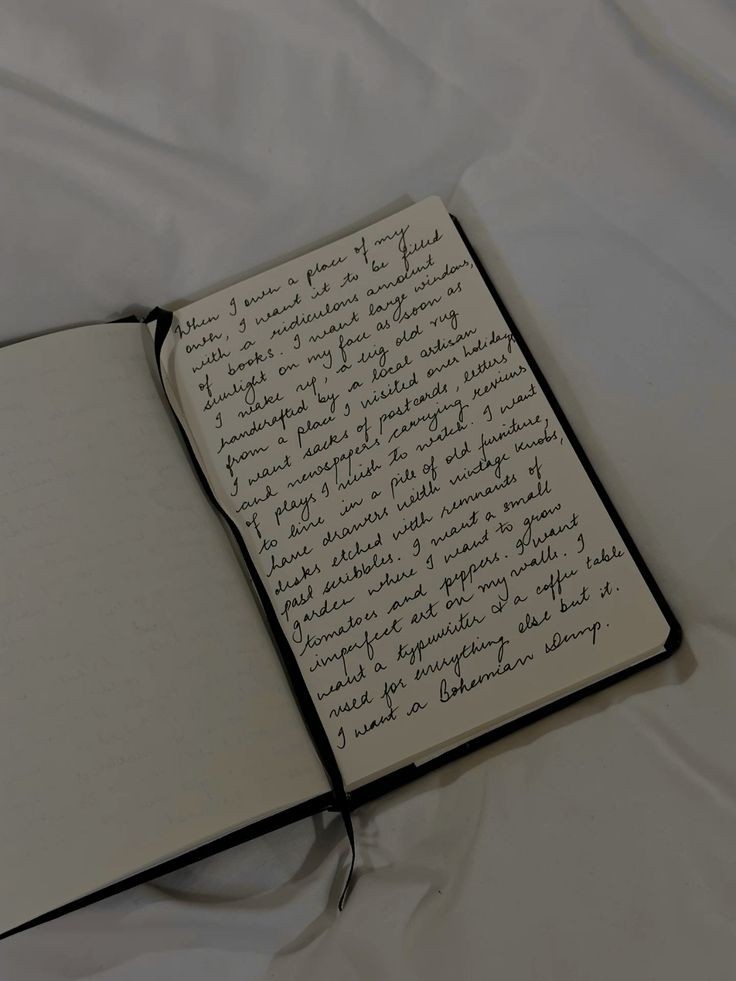
    Journal with long handwritten notes lying on a white sheet.
    A page of reflection—writing to bring mental clarity and peace.

    End your session with a forward-looking prompt: “How do I want to feel tomorrow morning?” Write in detail yet calm, energized, or steady. This directs your mind to create a softer landing for the next day.

    Reflection

    Daily journaling practices for mental clarity don’t need more than 10 minutes. Over time, these prompts become a personal toolkit , helping you reduce stress, release clutter, and reconnect with yourself.

    If you’ve been searching for a healing yet practical self-care habit, try picking one prompt tonight. Journaling doesn’t just record your life , it clears the mental space you need to truly live it.

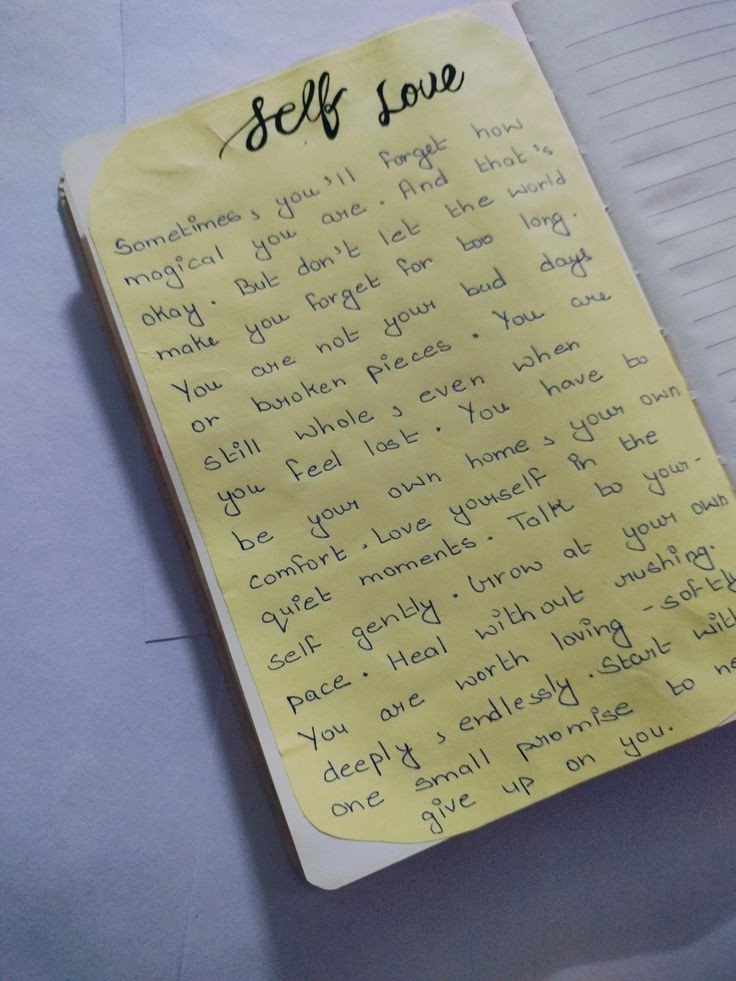
    Example: A cozy journal with self worth journal prompts written inside.

    Some days feel heavier than others. The world keeps asking more, while inside, you might feel like you’re running on empty. That’s where self-love practices can make a difference.

    Little things—like self worth journal prompts, self love day ideas, or self love writing prompts—become reminders that you still matter. They don’t fix everything overnight, but they gently shift the way you see yourself.

    This blog is about giving you simple, practical ways to care for your heart with words. Think of it as a collection of love notes you can turn to when life feels overwhelming. Each one is here to remind you—you are enough.

    Why Daily Self-Care Quotes and Notes Matter

    I’ll tell you a story. A friend of mine began leaving herself small notes on her bathroom mirror. Just simple lines—“Breathe. You’re doing your best.” At first, she rolled her eyes. It felt silly. But after a month, she realized she was pausing at the mirror, reading them, and beginning her mornings with a softer voice in her head.

    Another reader once shared with me how she carried index cards in her bag. Each card had a short love note. On difficult days, she’d pull one out during her lunch break. She told me it “felt like a hug from myself.” That’s the quiet power of self-care notes. They don’t demand big changes. They remind you, gently, that you’re still here, still worth caring for.

    When you’re stuck in the weight of depression, even brushing your teeth or stepping outside can feel overwhelming. Daily self-care quotes and notes—tiny reminders written to yourself—won’t cure everything, but they can shift the way your brain handles daily stress.

    Research backs this up. The American Psychological Association found that people who practice positive self-reflection report 31% lower stress levels and greater resilience. Another study in the Journal of Positive Psychology discovered that writing affirmations for just two weeks improved overall well-being.

    Why does it work? Depression convinces us that negative thoughts are the whole truth. A note that says, “I am still worthy, even on my tired days,” gives you a counter-voice. And over time, those words create new pathways in the brain—ones that lean toward hope instead of hopelessness.

    Daily notes may look small, but they matter. They become anchors. They become proof that love can come from within.

    Love Notes You Can Write Today (5 DIY Prompts)

    1. “Even if I didn’t do much today, I am still valuable.”
    2. “My body deserves kindness for carrying me through life.”
    3. “It’s okay to rest. Rest is also progress.”
    4. “I survived things I once thought I couldn’t. I’m stronger than I realize.”
    5. “Joy may be quiet, but I’m learning to hear it.”

    How to Start Your Self-Worth Journal

    A self-worth journal isn’t just a notebook. It’s a safe space to listen to yourself, to record thoughts without judgment, and to rebuild the way you see your own value. Many people discover that writing becomes an anchor—especially on days when confidence feels out of reach. Starting doesn’t have to be complicated. All you need is the right journal, a gentle routine, and a few prompts to guide you.


    Choosing a Journal That Inspires You

    The journal you choose should make you want to write in it. Some people prefer a simple lined notebook, while others enjoy a hardcover with inspiring quotes on the cover. There’s no right or wrong. What matters is that when you pick it up, it feels personal.

    If you’re a creative soul, you might even choose a sketchbook so you can doodle alongside your words. If you’re more digital, a journaling app can work too. The key is to find a format that feels welcoming, not intimidating.


    Setting a Routine for Reflection

    Consistency is what turns journaling into a habit. Choose a time when your mind is a little quieter-early morning before the day begins, or just before bed when things slow down. Even five minutes is enough.

    Try pairing it with another habit. For example, write one journal entry while having your morning coffee. Or keep your notebook on your nightstand so it’s the last thing you touch before sleep. The goal isn’t long essays. It’s regular check-ins with yourself.


    10 Self Worth Journal Prompts to Begin Today

    Here are some simple prompts to get you started. Use one each day, or return to the same one whenever you need it most:

    1. A quality I admire in myself is…
    2. Today I am grateful for…
    3. One challenge I’ve overcome in the past is…
    4. I feel proud when I…
    5. A reminder I need to hear right now is…
    6. A boundary I set that made me stronger was…
    7. My favorite memory of myself is…
    8. One thing I love about my body is…
    9. A way I showed kindness today was…
    10. I am worthy of love because…

    Self-Love Day Ideas You Can Try This Week

    Self-love doesn’t always need a grand plan. Sometimes, it’s about carving out one day—or even just a few hours—that belong entirely to you. A “self-love day” isn’t selfish. It’s a reset. A reminder that your well-being deserves space on the calendar too.


    Simple Rituals for Morning Energy

    The way you start your day sets the tone for everything that follows. On your self-love day, begin gently.

    • Drink a glass of water before your coffee.
    • Step outside and feel the sun or fresh air for five minutes.
    • Write down one thing you’re grateful for and one intention for the day.

    These little rituals may look small, but they wake up both the body and the mind. They tell you, “I matter enough to give myself this moment.”


    Creative Ways to Celebrate Yourself (DIY Activities, Self-Dates)

    Celebration doesn’t always mean balloons or cake. It can be quiet, creative, and deeply personal. Try activities that make you feel connected to yourself:

    • Cook a meal you’ve been craving, just for you.
    • Take yourself on a solo coffee date with a book.
    • Try a DIY project—painting, baking, or rearranging your space.
    • Write a “love letter” to your future self and tuck it into your journal.

    Think of it as dating yourself. You’re showing up, listening, and honoring your own company.


    Turning a Regular Day Into a “Self-Love Day”

    Not everyone can take a full day off, and that’s okay. You can still turn an ordinary day into a self-love day with small tweaks.

    • Add 10 minutes of journaling during lunch.
    • Play your favorite playlist on the commute home.
    • Say no to one thing that drains your energy, and yes to one thing that restores it.

    Self-love isn’t about perfection. It’s about presence. Even the tiniest adjustment can shift your mood, remind you of your worth, and make an average day feel special.

    By treating yourself with this kind of attention, you build a stronger bond with the most important person in your life—you.

    Self-Love Writing Prompts That Reframe Your Mind

    Sometimes the hardest part of journaling is knowing where to start. Self-love writing prompts work like open doors—they guide your thoughts toward healing, growth, and a deeper connection with yourself. Use these prompts whenever you feel stuck or need a gentle nudge back to your own worth.


    Prompts for Healing Old Wounds

    Old pain has a way of echoing into the present. Writing about it doesn’t erase what happened, but it helps you loosen the grip it has on you. Try these prompts when you’re ready to face the past with compassion:

    • What is a memory that still feels heavy, and what would I tell my younger self about it now?
    • Which people or situations hurt me, and what boundaries can I create today to protect myself?
    • What lesson did I learn from a difficult season in my life?
    • If I could write a letter of forgiveness—to myself or someone else—what would it say?

    Prompts for Building Confidence

    Confidence isn’t about being loud or flawless. It’s about trusting your own voice. These prompts remind you of your strength:

    • Three times I was proud of myself were…
    • A challenge I overcame that once felt impossible was…
    • One quality I admire in myself is…
    • If my best friend described me, what kind words would they use?

    Prompts for Future Purpose & Clarity

    Looking ahead can feel uncertain, but writing about the future helps you see direction more clearly. These prompts invite hope:

    • My vision for my best life five years from now looks like…
    • What kind of energy do I want to bring into my relationships?
    • The values I want to guide my choices are…
    • If fear wasn’t holding me back, what would I do first?

    Each of these prompts works like a mirror. They don’t just reflect where you are right now—they also show the strength and possibility already inside you.

    How to Turn Prompts Into Daily Affirmations

    Writing prompts are powerful, but they become even stronger when you carry them into your everyday life. Think of them as seeds. Once you write them down, you can water them with repetition, small actions, and visual reminders. That’s how they grow into affirmations you actually believe.


    From Written Notes to Spoken Mantras

    There’s something different about hearing your own voice. When you take a sentence you’ve written—like “I am worthy of rest”—and say it out loud, it shifts from thought to truth.

    Try this: each morning, choose one line from your journal and repeat it three times while looking in the mirror. Keep your voice gentle, not forced. Over time, those words stop feeling like wishful thinking and start feeling like part of you.


    Using Daily Self-Care Quotes as Journal Starters

    Quotes can be more than decoration on social media feeds. They can spark deeper reflection. If you find a line that speaks to you—“I am learning to love the sound of my own feet walking away from things not meant for me”—use it as your journal starter.

    Write beneath it: “How does this apply to my life today?” or “What part of me needs to hear this most right now?” Turning quotes into prompts bridges inspiration with action, making your journaling more personal and healing.


    Creating a “Love Note Wall” in Your Room

    Visual reminders keep self-love close. Choose a small space—a section of your wall, your mirror, even the inside of a closet door—and turn it into a “love note wall.”

    Write down affirmations or copy lines from your journal onto sticky notes. Arrange them where you’ll see them every day. Some people use photos, doodles, or drawings alongside their notes to make it even more personal.

    On the hard days, this wall becomes a place to stand in front of and breathe. On the good days, it becomes a celebration of how far you’ve come.


    Little by little, prompts turn into affirmations. Affirmations become habits. And habits build the foundation of self-worth you can stand on, even when life feels heavy.

    Real-Life Stories: When Self-Writing Transforms Healing

    Words can change the way we see ourselves. Journaling isn’t just theory—it’s something real people use to climb out of dark places and reconnect with their worth. Here are a couple of stories that show how powerful self-writing can be.


    The Mirror Notes
    A woman in her late 30s shared how she began writing short love notes and sticking them on her bathroom mirror. At first, they felt awkward. Notes like “You are doing enough” and “Breathe, you’re safe here” didn’t seem to sink in. But after weeks of repetition, she noticed a shift. Mornings became softer. Instead of starting her day with criticism, she started with compassion. She described it as “retraining her inner voice to be kind.”


    The Lunch Break Journal
    A college student struggled with anxiety and self-doubt during exams. She started carrying a small notebook, writing down one self-worth journal prompt during her lunch break each day. Her favorite was, “One challenge I’ve overcome is… Over time, her notebook filled with reminders of her resilience. Looking back at those entries before a test gave her courage. She said, “It felt like proof that I’d survived hard things before, so I could survive this too.”

    Final Steps: Building Your Personal Self-Love Routine

    Self-love grows stronger when it becomes a part of your daily rhythm. A journal helps you start, but combining it with other habits makes it sustainable. Think of it as building a routine that supports your mind, body, and heart.


    Blending Journal Prompts with Mindfulness

    Writing helps you release thoughts. Mindfulness helps you notice them without judgment. Put the two together, and you create a powerful practice.

    For example, start your journal entry with a self-worth prompt—“Today I am grateful for…”—then sit quietly for two minutes, breathing slowly. Let the words settle in your body. This mix of reflection and stillness keeps your self-love routine grounded, not rushed.


    Using Technology (Apps, Reminders)

    Technology doesn’t have to distract—it can support your healing too. Journaling apps like Daylio, Reflectly, or even a simple notes app can hold your daily prompts. Setting reminders on your phone can nudge you to pause and check in with yourself.

    You can also create phone wallpapers with affirmations or self-care quotes, so every time you unlock your screen, you’re reminded of your worth. The goal isn’t more screen time. It’s using your devices to carry your love notes with you.


    Protecting Your Energy With Boundaries

    A self-love routine isn’t just about what you add—it’s also about what you protect. Boundaries are acts of love.

    That could mean saying no to a conversation that drains you, muting notifications when you need quiet, or carving out an hour each week that belongs only to you. Boundaries remind you that your energy has value. You don’t have to give it away to prove your worth.


    A personal self-love routine doesn’t need to be complicated. Journaling, mindfulness, small reminders, and boundaries are enough to create a life where you feel cared for—by the one person who matters most: you.

    A Gentle Reminder Before You Go

    One Last Love Note to Yourself

    Before you close this page, pause for a moment. Take a deep breath.

    Here’s a note you can borrow until you’re ready to write your own:

    “I am worthy of love, even when I feel heavy. I am enough, even on the quiet days. I deserve kindness—from others, and from myself.”

    Write it down. Stick it on your mirror. Drop it in your journal. Whisper it to yourself before bed.

    Every love note you leave behind is a breadcrumb back to your worth. Start with this one. Tomorrow, write another. And little by little, you’ll be building a trail that leads you home—to you.