Symbolic illustration representing hidden life cheat codes and psychological truths about human behavior and power

Most of what shapes human behavior isn’t taught in school. It’s learned through patterns—often the hard way. These “cheat codes” aren’t about manipulation; they’re about seeing reality clearly, without illusions.

Use them wisely.

1. Confidence Beats Truth

People don’t follow facts—they follow certainty. A confident voice often outweighs a correct one. Belief persuades faster than accuracy.

2. Silence Exposes More Than Speech

Say less. People rush to fill silence, and in doing so, they reveal motives, fears, and intentions you’d never hear otherwise.

3. Attention Is Power

Whoever controls attention controls the relationship. Time, focus, and presence are modern currency—and they’re scarce.

4. Fear Moves Faster Than Hope

Inspiration motivates slowly. Consequences act immediately. When hope fails, fear still works.

5. First Impressions Don’t Fade

Tone, posture, and energy outlast words. People remember how you made them feel, not what you said.

6. Stories Win Where Facts Lose

Facts inform the brain. Stories persuade the heart. If you want action, don’t explain—narrate.

7. Guilt Bends Behavior

People will overcorrect to earn forgiveness. Guilt isn’t just an emotion—it’s leverage.

8. Scarcity Creates Desire

What’s rare feels valuable. Availability lowers perceived worth, even when quality stays the same.

9. Labels Shape Identity

Call someone strong, lazy, capable, or broken—and they’ll unconsciously grow into it. Words don’t just describe reality; they build it.

10. Kindness Without Strength Is Ignored

Compassion matters, but without boundaries it’s mistaken for weakness. Respect comes from balance.

11. Most Friendships Are Conditional

Remove the benefit—status, access, convenience—and many connections quietly fade. Loyalty is rare.

12. People Admire Strength—but Watch for Weakness

Success attracts praise, but vulnerability attracts scrutiny. Many cheer quietly while waiting for a fall.

13. Compliments Open Doors Faster Than Credentials

Ego is a universal language. Recognition disarms defenses quicker than achievements ever could.

14. Victimhood Can Manipulate

Helplessness holds power. Those who appear weak can quietly control outcomes by shifting responsibility.

15. Comfort Is a Stronger Trap Than Pain

Pain demands change. Comfort convinces you to stay stuck. Growth rarely happens where everything feels easy.

16. Power Doesn’t Corrupt—It Reveals

Power doesn’t change people; it removes constraints. What emerges was always there.

Final Thought

These aren’t rules to exploit others—they’re lenses to understand human nature.
Awareness gives you choice.
Choice gives you freedom.

Use these cheat codes not to dominate—but to navigate life with clarity, boundaries, and intent.

Ancient Roman midwife guiding a pregnant woman in gentle walking movement believed to strengthen the unborn child’s nervous system

Roman Midwife’s Secret- Centuries ago, a Roman midwife recorded a practice that sounded more like philosophy than medicine. She called it her “rule of motion.” Before birth, she asked expectant mothers to walk slowly in circles for hours—hands resting on their bellies, eyes half-closed, breathing steadily.

Her explanation was simple and profound:
“It makes the child remember the rhythm of the world.”

For generations, these words were dismissed as poetic intuition. Today, neuroscience is beginning to confirm what ancient midwives seemed to know instinctively.

The Science Behind Prenatal Movement

Modern research shows that slow, repetitive movement during pregnancy activates the vestibular system—the inner-ear balance network responsible for spatial awareness, emotional regulation, and stress response.

When a pregnant woman moves gently and rhythmically:

  • The vestibular system of both mother and fetus is stimulated
  • Maternal breathing patterns influence fetal heart rhythms
  • The baby’s nervous system begins synchronizing with the mother’s calm, repetitive motion

This isn’t exercise for fitness—it’s neurological communication.

What Brain Scans Reveal About “Motion Births”

Recent MRI studies comparing newborns show striking differences. Babies whose mothers engaged in regular, gentle movement during pregnancy demonstrated:

  • Stronger parasympathetic tone (the “calm and recover” nervous system)
  • More stable heart rates
  • Faster adaptation to sound, touch, and light
  • Reduced stress reactivity

In essence, their nervous systems appeared pre-trained for regulation before birth.

The Problem With Modern Stillness

Today’s pregnancies are often defined by stillness:

  • Long hours sitting in cars
  • Extended screen time
  • Couch rest monitored by apps and data

While medical monitoring has value, movement has quietly disappeared. The body, however, does not grow life from numbers—it grows life from rhythm.

A lack of sensory motion may act as a form of prenatal sensory deprivation, shaping nervous systems that are more reactive and anxious.

An Ancient Insight for a Modern World

The Roman midwife ended her notes with a line that still resonates:

“A calm womb makes a brave heart.”

The lesson isn’t about perfection or control. It’s about presence.
Not tracking every metric—but moving.
Not recording every moment—but rocking through it.

Final Thought

The next generation doesn’t need flawless data.
It needs your body’s rhythm—steady, calm, human—so it can remember how to live in the world it’s entering.

Infographic illustrating seven unique environments on Earth where the human body may heal faster, including monasteries, salt caves, forests, deserts at night, cold spring basins, stone caves, and bee-house apiaries.

Scientists – For decades, healing was framed as something driven purely by medicine, nutrition, or genetics. But emerging research from neuroscience, environmental psychology, and physiology points to a surprising truth:

The human body heals faster in specific environments — especially where sensory input drops dramatically.

Researchers studying stress, inflammation, and recovery found that certain locations consistently shift the nervous system into a deep “maintenance mode,” allowing repair processes to accelerate.

Here are seven such places — and why they work.

1. Ancient Monasteries and Inner Courtyards

Thick stone walls, enclosed layouts, and minimal sound define these spaces.

Studies show noise reduction of up to 80%, pushing the brain into a low-arousal state. Brain imaging suggests this activates the glymphatic system, which helps clear metabolic waste from the brain and reduce inflammation.

Why it helps:

  • Reduced sensory input
  • Nervous system downshifts
  • Faster inflammation recovery

2. Salt Caves (Halotherapy Chambers)

Salt caves aren’t just spa trends. Micro-ionized salt particles have been shown to:

  • Ease airway resistance
  • Reduce stress hormone levels
  • Improve breathing efficiency

Some hospitals in Eastern Europe already use halotherapy to support post-viral and respiratory recovery.

Why it helps:
Lower cortisol + improved oxygen flow = more energy available for healing.

3. Bee-House Apiaries

In parts of Eastern Europe, patients rest inside wooden structures built over beehives.

The constant wing vibration produces frequencies between 110–140 Hz, similar to those used in vibration-based physical therapy.

Clinical observations in Romania found faster cardiovascular and nervous system recovery after repeated exposure.

Why it helps:
Gentle vibration relaxes smooth muscle and stabilizes the nervous system.

4. Cold Spring Basins (Not Hot Ones)

Cold water below 12°C triggers a powerful physiological cascade:

  • Nitric oxide release
  • Improved mitochondrial efficiency
  • Redistribution of immune cells

Japanese clinics use controlled cold exposure to support autoimmune and inflammatory conditions.

Why it helps:
Cold activates repair systems without overstimulating inflammation.

5. Ancient Stone Caves with Narrow Entrances

These caves maintain:

  • Stable oxygen levels
  • Slightly elevated CO₂
  • Constant humidity

Respiratory effort decreases significantly, meaning the body uses less energy just to breathe.

Why it helps:
Lower breathing effort frees metabolic energy for tissue repair.

6. Silent Deserts at Night

Places like Wadi Rum or the Atacama Plateau approach total silence after dark.

Neuroimaging studies show dramatic reductions in amygdala activity in near-silent environments. Reduced threat processing allows the body to exit chronic stress mode.

Observational studies found faster recovery from stress-related injuries after nighttime exposure.

Why it helps:
Silence calms the brain’s danger system.

7. Moss-Rich Old-Growth Forests

These forests release compounds like beta-pinene and negative air ions.

Research in South Korea shows exposure:

  • Lowers blood pressure
  • Activates natural killer immune cells
  • Shortens post-surgical recovery time

Why it helps:
Forest biochemistry directly supports immune regulation.

The Common Thread: Sensory Collapse

None of these places work because they’re “beautiful.”
They work because they reduce sensory demand.

When noise, visual clutter, and constant stimulation disappear, the nervous system shifts from survival mode to repair mode.

Healing accelerates not because the body tries harder — but because it finally gets the conditions it needs.

Final Thought

You don’t need extreme environments to benefit from this insight.

Even small changes — silence, reduced stimulation, slower breathing, colder water, enclosed calm spaces — can nudge your body toward healing.

Sometimes recovery isn’t about adding more tools.
It’s about removing what keeps the body on edge.

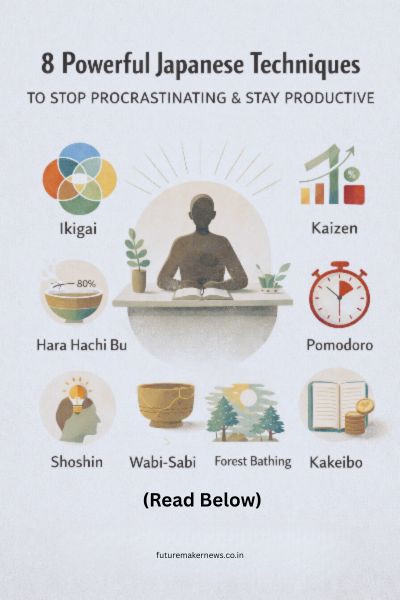
Minimalist illustration showing Japanese productivity concepts like Ikigai, Kaizen, Pomodoro focus, forest bathing, and mindful balance, symbolizing techniques to overcome procrastination and stay productive.

Japanese Techniques- Procrastination isn’t a time problem.
It’s a mindset problem.

Japanese culture approaches productivity differently—not through pressure or hustle, but through balance, purpose, and intentional living. These time-tested concepts don’t force motivation. They reshape how you think about action itself.

Here are eight powerful Japanese techniques that can permanently shift your relationship with work, focus, and discipline.

1. Ikigai — Find Your Reason to Begin

Ikigai means “reason for being.”

It sits at the intersection of:

  • What you love
  • What you’re good at
  • What the world needs
  • What gives your life meaning

When your work connects to purpose, procrastination fades naturally. You stop forcing yourself to start—because you want to.

Key insight: Motivation lasts when meaning comes first.

2. Kaizen — Improve by 1% Each Day

Kaizen is the philosophy of small, continuous improvement.

Instead of chasing dramatic change:

  • Improve slightly
  • Repeat consistently
  • Let momentum compound

Big goals paralyze. Small steps activate.

Key insight: Consistency beats intensity.

3. Pomodoro Technique — Work in Focused Bursts

This method uses structured focus:

  • 25 minutes of deep work
  • 5 minutes of rest

The brain works best in short sprints, not endless marathons. Pomodoro reduces overwhelm and increases completion.

Key insight: Focus thrives inside boundaries.

4. Hara Hachi Bu — Practice Self-Control Daily

This Okinawan principle means eating until you’re 80% full.

Why it matters for productivity:

  • Builds discipline through small restraint
  • Strengthens mind–body awareness
  • Reinforces intentional living

Control in one habit trains control everywhere else.

Key insight: Discipline grows from daily choices, not willpower spikes.

5. Shoshin — Keep a Beginner’s Mind

Shoshin means approaching life with openness and curiosity.

Instead of:

  • Perfectionism
  • Fear of failure
  • Overthinking

You adopt:

  • Willingness to learn
  • Openness to mistakes
  • Lightness toward progress

Key insight: Beginners start. Experts hesitate.

6. Wabi-Sabi — Embrace Imperfection

Wabi-sabi finds beauty in flaws, impermanence, and incompleteness.

Perfectionism fuels procrastination.
Acceptance fuels progress.

When you allow imperfect action, work actually gets done.

Key insight: Finished is better than flawless.

7. Forest Bathing — Reset Your Nervous System

Known as Shinrin-yoku, forest bathing involves intentional time in nature.

Benefits include:

  • Lower cortisol
  • Improved focus
  • Reduced mental fatigue

A calm nervous system is a productive one.

Key insight: Rest is a productivity tool, not a reward.

8. Kakeibo — Be Intentional With Money

Kakeibo is mindful budgeting:

  • Track spending
  • Set clear goals
  • Reflect regularly

Financial clarity reduces mental noise. Less anxiety = more focus.

Key insight: Order in finances creates order in thought.

Final Thought: Productivity Is a Way of Living

Japanese productivity isn’t about doing more.
It’s about living better.

Purpose over pressure.
Consistency over extremes.
Awareness over autopilot.

Adopt even one of these principles—and procrastination starts losing its grip.

Illustration of a Japanese couple sitting together in calm silence, symbolizing the concept of “ma” — shared silence used to regulate emotions and resolve conflict in long-lasting marriages.

Japanese Marriages- In the West, we’re taught that communication fixes everything.

Talk it out.
Express your feelings.
Resolve it immediately.

But according to Japanese relationship counselors, this belief may be one of the biggest reasons couples escalate conflict instead of resolving it.

A Japanese family counselor once explained it simply:

“Western couples talk through tension. Japanese couples sit through it.”

The practice is called ma — and it may be one of the most misunderstood, yet powerful, relationship rules.

What Is Ma?

Ma (間) roughly translates to intentional space or meaningful pause.

In relationships, it means:

  • Deliberate shared silence during tension
  • No fixing, defending, or explaining
  • Waiting until the nervous system calms before speaking

This isn’t avoidance.
It’s emotional calibration.

In Japan, the belief is simple:
Emotion should be resolved after the nervous system resets — not during the spike.

Why Talking While Upset Makes Things Worse

When couples argue, something biological happens.

Research shows partners enter limbic synchronization:

  • Heart rate aligns
  • Cortisol rises
  • Breathing patterns mirror

In this state:

  • The prefrontal cortex (reasoning) goes offline
  • The brain shifts into defense and threat mode

Talking here doesn’t resolve conflict.
It amplifies it.

Kyoto laboratory studies found that couples practicing ma lowered physiological arousal within 4–7 minutes, allowing rational thought to return.

A calm brain understands.
An activated brain attacks.

A Real Example from Tokyo

A Tokyo couple on the brink of divorce sought therapy.

Instead of communication exercises, the therapist introduced one rule:

  • Three minutes of shared silence before any discussion
  • No phones
  • No eye contact
  • No talking

Just co-regulation.

After two weeks, the wife said:

“For the first time, I could hear him without preparing my defense.”

Nothing else changed.
Only timing.

Why Western Couples Misinterpret Ma

In Western culture, silence is often seen as:

  • Cold
  • Punitive
  • Avoidant

In Japan, ma means something very different:

“I will not harm you with a hot mind.”

Silence becomes a buffer, protecting the relationship from the worst version of each partner.

It’s not distance.
It’s discipline.

How to Use Ma in Your Relationship

When tension rises, resist the urge to:

  • Explain
  • Justify
  • Fix
  • Confront

Instead, say one sentence:

“Let’s take three minutes of ma.”

Then:

  • Sit together
  • Stay silent
  • Let breathing slow naturally

Once your nervous systems settle, then talk.

In a Kobe study, couples who practiced ma reduced recurring conflicts by 61% in one month.

Final Thought: Silence Can Be an Act of Love

Not every emotion needs immediate expression.
Not every thought deserves airtime.

Sometimes the most loving thing you can do is wait until your mind cools before you speak.

Western relationships prize expression.
Japanese relationships prize regulation.

And often, the difference between lasting love and repeated conflict is not what you say — but when you say it.

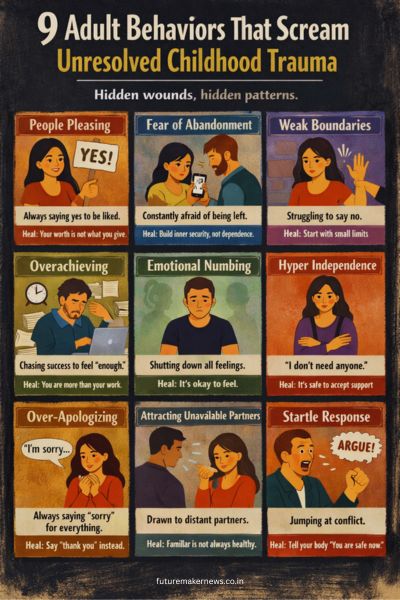
Infographic showing 9 adult behaviors linked to unresolved childhood trauma, including people pleasing, fear of abandonment, weak boundaries, overachieving, emotional numbing, hyper-independence, over-apologizing, attracting unavailable partners, and startle response, with gentle healing messages.

Many adults carry emotional wounds from childhood they never chose—and were never taught how to heal.

What looks like:

  • Strength
  • Independence
  • Perfectionism
  • “Personality quirks”

is often something deeper: survival strategies that once protected you.

These behaviors are not flaws. They are adaptations. Below are nine common adult patterns often linked to unresolved childhood trauma—and what healing can gently look like.

1. People-Pleasing at All Costs

Example:
Saying yes while breaking inside. Avoiding conflict even when it hurts.

This often develops when love or safety felt conditional in childhood.

Healing direction:
Your worth is not earn through sacrifice. Practice choosing yourself in small, safe ways.

2. Fear of Abandonment

Example:
Constantly monitoring a partner’s mood. Feeling anxious they might leave at any moment.

This can stem from early experiences of inconsistency or emotional loss.

Healing direction:
Build internal safety. Other people’s emotions are not proof of your value.

3. Difficulty Setting Boundaries

Example:
Feeling guilty for saying no. Overexplaining basic needs.

When boundaries were ignored or punished early on, asserting them later can feel unsafe.

Healing direction:
Start small. Set one boundary and honor it—without justification.

4. Overachieving to Cope

Example:
Nothing ever feels “enough,” no matter how much you accomplish.

Achievement becomes a substitute for worth when love was tied to performance.

Healing direction:
Redefine success as balance, rest, and self-respect—not constant output.

5. Emotional Numbing

Example:
Staying “strong” by disconnecting from feelings.

This often forms when emotions were dismissed or overwhelming in childhood.

Healing direction:
Notice emotions without judging them. Feeling does not equal weakness.

6. Hyper-Independence

Example:
“I don’t need anyone” becomes emotional armor.

This can develop when relying on others once led to disappointment or pain.

Healing direction:
Let safe people support you—slowly and on your terms.

7. Over-Apologizing

Example:
Saying sorry before speaking. Feeling like a burden for existing.

This often forms when you were made to feel “too much” or responsible for others’ emotions.

Healing direction:
Replace “sorry” with “thank you.” Shift from shame to presence.

8. Attracting Emotionally Unavailable Partners

Example:
Being drawn to people who cannot fully show up.

Familiar patterns feel safer than healthy ones—even when they hurt.

Healing direction:
Remember: familiar does not mean safe or nourishing.

9. Heightened Startle Response to Conflict

Example:
Raised voices trigger anxiety or panic.

When conflict once meant danger, the body remembers—even years later.

Healing direction:
Ground yourself in the present. Gently remind your body that you are safe now.

Final Thoughts: These Are Not Flaws—They Are Armor

Unresolved childhood trauma is not your fault.

These behaviors are not character defects.
They are protective systems you built when you had no other choice.

Healing doesn’t mean erasing them—it means learning that you no longer have to live in survival mode.

And that learning can be slow, compassionate, and deeply freeing.

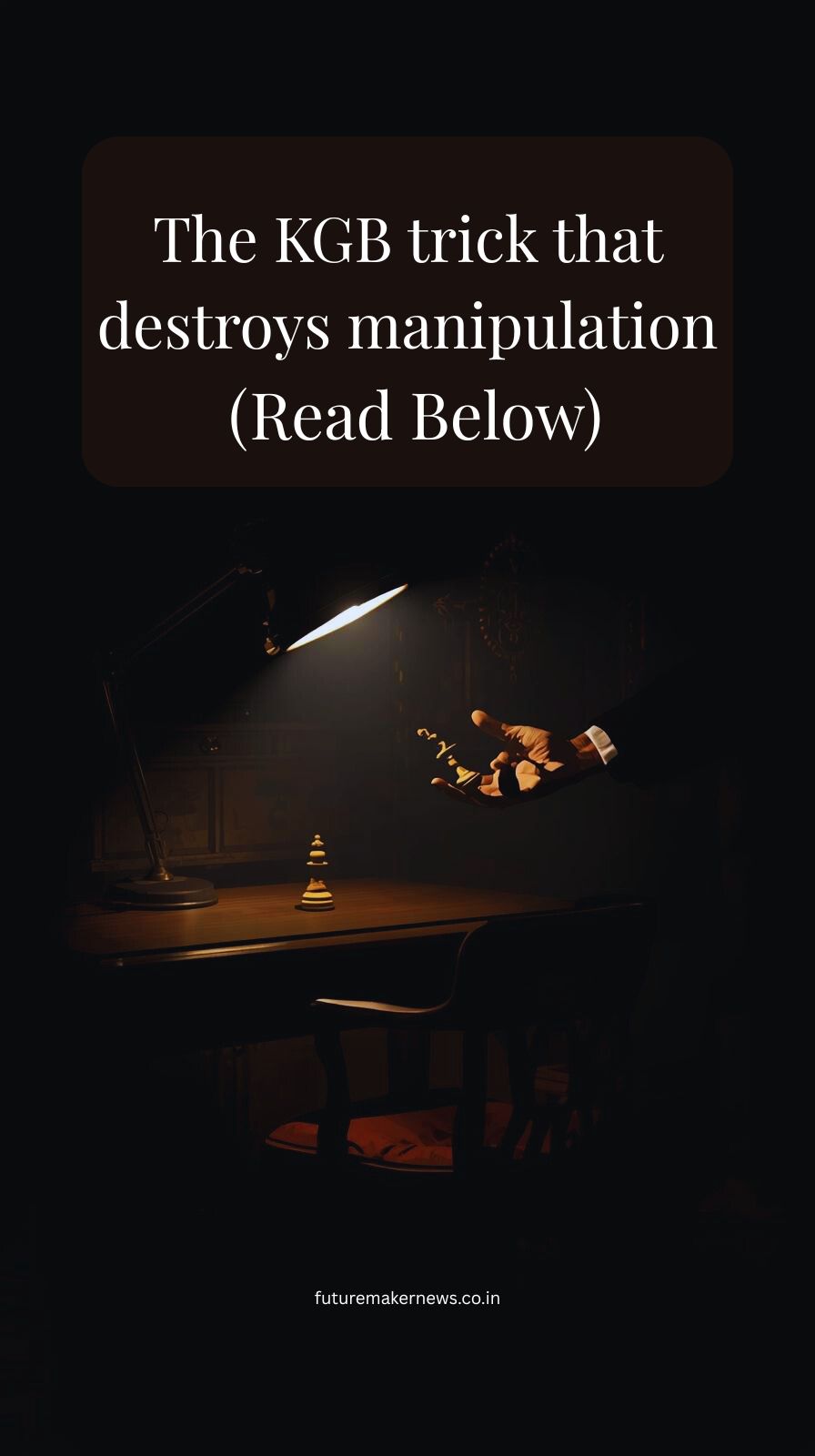
Illustration explaining cold unpredictability, a psychological tactic often associated with intelligence training, showing how silence, calm posture, and unpredictable responses disrupt manipulation.

Manipulation succeeds for one simple reason: predictability.

Manipulative people rely on expected reactions—defensiveness, explanations, emotional responses. When they know what you’ll do next, they can steer the interaction.

What disrupts manipulation isn’t louder boundaries or longer explanations.
It’s unpredictability combined with emotional restraint.

This approach is often described as cold unpredictability—a tactic commonly associated (rightly or wrongly) with intelligence and interrogation strategies, but rooted in well-established psychological principles.

What Is “Cold Unpredictability”?

Cold unpredictability is the deliberate removal of expected social and emotional responses. You don’t escalate, don’t defend, don’t react on cue.

Instead, you create psychological ambiguity—and ambiguity destabilizes control.

This isn’t about aggression.
It’s about non-cooperation with manipulation scripts.

1. Remove Predictable Social Responses

Manipulators expect something:

  • A smile
  • An explanation
  • A defense
  • An emotional reaction

Cold unpredictability replaces all of that with pause and stillness.

You don’t rush to answer.
You don’t fill the silence.

The absence of reaction interrupts their mental script. When they can’t read you, they can’t steer you.

Predictability fuels control. Silence starves it.

2. Refuse to Play the Emotional Game

Manipulation is emotional by design.

  • Accusations are meant to provoke defense
  • Pressure is meant to force agreement
  • Emotional hooks are meant to trigger compliance

Cold unpredictability removes emotional engagement entirely. You remain neutral—almost boring.

In psychology, this resembles emotional non-reinforcement: when behavior no longer gets a reaction, it often stops.

No fuel. No fire.

3. Ask Disruptive, Control-Shifting Questions

Instead of explaining yourself, ask questions that expose intent:

  • “Why are you bringing this up right now?”
  • “What outcome are you expecting from this conversation?”
  • “Are you aware of how this sounds?”

These questions:

  • Break conversational momentum
  • Force self-reflection
  • Shift cognitive load back to the other person

You’re no longer defending—you’re directing.

4. Project Calm Control (Regardless of How You Feel)

Body language often communicates more than words.

Cold unpredictability relies on:

  • Slow, deliberate movements
  • Relaxed posture
  • Steady eye contact
  • Minimal gestures

Even if you feel uncertain internally, external calm creates perceived authority. In social psychology, this is known as status signaling—calm behavior under pressure implies confidence and control.

Perception shapes power dynamics.

5. Master Silence Instead of Escaping It

Most people rush to fill silence because it feels uncomfortable.

Manipulators depend on this.

When you stay silent:

  • They talk more
  • They reveal intent
  • They attempt to regain control

Silence reverses pressure. The discomfort transfers from you to them.

In negotiation psychology, this is a known principle: the person who tolerates silence often gains leverage.

Why This Approach Works

Cold unpredictability works because it attacks the foundation of manipulation:

  • Predictable emotion
  • Automatic defense
  • Reactive behavior

You’re not analyzing manipulation.
You’re refusing to participate in it.

When people realize they can’t move you emotionally, they often do one of two things:

  • Back off
  • Change tactics

Either way, control returns to you.

Final Thoughts: Power Isn’t Loud

This method isn’t about dominance or intimidation.
It’s about self-possession.

You don’t need to win arguments.
You don’t need to explain yourself endlessly.

Sometimes the strongest move is stillness.

When your reactions are no longer predictable, manipulation loses its grip.

Pinterest-style image listing five signs people believe God may be guiding them to leave a relationship, including loss of peace, misaligned values, lack of growth, ongoing hurt, and repeated red flags.

Ending a relationship is one of the hardest decisions a person can face—especially when faith is involved. Many believers don’t look for dramatic signs or loud warnings. Instead, they notice quiet shifts: peace fading, values clashing, growth stopping.

While no article can replace prayer, wisdom, or counsel, these are five signs many people interpret as God gently nudging them to step away from a relationship that is no longer healthy—spiritually or emotionally.

1. Loss of Peace That Doesn’t Return

One of the most common signs people describe is a persistent loss of peace.

You feel:

  • Constantly anxious or unsettled
  • Emotionally drained after interactions
  • Uneasy even after prayer or reflection

In many faith traditions, God’s presence is associated with peace—not perfection, but inner calm. When unrest becomes constant rather than temporary, believers often see it as a warning rather than a test.

2. Conflict With Your Core Values or Faith

A relationship should not pull you away from who you are—or what you believe.

If your partner:

  • Undermines your faith or beliefs
  • Encourages compromise of your integrity
  • Pulls you away from spiritual practices

Many interpret this misalignment as a sign the relationship isn’t part of God’s direction for their life. Love should support your walk—not weaken it.

3. Lack of Emotional or Spiritual Growth

Healthy relationships encourage growth.

But if instead you feel:

  • Smaller, not stronger
  • Stuck, not progressing
  • Spiritually disconnected

It may be a sign the relationship is no longer serving its purpose. Many believers see stagnation as a signal that a season has ended—even if feelings remain.

4. Persistent Hurt, Disrespect, or Manipulation

This sign is critical and non-negotiable.

Abuse—emotional, verbal, physical, or psychological—is never aligned with God’s design for love.

If you find yourself:

  • Making excuses for repeated mistreatment
  • Normalizing disrespect
  • Staying out of fear rather than love

Faith is not meant to trap you in harm. Many people later recognize that the “conviction” they felt was actually self-protection guided by wisdom.

5. Closed Doors and Repeating Red Flags

Sometimes people try everything:

  • Counseling
  • Prayer
  • Communication
  • Patience

Yet nothing changes.

When efforts repeatedly fail and the same red flags return, many interpret this as God closing a door they keep trying to force open. Resistance isn’t always opposition—it can be redirection.

Final Thoughts: Leaving Can Be an Act of Faith

Walking away doesn’t always mean giving up. Sometimes it means trusting God with what comes next.

Leaving a relationship can create space for:

  • Healing
  • Alignment
  • Healthier love—spiritually and emotionally

Discernment takes time, honesty, and courage. If something consistently pulls you away from peace, values, and growth, it may not be punishment—it may be protection.

Vertical infographic illustrating Epictetus, the ancient Greek Stoic philosopher born a slave, explaining his 2,000-year-old method of controlling responses to build mental resilience and eliminate excuses.

Epictetus was born into slavery in the Roman Empire. He had no control over his status, his master, or even his own body. Yet history remembers him as one of the most mentally resilient philosophers who ever lived.

What made him unbreakable wasn’t privilege, wealth, or freedom—it was a radical idea that still reshapes psychology, self-discipline, and personal growth today.

At the core of Stoic philosophy is a principle so simple—and so devastating to excuses—that it still applies 2,000 years later.

1. The One Thing Epictetus Discovered He Could Control

Epictetus faced an uncomfortable truth early in life:
He could not control his birth, his enslavement, or his physical suffering.

But he discovered something revolutionary.

He had absolute control over his response to everything that happened.

This insight became the foundation of Stoicism and what modern psychology calls locus of control—the belief that your actions and attitudes shape your life more than external forces.

Mental freedom, Epictetus taught, does not depend on circumstances.
It depends on where you place your attention and responsibility.

2. Why Most People Stay Stuck (According to Stoic Philosophy)

Most people avoid pursuing their goals for the same reason:

They obsess over what they cannot control.

  • Other people’s opinions
  • Luck and timing
  • Past mistakes
  • External circumstances

Epictetus warned that this focus on externals is the root of suffering. When you fight battles you cannot win, you drain energy from the one battle that actually matters.

The result?
Procrastination disguised as caution.
Fear disguised as realism.
Excuses disguised as logic.

3. The Two-Category System That Destroys Excuses

Epictetus divided all of life into just two categories:

What Is Up to You

  • Your effort
  • Your consistency
  • Your discipline
  • Your mindset
  • Your decision to act

What Is Not Up to You

  • Other people’s judgments
  • Outcomes you can’t influence
  • The past
  • Timing
  • External approval

This simple framework forces radical clarity.

Neuroscience supports it: people with an internal locus of control consistently achieve more, experience less stress, and report higher life satisfaction.

Why?
Because they invest energy where it actually produces results.

4. Stoicism as a Survival Strategy, Not Just Philosophy

For Epictetus, Stoicism wasn’t intellectual entertainment—it was survival.

He couldn’t control being enslaved.
But he could control:

  • What he learned
  • How he interpreted pain
  • The meaning he gave to hardship

This same principle forms the backbone of Cognitive Behavioral Therapy (CBT) today. Change your controllable thoughts and behaviors, and your emotional experience changes with them.

Mental resilience is not about avoiding hardship.
It’s about mastering your response to it.

5. The Question That Instantly Weakens Resistance

Before your next challenge, decision, or moment of hesitation, ask:

“Is my resistance about something I can control—or something I can’t?”

  • Fear of judgment? Not up to you. Dismiss it.
  • Uncertainty of outcome? Not up to you. Release it.
  • Effort, discipline, preparation, consistency? Completely up to you. Own it.

When you focus your will only where it has power, excuses collapse under their own weight.

Final Thoughts: Mental Strength Is a Choice, Not a Privilege

Epictetus had every reason to feel powerless.
Instead, he became mentally unbreakable.

His message is uncomfortable—but liberating:

You don’t need better circumstances.
You need better control placement.

Focus on what is yours to command—and everything else loses its grip.

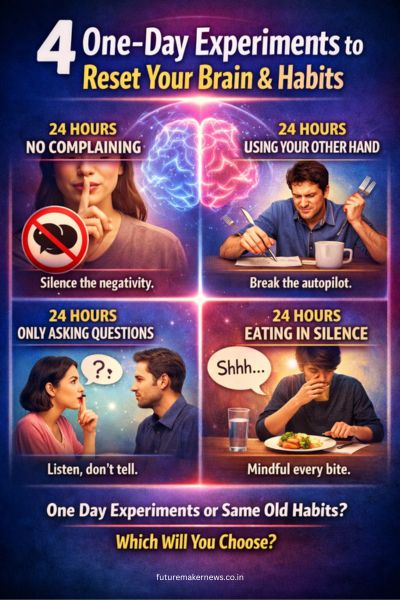
Illustration showing four one-day experiments to reset the brain and habits: no complaining, using the non-dominant hand, asking only questions, and eating in silence.

Can One Day Really Change Your Brain?

Brain- Most people assume habit change requires months of effort. Neuroscience suggests otherwise.
Short, intentional disruptions can activate neuroplasticity, interrupt autopilot behaviors, and increase self-awareness—even in just 24 hours.

These four one-day habit experiments are simple, uncomfortable, and surprisingly effective. Each targets a different mental loop: negativity, automatic behavior, poor listening, and mindless consumption.

1. Go 24 Hours Without Complaining

Complaining is one of the most ingrained mental habits. Studies in cognitive psychology show that repeated negative thought patterns strengthen neural pathways associated with stress and reactivity.

When you stop complaining for one day, you interrupt those loops.

Benefits:

  • Reduces mental noise
  • Improves emotional regulation
  • Increases awareness of negative self-talk

This process is sometimes referred to as neuroplastic silence—when the brain begins to loosen old patterns simply because they are no longer repeated.

2. Stop Using Your Dominant Hand for 24 Hours

Use your non-dominant hand to eat, write, brush your teeth, and perform daily tasks.

This simple disruption forces the brain out of automatic mode. Research on motor learning shows that unfamiliar movements activate new neural pathways and increase focus.

Benefits:

  • Breaks autopilot behavior
  • Improves attention and mindfulness
  • Stimulates neuroplasticity

The goal isn’t skill—it’s awareness.

2. Stop Using Your Dominant Hand for 24 Hours

Use your non-dominant hand to eat, write, brush your teeth, and perform daily tasks.

This simple disruption forces the brain out of automatic mode. Research on motor learning shows that unfamiliar movements activate new neural pathways and increase focus.

Benefits:

  • Breaks autopilot behavior
  • Improves attention and mindfulness
  • Stimulates neuroplasticity

The goal isn’t skill—it’s awareness.

4. Eat in Complete Silence for 24 Hours

  • No phone. No television. No conversation.

Eating without distractions reveals how often we consume food mindlessly. Mindful eating studies show that silence increases satiety awareness and improves self-control.

Benefits:

  • Resets relationship with food
  • Improves digestion awareness
  • Strengthens discipline through mindfulness

You don’t need a new diet. You need attention.

Why One-Day Experiments Work

A single day functions as a microcosm of long-term behavior. It exposes:

  • Automatic habits
  • Emotional triggers
  • Learned behaviors mistaken for identity

People who resist these experiments often believe habits are fixed. Those who try them treat habits as modifiable systems.

The difference isn’t willpower—it’s experimentation.

Final Thoughts: Are Your Habits Identity—or Experiments?

Some say, “One day can’t change anything.”
Others realize one day reveals everything.

You don’t need motivation to run an experiment.
You need curiosity.

So ask yourself:
Are you defending your habits—or testing them?