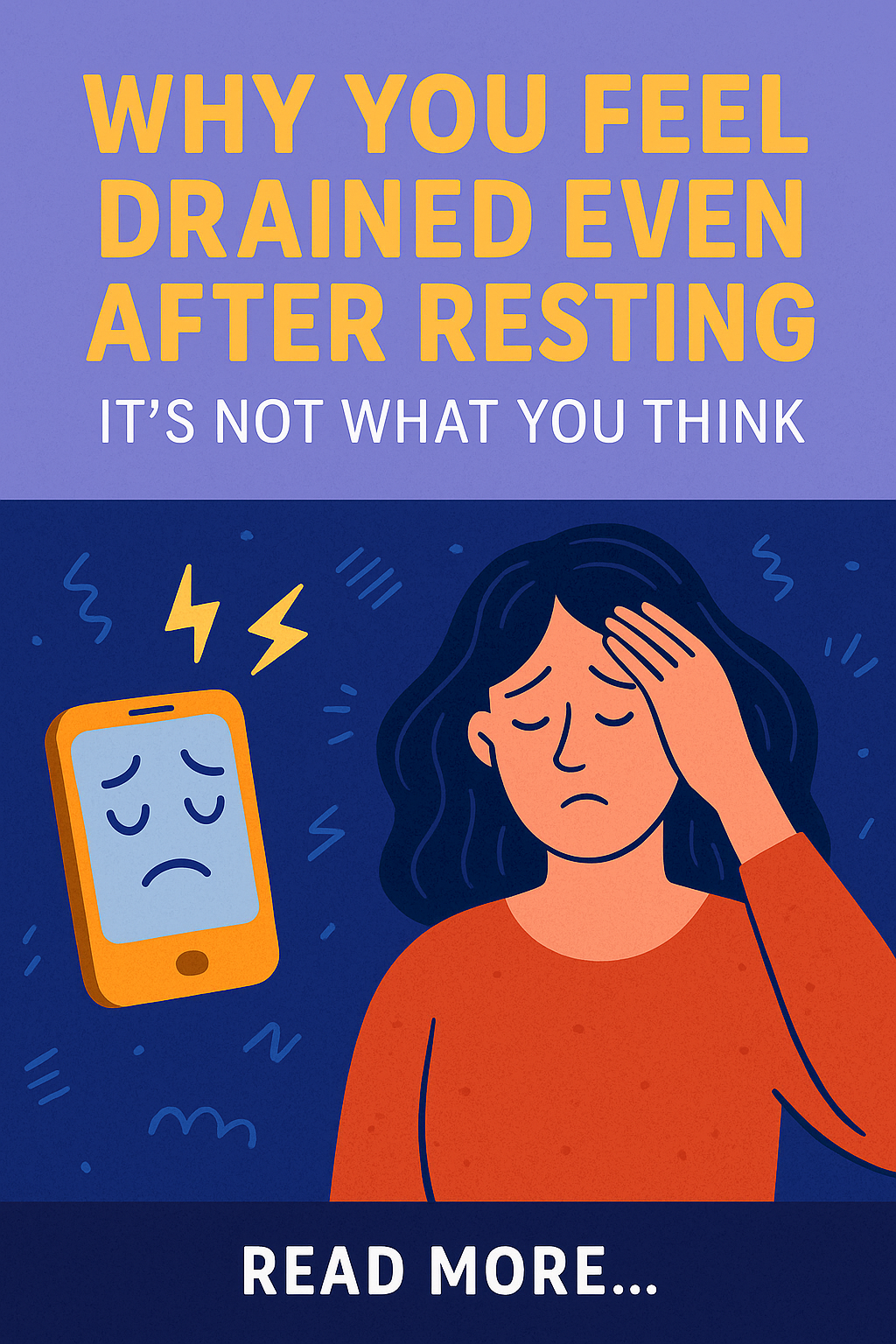
Illustration of a tired woman and a fatigued smartphone representing mental exhaustion and digital overload

Have you ever taken a full day off, done absolutely nothing strenuous, and still felt mentally and physically exhausted? If so, you’re not imagining it. According to recent neuroscience research, rest is no longer just about sleep—it’s about how we manage our brains in a world overloaded with digital noise.

Understanding Modern Fatigue

Feeling drained today doesn’t always come from physical labor. Instead, our mental exhaustion is more linked to constant stimulation, digital multitasking, and neurochemical overload.

1. Glutamate Overload in the Brain

Recent studies show that prolonged mental tasks cause a buildup of glutamate in the prefrontal cortex—the brain region responsible for decision-making. This buildup leads to mental fatigue and reduced cognitive performance.

Source: Medical News Today

2. Constant Digital Exposure Triggers Mental Exhaustion

Every notification, scroll, and video stimulates your brain’s attention system. Over time, this “digital overload” leads to anxiety, forgetfulness, and burnout symptoms.

Source: GoodRx Health

3. Social Media Fatigue Is Real

Heavy social media usage is linked with higher stress and lower self-control. One study found that users often experience information fatigue, reducing their emotional resilience.

Source: PMC Research

4. Your Attention Is Always Divided

The phenomenon of “continuous partial attention”—where you’re never fully focused—keeps your brain in a state of constant low-level stress. This prevents deep rest even when you’re technically relaxing.

Source: Wikipedia

5. Poor Sleep Caused by Screens

Blue light from screens suppresses melatonin, the hormone that signals your body it’s time to sleep. Without quality sleep, your brain doesn’t get the reset it desperately needs.

Source: Digital Detox – Wikipedia

6. Your Brain Was Never Meant for This Pace

Humans evolved with long periods of silence, slowness, and physical activity. Modern tech has created an unnatural mental environment that we’ve never biologically adapted to handle.

How to Truly Recharge – Backed by Neuroscience

  • Take intentional tech breaks – Try 1 hour per day without screens.
  • Use your brain differently – Read books, draw, or reflect in silence.
  • Practice mindfulness – Even 10 minutes a day reduces cortisol and clears your thoughts.
  • Get into nature – Green spaces have proven restorative effects on attention and mood.
  • Sleep better – Avoid screens 1 hour before bed and keep your room dark and cool.
  • Mono-task – Train your brain to focus on one thing at a time to rebuild attention strength.

So next time you feel tired after “doing nothing,” remember—true rest comes not just from lying down, but from shutting out the noise your brain never stops processing.

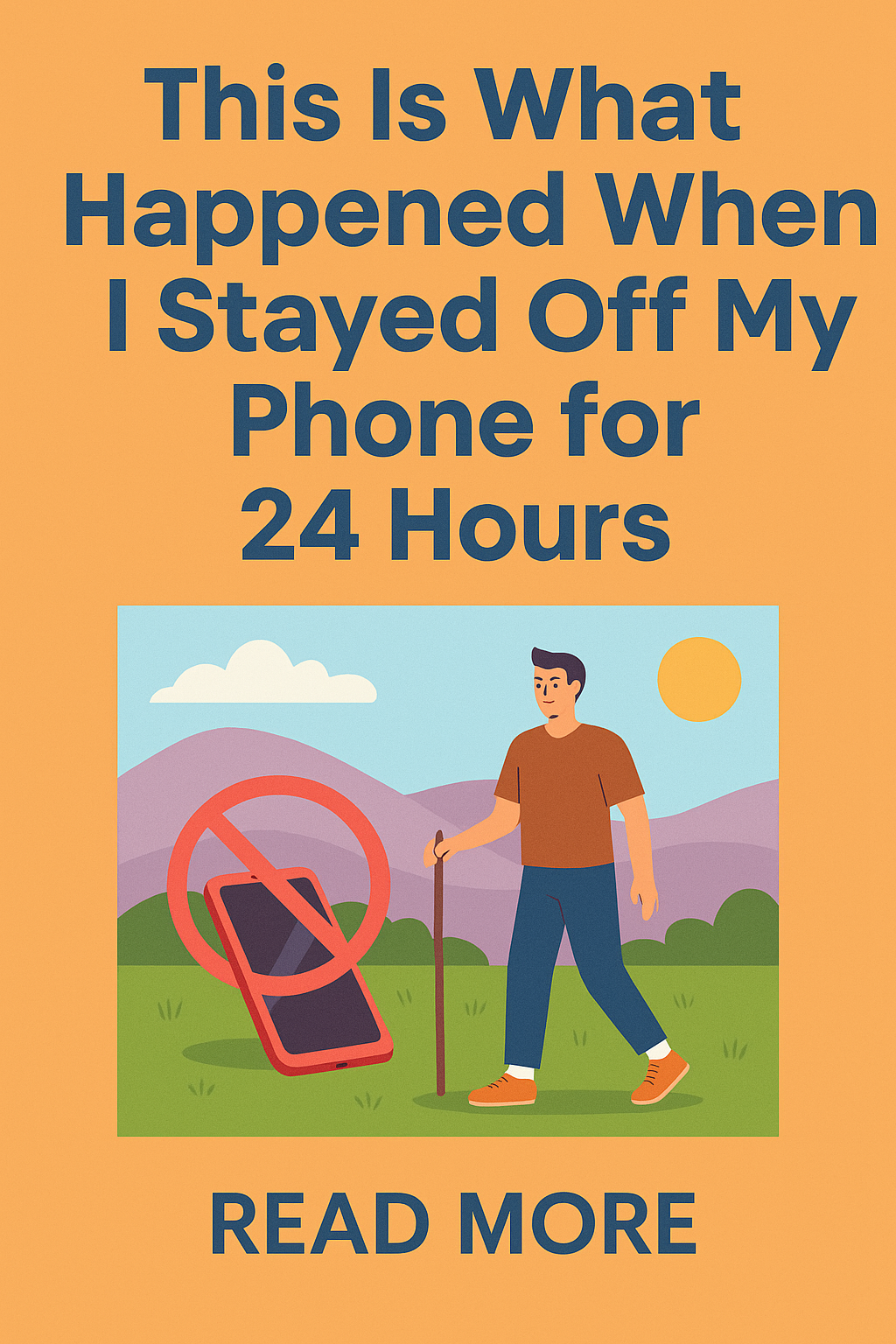
Illustration of a man outdoors with a crossed-out phone, representing a 24-hour digital detox challenge

In a world where we check notifications every few minutes, spending even one hour away from social media sounds unrealistic. But I decided to give it a try—and what happened shocked me.

1. My Thoughts Slowed Down

Without constant scrolling, my mind actually felt like it was breathing. I wasn’t jumping from reel to reel. I was thinking clearly.

2. I Noticed My Environment

For the first time in a while, I looked out the window and noticed the sky, the trees, the little things we often ignore.

3. I Felt Less Anxious

No likes to count, no comparison, no bad news to absorb. That one hour felt like a mini vacation for my brain.

4. I Had Time for Me

I wrote in a notebook. I made tea. I just sat in silence—and it felt calming, not boring.

5. I Realized I Wasn’t Missing Anything

When I went back to my phone, nothing major had changed. But inside, I felt refreshed and lighter.

So, what if you tried the same? You might be surprised too.

It sounded like a simple idea—24 hours without my phone. No scrolling, no swiping, no checking the clock every five minutes. What could possibly go wrong?

1. The First Few Hours Were Restless

I kept reaching for my phone unconsciously. It was like my brain was trained to touch the screen, even when there was no real reason.

2. My Mind Started to Calm Down

By mid-day, something strange happened. I felt present. I noticed sounds, small things, even the breeze on my face. It felt… peaceful.

3. I Talked More, Thought More

I had real conversations without distraction. I journaled. I even found myself just sitting and thinking. When was the last time that happened?

4. I Slept Better Than Ever

No bedtime scrolling. No blue light. I fell asleep faster and woke up clearer. One simple break changed my whole night.

5. I Realized How Dependent I Am

This challenge wasn’t easy—but it showed me how often I use my phone just to fill time. I wasn’t bored. I was free.

Ready to know what changed the most by the end?
Click the link below to read the full experience and try it for yourself.

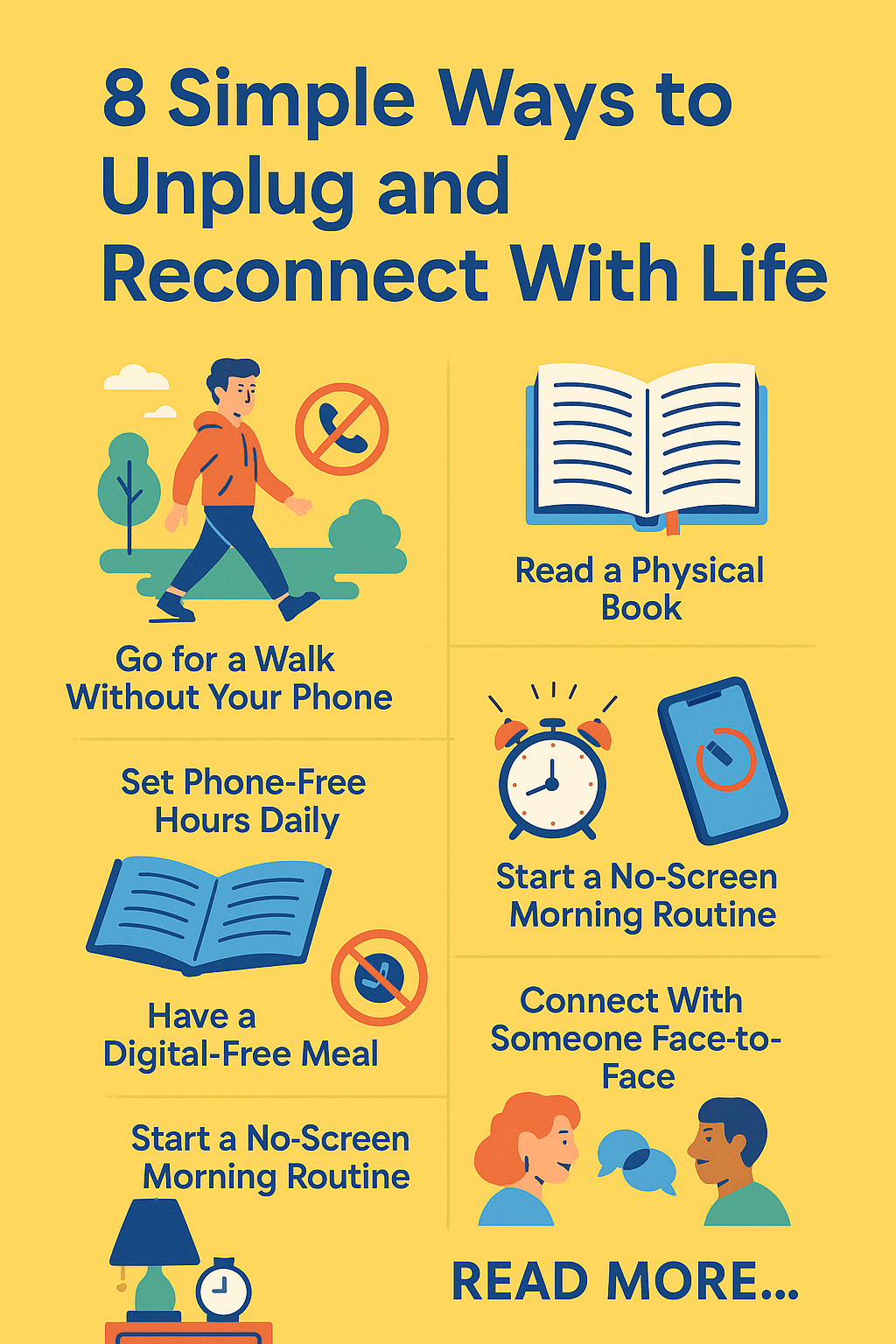
Infographic showing 8 simple ways to unplug and reconnect with life, including walking without a phone, setting phone-free hours, reading a physical book, and more.

In a world that never stops buzzing, sometimes you just need to hit pause. Here are eight practical and realistic ways to unplug from digital overload and reconnect with yourself and the people around you.

1. Go for a Walk Without Your Phone

Take a short walk in the park or around your neighborhood. Focus on what you see, hear, and feel—without any screen distractions.

2. Set Phone-Free Hours Daily

Choose certain hours of the day when you won’t check your phone. Mealtime and bedtime are great places to start.

3. Read a Physical Book

Turn off your device and grab a real book. Let your mind travel without a glowing screen.

4. Limit Screen Time With App Timers

Use built-in phone settings or apps to set daily limits for social media and other high-use platforms.

5. Have a Digital-Free Meal

Whether eating alone or with others, keep your phone out of sight and enjoy your food with full attention.

6. Start a No-Screen Morning Routine

Begin your day without reaching for your phone. Use the first 30 minutes to stretch, write, or simply breathe.

7. Connect With Someone Face-to-Face

Spend quality time with friends or family. Real conversations are refreshing compared to online chats.

8. Create a Wind-Down Routine Before Bed

Turn off screens at least 30 minutes before sleeping. This improves sleep quality and relaxes your mind.

This Is What Happens When You Take a Break From Your Phone

In today’s fast-paced life, we are constantly surrounded by mobile phones, laptops, and social media. From the moment we wake up to the time we go to bed, screens have become a part of our daily routine. But have you ever thought about how this is affecting your health and mind?

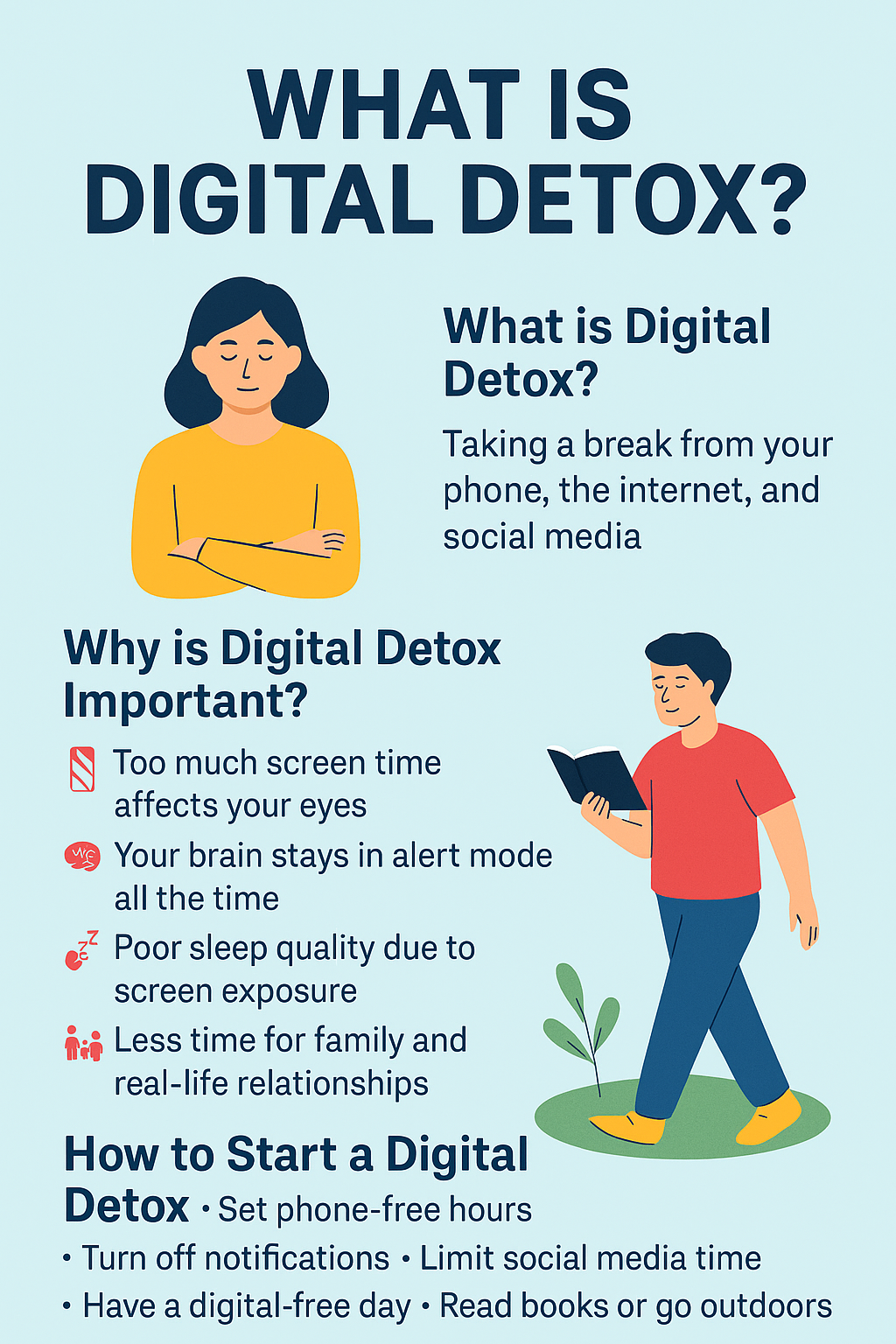
What is Digital Detox?

Digital detox means taking a break from your phone, the internet, and social media for a certain period. It’s like a mental and physical cleanse that helps you feel refreshed and balanced again.

Why is Digital Detox Important?

  • Too much screen time affects your eyes
  • Your brain stays in alert mode all the time, increasing stressPoor sleep quality due to screen exposure
  • Less time for family and real-life relationships

How to Start a Digital Detox – Easy Tips

  1. Set phone-free hours: Stay away from your phone for at least an hour in the morning and before bed.
  2. Turn off notifications: Only keep important alerts on, and mute the rest to avoid distractions.
  3. Limit social media time: Set daily limits for apps like Instagram and Facebook.
  4. Have a digital-free day: Pick one day a week to stay off screens and spend time offline.
  5. Read books or go outdoors: Use your free time to read, walk in a park, or just relax in nature.

What Happens When You Take a Digital Detox?

You’ll notice your mind feels calmer, your sleep improves, and your focus increases. You may also reconnect with people around you and feel more present and joyful in the real world.

Final Thoughts

Being connected online is important, but staying connected to yourself is even more important. Even a few hours of digital detox every week can bring big positive changes in your life. Start today — and feel the difference.

Everyone’s travel preferences are different, which is probably why everyone has that one (or even several) dream trips they’ve been thinking about for awhile. Sometimes that involves being totally alone, no added stress of matching interests and schedules. But what should someone do when it turns out that a friend desperately wants to come with you?

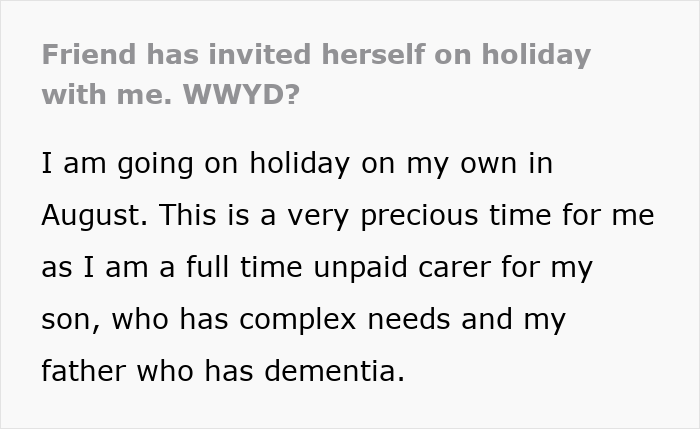
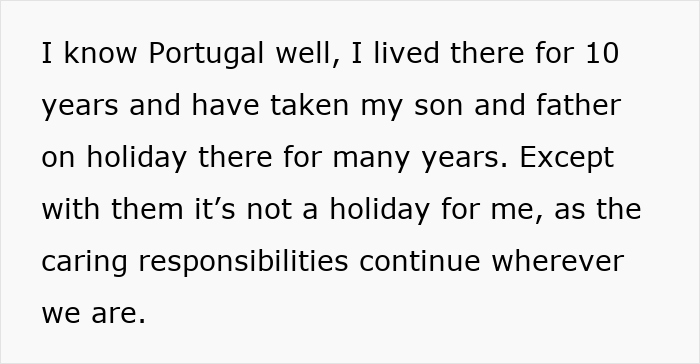
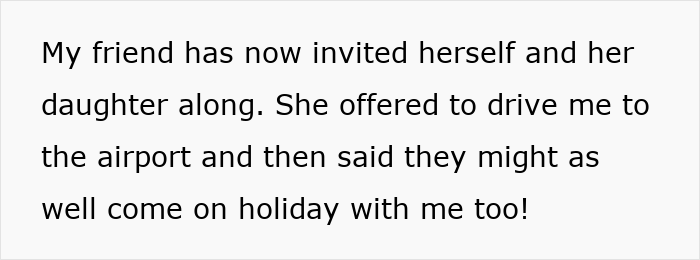
A woman asked the internet for advice on what to do when she learned her friend had just invited herself to join a solo trip to Portugal she was planning. Every move she made to dissuade her didn’t land, so finally she decided to ask netizens what to do and if she was even being unreasonable in the first place.

Telling a friend “no” can be complicated

Woman in yellow dress with suitcase at airport, watching plane take off, reflecting on solo holiday and friend invitation situation

Image credits: Getty Images / Unsplash (not the actual photo)

So one woman turned to people online for advice when her friend invited herself on her trip

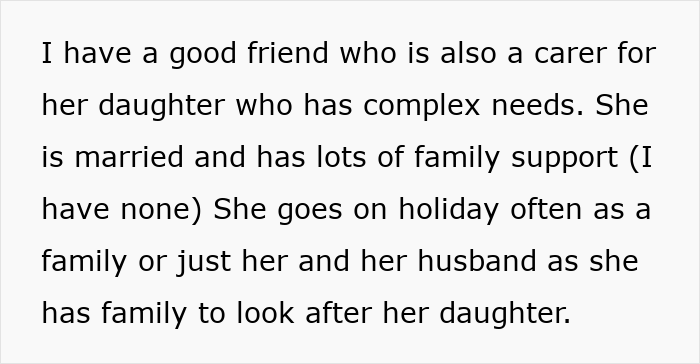
Woman wonders what to do when her friend invites herself on her solo holiday during a precious caregiving break
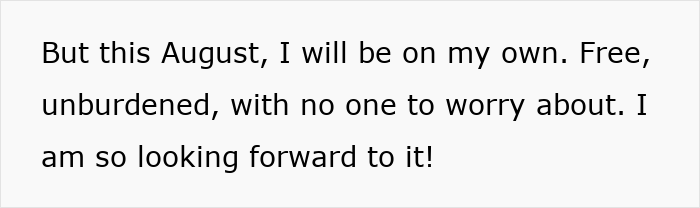
Text about a woman excited for her first solo holiday after arranging respite, wondering what to do when a friend invites herself.
Woman wonders what to do when her friend just invites herself to her solo holiday, feeling conflicted about the situation.
Woman wonders what to do when her friend just invites herself to her solo holiday, feeling unburdened and excited.
Woman looking thoughtful while considering what to do when friend invites herself on solo holiday trip
Woman sitting on sofa, looking concerned while talking on phone, pondering what to do when friend invites herself on solo holiday.

Image credits: freepik / Freepik (not the actual photo)

Woman wonders what to do when her friend invites herself to her solo holiday, causing a dilemma in travel plans.
Woman wonders what to do when her friend unexpectedly invites herself on her solo holiday trip.
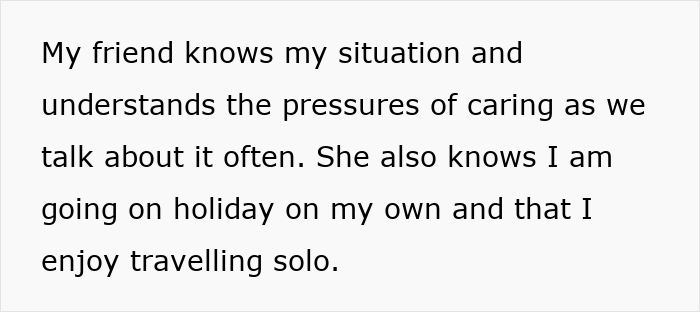
Text discussing a woman wondering what to do when her friend invites herself to her solo holiday and books a nearby hotel.
Text post showing a woman wonders what to do when her friend just invites herself to her solo holiday.

Image credits: OrtsandNoughts

Woman with backpack and hat enjoying a solo holiday, contemplating what to do when a friend invites herself along.

Image credits: Bluewater Sweden / Unsplash (not the actual photo)

Solo travel is a way to just focus on yourself and your needs

Planning a solo trip is all about tailoring every detail to your own pace, interests, and need for discovery. Traveling in a group can be fun, but it often comes with all sorts of complications. One person sleeps in, one is always late, one is a picky eater and so on. So when a friend announces they’re tagging along without actually checking in, it can feel like someone has wandered onto your carefully charted and personalized map. The first step is to take a breath and make sure you understand exactly what happened, sometimes it’s a simple miscommunication rather than a deliberate assumption.

Once you’ve clarified the situation in your own mind, think about why you chose to travel alone in the first place. Perhaps it’s the solitude you crave, the opportunity for uninterrupted reflection, or the freedom to follow whims without compromise. Pinning down your personal reasons will help you explain your perspective clearly and honestly to your friend. Some folks might struggle to understand that even their friends need alone time and it’s very probably not personal. Unfortunately, the internet is full of stories that do show why some folks might not take it the right way.

Having that conversation sooner rather than later is key. A quick, direct chat, ideally in person or over the phone, gives you room to adjust bookings if necessary and prevents awkward last-minute changes. When you talk, frame your words around your needs: “I’m really looking forward to this time alone to reflect,” or “This itinerary is structured around my own interests, and I don’t want to lose that flexibility.” By using “I” statements, you keep the focus on your plans rather than on any perceived misstep by your friend. The fact is, if you let it get to the stage where your friend has already bought tickets, you’ve waited all too long.

Two women drinking coffee and chatting by a window, pondering what to do when a friend invites herself on a solo holiday.

Image credits: lookstudio / Freepik (not the actual photo)

Honesty is important, but it’s also good to be sensitive

If you value the friendship but still want to keep this trip solo, offer an alternative outing. Suggest a weekend getaway or a shorter adventure that suits you both. This shows you appreciate their enthusiasm and enjoy their company, just not on this particular journey. If you truly need the trip to be alone, be firm and kind in your boundary-setting: “I hope you understand, I really need this time to travel solo.” The truth is, if your friend does feel like they are getting enough of your attention, they should understand. At the same time, it’s true, sometimes people have abandonment issues and might struggle.

Many of the readers suggested this, to be clear that this is and should be a solo trip, but that you can do more together in the future. Unfortunately, time is of the essence, since it gets a lot harder to cancel things the closer you get to them. In this case, perhaps in the worst scenario, the friend can go on the trip and both can just do things separately.

Your friend might feel disappointed or even a little hurt, and that’s okay. Give them space to process, and stay calm if they react emotionally. Remember that their impulse likely sprang from excitement rather than disregard for your plans. Once you’ve made your position clear, wrap up any logistical changes, cancel that extra hotel bed or amend your restaurant reservations, then refocus on the adventure ahead.

Solo travel is a form of self-care, a chance to disconnect and recharge on your own terms. Protecting that intention isn’t selfish; it’s essential. By approaching the situation with honesty, respect, and a dash of empathy, you’ll keep your travel dreams intact, and preserve the friendship for the many journeys you might take together in the future. The fact is that forcing yourself to have this trip the way you don’t want it will just breed resentment. If she wants to preserve this friendship, it’s important to realize that short term discomfort is still a better option than secretly hating her forever.


When The White Lotus season 3 dropped, not only did the series hook millions of viewers, but it also threw a spotlight on its cast. While many big names were involved in the dark comedy-drama, some of them garnered a whole new fan base.

Particularly the actor who’s the subject of our article today, who charmed his way into many hearts and became an appealing symbol for quite a few fans. However, they fell in love with him yet again when his high school yearbook picture went viral, as his perfect hair and pearly white smile literally screamed heartthrob!

Young Walton Goggins smiling in a high school yearbook photo wearing a patterned shirt with tousled hair.

Teddi Mellencamp bravely showed off her multiple brain surgery scars as she walked the red carpet at the Women’s Cancer Research Fund’s gala.

On Monday, the former “Real Housewives of Beverly Hills” star chose not to wear a wig to the annual event at the Beverly Hilton hotel in Beverly Hills, Calif., as she posed for solo shots and with her pal Kyle Richards.

For the special night, Mellencamp stunned in a plunging black pantsuit and silver chrome heels. She accessorized her look with silver necklaces and diamond stud earrings.

Teddi Mellencamp at An Unforgettable Evening in 2025.
Teddi Mellencamp bravely showed off her multiple brain surgery scars as she walked the red carpet at the Women’s Cancer Research Fund’s gala.

Teddi Mellencamp bravely showed off her multiple brain surgery scars as she walked the red carpet at the Women’s Cancer Research Fund’s gala.

Kyle Richards and Teddi Mellencamp at An Unforgettable Evening in 2025.
The former “Real Housewives of Beverly Hills” star chose not to wear a wig to the annual event at the Beverly Hilton hotel in Beverly Hills, Calif., Monday, as she posed for solo shots and with her pal Kyle Richards.

The former “Real Housewives of Beverly Hills” star chose not to wear a wig to the annual event at the Beverly Hilton hotel in Beverly Hills, Calif., Monday, as she posed for solo shots and with her pal Kyle Richards.

Teddi Mellencamp at An Unforgettable Evening in 2025.

Richards, 56, coordinated with her pal, wearing a low-cut white pantsuit with black lapels and black pumps.

Mellencamp’s appearance at the gala comes less than a week after she gave an “exciting” update on her stage 4 cancer battle.

“The crying is already done,” the former reality star said in a video shared to Instagram last Wednesday.

“I just finished with all of my scans and my tumors have significantly shrunk, which doctors believe means that this [treatment] all will work and that I will be back to myself and feeling good!”

Teddi Mellencamp in the hospital

Mellencamp’s appearance at the gala comes less than a week after she gave an “exciting” update on her stage 4 cancer battle.

Teddi Mellencamp's scars

The former Bravo star said her tumors have “significantly shrunk” due to treatment.

Mellencamp, 43, added that she has two more sessions of immunotherapy and then “hopefully [she will be] done and cancer-free.”

“I’m gonna keep a positive outlook because that’s the way that my doctor just spoke to me,” she shared. “He’s like, ‘You did this. You got this.’”

The “Two Ts In A Pod” podcast co-host urged her followers in her caption to “get checked” if “something isn’t feeling right.”

Teddi Mellencamp and her kids.

Earlier this month, Mellencamp revealed that she had a “50/50” chance of beating cancer.

Teddi Mellencamp in the hospital

The mom of three announced to her Instagram followers in February that doctors found “multiple tumors” on her brain.

Following the surgery, Mellencamp’s estranged husband, Edwin Arroyave, said she was “grateful” for all the support she’s received.

During the Season 6 finale of “The Kardashians,” the Kylie Cosmetics founder, 27, confided in her mom, Kris Jenner, 69, as she was worried that her low-cut vintage Atelier Versace gown at the Jan. 5 awards show was too revealing.

“Should I have looked like this at the Golden Globes with my tits out?” Jenner, who attended the event with boyfriend and nominee Timothée Chalamet, asked her mom over the phone.

Kylie Jenner Golden Globes 2025

Kylie Jenner had second thoughts about her low-cut Golden Globes 2025 gown.

Kylie Jenner Golden Globes 2025

During the Season 6 finale of “The Kardashians,” Jenner spoke to her mom about the vintage Atelier Versace number.

Kylie Jenner Golden Globes 2025

“Should I have looked like this at the Golden Globes with my tits out?” the Kylie Cosmetics founder asked Kris over the phone.

Kris Jenner on "The Kardashians"

Kris responded, “Yes. You have to wear your best dress to every function you go to no matter what.”

Having her daughter’s back, Kris responded, “Yes. You have to wear your best dress to every function you go to no matter what.”

The momager shared another tip with her youngest child: “It’s like I tell you. You have to wear matching lingerie because if you’re ever in an accident and you have to go to the hospital, you’re gonna have gorgeous lingerie on.”

The mom of two simply replied, “Okay.”

Elizabeth Hurley CFDA Awards 1999

Jenner wore an archival chainmail dress from the designer’s spring 1999 collection, which paid homage to British actress Elizabeth Hurley.

Elizabeth Hurley CFDA Awards 1999

In 1999, Hurley wore a lilac version of the number to the CFDA Awards 1999, attending the affair with her boyfriend at the time, Hugh Grant.

A porn star allegedly decapitated and dismembered a couple before storing their severed heads in a freezer and dumping the rest of their remains in suitcases at a popular landmark, a court in the United Kingdom heard.

Yostin Andres Mosquera, 35, is accused of murdering Albert Alfonso, 62, and Paul Longworth, 71, at their West London apartment on July 8, 2024.

On the night of July 10, Mosquera was spotted 100 miles west in Bristol next to a large red suitcase on the city’s famous Clifton Suspension Bridge, the prosecutor said.

The cyclist who saw Mosquera spoke to him, thinking he might be a lost tourist.

Yostin Andres Mosquera, Alberto Alfonso, and Paul Longworth

Yostin Andres Mosquera, left, is accused of murdering Alberto Alfonso and Paul Longworth in their West London home.

But inside were the decapitated and dismembered remains of Longworth and Alfonso, the prosecutor said.

Additional body parts were found in a large silver trunk Mosquera had with him, and the couple’s heads were found in a chest freezer at their apartment.

Mosquera, a Colombian national, had been hired to have “extreme sex” with Alfonso when he attacked and killed him, the Old Bailey court in London heard.

Yostin Andres Mosquera

Mosquera, a Colombian national, allegedly decapitated the couple and stored their heads in a chest freezer.

Yostin Andres Mosquera

Mosquera was spotted 100 miles away two days after the alleged murders with two suitcases that prosecutors say contained the couple’s remains.

Longworth was allegedly killed first after being attacked with a hammer to the back of his head, before Alfonso died from repeated stab wounds, the court heard.

Mosquera was also allegedly recorded singing and dancing following the attack.

Clifton Suspension Bridge, Bristol, UK

A forensic tent on the landmark Clifton Suspension Bridge in Bristol, England, where the suitcases containing the remains were found.

He admitted to the manslaughter of Alfonso during a hearing on Tuesday, but the prosecution rejected his plea.

Mosquera “could hardly deny” killing Alfonso, as the attack took place while the pair were having sex, and both the sex and the death were filmed, prosecuting attorney Deanna Heer KC said.

‘Extreme sex’

Alfonso liked having “extreme sex” with Mosquera and another unidentified man, whom Longworth knew about and accepted, but had “nothing to do with,” the prosecutor said.

Yostin Andres Mosquera, left alongside Alberto Alfonso (centre) and Paul Longworth (right)

Alfonso and Longworth had flown out to Colombia to see Mosquera more than once.

These degrading acts were often filmed and posted online, with Mosquera described as a “pornographic performer” by the prosecution.

Mosquera had visited the UK from Colombia more than once, spending time with the couple and having sex with Alfonso in exchange for money, and the couple also visited Mosquera in his South American home country.

Police tape in Shepherd's Bush, London

The couple’s heads were found in a chest freezer in their west London apartment.

Pictures show all three smiling together on a boat trip and on a beach during a visit to Colombia, according to images from social media.

Disturbing searches

Following the killings, Mosquera allegedly tried to steal money from the couple, attempting to send more than $5,000 to his own account online, according to prosecutors.

He is also accused of withdrawing more than $1,000 in cash from ATMs before the transactions started being declined — and making a PowerPoint document with all of the couple’s banking information.

In the weeks leading up to the killings, Mosquera allegedly made a series of disturbing searches on his computer, including Googling “serial killers of London,” as well as movies about the infamous Victorian murderer Jack the Ripper.

He also searched for the value of the couple’s home and browsed Facebook Marketplace for a chest freezer.