Laptop showing faceless online business setup with automated systems and digital income streams for introverts

For a long time, the “Internet Dream” was marketed as a loud, extroverted spectacle. It was about being a “personality,” dancing on camera, and documenting every second of your life. But in 2026, the landscape has shifted dramatically. A quiet revolution is happening.

Some of the most profitable businesses on the web today are run by people who value their privacy above all else. Introverts are no longer just participating in the digital economy; they are dominating it. By leveraging faceless channels, niche blogging, and automated backend systems, introverts are building high-revenue empires from the comfort of their home offices.

This guide explores the exact blueprint introverts are using to turn “quiet time” into passive income.

1. The Power of the “Faceless” Brand

Laptop displaying a faceless YouTube channel setup with video editing and voiceover tools representing anonymous content creation
You don’t need to be seen to succeed—faceless brands turn strategy and systems into scalable income.

The biggest hurdle for many introverts is the pressure to be the “face” of a brand. Fortunately, the rise of AI-driven content and high-quality stock footage has made the “personality-led” model optional.

  • Faceless YouTube Channels: These channels use cinematic stock footage, screen recordings, or 2D animations paired with professional voiceovers.
  • The “Cash Cow” Strategy: These channels focus on high-CPM niches like finance, technology, and luxury lifestyle, where the information is the star, not the person.
  • Voiceover Tech: With 2026-level AI voice synthesis, you can now generate human-like narration that sounds warm and authoritative without ever picking up a microphone.
  • Anonymity as a Asset: Being anonymous allows you to pivot your brand without personal backlash and makes the business much easier to sell later on.

2. Strategic Blogging: The Introvert’s Natural Playground

Person working on a blog article with SEO content on a laptop representing introvert-friendly online income strategy
Strategic blogging turns quiet focus into powerful authority, traffic, and long-term digital income.

Writing is the ultimate introverted superpower. It allows for deep thought, careful editing, and a lack of real-time social pressure. Niche blogging remains one of the most stable ways to generate online wealth.

  • Long-Form Value: While social media platforms favor “snackable” content, Google and AI search engines still crave deep, authoritative articles.
  • SEO Dominance: By targeting long-tail keywords, introverts can capture highly specific traffic that big media houses overlook.
  • Monetization via Expertise: A blog isn’t just for ads. It’s a platform to sell digital products, e-books, and specialized templates.
  • E-E-A-T (Experience, Expertise, Authoritativeness, Trustworthiness): Introverts excel at the “Expertise” part, providing deep dives that build massive trust with a reading audience.

3. Mastering the “Backend System”

Laptop displaying automated email funnels, analytics dashboards, and SaaS tools representing backend systems for passive online income
Build systems once, and let them work for you 24/7—backend automation is the real engine of passive income.

Introverts often prefer “systems” over “socializing.” This is why backend systems—the technical engines that run a business while you sleep—are the secret weapon of the quiet entrepreneur.

  • Automated Email Funnels: Once you capture a lead, an automated sequence can nurture that relationship and make sales for years without you ever sending a manual email.
  • Membership Portals: Building a gated community where users pay for access to information allows you to moderate on your own terms, often via text-based forums.
  • SaaS and Micro-SaaS: Many introverted developers build small software tools that solve one specific problem. These “set and forget” tools generate recurring revenue with minimal customer interaction.
  • Workflow Automation: Using tools to sync your social media, blog, and shop means you spend more time creating and less time “managing.”

4. Why Introverts Excel at High-Intent Content

Person analyzing keyword research and data on a laptop representing high-intent content strategy and deep focus work
Introverts win online by thinking deeper, researching smarter, and solving real problems—not chasing attention.

As we discussed in previous sessions, high-intent keywords are the key to profitability. Introverts are naturally wired to understand this because they tend to be observers and researchers.

  • The Researcher Mindset: Introverts will spend hours digging into a topic, finding the “gaps” in the market that extroverts might miss in their rush to go live.
  • Solving over Selling: Introverted content tends to be more helpful and less “salesy.” In 2026, consumers are weary of the “hype man” and gravitate toward the “problem solver.”
  • Data-Driven Decisions: Without the distraction of chasing “likes” for ego, introverts can focus strictly on the conversion metrics that actually pay the bills.

Profitable “Quiet” Niches for 2026

If you’re looking to start a faceless business, certain niches are naturally more “introvert-friendly” than others.

NicheWhy it Works for IntrovertsPrimary Revenue Stream
Personal FinancePurely data and strategy focused.Affiliate Marketing
Software TutorialsScreen-sharing only; no camera needed.Sponsorships
Self-ImprovementFocuses on psychology and deep work.Digital Products
Travel GuidesUses beautiful B-roll and maps.Ad Revenue
Home AutomationHighly technical and process-oriented.Consulting

The “Social” Aspect: Networking without the Noise

Even an introvert needs a network, but in the digital world, networking doesn’t have to mean “parties.”

  • Text-Based Networking: Engaging in high-level Twitter (X) threads or LinkedIn comments allows you to build a reputation through your ideas, not your charisma.
  • Collaboration by Mail: Reaching out to other creators for “ghost collaborations” where you provide the research or the script while they provide the platform.
  • Micro-Communities: Instead of a massive Facebook group, introverts thrive in small, private Discord or Slack channels where the conversation is focused and manageable.

Overcoming the “Imposter Syndrome” Trap

Many introverts feel that because they aren’t “out there,” they aren’t successful. This is a cognitive distortion.

  • Profit is the Metric: Your bank account doesn’t care if people know your face. If your backend systems are working, you are a successful entrepreneur.
  • The “Quiet Authority”: There is a unique power in being the “unseen hand.” Some of the most influential voices in tech and finance are people whose faces you would never recognize in a grocery store.
  • Focus on the Craft: When you stop worrying about how you look on camera, you can put 100% of your energy into the quality of your content strategy.

Protecting Your Energy: The Introvert’s Schedule

Sustainable money making for an introvert requires a schedule that prevents burnout.

  • Batch Processing: Do all your “social” tasks (emails, comments, outreach) in one 2-hour block once a week.
  • Deep Work Blocks: Reserve your most energetic hours for the “creation” phase—writing, coding, or editing.
  • Automation First: If a task can be done by a bot or a $10/month subscription, let the machine handle it. Your energy is your most limited resource.

Scaling Without Social Overload

The beauty of a faceless channel or a blogging empire is that it scales horizontally.

  • Multi-Site Ownership: Instead of making one blog bigger (which requires more management), you can own five small, automated sites in different niches.
  • Outsourcing the Loud Parts: If your business eventually requires a “voice” or a “face,” you can hire an actor or a spokesperson. You remain the CEO and Architect, while they handle the public-facing noise.
  • The Exit Strategy: Faceless businesses often sell for higher multiples because they aren’t dependent on a specific person’s presence to function.

Final Thought: The World is Listening to the Quiet

The 2026 digital economy is perfectly designed for the introvert. The tools have caught up to your need for privacy. You no longer have to scream to be heard; you just have to be the most helpful person in the room.

By focusing on search intent, building robust backend systems, and mastering the art of the faceless brand, you can build a life of total freedom. You don’t need a stage. You just need a laptop and a plan.

Digital product templates displayed on a laptop representing passive income and scalable online business

The gold rush of the digital age isn’t found in viral fame or crypto speculation—it’s found in utility. While most people are trying to become the next big influencer, a quiet group of creators is building massive wealth by selling things that solve boring, everyday problems. We are talking about the “quiet winners” who master the art of the digital product.

The secret to a product that “sells itself” isn’t fancy marketing. It’s about creating evergreen templates, budgeting sheets, and problem-solving products that address a specific pain point. When you provide a shortcut to a result, people don’t just buy; they thank you for the opportunity to pay.

The Psychology of the “Self-Selling” Product

Minimal workspace showing a digital product on a laptop symbolizing time-saving and self-selling online income tools
A great digital product doesn’t need hype—it sells itself by saving time, reducing effort, and delivering instant results.

Why do some products require a high-pressure sales pitch while others fly off the digital shelves? The difference is intrinsic value. A product sells itself when the user realizes that the time saved is worth significantly more than the price tag.

  • The Time-Money Trade-off: Humans will always choose the path of least resistance. If your digital download saves someone five hours of work, they will gladly pay $27 for it.
  • The Decision Gap: A great product closes the gap between “I want to do this” and “It is done.”
  • Low Friction: When a product is digital, the gratification is instant. No shipping, no waiting, just immediate relief.

To make money online sustainably, you must move away from “one-off” trends and toward evergreen digital assets.

The Power of Evergreen Templates

Evergreen templates turn one-time effort into long-term income by delivering value that never expires.
Laptop displaying digital templates for social media, business, and resumes highlighting scalable evergreen products

An evergreen template is a product that remains relevant year after year. It isn’t tied to a specific news cycle or a fleeting social media trend. It is a tool that people will need today, tomorrow, and three years from now.

Why Templates are the Ultimate Scalable Product

  • Build Once, Sell Forever: You invest the effort upfront, and the marginal cost of selling the 1,000th unit is zero.
  • High Perceived Value: A well-designed Canva template or Notion dashboard looks professional and expensive, even if it’s affordable.
  • Customizability: Users love templates because they can tweak them to fit their personal brand, making the product feel bespoke.

Top-Selling Template Categories

  • Social Media Kits: Instagram aesthetic layouts or LinkedIn carousel frames.
  • Business Operations: Brand identity guidelines, client onboarding questionnaires, and service agreements.
  • Resume & Career: Modern, ATS-friendly CV templates that help job seekers stand out.

By focusing on templates, you aren’t just selling a file; you are selling a “professional transformation.”

Budgeting Sheets: The Mathematics of Peace of Mind

Laptop showing a budgeting spreadsheet with charts and expense tracking tools for financial planning
A simple budgeting sheet can transform financial chaos into clarity, control, and confidence.

Financial stress is a universal human experience. This is why budgeting sheets and financial planners are some of the most consistent best-sellers in the digital marketplace. When people feel out of control, they look for a system.

  • Excel and Google Sheets Wizards: You don’t need to be a coder. A highly functional, automated Google Sheets budget tracker is a high-value asset.
  • Specific Use Cases: Don’t just make a “budget.” Make a “Wedding Budget Planner,” a “Debt Snowball Calculator,” or a “First-Time Homebuyer Savings Tracker.”
  • Visual Gratification: Products that include automated charts and progress bars provide a dopamine hit that keeps users coming back.

The “intent” behind someone searching for a budgeting tool is incredibly high. They have a problem (money stress) and are actively looking for a dashboard to solve it.

Problem-Solving Products: The “Painkiller” Strategy

In the world of digital marketing, you can sell “vitamins” (things that are nice to have) or “painkillers” (things that stop a specific hurt). Problem-solving products are the ultimate painkillers.

Identifying the Pain

To create a product that sells itself, you must look for “micro-frustrations.”

  • The Spreadsheet Struggle: “I can’t get my data to look right.” -> Solution: A data visualization template.
  • The Content Block: “I don’t know what to write.” -> Solution: 365 Days of Content Prompts.
  • The Organization Chaos: “I can’t keep track of my projects.” -> Solution: A Notion Project Management System.

The “A-to-B” Formula

Every successful digital product should take a user from Point A (Confusion/Stress) to Point B (Clarity/Result) as fast as possible. If your product does this effectively, word-of-mouth marketing will do the heavy lifting for you.

How to Optimize Your Product for “High Intent” Sales

Creating the product is only half the battle. To ensure it “sells itself,” you need to position it where people are already looking. This involves SEO-friendly descriptions and high-conversion landing pages.

  • Keyword Rich Titles: Instead of naming your product “The Organizer,” name it “Complete Notion Life Planner for Small Business Owners.”
  • Benefit-Driven Bullet Points: Don’t list features; list outcomes. “Automatic calculations” becomes “Save 2 hours every week on manual math.”
  • Social Proof Integration: Even a few testimonials can increase conversion rates by 200%. People want to see that the “painkiller” worked for someone else.

By using high intent keywords in your product listings, you capture traffic from people who are ready to buy now.

Choosing Your Platform: Where the Buyers Are

You don’t need a massive website to start. You can leverage existing marketplaces that already have Micro Traffic looking for your specific solution.

  • Etsy: The powerhouse for budgeting sheets and Canva templates.
  • Gumroad/Lemon Squeezy: Perfect for minimalist, high-tech, or developer-focused digital assets.
  • Shopify: If you want full control over your brand and email marketing list.
  • Creative Market: The go-to for high-end design assets and professional evergreen templates.

The key is to meet the customer where their “search intent” begins.

Pricing for Profit and Volume

One of the biggest mistakes creators make is mispricing their digital products.

  • The “Tripwire” Price ($7 – $27): This is the sweet spot for impulse buys. It’s low enough that the user doesn’t need to “think” about it, but high enough to build a significant income on volume.
  • The “Premium” Tier ($47 – $197): This is for comprehensive systems, like a full business-in-a-box template.
  • The Upsell Strategy: Once someone buys your budgeting sheet, offer them a “Financial Goal Setting Masterclass” at a discount.

This is how you turn a single digital download into a high-revenue business model.

Staying Ahead: The 2026 Digital Product Landscape

As we move through 2026, the market is becoming more discerning. “Low-effort” products are being filtered out by AI. To win, your products must have Information Gain.

  • Customization is King: Products that allow for easy AI integration or automation are seeing a surge in demand.
  • Hyper-Niche Focus: Stop trying to sell to “everyone.” A budgeting sheet specifically for “Traveling Nurses” will always outsell a generic one.
  • Quality over Quantity: One incredible evergreen asset will out-earn fifty mediocre ones.

Conclusion: Build Your Digital Empire Today

The beauty of digital products is that they democratize wealth. You don’t need a venture capital firm, a massive warehouse, or 100K followers. You just need a deep understanding of a specific problem and the willingness to build a solution once.

Focus on evergreen templates that save time, budgeting sheets that provide clarity, and problem-solving products that eliminate stress. When you align your creativity with the user’s high intent, you create a machine that works for you 24/7.


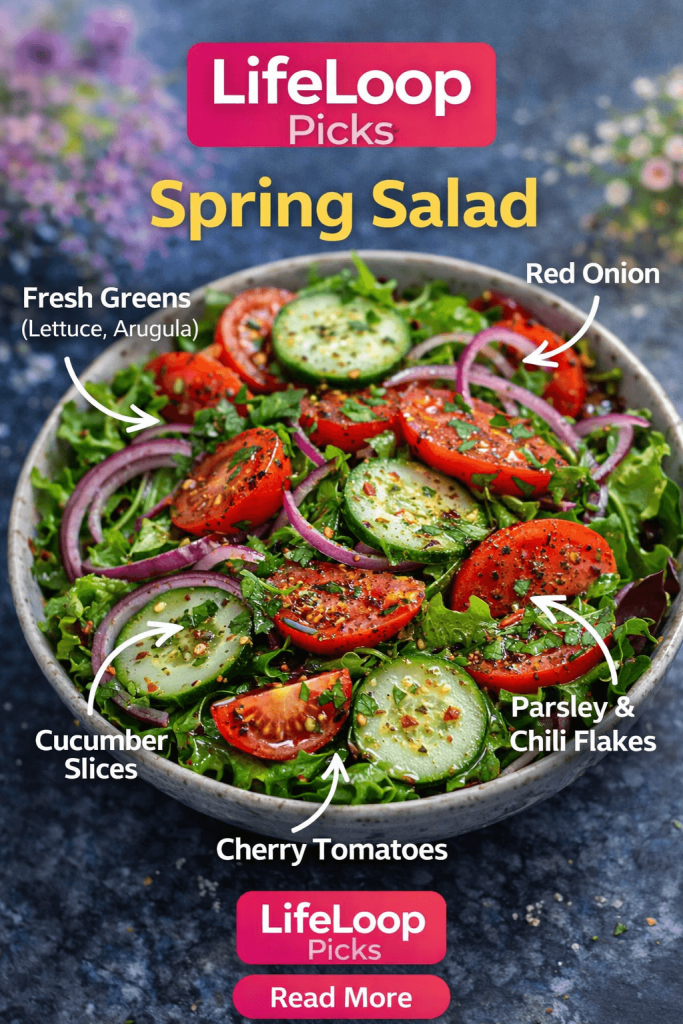
Spring is the season when everything feels fresh, including your food preferences. As the weather gets warmer, heavy meals often feel too much, and your body naturally craves something light and refreshing. This is where spring salad recipes become the perfect choice.

From crisp vegetables to colorful fruits and simple homemade dressings, spring salads are both nutritious and easy to prepare. In this guide, you will discover the best easy spring salad ideas that are ideal for daily meals, quick lunches, and healthy dinners.


Why Spring Salads Are Perfect for Healthy Eating

Spring salads are known for their freshness, simplicity, and nutritional value. Seasonal vegetables and fruits are at their peak during this time, making them more flavorful and rich in essential nutrients.

Including healthy spring salad recipes in your diet can improve digestion, keep you hydrated, and boost your overall energy levels. They are also light on the stomach, making them perfect for warm weather and a busy lifestyle.


Essential Ingredients for a Perfect Spring Salad

Fresh Greens

Fresh greens like lettuce, spinach, and arugula form the base of most spring salad recipes. They provide a crisp texture and are packed with vitamins, minerals, and antioxidants.

Using a mix of greens can enhance both the taste and nutritional value of your salad. Always choose fresh and well-washed leaves to maintain quality and freshness.


Seasonal Vegetables

Vegetables such as cucumbers, carrots, cherry tomatoes, and bell peppers add color, crunch, and flavor to your salad. They are rich in fiber and essential nutrients.

Including a variety of vegetables ensures a balanced and visually appealing dish. Seasonal vegetables also improve the taste and freshness of your easy spring salad ideas.


Fruits for Sweetness

Adding fruits like strawberries, apples, or oranges brings natural sweetness to your salad. This helps balance the overall flavor and makes the dish more enjoyable.

Fruits also provide vitamins and hydration, making them an important part of healthy salad recipes. Combining fruits with greens creates a refreshing and unique taste.


Protein Options

Protein is essential to make your salad more filling and satisfying. Options like grilled chicken, paneer, chickpeas, or boiled eggs work well.

Adding protein transforms a simple salad into a complete meal. It helps maintain energy levels and keeps you full for longer, making it ideal for weight management.


Best Easy Spring Salad Recipes to Try

Classic Garden Spring Salad

This salad includes lettuce, cucumbers, tomatoes, and a light olive oil dressing. It is simple, refreshing, and perfect for everyday meals.

The combination of fresh vegetables makes it a great choice for beginners. It is one of the most popular easy spring salad recipes due to its simplicity.


Fruit & Nut Spring Salad

This salad combines strawberries, apples, walnuts, and fresh greens. It offers a mix of sweet and crunchy textures in every bite.

It is rich in nutrients and provides a balanced flavor profile. This is a great option for those looking for healthy spring salad ideas with a twist.


Chickpea Protein Salad

A mix of boiled chickpeas, onions, tomatoes, and lemon juice creates a protein-rich salad. It is filling and suitable for a healthy lunch.

This salad is easy to prepare and supports digestion. It is ideal for those who want a high-protein option in their spring salad recipes.


Paneer Veggie Salad

This salad includes grilled paneer cubes combined with fresh vegetables and herbs. It is a perfect vegetarian option with high protein content.

The soft texture of paneer blends well with crunchy vegetables. It is one of the best vegetarian spring salad recipes for a balanced meal.


Healthy Salad Dressings You Can Make at Home

Lemon Honey Dressing

A mixture of lemon juice, honey, olive oil, and a pinch of salt creates a refreshing dressing. It adds a slightly sweet and tangy flavor to your salad.

This dressing is light and enhances the natural taste of ingredients. It is a popular choice for healthy salad dressing recipes.


Yogurt Mint Dressing

Blending curd with mint leaves and mild spices creates a cooling dressing. It is perfect for Indian-style salads and summer meals.

This dressing supports digestion and adds a creamy texture. It is ideal for those looking for low-calorie salad dressings.


Olive Oil & Herbs

A simple mix of olive oil, oregano, and black pepper enhances the natural flavors of your salad. It is light and easy to prepare.

This dressing works well with most salads and keeps them healthy. It is a must-have in your list of easy salad dressing recipes.


Quick Tips to Make the Best Spring Salad

Using fresh and seasonal ingredients is key to making a great salad. Always ensure that your vegetables and fruits are clean and crisp.

Keep your salad colorful and balanced by mixing different textures and flavors. Avoid heavy dressings and focus on light, natural options. Adding nuts or seeds can improve both taste and nutrition.


FAQs About Spring Salad Recipes

1. What are the best ingredients for a spring salad?
Fresh greens, seasonal vegetables, fruits, and protein options like paneer or chicken are ideal for creating a balanced and nutritious spring salad.

2. Are spring salads good for weight loss?
Yes, spring salads are low in calories and rich in nutrients, making them perfect for weight management and healthy eating.

3. How can I make my salad more filling?
Adding protein sources such as chickpeas, paneer, eggs, or grilled chicken helps make your salad more satisfying and energy-rich.


Conclusion

Spring salads are not just a side dish; they are a complete and healthy meal option. With fresh ingredients, simple dressings, and endless combinations, you can enjoy a variety of flavors every day.

They are quick to prepare, nutritious, and perfect for maintaining a healthy lifestyle. Try these spring salad recipes and make your meals lighter, fresher, and more satisfying.


SEO Meta Details

Meta Title: Best Spring Salad Recipes | Easy & Healthy Ideas

Meta Description: Discover easy and healthy spring salad recipes with fresh ingredients, simple dressings, and high-protein options for daily meals.

Keywords: spring salad recipes, healthy spring salad, easy spring salad ideas, fresh salad recipes, high protein salad recipes

Slug: /best-spring-salad-recipes


If you want next level 🚀
I can create:
✅ Pinterest viral pins (ready to post)
✅ Featured images like you made
✅ Internal linking SEO strategy

Just say next 😎


After a long day of fasting, Iftar becomes the most awaited part of the day. The first sip of a refreshing drink and the first bite of food bring instant comfort and satisfaction. However, planning meals every day during Ramadan can become tiring and confusing.

That is why having a list of well-planned iftar recipes makes a big difference. This guide includes easy, healthy, and delicious options that help you prepare balanced meals without stress. Whether you are cooking for your family or guests, these ideas will make your Ramadan more enjoyable.


Why Choosing the Right Iftar Recipes Matters

After fasting for several hours, your body needs proper nutrition to recover. Eating heavy or oily food can slow digestion and make you feel tired instead of energized. Choosing the right iftar recipes helps restore energy levels effectively.

A balanced Iftar should include hydration, protein, and light carbohydrates. This combination supports digestion and keeps you active throughout the evening. Making smart food choices ensures that your fasting routine remains healthy and sustainable.


Easy Iftar Snack Recipes to Start Your Meal

Samosa & Pakora (Classic Favorites)

Samosas and pakoras are traditional snacks that are widely enjoyed during Iftar. Their crispy texture and rich flavors make them a popular choice across households. They can be prepared in advance and quickly fried or air-fried when needed.

These snacks are ideal for starting your meal, but it is important to consume them in moderation. Pairing them with chutneys or yogurt can enhance the taste while maintaining balance in your meal.


Fruit Chaat

Fruit chaat is one of the healthiest and most refreshing Iftar options. It combines seasonal fruits with a light sprinkle of spices, offering both taste and nutrition. The natural sugars in fruits provide instant energy after fasting.

This dish is easy to prepare and helps keep the body hydrated. It is also a great option for those looking to include more healthy iftar food ideas in their routine.


Dahi Bhalla

Dahi bhalla is a soft and cooling dish made with lentil dumplings soaked in yogurt. It is light on the stomach and helps soothe digestion after a long fast. The combination of sweet and tangy chutneys adds a rich flavor.

This dish is perfect for balancing heavier foods in your Iftar menu. It also provides a good mix of protein and probiotics, making it both tasty and nutritious.


Healthy Iftar Recipes for a Balanced Meal

Dates & Milk

Starting Iftar with dates is a traditional and healthy practice. Dates provide quick energy and help regulate blood sugar levels after fasting. When paired with milk, they offer a complete nutritional boost.

This combination is simple yet highly effective in restoring energy. It prepares your body for the rest of the meal and supports overall digestion.


Grilled Chicken or Paneer

Grilled dishes are a healthier alternative to fried foods. They are rich in protein and help keep you full for a longer time. Chicken and paneer are both excellent options depending on your preference.

Including grilled items in your iftar recipes ensures a balanced intake of nutrients. It also helps maintain energy levels without feeling heavy or uncomfortable.


Sprout Salad

Sprout salad is a nutritious and light dish that fits perfectly into a healthy Iftar plan. It includes sprouts, fresh vegetables, and a hint of lemon juice for flavor. This combination provides fiber, vitamins, and protein.

It is easy to prepare and supports digestion after fasting. Adding sprout salad to your meal is a great way to include more healthy iftar recipes in your diet.


Refreshing Drinks for Iftar

Rooh Afza & Lemonade

Traditional drinks like Rooh Afza and lemonade are widely consumed during Iftar. They help cool the body and provide instant refreshment. These drinks are especially useful in hot weather.

They also help restore hydration levels after a long day of fasting. Including such beverages ensures that your body remains energized and refreshed.


Fresh Fruit Juices

Fresh fruit juices are a natural way to regain lost fluids and nutrients. Options like watermelon, orange, and mango juice are both refreshing and energizing. They provide essential vitamins and minerals.

These juices are better than packaged drinks as they contain no preservatives. They are a healthy addition to your iftar recipes list.


Smoothies

Smoothies are a great option for those looking for a filling and nutritious drink. Banana or dates smoothies provide sustained energy and keep you full for longer. They are also easy to prepare.

Including smoothies in your Iftar menu ensures a good balance of nutrients. They are especially useful for people who prefer light yet satisfying meals.


Quick Main Course Iftar Recipes

Chicken Biryani

Chicken biryani is a flavorful and satisfying main course that is perfect for Iftar. It combines rice, spices, and protein, making it a complete meal. Preparing it in advance can save time during busy evenings.

This dish is ideal for family gatherings and special occasions. However, it should be consumed in moderation to maintain a balanced diet.


Veg Pulao

Veg pulao is a lighter alternative to biryani and is packed with vegetables and mild spices. It is easy to cook and suitable for those who prefer less oily food.

This dish provides essential nutrients and is gentle on digestion. It is a great option for maintaining a healthy balance in your Iftar meals.


Khichdi

Khichdi is one of the most comforting and easy-to-digest dishes for Iftar. Made with rice and lentils, it is light yet nourishing. It is especially helpful after long fasting hours.

This dish supports digestion and provides essential nutrients without being heavy. It is a perfect addition to a simple and healthy Iftar menu.


Tips to Plan Your Iftar Menu Efficiently

Planning your Iftar meals in advance can reduce stress and save time. Preparing ingredients earlier and organizing your menu helps maintain consistency. It also ensures that you have a balanced mix of dishes.

Try to include both healthy and traditional options in your meals. Avoid overeating and focus on hydration. Rotating different iftar recipes daily can keep your meals interesting and enjoyable.


FAQs About Iftar Recipes

1. What are the best foods to eat at Iftar?
The best foods include dates, water, light snacks, and balanced meals with protein and carbohydrates. These help restore energy effectively.

2. How can I make healthy Iftar recipes?
Choose grilled, baked, or boiled foods instead of fried ones. Include fruits, salads, and fresh drinks for better nutrition.

3. What are quick Iftar recipes for busy days?
Fruit chaat, sandwiches, smoothies, and khichdi are quick and easy options that require minimal preparation time.


Conclusion

Iftar is more than just a meal; it is a time of reflection, gratitude, and togetherness. Choosing the right iftar recipes can make your Ramadan healthier and more fulfilling. Balanced meals help maintain energy and support overall well-being.

By planning ahead and including a mix of healthy and traditional dishes, you can enjoy stress-free evenings. Use these ideas to create a satisfying Iftar experience for yourself and your family.


Introduction

There’s nothing better than a chill beach day—sun, waves, and good vibes. But let’s be real, the wrong food can totally ruin the mood. Melted chocolate, soggy sandwiches, or spoiled food? Big no.

That’s why picking the right beach snacks ideas matters more than you think. You want food that stays fresh, keeps you energized, and is easy to carry. In this guide, you’ll find the best easy beach snacks, healthy options, and smart packing tips so your beach day stays perfect from start to sunset.


Why Choosing the Right Beach Snacks Matters

Beach conditions are very different from your home or picnic spot. Heat, sand, and travel time can affect your food quickly. Snacks that spoil fast or melt easily can turn messy within minutes.

Choosing travel-friendly snacks ensures you spend more time relaxing and less time worrying. Plus, the right food keeps your energy levels up while you enjoy swimming, walking, or just chilling by the shore.


Best Easy Beach Snacks to Pack

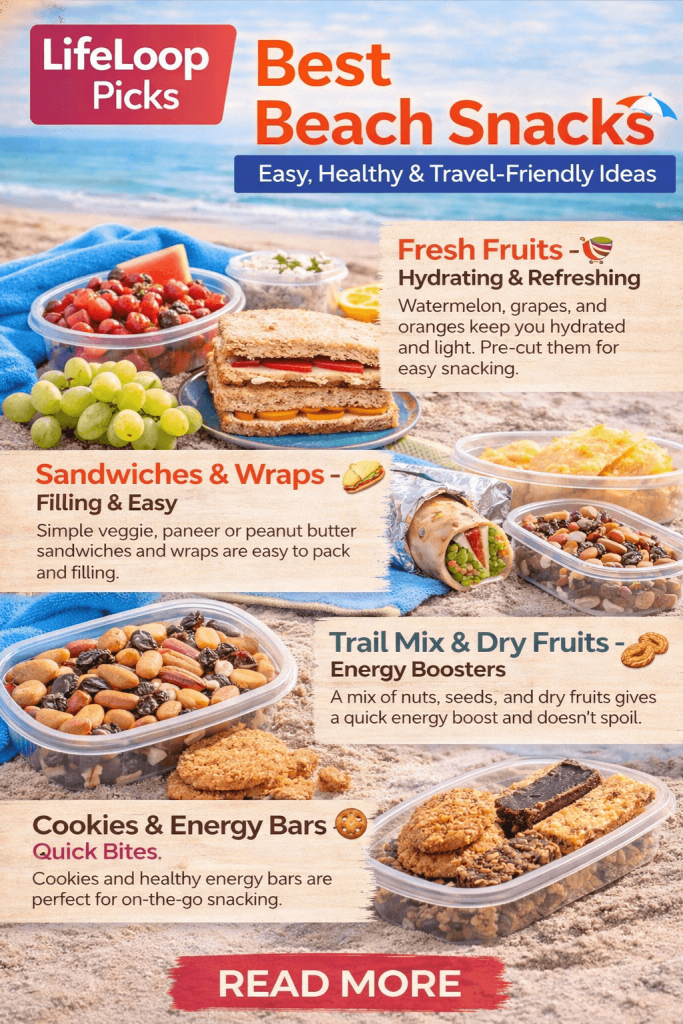
Here are some easy beach snacks that are simple, tasty, and hassle-free:

  • Fresh Fruits (Watermelon, Grapes, Apples)
    These are refreshing, hydrating, and super light. Cut them at home and store in airtight containers for easy access.
  • Sandwiches & Wraps
    Go for simple fillings like veggies, paneer, or peanut butter. Avoid heavy sauces to keep them fresh longer.
  • Chips & Namkeen
    Classic and convenient. They don’t spoil quickly and are perfect for quick munching.
  • Trail Mix (Nuts & Dry Fruits)
    A mix of almonds, cashews, raisins, and seeds gives you instant energy and doesn’t need refrigeration.
  • Energy Bars
    Compact and filling, these are perfect when you need a quick boost after a swim.
  • Cookies or Muffins
    Easy to carry and satisfying for sweet cravings without creating a mess.

Healthy Beach Snacks for a Guilt-Free Day

If you want to enjoy your beach day without feeling heavy, go for healthy beach snacks:

  • Greek Yogurt (in insulated containers)
    High in protein and super refreshing when kept cool.
  • Homemade Smoothies
    Carry them in insulated bottles to keep them fresh for hours.
  • Boiled Corn (Bhutta)
    A beach favorite that’s both tasty and nutritious. Add a little salt and lemon for extra flavor.
  • Roasted Chana
    Light, crunchy, and packed with protein—perfect for guilt-free snacking.

Healthy snacks keep you active and prevent that lazy, sluggish feeling under the sun.


Snacks That Stay Fresh Without Refrigeration

Not carrying a cooler? No problem. These non-refrigerated beach snacks are your best bet:

  • Peanut Butter Sandwiches
    They stay good for hours and provide long-lasting energy.
  • Dry Fruits & Nuts
    No spoilage, no mess—just pure nutrition.
  • Crackers & Biscuits
    Lightweight and perfect for quick bites between activities.
  • Protein Bars
    Ideal for long beach days when you need something filling and convenient.

These options are perfect for travel and eliminate the stress of food going bad.


What Snacks to Avoid at the Beach

Some foods just don’t belong on a beach trip. Avoid these to save yourself from disappointment:

  • Chocolate-Based Items
    They melt quickly and create a sticky mess.
  • Mayo-Based Sandwiches
    These spoil fast in heat and can cause stomach issues.
  • Ice Cream or Creamy Desserts
    Hard to store and messy once they start melting.
  • Fried & Oily Food
    Can feel too heavy and uncomfortable in hot weather.

Keeping it simple is always the smarter choice.

Pro Tips for Packing Beach Snacks

Smart packing makes a huge difference in your overall experience:

  • Use airtight containers to keep food fresh and sand-free
  • Carry a small cooler or ice packs for perishable items
  • Keep dry and wet snacks separate
  • Pack reusable water bottles to stay hydrated
  • Bring extra napkins or tissues for easy cleanup

A little planning goes a long way in making your beach day stress-free.


FAQs (Beach Snack Tips)

1. What are the best snacks to take to the beach?
Fresh fruits, sandwiches, nuts, and energy bars are among the best options as they are easy to carry and stay fresh longer.

2. How do you keep food fresh at the beach?
Use insulated bags, ice packs, and airtight containers to protect food from heat and moisture.

3. What are healthy beach snack options?
Greek yogurt, roasted chana, fruits, and smoothies are great healthy choices that keep you light and energized.


Conclusion

A perfect beach day isn’t just about the view—it’s also about what you bring along. Choosing the right beach snacks ideas can make your outing smoother, healthier, and way more enjoyable.

Stick to simple, fresh, and travel-friendly options, and avoid foods that melt or spoil quickly. With a little planning, you can focus on relaxing, having fun, and making memories instead of worrying about food.

Next time you head to the beach, pack smart—and enjoy every moment without stress 🌊


Introduction

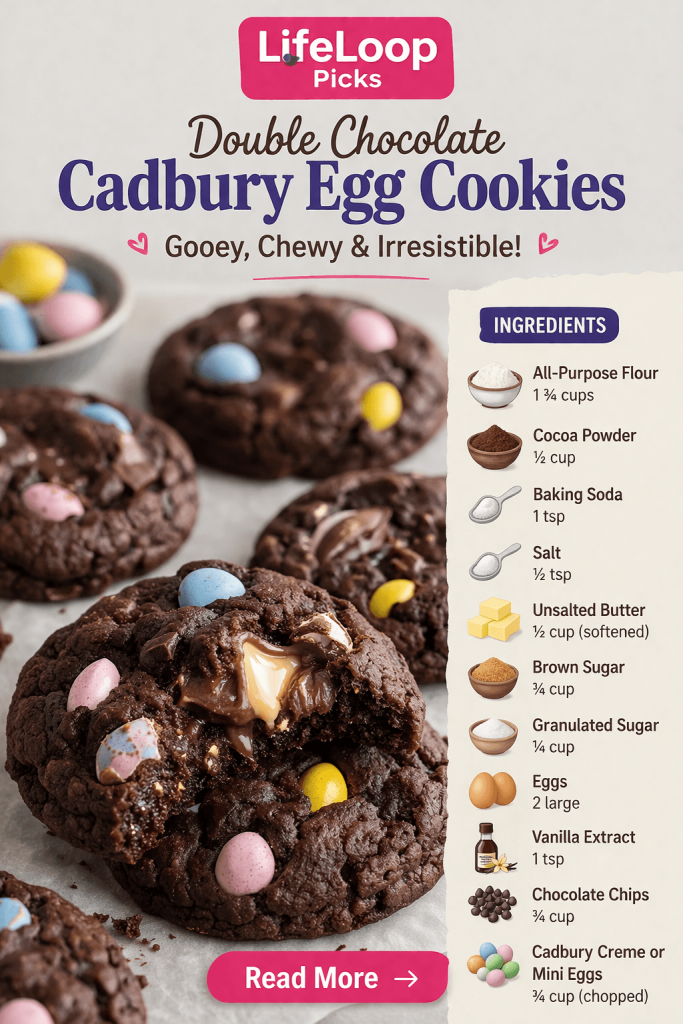
If you love soft, gooey cookies and chocolate-filled desserts, this one’s going to be your favorite. Imagine biting into a warm cookie and finding a creamy chocolate center—pure heaven, right? That’s exactly what Cadbury egg cookies bring to your table.

These cookies are perfect for festive baking, especially around Easter, but honestly, they’re too good to wait for a season. In this guide, you’ll learn how to make the best Cadbury egg cookies recipe at home with simple ingredients and easy steps.


Why Cadbury Egg Cookies Are So Popular

Cadbury egg cookies are loved for their unique texture and flavor. The outer cookie stays soft and slightly crispy, while the inside melts with rich chocolate goodness.

What makes these cookies stand out is the creamy filling of Cadbury eggs. It creates a surprise element in every bite. Plus, they are easy to bake, making them perfect for beginners and home bakers.


Ingredients You’ll Need

Basic Ingredients

To make the best Cadbury egg cookies, you’ll need:

  • All-purpose flour
  • Butter (softened)
  • Brown sugar & white sugar
  • Eggs
  • Baking soda
  • Vanilla extract

Star Ingredient

  • Cadbury Creme Eggs or Mini Eggs (chopped or whole)

Optional Add-ons

  • Chocolate chips
  • Nuts (optional for crunch)

Using quality ingredients makes a big difference in taste and texture.


Step-by-Step Cadbury Egg Cookies Recipe

Step 1: Prepare the Dough

Mix butter and sugar until creamy. Add eggs and vanilla extract, then slowly combine with dry ingredients like flour and baking soda.

Step 2: Add Cadbury Eggs

Fold chopped Cadbury eggs into the dough. Make sure they are evenly distributed for that gooey surprise in every bite.

Step 3: Shape the Cookies

Take small portions of dough and shape into balls. You can even place a whole Cadbury egg inside for a stuffed cookie effect.

Step 4: Bake to Perfection

Bake at 180°C (350°F) for 10–12 minutes until edges are golden. Let them cool slightly before serving.


Tips for Perfect Cadbury Egg Cookies

  • Use soft butter for a smooth dough
  • Don’t overbake—cookies should stay soft inside
  • Chill the dough for 20 minutes for better texture
  • Use parchment paper to avoid sticking
  • Add extra chocolate chips for richer flavor

These small tips can take your cookies from good to amazing.


Variations You Can Try

Stuffed Cadbury Cookies

Hide a whole Cadbury egg inside the dough for a molten chocolate center.

Double Chocolate Cookies

Add cocoa powder to the dough for a richer chocolate taste.

Crunchy Nut Cookies

Mix chopped almonds or walnuts for added texture.

Trying different variations keeps your baking fun and creative.


Common Mistakes to Avoid

  • Overmixing the dough (makes cookies hard)
  • Baking too long (loses softness)
  • Using cold butter (affects texture)
  • Not spacing cookies properly on tray

Avoiding these mistakes ensures perfect results every time.


FAQs About Cadbury Egg Cookies

1. Can I use mini Cadbury eggs instead of creme eggs?
Yes, mini eggs work great and add a crunchy texture to the cookies.

2. How do I store Cadbury egg cookies?
Store them in an airtight container at room temperature for up to 4–5 days.

3. Can I freeze the cookie dough?
Yes, you can freeze the dough for up to 2 months and bake when needed.


Conclusion

If you’re looking for a dessert that’s easy, indulgent, and guaranteed to impress, Cadbury egg cookies are the way to go. They combine the comfort of homemade cookies with the richness of chocolate in every bite.

Whether you’re baking for a festival or just craving something sweet, this recipe is a must-try. So grab your ingredients and start baking—because once you try these cookies, there’s no going back 🍪

You don’t need a massive following—just the right audience and strategy.

The “influencer” dream is often sold as a numbers game. We are told that until we hit 100,000 followers, we aren’t “monetizable.” This is a lie that keeps brilliant creators from ever starting. The truth? Some of the wealthiest digital entrepreneurs have tiny audiences, but they dominate a secret realm called Micro Traffic.

By focusing on High Intent Keywords, you can flip the script. You don’t need a stadium full of fans; you just need a room full of people ready to open their wallets. In this guide, we will break down how to stop chasing “vanity metrics” and start building a high-conversion revenue engine.

The Myth of the Massive Audience

Most people believe that Traffic = Money. They think if they get 1,000,000 views on a viral dance video, they will be rich. In reality, that traffic is often “low intent.” People are there for entertainment, not to solve a problem or buy a solution.

  • Vanity Metrics: Likes, shares, and follower counts that look good but don’t pay bills.
  • The Follower Trap: Managing a massive audience requires huge overhead and broad content that dilutes your message.
  • The Conversion Reality: A small, targeted list of 500 people often out-earns a distracted million.

If you want to make money online, you have to stop being an entertainer and start being a solution provider. This starts with understanding Micro Traffic.

What is Micro Traffic?

Micro Traffic refers to small, highly specific streams of visitors who are looking for something very particular. Instead of trying to rank for “Fitness,” which has millions of searches, you rank for “Best home workout equipment for small apartments.”

Why Micro Traffic Wins

  • Zero Competition: While the big brands fight for the “Macro” keywords, you own the “Micro” ones.
  • Authority Building: It is easier to be seen as an expert in a tiny niche than in a massive industry.
  • Precision Targeting: You know exactly who is clicking, why they are clicking, and what they need.

In the world of SEO, Micro Traffic is the “low-hanging fruit.” It is the path of least resistance to your first $1,000 month.

Decoding High Intent Keywords

To capture Micro Traffic, you must master High Intent Keywords. These are search terms that indicate a user is at the very end of their “buyer’s journey.” They aren’t just “looking”; they are “deciding.”

The Four Stages of Intent

  1. Informational: “How to save money.” (User is learning).
  2. Navigational: “Chase Bank login.” (User knows where they want to go).
  3. Commercial: “Best high-yield savings accounts 2026.” (User is comparing).
  4. Transactional: “Open a Chase savings account online.” (User is ready to buy).

To make money with a small audience, you should spend 80% of your time on Commercial and Transactional keywords.

The Power of “Long-Tail” Search

High Intent Keywords are almost always Long-Tail Keywords. These are phrases that are 3-6 words long. They have lower search volume, but the conversion rate is astronomical.

  • Short-Tail (Bad): “Coffee.”
  • Long-Tail (Good): “Organic fair-trade coffee beans for espresso machines.”

When someone searches for the second phrase, they have a specific machine, a specific taste, and a specific budget. If you provide the answer, you get the sale. You don’t need 100K followers to rank for a long-tail phrase; you just need one piece of high-value content.

How to Find “Money” Keywords Without Tools

You don’t need expensive software to find High Intent Keywords. You can use the “Human Method” to see what people are actually desperate to find.

  • Google Autocomplete: Type your niche + “best for…” or “vs…” and see what Google suggests.
  • People Also Ask: Look at the questions box in Google search results. These are literal “pain points.”
  • Reddit & Quora: Search for “How do I…” or “What is the best…” in your niche. The threads with the most heat are your content goldmines.
  • Amazon Reviews: Look at 3-star reviews of products in your niche. They often list specific problems that a “better” product could solve.

By targeting these niche keywords, you are positioning yourself right in front of the “money.”

Building a “High Intent” Content Strategy

Once you have your keywords, you need to create content that converts. This isn’t about “blogging” in the traditional sense; it’s about Strategic Asset Creation.

1. The Comparison Guide

Compare smarter—make confident choices with clear, unbiased insights.
Side by side comparison of Product A vs Product B showing features and differences for buying decision.

Users searching for “Product A vs Product B” are inches away from a purchase. They just need someone they trust to tell them which one is better.

  • The Goal: provide an unbiased, deep-dive comparison.
  • The Result: High trust and high click-through rates.

2. The “Best Of” List

The right list attracts the right audience—targeted recommendations that convert.
Best tools list for a specific audience showing curated top picks and ranked recommendations.

Keywords like “Best [Niche] tools for [Specific Persona]” are high intent magnets.

  • Example: “Best CRM software for solo freelancers in 2026.”
  • Why it works: It filters out people who aren’t your target audience.

3. The “Problem-Solution” Tutorial

Tutorial setup showing step by step process on laptop for solving a problem using a specific tool.
Show the solution, build trust—teach first, sell later.

Focus on “How to [Specific Result] using [Specific Tool].”

  • Example: “How to set up automated email flows using Beehiiv.”
  • Why it works: It demonstrates your expertise while showing the tool in action.

The Math: Why 1,000 Visitors is Enough

Let’s do the “Profit Math” to prove why you don’t need 100K followers.

Scenario A (Macro Traffic): > You have 100,000 followers. You post a general “Lifestyle” link. 1% click (1,000 clicks). 0.1% buy a $20 product.

Total: $200.

Scenario B (Micro Traffic): > You have 500 visitors a month from a High Intent Keyword (e.g., “Best high-end enterprise security software”). 10% click. 5% buy or book a consultation for a $2,000 service.

Total: $5,000+.

The Micro Traffic approach allows you to work less and earn more because you are working with quality leads rather than quantity noise.

SEO Optimization for Small Sites

To capture this traffic, your On-Page SEO must be flawless. Since you don’t have the “Domain Authority” of a giant site, you must win on Relevance and User Experience.

  • The H1 Tag: Must include your primary high intent keyword.
  • Subheadings (H2/H3): Use these to answer the “People Also Ask” questions.
  • Speed & Mobile: Most high intent searches happen on the go. If your site is slow, you lose the “impulse” buyer.
  • Internal Linking: Link your informational posts to your “Money” posts to pass on “Link Equity.”

Monetization Without the Fame

When you focus on intent, you have multiple ways to monetize that don’t require you to be “famous.”

  1. Affiliate Marketing: Recommending the “Best” tools and earning a commission.
  2. Digital Products: Selling a template or guide that solves the exact problem the user searched for.
  3. High-Ticket Consulting: Using your content to prove you are the expert they need to hire.
  4. Lead Generation: Selling the “Micro Traffic” you’ve captured to companies who want those customers.

The 2026 Shift: AI and Intent

In 2026, AI Search (like Gemini and Search Generative Experience) favors specific, helpful content. Generalist sites are losing traffic, but niche experts are thriving.

AI models look for “Information Gain”—new, unique insights that haven’t been repeated a thousand times. By targeting Micro Traffic with a unique perspective, you become the “source of truth” that AI recommends.

Conclusion: Start Small, Think Deep

Stop waiting for the “Follow” button to hit a certain number. The internet doesn’t reward “size” anymore; it rewards precision.

If you can find five High Intent Keywords and create the best possible answers for them, you will have a business. You don’t need a million fans; you just need to be the person who shows up when someone is ready to solve a problem.

Comparison of luxury and affordable skincare products showing that effective skincare is not based on price.

For decades, the beauty industry has whispered a persuasive lie: if it costs more, it works better. We’ve been conditioned to believe that a $200 cream contains mystical youth-preserving secrets, while the $15 drugstore alternative is merely “basic.”

In 2026, the veil is finally lifting. Savvy consumers are shifting from brand loyalty to ingredient literacy. We are realizing that your skin doesn’t have a price sensor; it has biological receptors. Whether a molecule of Hyaluronic Acid comes from a gold-trimmed jar or a simple plastic tube, its chemical structure—and its effect on your dermis—remains exactly the same.

This guide will dismantle the marketing hype and arm you with the ingredient knowledge needed to build a world-class routine without the “luxury” tax.

1. The Anatomy of a Price Tag: What Are You Actually Paying For?

You’re not just paying for skincare—you’re paying for the story around it.
Luxury skincare price breakdown showing costs of packaging, marketing, and branding versus actual product value.

When you buy a luxury serum, the actual “juice” inside the bottle often accounts for less than 10% of the retail price. So, where does the rest of your money go?

  • Opulent Packaging: Heavy glass, magnetic caps, and embossed boxes create a “prestige” experience but do zero for your fine lines.
  • Celebrity Endorsements: Multi-million dollar contracts with A-list actors are funded directly by your purchase.
  • Prime Real Estate: Maintaining counters in high-end department stores requires massive overhead.
  • Fragrance & Texture: Significant R&D goes into making a cream smell like a French garden and feel like silk—sensory details that often increase the risk of skin irritation.

2. Marketing Hype vs. Clinical Reality

Skincare marketing terms like proprietary complex and dermatologist tested compared with real ingredient science.
Don’t be fooled by fancy words—understand what your skincare is really saying.

Marketing departments are masters of “pseudoscientific” language. They use terms designed to sound revolutionary while remaining legally vague.

  • “Proprietary Complexes”: This usually just means a standard blend of common ingredients given a fancy trademarked name to prevent you from price-shopping.
  • “Dermatologist Tested”: This sounds impressive, but it only means one doctor checked it. It is not the same as Dermatologist Recommended or peer-reviewed clinical trials.
  • “Clean Beauty”: A non-regulated term often used to fear-monger against safe, synthetic preservatives that actually keep your products shelf-stable.

3. The “Identity” Ingredients: Actives That Are Identical at Every Price Point

Skincare ingredients niacinamide, hyaluronic acid, glycerin, and salicylic acid shown in both luxury and affordable products.
Same ingredients, different price—your skin only recognizes the science.

There are certain “workhorse” ingredients where the chemistry is so standardized that paying a premium is scientifically unnecessary.

  • Niacinamide (Vitamin B3): A powerhouse for pore refinement and barrier repair. Whether it’s from a budget brand or a luxury house, the molecule is identical.
  • Hyaluronic Acid: This humectant draws moisture into the skin. Look for multi-molecular weight versions in affordable serums to ensure deep hydration.
  • Glycerin: The unsung hero of hydration. It is one of the most effective humectants in existence and costs pennies to formulate.
  • Salicylic Acid: The gold standard for acne-prone skin. The USP (United States Pharmacopeia) grade used in a $10 cleanser is the same as that in a $90 exfoliant.

4. When Does a Higher Price Actually Make Sense?

Advanced skincare products with vitamin C airless pump, encapsulated retinol, and peptide serums showing formulation technology.
Sometimes you’re not paying more for hype—you’re paying for smarter formulation.

While many expensive products are overhyped, price can sometimes be justified by formulation stability and delivery systems.

  • Vitamin C (L-Ascorbic Acid): This molecule is notoriously unstable. It oxidizes (turns brown) quickly when exposed to light and air. Brands that invest in airless pumps and stabilized delivery often charge more, and in this case, it’s worth it.
  • Encapsulated Retinol: Pure Retinol can be irritating. Luxury or medical-grade brands often use “encapsulation” technology, which releases the active slowly into the skin, reducing redness while maximizing collagen production.
  • Curation of Peptides: Sophisticated peptide chains (like Copper Peptides or Matrixyl 3000) are expensive to manufacture and require precise pH levels to remain effective.

5. How to Read an Ingredient List (INCI) Like a Pro

Reading skincare ingredient list INCI on product label to understand active ingredients and concentrations.
Flip the bottle—your skincare truth is written on the back.

To beat the marketing hype, you must stop looking at the front of the bottle and start reading the back.

  • The 1% Rule: Ingredients are listed from highest concentration to lowest. However, once you hit the preservative (usually Phenoxyethanol), everything listed after it is present at less than 1%.
  • Active Concentration: If a brand screams about “24K Gold” or “Rare Orchid Extract” but lists them after the fragrance or preservatives, they are “fairy-dusted”—added in tiny amounts just for marketing claims.
  • Avoid Irritants: High prices often come with high fragrance loads. Look for Fragrance-Free labels if you have sensitive skin, regardless of the price.

The “Goldilocks” Routine: Investing Where It Counts

You don’t need an all-luxury or all-budget routine. The secret to glowing skin is a hybrid approach.

Product TypeSpend or Save?Why?
CleanserSaveIt stays on your face for 60 seconds. A basic, pH-balanced cleanser is all you need.
Vitamin CSpendStability is key. Cheap versions often oxidize before you finish the bottle.
MoisturizerSaveIts main job is to seal in moisture. Ingredients like Ceramides and Squalane are now affordable.
RetinoidsSpend/MidBetter formulation equals less peeling and better long-term anti-aging results.
SunscreenSaveThe best SPF is the one you aren’t afraid to use generously because of the cost.

The Myth of “Instant Results”

Luxury marketing often promises a “miracle in a bottle.” The biological truth is that skin cells take roughly 28 to 40 days to turn over.

  • No $500 cream can change your DNA or mimic the results of Botox or fillers.
  • Consistency beats intensity every single time. A $20 routine used every night will outperform a $200 serum used sporadically because you’re “saving” it.
  • True skin health is about barrier support, protection from UV damage, and patience.

Budget Brands That Are Disrupting the Industry

The rise of “Transparent Beauty” has given us brands that prioritize science-backed skincare over fancy ads.

  • The Ordinary: Pioneered the concept of single-active serums at disruptive prices.
  • The Inkey List: Focuses on consumer education and simple, effective formulations.
  • CeraVe: A dermatologist favorite that focuses on Ceramides to rebuild the skin barrier.
  • Korean Beauty (K-Beauty): Brands like Beauty of Joseon offer incredibly advanced formulations (especially sunscreens) at a fraction of Western luxury prices.

Breaking the Cycle of Consumerism

The “more is better” mentality often leads to over-exfoliation and a compromised skin barrier. When we buy into the hype, we often end up with a 10-step routine that our skin never asked for.

  • Skin Streaming: The 2026 trend of simplifying your routine to 3–4 essential products.
  • Quality over Quantity: One well-formulated multi-tasking serum is better than five cheap, single-ingredient bottles that don’t play well together.
  • Listen to Your Skin: If your face feels tight, red, or “squeaky clean,” you are likely overdoing it—no matter how much you spent on the products.

Final Verdict: Knowledge is the Ultimate Luxury

In the modern world of beauty, Ingredient knowledge is your superpower. When you understand what Peptides, Antioxidants, and AHAs actually do, you become immune to the lure of a pretty glass jar.

Expensive skincare isn’t the answer to perfect skin—formulation integrity and sun protection are. Spend your money on ingredients that have decades of clinical backing, and leave the “miracle” marketing on the shelf. Your skin, and your bank account, will thank you.

Reset your routine, simplify your skincare, and rediscover your natural glow.

In an era of 12-step routines and endless “holy grail” product hauls, our skin is often shouting for one thing: simplicity. We’ve reached a tipping point where more isn’t better—it’s just more. A Beauty Reset isn’t about throwing away everything you own; it’s about auditing your habits, detoxing the “noise,” and returning to a routine that actually works.

If your skin feels perpetually irritated, your vanity is overflowing, and your morning routine feels like a chore, you’re in the right place. This is your comprehensive beauty checklist to reclaim your glow, your time, and your bathroom counter.

Phase 1: The Habit Detox

Skincare habit detox including pimple patch use, cleaning phone, gentle face washing, and silk pillowcase for healthy skin.
Healthy skin starts with better habits—small changes, big results.

Before we touch a single bottle of serum, we have to look at the daily behaviors that sabotage our results. No amount of expensive hyaluronic acid can fix a foundation of poor habits.

1. Stop the “Skin Picking” Cycle

It’s tempting to perform “bathroom surgery” on a blemish, but trauma to the skin leads to post-inflammatory hyperpigmentation (PIH) and scarring.

  • The Fix: Use hydrocolloid patches (pimple patches). They create a physical barrier so you can’t pick and speed up the healing process.

2. Ditch the Scalding Water

We love a hot shower, but your face does not. Hot water strips the natural lipid barrier, leading to dehydrated, flaky skin.

  • The Fix: Switch to lukewarm water. If it’s too hot for a baby, it’s too hot for your face.

3. Sanitize Your Tech

Your smartphone screen is a breeding ground for bacteria. Every time you take a call, you’re pressing that bacteria into your pores.

  • The Fix: Use alcohol wipes on your phone daily, or switch to wireless earbuds to keep your screen away from your cheeks.

4. Optimize Your Sleep Hygiene

It’s called “beauty sleep” for a reason. During sleep, your body’s cortisol levels drop, and skin repair goes into overdrive.

  • The Fix: Swap your cotton pillowcase for mulberry silk. Silk reduces friction, preventing “sleep wrinkles” and hair breakage.

Phase 2: The Product Purge (The Great De-Clutter)

Minimal skincare routine with decluttered products and removal of expired and unnecessary items from vanity.
Declutter your routine—fewer products, better results.

A cluttered vanity leads to a cluttered mind. Most of us use only 20% of our products 80% of the time. It’s time to be ruthless.

1. Check the PAO (Period After Opening)

Look for the tiny “open jar” icon on your packaging. If it says “12M” and you bought it in 2024, it’s time to say goodbye.

  • The Danger: Expired products lose their active ingredient potency and can harbor harmful bacteria.

2. Eliminate “Redundant” Steps

Do you really need a separate eye cream, a neck cream, and a décolletage serum? Often, a high-quality moisturizer can do the job of all three.

  • The Reset: Focus on products that offer multitasking benefits, like a tinted SPF that also contains niacinamide.

3. The Scent Audit

Fragrance is the number one sensitizer in skincare. If your skin is often red or itchy, look for fragrance-free labels. Note: “Unscented” often contains masking fragrances; “fragrance-free” is the safer bet.

Phase 3: Simplifying the Routine (Skin Minimalism)

Minimal skincare routine with cleanser, vitamin C serum, moisturizer, sunscreen, and night treatment for morning and evening use.
Simplify your routine—just the essentials for healthy, glowing skin.

Skinimalism is the philosophy that a lean, potent routine outperforms a complex, diluted one. Here is the “Reset” framework for a glowing complexion.

The Essential Morning Routine

  1. Gentle Cleanser: You don’t always need a deep scrub in the morning. A gentle milk or water-based cleanser preserves your acid mantle.
  2. Antioxidant Serum: Use a Vitamin C serum to protect against environmental stressors and pollution.
  3. Moisturizer: Even oily skin needs hydration to prevent overcompensation of oil production.
  4. Broad-Spectrum SPF: This is non-negotiable. Sunscreen is the best anti-aging product on the market. Period.

The Essential Evening Routine

  1. Double Cleanse: Use an oil-based cleanser or micellar water to break down makeup and SPF, followed by your regular cleanser to clean the skin.
  2. Targeted Treatment: This is where you use your retinoids, AHAs, or BHAs. Pick one “powerhouse” per night to avoid irritation.
  3. Barrier Repair Cream: Look for ingredients like ceramides, squalane, and fatty acids to “seal” the skin overnight.

Phase 4: Inner Beauty & Nutrient Reset

Healthy foods and skincare tools for inner beauty including cucumber, yogurt, and gua sha for glowing skin.
True glow starts within—nourish your body, calm your mind, and your skin will follow.

Topical products only reach the outer layers of the epidermis. True radiance is a systemic effort.

1. Hydration Beyond the Bottle

Drinking water is great, but “eating” your water is better.

  • The Goal: Consume water-rich foods like cucumber, watermelon, and celery. These contain structured water and minerals that help your cells stay plump.

2. Focus on Gut Health

The gut-skin axis is a real scientific connection. Chronic inflammation in the gut often manifests as acne or eczema on the skin.

  • The Habit: Incorporate probiotics (kombucha, kimchi, yogurt) and high-fiber foods to keep your digestive system—and your skin—clear.

3. Manage Stress-Induced Cortisol

High stress triggers sebum production, leading to “stress breakouts.”

  • The Reset: Dedicate 5 minutes a day to facial massage or Gua Sha. Not only does it aid lymphatic drainage, but it also lowers your heart rate and relaxes facial tension.

Phase 5: The Sustainable Beauty Mindset

Minimal sustainable skincare routine with empty product bottle and eco-friendly beauty setup.
Buy less, use more—sustainable beauty starts with mindful choices.

The final step in a beauty reset is changing how you consume. The most “impressive” beauty routine is one that is sustainable for your wallet and the planet.

  • Wait 48 Hours: Before clicking “Buy” on a new viral product, wait two days. Most “cravings” for new products are driven by marketing, not skin need.
  • Focus on Bioavailability: Look for brands that prioritize bioavailable ingredients—substances your skin can actually recognize and utilize.
  • Empty Before You Buy: Make it a rule to finish a product completely before replacing it. This reduces waste and allows you to see the long-term effects of a single formula.

The Reset Checklist Summary

CategoryAction ItemFrequency
HabitsSanitize phone & makeup brushesWeekly
HabitsChange silk pillowcaseEvery 3 days
ProductsCheck expiration dates & PAO iconsMonthly
RoutineApply Broad-Spectrum SPF 30+Daily (No exceptions)
Inner10 minutes of “Tech-Free” morning lightDaily
BodyFull-body exfoliation & hydrationWeekly

Why This Works

By stripping away the excess, you allow your skin’s natural barrier to heal. Many people find that once they stop over-exfoliating and using ten different serums, their “sensitive skin” actually disappears. It wasn’t sensitive; it was just overwhelmed.

A Beauty Reset isn’t a one-time event; it’s a seasonal recalibration. As the weather changes, your skin’s needs change. By keeping your foundation simple, you can easily swap one or two items to adapt without crashing your entire system.

Final Thoughts

Embrace the glow that comes from health, not just highlighters. When you detox your habits and simplify your products, you stop “fixing” your face and start caring for it. Your skin is your largest organ—treat it with the respect, simplicity, and consistency it deserves.

Person with healthy defined curly hair showing frizz-free curls with shine and volume.

Have you ever wondered why your hair looks like a dream while wet but transforms into a frizzy, undefined mess the moment it dries? You aren’t alone. Achieving the perfect curly hair routine isn’t just about buying the most expensive products; it’s about understanding the delicate science of moisture and hold balance.

For years, I struggled with “crunchy” curls or, conversely, curls so soft they lost their shape by noon. After endless experimentation, I’ve perfected a product layering technique that guarantees long-lasting curl definition and incredible shine.

In this comprehensive guide, we are going to dive deep into the steps that will transform your texture. Get ready to fall in love with your natural hair all over again.

Understanding the Foundation: Moisture vs. Hold

Before we pick up a bottle, we need to understand what our hair actually wants. Curly hair is naturally drier than straight hair because the scalp’s natural oils have a harder time traveling down the spiral shaft.

  • Moisture is what gives your hair elasticity, softness, and shine. Without it, hair becomes brittle and prone to breakage.
  • Hold is provided by styling products like gels and mousses. It creates a “cast” around the hair to keep the curl pattern intact as it dries.

The secret to frizz-free curls is ensuring neither side outweighs the other. Too much moisture leads to limp, greasy hair; too much hold leads to stiff, “ramen noodle” hair.

Step 1: The Clean Slate (Clarifying and Conditioning)

Washing curly hair with sulfate-free shampoo and detangling with conditioner for healthy hair routine.
A clean foundation is everything—clarify, cleanse, and detangle for healthier curls.

Your wash day routine sets the stage for everything else. You cannot layer products effectively on top of old buildup.

  • Clarify Regularly: Use a sulfate-free clarifying shampoo once every two weeks to remove minerals and product residue.
  • Focus on the Scalp: Always massage your shampoo into the scalp to stimulate blood flow and ensure a healthy environment for hair growth.
  • The Power of Detangling: Apply a generous amount of moisturizing conditioner and detangle only when your hair is soaking wet and coated in “slip.” Use your fingers or a wide-tooth comb to prevent snapping the hair fibers.

Step 2: The L.O.C. or L.C.O. Method

Curly hair LOC method with leave-in conditioner, curl cream, and hair oil arranged for layering routine.
Layer your products the right way—hydration, definition, and seal for perfect curls.

One of the most effective product layering strategies is the LOC method (Leave-in, Oil, Cream) or the LCO method (Leave-in, Cream, Oil).

  1. Leave-in Conditioner: This is your base layer of hydration. Look for ingredients like aloe vera or glycerin to draw moisture into the hair cuticle.
  2. Cream: A curl defining cream provides the weight necessary to prevent “poofiness” and helps the curls clump together.
  3. Oil: A lightweight oil (like jojoba or argan) acts as a sealant, locking all that goodness inside so the air doesn’t suck the moisture back out.

Step 3: The Secret Weapon—Styling for Hold

Applying gel to wet curly hair using praying hands technique and scrunching for curl definition.
Lock in definition—apply, smooth, and scrunch for long-lasting curls.

This is where the magic happens. Many people stop at cream, but if you want multi-day curl retention, you need a styler with hold.

  • Apply to Soaking Wet Hair: For the best clump definition, apply your gel or mousse while your hair is still dripping. This traps the water inside the curl.
  • The “Praying Hands” Technique: Rub the product between your palms and smooth it over sections of hair. This flattens the cuticle and reduces frizz.
  • Scrunching: Once the product is distributed, gently scrunch upward toward the scalp. This encourages your natural curl pattern to form.

Step 4: Drying Techniques for Maximum Volume

Plopping curly hair with a T-shirt and diffusing with a hair dryer for volume and frizz-free curls.
Dry smarter, not harder—plop for definition and diffuse for volume.

How you dry your hair is just as important as what you put in it. Air drying is great, but it often leads to flat roots due to the weight of the water.

The Art of Plopping

Use a microfiber towel or an old cotton T-shirt to “plop” your hair. Lay the towel on a flat surface, flip your hair over into the center, and tie the towel around your head. This absorbs excess water without ruffling the hair cuticle, preserving the curl shape.

Diffusing for Greatness

If you want maximum volume, use a hair dryer with a diffuser attachment.

  • Use low heat and low airflow.
  • Tilt your head to the side or upside down.
  • Avoid touching the curls with your fingers until they are 100% dry to prevent frizz.

Step 5: Breaking the Cast (SOTM)

Scrunch out the crunch—reveal soft, defined curls with natural movement.
Scrunching curly hair with oil to break gel cast and create soft defined curls.

Once your hair is completely dry, it might feel stiff or “crunchy.” Don’t panic! This is the gel cast doing its job.

  • S’crunch Out The Crunch (SOTC): Take a few drops of a light hair oil on your hands and gently scrunch your curls.
  • This breaks the hard outer layer of the gel, revealing soft, bouncy, and defined curls underneath.
  • The result? High-definition hair that feels like silk but stays in place all day.

Maintenance: The Pineapple and Silk Strategy

You’ve spent the time getting your curls perfect—don’t ruin them overnight! Proper nighttime hair care is the key to making your routine last for 3, 4, or even 5 days.

  • The Pineapple: Flip your hair forward and tie it in a very loose ponytail at the very top of your head. This prevents you from crushing your curls while you sleep.
  • Silk or Satin Pillowcase: Traditional cotton pillowcases absorb moisture and cause friction. Switching to silk or satin allows your curls to glide smoothly, preventing morning tangles and breakage.
  • Refresh Strategy: On day two or three, don’t re-wash. Simply mist your hair with a mix of water and a little leave-in conditioner to reactivate the products already in your hair.

Troubleshooting Common Curl Issues

Even with a great routine, your hair might act up. Here is how to fix common hurdles:

1. Hair Feels Sticky or Heavy

You likely used too much heavy cream or a product containing too much butter (like shea or cocoa) for your hair’s porosity. Try switching to a lightweight milk or foam.

2. Curls Are Stringy

This usually happens when you apply product to damp hair rather than wet hair. Ensure your hair is “seaweed-like” and soaking wet when you start layering products.

3. Frizz at the Roots

Focus your styling gel application closer to the scalp (while avoiding the skin itself) and ensure you are diffusing the roots thoroughly to set the lift.

Key Ingredients to Look For

When shopping for curly hair products, keep an eye on the label. Your hair’s health depends on quality ingredients:

  • Humectants: Honey, Glycerin, Agave. (Great for drawing in moisture).
  • Emollients: Shea Butter, Coconut Oil, Avocado Oil. (Great for softening).
  • Proteins: Keratin, Silk Amino Acids, Wheat Protein. (Essential for hair elasticity and strength).

Pro Tip: If your hair feels “mushy” or won’t hold a curl, you might need a protein treatment. If it feels like straw, you need more deep conditioning.

Conclusion: Embrace the Journey

Perfecting a curly hair routine is a marathon, not a sprint. Every head of curls is a unique ecosystem of density, porosity, and pattern. By mastering the balance of moisture and hold, you give your hair the tools it needs to thrive.

Consistency is the most important ingredient. Stick to this layering method for a few weeks, and you will notice your hair becoming more manageable, shinier, and infinitely more beautiful. Your curls aren’t “difficult”—they just have high standards!