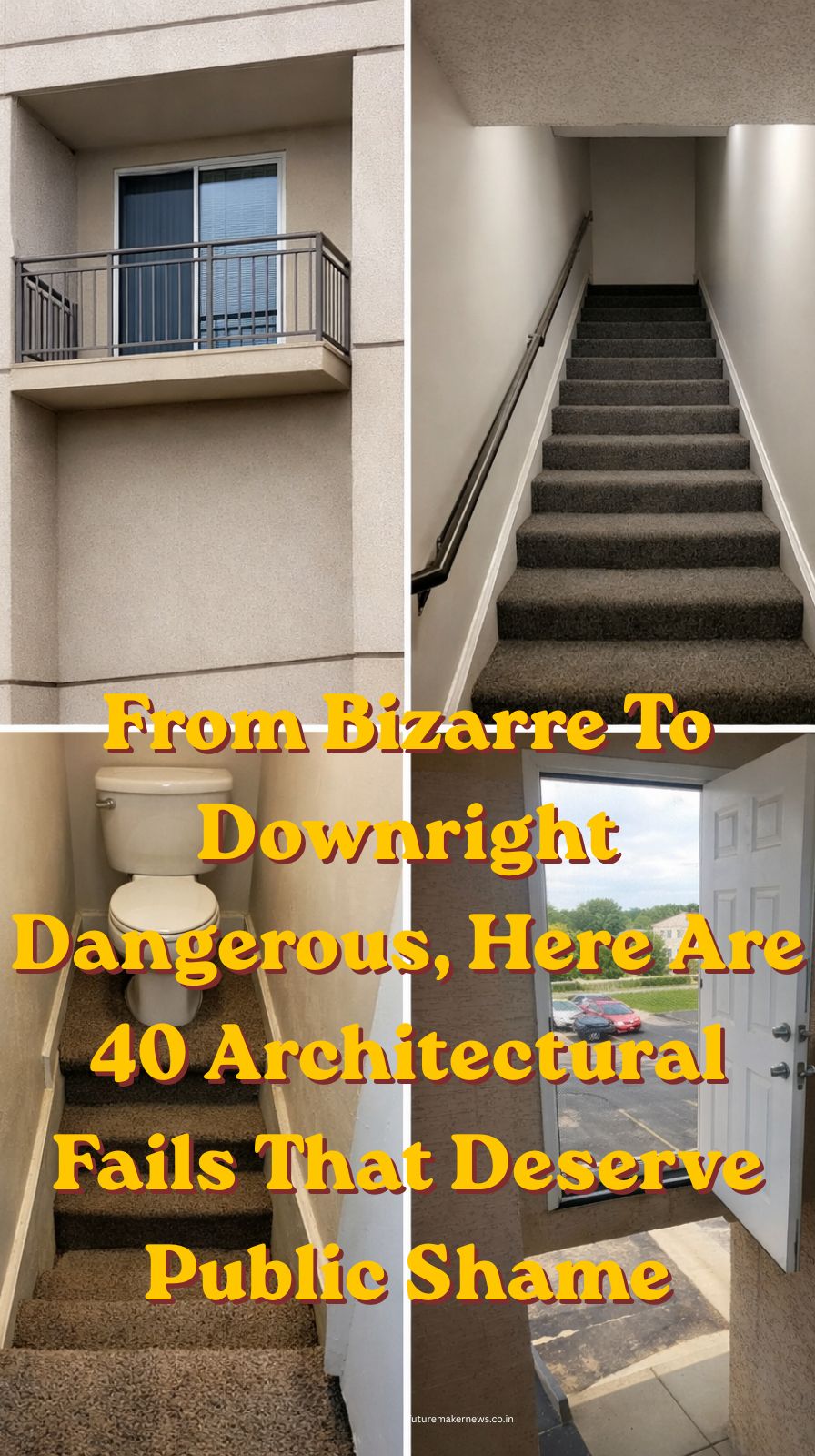
Architecture is often hailed as the perfect marriage between art and engineering. But what happens when the honeymoon ends in a catastrophic divorce? Across the globe, we see towering monuments to human ego that are either hilariously dysfunctional or terrifyingly unsafe.
From skyscrapers that melt luxury cars to bridges that “dance” in the wind, these architectural fails serve as a grim reminder that a pretty blueprint doesn’t always translate to a safe reality. Here are 40 of the most bizarre and dangerous design disasters that deserve a spot in the hall of shame.
The “Death Ray” Skyscrapers
In the quest for sleek, glass-heavy aesthetics, some architects forgot the basic laws of physics—specifically, how concave mirrors work.
- 20 Fenchurch Street (London): Nicknamed the Walkie Talkie, this building’s curved glass focused sunlight so intensely it melted Jaguars and fried eggs on the sidewalk.
- Vdara Hotel (Las Vegas): Designed by the same architect, this hotel features a “death ray” that singed guests’ hair and melted plastic cups by the pool.
- The Solution: Both buildings had to be retrofitted with non-reflective film and sunshades at a massive cost.
The “Plywood Palace”: John Hancock Tower
Boston’s tallest building, the John Hancock Tower, was a marvel of modernism until its 500-pound glass panes started falling out and crashing onto the streets below.
- The Hazard: During windstorms, the building’s sway caused the double-paned glass to delaminate and shatter.
- The Shame: For years, empty window sockets were covered with plywood, earning it a mocking nickname and a $5 million repair bill.
- Structural Integrity: Engineers eventually had to add 1,600 tons of steel bracing to stop the building from potentially falling over.
“Galloping Gertie”: The Tacoma Narrows Bridge
Perhaps the most famous engineering disaster in history, this Washington bridge became a viral sensation long before the internet existed.
- The Fail: To save costs, the bridge was built with shallow plate girders that caught the wind like a sail.
- The Outcome: Just four months after opening in 1940, the bridge began to twist and undulate violently in 42 mph winds before snapping like a twig.
- The Lesson: It revolutionized the study of bridge aerodynamics and resonance.
- The Lotus Riverside Collapse (Shanghai)
Imagine waking up to find your 13-story apartment complex has simply laid down for a nap.
- The Blunder: Workers piled excavated dirt on one side of the building while digging a parking garage on the other.
- The Physics: Heavy rain turned the ground into mud, and the pressure difference caused the entire structure to topple over—almost completely intact.
- The Fallout: Several company executives were jailed for structural negligence.
The “Trousers” and the Wind Tunnels
Some buildings are so strangely shaped they actually change the local climate.
- CCTV Headquarters (Beijing): Known as “The Big Trousers,” its cantilevered design creates massive wind tunnels that make walking near the base a hazardous chore for pedestrians.
- Bridgewater Tower (Leeds): This residential skyscraper created such strong wind gusts at its base that it actually flipped over several cars and caused a pedestrian fatality.
The Ghost Town of Ordos Kangbashi
Luck isn’t always about a building falling down; sometimes it’s about a city that never “woke up.”
- The Scale: China built a massive, futuristic city designed for one million people.
- The Fail: High property prices and a lack of infrastructure meant the city remained 90% empty for a decade.
- The Shame: It stands as a monument to top-down urban planning gone wrong.
Dangerous Playgrounds: The Brooklyn Bridge Park Domes
Sometimes, the “fail” is small but painful.
- The Design: Shiny metal domes were installed in a high-end New York playground for kids to climb.
- The Danger: In the summer sun, the metal reached temperatures hot enough to cause second-degree burns on toddlers.
- The Public Shame: The equipment had to be removed almost immediately after its debut.
The Ryugyong Hotel: The “Hotel of Doom”
North Korea’s attempt at a 105-story pyramid has been “under construction” since 1987.
- The Financial Toll: It cost an estimated 2% of the country’s GDP.
- The Structural Issue: For decades, it sat as a hollow concrete shell with no windows, leading experts to question if the concrete quality was even safe for occupancy.
- The Current State: It now sports a fancy LED facade, but remains largely empty and unopened.
Why Architectural Fails Keep Happening
Looking at these 40 examples, a few common themes emerge that explain why modern architecture often fails so spectacularly:
- Aesthetics Over Function: Designers prioritizing “the look” over the reality of wind, sun, and gravity.
- Cost-Cutting Measures: Substituting high-quality materials for substandard steel or concrete to meet a budget.
- Lack of Communication: As seen in the Walkie Talkie case, vital safety features (like sun-louvres) are often cut during the final planning stages without the architect’s input.
- Illegal Construction: The tragic 2026 collapse in Johannesburg highlights the danger of building without approved plans or structural shoring.
The Psychological Impact of Shoddiness
When a building fails, it doesn’t just hurt the wallet; it hurts the public’s trust in their environment.
- Anxiety: People living near “Plywood Palaces” or wind-prone skyscrapers experience genuine stress.
- Economic Ruin: For apartment owners in failing buildings, their life savings vanish the moment a structural crack appears.
- Cultural Trauma: Great disasters like the Rana Plaza or the St. Francis Dam leave scars on the collective memory of a nation.
Can These Fails Be Prevented?
In the age of BIM (Building Information Modeling) and AI, we should be past the era of “Death Rays.”
- Simulations: Architects can now simulate wind, heat, and seismic stress before a single brick is laid.
- Intricacy Coordination: Clash detection software ensures that plumbing doesn’t run through structural beams.
- Public Accountability: Social media and “public shaming” blogs ensure that developers can’t hide their design blunders from the world.
Final Thoughts: The Beauty of Resilience
The world of architecture will always have its villains, but it also has its heroes—the engineers who step in to fix the unfixable. Whether it’s the Leaning Tower of Pisa being stabilized or the John Hancock Tower finally getting its glass right, we learn more from our failures than our successes.