Split image showing stressed entrepreneur trying multiple online hustles versus calm person earning passive income from digital products.

Online Hustles- The internet is flooded with “gurus” showing off rented Lamborghinis and promising that you can make $10,000 a month by clicking a few buttons. In 2026, the digital landscape has shifted. What worked in 2020 is now a ghost town.

I decided to stop listening to the noise and actually test the five most popular online side hustles. I spent months tracking my time vs income results to see which one is actually a viable path to financial freedom and which one is just a glorified hobby.

Spoiler alert: Out of the five, only one consistently put real profit into my bank account without burning me out. Here is the honest breakdown.

1. Dropshipping: The High-Stress Money Pit

Shopify dashboard showing high ad spend and low profit representing dropshipping losses.
In 2026: High Revenue, Negative Profit

Dropshipping is often sold as the ultimate hands-off business. The reality? It’s a high-stakes game of digital arbitrage that requires a massive upfront investment in testing.

  • The Time Investment: I spent 30+ hours a week hunting for “winning products,” building a Shopify store, and managing frustrated customers.
  • The Reality Check: In 2026, ad costs on platforms like TikTok and Meta have skyrocketed. To find one successful product, I had to burn through $1,500 in ad spend.
  • The Income Result: I made $3,200 in revenue, but after product costs, shipping, and ads, my net profit was negative $200.
  • The Verdict: Unless you have a huge budget for paid advertising and a brand-first mentality, the “cheap AliExpress” era of dropshipping is officially dead.

2. Freelancing: The Modern Day Hamster Wheel

Overworked freelancer managing client messages late at night showing time-for-money income model.
Pays… But Only If You Keep Working

Freelancing (specifically content writing and graphic design) is the fastest way to make your first dollar, but it comes with a massive “time ceiling.”

  • The Time Investment: 40 hours a week. Most of my time wasn’t spent doing the work—it was spent on client acquisition, sending proposals, and chasing invoices.
  • The Reality Check: Platforms like Upwork and Fiverr are more competitive than ever. I was constantly underbid by people or AI-assisted agencies.
  • The Income Result: I earned $2,500 in a month. While this sounds good, the moment I stopped working, the money stopped. There is zero passive income potential here.
  • The Verdict: Great for quick cash, but it’s just a job with a different boss. You are still trading time for money.

3. Blogging: The Slow-Burn Asset

Website analytics showing gradual traffic growth for new blog monetization strategy.
Is Powerful — But It Takes Time

I’ve always loved the idea of evergreen blog posts generating traffic while I sleep. But blogging is a marathon, not a sprint.

  • The Time Investment: 15 hours a week for 6 months.
  • The Reality Check: SEO is a long game. Even with low-competition keywords, it takes months for Google to trust a new site. In 2026, you also have to compete with AI-generated search results.
  • The Income Result: $45 total from display ads. The compounding traffic hadn’t kicked in yet.
  • The Verdict: Blogging is a powerful long-term asset, but it’s not a “hustle” that will pay your rent this month. It requires extreme patience and content strategy.

4. UGC (User-Generated Content): The Fame Trap

Content creator recording brand video for social media collaboration.
Creator Life: Fun But Unpredictable

UGC creator roles are the newest trend. Brands pay you to film “authentic” videos for their social media ads.

  • The Time Investment: 20 hours a week filming, editing, and pitching to brands.
  • The Reality Check: You need to be “on” all the time. Your income depends on your ability to stay trendy. If your engagement drops, your brand deals vanish.
  • The Income Result: I landed two deals for $200 each. Total: $400.
  • The Verdict: It’s fun if you love being on camera, but the income stability is nonexistent. You are at the mercy of the algorithm.

5. Digital Printables: The Winner That Actually Paid

Etsy dashboard showing digital printable sales representing scalable passive income.
The $7 Printable That Outperformed Everything Else

This was the “boring” hustle I almost didn’t try. Selling printables on marketplaces like Etsy or through a niche Shopify store turned out to be the goldmine.

  • The Time Investment: 10 hours a week.
  • The Reality Check: Unlike dropshipping, there is no inventory risk. Unlike freelancing, I created the product once and sold it 500 times.
  • The Income Result: $1,800 in month three, with a 95% profit margin.
  • The Verdict: This is the only hustle that combined low-competition keywords with a product that scales. It is the ultimate form of passive income.

Why Digital Printables Crushed the Competition

You might be wondering why a $7 digital planner outperformed a $1,000 freelance contract. It comes down to scalability and leverage.

1. High Profit Margins

In dropshipping, your margin is slim (15-20%). With digital printables, your only cost is your time and a small platform fee. When I sold a “Budget Tracker for Freelancers,” almost every cent stayed in my pocket.

2. Automated Sales

With freelancing, I had to attend Zoom calls. With printables, the customer buys, the file is delivered automatically, and I get a notification while I’m at the gym. This is true automated income.

3. SEO-Driven Traffic

By targeting low-competition keywords like “homeschooling schedule for toddlers” or “ADHD daily planner,” I bypassed the massive competition. These are high-intent buyers who are ready to purchase immediately.

Comparison Table: Time vs. Income (Month 3 Results)

Side HustleWeekly HoursMonthly ProfitScalabilityStress Level
Dropshipping35+-$200 (Loss)HighExtreme
Freelancing40$2,500LowMedium
Blogging15$45ExtremeLow
UGC Creator20$400MediumHigh
Digital Printables10$1,800HighLow

How to Start the Only Hustle That Works

If you want to skip the failures I went through, focus on digital assets. Here is the 3-step blueprint I used to make digital printables work:

  • Step 1: Find the Gap. Don’t just make a “to-do list.” Use tools to find low-competition keywords where people are searching for a solution but the existing options are ugly or outdated.
  • Step 2: Solve a Specific Problem. My best seller was a very niche “Small Business Inventory Log.” It wasn’t pretty, but it was functional.
  • Step 3: Optimize for Search. Treat your product listing like an SEO-friendly blog post. Use your keywords in the title, description, and tags.

Final Thoughts: Stop Chasing Hype

The reason most people fail to make money online is that they chase the hustle with the most “hype” rather than the one with the best math.

Freelancing will always be limited by your clock. Dropshipping will always be limited by your ad budget. But digital products—backed by evergreen traffic—allow you to decouple your income from your time.

I stopped trying to be a “jack of all trades” and doubled down on the one that actually paid. The results speak for themselves. In a world of digital noise, the most “boring” products often yield the most exciting bank accounts.

Laptop showing growing website traffic and digital template sales representing long-term passive income strategy.

Everyone is chasing the next viral crypto coin or trying to flip houses with money they don’t have. Meanwhile, a quiet group of digital entrepreneurs is building massive wealth using a “boring” strategy that compounds while they sleep.

This isn’t about “get rich quick” schemes. It’s about digital real estate. If you are tired of the hamster wheel of freelancing or the volatility of the stock market, it’s time to look at the intersection of digital templates, evergreen blog posts, and low-competition keywords.

Why The “Old” Passive Income Advice is Failing

Most gurus tell you to start a YouTube channel or launch a dropshipping store. Here’s the problem: those require constant maintenance. If you stop filming, your views drop. If your supplier raises prices, your margins vanish.

The trick nobody talks about is asymmetric leverage. You want to do the work once and have it pay you for the next five to ten years without touching it again.

The Power of Compounding Traffic

In the physical world, your shop only sees the people walking past it. In the digital world, compounding traffic acts like a snowball.

  • Year 1: You get 100 visitors a month.
  • Year 2: Those same posts now get 1,000 visitors because of authority.
  • Year 5: You have a “traffic machine” that functions as a 24/7 salesperson.

Step 1: Hunting for Low-Competition Keywords

SEO keyword research tool showing long-tail keywords for evergreen blog strategy.
Low-Competition Keywords = High-Intent Buyers

Most beginners fail because they try to rank for “How to make money.” You will never rank for that. The secret is finding long-tail keywords with low-competition.

How to Spot a Goldmine Keyword:

  • Search Intent: Look for “How-to” or “Template for” queries.
  • Zero Volume Myth: Don’t be afraid of keywords that show “0-10” searches a month. These are often uncalculated and represent highly motivated buyers.
  • Forum Gaps: If a Reddit or Quora thread is the top result for a search, that is your signal to write a better, more professional blog post.

By targeting niche-specific keywords, you bypass the giants and go straight to the front page of Google.

Step 2: Creating Evergreen Blog Posts

Evergreen blog post displayed on laptop screen optimized for SEO and long-term traffic.
Write Once. Rank for Years.

An evergreen blog post is a piece of content that remains relevant year after year. It isn’t news; it’s a solution.

The Anatomy of a High-Value Post:

  1. The Hook: Acknowledge the reader’s specific pain point immediately.
  2. The Solution: Provide a step-by-step breakdown that is easy to skim.
  3. The Optimization: Use SEO-friendly headers and bullet points to keep the reader engaged.
  4. The Integration: This is where you mention your digital templates as the “fast track” to the solution you just described.

When your content is evergreen, it becomes a reliable asset. You aren’t chasing trends; you are building an archive of value.

Step 3: The Secret Weapon—Digital Templates

Digital productivity templates displayed on tablet and laptop for online passive income.
Digital Templates: The Ultimate Passive Income Asset

Content brings the traffic, but digital products bring the profit. Specifically, digital templates are the ultimate passive income vehicle.

Why Templates Win Every Time:

  • Zero Overhead: You create it once; you sell it a million times.
  • High Perceived Value: People will pay for anything that saves them time.
  • No Shipping: Delivery is instant and automated.

Examples of High-Demand Templates:

  • Notion Dashboards for specific industries (e.g., “Notion for Interior Designers”).
  • Google Sheets Budgeting Tools for freelancers.
  • Canva Brand Kits for small business owners.
  • Excel Automation Scripts for data analysts.

By pairing a low-competition keyword (e.g., “social media planner for bakeries”) with a specific digital template, you create a conversion machine.

Step 4: The System of “Stacking”

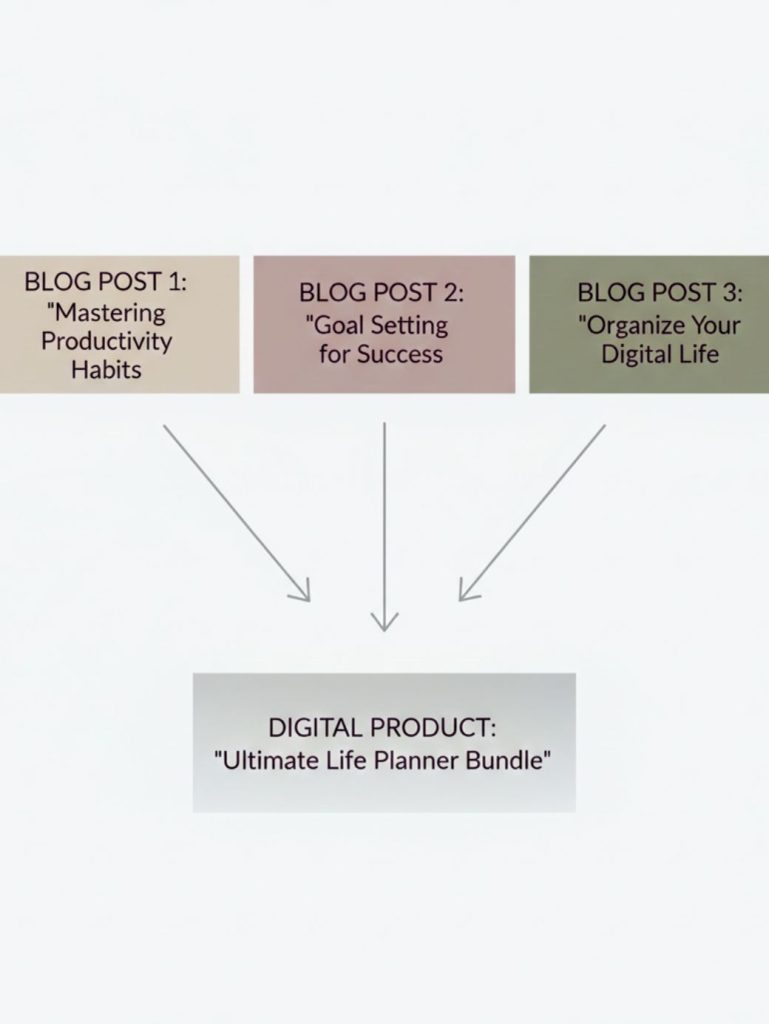
Infographic showing multiple blog posts driving traffic to a single digital template product.
Stack Content. Multiply Sales.

The “trick” isn’t just making one post or one template. It’s content stacking.

Imagine you spend one weekend creating a high-quality Excel template for tracking rental property expenses. You then write three evergreen blog posts targeting keywords like “how to manage rental property taxes” or “landlord expense spreadsheet.”

  1. Post A starts ranking.
  2. Post B gets shared on Pinterest.
  3. Post C gains backlinks from real estate forums.

All three roads lead to your digital template. Within six months, that one weekend of work is generating $200–$500 a month in passive income. Now, do that every month for a year. That is how you build a six-figure digital empire.

Step 5: Mastering SEO for Longevity

Website analytics graph showing long-term traffic growth for passive income blog strategy.
Compounding Traffic Turns Small Efforts into Big Income

To ensure your compounding traffic never dies, you must treat SEO as a foundational pillar, not an afterthought.

Key SEO Strategies:

  • Internal Linking: Link your new posts to your old ones. This tells search engines your site is an authority.
  • User Experience (UX): Use small paragraphs and plenty of white space. If users stay on your page longer, Google rewards you with higher rankings.
  • Mobile Optimization: Most of your buyers will find you on their phones. Ensure your digital templates are easy to download or access via mobile.
  • Keyword Placement: Include your low-competition keywords in the first 100 words, the H2 headers, and the image alt-text.

The Psychology of the Digital Buyer

Why do people buy digital templates instead of making them? Convenience is the ultimate currency. The modern professional is “time-poor” but “cash-rich.” They would rather spend $27 on a pre-made Notion template than spend five hours building it themselves. When you provide that shortcut through your evergreen blog posts, you aren’t “selling”—you are helping.

Overcoming the “First Sale” Hurdle

Most people quit before the compounding traffic kicks in. The first three months of this strategy often feel like shouting into a void.

  • Month 1-3: Focus on volume. Create 10-15 high-quality evergreen blog posts.
  • Month 4-6: Watch the data. See which low-competition keywords are actually bringing people in.
  • Month 6+: Optimize your digital templates based on user feedback and watch the sales notifications start rolling in.

Conclusion: Start Building Your Empire

The beauty of this passive income trick is that it is accessible to anyone with a laptop and a bit of specialized knowledge. You don’t need a huge following; you just need to solve a specific problem for a specific group of people.

Stop trading your hours for dollars. Start building digital templates, writing evergreen blog posts, and targeting low-competition keywords. Let the power of compounding traffic do the heavy lifting for you.

The internet is a vast ocean of opportunity, and there is plenty of room for those who are willing to build assets rather than just consume content.

Futuristic workspace with laptop showing multiple online income dashboards representing profitable side hustles in 2026.

Making money online in 2026 isn’t about “get-rich-quick” schemes; it’s about building scalable assets. From AI automation to visual search engines, the barrier to entry has dropped, but the need for strategy has skyrocketed.

If you’re ready to stop trading time for pennies, here are the seven most effective side hustles that are dominating the landscape this year.

The traditional 9-to-5 is no longer the “safe” bet it once was. In 2026, the economy has shifted toward the solopreneur, where individual skills and digital leverage outweigh corporate seniority. Whether you are looking to escape the rat race or simply pad your savings against inflation, the creator economy offers more opportunities than ever before.

1. High-Value Digital Products

Build Once. Sell Forever. Digital Products in 2026

The “build once, sell forever” model is the holy grail of passive income. In 2026, consumers are moving away from bloated, expensive masterclasses and toward “mini-products”—hyper-specific solutions to immediate problems.

  • The Concept: You package your knowledge into digital downloads like e-books, Notion templates, or mini-video workshops.
  • The Strategy: Identify a “bleeding neck” problem in a specific niche (e.g., “AI-Powered Budgeting for Freelancers”) and create a low-cost solution ($27–$97).
  • Scalability: Once the product is hosted on a platform like Gumroad or Stan Store, your only job is traffic generation.

Pros & Cons

  • Pros: Extremely high profit margins (90%+); no inventory or shipping costs; works while you sleep.
  • Cons: Requires an initial time investment to create; needs a consistent marketing strategy to stay relevant.

2. Faceless Pinterest Blogging

Make Money on Pinterest Without Showing Your Face

Pinterest has evolved into a powerhouse visual search engine in 2026. Because the platform prioritizes content over creators, you can drive massive traffic to a blog without ever showing your face or recording a single “Get Ready With Me” video.

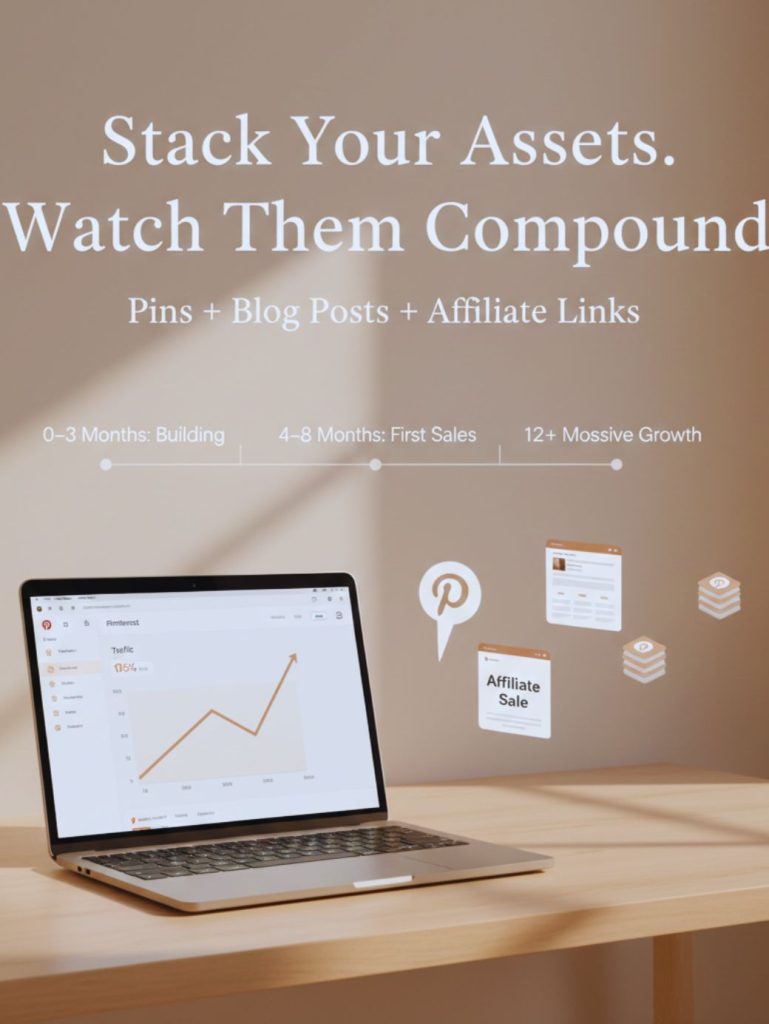
  • The Loop: You create visually stunning pins using AI design tools, link them to helpful blog posts, and monetize that traffic through affiliate marketing and display ads.
  • SEO Integration: By using Pinterest SEO, you target high-intent keywords that users are actively searching for, bypassing the hyper-competitiveness of Google’s front page.
  • The 2026 Edge: Pinterest users have higher purchasing intent than TikTok or Instagram users. They aren’t there to be entertained; they are there to plan and buy.

Pros & Cons

  • Pros: Total anonymity; compounding traffic (pins can go viral months after posting); low maintenance once the system is set up.
  • Cons: It takes 3–6 months to see significant organic reach; requires consistent pinning and high-quality graphics.

3. Niche Digital Printables

Digital printable planners and trackers displayed on tablet and paper for online selling.
Turn Simple Printables into Daily Passive Sales

The market for digital printables has exploded as more people embrace digital planning and home organization. This is the ultimate “entry-level” hustle for those who have an eye for design but don’t want to manage a complex website.

  • Top Sellers: Habit trackers, “Shadow Work” journals, educational worksheets for kids, and Etsy SEO-optimized wedding planners.
  • The Workflow: Design a PDF in Canva, upload it to Etsy or a Shopify starter store, and let the platform’s internal search engine find your customers.
  • The 2026 Twist: Use AI image generators to create unique borders, stickers, and elements that make your printables stand out from generic competitors.

Pros & Cons

  • Pros: Zero overhead costs; very low barrier to entry; great for testing different market niches quickly.
  • Cons: Highly competitive; requires staying on top of seasonal trends; profit per sale is usually lower than other products.

4. UGC (User-Generated Content) Creation

Content creator filming product review video for brand collaboration.
Get Paid to Create Content (No Followers Required)

Brands in 2026 have realized that polished, professional ads are often ignored. They want “real” people making “real” content. As a UGC creator, you don’t need a following; you just need a smartphone and the ability to make engaging short-form videos.

  • The Job: You record a video of yourself using a product, unboxing it, or giving a testimonial. The brand then buys the rights to use that video on their social media ads.
  • The Income: Beginners can charge $150–$250 per video, while experienced creators with a portfolio often command $500+ for a single 30-second clip.
  • High Demand: Every e-commerce brand on Earth needs a constant stream of fresh social media content to stay relevant.

Pros & Cons

  • Pros: You get free products; no need to build a personal audience; high income potential for those with good communication skills.
  • Cons: Not passive—you are trading your time for content; requires basic video editing skills and a “pitching” mindset.

5. AI Services & Prompt Engineering

Laptop showing AI automation tools used for business services and prompt engineering.
Turn AI Skills into High-Paying Services

If you aren’t using AI to make money in 2026, you’re leaving money on the table. Small businesses are desperate to integrate AI but have no idea where to start. You can act as the “bridge” by offering AI-powered services.

  • Service Ideas: Selling curated AI prompt libraries, setting up automated AI customer service bots, or offering “AI Content Audits” to help brands optimize their output.
  • The B2B Angle: Many local businesses (plumbers, lawyers, realtors) will pay a premium for someone to automate their boring administrative tasks using LLM workflows.
  • Specialization: Don’t just “do AI.” Be the person who helps real estate agents generate 30 days of social media content in 30 minutes.

Pros & Cons

  • Pros: High-demand, cutting-edge skill; allows you to charge premium rates; work can be done very quickly with the right tools.
  • Cons: The tech moves fast—you must be a “forever student”; high responsibility if you are managing a client’s business systems.

6. Remote Appointment Setting

Phone screen showing booked sales appointment representing remote appointment setting income.
Earn Commission by Booking High-Ticket Calls

As the world of high-ticket coaching and B2B software continues to grow, companies need humans to bridge the gap between a “lead” and a “sale.” Remote appointment setting is a skill-based hustle that requires zero followers and zero initial investment.

  • The Role: You manage a brand’s Instagram DMs or LinkedIn inbox, chatting with interested prospects and booking them for a call with a senior closer.
  • The Payoff: Most setters earn a base pay plus a commission (usually 3–5%) on any closed deals. In a high-ticket program, one booking could net you $200–$500 in commission.
  • Flexibility: You can do this from anywhere in the world using just your phone.

Pros & Cons

  • Pros: Unlimited earning potential based on performance; teaches you high-value sales skills; easy to start without a degree.
  • Cons: Can be repetitive; requires dealing with rejection; your income depends on the “closer’s” ability to finish the deal.

7. Faceless YouTube Channels (Cash Cow Channels)

Video editing screen showing faceless YouTube channel production and monetization growth.
Build a Cash Cow YouTube Channel Without Showing Your Face

YouTube is still the king of long-form content. In 2026, the most profitable channels aren’t vloggers—they are “Cash Cow” channels that use stock footage, AI voiceovers, and SEO-driven scripts to educate or entertain.

  • The Niche: Think “Top 10” lists, financial news, space documentaries, or meditation music.
  • The System: You hire (or use AI) to write a script, generate a voiceover, and edit clips together. Once you hit the monetization requirements, you earn AdSense revenue and affiliate commissions.
  • The 2026 Edge: With the rise of high-quality AI video generators, creating cinema-quality faceless content is now possible for a fraction of the cost.

Pros & Cons

  • Pros: Builds a long-term digital asset; high ceiling for income; can eventually be fully outsourced to a team.
  • Cons: High initial effort to get monetized; requires a deep understanding of the YouTube algorithm and click-through rates (CTR).

The 2026 Blueprint for Success

Choosing a side hustle is only half the battle; the other half is consistent execution. To succeed this year, you must move away from “dabbling” and toward “ownership.”

  1. Pick One: Don’t try all seven at once. Pick the one that fits your current lifestyle and skills.
  2. Focus on SEO: Whether it’s Pinterest, Etsy, or YouTube, understanding how search algorithms work is your superpower.
  3. Use Leverage: Use AI to do the boring work so you can focus on the high-level strategy.

The internet is a massive “value-exchange” machine. If you can provide a solution, provide entertainment, or provide a shortcut, the money is already there waiting for you.

Minimalist home office setup showing Pinterest analytics growth on laptop screen representing $3,000 per month passive income strategy.

The dream of earning a passive income without ever stepping in front of a camera is no longer just a pipe dream. Recently, a creator made waves by documenting her journey of hitting $3,000 per month on Pinterest—all while remaining completely anonymous.

Pinterest isn’t just a place for wedding inspiration or sourdough recipes; it is a high-intent visual search engine. Unlike Instagram, where users follow people, Pinterest users follow interests. This makes it the perfect playground for faceless content creators to build a digital empire.

In this guide, we will break down the exact framework used to generate these results, from choosing the right profitable niche to building a high-converting blog funnel using simple AI tools.

1. High-Converting Faceless Niches

4 High-Converting Pinterest Niches That Actually Make Money

To make money on Pinterest, you need to go where the money is already flowing. You don’t need a “personal brand” to dominate these categories; you just need high-quality visuals and helpful information.

The “Wealth” Niche

People are constantly searching for ways to save, invest, or make money.

  • Budgeting printables and debt payoff trackers.
  • Side hustle ideas for students or stay-at-home parents.
  • Cryptocurrency guides or stock market basics for beginners.

The “Health & Wellness” Niche

This is a perennial favorite on the platform.

  • Keto recipes or meal prep plans.
  • Mental health journals and self-care routines.
  • Home workout challenges that don’t require expensive equipment.

The “Aesthetics & Lifestyle” Niche

Pinterest is a visual-first platform, making this niche highly viral.

  • Home decor transitions and DIY room makeovers.
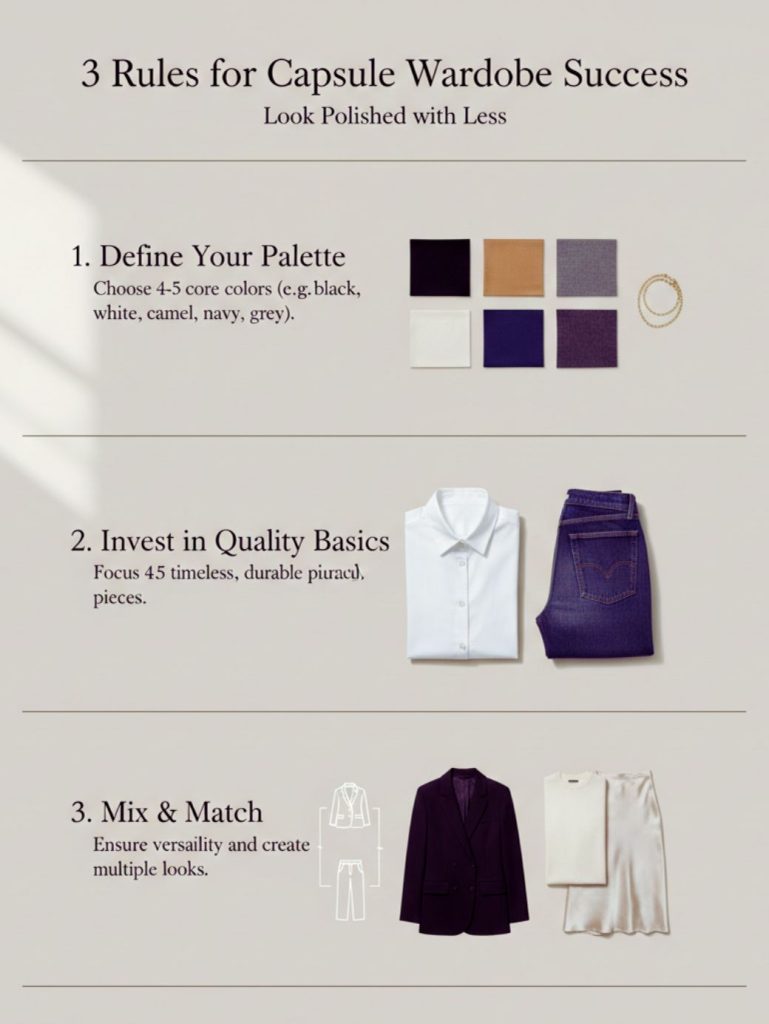
  • Outfit mood boards and capsule wardrobe planning.
  • Organizing tips and “Clean Girl” aesthetic checklists.

The “Tech & AI” Niche

With the explosion of AI technology, users are searching for tools to make their lives easier.

  • ChatGPT prompts for productivity.
  • AI art tutorials and digital design tips.
  • Automating your workflow with simple software solutions.

2. The Power of Affiliate Links

Illustration showing affiliate marketing process where blog traffic converts into commission income.
How Affiliate Links Turn Pinterest Traffic into $3,000/Month

The secret sauce to that $3,000 paycheck is Affiliate Marketing. Instead of creating your own products (which takes time), you promote existing products and earn a commission.

Choosing the Right Programs

Look for high-ticket affiliate programs or those with recurring commissions. Common choices include:

  • Amazon Associates: Great for physical goods and home decor.
  • ShareASale & CJ Affiliate: Massive marketplaces for various brands.
  • Software Affiliates: These often offer 30% to 50% recurring monthly commissions.

The “Golden Rule” of Linking

Pinterest has a love-hate relationship with direct affiliate links. To stay safe and maximize your conversion rate, never link directly from a Pin to a sales page. Instead, use a bridge page or a blog post. This adds value, builds trust, and prevents your account from being flagged as spam.

3. The Blog Funnel Setup: Your 24/7 Salesperson

Marketing funnel infographic showing Pinterest traffic flowing into blog content and converting into email subscribers and affiliate income.
Turn Pinterest Traffic into Passive Income with This Simple Blog Funnel

To reach $3,000, you need a system that works while you sleep. This is where the Blog Funnel comes in. Think of Pinterest as the “Top of the Funnel” (Traffic) and your blog as the “Bottom of the Funnel” (Conversion).

Step 1: The Magnetic Pin

You create a high-quality Pin in Canva that addresses a specific pain point (e.g., “How to Save $1,000 in 30 Days”).

Step 2: The Educational Blog Post

When the user clicks the Pin, they arrive at a 1,000-word article on your site. This article provides genuine value but also naturally weaves in your affiliate links.

Step 3: The Email Opt-in

Inside the blog post, offer a “Freebie” (like a PDF checklist) in exchange for their email address. Now, even if they don’t buy today, you can market to them via an automated email sequence forever. This is how you build a long-term digital business.

4. Simple AI Tools for Content Creation

Laptop workspace showing AI tools used for writing, designing, and generating content for Pinterest marketing.
Use AI Tools to Create 30 Days of Pinterest Content in One Weekend

Efficiency is the difference between a hobby and a business. Use these AI tools to do 90% of the heavy lifting.

ChatGPT (The Brain)

Use this for keyword research, generating catchy Pin titles, and drafting entire blog posts. Simply ask: “Give me 10 viral Pinterest titles for a blog post about minimalist living.”

Canva & Bulk Create (The Designer)

You don’t need to be a graphic designer. Use Canva’s templates. You can even use their Bulk Create feature to turn a CSV file of tips into 50 different Pins in under five minutes.

Midjourney or DALL-E (The Photographer)

Since you aren’t showing your face, you need high-quality stock imagery. AI image generators can create unique, high-definition photos for your Pinterest Marketing strategy that no one else is using.

Pinterest Trends (The Compass)

This is a free tool provided by Pinterest. It tells you exactly what people are searching for right now. Use it to stay ahead of the curve and create content that is virtually guaranteed to get organic reach.

5. The Realistic 60-Day Roadmap

Vertical infographic showing a structured 60-day roadmap for growing Pinterest traffic, affiliate income, and email subscribers.
The Exact 60-Day Plan to Reach $3,000/Month on Pinterest (Step-by-Step)

Don’t expect $3,000 overnight. Pinterest is a “slow burn” platform that rewards consistency. Here is your step-by-step plan.

  • Days 1–10: The Foundation
  1. Niche Research: Pick one niche and stick to it.
  2. Setup: Create a Pinterest Business account and a simple WordPress or Ghost blog.
  3. SEO Setup: Optimize your Pinterest profile with target keywords in your bio and board titles.
  • Days 11–30: The Content Blitz
  1. Create 5–10 Pillar Blog Posts: These should be deep dives into your niche.
  2. Pinning Schedule: Start pinning 3–5 high-quality Pins per day.
  3. Automation: Use a tool like Tailwind to schedule your Pins so you don’t have to be online 24/7.
  • Days 31–45: Analyzing & Pivoting
  1. Check Analytics: See which Pins are getting the most “Outbound Clicks.”
  2. Double Down: Create 10 more Pins for your best-performing blog post.
  3. Split Testing: Try different colors, fonts, and call-to-actions (CTAs) on your Pins.
  • Days 46–60: Monetization & Scaling
  1. Affiliate Optimization: Replace low-performing links with better offers.
  2. Email Marketing: Set up your first 5-day automated email sequence to welcome new subscribers.
  3. Growth: Look into “Idea Pins” (now integrated into standard Pins) to boost your brand awareness and follower count.

Why Faceless Pinterest is the Best Side Hustle

The beauty of this model is the low barrier to entry. You don’t need a fancy camera, you don’t need to spend thousands on ads, and you certainly don’t need to be an extrovert.

By focusing on SEO optimization, high-quality visuals, and a solid funnel, you are building a digital asset. Unlike a TikTok video that dies after 24 hours, a Pin can continue to drive traffic and sales to your blog for years.

Success on Pinterest is about patience and data. If you provide the solution to a problem someone is searching for, the money will naturally follow.

The Bottom Line

Generating $3,000 on Pinterest faceless is about working smarter, not harder. Use AI content creation to scale your output and focus on niches with high commercial intent.


Google Business Profile Optimization Guide

Google Business Profile (formerly Google My Business) is the backbone of Local SEO.
If your business is not optimized properly, you will never rank in the Google Map Pack, no matter how good your website is.

This guide breaks down BASIC → INTERMEDIATE → ADVANCED → PRO-LEVEL GMB Optimization, exactly how top-ranking local businesses do it in 2026.


BASIC Google Business Profile Optimization (Foundation Setup)

This step builds your trust base. Never skip it.

1. Create & Verify Google Business Profile

  • Create a Google Business Profile
  • Verify via postcard, phone, or email
  • One business = one profile = one location

2. Business Name (NAP Accuracy)

  • Use real business name only
  • Keep it consistent everywhere
  • No keyword stuffing
    ❌ “Best Dental Clinic in Mohali”
    ✅ “Sharma Dental Clinic”

3. Select Correct Primary Category

  • Most important ranking factor
  • Choose one closest main category
  • Example: Dentist, Restaurant, Solar Energy Company

4. Business Address & Map Pin

  • Exact address required
  • Pin location must match the real place
  • Avoid virtual offices

5. Phone Number (NAP Consistency)

  • Same phone number on:
    • GMB
    • Website
    • Directories
  • Avoid multiple numbers

6. Website URL

  • Add your official website
  • Prefer location-based landing page

7. Business Hours

  • Set correct working hours
  • Update special hours if needed

8. Business Description (750 Characters)

  • Add keywords naturally
  • Mention services + city
  • Avoid spammy language

9. Upload Photos

  • Profile Photo (logo)
  • Business Logo
  • Cover Photo (high quality)

INTERMEDIATE GMB Optimization (Visibility Boost)

This step improves relevance + engagement.

1. Add Secondary Categories

  • Add related services
  • Example:
    Dentist → Cosmetic Dentist, Dental Clinic

2. Complete Services / Products Section

  • Add each service separately
  • Use keyword-rich descriptions

3. Service Area Setup (If Applicable)

  • Add nearby cities
  • Useful for service-based businesses

4. Add Attributes

  • Wi-Fi
  • Online Appointments
  • Payment Modes
  • Accessibility options

5. Opening Date

  • Adds trust signal
  • Helps Google understand business age

6. Regular GMB Posts (Weekly)

  • Offers
  • Updates
  • Events
  • Use images + CTA

7. Enable Messaging

  • Increases conversions
  • Google prefers active profiles

8. Call Tracking (Smart Setup)

  • Real number on GMB
  • Tracking number on website
  • Never replace GMB number with tracking

ADVANCED GMB Optimization (Local SEO Power)

This is where Map Pack rankings start moving.

1. Upload Geo-Tagged Images

  • Images tagged with:
    • City
    • Service keywords
  • Upload regularly

2. Image SEO

  • Rename files before upload
    Example:
    best-dentist-mohali-clinic.jpg

3. Keyword-Based GMB Posts

  • City + Service keywords
  • Example:
    “Best Dental Implant Clinic in Mohali”

4. UTM Tracking

  • Track traffic from GMB
  • Measure calls, visits, clicks

5. Review Strategy

  • Ask for reviews daily/weekly
  • Real customers only

6. Keyword-Rich Review Replies

  • Reply to every review
  • Mention city + service naturally

7. Google Maps Citations

  • Build citations on:
    • Business directories
    • Maps platforms
  • Improves authority

8. Local Backlinks

  • Local news sites
  • Blogs
  • City directories

9. Analyze Business Profile Insights

  • Calls
  • Directions
  • Website clicks
  • Improve based on data

10. NAP Consistency Everywhere

  • Website
  • Social media
  • Directories
  • Maps listings

PRO-LEVEL GMB Optimization (Ranking Acceleration)

Used by top 3 Map Pack businesses.

1. Location-Based Landing Pages

  • One page per city
  • Connect it with GMB

2. Content Alignment

  • Website content = GMB services
  • City + service keyword matching

3. Schema Markup

  • Local Business Schema
  • Helps Google understand your business

4. Weekly Photo Upload

  • Freshness factor matters
  • Google favors active profiles

5. Post CTA Optimization

  • Call Now
  • Book Appointment
  • Order Online

6. Holiday Hours Update

  • Prevents profile issues
  • Improves trust

7. Suspension Risk Check

  • Follow Google policies
  • Avoid fake addresses & spam

8. Map Pack Tracking Tools

  • Track rankings by location
  • Tools like Localo help

BONUS Tips (High-Ranking Secrets)

  • Ask customers to mention city + service in reviews
  • Never use fake reviews
  • One profile = one physical location
  • Don’t add extra keywords in business name
  • Weekly activity is mandatory

Final Thought

Google Business Profile ranking is not magic.
It’s consistency + optimization + trust.

If you follow this step-by-step GMB system, your business can dominate Google Maps, Local Search, and Nearby Results in 2026.


Google Discover has completely changed how websites get traffic. Unlike traditional SEO, Discover does not depend on keywords alone. It pushes content based on user interests, trends, freshness, authority, and trust.

If you want massive Discover traffic in 2026, you need a different system. Below is a complete, practical, step-by-step Google Discover strategy used by high-traffic publishers.


Step 1: Use Expired Domains for Faster Google Discover Entry

Using an expired domain with existing authority can dramatically reduce the time required to appear on Google Discover. These domains already have backlinks, trust signals, and indexing history.

Best Platforms to Find Expired Domains

  • ExpiredDomains.net
  • GoDaddy Auctions
  • Namecheap Auctions
  • SpamZilla
  • Odys Global

Key Metrics to Check Before Buying

Domain Authority (DA):

  • Minimum: 20+
  • Ideal: 30–50+

Page Authority (PA):

  • Minimum: 25+

Backlinks:

  • At least 100+ backlinks
  • Preference: news websites, blogs, authority sites

Spam Score:

  • Ideal: 1%–5%
  • Avoid anything above 10%

Domain History Check:

  • Always check on archive.org
  • Avoid domains previously used for casino, adult, crypto spam, or PBNs
  • Clean history is non-negotiable

Step 2: Choose a Google Discover-Friendly Niche

Not every niche works on Discover. Google Discover promotes interest-based and trend-driven content, not static business pages.

Best Niches for Google Discover in 2026

  • News & Breaking Updates
  • Technology & AI
  • Health & Wellness
  • Finance & Economy
  • Bollywood & Entertainment
  • Cricket & Sports
  • Government Schemes
  • Gadgets & Product Launches
  • Education Updates
  • Viral & Trending Topics

Avoid These Niches

  • Static company websites
  • Local service pages
  • Low-interest evergreen topics

Step 3: Find Trending Topics (This Is the Core)

Google Discover runs almost entirely on trends. If your content isn’t trending, Discover won’t push it.

Best Tools for Trending Topic Research

Google Trends

  • Visit trends.google.com
  • Focus on Daily Trends
  • Filter by country and category

Google News

  • Check latest breaking news
  • Cover updates quickly with original angles

Google Discover Feed Analysis

  • Scroll your mobile Discover feed daily
  • Identify repeated topics
  • Publish a better version of those articles

Twitter (X) Trending

  • Use trending hashtags and news topics

YouTube Trending

  • Convert trending videos into articles with added insights

Step 4: Technical Website Setup for Discover

Google Discover prefers fast, clean, mobile-first websites.

Essential Technical Requirements

Fast Hosting

  • Load time under 2 seconds
  • Recommended: Hostinger, Cloudways, DigitalOcean

Mobile Optimization

  • 90% Discover traffic comes from mobile
  • Responsive design is mandatory

Clean & Lightweight Theme

  • GeneratePress
  • Astra
  • Newspaper Theme

SSL Certificate

  • HTTPS is compulsory

Step 5: Publish High-Quality Content at Scale

Discover rewards fresh and frequent publishing, especially on trending topics.

Daily Publishing Target

  • Minimum: 8–10 articles per day

Why it works:
Google Discover boosts active publishers consistently pushing fresh content.

Ideal Article Length

  • Minimum: 600 words
  • Best performing: 800–1000 words

Recommended Article Structure

  • Strong, emotional headline
  • Short introduction
  • Main information
  • Latest updates
  • Clear conclusion

Example Title:
New AI Tool Launch 2026: This Tool Can Make Your Work 10X Faster


Step 6: Image Optimization (Critical for Discover)

Images are one of the biggest ranking triggers in Google Discover.

Image Requirements

  • Minimum width: 1200px
  • Best size: 1200 × 675
  • Aspect ratio: 16:9
  • Format: JPG or WebP
  • High-resolution only

Copyright-Free Image Sources

  • Unsplash
  • Pexels
  • Freepik

Always use eye-catching, relevant, and sharp images.


Step 7: Write High-CTR Headlines

Google Discover heavily favors click-worthy titles.

Weak Title

AI Tool Launched

Strong Title

New AI Tool Launch 2026: This AI Can Replace 10 Tools Instantly

Title Optimization Tips

  • Use numbers
  • Use power words
  • Add curiosity
  • Add emotional triggers

Step 8: Speed Up Indexing

After publishing each article:

  • Submit URL in Google Search Console
  • Share on Twitter (X)
  • Share on Facebook
  • Optional: Telegram or WhatsApp channels

Fast indexing improves Discover visibility.


Step 9: Build Website Trust Signals

Trust matters more than ever in Discover.

Must-Have Pages

  • About Us
  • Contact Us
  • Privacy Policy
  • Disclaimer

These pages help Google verify legitimacy and credibility.


Step 10: Consistency Is the Real Secret

Most people fail because they stop too early.

Ideal Daily Routine

  • Publish 8–10 trending articles
  • Use high-quality images
  • Maintain the same niche
  • Repeat for at least 30–60 days

Google Discover Ranking Formula (Advanced)

Discover Ranking =
Expired Domain Authority

  • Trending Topics
  • Daily Publishing (8–10 posts)
  • High-Quality Images (1200px)
  • Fast Website Speed
  • High-CTR Titles
  • Long-Term Consistency

Expected Results Timeline

Day 1–7:
Articles start indexing

Day 7–30:
Discover impressions appear

Day 30–60:
Traffic growth begins

Day 60–90:
Potential for massive Discover traffic


Pro Tips for Advanced Growth

  • Mix AI drafting with human editing
  • Stay focused on one niche
  • Track Discover performance in Search Console
  • Cover trends daily without missing updates

Infographic showing three commonly overused vitamins with warnings about long-term health risks, including effects on blood, liver, and organs.

Vitamins are marketed as harmless insurance policies for health.
Bright labels promise energy, immunity, and longevity — no prescription required. But medical research has revealed a less comfortable truth: Some vitamins, when taken in high doses for months without medical supervision, can quietly damage the liver, kidneys, blood vessels, and heart.Not because vitamins are “poison,”
but because the body was never designed to process chronic megadoses of isolated nutrients.

Here are three supplements most commonly linked to long-term toxicity when misused, and why the risk often goes unnoticed.

1. Vitamin A (Retinol): The Fat-Soluble Accumulator

Vitamin A is essential for vision, immunity, and cell growth — but only in small amounts. The danger lies in synthetic preformed vitamin A (retinol, retinyl palmitate), commonly found in supplements and fortified foods. Unlike water-soluble vitamins, vitamin A is stored in the liver.
When intake consistently exceeds the body’s needs, it accumulates.

What long-term excess can cause:

  • Liver inflammation and fibrosis
  • Headaches, nausea, hair thinning
  • Bone loss and increased fracture risk
  • Fatigue often misdiagnosed as stress or burnout

Clinical cases of hypervitaminosis A have been documented after months of daily over-supplementation — even at doses people assumed were “safe.” Key issue: the liver cannot flush excess vitamin A efficiently.

2. Vitamin D Megadoses: When “More” Backfires

Vitamin D is vital for bone health and immune regulation.
But modern supplement culture often promotes 5,000–10,000 IU daily without blood testing.

Vitamin D increases calcium absorption.
When taken excessively for long periods, this can lead to hypercalcemia — too much calcium in the blood.

Documented risks include:

  • Kidney stones and kidney damage
  • Calcification of blood vessels
  • Heart rhythm disturbances
  • Increased cardiovascular strain

The problem isn’t vitamin D itself — it’s unsupervised megadosing without monitoring blood calcium and vitamin D levels. Medical guidelines consistently emphasize: Vitamin D should be personalized, not blindly stacked.

3. Iron Supplements: Helpful — Until They Aren’t

Iron is lifesaving for people with diagnosed deficiency.
But for those without anemia, excess iron becomes dangerous.

The human body has no active mechanism to excrete excess iron.
Instead, it stores it in organs like the liver, pancreas, and heart.

Long-term excess iron can lead to:

  • Oxidative damage to blood vessels
  • Increased cardiovascular risk
  • Liver and pancreatic stress
  • Elevated inflammation markers

This is why physicians test ferritin levels before recommending iron — and why routine supplementation without diagnosis is discouraged.

Iron isn’t a daily “energy vitamin.”
It’s a medical intervention.

Why This Happens: Pills vs. Physiology

Whole foods deliver vitamins in balanced, bio-regulated forms, alongside fiber, enzymes, and cofactors that limit overabsorption.

Supplements deliver isolated compounds, often in doses far beyond evolutionary exposure.

Your liver and kidneys don’t interpret them as “health” —
they interpret them as chemical inputs that must be processed or stored.

Over time, storage becomes strain.

The Real Takeaway (Not Fear — Awareness)

This isn’t an argument against vitamins.
It’s an argument against chronic, unsupervised supplementation driven by marketing rather than medicine.

Evidence-based principles:

  • Test before supplementing
  • Respect upper intake limits
  • Be cautious with fat-soluble vitamins
  • Treat iron and high-dose vitamin D as medical tools, not wellness trends

Health isn’t built by swallowing more pills.
It’s built by understanding what the body can — and cannot — safely handle.

Final Thought

Nature didn’t design the body for constant megadoses of isolated nutrients.
It designed it for balance.

Supplements can support health —
but misuse over time can quietly undermine it.

Infographic illustrating NASA-inspired psychological anchors that limit ambition, including zero gravity drag, echo loops, redundancy traps, mission creep, and afterglow paralysis.

Most people don’t lose ambition overnight.
They drift away from it — slowly, invisibly, and almost politely.

Inside NASA’s behavioral research and mission psychology studies, scientists identified recurring mental patterns that derail performance even among elite astronauts. These patterns aren’t flaws. They’re psychological anchors — forces that quietly pull momentum to zero.

What’s disturbing is this:
Over 80% of people get trapped by at least one of these anchors without ever realizing it — losing years, sometimes decades.

Here are the five anchors, how they work, and why recognizing them changes everything.

1. Zero Gravity Drag: Why Starting Is Harder Than Continuing

In space, nothing moves without force.
On Earth, ambition works the same way.

NASA research shows the first 10 minutes of action determine whether momentum forms at all. The problem isn’t laziness — it’s hesitation. You open the document. Check a message. Rethink the plan. Pause.

The brain slips into what psychologists call the calm zone — a state where everything feels “under control,” so urgency disappears. Energy fades. Motivation evaporates. And suddenly, nothing launches.

Key insight:
Action creates energy — not the other way around.
Without immediate thrust, ambition stalls at zero.

2. The Echo Loop Effect: When Approval Replaces Progress

NASA learned early that crews exposed to a single dominant voice develop false confidence. They stop questioning. Errors compound quietly.

Modern ambition suffers the same fate.

You consume advice from familiar sources. You get encouragement from friends. Likes, comments, praise — all reinforcing comfort. But the insight that would actually challenge you gets filtered out.

You mistake validation for clarity.

Meanwhile, others — less applauded but more focused — move forward.

Key insight:
If everyone agrees with you, you’re probably not growing.
Ambition dies when feedback feels good instead of useful.

3. The Redundancy Trap: Planning Every Failure Until Nothing Happens

NASA builds redundancies for survival — not momentum.
Too many backups slow decisions.

In life, redundancy becomes avoidance.

You create fallback careers. Backup plans. Side options. Emergency exits. Each one reduces commitment to the main mission. You prepare for failure so thoroughly that success never gets a real chance.

Risk is diluted. Action weakens. Launch never happens.

Key insight:
Commitment creates pressure — and pressure creates movement.
Ambition fades when nothing is truly on the line.

4. Mission Creep Spiral: Losing the Original Why

NASA missions fail when objectives expand without discipline. What starts as exploration becomes safety management, system optimization, endless adjustments.

People do the same.

You start a business to build something meaningful. Then shift to content, monetization. Then optimization. Eventually, you’re busy — but directionless.

The mission hasn’t failed.
It’s dissolved.

Key insight:
Ambition requires a stable “why.”
When purpose drifts, effort multiplies — but progress disappears.

5. Afterglow Paralysis: How Success Can Quietly End the Climb

NASA warns that every successful maneuver requires a counter-thrust. Without it, a spacecraft stalls in orbit.

Human ambition stalls the same way.

You achieve something meaningful. The brain releases reward chemicals. Hunger shuts down. The sense of “we made it” settles in. Instead of using success as fuel, you pause — expecting momentum to carry itself.

It doesn’t.

Most ambition dies not from failure — but from comfort after a win.

Key insight:
Success must be followed by deliberate discomfort.
Without it, growth plateaus permanently.

Final Thought: Breaking the Loop

These anchors don’t mean you lack discipline.
They mean you’re human.

But awareness is escape velocity.

When you understand why ambition stalls — at the start, in feedback loops, in overplanning, in drift, and after success — you stop blaming yourself and start correcting the system.

Ambition isn’t about doing more.
It’s about removing what silently holds you still.

And once those anchors lift, momentum returns — fast.

A middle-aged man sitting alone at night reviewing bills and finances, symbolizing the financial trap of debt, status pressure, and loss of freedom after 40.

Financial Trap – For decades, men are taught a simple equation: more money equals more freedom. Work harder, earn more, buy the house, upgrade the car, secure the lifestyle. But somewhere after 40, many men wake up to a brutal realization:

They don’t feel free at all.

They feel trapped.

1. When Ownership Turns Into Captivity

Mortgages, car payments, credit cards, subscriptions, school fees, insurance—each one seems reasonable on its own. Together, they form a quiet cage.

You don’t own the house.
The house owns your schedule.

You don’t control your job.
Your job controls your nervous system.

What feels like stability is often dependency in disguise. Men believe they’re “building a life,” but in reality, they’re maintaining liabilities that demand constant sacrifice. Missing one paycheck doesn’t mean inconvenience—it means panic.

That’s not freedom. That’s pressure with better furniture.

2. Status: The Most Expensive Prison

Few men admit it, but much of modern spending isn’t about comfort—it’s about comparison.

The car that stretches your finances.
The watch that signals success.
The holidays posted online, funded by debt.

These purchases are rarely for personal fulfillment. They’re social armor—protection against being seen as “less.” And the cost isn’t just money. It’s years of additional work, stress, and obligation spent paying off things that don’t actually improve life.

Status doesn’t make you powerful.
It makes you predictable—and expensive to maintain.

3. The Debt That Matters Most: Time

Financial debt can be measured. Time debt cannot.

A man can recover money.
He cannot recover missed years.

While chasing income targets and promotions, many men quietly trade away what actually matters: health, presence, relationships. Children grow up while they’re working late. Partners feel emotionally alone. The body weakens under stress and neglect.

Banks don’t charge interest on this debt—but life does.

And there are no refunds.

4. Why “Work Harder” Is the Wrong Advice

When a man feels financially trapped, the default advice is always the same: earn more.

But earning more inside the wrong system only tightens the chain.

A man making £200,000 can be drowning under obligations.
A man making £50,000 can breathe freely.

The difference isn’t income—it’s outflow.

More money without control doesn’t buy freedom. It buys larger cages with better branding. Real leverage comes not from constant growth, but from intentional reduction.

5. What Financial Freedom Actually Looks Like

Freedom is not a number in a bank account.
It’s not early retirement fantasies.
It’s not impressing other men.

Freedom is the ability to say no.

  • No to overtime that drains your health.
  • No to purchases that don’t add real value.
  • No to lifestyles built for applause instead of peace.

A man who controls his spending controls his life.
A man who doesn’t will always feel tired—no matter how much he earns.

The Real Question

The financial trap after 40 isn’t about money.

It’s about living unconsciously inside systems designed to keep you busy, dependent, and distracted.

The strongest men don’t ask, “How can I make more?”
They ask, “What can I remove?”

Because the lighter your life becomes, the freer you are to actually live it.

Japanese Zen monk practicing cold water face immersion at dawn, illustrating an ancient morning ritual proven by Harvard research to strengthen willpower and self-control.

For centuries, Japanese Zen monks practiced a simple morning ritual long before neuroscience existed to explain it.

Now, modern science has caught up.

After three years of observation and brain imaging, Harvard-affiliated researchers uncovered something striking: monks who practiced this ritual daily showed measurable structural changes in the brain regions responsible for discipline, focus, and impulse control.

This wasn’t spiritual metaphor.
It was biology.

The Discovery: Willpower Has a Physical Structure

MRI scans revealed that long-term practitioners had a significantly thicker prefrontal cortex—the area of the brain responsible for:

  • Self-control
  • Focus
  • Decision-making under pressure

On average, monks who maintained the practice showed up to 43% greater prefrontal cortical thickness compared to control groups.

In simple terms:
Their willpower wasn’t stronger because of belief—it was stronger because the brain itself had changed.

The Ritual: Cold Water Face Immersion

The practice itself is deceptively simple.

Each morning, monks immerse only the face—not the body—into cold water for about 60 seconds, while calmly counting breaths.

This is not a cold shower.
It is targeted, intentional exposure.

The cold activates the body’s dive response, a powerful reflex that:

  • Slows heart rate
  • Stimulates the vagus nerve
  • Forces rapid nervous system regulation

The brain must override panic signals almost instantly.

That override is the training.

Why It Rewires Discipline

Neuroscientists found that cold face immersion activates the same neural circuits elite athletes use under extreme pressure.

Here’s what happens:

  • The limbic system triggers discomfort and stress
  • The prefrontal cortex is forced to regain control
  • Repeated exposure strengthens this control loop

Each session becomes a micro-workout for self-regulation.

Over time, the brain learns:
Discomfort does not require escape.

That lesson transfers directly to:

  • Cravings
  • Anger
  • Procrastination
  • Fear-based decisions

Ancient Wisdom, Modern Proof

Ancient Zen texts reveal monks never used this ritual for mystical enlightenment.

They used it for mastery of impulses.

Anger.
Desire.
Fear.

Modern studies now support this intent. Participants who practiced daily cold face immersion for 30 days showed:

  • Improved resistance to temptation
  • Reduced stress-driven decisions
  • Increased emotional regulation

Some studies reported improvements of up to 67% in self-control metrics.

Why One Simple Habit Beats Complex Routines

Many people exhaust themselves trying to follow elaborate morning routines:

  • Multiple habits
  • Perfect sequences
  • Constant optimization

The monks did the opposite.

They focused on one foundational practice that strengthened the system responsible for all discipline.

One path leads to burnout.
The other builds capacity.

When willpower improves, everything else becomes easier.

Final Thought

Discipline isn’t a personality trait.
It’s a trained biological function.

The monks understood this intuitively centuries ago.
Science is only now confirming it.

You don’t need fifteen habits to master your mornings.
You need one practice that teaches your brain how to stay calm, focused, and in control—especially when it wants to quit.

And sometimes, mastery begins with sixty seconds of cold water and a steady breath.