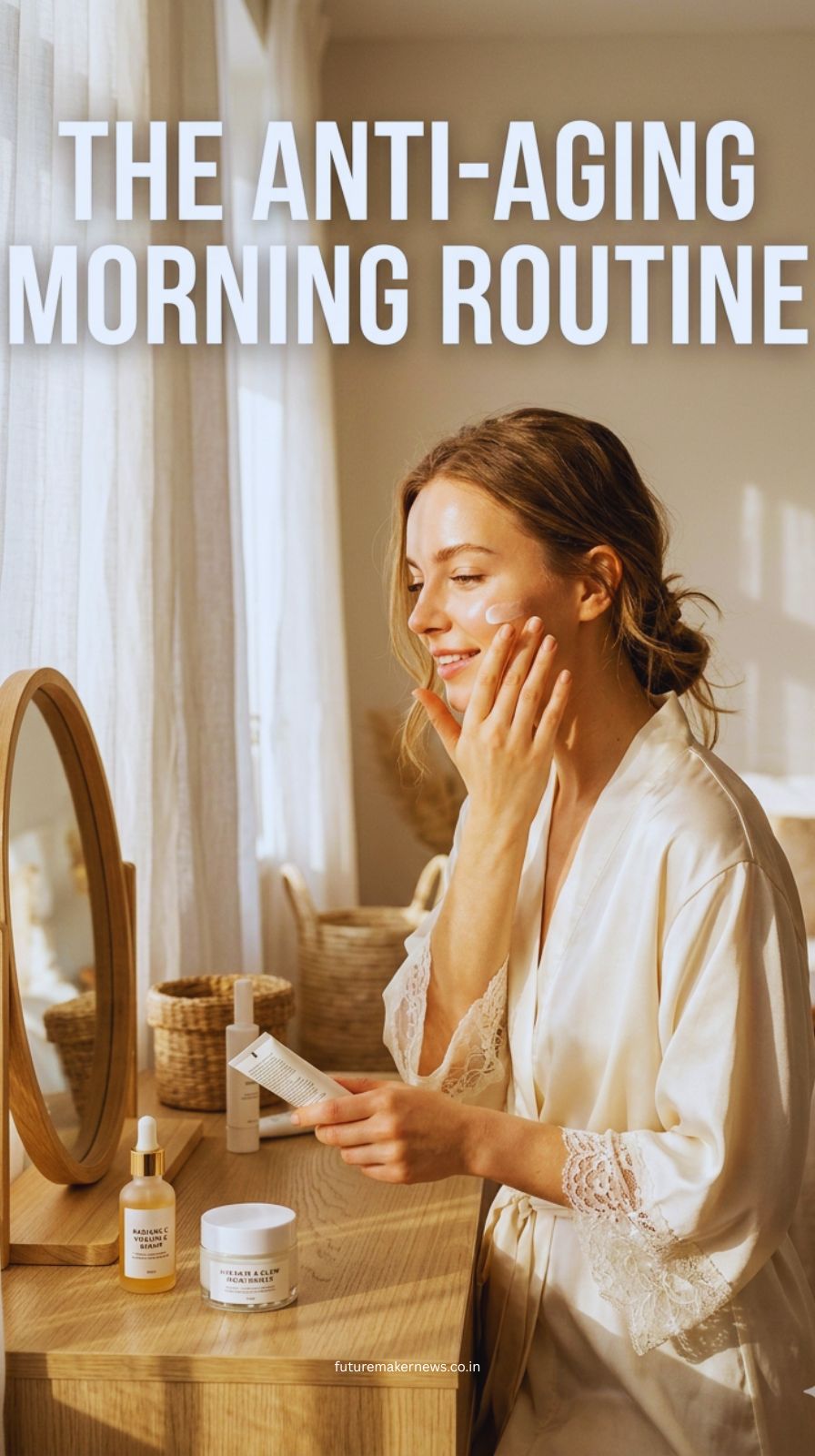
Woman applying sunscreen in soft morning light with vitamin C serum and moisturizer on a minimal vanity.

The secret to youthful skin isn’t found in a surgeon’s office or a $500 night cream. It is found in the first thirty minutes of your day. While evening routines focus on repair, your morning beauty habit is all about defense.

Think of your face as a masterpiece; you wouldn’t leave a Renaissance painting out in the wind, rain, and sun without protection. Aging is essentially the accumulation of environmental damage and internal stress. By mastering a preventative skincare morning ritual, you are effectively slowing down the biological clock.

Here is how to build a high-impact, low-effort morning routine that preserves your collagen and keeps your skin vibrant for decades to home.

1. The Power of the Gentle Cleanse

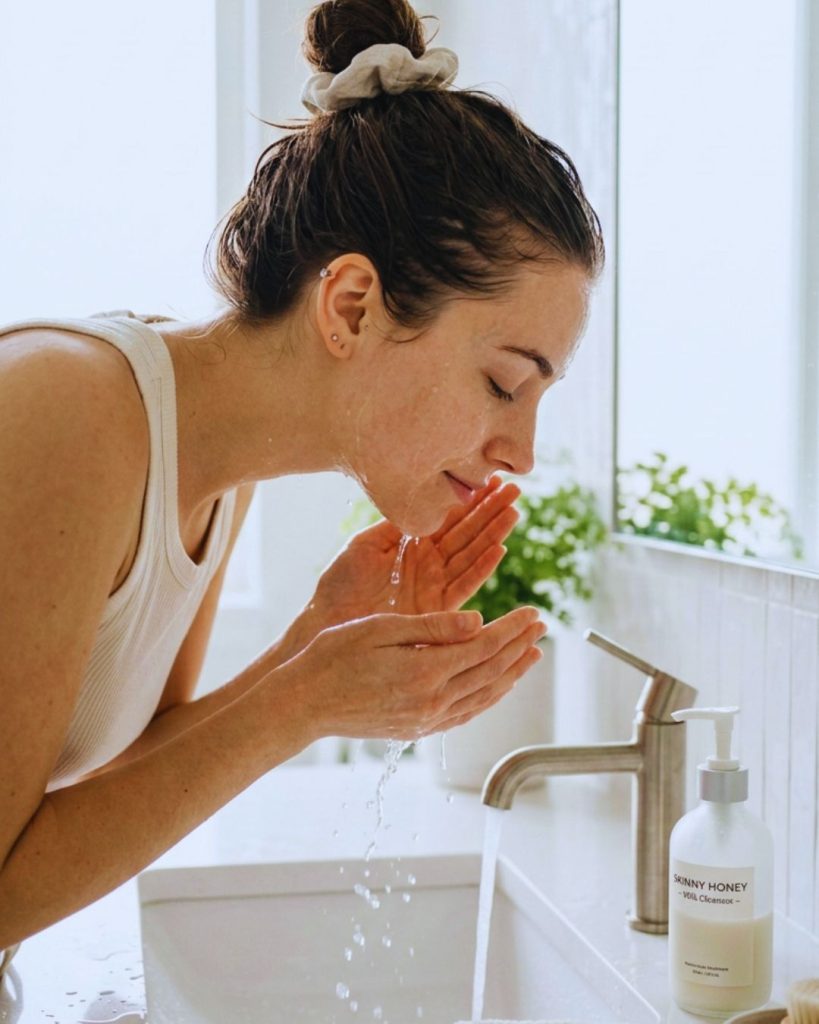
Woman rinsing face with lukewarm water in a bright minimalist bathroom.
Gentle cleansing protects your skin barrier and prevents dehydration.

Many people wake up and immediately reach for a harsh, foaming cleanser to “strip” the oils from the night before. This is the first mistake of anti-aging.

Preserve Your Natural Mantle

  • Overnight, your skin produces natural oils and lipids that are essential for a strong skin barrier.
  • Over-cleansing in the morning creates “micro-cracks” in the skin, allowing moisture to escape and pollutants to enter.

The Fix: Lukewarm Water or Milky Cleansers

  • If you have dry or sensitive skin, simply rinsing with lukewarm water is enough to refresh the face while keeping your hydration intact.
  • If you are oily, use a soap-free, pH-balanced cleanser. This ensures you start your day with a “supple” canvas rather than a tight, dehydrated one.
2. Sunscreen: The Ultimate Anti-Aging Tool

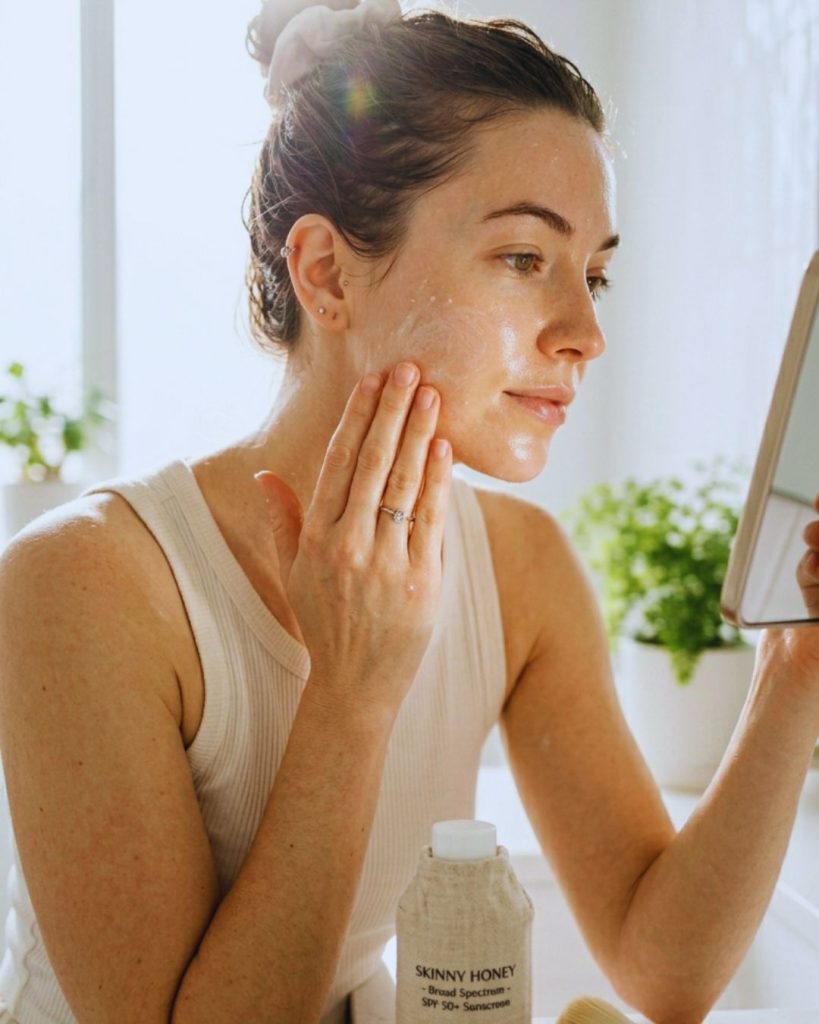
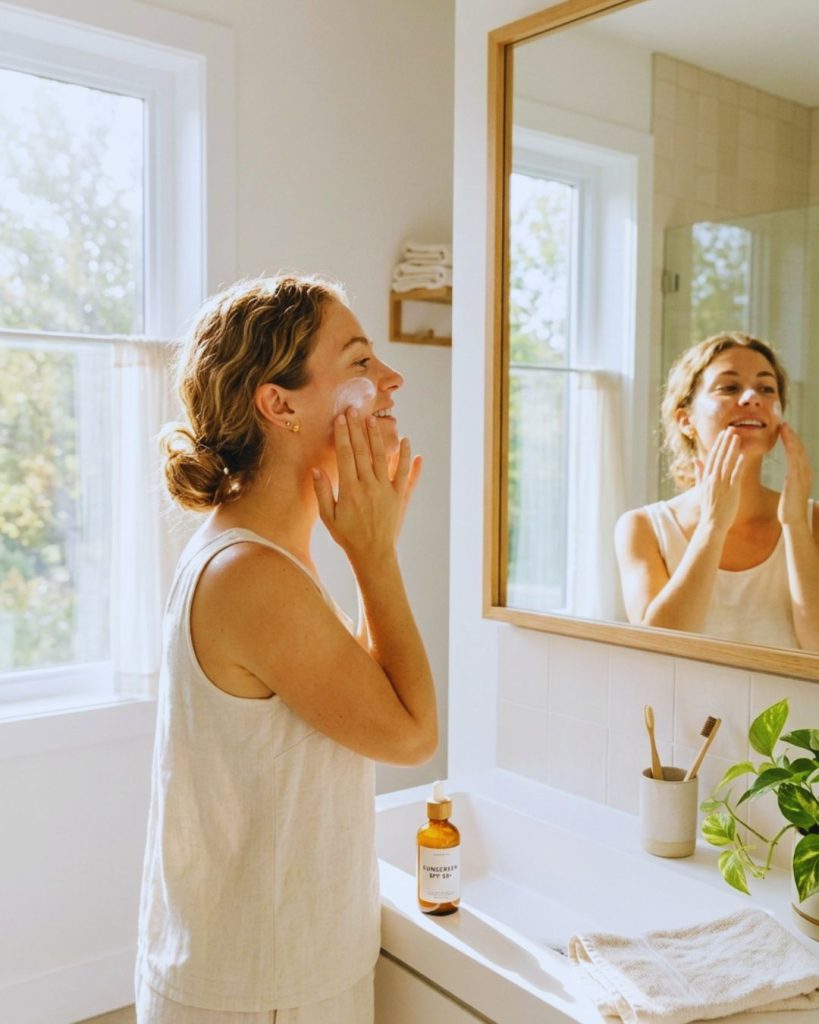
Woman applying sunscreen to face and neck in bright natural light.
SPF is the most powerful anti-aging product you own.

If you did nothing else for your skin, wearing broad-spectrum SPF would still slow down aging more than any other habit. 90% of visible skin changes—wrinkles, leathery texture, and “age spots”—are caused by UV radiation, not by birthdays.

The Science of Photoaging

  • UVA Rays: These are the “Aging” rays. They penetrate deep into the dermis, shattering elastin fibers and causing the skin to sag.
  • Blue Light: In the modern world, our screens also emit HEV light, which can contribute to hyperpigmentation.

The Habit: The “Non-Negotiable” Layer

  • Apply a nickel-sized amount of SPF 30 or higher every single day, regardless of the weather.
  • Pro Tip: Don’t forget your ears, neck, and the backs of your hands. These areas are the first to give away someone’s true age because they are so often neglected in sun protection routines.

3. Cortisol Control: The “Internal” Facelift

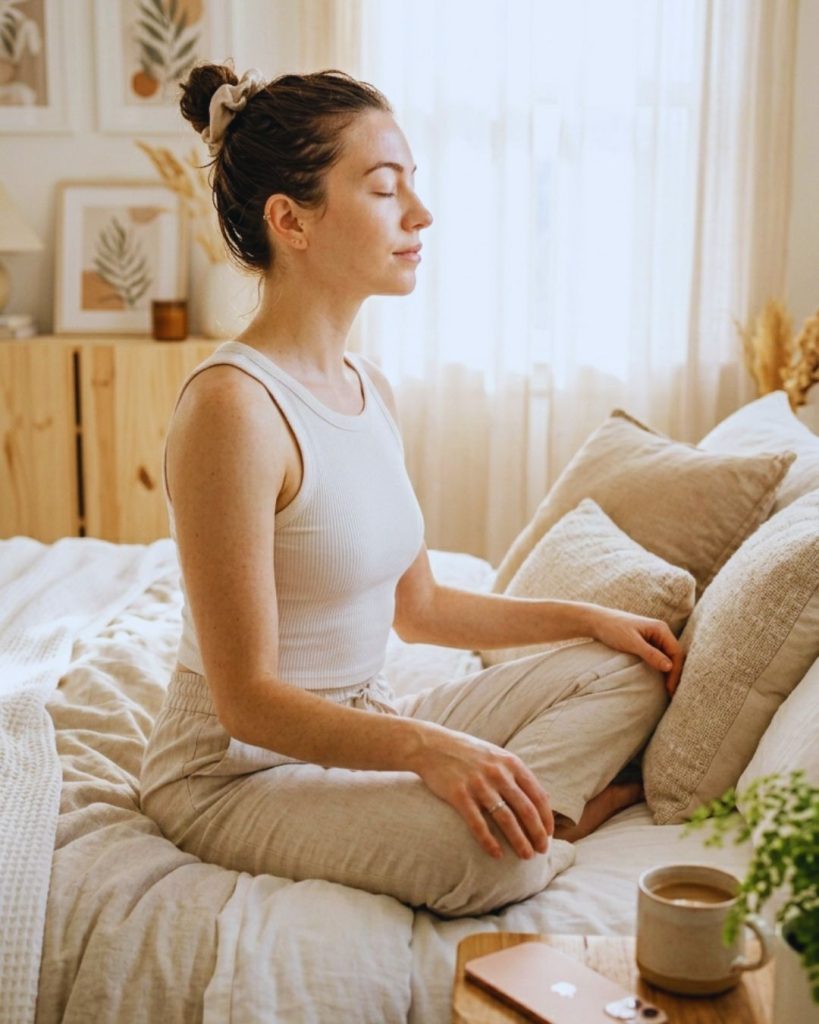
Woman practicing morning breathing exercise with phone turned away in soft natural light.
Five minutes of calm protects your collagen.

High levels of cortisol (the stress hormone) are toxic to your skin. Stress triggers a process called “glycation,” where sugar molecules attach to your collagen, making it brittle and prone to breaking.

The “Stress-Free” Morning Window

  • Checking your emails or social media the second you wake up spikes your adrenaline and cortisol.
  • This “fight or flight” state constricts blood vessels, depriving your skin of the oxygen it needs to look radiant.

The Habit: 5 Minutes of Stillness

  • Before touching your phone, practice deep belly breathing or a light stretch.
  • Lowering your heart rate in the morning sets a “calm” baseline for your hormones.
  • Result: Reduced under-eye puffiness and a clearer, more even skin tone. A calm mind truly equals a “soft” face.

4. Antioxidants: The Invisible Shield

Close-up of vitamin C serum being applied to skin in bright morning light.
Vitamin C + SPF = the ultimate morning defense shield.

To amplify your morning beauty habit, you need to neutralize “free radicals”—unstable molecules from pollution and smoke that eat away at your skin cells.

The Vitamin C Gold Standard

  • Applying a Vitamin C serum in the morning acts like a secondary shield underneath your sunscreen.
  • It brightens existing dark spots and provides “environmental insurance” against city smog.
  • Layering Technique: Cleanse -> Vitamin C -> Moisturizer -> Sunscreen.

Summary of the Anti-Aging Morning Routine

Consistency is the only “miracle” in beauty. Follow this simple checklist to protect your future self:

StepActionBenefit
CleanseUse lukewarm water or a gentle milk.Protects the acid mantle.
ProtectApply an Antioxidant Serum (Vit C).Fights pollution and oxidative stress.
SealApply a lightweight moisturizer.Prevents dehydration lines.
ShieldApply Broad-Spectrum SPF.Prevents 90% of future wrinkles.
Mindset5 minutes of no-phone time.Keeps cortisol from breaking down collagen.

Why “Gentle” is Always Better Than “Aggressive”

The biggest trend in dermatology right now is a return to simplicity. We have learned that “hitting” the skin with too many actives in the morning makes it vulnerable.

By choosing a gentle routine, you are allowing your skin to do what it does best: protect you. When you stop causing inflammation through harsh scrubbing and start providing a shield through SPF and stress control, your skin stays “bouncy” and resilient.

Aging is a privilege, but looking “tired” is optional. By adopting these morning habits, you aren’t just changing your look; you are changing how your skin cells function at a biological level.

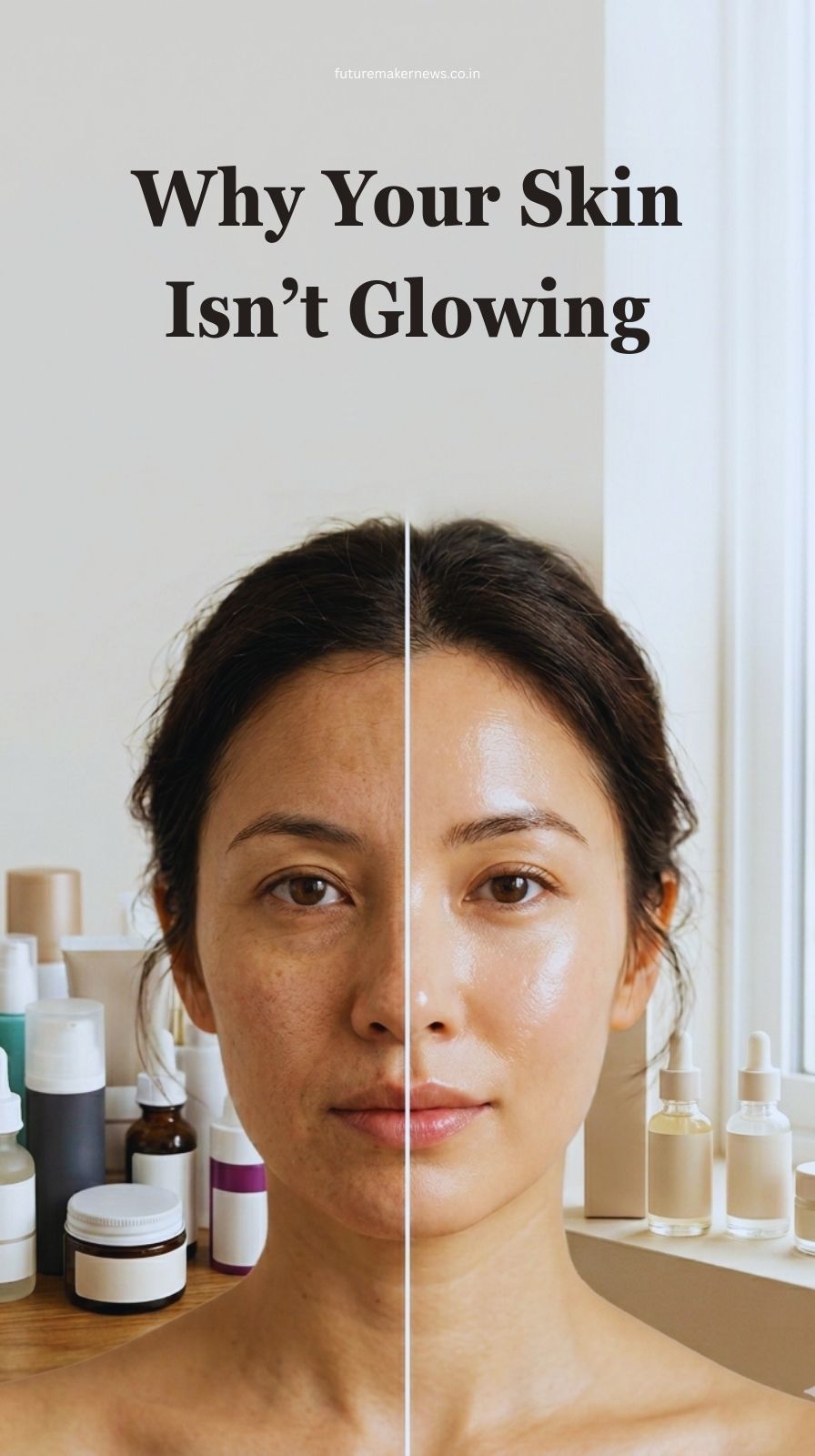
Split image showing dull skin with cluttered skincare versus glowing skin with a minimal routine.

We have all been in this situation: you have bought all the skincare products that everyone is talking about you have followed all the skincare routines that you see online. You have spent a lot of money on creams that are suppose to be really good for your skin but your skin still looks dull, rough or it breaks out easily. It is really frustrating to spend much time and money on skincare and not see any good results.

The truth is that having skin is not just about what you put on your face it is also about what you stop doing to it. Sometimes the things we do to try to help our skin are actually hurting it.

If you feel like you are not getting the results you want from your skincare routine it is time to take a look at what you are doing. Here are some common mistakes that can hurt your skin and how to fix them.

1. Over-Exfoliating

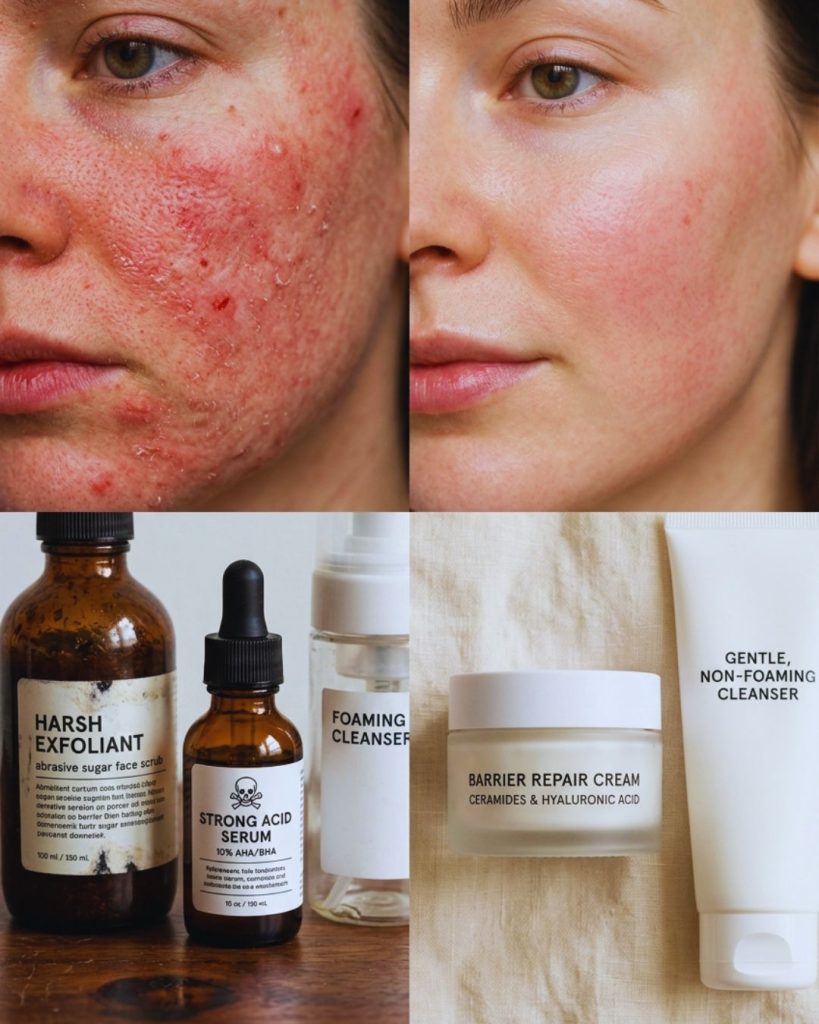
Harsh exfoliating products beside gentle cleanser and moisturizer to show skin barrier repair concept.
Over-exfoliating can damage your skin barrier and cause breakouts.

A lot of people are trying to get skin that looks really smooth and clear so they use a lot of products that contain acids. They scrub their skin too much.. This can actually hurt your skin and make it look worse.

If your skin looks shiny but feels tight and dry or if products that used to be okay for you now sting or burn or if you are getting breakouts or your skin is more sensitive than usual then you might be over-exfoliating.

To fix this you should stop using any products that contain acids or other harsh ingredients for least two weeks. Instead use products that help repair your skin like ceramides and centella asiatica. And do not exfoliate much. Once or twice a week is enough.

2. Not Staying Hydrated

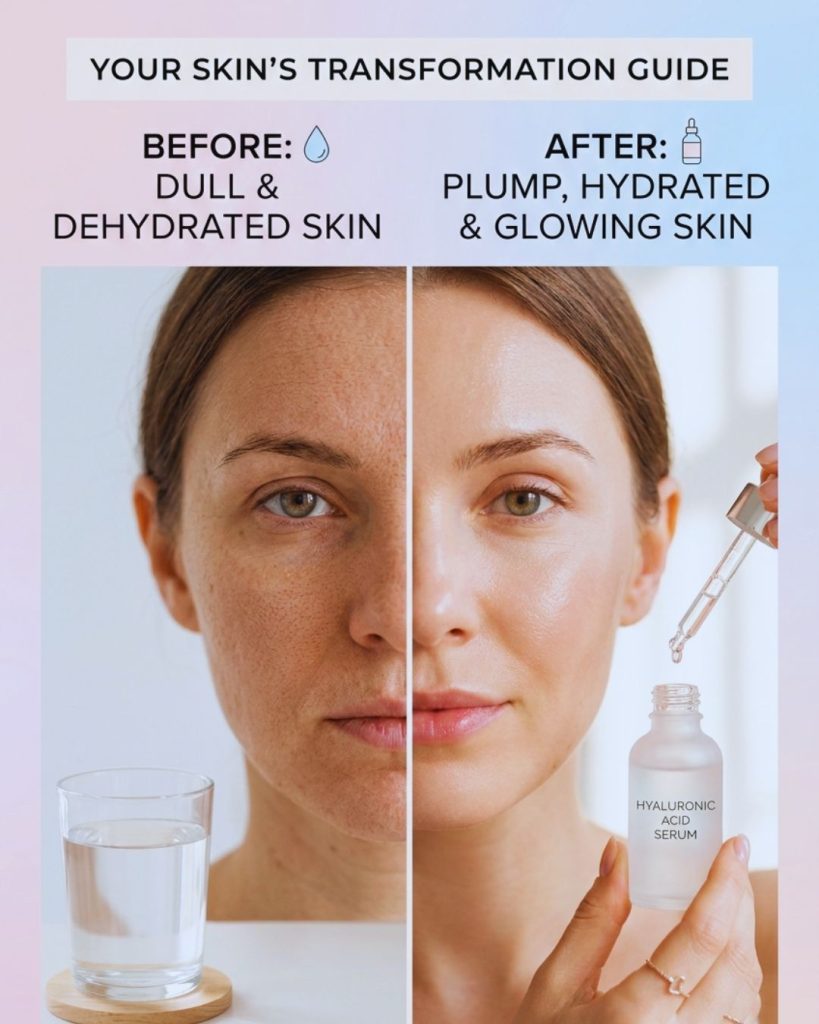
Comparison of dull dehydrated skin and plump glowing hydrated skin with water and serum.
Hydrated skin looks bouncy and radiant—dehydrated skin looks flat.

There is a difference between skin that is dry and skin that is dehydrate. Even if you have skin you can still be dehydrated and this can make your skin look dull and flat.

Think of your skin like a sponge. When a sponge is wet it is soft and bouncy. When it is dry it is hard and dull. When your skin is dehydrated it loses its moisture. Becomes dull and flat.

To fix this you should apply your skincare products to damp skin, not skin. Use products that contain acid or glycerin to help your skin hold onto moisture.. Use a facial oil or a thick cream to lock it all in.

3. Not Wearing Sunscreen Every Day

Woman applying sunscreen in morning light to protect skin from UV damage.
Skipping SPF is undoing all your skincare progress.

If you only wear sunscreen when it is sunny outside you are not protecting your skin enough. The suns rays can still hurt your skin on cloudy days or when you are inside.

The suns rays can break down the collagen in your skin. Make it look dull and uneven.. If you do not wear sunscreen every day you are undoing all the good work that your skincare routine is doing.

To fix this you should apply sunscreen every morning even if it is cloudy or you are staying inside. Use a broad-spectrum sunscreen with least SPF 30 and apply it as the last step in your skincare routine.

4. Not Taking Care of Your Body

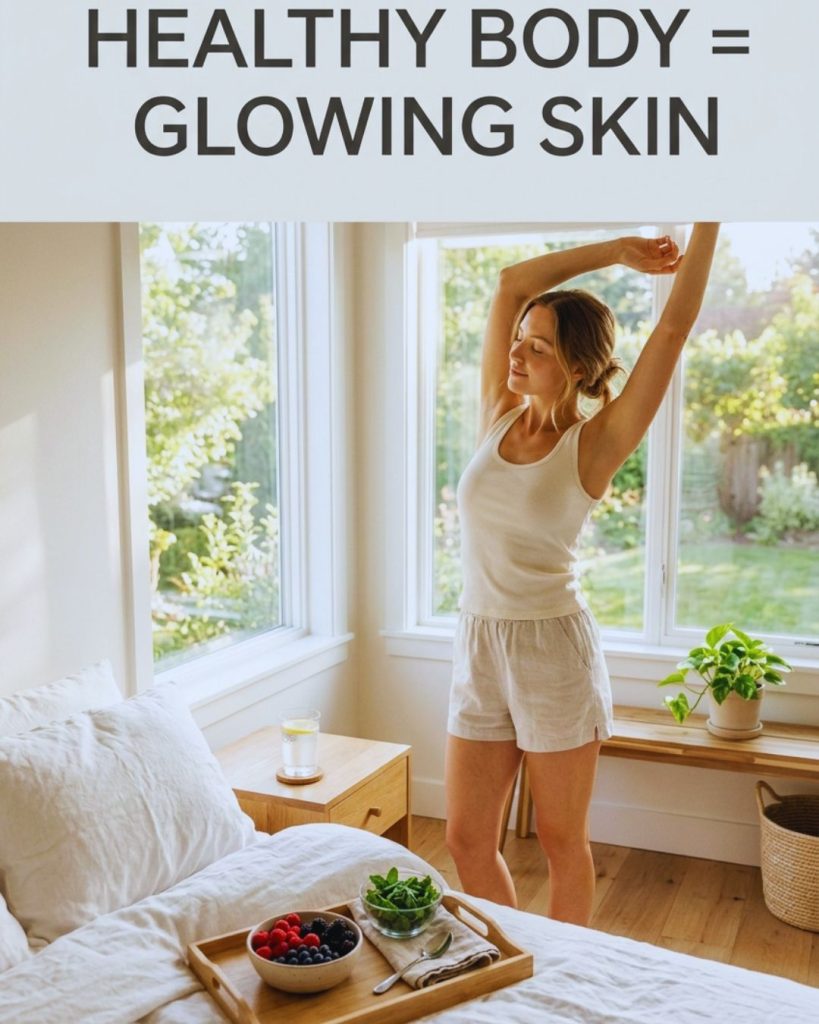
Woman stretching in morning light with water and antioxidant-rich foods nearby to represent healthy habits for glowing skin.
Your glow starts with sleep, hydration, and what’s on your plate.

Your skin is connected to your body. If you are not taking care of your body it will show on your skin. If you are stressed, tired or not eating well your skin will look dull and rough.

When you are stressed your body produces cortisol, which can make your skin look oily and break out.. If you are not sleeping enough your skin will not be able to repair itself overnight which can make it look dull and tired.

To fix this you should try to get sleep stay hydrated and eat foods that are rich in antioxidants, like berries, leafy greens and fatty fish.

5. Using Many Skincare Products

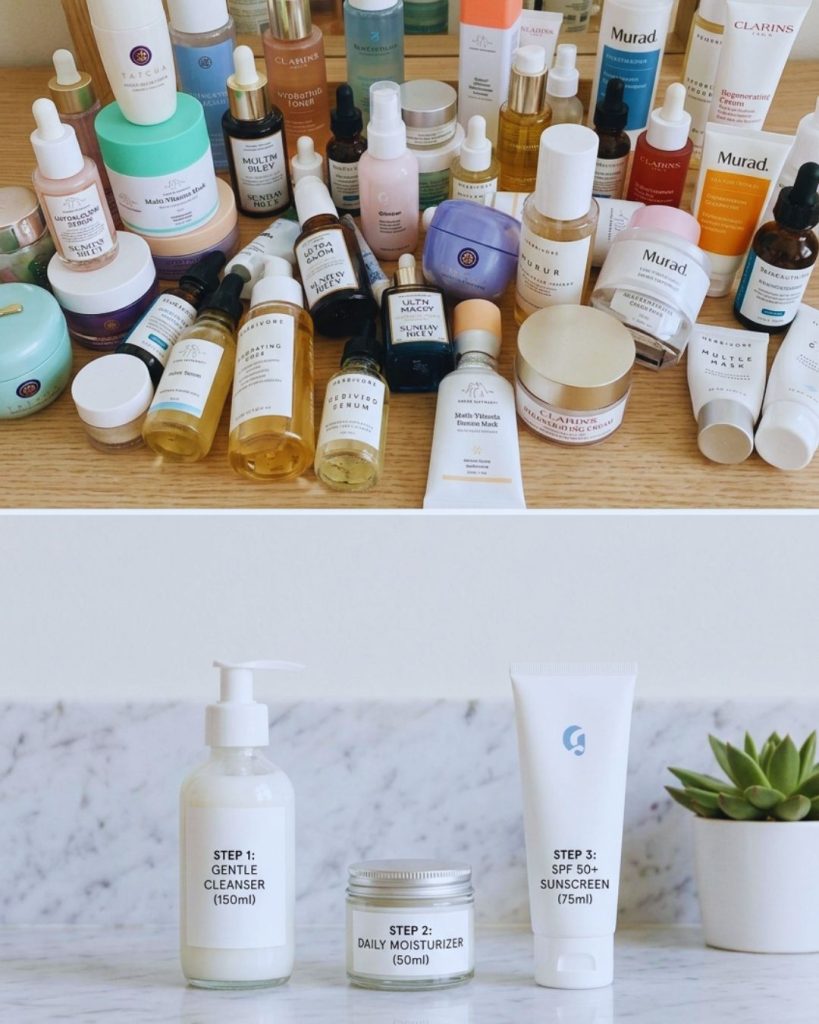
Cluttered skincare collection compared to simple minimal routine setup.
More products don’t equal better skin—simplify to amplify.

Using too many skincare products can actually hurt your skin. When you mix many products together you can create a reaction that can cause irritation and breakouts.

Of using a lot of products try to keep your skincare routine simple. Use a cleanser, a moisturizer and a sunscreen and do not be afraid to take breaks from products that are too harsh.

If you want to see a difference in your skin you should stop guessing and start following a skincare routine. Stop exfoliating start wearing sunscreen every day and take care of your body.. Most importantly be patient. Good skin takes time.

Remember your skin wants to be healthy and it will glow if you take care of it. So simplify your skincare routine. You will see the difference. The beautiful skin is not the one with the most products, on it it is the one that is respected and taken care of.

The Checklist for an Instant Glow-Up

If you want to see a difference by next week, stop the “guesswork” and follow this beauty audit:

MistakeImmediate Solution
Over-scrubbingSwitch to a gentle cleanser and put the scrubs away.
Skipping SunscreenWear broad-spectrum SPF even if you’re working from home.
Using Hot WaterWash your face with lukewarm or cool water to prevent redness.
Touching Your FaceStop leaning on your hands to prevent “friction acne” and bacteria spread.
Ignoring Your NeckExtend all skincare layering down to your chest for a uniform glow.

The Psychological Component: Patience

We live in a world of instant gratification, but skin health is a long game. Most cells take about 28 to 40 days to turn over. If you switch your routine every three days because you don’t see a “glow,” you are just stressing your skin further.

True radiance comes from a state of balance. It is the result of a calm mind, a protected barrier, and a consistent, simple routine. When you stop attacking your skin with harsh treatments and start supporting its natural functions, the glow will return naturally.

Summary: Simplify to Amplify

Your skin wants to be healthy. It is designed to heal and glow on its own. Your job is simply to provide the environment for it to do so. By avoiding over-exfoliation, prioritizing hydration, and never skipping your SPF, you are removing the obstacles between you and the best skin of your life.

The most beautiful skin isn’t the one with the most products on it—it’s the one that is the most respected.

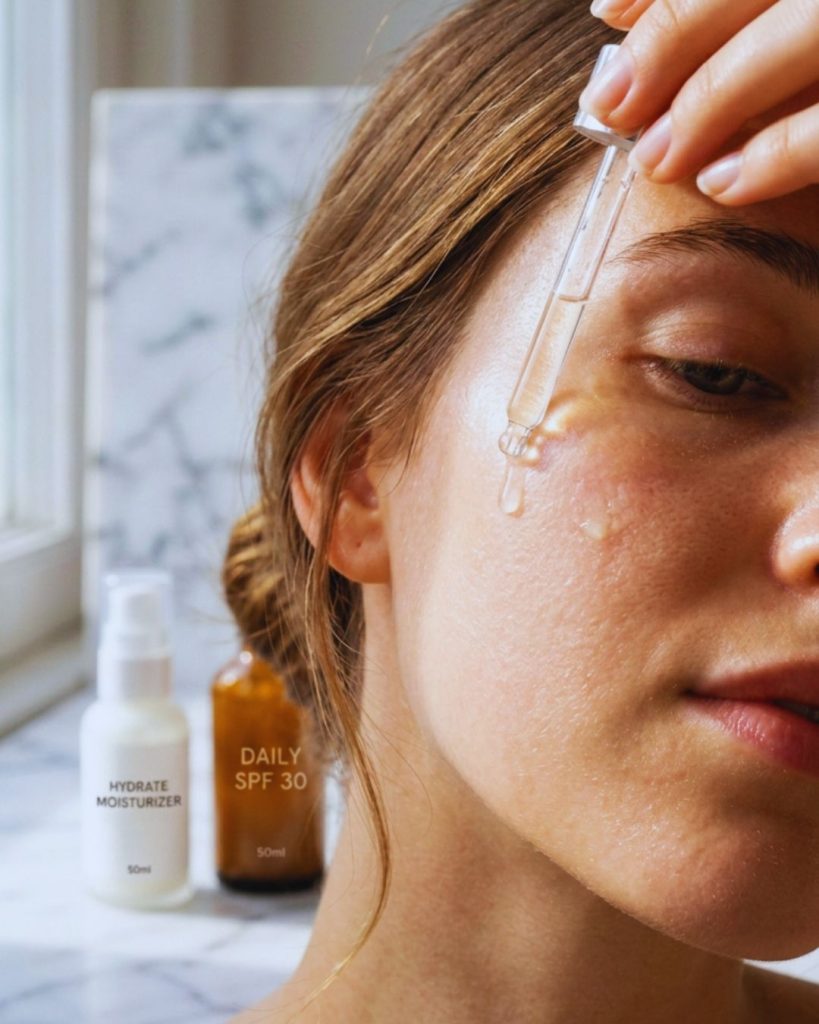
Glowing woman massaging her face with facial oil on a marble vanity, luxury skincare jars blurred in background.

In a world obsessed with luxury beauty brands and $300 serums, we have been conditioned to believe that a radiant glow requires a heavy financial investment. We see 10-step routines and high-tech facial gadgets flooding our feeds, making us feel that “real” beauty is reserved for those with deep pockets.

But what if the most transformative beauty habit in your arsenal cost less than a fancy latte?

The truth that the skincare industry doesn’t want you to know is that your skin responds far better to biological consistency than it does to expensive packaging. There is a single, $5 habit that—when done correctly—can outperform the most prestigious creams on the market.

That habit is strategic facial massage combined with a simple, high-purity carrier oil.

The Myth of the Expensive Glow

We often confuse price with potency. We assume that if a product costs more, it must contain a “miracle” ingredient that will bypass the laws of biology. However, dermatology experts agree that most luxury products are 90% water and fillers, with only a tiny fraction of active ingredients.

  • Marketing vs. Results: You aren’t paying for the glow; you’re paying for the glass bottle and the celebrity endorsement.
  • The Barrier Issue: Even the most expensive serum cannot penetrate the skin barrier if your circulation is sluggish and your lymphatic system is backed up.
  • The Natural Alternative: A $5 bottle of pure sweet almond oil or sunflower seed oil provides the same fatty acids found in luxury oils, without the irritating synthetic fragrances.

The $5 Powerhouse: Strategic Facial Massage

Woman massaging her face with facial oil using upward strokes to improve circulation and reduce puffiness.
Five minutes. A few drops of oil. Real sculpting results.

The habit that truly “changes your face” is the daily practice of manual lymphatic drainage and muscle stimulation. By using a simple lubricant (like a $5 oil), you can perform a professional-grade treatment at home.

1. Oxygenation and Blood Flow

  • When you massage your skin, you increase microcirculation.
  • This rush of blood brings fresh oxygen and nutrients to the surface cells.
  • Result: An immediate, natural rosy flush and a long-term increase in cellular repair.

2. Lymphatic Drainage

  • Our faces hold a significant amount of “stagnant” fluid, especially around the jaw and under the eyes.
  • Unlike the heart, the lymphatic system doesn’t have a pump; it requires movement.
  • Result: By gently “sweeping” this fluid toward the lymph nodes, you reduce facial puffiness and reveal your actual bone structure.

3. Muscle Tension Release

  • We hold incredible stress in our brows and jaw (bruxism).
  • Chronic tension leads to “expression lines” and a tired appearance.
  • Result: Massaging these muscles acts like a natural alternative to Botox, softening the face and preventing deep-set wrinkles.

How to Execute the $5 Routine

Step-by-step facial massage routine using grapeseed or jojoba oil with upward sweeping motions along the jawline and brows.
No tools needed—just your hands, a few drops of oil, and upward strokes.

To make this skincare habit effective, you don’t need a fancy jade roller. Your hands are your most powerful tools. Here is the step-by-step minimalist beauty routine:

  • Step 1: The Oil Selection
  1. Purchase a bottle of cold-pressed Grapeseed Oil or Jojoba Oil from the health section of your grocery store.
  2. These are non-comedogenic, meaning they won’t clog your pores.
  3. Cost: Usually under $5 for a bottle that lasts three months.
  • Step 2: The Warm-Up
  1. Rub 3–4 drops of oil between your palms to warm it up.
  2. Press it gently into your skin. This provides the “slip” needed to avoid pulling on the delicate skin around your eyes.
  • Step 3: The Upward Sweep
  1. Using your knuckles or fingertips, start at the center of your chin and sweep outward toward your ears.
  2. Move to your cheekbones, sweeping from the nose toward the temples.
  3. Key Rule: Always move upward and outward to defy gravity and promote lifting.
  • Step 4: The Brow Lift
  1. Use your index and middle fingers to “pinch” along your eyebrows, moving from the bridge of the nose to the ends.
  2. This releases the “11 lines” and opens up the eye area for an instant eye lift effect.

Why Consistency Trumps Luxury

Minimal facial oil and daily massage routine contrasted with a luxury skincare jar to represent consistency over expensive products.
Daily habits beat expensive products—every single time.

The reason people fail with skincare isn’t because their products are cheap; it’s because they are inconsistent. A $5 habit performed daily is infinitely more powerful than a $200 mask used once a month.

  • The Compound Effect: Just like exercise, the benefits of facial massage build over time.
  • Cellular Memory: Your skin “learns” to stay toned and drained when you stimulate it every morning or night.
  • The Ritual Mindset: This 2-minute habit forces you to slow down. Lowering your cortisol levels (the stress hormone) is the ultimate secret to preventing hormonal acne and inflammation.

Boosting the $5 Habit: The Lifestyle Add-ons

Morning skincare lifestyle setup showing cold water splash, clean pillowcase, and a glass of salted lemon water in soft natural light.
Small $0 habits can amplify your glow more than expensive products.

While the massage is the core habit, you can amplify your glow-up for almost zero extra dollars by optimizing your environment.

1. The Ice Water Hack

  • Every morning, splash your face with ice-cold water.
  • This causes vasoconstriction, which tightens the appearance of pores and wakes up the nervous system.
  • Cost: $0.

2. Pillowcase Hygiene

  • Flip your pillowcase every night and wash it every three days.
  • Bacteria buildup on linens is a leading cause of clogged pores.
  • Cost: $0 (just the price of laundry).

3. Strategic Hydration

  • Add a pinch of sea salt to your first glass of water in the morning.
  • This improves cellular hydration better than plain water, ensuring your skin looks “plump” from the inside.
  • Cost: Less than $0.01 per day.

The Science of “Glass Skin” Without the Price Tag

The “Glass Skin” trend originates from K-Beauty, emphasizing a smooth, translucent, and luminous complexion. While the media suggests you need an 11-step kit, science suggests you need moisture retention.

  • Occlusion: Applying your $5 oil on top of damp skin “locks” the water in.
  • The Dewy Finish: This creates a natural light-reflecting surface that mimics the look of high-end highlighters.
  • Skin Health: When your skin is properly lubricated, the acid mantle (your skin’s protective layer) stays intact, shielding you from breakouts and redness.

Breaking the Shopping Addiction

We often buy new beauty products because we want the “hit” of dopamine that comes with a new purchase. However, that dopamine wears off, while the frustration of dull skin remains.

  • Audit Your Stash: Look at how many half-finished bottles you own.
  • The Challenge: Commit to the $5 facial oil massage for 30 days without buying anything new.
  • The Observation: Notice how your skin texture changes. You will likely find that your skin becomes softer, more “awake,” and significantly more vibrant.

Real Results: What to Expect

If you start this daily beauty ritual today, here is the timeline of your transformation:

TimelineThe Transformation
Day 1Immediate reduction in morning puffiness; a healthy, temporary glow.
Day 7Improved skin texture; makeup applies smoother due to better exfoliation.
Day 14Jawline appears more defined; under-eye circles start to brighten.
Day 30The “Soft Girl” glow becomes permanent; skin feels firmer and more resilient.

Final Thoughts: Beauty is a Verb, Not a Product

A “glow” isn’t something you can buy in a jar and smear on your face. It is the physical manifestation of circulation, hydration, and care. By choosing a $5 habit over a $500 routine, you are taking back control from the beauty industry and putting it back into your own hands—literally.

Stop waiting for a “miracle product” to arrive in the mail. The miracle is already in your fingertips and your consistency. Start your massage tonight, and watch your face transform.

Glowing woman with dewy skin sitting at a vanity with skincare products and gua sha tool in a soft pastel bedroom aesthetic.

The “Soft Girl” aesthetic is more than just a viral trend; it is a philosophy of self-care that prioritizes a radiant, dewy, and effortless appearance. Unlike heavy “insta-glam” makeup that masks the skin, the soft girl beauty routine focuses on enhancing your natural features through meticulous skincare layering, deep hydration, and restorative habits.

When people say this routine “changes your face,” they aren’t talking about surgery. They are talking about the visible transformation that happens when your skin barrier is healthy, your lymphatic system is drained, and your cells are deeply nourished.

Here is the definitive guide to achieving that ethereal, lit-from-within glow through a dedicated holistic beauty approach.

Phase 1: The Art of Skincare Layering

Flat lay of skincare products arranged in layering order including oil cleanser, toner, serums, and moisturizer on a soft pastel background.
The secret to glass skin? Layer your skincare from thinnest to thickest for maximum glow.

The foundation of the soft girl look is skin that looks like glass. To achieve this, you must master the sequence of your products. The rule is simple: layer from thinnest to thickest consistency to ensure maximum product absorption.

1. The Double Cleanse (The Non-Negotiable)

  • Step A: Use an oil-based cleanser or balm to dissolve SPF, makeup, and sebum.
  • Step B: Follow with a gentle, pH-balanced water-based cleanser.
  • Why it works: It prevents “congested skin” and ensures your expensive serums aren’t sitting on top of a layer of dirt.

2. Hydrating Toners and Essences

  • Instead of harsh astringents, use hydrating toners packed with rose water or rice ferment.
  • Pro Tip: Apply 3 to 7 layers of toner (the “7-Skin Method”) for an instant plumping effect.

3. Targeted Serums (The Transformers)

  • Vitamin C: For morning brightness and protection against environmental stressors.
  • Niacinamide: To minimize pores and regulate oil production.
  • Hyaluronic Acid: The gold standard for moisture retention. Always apply this to damp skin to avoid drawing moisture out of your face.

4. Barrier Repair Moisturizer

  • Look for ingredients like ceramides, fatty acids, and squalane.
  • A healthy skin barrier is what gives you that “soft” texture and prevents redness or irritation.

Phase 2: The Hydration Architecture

Aesthetic setup with water bottle and lemon, avocado and walnuts, humidifier misting, and face spray on a soft pastel background.
Glowing skin starts with hydration—inside and out.

True hydration isn’t just about what you put on your face; it’s about how your body manages water. For the soft girl aesthetic, we want “bouncy” skin that reflects light.

Internal Hydration

  • The 3-Liter Rule: Drinking enough water is the cheapest beauty treatment in existence.
  • Electrolytes: Add a pinch of sea salt or a lemon slice to your water. Pure water can sometimes pass through you; electrolytes help it actually enter your cells.
  • Omega-3s: Incorporating healthy fats (avocados, walnuts, salmon) creates a natural oil seal for your skin from the inside out.

External Humidity

  • The Humidifier Hack: If you live in a dry climate or use air conditioning, a humidifier is essential. It prevents trans-epidermal water loss while you sleep.
  • Face Mists: Keep a thermal water spray at your desk. A quick spritz during the day keeps your dewy finish intact without ruining your makeup.

Phase 3: The Sleep-Skin Connection

Woman resting on a silk pillowcase in a softly lit bedroom with skincare products on the nightstand.
Your skin repairs while you sleep—make your nighttime routine work harder.

They call it beauty sleep for a reason. During the REM cycle, your body’s growth hormones kick in, repairing tissue and producing new collagen.

1. The Silk Pillowcase Advantage

  • Cotton absorbs moisture and creates friction, leading to “sleep lines” and frizzy hair.
  • Silk or Satin: These fabrics allow your face to glide, preserving your skincare products on your skin rather than your pillow.

2. The Overnight Repair Window

  • Between 10 PM and 2 AM, skin cell turnover is at its peak.
  • Using a sleeping mask or a thicker “slugging” layer of petrolatum-based ointment can lock in active ingredients and transform a tired complexion by morning.

3. Elevation for Drainage

  • Sleeping slightly elevated on two pillows can prevent fluid from pooling under your eyes.
  • This simple shift drastically reduces morning puffiness and dark circles.

Phase 4: Consistency and the “Compound Effect”

Split image of morning vitamin C and SPF routine beside nighttime moisturizer and sleeping mask in a soft aesthetic setting.
Great skin isn’t about one miracle product—it’s about what you do every single day.

The biggest mistake in beauty routines is the “hero product” myth. No single cream will change your face overnight. It is the consistency routine that yields results.

The 21-Day Rule

  • Skin cells take about 28 days to renew.
  • Commit to your skincare steps for at least three weeks before deciding if a product “works.”
  • Consistency is the bridge between a “good skin day” and a “good skin life.”

Morning vs. Evening Discipline

  • Morning: Focus on Antioxidant Protection and high-SPF sun protection.
  • Evening: Focus on Cellular Repair and deep nourishment.
  • Never skip your evening routine, no matter how tired you are. The pollutants of the day are the primary cause of premature aging.

Phase 5: Sculpting the Soft Girl Features

Close-up of a woman using a gua sha tool with glowing skin, fluffy brows, and natural lashes in soft lighting.
Sculpt your features naturally with daily facial massage and soft grooming rituals.

To “change your face,” you must address the underlying structure. Soft girl beauty is about soft contours and a relaxed expression.

1. Manual Lymphatic Drainage (Gua Sha)

  • Using a Gua Sha tool or even your fingers can move stagnant lymph fluid.
  • Focus on the jawline, cheekbones, and brow bone.
  • Result: A more snatched, “sculpted” look without the need for heavy contour makeup.

2. The Power of Facial Massage

  • Massaging your face for 2 minutes during your oil cleanse increases blood flow.
  • Increased circulation brings fresh oxygen to the skin, creating a natural, healthy rosy flush.

3. Brow and Lash Care

  • The soft girl look relies on “fluffy” brows and long, natural lashes.
  • Use a growth serum or castor oil nightly. Well-groomed, full brows frame the face and provide a youthful, “soft” lift.

The Soft Girl Mindset: Stress and Skin

You cannot have “soft” skin if your body is in a “hard” state of stress. Cortisol, the stress hormone, breaks down collagen and triggers inflammatory conditions like acne and eczema.

Mindful Beauty

  • Turn your skincare routine into a meditative ritual.
  • Light a candle, play lo-fi music, and focus on the sensation of the products on your skin.
  • Lowering your stress levels is a form of anti-aging that no cream can replicate.

Summary of the Soft Girl Formula

To truly transform your complexion, follow this checklist daily:

CategoryEssential Action
CleansingDouble cleanse every night to remove environmental pollutants.
LayeringApply products from watery to creamy; never skip SPF 30+.
MoistureDrink 2-3L of water and use a humidifier at night.
RecoveryAim for 7-9 hours of sleep on a silk pillowcase.
MovementPerform 5 minutes of facial massage or Gua Sha daily.

Final Thoughts: The Journey to Radiance

The soft girl routine is an investment in yourself. It is the rejection of the “hustle” in favor of a slower, more intentional way of living and grooming. When you treat your face with kindness and provide it with the hydration and nutrients it craves, it will reward you with a glow that transcends makeup.

Changing your face isn’t about changing who you are; it’s about revealing the most vibrant, hydrated, and rested version of yourself.

Woman wearing off-white blazer and wide-leg trousers in neutral minimalist setting representing soft luxury style on a budget.

In 2026, the fashion world has officially moved past the era of “logomania” and “loud luxury.” We are entering the age of Soft Luxury—a refined, tactile aesthetic that prioritizes comfort, quality, and a sense of calm sophistication. Unlike the rigid “Quiet Luxury” of years past, Soft Luxury is approachable, incorporating fluid silhouettes and a gentle color palette that feels like a warm embrace.

The best part? You don’t need a designer’s salary to achieve this look. True luxury isn’t a price tag; it’s an intentional approach to fabric selection, color harmony, and garment care. If you want to look like you spend your weekends at a coastal retreat while sticking to a realistic budget, this is your ultimate guide.

1. The Soft Luxury Color Palette: 2026 Edition

Flat lay of off-white, sage, and cocoa neutral clothing pieces representing soft luxury color palette for 2026.
Soft Luxury starts with living neutrals—Cloud Dancer, sage, cocoa, and oat tones that naturally harmonize.

Color is the most immediate way to signal luxury. For 2026, the palette has shifted from stark whites to “living neutrals.”

  • The Hero Shade: Cloud Dancer. This soft, airy off-white (Pantone’s 2026 favorite) is the foundation of Soft Luxury. It’s warmer than pure white and more modern than beige.
  • Earthy Pastels: Think Sage Green, Angora, and Cocoa Powder. These colors look expensive because they mimic the natural world.
  • The Monochromatic Magic: Dressing in varying shades of the same color (e.g., a cream knit with oat-colored trousers) creates a long, expensive-looking line. It removes the “choppiness” of an outfit and makes even budget pieces look like a coordinated set.

By sticking to this neutral palette, every piece in your wardrobe will naturally match, giving you that effortless “curated” vibe.

2. Fabric Hacks: Seeking the “Touch of Wealth”

Close-up of cotton-modal knit, linen blend fabric and textured sweater representing affordable luxury fabrics.
Cotton-modal, linen blends, and textured knits create the illusion of luxury without the designer price.

In Soft Luxury, the way a fabric moves is more important than the brand on the label. High-end brands use natural fibers because they drape beautifully and last for decades.

  • The Cotton-Modal Blend: Pure polyester often has a “plastic” shine. Instead, look for cotton-modal or viscose blends. These affordable alternatives mimic the drape of silk and the softness of cashmere at a fraction of the cost.
  • Linen Blends: While pure linen can be pricey and prone to harsh wrinkling, a linen-cotton blend offers that “wealthy coastal” texture with more durability and a lower price point.
  • Textured Knits: Look for bouclé or “shaved” knits. Texture adds depth to an outfit, making it look more complex and expensive. A textured sweater in a neutral tone will always outshine a flat, synthetic one.

3. Styling Hacks: The Art of the “Soft Silhouette”

Woman wearing wide-leg trousers with fitted knit and trench coat demonstrating soft luxury silhouette balance.
Pair flowy trousers with a fitted top to create a soft, balanced silhouette that looks effortlessly luxe.

The silhouette of 2026 is all about proportional flow. The goal is to look polished but never “stiff.”

  • The Half-Tuck: A full tuck can look too formal; leaving a shirt out can look messy. The “French tuck” (tucking just the front) creates a waistline while keeping that soft, relaxed vibe.
  • Layering with Purpose: Layer a lightweight knit over your shoulders or a crisp trench coat over a casual tee. Layering adds “visual volume,” which is a key indicator of sophisticated style.
  • The “One Loose, One Tailored” Rule: To master silhouette balance, pair a voluminous wide-leg trouser with a more fitted (but not tight) top. This ensures you don’t look swallowed by your clothes.

4. Affordable Alternatives: Where to Shop

Comparison of untailored trousers versus hemmed tailored trousers showing difference in fit and polish.
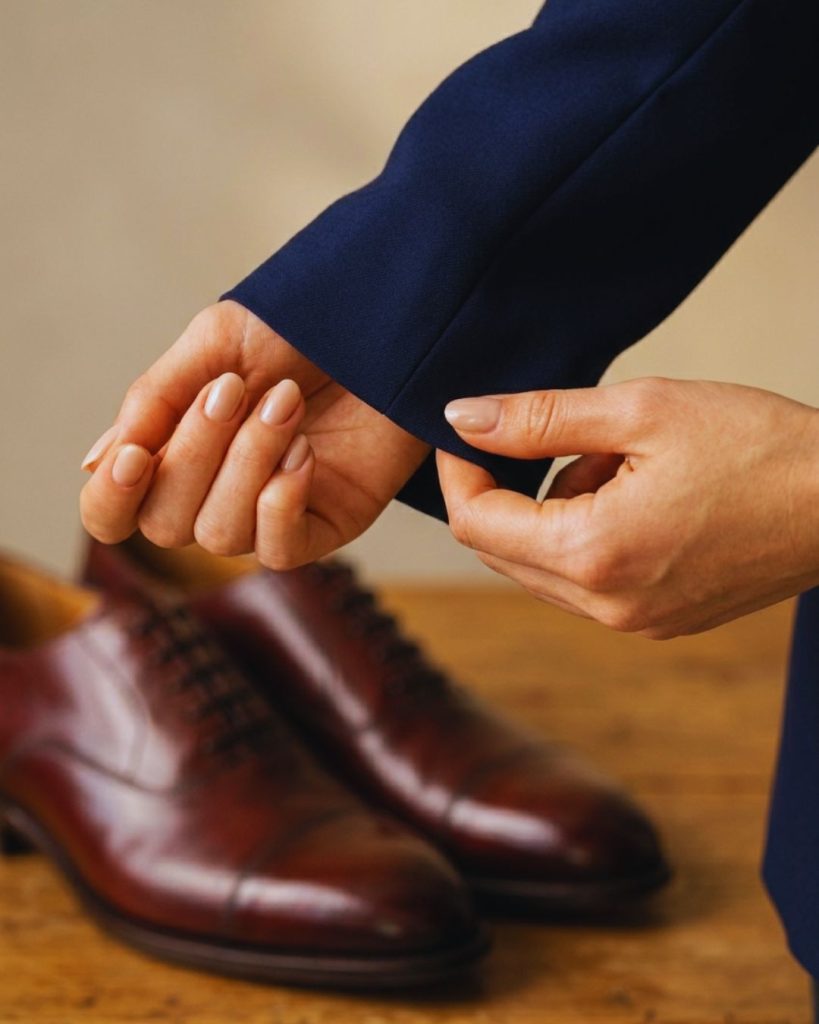
A $30 pair of trousers can look like $300 with simple tailoring. Fit is the real luxury.

You don’t need to visit high-end boutiques to find Soft Luxury staples. You just need to know what to look for in everyday stores.

  • Thrifting for Natural Fibers: Thrift stores are goldmines for 100% wool blazers or silk scarves. Look past the style and focus on the fabric tag. A vintage wool blazer can be tailored to fit you perfectly for under $50.
  • High-Street “Premium” Lines: Many budget-friendly retailers now have “Premium” or “Heritage” collections that focus on linen, leather, and wool. These are the sweet spot for affordable luxury.
  • The Tailoring Secret: This is the #1 hack. A $30 pair of trousers from a fast-fashion brand can look like $300 trousers if you spend $15 to have the hem shortened and the waist nipped. Tailoring importance cannot be overstated.

5. The Invisible Details of Luxury

Flat lay of garment steamer, matte buttons and leather tote representing invisible details of soft luxury style.
Steamed clothes, matte hardware, neutral nails—the small details create the soft luxury effect.

The “Soft Luxury” woman always looks “finished.” This isn’t about expensive jewelry; it’s about impeccable grooming and maintenance.

  • The Handheld Steamer: Wrinkles are the ultimate luxury-killer. A perfectly steamed cotton shirt looks ten times more expensive than a wrinkled designer one.
  • Mind the Hardware: Cheap, shiny gold buttons on a blazer are a giveaway. Swap them for matte gold, horn, or mother-of-pearl buttons to instantly elevate the piece.
  • Signature Scent & Grooming: A clean, “skin-scent” perfume (think white musk or soft sandalwood) complements the Soft Luxury aesthetic. Keep nails short and neutral; chipped polish is the opposite of luxury.

6. The “Investment” Strategy

Capsule wardrobe featuring off-white blazer, wide-leg trousers, leather tote and pointed-toe flats representing soft luxury starter kit.
Build your soft luxury wardrobe with just five elevated staples that anchor everything else.

Even on a budget, you should aim for Quality Over Quantity. Instead of five trendy tops, buy one high-quality structured blazer or a pair of leather loafers. These “hero pieces” anchor your cheaper items, “pulling up” the value of the entire outfit.

Your 5-Piece Soft Luxury Starter Kit:

  1. A Cloud Dancer (Off-White) Blazer: Instantly polishes any look.
  2. Wide-Leg Trousers: Look for a high-waisted fit in a flowy fabric.
  3. A Seamless Bodysuit: The perfect base for layering.
  4. A Leather Tote: Avoid logos; focus on a structured silhouette.
  5. Pointed-Toe Flats: They elongate the leg and look more “luxe” than rounded toes.

Conclusion: Luxury is a State of Mind

The Soft Luxury aesthetic is proof that style is about intentionality, not income. By focusing on natural-looking fabrics, a neutral color palette, and the perfect fit, you create a wardrobe that feels as good as it looks.

In 2026, the most stylish person isn’t the one wearing the most expensive outfit—it’s the one who looks the most at ease in their clothes. Stop chasing “loud” trends and start building a wardrobe that whispers.

Woman wearing camel wool coat and cashmere sweater in neutral luxury setting highlighting old money style aesthetic.

The “Old Money” aesthetic has taken the digital world by storm in 2026. You’ve seen the images: neutral linen sets on the Amalfi Coast, structured navy blazers in London, and cashmere sweaters draped over shoulders in the Hamptons. But most people chasing this look make a fatal mistake—they focus on the brand name rather than the structural integrity of the garment.

The true old money style rule that rarely gets mentioned is the tactile hierarchy. In elite circles, wealth isn’t seen; it is felt. It is a language of fabric quality and bespoke tailoring that whispers while “new money” trends shout. If you want to master this look, you have to stop shopping for “vibes” and start shopping for fibers.

1. The Fabric Manifesto: Natural Over Synthetic

Flat lay of cashmere, linen, silk and Egyptian cotton garments representing natural fabrics for old money style.
The real old money rule: always choose natural fibers like wool, silk, linen, and Egyptian cotton.

The most important rule of the old money aesthetic is a total rejection of polyester, nylon, and acrylic. Synthetic fabrics have a “shiny” finish and a static-prone drape that instantly cheapens an outfit, regardless of the price tag.

  • Cashmere & Wool: These are the twin pillars of a high-end winter wardrobe. Look for “two-ply” cashmere, which offers a denser, more luxurious weight that resists pilling.
  • Linen: The aristocrat’s summer fabric. Many avoid it because it wrinkles, but in old money circles, a few natural creases are seen as a sign of authenticity—it shows you are wearing real, breathable fibers.
  • Silk: Use silk for blouses and scarves. It has a natural luster that catches the light without looking “glittery.”
  • Egyptian Cotton: For shirting, the thread count and the staple length of the cotton determine the “crispness.” A high-quality cotton shirt will hold its collar shape all day.

When you prioritize natural fibers, your clothes age “with character” rather than wearing out. They breathe, they drape, and they feel significantly more high-end against the skin.

2. The Tailoring Importance: The “One-Inch” Rule

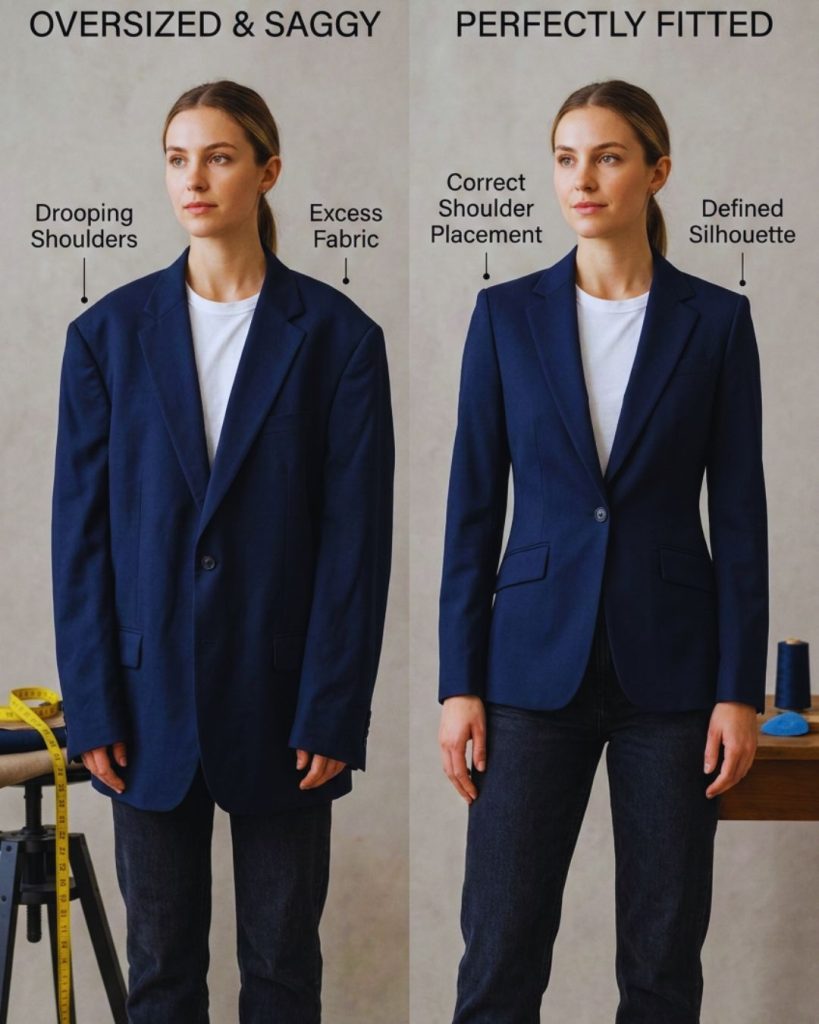
Comparison of poorly fitted blazer versus tailored blazer showing proper shoulder alignment and trouser break.
A half-inch makes the difference between rental and refined. Tailoring is non-negotiable in old money style.

You could buy a $5,000 suit off the rack, but if the sleeves are half an inch too long, it will look like a rental. The silent rule of the wealthy is that nothing fits perfectly until it’s been altered.

  • Shoulder Alignment: The seam of your blazer or shirt should sit exactly where your arm meets your shoulder. If it droops, the silhouette balance is ruined.
  • The Trouser Break: Old money style favors a “slight break” or “no break.” Your trousers should graze the top of your shoes, creating a clean, vertical line that elongates the leg.
  • The Waist Taper: Even a “relaxed” shirt should have a slight taper. A tailor can add “darts” to the back of a shirt to remove excess fabric, making a $30 thrifted find look like a bespoke masterpiece.

Tailoring tips aren’t just for formal wear. Tailoring your casual chinos or even your heavy wool overcoat is the difference between looking like you’re wearing a costume and looking like you own the room.

3. Silhouette Balance and “Sprezzatura”

Woman wearing structured blazer with relaxed linen trousers demonstrating effortless old money silhouette balance.
Old money style is about balance — structured pieces paired with relaxed elements for effortless elegance.

The Italians have a word for the old money way of dressing: Sprezzatura. it means “a certain nonchalance, so as to conceal all art and make whatever one does or says appear to be without effort.”

  • Intentional Mismatching: Don’t be too “perfect.” A perfectly tailored blazer paired with slightly “rumpled” linen trousers creates a balanced, lived-in luxury.
  • The Rule of Proportions: If your coat is heavy and structured, keep your base layers light. This maintains a sophisticated silhouette that doesn’t overwhelm your frame.
  • Color Conversations: In this aesthetic, colors don’t “match”—they “converse.” Pair neutral tones like oatmeal and camel with “accent” colors like forest green or burgundy. These colors naturally complement each other without looking like a uniform.

4. Hardware and Hidden Details

Close-up of horn buttons, silk lining and pick stitching on blazer representing understated luxury details.
Horn buttons, silk lining, and hand-finished stitching — the quiet signals of real quality.

The “trick” nobody mentions is that the wealth is in the details that 99% of people miss. This is what creates understated luxury.

  • Buttons: Fast-fashion brands use plastic buttons. Old money pieces use horn, mother-of-pearl, or brass. Swapping the buttons on a cheap blazer is the fastest fashion hack to triple its perceived value.
  • Stitching: Look for “pick-stitching” on lapels—a small, hand-done looking stitch that signals a garment was crafted with care rather than mass-produced.
  • Lining: A truly expensive coat is fully lined in Bemberg or silk, not cheap polyester that makes a “swish” sound when you move.

5. The “Cost Per Wear” Investment Mindset

Minimalist wardrobe featuring wool coat and polished leather shoes representing cost per wear investment fashion.
Old money style is sustainable by nature. Invest in timeless pieces that age with character.

Old money style is fundamentally sustainable because it prioritizes investment over impulse. Instead of buying five trendy jackets that will fall apart in a year, you buy one timeless wool coat that you will wear for a decade.

  • Durability: Natural fibers like tweed and heavy cotton improve with age. They mold to your body, becoming more comfortable the more you wear them.
  • Heritage Patterns: Stick to pinstripes, herringbone, and houndstooth. These patterns have been in style for 100 years and will be in style for 100 more.
  • Maintenance: Part of the style is the care. Polished shoes, brushed wool, and steamed linens are the “invisible” accessories that complete the sophisticated look.

Conclusion: Wealth is Quiet, Style is Consistent

The old money style rule nobody mentions is that you cannot “buy” the aesthetic—you have to curate it. It is a commitment to quality over quantity and a deep respect for craftsmanship.

By focusing on fabric quality, mastering tailoring, and sticking to a neutral palette, you aren’t just following a trend. You are adopting a way of dressing that transcends time. In a world of fast fashion and fleeting “cores,” the person in the perfectly fitted, high-quality wool sweater will always be the best-dressed person in the room.

Side-by-side fashion comparison showing outdated baggy jeans and chunky sneakers versus refined 2026 tailored denim and structured tote.

The fashion cycle has shifted. In 2026, the era of “disposable trends” has finally hit a wall. We are moving away from the loud, chaotic aesthetics of the early 2020s and leaning into a period of refined minimalism and intentional dressing.

If you want to keep your wardrobe fresh, it’s time to perform a closet audit. Looking “dated” isn’t about the age of your clothes—it’s about clinging to silhouettes and styles that no longer serve the modern aesthetic. Here is exactly what you should stop wearing in 2026 and the timeless fashion pieces you should reach for instead.

1. The Death of the Ultra-Baggy Jean

Comparison of ultra-baggy puddle jeans versus stovepipe jeans styled with boots in modern minimalist outfit.
2026 denim is structured, balanced, and ankle-length. Stovepipe jeans are the grown-up upgrade.

For years, “the baggier, the better” was the denim mantra. But in 2026, we are officially over the “puddling” fabric that swallows your shoes and hides your frame.

  • The Outdated Trend: Low-rise, ultra-baggy “puddle” jeans that drag on the floor.
  • The 2026 Winner: Stovepipe jeans and cigarette pants. We are returning to a more balanced silhouette. These cuts provide the comfort of a straight leg but with a cleaner, more tailored line that hits exactly at the ankle.
  • Why it Works: Stovepipe jeans create a “grown-up” look that works with everything from a pointed-toe boot to a sleek loafer.

2. Farewell to Micro-Handbags

Small micro handbag compared with large structured leather tote in burgundy representing 2026 handbag trend.
Micro-bags are out. Structured workhorse totes are the power move for 2026.

We’ve all had our fun with the “decorative” bags that couldn’t even fit a smartphone. In 2026, practicality is the new luxury.

  • The Outdated Trend: Micro-bags that serve zero functional purpose.
  • The 2026 Winner: The workhorse tote. We are seeing a massive resurgence in large, structured leather totes.
  • The Key Detail: Look for “architectural” shapes rather than slouchy ones. A structured tote in a rich burgundy or deep navy signals that you are a woman of business and style.

3. Retiring the “Chunky Dad” Sneaker

Chunky dad sneakers compared to slim low-profile leather trainers styled with tailored trousers.
Heavy dad sneakers feel dated. Low-profile trainers create a cleaner silhouette for 2026.

The “clunky” sneaker trend had a massive run, but the heavy, orthopedic-looking soles now feel clunky and “costumey” rather than edgy.

  • The Outdated Trend: Triple-S style platforms and “Dad” sneakers with excessive mesh and neon.
  • The 2026 Winner: Low-profile trainers and slim-line sneakers. Think of the sleekness of a racing shoe or a classic indoor soccer trainer.
  • Style Note: A slim-profile sneaker allows your trousers to take center stage and maintains a sophisticated silhouette balance.

4. Moving Past Excessive Cut-Outs

Cut-out dress compared to draped midi dress in neutral tone representing refined 2026 fashion trend.
2026 is about sculptural draping, not exposed cut-outs. Quiet luxury always wins.

The “Main Character” era of 2023-2024 was defined by clothes with holes in the most unexpected places. In 2026, we are choosing sculptural draping over exposed skin.

  • The Outdated Trend: Midriff-baring cut-outs and “asymmetrical” holes in dresses.
  • The 2026 Winner: Draped midi dresses and bias-cut skirts. Instead of showing skin through holes, we are using the fabric itself to create movement and interest.
  • The Vibe: This is “Quiet Luxury” at its finest. A draped silhouette looks more expensive and photographs beautifully from every angle.

5. Ditching Loud Logo Pendants

Flat lay of funnel-neck jacket, v-neck knit, column skirt and structured tote representing trend-proof 2026 wardrobe essentials.
Instead of chasing trends, invest in tailored staples like funnel-neck jackets and column skirts for a modern 2026 wardrobe.

Loud, “logomania” jewelry is officially taking a back seat. Wearing a giant brand logo around your neck now feels like a lack of personal style.

  • The Outdated Trend: Chunky gold necklaces with massive brand initials.
  • The 2026 Winner: Artistic pendants and sculptural gold. We are seeing a move toward “found object” jewelry—abstract shapes, organic metals, and unique stones that look like pieces of art.
  • Investment Tip: Switch to brushed gold or vintage-inspired silver to give your outfit a curated, “one-of-a-kind” feel.

The 2026 Replacement Strategy: Timeless Staples

If you’re clearing out the trends above, you need to fill those gaps with pieces that won’t go out of style by next season. These are the foundational pieces of a 2026 wardrobe.

The Funnel-Neck Jacket

While the “shacket” is officially dead, the funnel-neck jacket has taken its place. It provides a sharp, architectural neckline that frames the face and adds instant polish to even a simple t-shirt and jeans combo.

The V-Neck Knit

For a long time, the crew neck was king. But the V-neck sweater is making a huge comeback. It offers a more refined, elongating line that is perfect for layering over a crisp white shirt.

The Column Skirt

Move over, micro-minis. The column maxi skirt is the silhouette of the year. Whether in denim, wool, or silk, its straight, vertical line provides the perfect silhouette balance when paired with a boxy, cropped jacket.

How to Stay “Trend-Proof” in 2026

The most stylish people in 2026 aren’t the ones following a TikTok “Core” aesthetic. They are the ones who follow three simple rules of timeless fashion:

  1. Tailoring is Non-Negotiable: A $20 pair of trousers that has been tailored to fit your waist and length will always look more expensive than a $500 pair that is dragging on the ground.
  2. Fabric Over Brand: In 2026, we are checking labels for natural fibers. 100% wool, organic cotton, and real silk have a “sheen” and “drape” that synthetic polyesters simply cannot replicate.
  3. Neutral-Plus: Build your base in neutral tones (Vanilla, Navy, Slate, Camel), but add one “power color.” For 2026, that color is Cobalt Blue or Transformative Teal.

Conclusion: Edit Your Style, Not Your Budget

Looking current in 2026 isn’t about buying a whole new wardrobe; it’s about editing. By removing the pieces that scream “fast fashion trend” and replacing them with tailored staples, you create a look that is both modern and eternal.

Fashion should be a tool that serves you, not a set of rules that stresses you out. When you stop chasing the “viral” and start investing in the “versatile,” you’ll find that getting dressed becomes the easiest part of your day.

Minimalist 15-piece capsule wardrobe displayed on neutral clothing rack with blazer, trench coat, denim, trousers and essential shoes.

In 2026, the fashion world has officially moved away from the “more is more” philosophy. The most stylish people you see on your feed aren’t the ones with overflowing closets; they are the ones who have mastered the capsule wardrobe.

A capsule wardrobe is a curated collection of versatile pieces that work together in harmony. By focusing on silhouette balance, quality over quantity, and a cohesive neutral palette, you can eliminate decision fatigue and ensure you look polished every single day.

If you’re ready to reclaim your time and space, here is the foolproof 15-piece breakdown that will revolutionize the way you dress.

The Core Philosophy: The Power of 15

Why 15? It’s the “Goldilocks” number. It’s enough to cover work, weekends, and date nights, but small enough to fit into a carry-on or a minimalist closet.

The secret to making this work is mix-and-match versatility. Every top must pair with every bottom. When you achieve this, 15 pieces don’t just make 15 outfits—they make over 50 unique combinations.

The 15-Piece Breakdown

Flat lay of 15-piece capsule wardrobe including white shirt, silk camisole, blazer, trench coat, straight-leg denim, tailored trousers, slip skirt and minimalist shoes in neutral tones.
The ultimate 15-piece capsule wardrobe breakdown. These timeless essentials mix and match to create 50+ outfits with zero clutter.

The Foundation: 5 Essential Tops

  • 1. Crisp White Button-Down: The “Swiss Army Knife” of fashion. Choose a tailored fit for the office or an oversized linen version for a relaxed aesthetic.
  • 2. Neutral Silk Camisole: Perfect for layering under blazers or wearing alone for an evening look.
  • 3. Structured White Tee: Not your average undershirt. Look for heavy-weight cotton that maintains its shape.
  • 4. Breton Striped Top: A classic that adds visual interest without clashing with your neutral tones.
  • 5. Lightweight Cashmere Knit: Opt for a crew neck in tan, grey, or chocolate brown.

The Anchor: 4 Versatile Bottoms

  • 6. Tailored Straight-Leg Trousers: In a dark neutral like charcoal or navy. These are the backbone of professional style.
  • 7. Perfect Mid-Wash Denim: Avoid heavy distressing. A clean, straight-leg silhouette is timeless fashion.
  • 8. Silk or Satin Slip Skirt: This piece transitions effortlessly from sneakers and a tee to heels and a blazer.
  • 9. High-Waisted Black Jeans: The “dressy” denim option that pairs with everything.

The Layers: 3 Strategic Outerwear Pieces

  • 10. Structured Blazer: Choose a slightly oversized fit to keep the look modern. This is your “instant polish” tool.
  • 11. Classic Trench Coat: In a camel or “Cloud Dancer” off-white. It’s the ultimate transitional staple.
  • 12. Leather Moto or Bomber Jacket: To add an edge to your softer, neutral outfits.

The Finishing Touch: 3 Pairs of Shoes

  • 13. Minimalist Leather Sneakers: White or beige. They should be clean enough to wear with trousers.
  • 14. Pointed-Toe Ankle Boots: A small heel adds height while remaining walkable for a busy lifestyle.
  • 15. Classic Loafers: In black or tan leather for a sophisticated, “Quiet Luxury” vibe.

Mix-and-Match Examples: From 15 to 50+

Three capsule wardrobe outfit examples including professional blazer look, casual trench coat weekend outfit, and elegant silk skirt evening outfit styled in neutral tones.
3 outfits. 15 pieces. Endless combinations. This is how a capsule wardrobe creates 50+ looks using timeless essentials.

The magic of the capsule wardrobe formula is in the combinations. Here are three ways to style the same pieces for different vibes:

1: The “Power Professional”

  • Pieces: #1 (White Shirt) + #6 (Tailored Trousers) + #10 (Blazer) + #15 (Loafers).
  • The Vibe: Sharp, authoritative, and expensive. Use tailoring tips like a French tuck to define the waist.

2: The “Aesthetic Weekend”

  • Pieces: #3 (White Tee) + #7 (Mid-Wash Denim) + #11 (Trench Coat) + #13 (Sneakers).
  • The Vibe: Effortlessly cool. This is the “model off-duty” look that relies on silhouette balance.

3: The “Elegant Evening”

  • Pieces: #2 (Silk Cami) + #8 (Slip Skirt) + #12 (Leather Jacket) + #14 (Ankle Boots).
  • The Vibe: A perfect mix of feminine and edgy. The leather jacket tones down the formal silk for a modern finish.

3 Rules for Capsule Success

Infographic showing three capsule wardrobe rules including neutral color palette, silhouette balance examples, and natural fabric textures like wool, silk, and linen.
The 3 rules that make a capsule wardrobe work: neutral colors, balanced silhouettes, and high-quality fabrics. Master these and every outfit looks intentional.

1. Master Your Neutral Palette

A successful capsule relies on a base of neutral tones. Stick to 3-4 core colors (Black, White, Camel, Navy) and add 1-2 “accent” colors if you must. This ensures that every piece in your closet is “friends” with every other piece.

2. Prioritize Silhouette Balance

If your bottom is wide (like a flowy skirt or wide-leg trousers), keep your top fitted. If you’re wearing an oversized knit, pair it with slim-fit jeans. This creates a harmonious look that flatters your frame regardless of the price tag.

3. Focus on Fabric Quality

In a small wardrobe, each piece gets more “wear time.” Cheap synthetics will pill and lose shape after three washes. Invest in natural fibers like wool, silk, linen, and organic cotton. They breathe better, last longer, and look significantly more high-end.

The Benefits Nobody Talks About

Building a capsule wardrobe isn’t just about fashion; it’s about mental clarity.

  • Save Money: You stop buying “gap-filler” clothes that you only wear once.
  • Save Time: You can get dressed in the dark and still look 10/10 because everything matches.
  • Sustainable Living: By buying fewer, better pieces, you reduce your fashion footprint and support a conscious lifestyle.

Conclusion: Quality Over Quantity

The 15-piece capsule wardrobe is more than a trend—it’s a lifestyle shift. It forces you to define your personal style and stick to it. When you stop chasing every micro-trend, you start building a signature look that is uniquely yours.

Start by auditing your current closet. Keep the pieces that fit this formula, donate the rest, and fill the gaps with intention. Your future, more stylish self will thank you.

Woman wearing camel coat and cream trousers in minimalist city setting representing expensive-looking outfit on a budget.

In 2026, the definition of “luxury” has shifted. It is no longer about flaunting loud logos or chasing every micro-trend on social media. True elegance is found in the “Quiet Luxury” aesthetic—a look that signals wealth through silhouette balance, impeccable tailoring tips, and a mastery of neutral tones.

Looking expensive is a skill, not a bank balance. It is about how you curate your pieces and how they sit on your body. If you want to transform your wardrobe into a high-end collection, these five outfit formulas are your roadmap to a sophisticated style that commands respect in any room.

1. The Power of Monochromatic Neutrals

Beige monochrome outfit with knit sweater and wide-leg trousers showing expensive neutral fashion style.
Head-to-toe neutrals create a seamless, elongated silhouette that looks polished and expensive — no designer label required.

There is nothing that says “I have my life together” quite like a head-to-toe monochromatic look. When you dress in a single color family, you create a seamless vertical line that makes you look taller, slimmer, and significantly more polished.

  • The Palette: Stick to neutral tones like cream, camel, slate grey, or chocolate brown. Avoid stark whites in favor of “expensive” looking off-whites and ecru.
  • The Texture Trick: To prevent a monochrome outfit from looking flat, mix your fabrics. Pair a silk slip skirt with a chunky cashmere knit, or wool trousers with a crisp poplin shirt.
  • The Silhouette: Ensure your silhouette balance is intentional. If you are wearing a voluminous wide-leg trouser, keep the top more fitted to define your frame.

By removing the distraction of multiple colors, the eye focuses on the quality of your fabrics and the tailoring of your garments. This is the ultimate “old money” secret.

2. The Tailored Blazer and Straight-Leg Denim

Dark wash jeans styled with structured blazer demonstrating expensive casual outfit idea.
Dark wash denim + structured blazer = effortless wealth aesthetic. Skip distressing and focus on clean tailoring.

Can denim actually look expensive? Absolutely, but only if you follow the rules of structured dressing. This outfit is the gold standard for “Elevated Casual.”

  • The Dark Wash Rule: For an expensive look, opt for dark indigo or solid black denim with zero distressing. Rips and faded washes instantly cheapen an outfit.
  • The Oversized Blazer: A structured blazer is the most important investment piece in your closet. Look for shoulder pads that provide a sharp line and a lapel that holds its shape.
  • Tailoring Tips: Ensure the blazer sleeves hit exactly at your wrist bone. If they are too long, you look like you’re wearing a borrowed suit; if they are too short, the proportions are off.

Pair this with a simple high-neck bodysuit and a leather belt. The contrast between the casual denim and the formal tailoring creates an effortless, high-end vibe.

3. The “Sandwich” Method: Silhouette Balance

Pleated midi skirt styled with fitted top illustrating silhouette balance for expensive look.
Looking expensive is about proportion. Pair volume with structure and always define your waist.

One of the biggest mistakes people make when trying to look expensive is wearing clothes that are either too tight or too baggy all over. High-end fashion is built on the principle of silhouette balance.

  • The Formula: Use the “Sandwich Method.” If you wear a voluminous bottom (like a pleated midi skirt), wear a sleek, fitted top. If you wear an oversized “dad” shirt, pair it with slim-fit cigarette pants.
  • Visual Weight: Expensive outfits manage “visual weight” perfectly. A heavy wool coat should be balanced with a delicate pointed-toe heel or a slim leather boot.
  • The Waistline: Always define your waist. Even in oversized looks, a subtle tuck or a high-quality leather belt tells the world that the “oversized” look was a choice, not an accident of poor fit.

Mastering your body proportions through balance is what separates a “mall outfit” from a “runway look.”

4. The Tonal Suit: Masculine Meets Feminine

Woman wearing sage green tailored suit with blazer draped over shoulders representing expensive fashion aesthetic.
A well-tailored suit in sage, navy, or taupe looks far more expensive than basic black. Fit is everything.

Traditional tailoring for women has evolved. In 2026, the most expensive-looking women are leaning into masculine-inspired suiting with feminine styling.

  • The Fit: This is where tailoring tips are non-negotiable. Your trousers should graze the floor when wearing heels, or hit right at the ankle if wearing loafers. There should be no “puddling” of fabric at the bottom.
  • The Colorway: A sage green, soft taupe, or navy blue suit looks significantly more expensive than a basic black one. These neutral tones feel curated and intentional.
  • The Styling: Wear the blazer draped over your shoulders (the “editor’s drape”) for an air of nonchalance that screams “I don’t need to try too hard.”

A well-fitted suit functions as a suit of armor. It boosts your confidence and instantly elevates your professional aesthetic.

5. The Knitwear Set and Longline Coat

Neutral knitwear set styled with long camel coat showing expensive winter outfit idea on a budget.
Natural fibers + longline coat = quiet luxury. Comfort doesn’t have to look cheap.

Comfort doesn’t have to look cheap. The “Aesthetic Page” look often features high-quality knitwear that looks incredibly cozy yet undeniably rich.

  • The Fabric: Look for natural fibers like merino wool, alpaca, or heavy-weight cotton. Synthetic “shiny” knits are a giveaway of low-quality fast fashion.
  • The Longline Coat: A coat that hits below the knee or at the mid-calf adds an instant layer of “drama” and luxury. A camel-colored wrap coat is a timeless fashion staple that never goes out of style.
  • The Accessories: Keep your jewelry minimal. A pair of gold chunky hoops and a structured leather handbag (with no visible branding) will complete the look.

This outfit works because it relies on the compounding effect of clean lines and soft, expensive-looking textures.

The Golden Rules of Looking Expensive

Beyond the specific outfits, there are three “invisible” factors that determine if you look high-end or high-street.

Proper Tailoring is Everything

No matter how much you spend, if the garment doesn’t fit your specific measurements, it will look cheap. Find a local tailor. Shortening a hem or taking in a waist by one inch can turn a $50 dress into a $500-looking masterpiece. Tailoring tips are the best-kept secret of the fashion elite.

Steam Your Clothes

Wrinkles are the enemy of luxury. An expensive look is a crisp look. Investing in a high-quality steamer will do more for your style than buying another pair of shoes. A perfectly steamed linen shirt looks ten times more expensive than a wrinkled silk one.

Mind the Hardware

Check the buttons and zippers on your clothes. Cheap, shiny plastic buttons can ruin a beautiful coat. One of the best fashion hacks is to buy an affordable blazer and replace the buttons with high-quality horn or brass ones. It’s a small detail that makes a massive difference in perceived value.

Building an Expensive Wardrobe on a Budget

You don’t need a designer budget to achieve this look. You need a curated wardrobe strategy.

  • Audit Your Closet: Remove anything that is pilling, faded, or doesn’t fit your current silhouette.
  • Focus on Foundations: Spend your money on the “outer” layers (coats, blazers, shoes) and save on the “inner” layers (tees, tanks, bodysuits).
  • Shop Second-Hand: Use resale apps to find high-end neutral tones and designer fabrics at a fraction of the cost.

The goal is to create a capsule wardrobe where every piece can be mixed and matched. When your clothes are cohesive in color and quality, you never have “nothing to wear.”

Conclusion: Confidence is the Final Accessory

The ultimate “expensive” look comes from the way you carry yourself. When you follow these tailoring tips, master your silhouette balance, and lean into neutral tones, you remove the stress of dressing. You know you look good, so you can focus on being your most productive and confident self.

Fashion is a language. What is your current wardrobe saying about you? By shifting your focus from “more” to “better,” you can build a signature style that looks like a million dollars—without actually spending it.

Minimalist neutral workspace with laptop showing Pinterest analytics and digital planner representing aesthetic pages building six-figure online businesses.

While most of the world is busy arguing on social media, a new generation of digital entrepreneurs—predominantly women—is quietly building massive wealth through the power of visual aesthetics. You’ve seen them: the “Clean Girl” morning routines, the “Dark Academia” study vibes, and the “Minimalist Home” mood boards.

These aren’t just “pretty pictures.” They are the top of a highly sophisticated marketing funnel. By mastering the art of the aesthetic theme page, these creators are capturing millions of eyes and converting that attention into a sustainable, high-margin business.

In this guide, we are pulling back the curtain on the exact system used to turn “vibes” into a full-time income using Pinterest traffic, evergreen blogs, and affiliate marketing.

1. The Foundation: Choosing Your Niche Theme Page

Soft life wellness aesthetic bedroom with matcha and skincare representing a profitable niche theme page.
The “Soft Life” aesthetic blends wellness, skincare, and slow living — a high-converting niche with strong buyer intent.

The secret to a successful aesthetic page is hyper-niche focus. You aren’t trying to appeal to everyone; you are trying to be the “mood board” for a very specific lifestyle. When your page has a cohesive look and feel, followers don’t just “like” your content—they trust your taste.

Top-Performing Aesthetic Niches in 2026:

  • Wellness & “Soft Life”: Focusing on slow mornings, matcha, skincare, and mental health rituals.
  • Home & Interior Design: Specific styles like “Organic Modern,” “Japandi,” or “Cottagecore.”
  • Digital Productivity: Aesthetic workspace setups, Notion templates, and iPad digital journaling.
  • Capsule Fashion: Neutral palettes, “Old Money” style, and sustainable wardrobe planning.
  • Cozy Gaming: Aesthetic desk setups for female gamers, Nintendo Switch accessories, and “Stardew Valley” vibes.

By picking a niche theme page, you become an authority in that visual space. Your followers begin to look to you for recommendations on how to achieve that exact look.

2. The Traffic Engine: Pinterest Funnels

Minimalist workspace with laptop showing Pinterest analytics and blog page, illustrating Pinterest funnel strategy for evergreen traffic and affiliate marketing income.
A single optimized Pin can drive traffic for months (even years). The goal isn’t followers — it’s click-throughs.

Instagram is for ego, but Pinterest is for traffic. Unlike other platforms where content dies after 24 hours, a “Pin” is a search engine result that can drive clicks for years. This is the evergreen traffic machine that fuels the entire business.

How the Aesthetic Funnel Works:

  • Visual Bait: You create high-quality, vertical pins (1000x1500px) that embody your aesthetic.
  • Keyword Optimization: You don’t just use “pretty” titles. You use low-competition keywords that people are actually searching for, like “minimalist desk setup ideas for small rooms.”
  • The Click: Instead of just getting a “like,” you lead the user to a destination link.
  • Pinterest SEO: By using SEO-friendly descriptions and board titles, your pins show up when users are in “planning mode”—which is exactly when they are most likely to buy.

The goal isn’t to get followers; it’s to get click-throughs. Each pin acts as a 24/7 salesperson directing traffic back to your home base: the blog.

3. The Home Base: Monetizing via an Aesthetic Blog

Neutral aesthetic workspace with laptop displaying monetized blog post and affiliate product links, representing how aesthetic blogs generate passive income.
Your aesthetic page attracts attention — but your blog makes the money.

The niche blog is where the magic happens. While social media platforms can delete your account overnight, you own your blog. It is the central hub where “inspiration” meets “commerce.”

Transforming “Vibes” into Value:

A successful aesthetic blog doesn’t just show pictures; it provides the roadmap. If you post a photo of a dreamy bedroom, the blog post explains exactly where to get the linens, the lamp, and the paint color.

  • Listicles: “10 Essentials for a Clean Girl Bedside Table.”
  • How-To Guides: “How to Curate a Neutral Capsule Wardrobe on a Budget.”
  • Review Posts: “Is the [Brand Name] Espresso Machine Worth the Hype?”

By writing evergreen blog posts, you capture traffic from both Pinterest and Google. This dual-threat strategy ensures that even if one platform changes its algorithm, your income remains stable.

4. The Revenue Stream: Strategic Affiliate Marketing

Cozy neutral reading nook with laptop displaying blog post and affiliate product links representing aesthetic affiliate marketing income strategy.
Affiliate marketing is how aesthetic creators turn “vibes” into income.

This is how the “Aesthetic Girls” actually get paid. They don’t wait for “influencer sponsorships.” They use affiliate marketing to earn a commission on every product they recommend.

Why Aesthetic Affiliate Marketing is Genius:

  • Native Integration: The products aren’t forced; they are part of the aesthetic. If a reader loves your “cozy reading nook,” they want to know where you got the chair.
  • High Conversion: Pinterest users have high “buyer intent.” They are searching for things to buy to complete their personal “vibe.”
  • Passive Scaling: Once an affiliate link is embedded in an evergreen post, it can generate commissions for years without any extra work from you.

Common Affiliate Targets:

  • Home Decor: Amazon Associates, Target, or luxury furniture boutiques.
  • Tech & Tools: Productivity apps, iPad accessories, and digital templates.
  • Beauty & Skincare: High-end brands or “Clean Beauty” marketplaces.

5. The Compound Effect: Stacking Your Assets

Minimalist workspace with laptop showing upward traffic graph and timeline illustrating compound growth from Pinterest, blog posts, and affiliate marketing.
The real power isn’t one viral Pin — it’s the compound effect.

The real “trick” that nobody talks about is the compounding effect of these three layers working together.

  1. Year 0-3 Months: You build the aesthetic page and start pinning. You earn $0, but you are building brand authority.
  2. Month 4-8: Your SEO-friendly blog posts start ranking. You see your first few affiliate commissions.
  3. Month 12+: You have 50+ blog posts and 500+ pins in the world. Even if you don’t post for a month, the compounding traffic keeps hitting your blog, and the affiliate sales keep rolling in.

This isn’t a “hustle”—it’s a digital asset. You are building a machine that turns aesthetic inspiration into a reliable revenue stream.

6. Pro-Tip: The Power of “Low-Competition” Aesthetics

Minimalist workspace with laptop showing upward traffic graph and timeline illustrating compound growth from Pinterest, blog posts, and affiliate marketing.
The real power isn’t one viral Pin — it’s the compound effect.

Don’t try to be the 1,000th “Standard Fitness” page. The money is in the micro-aesthetic.

Instead of “Home Decor,” try “Retro-Futurist Apartment Decor.” Instead of “Fashion,” try “Sustainable Minimalist Workwear for Teachers.”

When you go narrow, your keyword competition drops, and your audience loyalty skyrockets. People don’t just follow you; they use you as a reference for their entire lifestyle.

Final Thoughts: The Beauty of the System

The reason this works so well for creators in 2026 is that it respects the intelligence of the consumer. You aren’t pushing junk; you are curating a world. By focusing on aesthetic pages, leveraging Pinterest funnels, and building a monetized blog, you create a business that is as beautiful as it is profitable.

The digital world is becoming more visual every day. Those who know how to curate that beauty—and direct the traffic it generates—will be the ones who own the future of e-commerce.