Fluffy cat sleeping in IKEA DUKTIG doll bed with soft bedding in a cozy minimalist home setting

If there is one thing the internet loves more than home organization hacks, it’s funny cat photos. So, when a specific product from a Swedish furniture giant accidentally bridges the gap between those two worlds, it doesn’t just go viral—it becomes a cultural movement.

Enter the IKEA DUKTIG doll bed. Originally designed as a charming wooden accessory for children to tuck in their teddy bears, it has been officially reclaimed by the feline community. Across the globe, cat owners are bypassing the expensive, plush “pet beds” in favor of this $20 miniature furniture piece.

Why? Because apparently, our cats have decided they are tired of sleeping in cardboard boxes and are ready for a proper bedroom aesthetic. Here is why this trend is taking over your feed and why your cat is probably judging you for not owning one yet.

The Anatomy of the DUKTIG: Why Cats Love It

At first glance, it’s just a basic pine frame. But to a cat, it’s a structural masterpiece.

  • The Elevated Design: Cats naturally prefer to be off the cold floor. The DUKTIG bed provides just enough height to make them feel like they are “perched” rather than just lying down.
  • The “Box” Feel: The headboard and footboard provide a sense of security. It mimics the “enclosed space” feel of a box while offering the luxury of a mattress.
  • Breathability: Unlike stuffed beds that can trap heat and smells, the wooden slats allow for airflow, keeping your kitty cool during those 16-hour naps.
  • The Tail Gap: Many owners have noted that the gap at the end of the bed is the perfect spot for a tail to hang out, preventing the “cramped” feeling of traditional round beds.

30 Tiers of Adorable: The Ways People Are Customizing Them

The “30 Pics” that sparked this trend show that cat owners aren’t just buying the bed; they are participating in a full-blown DIY home decor challenge.

  1. The Bunk Bed Hack: Did you know you can stack DUKTIG beds? By using simple brackets or wood glue, owners are creating feline bunk beds for multi-cat households.
  2. Matching Linens: People are discarding the basic IKEA bedding and sewing custom mini-quilts and pillows that match their own human-sized bedrooms.
  3. Personalized Headboards: From “King Mittens” stenciled in gold to elaborate hand-painted floral designs, these beds are becoming works of custom pet art.
  4. The Luxury Suite: Some owners go as far as adding tiny bedside tables (usually made from IKEA coaster sets) and miniature “rugs.”

The Psychology of “Pet Humanization”

Why are we so obsessed with seeing a cat in a bed? It taps into a growing trend in consumer behavior known as pet humanization.

  • Empathy and Humor: Seeing a cat tucked under a blanket with its head on a pillow triggers a dopamine hit. It makes the animal look “human,” which we find inherently hilarious and endearing.
  • The “Spoiled Pet” Narrative: In 2026, pets are no longer just animals; they are family members. Providing them with “human-style” furniture is a way for owners to express their devotion.
  • Social Currency: Let’s be honest—a photo of a cat on a doll bed is guaranteed engagement gold on platforms like Instagram and TikTok.

Is It Actually Comfortable? (A Cat’s Perspective)

We’ve all bought that $100 orthopedic cat bed only for the cat to sleep in the shipping box it came in. The IKEA doll bed seems to be the exception to the rule.

  • Stability: Unlike “shred-able” carpet towers, the solid pine frame is sturdy. A cat can jump onto it without the bed sliding across the hardwood floor.
  • The “Scratch” Factor: If your cat is a “kneader,” the wooden frame provides a satisfyingly solid base to push against while they get comfortable.
  • Size Matters: Measuring roughly 12″x20″, it fits the average domestic cat perfectly. It’s the Goldilocks of pet furniture—not too big, not too small.

The SEO Power of the “IKEA Hack”

The reason this story keeps resurfacing in lifestyle blogs is the sheer power of the IKEA Hack community.

  • Affordability: At a time when pet supplies are skyrocketing in price, a $20 solution is a breath of fresh air.
  • Accessibility: You can find an IKEA almost anywhere, making this a “global” trend that anyone can participate in.
  • Sustainability: Wood is a more sustainable material than the plastic and synthetic foams found in many cheap pet beds.

How to Introduce Your Cat to Their New Bed

If you’re rushing to the store after reading this, remember that cats are fickle creatures. Here’s how to ensure your IKEA purchase doesn’t become an expensive dust collector:

  • The Scent Trick: Place a piece of your worn clothing on the mattress. Your scent will make the new object feel safe.
  • Catnip Placement: Sprinkle a little organic catnip on the pillow to encourage them to investigate.
  • Location, Location, Location: Place the bed in a “sunny spot” or near a radiator. Cats follow the warmth, and if the bed is in the sun, they will find it.
  • The “Patience” Rule: Don’t force them into it. Let them discover it on their own terms.

Beyond Cats: The Trend is Spreading

While cats are the primary “tenants” of the DUKTIG bed, other small pets are getting in on the action.

  • Bunnies: House rabbits love the wooden frame (though they might try to nibble on it!).
  • Small Dogs: Chihuahuas and Yorkies have been spotted reclaiming the bunk beds from their feline siblings.
  • Guinea Pigs: For the truly dedicated small-pet owner, these beds make for an adorable “photo op” during floor time.

Why the DUKTIG Phenomenon Won’t Die

This isn’t just a flash in the pan. The IKEA cat bed represents a shift in how we view our living spaces. We want our homes to be aesthetic, but we also want our pets to be happy. This product is the rare “win-win” that satisfies both the interior designer and the cat lover within us.

It reminds us that joy can be found in the simplest things—like a $20 doll bed and a cat that finally decides to sleep somewhere other than your keyboard.

Final Thoughts: Join the Feline Elite

Whether you’re looking for a budget-friendly gift for a fellow cat lover or you just want to see your own fluffy friend looking like a tiny human, the IKEA DUKTIG is the undisputed king of pet furniture hacks.

In a world that can often feel chaotic, there is something deeply peaceful about a cat tucked into a bed, dreaming of tuna and laser pointers.

Film set showing actors and director highlighting realism and artistic tension in cinema production

In the world of Hollywood, “making magic” usually involves clever camera angles, prosthetic appliances, and a lot of acting. However, there is a rare and controversial corner of cinema where the lines between performance and reality don’t just blur—they disappear.

While most steamy movie scenes are carefully choreograph dances involving modesty garments and intimacy coordinators,

a handful of brave (or perhaps radical) actors have chosen to forgo the pretense.

The decision to engage in unsimulated intercourse on film is never taken lightly. It is often a move made in the name of hyper-realism, artistic integrity, or a desire to strip away the artifice of traditional filmmaking. From indie darlings to avant-garde masterpieces, these are the moments where the actors weren’t just playing a part—they were living it.

The Artistic Philosophy of “Unsimulated” Scenes

Why would a professional actor agree to perform actual sexual acts on a film set? For many, it boils down to the pursuit of cinematic authenticity.

  • Breaking the Fourth Wall: In art-house cinema, directors often feel that “faking it” pulled the audience out of the emotional gravity of the scene.
  • The Pursuit of Truth: Legendary directors like Lars von Trier and Vincent Gallo have argued that the physical response of a human body in a state of true intimacy cannot be replicate by acting alone.
  • A Shift in Power: For some performers, choosing to engage in real intimacy is a way to take control of their sexuality on screen rather than being a passive subject of the “male gaze.”

1. The Brown Bunny (2003): The Scene That Shocked Cannes

Perhaps the most famous example of unsimulated intimacy in modern cinema occurred in

Vincent Gallo’s polarizing road movie, The Brown Bunny.

  • The Moment: The film concludes with an incredibly explicit scene involving Chloë Sevigny and Gallo.
  • The Reality: Sevigny later confirmed that the act was real, a decision that led to significant backlash and nearly derailed her career at the time.
  • The Legacy: Years later, Sevigny has defendes her choice as an artistic risk, though she admitted the media firestorm that followed was “complicate” to navigate.

2. 9 Songs (2004): A Study in Physicality

Director Michael Winterbottom’s 9 Songs is often cite as the most sexually explicit non-pornographic film ever released in mainstream theaters.

  • The Structure: The film follows the relationship of a young couple, told through a series of live rock concerts and their private intimate moments.
  • The Performers: Actors Kieran O’Brien and Margo Stilley engaged in numerous unsimulated acts throughout the production.
  • The Impact: The film was design to show sex as a mundane, beautiful, and essential part of a relationship, stripped of the usual Hollywood “gloss.”

3. Little Ashes (2008): Robert Pattinson’s Quest for Realism

Before he was the Caped Crusader or a sparkling vampire,

Robert Pattinson took on the role of surrealist artist Salvador Dalí.

  • The Choice: In a scene involving self-gratification, Pattinson famously decided that faking the moment would look “cheap.”
  • The Quote: Pattinson later remarked in interviews that his “orgasm face is record for eternity,” highlighting his dedication to method acting even in the most vulnerable scenarios.

4. Antichrist (2009): Body Doubles and Real Acts

While Willem Dafoe and Charlotte Gainsbourg are the faces of this haunting horror-drama,

the film’s most explicit moments involved a unique blend of reality and trickery.

  • The Technique: Director Lars von Trier used pornographic body doubles to perform the unsimulated acts, which were then digitally stitched with the lead actors’ performances.
  • The Reason: Von Trier wanted the visceral reality of hardcore imagery to emphasize the film’s themes of grief, nature, and despair, without forcing his lead actors into the act themselves.

The Legal and Ethical Guardrails of 2026

In today’s film industry, the landscape of on-set intimacy has shifted dramatically. The “wild west” days of directors demanding unsimulated acts are largely over, replaced by strict SAG-AFTRA protocols.

  • Intimacy Coordinators: These professionals are now mandatory on almost every major set. They act as a liaison between the director and the actors to ensure informed consent.
  • Nudity Riders: Actors now sign specific contracts that detail exactly what will be shown, who will be on set (usually a closed set), and what kind of physical contact is permitted.
  • Modesty Garments: From “shibues” (adhesive patches) to “socks,” the technology used to simulate nudity while preventing actual contact has become incredibly sophisticated.

5. Intimacy (2001): Taking the Title Literally

This British-French drama took a unflinching look at a relationship built entirely on physical connection without knowing each other’s names.

  • The Performance: Leads Mark Rylance and Kerry Fox performed unsimulated scenes to capture the raw, desperate nature of their characters’ connection.
  • The Aftermath: Rylance later expressed some complicated feelings about the film, while Fox stood by the work as a necessary exploration of human vulnerability.

Why Audiences are Obsessed with “Real” Scenes

There is a psychological reason why these “X-rated” moments in mainstream film garner so much attention.

  1. The Taboo Factor: Society is still fascinate by the line between art and pornography.
  2. The “Reality” Craze: In an era of filters and AI, audiences crave moments that are undeniably “real.”
  3. The Risk: We admire—and are sometimes terrifie by—actors who are willing to sacrifice their privacy for a role.

The Future of Intimacy in Film

As we look toward the future of cinema,

the trend seems to be moving away from unsimulated sex and toward hyper-realistic simulation. With the advent of high-definition digital doubles and sophisticated choreography, directors can now achieve the “look” of reality without the ethical complexities of the past.

However, for a certain breed of filmmaker, nothing will ever replace the raw energy of a truly unscripted, unsimulated moment.

emotional portrait of woman reflecting after losing child custody, symbolizing strength, motherhood, and resilience

In the glitzy, high-stakes world of Hollywood,

we often see the red carpets and the glamorous friendships—like the tight-knit bond between Jaime King and Taylor Swift. But behind the camera lens, a far more somber reality has been unfolding. The news that actress Jaime King has lost custody of her two children has sent shockwaves through the entertainment world,

sparking a conversation about mental health, divorce proceedings, and the grueling nature of custody battles.

After months of legal silence, Jaime King is finally speaking out. This isn’t just a story about a celebrity; it’s a raw,

human look at the devastating toll of family court and the resilience required to keep fighting for your children when the world feels like it’s falling apart.

The Breaking Point: A Legal Blow to Motherhood

For those following the saga, the recent court ruling was a staggering development. Jaime King, known for her roles in Hart of Dixie and Sin City,

has been embroiled in a bitter legal dispute with her ex-husband, Kyle Newman, since their split in 2020.

  • The Ruling: A judge recently granted sole physical custody of their two sons, James Knight and Leo Thames, to Newman.
  • The Relocation: The children are set to move to Pennsylvania with their father, thousands of miles away from King’s primary residence in Los Angeles.
  • The Visitation: King has been granted supervised visitation, a detail that has left fans and advocates questioning the severity of the court’s stance.

This development is more than a legal headline; it is a profound personal tragedy that has forced King into a position no parent ever wants to occupy.

Jaime King Breaks Her Silence: The Power of Vulnerability

Taking to social media, Jaime King shared a poignant message that resonated with thousands of parents. She didn’t lead with anger; she led with raw emotion and a sense of “radical honesty.”

  • A Message of Love: King emphasized that her children remain the “center of her universe,” regardless of a piece of paper signed in a courtroom.
  • The Reality of Pain: She spoke openly about the “hollow” feeling of an empty house, a sentiment shared by many going through co-parenting struggles.
  • A Call for Empathy: She urged the public to remember that there are two sides to every story and that public shaming only adds to the trauma of the children involved.

By breaking her silence, King has pivoted from being a victim of the headlines to an active participant in her own narrative.

The Taylor Swift Connection: More Than a “Squad” Member

When we think of Jaime King, we often think of her “best friend” status with Taylor Swift. In fact, Taylor is the godmother to King’s younger son, Leo Thames.

  • Support Systems: In times of legal crisis, having a support system is vital. Sources suggest that King’s inner circle, including high-profile friends, has been a pillar of strength.
  • The Godmother’s Role: Taylor Swift’s involvement in the children’s lives adds a layer of public scrutiny and interest, but more importantly, it highlights the importance of chosen family during a divorce.
  • The “Mother’s Choice”: King famously chose Swift as a godmother because of her “values and strength”—qualities King is now having to channel herself.

The Complexity of High-Conflict Divorce

Why does a custody battle get this intense? When celebrity divorces go south, they often become a “war of attrition.”

  1. Allegations and Counter-Allegations: The case has been marred by claims of substance abuse and emotional distress, which are common (though devastating) tactics in high-conflict cases.
  2. The Financial Toll: Legal fees in these cases can reach millions, putting a massive strain on the parties involved.
  3. The Impact on Children: The “best interests of the child” is the legal standard, but as Jaime King’s case shows, determining what that means is often subjective and painful.

Navigating Mental Health in the Public Eye

One of the most discussed aspects of this case is mental health awareness. King has been open about her struggles in the past,

including her journey with endometriosis and the trauma of her upbringing.

  • Weaponizing Health: In many custody disputes, a parent’s history of mental health struggles can be used against them.
  • The Stigma: King’s situation brings to light the unfair stigma mothers face when they admit to needing help or struggling with emotional well-being.
  • Healing in Private: While the world watches, King is task with the impossible job of healing her own psyche while fighting for her rights as a mother.

What Can We Learn from the Jaime King Saga?

Beyond the celebrity gossip, there are deep, actionable lessons for anyone navigating family law or supporting someone who is.

  • Documentation is Key: In the eyes of the court, if it isn’t written down, it didn’t happen.
  • Prioritize the Kids: No matter how much you dislike an ex-spouse, the children’s stability must come first.
  • The Power of Silence: Sometimes, staying quiet during the heat of a legal battle is a strategic necessity, even when your heart wants to scream.
  • Hope for Reconciliation: Custody orders are not always permanent. They can be modified as circumstances change and as parents demonstrate growth.

The Road Ahead: A Mother’s Unyielding Fight

Jaime King has made it clear: she is not giving up. The loss of custody is a chapter, but she refuses to let it be the end of her story.

  • Legal Appeals: It is highly likely that King’s legal team will seek to challenge or modify the current visitation rights.
  • Personal Growth: King is focusing on her wellness journey, proving to the courts—and herself—that she is capable of providing a stable environment.
  • Advocacy: There are whispers that King may use her platform to advocate for family court reform, helping other mothers who feel silenced by the system.

The Digital Reaction: Fans Rally Around “Hart of Dixie” Star

The internet has been divide,

but a large portion of the “Swiftie” and “Hart of Dixie” fandom has come out in support of Jaime.

  • Hashtags of Support: Trending topics show a wave of empathy for the actress.
  • The Double Standard: Many fans are pointing out the gender bias often found in custody rulings, where mothers are held to an impossible standard of perfection.
  • A Community of Mothers: Comment sections are filled with women sharing their own stories of losing children to “systemic failures.”

Final Thoughts: The Resilience of the Human Spirit

Jaime King’s story is a heartbreaking reminder that fame and fortune do not insulate

a person from the most primal of pains: the loss of daily contact with one’s children. However, it is also a story of extraordinary resilience.

As she navigates this “new normal,” King serves as a mirror for many who are fighting similar battles in the shadows.

Her decision to “break her silence” isn’t just about PR; it’s about reclaiming her voice and her identity as a mother.

We may not know the full intricacies of the court’s decision, but we can recognize the universal truth in her words: a mother’s love knows no borders, no distance, and no legal limits.

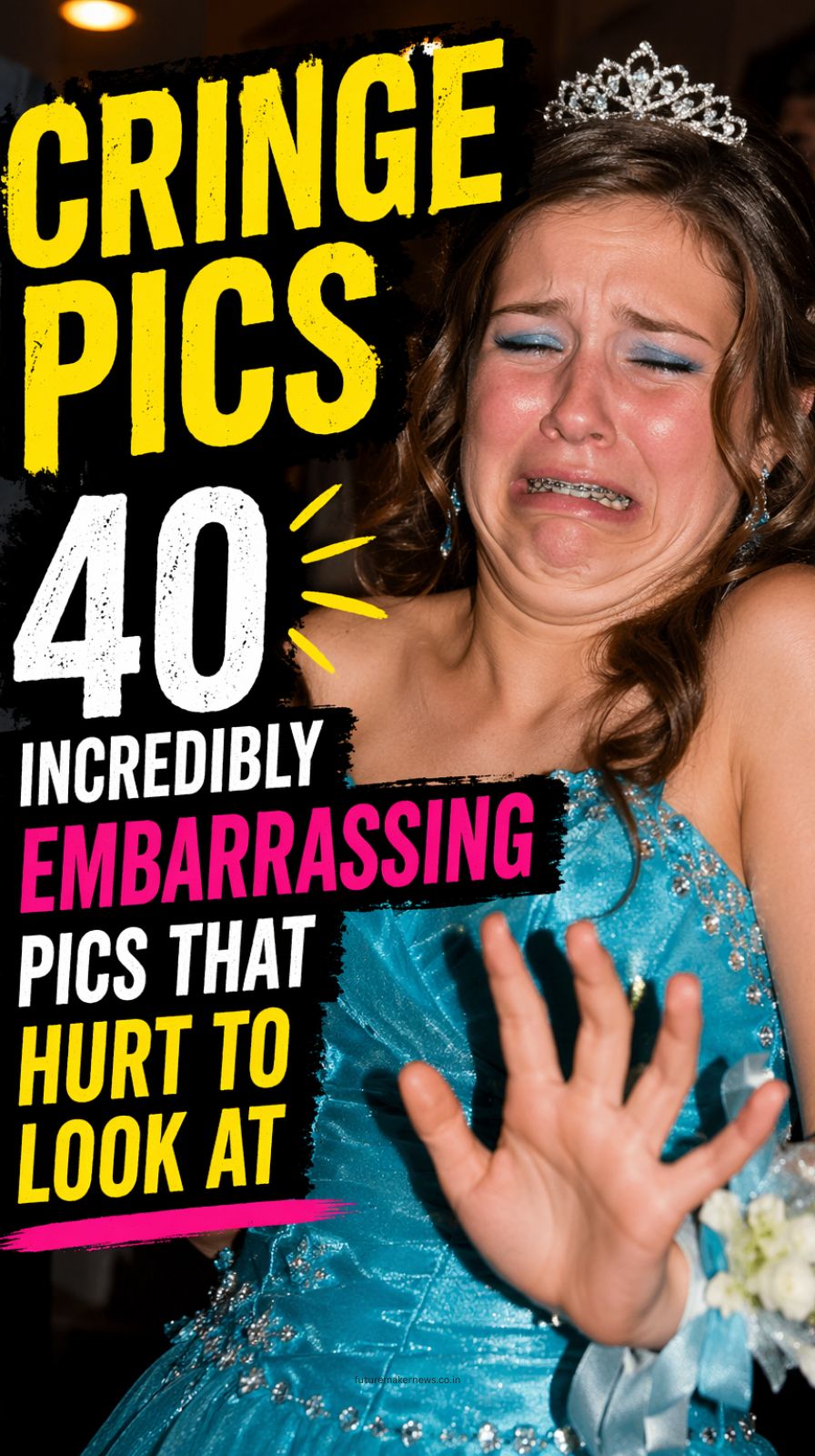
Collage of awkward cringe moments including gym posing, failed proposal, over-edited selfie, and corporate team building fail

We have all been there. That sudden, cold shiver that runs down your spine when you remember something embarrassing you said three years ago at a party. But there is a specific, modern phenomenon that takes this feeling to a global scale: the Cringe Pic.

In the digital age, our most mortifying moments aren’t just memories; they are digital artifacts. Whether it is a failed attempt at looking “cool,” a public display of social unawareness, or a fashion disaster caught on camera, cringe culture has become a cornerstone of internet entertainment.

But why do we seek out these embarrassing photos? Why does it feel so good to feel so bad? Let’s dive into the psychology of the cringe and explore 40 layers of awkwardness that define the human experience.

The Science of Vicarious Embarrassment

When we look at cringe-worthy images, our brains are doing more than just laughing. We are experiencing vicarious embarrassment.

  • Mirror Neurons: Our brains are wired to empathize. When we see someone in a socially painful situation, our mirror neurons fire as if we are the ones standing in the middle of the mall in a neon spandex suit.
  • The “Thank God It’s Not Me” Factor: There is a subtle sense of relief. Viewing second-hand embarrassment reinforces our own social boundaries.
  • Social Learning: Believe it or not, cringe pics act as a “what-not-to-do” guide for social survival.

Category 1: The “Main Character” Energy Gone Wrong

We all want to be the star of our own story, but some people take the spotlight a bit too literally. These are the photos of people acting like the world is their personal photoshoot—usually in the most inappropriate places.

  • The Public Transport Diva: Doing a full yoga routine on a crowded subway.
  • The Gym Poseur: Spending 20 minutes setting up a tripod and zero minutes lifting weights.
  • The Historical Site Selfie: Taking a “duck face” photo at a somber memorial.

These social media fails remind us that there is a very thin line between confidence and complete lack of self-awareness.

Category 2: Failed Romantic Gestures

Nothing stings quite like romantic cringe. When the heart is involved, the potential for a viral fail triples.

  • The Over-the-Top Promposal: Complete with a flash mob that no one asked for and a “No” at the end.
  • The Tattoo of a Three-Week Relationship: Nothing says “forever” like a portrait of someone who blocked you on Instagram yesterday.
  • The Public Serenade: Watching someone play an acoustic guitar at a girl who clearly wants to be anywhere else on Earth.

These moments are painful because we’ve all felt that desperation to be loved. We just didn’t record it and post it for internet points.

Category 3: The “Edgy” Phase We All Regret

If you didn’t have a phase where you thought you were the deepest person in the room, did you even grow up?

  • Deep Quotes on Low-Res Backgrounds: “I’m the joker, you’re just the cards.”
  • The Mirror Selfie with a Knife: Usually a kitchen knife. Usually in a bathroom with a pile of laundry in the background.
  • Extreme Filters: The 2012 era of sepia and vignettes that made everyone look like they were living in a dusty attic.

These throwback fails are a rite of passage. We laugh at them because they represent a universal truth: we were all once trying way too hard.

Category 4: The Workplace “Team Building” Fails

Corporate culture is a breeding ground for high-tier cringe. When HR tries to be “fun,” the results are often haunting.

  • The Corporate Rap Video: White-collar executives trying to rhyme about “synergy” and “quarterly goals.”
  • Mandatory Fun Days: Photos of grown adults in business casual doing a three-legged race with visible misery in their eyes.
  • The LinkedIn “Hustle” Post: A 500-word essay on how a leaf falling in a park taught someone about B2B sales strategy.

Why We Love “Hurt-To-Look-At” Content

There is a specific subgenre of cringe pics known as “hurt to look at.” These aren’t just funny; they physically make you squint.

  • Visual Tension: A photo of someone’s phone screen with 4,000 unread notifications.
  • Social Disharmony: A group photo where one person is clearly being excluded, yet they are smiling the hardest.
  • The “Nice Guy” Text: Screenshots of someone being overly polite until they are rejected, at which point they turn into a different person entirely.

This content thrives because it taps into our social anxieties. We are terrified of being the person in the photo, so we look at the photo to make sure we aren’t.

The Evolutionary Benefit of Cringe

Believe it or not, cringe is an evolutionary superpower.

  1. Group Cohesion: By laughing at social faux pas, we reinforce the “rules” of our tribe.
  2. Humility: Seeing others fail—and failing ourselves—keeps our egos in check.
  3. Bonding: Sharing a cringe-worthy meme with a friend is a high-speed way to say, “I’m glad we both know better than this.”

How to Handle Your Own Cringe Moments

If you find yourself becoming a viral sensation for the wrong reasons, or if you simply woke up in a cold sweat thinking about a middle-school memory, here is how to cope:

  • Own the Narrative: The fastest way to kill cringe is to laugh at it yourself. If you’re in on the joke, no one can use it against you.
  • The 5-Year Rule: Ask yourself: “Will this matter in five years?” Usually, the answer is no.
  • Digital Hygiene: Every few months, go back and look at your social media history. If you feel a “sting” of embarrassment, that’s actually a good sign—it means you’ve grown as a person.

The Bottom Line: Cringe is Human

The reason 40 incredibly embarrassing pics can garner millions of views is that they represent the raw, unpolished, and often messy reality of being a human being in a digital world. We are all trying to navigate social hierarchies, find love, and look cool while doing it.

Most of the time, we fail. And that’s okay.

The next time you see a cringe pic that makes you want to crawl under your desk, remember: that person is just a mirror of our own imperfections. We are all one bad haircut or one “deep” Facebook post away from being the next internet meme.

Embrace the awkwardness. It’s the only thing that proves we’re actually living.

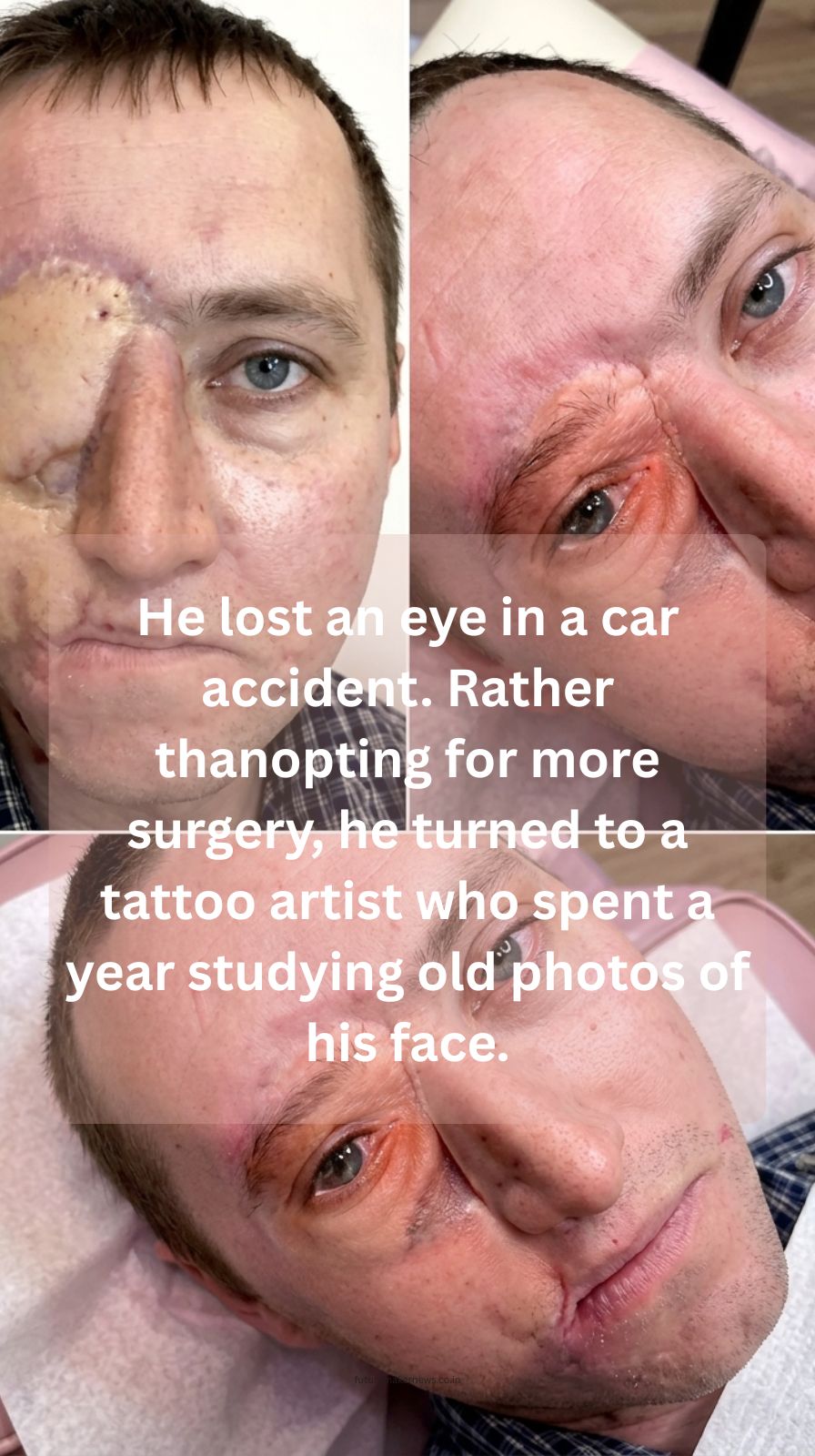
Man with hyper-realistic tattooed eye after accident, showcasing paramedical tattoo reconstruction and facial scar camouflage

In the blink of an eye, life can change forever. For one man, a devastating car accident didn’t just leave him with scars; it took away a vital part of his identity—his left eye. Most people would follow the traditional medical path, undergoing endless cycles of reconstructive surgery and fitting for a prosthetic eye.

But this story isn’t about tradition. It’s about the intersection of human resilience, artistic precision, and the refusal to be defined by a medical condition. This is the story of how a tattoo artist accomplished what surgeons couldn’t: restoring a man’s sense of self through ink and needle.

The Moment Everything Changed

The impact was sudden. Metal crushed against metal, and in the chaos of a highway collision, a shard of glass changed his perspective—literally.

  • The Physical Toll: Total loss of vision in one eye and severe damage to the orbital socket.
  • The Emotional Weight: Looking in the mirror and seeing a “stranger” staring back.
  • The Surgical Cycle: Multiple operations that left him feeling like a medical project rather than a person.

He faced a choice: continue with cosmetic surgery that promised “closeness” but never “perfection,” or find a more creative way to heal.

Why Surgery Wasn’t the Answer

Medical science is miraculous, but it has its limits. Glass eyes and acrylic prosthetics are incredible feats of engineering, but they often lack the “soul” of a real eye.

  • The “Uncanny Valley”: Prosthetics often look slightly off, creating a sense of discomfort for the wearer.
  • Painful Recoveries: Every surgical intervention required weeks of healing and mounting medical bills.
  • Static Appearance: A prosthetic doesn’t always mimic the depth and texture of a living iris.

He decided to stop being a patient and started looking for an aesthetic solution that felt more permanent and personal.

The Unconventional Solution: Medical Tattooing

Enter the world of paramedical tattooing. This isn’t about anchors or dragons; it’s about skin pigmentation and optical illusions. He reached out to a master tattoo artist known for hyper-realistic portraits.

The goal? To tattoo the eyelid and the surrounding tissue to mimic the appearance of a healthy, open eye, creating the illusion of symmetry without the need for further invasive procedures.

A Year of Observation

This wasn’t a “walk-in” appointment. To achieve photorealistic results, the artist spent an entire year preparing.

  1. Studying the Past: They gathered dozens of high-resolution photos of the man from before the accident.
  2. Color Theory: Analyzing the specific shades of hazel, gold, and green in his iris.
  3. Light and Shadow: Studying how light hit his face in different environments to recreate the natural reflection of a wet cornea.
  4. Symmetry Mapping: Using his remaining eye as a blueprint to ensure the tattooed eye sat at the exact same horizontal plane.

The Process: Artistry Under the Needle

When the sessions finally began, it was a delicate dance of micropigmentation. The skin around the eye is incredibly thin and sensitive, requiring a master’s touch.

  • Layering Pigment: The artist didn’t just use one color. They used dozens of custom-blended inks to build depth.
  • The Sclera Effect: Using off-white and subtle blues to mimic the “white” of the eye, avoiding a flat, cartoonish look.
  • The Eyelash Illusion: Tattooing individual “hairs” to match the natural growth pattern of his existing lashes.
  • Scar Camouflage: Using skin-tone pigments to blend the jagged lines of the accident into the surrounding tissue.

The Psychology of the “New” Face

For the wearer, this wasn’t just about aesthetics. It was about psychological recovery.

  • Regaining Confidence: No longer feeling the need to wear sunglasses indoors.
  • Control over Narrative: Being able to tell a story of artistic triumph rather than one of medical trauma.
  • Closure: The completion of the tattoo marked the end of the “accident phase” of his life.

The Rise of Paramedical Tattooing in Modern Medicine

This story highlights a growing trend in aesthetic medicine. More people are turning to tattoo artists for help with:

  • Areola Restoration after mastectomy.
  • Scar Camouflage for burn victims.
  • Scalp Micropigmentation for hair loss.
  • Vitiligo Repigmentation to even out skin tone.

The tattooing industry is no longer just about rebellion; it is a vital tool for post-traumatic healing.

Why This Story Matters to You

We all face “accidents” in life—moments that leave us feeling broken or incomplete. This man’s journey teaches us three vital lessons:

  1. Innovation is Everywhere: Sometimes the best solution to a problem lies outside of the box (or the doctor’s office).
  2. Patience is Key: A year of study led to a lifetime of satisfaction. Quality work cannot be rushed.
  3. Beauty is Subjective: What looks like a “fix” to a surgeon might not feel like a “fix” to the soul. You have the right to define your own beauty standards.

The Final Result: A Masterpiece in the Mirror

When the final needle stroke was finished and the swelling subsided, the man looked in the mirror and saw himself. Not a victim, not a patient, but a man restored by creative vision.

The tattooed eye was so realistic that people on the street didn’t even notice it wasn’t “real.” But he noticed. He saw the fine lines, the perfect shading, and the vibrant color that signaled his return to the world.

Redefining the Limits of Art

This collaboration between a trauma survivor and a tattooist proves that art heals. While modern medicine saved his life, artistic expression saved his spirit.

  • The Impact: His story has gone viral, inspiring thousands of others with facial disfigurements.
  • The Legacy: It has bridged the gap between tattoo culture and professional healthcare.
  • The Future: As ink technology improves, the possibilities for restorative tattooing are endless.

Final Thoughts on Resilience

The human spirit is like tattoo ink—it’s permanent, it’s vibrant, and it can be used to rewrite any story. Whether you are dealing with a physical scar or an emotional wound, remember that there are always alternative paths to wholeness.

You don’t always need a scalpel to fix what is broken. Sometimes, all you need is a person who is willing to look at your old photos, understand your soul, and help you draw a new future.

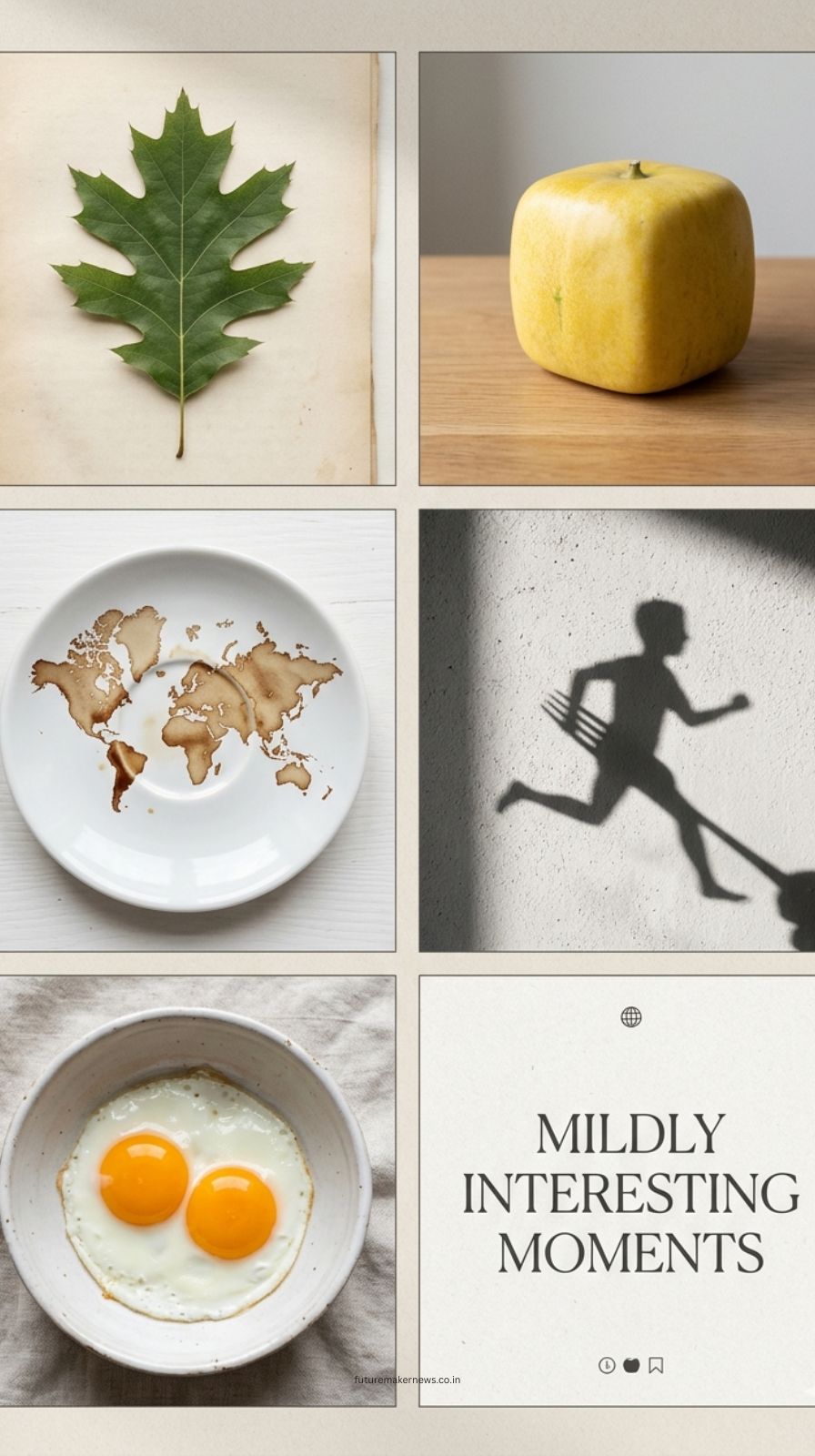
Collage of mildly interesting everyday objects including symmetrical leaf, square fruit, coffee stain art, shadow illusion, and double-yolk egg

In a world filled with high-octane breaking news and over-the-top viral stunts, there is a quiet corner of the internet that celebrates the mundane, the slightly odd, and the oddly satisfying. We are talking about the “mildly interesting”—those moments where you stop, tilt your head, and think, “Huh, that’s actually kind of cool.”

The phenomenon of sharing mildly interesting photos has created a massive global community. It’s a place where a strangely shaped potato or a perfectly weathered coin is treated like a masterpiece. Today, we are diving deep into 50 times people saw something just quirky enough to capture and knew exactly where to post it for that sweet, sweet internet validation.

Why Our Brains Crave “Mildly Interesting” Content

Why do we scroll through hundreds of images of everyday anomalies? It’s simple: our brains are hardwired to spot patterns. When something breaks that pattern—even slightly—it triggers a dopamine hit.

  • Pattern Recognition: Seeing a cloud that looks exactly like a teapot satisfies our internal filing system.
  • The Relatability Factor: Most of these viral images happen in kitchens, backyards, or grocery stores. They feel reachable.
  • Low Stakes, High Reward: You don’t need to be an expert to appreciate a perfectly symmetrical leaf. It’s pure, uncomplicated entertainment.

The All-Stars of the Mildly Interesting World

When we look at the top 50 photos that ignited the latest social media frenzy, several categories of “mildness” emerge as clear winners. These are the images that earn thousands of upvotes in minutes.

1. Nature’s Little Glitches

Nature is the original artist, but sometimes she gets a bit experimental.

  • Square Grapes: Occasionally, a vine grows in a way that compresses the fruit into cubes. It looks like a video game glitch in real life.
  • Albino Everything: From squirrels to sunflowers, seeing a lack of pigment in a common species is a top-tier mildly interesting find.
  • Trees Swallowing Signs: The slow-motion battle between nature and urban life never fails to fascinate. Seeing a park bench being slowly “eaten” by an oak tree is a classic.

2. The Perfection of Coincidence

Sometimes, the universe aligns just right, creating a visually stunning moment that feels like a glitch in the simulation.

  • Shadow Alignment: When a fence shadow perfectly aligns with the pavement lines, it creates a satisfying optical illusion.
  • Matching Outfits with Architecture: That moment someone realizes their shirt matches the bus seat or a hotel hallway carpet perfectly.
  • Perfect Packaging: A soda can that fits perfectly into a random hole in a stone wall. It’s the ASMR of photography.

50 Shades of “Wait, Look at That!”

Let’s break down some of the most iconic recent captures that prove you don’t need a professional camera to find viral content.

  • The Triple-Yolk Egg: A rare culinary miracle that makes you feel like you’ve won the breakfast lottery.
  • Long-Lost Relics: Finding a 1990s soda can perfectly preserved behind a wall during a home renovation.
  • The “Shadow” Dog: A black dog sitting in a way that makes it look like the shadow of a different dog entirely.
  • Transparent Fish: Deep-sea or shallow-water creatures that look like they were made of glass.
  • Accidental Art: A spilled coffee stain that looks remarkably like a map of the world or a famous celebrity.

The “Best Group” Phenomenon: Finding Your People

The title of our journey mentions that people “knew the best group to share it in.” This refers to the highly curated online communities (like Reddit’s r/mildlyinteresting) where specific rules apply.

  • No Over-the-Top Content: If it’s too amazing, it’s banned. It has to stay “mild.”
  • Original Content (OC): These groups thrive on authentic photography. If it’s a repost, the community knows immediately.
  • Descriptive Titles: The joy is in the explanation. A photo of a rock is boring; a photo of “a rock that looks like a half-eaten ham sandwich” is internet gold.

The SEO Power of the Mundane

Believe it or not, mildly interesting images are an SEO goldmine. People search for curious facts, strange coincidences, and unique photography constantly.

  • Visual Storytelling: A single image can tell a story better than a 1000-word essay.
  • Engagement Loops: These photos spark debates. “Is that really a square grape, or is it fake?” This leads to hundreds of comments, boosting the post’s algorithmic reach.
  • Shareability: “Mildly interesting” content is the most shared type of media on Pinterest and Facebook because it’s safe for all ages and universally understood.

The Psychology Behind the “Share”

What makes someone take their phone out for a mildly interesting moment?

  1. Validation: We want to know if others find the “thing” as weird as we do.
  2. Connection: Sharing a quirk of the world makes us feel connected to a global audience.
  3. Digital Archiving: In the 2020s, if you didn’t photograph it, did it even happen? We use social media as a scrapbook for the weirdness of life.

How to Spot Your Own “Mildly Interesting” Moment

You don’t need to go on a safari to find impressive content. You just need to change your perspective.

  • Look Down: The patterns in sidewalk cracks or the way oil swirls in a puddle can be captivating.
  • Check Your Groceries: Double-strawberries, conjoined bananas, or oversized cereal flakes are classic social media hits.
  • Watch the Light: The way sunlight hits a glass of water can create accidental rainbows or complex light patterns on your wall.

Why This Trend Won’t Die

The “Mildly Interesting” trend is immune to fatigue. Unlike fashion trends or dance challenges, the quirks of reality are infinite. As long as the physical world exists, there will be anomalies to photograph.

  • Universal Appeal: A person in Japan and a person in Brazil can both appreciate a cat with a thumb.
  • Timelessness: A photo of a “perfectly peeled orange” is just as interesting today as it will be in ten years. It’s evergreen content at its finest.

The 50-Image Legacy

When we look at the collection of 50 new pics that recently went viral, we see a snapshot of human curiosity. We see a person who noticed that their frozen pizza had zero toppings, and instead of being angry, they thought, “The internet needs to see this blank canvas.” We see the person who found a clear leaf and held it up to the sun to show the world the “skeleton” of nature.

These moments remind us to slow down. They remind us that there is extraordinary beauty hidden in the most ordinary circumstances.

Final Thoughts: Stay Curious

The next time you’re walking down the street and see something that makes you do a double-take, don’t keep it to yourself. Pull out your phone, capture that mildly interesting detail, and find your group. You might just be the next person to ignite a global social media frenzy with nothing more than a photo of a cloud, a coin, or a very, very long fry.

Bride revealing a bold reception outfit at a wedding while guests and groom react with surprise

Weddings are traditionally a time of white lace, solemn vows, and carefully orchestrated elegance. However, in the age of TikTok trends and viral wedding moments, the “traditional” rulebook is being thrown out the window. A recent incident involving a bride’s daring underwear stunt has sent the internet into a tailspin, leaving millions asking: How far is too far for your big day?

The headline “Dude Was Regretting It” began trending after a video surfaced showing a bride’s unconventional choice of attire—or lack thereof—during the reception. What was intended as a playful moment of self-expression has ignited a social media frenzy, pitting traditionalists against modernists in a battle over wedding etiquette and personal freedom.

The Moment That Broke the Internet

Every wedding has a highlight, but this particular ceremony featured a plot twist no one saw coming. During the transition from the formal ceremony to the high-energy reception, the bride revealed a bold bridal look that bypassed the classic “reception dress” and went straight to bridal lingerie as outerwear.

  • The Reveal: As the music shifted to a bass-heavy track, the bride shed her outer skirt to reveal a sheer, high-cut ensemble.
  • The Reaction: Guests were caught in a mix of cheers and visible confusion.
  • The Groom’s Face: This is where the viral title stems from. A well-timed camera zoom caught the groom looking somewhat stunned, leading to the “regret” narrative that fueled the comment section chaos.

Why “Wedding Stunts” are the New Norm

In a world driven by social media engagement, many couples feel a subconscious pressure to make their wedding “Instagrammable.” A simple walk down the aisle isn’t enough; it has to be a viral wedding video.

  • The Quest for Virality: Couples often look for a “hook” that will get their wedding featured on major lifestyle blogs.
  • Personal Branding: For some, a wedding is a public statement of their unique personality and refusal to conform to societal norms.
  • Shock Value: Sometimes, the goal is simply to surprise the guests and create a memory that will be talked about for decades.

Decoding the Social Media Backlash

The internet is rarely a place of nuance. Once the video hit Twitter (X) and Instagram, the comments were split into two distinct camps:

1. The “It’s Her Day” Defenders

This group argues that since the couple is paying for the event, they have the absolute right to dress and act however they choose.

  • They view the bold underwear stunt as an act of female empowerment and body positivity.
  • They argue that “tradition” is just peer pressure from dead people.

2. The “Respect the Occasion” Critics

On the other side, many feel that a wedding is a family event that requires a certain level of decorum.

  • Critics point out that children and elderly relatives are often present, making provocative wedding attire inappropriate.
  • The phrase “Dude Was Regretting It” became a rallying cry for those who felt the bride’s choice embarrassed the groom and the families involved.

The Psychology of “Groom Regret”

Why did the internet latch onto the groom’s expression? It’s because the wedding dynamic is built on the concept of partnership. When one partner makes a radical choice without (seemingly) consulting the other, it creates visible tension.

  • Public Perception vs. Private Reality: Even if the groom knew about the stunt, the pressure of being watched by 200 people can make any man look uncomfortable.
  • The Role of Expectations: Most men enter a wedding expecting a certain level of classic romance. When that is swapped for a bold fashion statement, it can lead to a “deer in the headlights” look that the internet mistake for regret.

Modern Wedding Etiquette: Where is the Line?

As wedding trends continue to evolve, the line between “fun” and “cringe” becomes increasingly blurry. If you are planning your own big day, how do you balance being bold with being respectful?

  • Know Your Audience: If your guest list is full of conservative family members, a daring reveal might cause more drama than it’s worth.
  • Communication is Key: Ensure your partner is 100% on board with any wedding stunts. You want to be a team, not a viral meme.
  • Timing Matters: There is a big difference between wearing a daring outfit at a 2:00 AM after-party and wearing it during the “first dance” in front of Grandma.

The Rise of the “Reception Reveal”

This viral story highlights a growing trend in the bridal fashion industry: the multiple-outfit wedding.

  1. The Ceremony Gown: The traditional, modest, and grand dress for the vows.
  2. The Reception Mini: A shorter, more dance-friendly version of the gown.
  3. The After-Party Look: This is where things get “bold.” It often involves bridal jumpsuits, sheer fabrics, or, as seen in this viral case, lingerie-inspired fashion.

Is All Publicity Good Publicity?

For the bride in the video, the social media frenzy has brought both fame and infamy. While her follower count may have spiked, she has also had to deal with thousands of “armchair experts” judging her marriage.

  • The Impact on Mental Health: Dealing with a viral backlash can be incredibly draining during what should be the “honeymoon phase.”
  • The Longevity of the Video: Once a wedding fail or “stunt” is online, it’s there forever. Future employers, children, and extended family will always have access to that moment.

How to Style a Bold Look Without the Drama

If you love the idea of a bold wedding look, you can still pull it off with class. It’s all about the execution.

  • Sheer Elements: Use lace and mesh strategically to give the illusion of skin without being overly revealing.
  • Detachable Pieces: Use overskirts or capes. This allows you to have a traditional bridal moment and a “wow” reveal later on.
  • High-End Fabrics: A bold stunt looks more like “high fashion” and less like “costume” when the materials are high-quality silk or hand-beaded lace.

The Verdict: Was He Actually Regretting It?

While the internet loves a narrative of “groom regret,” the reality is often much simpler. In many follow-up interviews with viral couples, the grooms clarify they were simply tired, overwhelmed, or even just in awe of their partner’s confidence.

The social media frenzy thrives on negativity because it drives more clicks. However, the only two people whose opinions truly matter are the ones standing at the altar.

Final Thoughts for Future Brides

Your wedding is a celebration of your love story. If your story involves a bold underwear stunt, then own it! But be prepared for the digital age to have an opinion on it.

  • Prioritize Joy: Don’t do something just for the TikTok algorithm. Do it because it makes you feel beautiful.
  • Respect the Sanctity: Remember that a wedding is a transition into a new life chapter. Start it with a choice that you’ll look back on with a smile, not a cringe.
Stop posting randomly—build a system that pays.

The digital landscape has shifted. In 2026, the era of “post and pray” is officially dead. If you want to build a sustainable, high-income business, you cannot rely on viral hits or fickle algorithms. You need a resilient ecosystem.

Success today is about moving away from platform-dependency and toward owned assets. This guide breaks down the ultimate 2026 Content Model: a three-pillar system designed for long-term wealth and audience sovereignty.

Pillar 1: The Traffic Engine (Attraction)

Content creator producing videos and blog content to attract traffic
Attention is step one—but strategy makes it valuable.

Traffic is the fuel for your business, but in 2026, not all traffic is created equal. With the rise of AI-driven search and SGE (Search Generative Experience), your content must be more than just “info-dumping.”

Master the Multi-Channel Approach

  • Search Intent 2.0: Don’t just target keywords; target human problems. Use long-tail keywords that AI summaries often miss—specific, experience-based queries.
  • Short-Form Video as a Hook: Use platforms like TikTok and Reels as “top-of-funnel” discovery tools. These are your traffic magnets.
  • Thought Leadership: People don’t follow brands; they follow perspectives. Infuse every piece of content with a unique POV (Point of View) that AI cannot replicate.

Quality Over Velocity

  • Deep-Dive Guides: One 3,000-word authoritative post beats ten 500-word filler posts. High-quality content signals authority to both users and search engines.
  • Interactive Content: Use polls, quizzes, and calculators. This increases dwell time, which is a massive ranking signal in the current algorithm.

Pillar 2: The Email Powerhouse (Retention)

Email marketing dashboard showing subscriber growth and content strategy
Followers disappear. Email lists build wealth.

If you don’t own your audience, you don’t have a business. Your email list is the only asset that no algorithm can take away. In 2026, your inbox is the most intimate space you can occupy.

Building the “Permission Asset”

  • The Lead Magnet Evolution: Stop offering generic PDFs. Offer value-packed assets like Notion templates, mini-video courses, or exclusive data reports.
  • Zero-Party Data: Use your welcome sequence to ask questions. Find out exactly what your readers want. This audience segmentation allows for hyper-personalized messaging.

The Newsletter as a Product

  • Relatability & Trust: Write like you talk. Use a conversational tone to build a “friendship” with your subscribers.
  • Consistent Value: Every email must either educate, entertain, or empower. If it doesn’t add value, don’t send it.
  • Direct Engagement: Encourage replies. The more your readers interact, the higher your sender reputation and deliverability will be.

Pillar 3: The Product Suite (Monetization)

Digital products like courses and ebooks displayed on devices representing monetization
Turn your knowledge into scalable income.

The final piece of the 2026 Content Model is transforming your influence into scalable income. You aren’t just a creator; you are a solutions provider.

Solving Specific Problems

  • Digital Products: Create what your audience is already asking for. Whether it’s an online course, an e-book, or a software tool, ensure it solves a “bleeding neck” problem.
  • Tiered Pricing: Offer something for everyone. A low-ticket entry-level product builds trust, while high-ticket coaching or masterminds drive significant revenue.

The Ecosystem Effect

  • Product-Led Growth: Your products should naturally lead to more content and more traffic. Encourage user-generated content and testimonials.
  • Recurring Revenue: In 2026, stability is king. Aim for subscription models or memberships that provide predictable monthly income.

The Synergy: How the System Wins

This model works because it creates a compounding loop. Your traffic feeds your email list, and your email list sells your products.

The Workflow of a 2026 Pro

  1. Create Authority Content: Post a deep-dive article or a high-value video to attract organic reach.
  2. Capture the Lead: Use a high-converting call-to-action (CTA) to move that visitor into your email ecosystem.
  3. Nurture the Relationship: Send weekly insights that prove you are an expert who cares about their success.
  4. Present the Solution: Launch your digital product to an audience that already knows, likes, and trusts you.

Why This is “Anti-Fragile”

  • Algorithm Independence: If a social platform dies tomorrow, your email list stays.
  • High Profit Margins: Digital products have near-zero overhead, leading to massive ROI.
  • Scalability: Once the system is built, you can scale your traffic and sales without linearly increasing your workload.

Strategic Implementation for 2026

To win this year, you must treat your content like a business system, not a hobby. Focus on long-term growth over short-term vanity metrics.

Key Focus Areas

  • SEO Optimization: Use semantic search principles. Ensure your site is fast, mobile-friendly, and optimized for voice search.
  • Brand Voice: Develop a signature style. In an AI-saturated world, authenticity is your greatest competitive advantage.
  • Data-Driven Decisions: Monitor your conversion rates more than your follower count. The only metric that truly matters is Customer Lifetime Value (CLV).

The Path Forward

Building a long-term system takes time, but it is the only way to ensure financial freedom in the creator economy. Start with one pillar, master it, and then bridge to the next.

The 2026 Content Model isn’t about being everywhere; it’s about being indispensable to a specific group of people. Focus on your niche, build your list, and create products that change lives. That is how you make money that lasts.

Comparison of viral social media chaos versus steady passive income from search traffic

In the world of digital entrepreneurship, there is a dangerous myth: you need to go viral to make significant money. We see the overnight success stories, the TikTokers with millions of views, and the “lucky” breaks that catapult creators into the spotlight.

But here is the truth: virality is not a business strategy. It is a lottery ticket.

If you want to build a reliable, predictable income that grows month after month, you don’t need a viral hit. You need a system. This guide will show you how to dominate the Search Traffic landscape and why it is the superior path to Making Money compared to the chaotic world of Viral Traffic.

The Chaos of Viral Traffic: Why It’s a Trap

Viral traffic is like a summer storm. It’s loud, it’s intense, and it disappears just as quickly as it arrived. For most creators, a viral moment leads to a massive spike in views but very little Revenue Generation.

The Problem with Going Viral:

  • Low Intent: People watch viral content because they are bored, not because they are looking to solve a problem or buy a product.
  • The “One-Hit Wonder” Risk: Once the algorithm stops favoring your post, your traffic—and your income—drops to zero.
  • Audience Disconnect: Viral hits often attract people who aren’t your target audience, making it nearly impossible to build a Loyal Community.
  • Burnout: The pressure to keep “hitting the jackpot” leads to creative exhaustion and inconsistent Content Strategy.

The Power of Search Traffic: The Silent Wealth Builder

Search Traffic (SEO) is the exact opposite. It is the steady, reliable stream of people actively looking for what you have to offer. Whether it’s through Google, YouTube search, or Pinterest, Organic Search brings you “high-intent” visitors.

Why Search Traffic Wins Every Time:

  • High Conversion Rates: When someone searches for “best noise-canceling headphones,” they are in a Buying Mindset. They aren’t just browsing; they are deciding.
  • Passive Income Potential: A well-optimized blog post or video can rank for years. You do the work once, and it pays you 24/7.
  • Compounding Growth: Unlike social media, where old content dies, SEO builds on itself. The more authority you gain, the easier it is to rank for new Target Keywords.
  • Predictability: You can look at Keyword Research tools and know exactly how many people are looking for a topic before you even create the content.

Search Traffic vs. Viral Traffic: The Ultimate Comparison

FeatureViral TrafficSearch Traffic (SEO)
User IntentEntertainment/CuriosityProblem-Solving/Buying
SustainabilityShort-lived (24–48 hours)Long-term (Months to Years)
EffortHigh (Requires constant trend-chasing)Strategic (Requires initial optimization)
MonetizationMostly Ads (Low RPM)Affiliate Marketing, Products, High Ads
ScalabilityRandom and unpredictableLogical and data-driven

How to Make Money Without Going Viral (Step-by-Step)

If you are ready to stop chasing “likes” and start building a Profitable Online Business, follow this blueprint. This is how you create an income stream that doesn’t depend on the whims of an algorithm.

1. Identify High-Value “Problem” Niches

Content creator researching profitable niches like finance, health, and digital marketing
Pick problems, not passions—problems pay.

Don’t just write about your day. Focus on Profitable Niches where people are actively seeking solutions. In 2026, the highest-paying niches include:

  • Personal Finance (Investing, Taxes, Crypto)
  • Health & Wellness (Specific diets, Biohacking)
  • Digital Marketing (SaaS reviews, AI tools)
  • Technical Tutorials (Software “How-To” guides)

2. Master the Art of Keyword Research

Keyword research tools showing search terms and SEO analytics on a laptop
Traffic starts with the right keywords.

To get Search Traffic, you must know what your audience is typing into that search bar.

  • Use tools like Ahrefs, SEMrush, or even Google Keyword Planner.
  • Look for Long-Tail Keywords. Instead of “Weight Loss,” target “Best weight loss plan for busy office workers.”
  • Check the Search Intent. Does the user want information, or are they ready to purchase?

3. Create “Evergreen” Content

Evergreen blog content concept showing long-term traffic and passive income growth
Create content once, earn from it forever.

Evergreen Content is the backbone of Making Money Online. This is content that remains relevant for years.

  • Avoid news or temporary trends.
  • Focus on “How-To” guides, “Best Of” lists, and “Product Comparisons.”
  • Update your content annually to ensure it stays fresh and maintains its Search Rankings.

4. Optimize for “User Experience” (UX)

Responsive website design optimized for mobile and user experience
Better experience = better rankings = more money.

Google doesn’t just rank keywords anymore; it ranks satisfaction.

  • Ensure your site loads in under 2 seconds.
  • Use Mobile-Friendly designs. Most searchers are on their phones.
  • Break up text with bullet points and headings to make it scannable.

Monetization Strategies for Search-Driven Content

When you have Targeted Traffic, you don’t need millions of views to make a full-time living. A few thousand dedicated visitors can generate more than a viral video with a million views.

Affiliate Marketing

This is the holy grail of Passive Income. By recommending products that solve your readers’ problems, you earn a commission on every sale. Since searchers have High Intent, your click-through and conversion rates will be significantly higher than on social media.

Display Advertising

Once you have steady Organic Traffic, platforms like Mediavine or AdThrive (Raptive) pay premium rates. Because your traffic is coming from search, advertisers are willing to pay a higher CPM (Cost Per Mille) to reach your audience.

Selling Digital Products

You can create an E-book, a template, or a mini-course that addresses the specific problem your searchers are trying to solve. This allows you to keep 100% of the profits and build a direct relationship with your customers.

The “Slow and Steady” Mindset

The biggest reason people fail at Search Engine Optimization is that they quit too early. Viral traffic gives you a dopamine hit instantly. Search traffic takes 3–6 months to start showing results.

However, the “slow” way is actually the fastest way to Financial Freedom.

Imagine waking up two years from now. You haven’t posted on social media in weeks, yet your bank account is growing because a blog post you wrote 18 months ago is still ranking #1 on Google. That is the power of Search Traffic.

Actionable Tips to Increase Your Earnings Today

  • Audit Your Content: Look at your existing posts. Are they optimized for a specific Search Term? If not, rewrite the headers and meta-descriptions.
  • Build Authority: Get other reputable sites to link back to you (Backlinks). This tells search engines that your content is trustworthy.
  • Focus on Quality over Quantity: One 2,000-word “Ultimate Guide” that ranks well is worth more than fifty 500-word “fluff” posts.
  • Analyze the Data: Use Google Analytics and Search Console to see which keywords are actually bringing you money, then double down on those topics.

Final Thoughts

You do not need to be “internet famous” to be wealthy. You do not need to dance on camera or chase every fleeting trend.

By shifting your focus from Viral Traffic to Search Traffic, you are choosing stability over chaos. You are building an asset that you own, rather than being a slave to a social media algorithm.

Start treating your content like a business, focus on SEO Best Practices, and provide genuine value to people who are searching for answers. The money will follow, and it will stay long after the viral stars have faded away.