Blood Sugar Management: Simple Daily Habits to Balance Your Levels Naturally

Image

Introduction: Why Blood Sugar Management is Essential Today

If you often feel energy crashes, sudden hunger, or cravings for sweets, your blood sugar levels might not be stable. Blood sugar management is no longer just for people with diabetes; it is essential for anyone who wants better energy, focus, and long-term health.

When your blood sugar is balanced, your body functions smoothly. You feel more energetic, your mood improves, and your risk of chronic diseases decreases. The good news is that managing blood sugar can be simple when you follow the right diet and habits consistently.


What is Blood Sugar and How It Affects Your Body

Blood sugar, also known as glucose, is the main source of energy for your body. It comes from the food you eat, especially carbohydrates. Your body regulates glucose using insulin, a hormone that helps move sugar into your cells.

When this system works properly, your energy remains stable throughout the day. However, frequent spikes and crashes can lead to fatigue, irritability, and long-term health issues like diabetes. This is why blood sugar control is important for both immediate and future health.


Understanding Blood Sugar Levels with a Simple Chart

To manage your health effectively, it is important to understand what normal blood sugar levels look like. A blood sugar chart gives a clear idea of where you stand.

TimeNormal Blood Sugar Levels (mg/dL)
Fasting70–99
After Meals (2 hours)Below 140
Prediabetes140–199
Diabetes200 and above

Monitoring your levels occasionally can help you understand how your body reacts to different foods. This awareness is the first step toward better blood sugar management.


Best Foods for Blood Sugar Management

Leafy Greens and Vegetables

Leafy greens such as spinach, kale, and broccoli are low in carbohydrates and high in fiber. They help slow down the absorption of sugar into the bloodstream.

These foods also provide essential nutrients like magnesium, which supports insulin function. Including vegetables in every meal can significantly improve blood sugar control.


Protein-Rich Foods

Protein plays a key role in stabilizing blood sugar levels. Foods like eggs, chicken, paneer, and lentils help prevent sudden spikes after meals.

They also keep you full for longer, reducing the urge to snack on unhealthy foods. Adding protein to every meal is a simple yet powerful strategy.


Healthy Fats

Healthy fats from sources like nuts, seeds, and avocado help slow digestion and prevent rapid glucose spikes. They also support heart health and hormone balance.

Combining fats with carbohydrates creates more balanced meals that support long-term blood sugar management.


Low-Glycemic Fruits

Not all fruits are harmful for blood sugar. Fruits like berries, apples, and pears have a low glycemic index, meaning they release sugar slowly into the bloodstream.

These fruits satisfy sweet cravings without causing major spikes, making them a smart choice for a diabetes-friendly diet.


Blood Sugar Balancing Meals: Simple Plate Formula

Creating balanced meals is one of the easiest ways to manage blood sugar levels. You do not need complex diets or restrictions to achieve this.

A simple plate formula works well for most people:

  • 50 percent vegetables
  • 25 percent protein
  • 25 percent whole grains

For example, a meal with grilled chicken, brown rice, and sautéed vegetables provides a perfect balance. This combination keeps your energy stable and prevents sugar crashes.


Healthy Snacks for Better Blood Sugar Control

Snacking can either support or harm your blood sugar management. Choosing the right snacks helps maintain consistent energy throughout the day.

Some healthy snack ideas include:

  • Apple slices with peanut butter
  • A handful of almonds or walnuts
  • Greek yogurt with seeds
  • Boiled eggs

These options provide a mix of protein, fiber, and healthy fats, which help keep your blood sugar stable between meals.


Diabetes-Friendly Recipes and Desserts

You do not have to give up your favorite foods completely. With small modifications, you can enjoy delicious meals that support your health.

For example, replacing refined flour with whole grains and using natural sweeteners can make recipes healthier. Diabetes-friendly desserts like chia pudding or dark chocolate treats can satisfy cravings without disrupting blood sugar levels.

A well-planned diabetes diet can be both enjoyable and sustainable.


Foods That Increase Blood Sugar Levels

Certain foods can quickly raise blood sugar and should be limited. These include sugary drinks, white bread, processed snacks, and excessive sweets.

These foods are digested quickly, causing rapid spikes followed by sudden crashes. Over time, this pattern can lead to insulin resistance and increased risk of diabetes.

Reducing these foods gradually is more effective than eliminating them suddenly.


Practical Tips for Effective Blood Sugar Management

Managing blood sugar is not just about food. Your daily habits also play an important role in maintaining balance.

  • Eat meals at regular intervals
  • Avoid skipping breakfast
  • Stay physically active with light exercise
  • Drink enough water throughout the day

Even a short walk after meals can significantly improve blood sugar control. These small actions add up to create long-term results.


Real-Life Example: Small Changes That Work

A working professional who struggled with low energy and frequent cravings made simple changes to their routine. Instead of starting the day with tea and biscuits, they switched to eggs, fruits, and nuts.

Within a few weeks, they noticed improved energy, fewer cravings, and better focus at work. This shows that blood sugar management does not require extreme diets, just smarter choices.


FAQs on Blood Sugar Management

What is the best way to manage blood sugar naturally

Focus on balanced meals, regular eating patterns, and physical activity.


Which foods are best for blood sugar control

Leafy greens, protein-rich foods, nuts, and low-glycemic fruits are ideal.


How often should I check my blood sugar levels

If you are at risk or have diabetes, regular monitoring is helpful. Otherwise, occasional checks are sufficient.


Are fruits safe for blood sugar management

Yes, when chosen wisely. Low-glycemic fruits are beneficial and safe in moderation.


Can exercise help control blood sugar

Yes, physical activity improves insulin sensitivity and helps regulate glucose levels.


Conclusion: Take Control of Your Blood Sugar Today

Blood sugar management is not about strict rules or giving up your favorite foods. It is about making smarter, more balanced choices every day.

Start with simple steps such as improving your meals, choosing better snacks, and staying active. Over time, these habits will lead to better energy, improved focus, and long-term health benefits.

Take control today and make your health a priority.


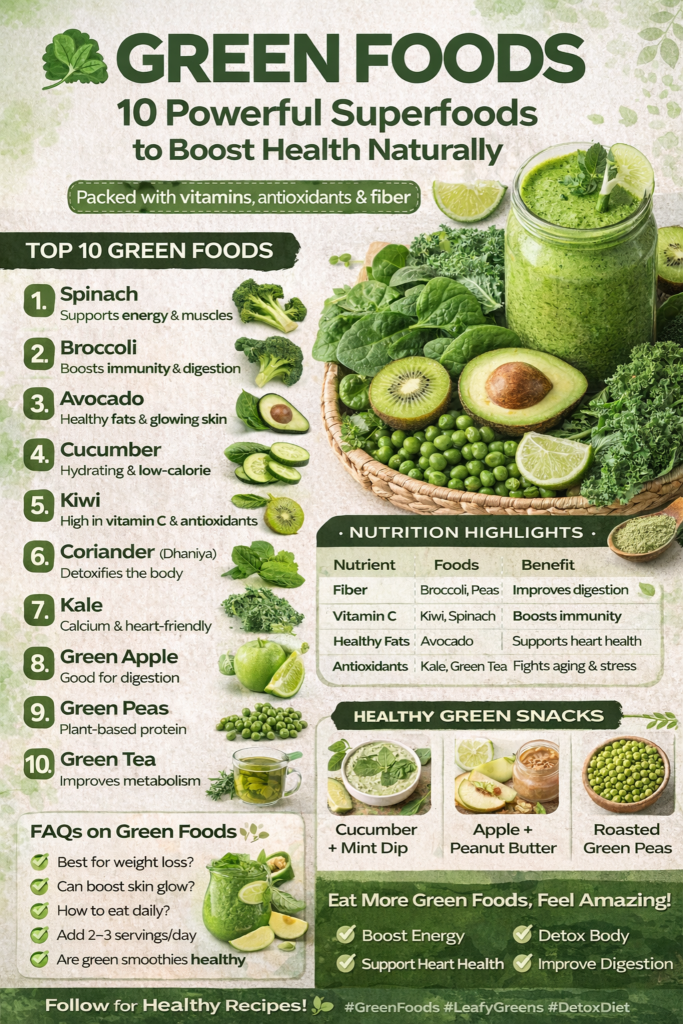
Introduction: Why Green Foods Should Be a Daily Habit

If you want better energy, stronger immunity, and a cleaner diet, adding more green foods is one of the simplest upgrades you can make. These foods are naturally rich in vitamins, minerals, fiber, and antioxidants that support your overall health.

Green foods are not just about eating vegetables. They help balance your body, improve digestion, and even enhance skin health. The real benefit comes from consistency, not perfection, which means small daily additions can create long-term results.


What Are Green Foods and Why Are They Important

Green foods include vegetables, fruits, and herbs that are naturally green due to chlorophyll. This compound plays a key role in detoxifying the body and improving oxygen circulation.

They are packed with essential nutrients like vitamin C, magnesium, and fiber, which support multiple body functions. Regular consumption of green foods helps reduce inflammation, improve digestion, and maintain stable energy levels throughout the day.


Top 10 Green Foods You Should Include Daily

Spinach

Spinach is one of the most nutrient-dense green foods available. It contains iron, magnesium, and antioxidants that help boost energy and support muscle function.

Including spinach in smoothies, curries, or salads is an easy way to increase your nutrient intake without changing your diet drastically.


Broccoli

Broccoli is rich in fiber and vitamin C, making it excellent for digestion and immunity. It also contains compounds that support detoxification in the body.

Lightly steaming broccoli preserves its nutrients and makes it easier to digest while maintaining its health benefits.


Avocado

Avocado provides healthy fats that support heart health and improve skin quality. It also helps keep you full for longer, reducing unnecessary snacking.

Adding avocado to toast, salads, or bowls can make your meals more satisfying and balanced.


Cucumber

Cucumber is highly hydrating and low in calories, making it ideal for weight management. It also helps flush toxins from the body and supports digestion.

It can be consumed raw, in salads, or infused in water for a refreshing and healthy drink.


Kale

Kale is often considered a superfood due to its high calcium and antioxidant content. It supports bone health and reduces oxidative stress in the body.

You can sauté kale, add it to soups, or blend it into smoothies for maximum benefits.


Green Apple

Green apples are rich in fiber and vitamin C, making them excellent for digestion and immunity. They also help regulate blood sugar levels.

They are a convenient snack option that provides both nutrition and natural sweetness.


Kiwi

Kiwi is packed with vitamin C and antioxidants that improve skin health and boost immunity. It also aids digestion due to its natural enzymes.

Including kiwi in your breakfast or snacks can add variety and enhance your nutrient intake.


Green Peas

Green peas are a great source of plant-based protein and fiber. They support muscle health and keep you full for longer periods.

They can be added to rice, curries, or salads to enhance both taste and nutrition.


Coriander (Dhaniya)

Coriander is known for its detoxifying properties. It helps remove heavy metals from the body and supports liver function.

Using fresh coriander as a garnish or in chutneys can add both flavor and health benefits.


Green Tea

Green tea contains antioxidants that help boost metabolism and reduce stress. It also supports fat burning and improves focus.

Replacing sugary beverages with green tea can significantly improve your overall health.


Nutritional Benefits of Green Foods

NutrientSourcesBenefit
FiberBroccoli, peasImproves digestion
Vitamin CKiwi, spinachBoosts immunity
Healthy FatsAvocadoSupports heart health
AntioxidantsKale, green teaReduces stress and aging

These nutrients work together to create a strong foundation for long-term health and wellness.


How to Add Green Foods to Your Daily Diet

Adding green foods to your diet does not require a complete lifestyle change. It can start with simple adjustments that fit into your routine.

Begin your day with a green smoothie or a cup of green tea. Include a portion of leafy greens in your lunch and add vegetables like broccoli or peas to your dinner.

Snacks can also include green foods such as apples or cucumber slices, making it easier to stay consistent without feeling restricted.


Healthy Snack Ideas Using Green Foods

Choosing the right snacks can help maintain your energy levels throughout the day. Green foods offer excellent options that are both nutritious and satisfying.

  • Cucumber with mint dip
  • Apple slices with peanut butter
  • Roasted green peas
  • Smoothies with spinach and fruits

These snacks are easy to prepare and support your overall health goals.


Common Mistakes to Avoid

While green foods are highly beneficial, certain mistakes can reduce their effectiveness. Overcooking vegetables can destroy essential nutrients, so it is better to steam or lightly cook them.

Relying only on salads without including proteins and healthy fats can make your meals unbalanced. Variety is key to ensuring you get a wide range of nutrients.


Real-Life Benefits of Eating Green Foods

People who regularly include green foods in their diet often notice improved digestion, clearer skin, and higher energy levels. These benefits are not immediate but become visible over time with consistent effort.

For example, replacing processed snacks with green food options can lead to better weight management and reduced cravings. Small changes like these can create a significant impact on your health.


FAQs on Green Foods

What are the best green foods for weight loss

Spinach, broccoli, cucumber, and green tea are excellent options as they are low in calories and high in nutrients.


Can green foods improve skin health

Yes, the antioxidants and vitamins in green foods help reduce inflammation and improve skin texture.


How many servings of green foods should I eat daily

Aim for at least two to three servings per day for optimal health benefits.


Are green smoothies healthy

Yes, when made with natural ingredients and without added sugar, they are a great way to consume multiple nutrients.


Can green foods help in detoxification

They support the body’s natural detox process but should be combined with a balanced diet and healthy lifestyle.


Conclusion: Make Green Foods a Lifestyle

Green foods are not a trend but a long-term investment in your health. By including them in your daily routine, you can improve your energy, digestion, and overall well-being.

Start with small steps, such as adding one green food to each meal. Over time, these habits will become natural and sustainable.

Take control of your health today by making green foods a consistent part of your lifestyle.


SEO Optimization Section

Meta Title:
Green Foods Benefits: Best Superfoods for Health

Meta Description:
Discover green foods benefits, top superfoods, diet tips, and healthy recipes to boost energy, immunity, and overall wellness naturally.

URL Slug:
/green-foods-benefits


Internal Linking Suggestions

  • Healthy Diet Plan for Weight Loss
  • Best Detox Drinks for Daily Routine
  • Foods for Glowing Skin Naturally

SEO Hashtags

#GreenFoods #HealthyEating #Superfoods #DetoxDiet #HealthyLifestyle #NutritionTips #EatClean #Wellness #HealthyLiving #FitnessDiet

Introduction: Why Cortisol Reducing Foods Matter

If you often feel tired, anxious, or notice stubborn belly fat, your cortisol levels may be elevated. Cortisol is your body’s primary stress hormone, and while it helps you respond to challenges, too much of it can harm your health over time.

This is where cortisol reducing foods come into play. By choosing the right foods, you can naturally balance your hormones, improve sleep, and feel more in control of your energy. The best part is that small dietary changes can make a noticeable difference within weeks.


What is Cortisol and How It Affects Your Body

Cortisol is released when your body experiences stress, whether physical or emotional. It plays a role in metabolism, immune response, and energy regulation. However, chronic stress leads to consistently high cortisol levels, which disrupt normal body functions.

High cortisol can result in weight gain, especially around the abdomen, poor sleep quality, and increased cravings for sugar. Over time, it may also weaken immunity and affect mental clarity. Managing cortisol through diet is one of the most natural and effective strategies available.


Top 10 Cortisol Reducing Foods You Should Include Daily

Leafy Greens (Spinach, Kale)

Leafy greens are rich in magnesium, a mineral known to calm the nervous system. They help reduce stress responses and support muscle relaxation. Including them in your daily meals can significantly improve your overall stress tolerance.

Adding spinach to smoothies or sautéing kale with garlic are simple ways to include these foods without changing your routine too much.


Fatty Fish (Salmon, Sardines)

Fatty fish are high in omega-3 fatty acids, which are known to reduce inflammation and lower cortisol levels. They also support brain health, improving mood and focus during stressful situations.

Consuming fatty fish twice a week can help stabilize hormones and provide long-term stress relief benefits.


Avocados

Avocados are packed with healthy fats and potassium, both of which help regulate blood pressure and reduce stress hormones. They also keep you full for longer, preventing blood sugar spikes that can increase cortisol.

You can add avocado to salads, toast, or even smoothies for a creamy and nutritious boost.


Berries

Berries such as blueberries and strawberries are rich in antioxidants that fight oxidative stress in the body. These antioxidants help protect your cells from damage caused by high cortisol levels.

Including a handful of berries as a snack or in breakfast bowls is an easy way to support your body’s stress response.


Nuts and Seeds

Almonds, walnuts, and chia seeds are excellent sources of magnesium and healthy fats. These nutrients work together to stabilize mood and reduce stress levels.

A small portion of mixed nuts as a daily snack can prevent energy crashes and support consistent cortisol control.


Dark Chocolate

Dark chocolate with high cocoa content contains compounds that help lower stress hormones. It also boosts serotonin levels, improving mood and reducing anxiety.

Consuming a small piece daily can satisfy cravings while contributing to better emotional balance.


Herbal Teas (Chamomile, Green Tea)

Herbal teas contain calming compounds that promote relaxation and better sleep. Green tea also includes L-theanine, which helps reduce stress without causing drowsiness.

Replacing caffeinated beverages with herbal teas in the evening can significantly improve sleep quality.


Yogurt and Probiotics

Your gut health is directly linked to your mental health. Probiotic-rich foods like yogurt help maintain a healthy gut microbiome, which plays a role in regulating cortisol levels.

Including yogurt in your diet can improve digestion and support emotional stability.


Bananas

Bananas are rich in vitamin B6 and natural sugars that help regulate mood and energy levels. They provide quick energy without causing a spike in blood sugar.

They are an ideal snack option for managing stress during busy days.


Ashwagandha

Ashwagandha is a natural adaptogen that helps the body cope with stress. It has been widely studied for its ability to lower cortisol levels and improve resilience.

It can be consumed as a supplement or added to warm drinks for a calming effect.


Nutrients That Help in Cortisol Reduction

NutrientFood SourcesBenefit
MagnesiumSpinach, almondsCalms the nervous system
Omega-3Salmon, chia seedsReduces inflammation
ProbioticsYogurtSupports gut-brain connection
AntioxidantsBerries, dark chocolateProtects against stress damage

These nutrients work together to create a balanced internal environment, making cortisol management easier and more sustainable.


How to Build a Cortisol-Reducing Diet

Creating a cortisol-friendly diet does not require strict rules. It is about balance and consistency rather than perfection.

Start your day with a nutrient-rich breakfast that includes protein, healthy fats, and fiber. For lunch and dinner, aim for a balanced plate with vegetables, protein, and whole grains. Snacks should include nuts, fruits, or yogurt to maintain stable energy levels.

Consistency in meal timing also plays a role. Eating at regular intervals prevents blood sugar fluctuations, which can trigger cortisol spikes.


Foods That Increase Cortisol Levels

Certain foods can worsen stress and should be limited if you are focusing on cortisol reduction. These include processed foods, sugary snacks, and excessive caffeine.

Highly refined carbohydrates can cause rapid spikes and crashes in blood sugar, leading to increased cortisol production. Alcohol and energy drinks can also disrupt sleep and hormonal balance.

Reducing these foods gradually can have a noticeable impact on your stress levels and overall health.


Practical Tips to Enhance Cortisol Reduction

In addition to diet, lifestyle habits play a crucial role in managing cortisol levels. Simple practices can amplify the benefits of cortisol reducing foods.

  • Get 7–8 hours of quality sleep every night
  • Engage in light physical activity such as walking or yoga
  • Practice deep breathing or meditation for a few minutes daily
  • Spend time in natural sunlight

These habits work together with your diet to create a strong foundation for stress management.


FAQs on Cortisol Reducing Foods

What are the best cortisol reducing foods for daily use?

Leafy greens, nuts, berries, and herbal teas are some of the easiest and most effective options for daily consumption.


Can cortisol reducing foods help with weight loss?

Yes, lowering cortisol levels can reduce stress-related weight gain, especially around the abdominal area.


How quickly do cortisol levels improve with diet?

You may start noticing improvements in energy and mood within one to two weeks of consistent dietary changes.


Is coffee bad for cortisol levels?

Excessive coffee intake can increase cortisol, especially when consumed on an empty stomach.


Do I need supplements for cortisol reduction?

Not necessarily. A balanced diet rich in natural cortisol reducing foods is often sufficient for most people.


Conclusion: Small Changes, Big Impact

Managing stress does not require extreme measures. By including cortisol reducing foods in your daily routine, you can naturally support your body’s balance and improve overall well-being.

Start with simple changes such as adding leafy greens, choosing healthier snacks, and staying consistent with your meals. Over time, these small steps can lead to better energy, improved mood, and long-term health benefits.

Take control of your stress today by making smarter food choices.


“Three-stage life transformation from distracted and unmotivated to focused growth and finally confident, successful lifestyle—representing a 90-day self-improvement journey.”

The version of you that exists today is simply a collection of habits, thoughts, and environments that you have tolerated up until this point. But here is the exhilarating truth: personal transformation is not a lifelong sentence—it is a strategic project.

If you feel stagnant, “invisible,” or financially capped, you don’t need a miracle; you need a 90-day sprint. This timeframe is the “sweet spot” of human psychology. It is long enough to see radical physiological and financial shifts, but short enough to maintain a high-intensity growth mindset.

This is your roadmap to blending income acceleration, aesthetic refinement, and psychological resilience into a new identity.

Phase 1: The Foundation (Days 1–30) — Breaking the Old Mold

“Minimalist morning routine setup with journal, water bottle, sunlight, and a person stretching—representing discipline, self-improvement, and healthy habits.”
“Phase 1 is about subtraction, not addition. Reset your mind, body, and habits before building your dream life. Discipline starts in the small daily choices. #SelfImprovement #MorningRoutine #Discipline #GlowUpJourney”

The first month isn’t about adding new things; it’s about aggressive subtraction. You cannot build a skyscraper on a swamp. You must audit your current life with cold, clinical precision.

1. The Mindset Audit

  • Identify Limiting Beliefs: Write down every thought that starts with “I can’t” or “I’m not the type of person who…”
  • Dopamine Detox: For 30 days, eliminate “cheap dopamine”—endless scrolling, junk food, and gossip. This resets your focus and mental clarity.
  • The Power of Proximity: Audit your circle. If your friends aren’t talking about wealth creation or self-improvement, they are anchors, not sails.

2. The Physical Reset

  • Hydration & Inflammation: Drink 3 liters of water daily. Cut out processed sugars and alcohol. You will see a “beauty boost” in your skin clarity within 14 days.
  • Circadian Rhythm: Wake up at the same time every day. Morning sunlight is the most underrated biohacking tool for mood regulation.
  • Movement: Don’t worry about a “perfect” gym routine yet. Just move for 45 minutes. Consistency beats intensity in Phase 1.

Phase 2: The Income Engine (Days 31–60) — Monetizing the New You

“Minimalist workspace with laptop, notes on high-income skills, and social media growth—representing learning, personal branding, and building multiple income streams.”
“Stop trying to save your way to wealth—learn your way there. Build skills, create proof, and turn attention into income. Phase 2 is where growth becomes profit. #IncomeEngine #SideHustle #DigitalSkills #PersonalBranding #MakeMoneyOnline”

In the second month, we pivot toward financial freedom. Most people fail because they try to “save” their way to wealth. You must upskill your way to wealth.

1. Skill Acquisition

  • High-Income Skills: Identify one skill that the market prizes—digital marketing, copywriting, data analysis, or public speaking.
  • The 2-Hour Rule: Dedicate two hours every morning to mastering this skill before you check your emails or social media.
  • Personal Branding: Start documenting your journey. In the modern economy, attention is currency. Even if you are a beginner, your transparency builds authority.

2. Portfolio Building & Outreach

  • Create a “Proof of Work”: Don’t just say you can do it; show it. Create a digital portfolio or a blog that showcases your expertise.
  • Strategic Networking: Reach out to three people who are 10 steps ahead of you. Offer value first—never ask for a job; ask for a perspective.
  • Multiple Income Streams: Explore side hustles that have low overhead but high scalability, such as digital products or consulting.

Phase 3: The Aesthetic & Social Edge (Days 61–90) — Polishing the Diamond

“Confident person adjusting blazer in front of mirror with organized wardrobe and grooming setup, representing self-improvement, style, and personal presence.”
“Power isn’t just built—it’s presented. When your mindset, income, and image align, you become unstoppable. Phase 3 is where confidence becomes influence. #GlowUp #PersonalBrand #Confidence #SelfImprovement #LevelUp”

By day 60, your bank account is growing and your mind is sharp. Now, we align your external reality with your internal evolution. This is where beauty meets power.

1. The Visual Identity

  • Wardrobe Architecture: Throw away clothes that make you feel “average.” Adopt a “uniform” that screams professionalism and self-respect. High-quality basics always beat fast-fashion trends.
  • Grooming Excellence: Invest in a skincare routine and a haircut that fits your face shape. This isn’t vanity; it’s strategic signaling. People judge the book by its cover before they ever read the preface.
  • Posture & Presence: Stand tall. Use expansive body language. Your physical presence should command the room before you even speak.

2. Mastering Soft Power

  • Social Intelligence: Practice active listening and empathy. The most attractive quality a person can have is making others feel important.
  • Negotiation Skills: Now that your value has increased, negotiate your salary or your rates. Use your new confidence to claim your worth.
  • The Feedback Loop: Seek constructive criticism. A reinvented person is not afraid of being wrong; they are afraid of staying the same.

The Psychology of the 90-Day “Blend”

Why does this work? Because it addresses the triad of human influence:

  1. Income (Security): Removes the “survival mode” stress that kills creativity.
  2. Beauty (Presentation): Increases your “Halo Effect,” making people more likely to trust and support you.
  3. Mindset (Core): Ensures that the changes are permanent, not just a temporary “phase.”

The secret is Neural Plasticity. By forcing yourself into new patterns for 90 days, you are physically re-wiring your brain. You are killing the old “you” and giving birth to a version that is optimized for the 21st century.

Practical Daily Habits for Reinvention

To stay on track, your daily “Operating System” should look like this:

Time BlockFocus AreaActivity
06:00 – 08:00Mindset/IncomeDeep work on your high-income skill + Meditation.
08:00 – 09:00Beauty/HealthNutrient-dense breakfast + Physical exercise.
12:00 – 13:00NetworkingEngaging with industry peers or learning via podcasts.
20:00 – 21:00ReflectionJournaling progress and planning the next day’s “wins.”

Overcoming the “Day 45” Slump

Around the halfway mark, your brain will scream for its old comforts. This is the Resistance.

  • Expect the Plateau: Progress isn’t linear. If your weight loss or income growth stalls, don’t quit. Re-calibrate your strategy but never your goal.
  • Micro-Wins: Celebrate the small things—a complimented outfit, a $50 side-hustle payment, or five minutes of pure mental silence. These are the bricks of your new empire.
  • Visualization: Spend 5 minutes a day vividly imagining your life on Day 91. How does it smell? How does your bank account look? How do you walk?

The SEO of You: Keywords for Success

To truly reinvent yourself in the digital age, you must optimize your life for these high-value keywords:

  • Self-Discipline: The bridge between goals and accomplishment.
  • Financial Literacy: Understanding how money works so you don’t have to work for money.
  • Emotional Resilience: The ability to bounce back from “no” and keep moving toward “yes.”
  • Holistic Wellness: Balancing the body, mind, and spirit for sustainable peak performance.

Your New Life Starts Tomorrow

Reinvention is not a matter of “finding yourself.” It is a matter of creating yourself. You have the roadmap, the structure,the 90 days.

The time will pass anyway. You can either spend the next three months drifting in the same patterns, or you can commit to the total life overhaul that you know you deserve.

The world doesn’t reward those who wait for permission; it rewards those who take it.

Confident professional demonstrating quiet authority and soft power leadership in a modern workspace

In a world obsessed with “hustle culture” and “alpha energy,” we’ve been taught that to lead is to dominate. We are told to speak loudest, move fastest, and demand space. But there is a quieter, more potent form of authority rising in the modern era. It’s not about force; it’s about influence. It’s not about command; it’s about connection.

This is the realm of Soft Power, fueled by the sophisticated engine of Emotional Intelligence (EQ). While hard power relies on carrots and sticks, soft power relies on attraction and persuasion. When you master the blend of these two, you become an unstoppable force in both your professional and personal life.

Understanding the Architecture of Soft Power

To understand this strategy, we first have to redefine what power looks like. Soft Power is the ability to affect others to get the outcomes one wants through attraction rather than coercion or payment. In a corporate or social setting, this means people follow you because they want to, not because they have to.

  • Attraction over Action: You don’t push people; you pull them toward your vision.
  • Cultural Currency: Your reputation and values become your most valuable assets.
  • The EQ Foundation: You cannot have soft power without a high level of self-awareness and empathy.

The EQ Engine: Why Emotional Intelligence is the Secret Sauce

If soft power is the vehicle, Emotional Intelligence is the high-octane fuel. Most people think EQ is just about “being nice.” It’s actually much more clinical and strategic than that. It is the ability to perceive, control, and evaluate emotions—both your own and those of others.

1. The Art of Self-Regulation

The most influential people in the room are often the ones who are the least reactive. When you master self-regulation, you maintain your executive function under pressure. This calm demeanor acts as a psychological anchor for everyone else, naturally drawing them toward your leadership.

2. Radical Empathy as a Strategic Tool

Empathy isn’t just a soft skill; it’s a data-gathering mission. By truly understanding the fears, desires, and motivations of your peers, you can tailor your messaging to resonate with them on a biological level. This is how you build psychological safety, the number one predictor of high-performing teams.

3. Social Awareness and Reading the Room

Social awareness allows you to identify the “unspoken” dynamics in a meeting or a social gathering. Who holds the real influence? What is the underlying tension? By navigating these invisible currents, you exercise discreet influence that others never see coming.

The Blend: How to Execute the Soft Power Strategy

The “Blend” is where the magic happens. It is the intentional mixing of your technical expertise (Hard Skills) with your interpersonal finesse. Here is the step-by-step blueprint for executing this strategy.

1. Master the Law of Reciprocity

Professionals building trust through collaboration and mutual support in a workspace
Give Value First, Influence Follows

One of the strongest pillars of Social Influence is the law of reciprocity. When you provide value, offer mentorship, or give credit freely, you create a psychological “debt” that others are eager to repay.

  • Give more than you take.
  • Be the first to offer help without an immediate “ask.”
  • Build a relational bank account before you need to make a withdrawal.

2. Cultivate “Quiet Authority”

Leader demonstrating quiet authority through confident posture and attentive presence in a meeting
Speak Less. Command More.

Quiet Authority is the hallmark of the modern leader. It’s the ability to command a room without raising your voice.

  • Active Listening: Spend 80% of your time listening and 20% asking high-level questions.
  • Body Language: Use open postures and maintain steady eye contact to signal confidence and trustworthiness.
  • The Power of the Pause: Don’t rush to fill the silence. Let your points breathe.

3. Strategic Vulnerability

Two people sharing a genuine conversation showing emotional intelligence and vulnerability
Authenticity Is the New Power

In the past, leaders were expected to be stoic icons of perfection. Today, vulnerability is a superpower. Admitting a mistake or sharing a challenge makes you relatable and human. It builds authentic connection, which is the bedrock of long-term influence.

The SEO of Human Connection: Keywords for Influence

In the digital age, your “brand” is your soft power. To optimize your presence—whether in person or online—you need to focus on these core behavioral keywords:

  • Authenticity: People can smell a “strategy” from a mile away. Your soft power must be rooted in your true values.
  • Consistency: Influence is built over time through repeated, reliable actions.
  • Inclusivity: Soft power grows when you bring others into the fold.
  • Resilience: How you handle setbacks defines your perceived authority.

Overcoming the “Nice Guy” Trap

A common misconception is that Soft Power makes you a “doormat.” This couldn’t be further from the truth. The difference between being “nice” and being “influential” is Boundaries.

  • Soft Power with a Hard Edge: You are kind and empathetic, but you are also firm on your principles and goals.
  • Strategic No: Using your EQ, you can say “no” in a way that preserves the relationship while protecting your time.
  • Assertiveness over Aggression: Assertiveness is stating your needs clearly; aggression is forcing your needs on others. Soft power masters the former.

Transforming Conflict into Cooperation

Conflict is the ultimate test of your Soft Power Strategy. Instead of engaging in a power struggle, the EQ-led influencer uses conflict resolution techniques to find the “Third Way.”

  1. Validate First: Before arguing your point, validate the other person’s perspective. “I see why you feel that way…”
  2. Separate the Person from the Problem: Attack the issue, not the individual. This preserves the social capital you’ve built.
  3. Seek Mutual Gains: Look for the “Win-Win” scenario. This ensures that the other party feels empowered, not defeated, which secures their future loyalty.

The Long Game: Building a Legacy of Influence

Hard power is fleeting. Once you lose your title or your resources, your power vanishes. Soft Power, however, is portable. It lives within you and follows you wherever you go. It is the reason people take your calls years after you’ve left a company.

By focusing on Relationship Management and Emotional Intelligence, you aren’t just winning a negotiation; you are building a network of advocates. These are the people who will mention your name in rooms you haven’t entered yet.

Key Takeaways for Immediate Impact:

  • Audit your EQ: Identify one area (Self-Awareness, Self-Regulation, Motivation, Empathy, or Social Skill) to improve this month.
  • Practice Active Empathy: In your next meeting, try to identify the “emotion behind the words” of your colleagues.
  • Shift the Focus: Stop asking “How can I get what I want?” and start asking “How can I make them want to help me?”

Final Thoughts: The Future is Soft

As AI and automation handle the technical “hard” tasks, the human element—the Soft Power Strategy—will become the most valuable commodity in the world. Those who can navigate the complexities of human emotion and lead through influence and inspiration will be the ones who shape the future.

You don’t need a loud voice to have a big impact. You just need a deep understanding of the human heart and the strategic discipline to lead with Emotional Intelligence.

Confident woman in a luxury minimalist space representing financial empowerment and breaking money habits

It is one of the greatest paradoxes of the modern economy: women are graduating at higher rates than men, entering the workforce with sharper skills, and managing household complexities with surgical precision. Yet, many high-achieving, smart women find themselves stuck in a cycle of “comfortable stagnancy”—earning well but never building true generational wealth.

The truth is, intelligence and hard work are often not enough. In fact, for many women, the very traits that made them successful in school—meticulousness, caution, and following the rules—are the exact traits that keep them financially plateaued.

If you’ve ever wondered why your bank account doesn’t reflect your IQ, the answer usually lies in two psychological and structural bottlenecks: Risk Avoidance and a Lack of Leverage.

1. The Good Student Syndrome

Educated woman surrounded by degrees but struggling with financial growth
Being “Smart” Doesn’t Always Build Wealth

From a young age, girls are often socialized to be “good students.” This means following instructions, seeking validation through grades, and avoiding mistakes. In the corporate world, this translates into being an exemplary employee but a timid investor.

  • Linear Thinking: Smart women often believe that if they work 10% harder, they will earn 10% more. This is linear income, and it is the slowest path to wealth.
  • The Perfectionism Tax: Waiting until a project, investment, or business idea is 100% perfect before launching. In the world of wealth creation, “done” is almost always better than “perfect.”
  • The Over-Education Trap: Spending thousands on another degree or certification instead of putting that capital into a cash-flowing asset.

2. The High Cost of Risk Avoidance

Woman choosing between safe and risky paths symbolizing financial risk avoidance
Playing Safe Is the Riskiest Move You Can Make

Risk is often framed as something to be feared, but in the realm of personal finance, the greatest risk is taking no risk at all. Smart women tend to be more calculated, which is a strength, but when calculation turns into analysis paralysis, it becomes a financial anchor.

The Savings Account Delusion

Many women prioritize “safety” by keeping the bulk of their capital in high-yield savings accounts. While this feels secure, inflation is a silent thief. By avoiding the stock market or real estate, you aren’t protecting your money; you are guaranteeing its decline in purchasing power.

Fear of Social Capital Loss

Men are often socialized to “fail upward.” Women, conversely, often fear that a failed business venture or a bad investment will damage their reputation. This fear of looking “foolish” prevents the bold moves required for exponential growth.

3. The Leverage Gap: Working Hard vs. Working Wide

Working Hard vs Working Smart (Leverage Changes Everything)

This is the “Blend” where the most significant shift must happen. Leverage is the ability to do more with less. While many women are masters of time management, they often fail to utilize financial leverage.

  • Labor Leverage: Are you the one doing all the work, or are you hiring others to buy back your time? Wealthy women understand that their time is the most expensive commodity they own.
  • Capital Leverage: Using “other people’s money” (like a mortgage or business loan) to acquire assets. Many women view debt as a moral failing rather than a financial tool.
  • Digital Leverage: In the modern economy, code and content work for you while you sleep. If your income is strictly tied to your physical presence, you don’t have a wealth machine; you have a high-paying job.

4. The “DIY” Trap: Why Micromanagement Kills Wealth

Overwhelmed woman juggling multiple tasks without outsourcing
Doing Everything Yourself Is Keeping You Broke

Smart women are often capable of doing everything themselves—from tax preparation to home repairs to high-level coding. However, just because you can do something doesn’t mean you should.

When you spend your weekend cleaning the house to “save money,” you are actually spending your potential entrepreneurial energy. Financial independence requires shifting from a “How can I do this?” mindset to a “How can this get done?” mindset.

5. Overcoming “Money Nice-ness”

Concept of money losing value due to inflation despite saving habits
Saving Alone Won’t Make You Rich

There is a documented “likability trap” in professional settings. Smart women often hesitate to negotiate aggressively or demand equity because they don’t want to seem “difficult.”

  • Negotiation Resistance: Statistical data shows women negotiate less frequently than men. Over a 30-year career, this “politeness” can cost over $1 million in lost earnings.
  • Equity over Salary: Wealth is built through ownership, not just a paycheck. Smart women stay broke because they focus on the monthly salary rather than asking for stock options or profit sharing.

6. Shifting from Consumption to Acquisition

Woman stepping into confidence and leaving limiting beliefs behind
Wealth Starts When You Think Differently

Society markets heavily to successful women. The “treat yourself” culture often encourages women to spend their disposable income on high-end lifestyle goods (depreciating assets) rather than appreciating assets.

  • The Luxury Trap: Buying a $3,000 handbag provides a temporary dopamine hit. Investing that $3,000 into a diversified portfolio provides long-term freedom.
  • Asset Allocation: A smart woman’s balance sheet should be heavy on items that pay her to own them (dividends, rental income, royalties) and light on items that cost her to keep them (maintenance, storage, insurance).

7. Building Your “Wealth Circle”

Peaceful wealthy lifestyle representing financial independence and smart money habits
From Stuck to Financially Free

The people you surround yourself with dictate your “financial thermostat.” If your inner circle only talks about saving coupons or office politics, your brain won’t look for investment opportunities.

  • Mentorship and Networking: You need to be in rooms where people discuss capital gains, tax strategies, and scaling businesses.
  • Normalizing Big Numbers: To stop being broke, you must become comfortable with large sums of money. This starts by viewing money as a neutral tool for impact and freedom, not a measure of your worth.

Taking the “Smart” Leap: A Tactical Guide

How do you move from being a “smart woman who is broke” to a “smart woman who is wealthy”? It requires a radical re-wiring of your relationship with uncertainty.

Step 1: Automate Your Investing

Take the emotion out of it. Set up an automatic transfer to your brokerage account. This bypasses the “risk avoidance” brain and treats investing as a non-negotiable bill.

Step 2: Identify Your Leverage Point

Look at your current career or business. Where is the bottleneck?

  • If it’s time, outsource.
  • If it’s reach, digitize.
  • If it’s growth, borrow.

Step 3: Embrace “Strategic Failure”

Set a goal to fail at something small every month. Whether it’s a bold pitch that gets rejected or a small investment that dips, you need to build your “risk muscle.” The more comfortable you are with market volatility, the more you can profit from it.

Conclusion: The New Definition of “Smart”

True intelligence in the 21st century is not about how much you know; it’s about how much freedom you have created. A woman who earns $200k but has no time or assets is effectively “working poor” on a higher level.

A truly smart woman recognizes that her value isn’t in her labor, but in her judgment and her assets. By breaking the chains of risk avoidance and embracing the power of leverage, you move from a life of “getting by” to a life of financial mastery.

Stop playing small to stay safe. The world—and your bank account—rewards those who are brave enough to be leveraged.

Aesthetic workspace setup representing Pinterest branding strategy and income funnel for creators.

In the digital landscape of 2026, your brand is more than just a logo or a color palette; it is an aesthetic ecosystem. If you’ve ever scrolled through Pinterest and felt an immediate sense of peace, inspiration, or “wanting that life,” you have witnessed the power of the Pinterest Girl Aesthetic.

But here is the secret: that “effortless” vibe is a meticulously designed income funnel. This guide explores how to blend high-level aesthetic branding with a high-converting digital marketing strategy to turn your curation into a career.

Phase 1: Decoding the Pinterest Girl Aesthetic

Aesthetic Pinterest-style mood board showcasing soft luxury lifestyle, neutral tones, and aspirational everyday visuals.
People don’t buy products—they buy the lifestyle

To build the blueprint, we first have to understand the psychology of Pinterest. Unlike Instagram, which is often about “look at me,” Pinterest is about “look at what I can become.”

  • Vibe over Value: People don’t just buy products; they buy the lifestyle the product facilitates.
  • Visual Storytelling: Every pin should feel like a page from a high-end editorial magazine.
  • Aspiational Realism: Your branding should feel reachable yet polished—the “elevated everyday.”

Your visual identity must be consistent across every touchpoint. This means your Pinterest boards, your Instagram stories, and your website must share the same color story, typography, and “grain” or filter style.

Phase 2: Building Your Aesthetic Branding Foundation

Aesthetic branding setup with color palette, typography, and mood board for creating a cohesive Pinterest brand identity.
Your aesthetic is your brand—make it recognizable

Before you can sell, you must attract. Organic traffic on Pinterest is driven by visual hooks.

1. Define Your Core Aesthetic

Are you “Coastal Grandmother,” “Dark Academia,” “Soft Minimalist,” or “Digital Nomad Luxe”? Choose one and commit. This is your niche branding. When a user lands on your profile, they should immediately know the “vibe” they are subscribing to.

2. The Color Palette of Success

Use tools like Coolors or Canva to lock in a 5-color palette. Stick to these colors in your Pinterest pin designs. Consistent colors build brand recognition, which is the first step toward building brand authority.

3. Typography as a Signature

Choose two fonts: one elegant serif for headings and a clean sans-serif for body text. This creates a luxury brand feel even if you are just starting out.

Phase 3: The Pinterest SEO Strategy

Pinterest search and SEO strategy setup showing keyword research and optimized pin descriptions.
Pinterest isn’t social—it’s search

Pinterest is a visual search engine, not just a social media platform. To get your aesthetic branding in front of millions, you need to master Pinterest SEO.

  • Keyword-Rich Descriptions: Use the Pinterest search bar to find trending keywords. If you are in the wellness space, “Morning Routine Aesthetic” might be a high-volume search term.
  • Alt Text Optimization: Don’t ignore the “Alt Text” field. Describe your pin using long-tail keywords to help the algorithm categorize your content.
  • Board Titles: Name your boards exactly what people are searching for. Instead of “Cool Stuff,” use “Home Office Decor Ideas 2026.”

Phase 4: The Income Funnel Combo

Aesthetic income funnel setup showing lead magnet, landing page, and digital product conversion process.
Pretty content is good—profitable systems are better

Now that you have the eyes, you need the revenue. A “Pinterest Girl” doesn’t just post pretty pictures; she builds an income funnel that works while she sleeps.

1. The Lead Magnet (The “Entry” Point)

Create a free digital product that matches your aesthetic.

  • Example: A Free Lightroom Preset, a Digital Planner Sample, or a Branding Checklist.
  • This freebie is your “hook.” In exchange for the freebie, you get their email address.

2. The Landing Page (The “Conversion” Point)

Your landing page should be the peak of your aesthetic branding. Keep it minimal, fast-loading, and highly visual. Use social proof and clear call-to-action (CTA) buttons.

3. The Low-Ticket Offer

Once they sign up for your freebie, offer a “tripwire” product. This is usually something between $7 and $27.

  • Ideas: Pinterest Templates, Canva Branding Kits, or a Mini-Course on Aesthetic Content Creation.

Phase 5: Mastering the “Blend” (Content Strategy)

Pinterest content strategy showing a mix of curated inspiration and original content for growth and monetization.
Inspire first, sell second—that’s the Pinterest game

The “Blend” is the art of mixing curated content (re-pinning others) with created content (your own pins).

  • The 80/20 Rule: 80% of your pins should lead directly to your income funnel or blog, while 20% should be curated “mood board” content that keeps your profile looking inspired.
  • Video Pins (Idea Pins): These are essential for engagement. Show behind-the-scenes of your “Aesthetic Life.” Show the process of creating your digital products.
  • Direct-to-Product Pins: Occasionally, pin your product images directly with a link to your checkout page. Ensure the product photography is high-end.

Phase 6: Automating Your Aesthetic Empire

Aesthetic digital workspace showing Pinterest scheduling tools and automated email marketing system for passive income.
Work once, automate forever

You cannot be a “Pinterest Girl” if you are glued to your phone 24/7. Automation is the key to scaling your passive income.

  • Scheduling Tools: Use tools like Tailwind to schedule your pins weeks in advance. This ensures a consistent posting schedule which the Pinterest algorithm loves.
  • Email Sequences: Set up an automated email marketing sequence. When someone downloads your freebie, they should receive a 5-day email “welcome series” that introduces your brand and eventually sells your high-ticket offer.

Monetization Streams for the Aesthetic Brand

Once your Pinterest funnel is flowing, you can diversify your income.

Income StreamHow it WorksAesthetic Integration
Digital ProductsSelling templates, ebooks, or presets.Design them to match your signature look.
Brand PartnershipsCollaborating with brands for sponsored pins.Choose brands that fit your “vibe.”
Ad RevenueDriving Pinterest traffic to a monetized blog.Your blog layout must be as “aesthetic” as your pins.
ConsultingTeaching others how to build their Pinterest Girl Blueprint.Use your own profile as the ultimate portfolio.

Why “Aesthetic” is a Business Requirement

In a world of information overload, aesthetic branding acts as a filter. It signals quality and taste. When your brand looks “expensive,” you can charge premium prices.

People don’t just follow you for the information; they follow you for the curated experience. By blending this experience with a solid income funnel, you move from being a “creator” to being a business owner.

Common Mistakes to Avoid

  • Inconsistency: Posting “Boho” one day and “Cyberpunk” the next will confuse the algorithm and your audience.
  • Ignoring Analytics: Check your Pinterest Analytics to see which pins are getting the most “saves.” Saves are the ultimate metric for aesthetic resonance.
  • Over-Selling: If every pin is a “buy now” ad, your audience will leave. Focus on value-first content.

Final Thoughts: Your Blueprint for 2026

The Pinterest Girl Blueprint isn’t about being perfect; it’s about being intentional. It’s about taking your natural eye for beauty and applying it to a strategic marketing framework.

When you combine SEO-optimized pins, a cohesive brand identity, and a seamless sales funnel, you create a brand that is not only beautiful to look at but also incredibly profitable.

Your aesthetic is your currency. Use it wisely.

Confident woman with strong posture and polished appearance representing personal confidence and presence.

Confidence isn’t a finish line you cross; it’s a habit you wear. Most people wait to feel confident before they act, but the secret of high-performers is the “Blend.” By syncing your physical posture, your vocal tone, and your online persona, you create a feedback loop that convinces both the world and your own brain that you are a force to be reckon with.

When these three elements align, you don’t just look the part—you become it. This is the ultimate confidence habit that changes everything.

1. The Foundation: Posture and Physical Presence

Comparison of poor posture versus confident upright posture and its effect on presence.
Stand tall—your body speaks first

Your body speaks before your mouth opens. If your body language is slumpe, you are broadcasting a signal of defeat to your nervous system.

The Physiology of Power

  • The Power Pose: Research suggests that expansive postures can lower cortisol (the stress hormone) and increase testosterone. Standing tall isn’t just about height; it’s about spatial dominance.
  • The Crown Alignment: Imagine a string pulling the top of your head toward the ceiling. This naturally aligns your spine and opens your chest, improving your respiratory efficiency.
  • Open Gestures: Avoid crossing your arms. Open palms and visible hands signal trustworthiness and transparency, which are the cornerstones of authentic confidence.

Micro-Habits for Better Posture

  • The Doorway Trigger: Every time you walk through a door, check your shoulders. Pull them back and down.
  • Eye Contact Calibration: Hold eye contact just a second longer than feels comfortable. It signals that you are comfortable in the social spotlight.
  • Controlled Movement: Fast, jerky movements signal anxiety. Slow down your walk and your gestures to project composed authority.

2. The Resonance: Tone and Vocal Authority

Person maintaining confident eye contact and open body language in a conversation.
Eye contact = instant authority

You can have the best ideas in the world, but if they are delivered in a shaky, high-pitched, or rushed vocal tone, they will lose their impact. Effective communication is 38% tone of voice.

Mastering Your Sound

  • The Diaphragmatic Breath: Speak from your belly, not your throat. A deep breath provides the “fuel” for a resonant voice that carries weight and conviction.
  • The Power of the Pause: Insecure speakers fear silence and fill it with “um” or “uh.” Confident speakers use strategic silence to let their points sink in.
  • Eliminate Upspeak: Ending your sentences on a high note makes everything sound like a question. Use declarative intonation—drop your pitch at the end of a sentence to sound certain.

Developing Vocal Charisma

  • Vary Your Cadence: Monotone is the enemy of engagement. Shift your speed and volume to highlight key points, a technique known as vocal variety.
  • Smile While Speaking: Even if you aren’t seen, smiling changes the shape of your mouth and makes your tone sound more approachable and warm.
  • Record and Review: The “cringe” you feel hearing your own voice is just a lack of familiarity. Record yourself to identify and prune filler words that dilute your professional presence.

3. The Digital Mirror: Online Persona Building

Confident speaker using calm tone and clear communication in a professional setting.
Your voice is your power tool

In the modern era, your digital footprint is often your first impression. If your online persona doesn’t match your real-world energy, you create “identity friction” that undermines your personal brand.

Curating a Consistent Identity

  • Visual Storytelling: Your profile pictures and aesthetic should reflect the confidence habit. Use high-quality imagery that captures your professionalism and personality.
  • Value-Driven Content: Don’t just post; provide value. Thought leadership is built by consistently sharing insights that help others, positioning you as an authority figure in your niche.
  • The Authenticity Filter: While you want to be polished, being “too perfect” feels robotic. Share the process, the failures, and the lessons. Vulnerability is a high-level confidence trait.

Leveraging Social Proof

  • Engagement Over Reach: Don’t just chase followers. Engage deeply with your community. Social influence is built through meaningful interaction, not just broadcasting.
  • Optimizing Your Bio: Use clear, punchy language. Define who you are and what you do in ten seconds or less. Use keywords related to your expertise to improve your searchability.
  • Network Synergy: Align yourself with other confident, high-value individuals. The “Blend” extends to the company you keep online.

4. The Synergy: Blending the Three Pillars

Professional online profile representing strong personal branding and digital confidence.
Your online presence = your first impression

The real magic happens when posture, tone, and online persona work in harmony. This is the integrated confidence model.

Creating the Feedback Loop

  • Internal Validation: When you stand tall and speak well, your brain receives signals that you are safe and powerful. This reduces social anxiety.
  • External Perception: When the world sees a consistent image of you—both in person and on LinkedIn—they begin to treat you with more respect.
  • The Momentum Effect: Small wins in one area (like a viral post) boost your confidence to speak up in meetings, which improves your leadership skills.

Practice Makes Permanent

  • The 21-Day Integration: For the next three weeks, pick one micro-habit from each category. Focus on your shoulders, your pauses, and one meaningful post per day.
  • Mental Rehearsal: Visualize yourself entering a room with perfect posture, speaking with a commanding tone, and being recognized for your digital influence.
  • Audit Your Circle: Surround yourself with people who challenge you to maintain this high standard of self-presentation.

5. Overcoming the “Imposter” Hurdles

Person practicing self-confidence habits like journaling or affirmations in a calm setting.
Act confident—and your mind will follow

Even with the best habits, imposter syndrome can creep in. The key is to realize that confidence is an action, not a feeling.

Reframing the Fear

  • Anxiety vs. Excitement: Physiologically, these two states are nearly identical. Tell yourself you are “excited” rather than “nervous” to flip your emotional state.
  • The Spotlight Effect: Most people are too worried about themselves to judge you. This realization should give you the creative freedom to be bold.
  • Incremental Growth: You don’t need to be the most confident person in the room; you just need to be more confident than you were yesterday. Focus on self-mastery.

The ROI of High Confidence

  • Career Advancement: Confident individuals are more likely to be promoted and receive higher salary offers.
  • Improved Relationships: Clear communication and assertiveness lead to healthier, more transparent connections.
  • Mental Well-being: Living in alignment with your potential reduces the stress of “hiding” and increases life satisfaction.

Summary: The Blend is Your Superpower

Confidence isn’t a gift given to a lucky few; it is a skill set built through the intentional “Blend” of how you carry yourself, how you sound, and how you present yourself to the digital world. By mastering your posture, refining your vocal tone, and building a powerful online persona, you create an unstoppable personal brand.

Stop waiting for the “feeling” of confidence to arrive. Start the habit today. Move with intent, speak with purpose, and show the world—and yourself—exactly who you are.

Before and after comparison showing effects of aging habits versus healthy lifestyle on skin and appearance.

We’ve all seen them: the people who seem to have found a glitch in the matrix, possessing skin that glows and energy that never flags, regardless of their birth certificate. While genetics play a role, the truth is that longevity and youthful radiance are largely dictated by the daily choices you make.

The modern world is designed to age us. Between the blue light of our screens, the convenience of processed snacks, and the “hustle culture” that demands our every waking hour, we are inadvertently accelerating our biological clocks.

If you want to protect your collagen, maintain your cognitive function, and ensure your metabolic health remains peak, you need to identify the culprits. Here are the five habits that are aging you faster than you realize—and exactly how to reverse the damage.

1. The Sweet Saboteur: Excessive Sugar Consumption

Sugary foods compared with healthy snacks showing impact of sugar on skin aging and collagen damage.
That sugar hit? It’s aging your skin

Sugar isn’t just bad for your waistline; it is a primary driver of premature aging. When you consume excess sugar, a process called glycation occurs in your bloodstream.

  • What is Glycation? This happens when sugar molecules attach to proteins like collagen and elastin.
  • The Result: These vital fibers become stiff, malformed, and brittle. Think of it like “caramelizing” your skin from the inside out.
  • Visual Impact: This leads to deep wrinkles, loss of elasticity (sagging), and a dull, sallow complexion.

Beyond the skin, high sugar intake triggers insulin spikes, which lead to systemic chronic inflammation. This inflammation attacks your cells at a molecular level, increasing the risk of age-related diseases. To combat this, focus on low-glycemic index foods and natural antioxidants that protect your cells from oxidative stress.

2. The Internal Acid: Chronic Stress and Cortisol

Comparison of stressed lifestyle versus calm meditation showing impact of cortisol on aging.
Chronic stress = silent aging trigger

We often wear “being busy” as a badge of honor, but your body perceives chronic stress as a constant state of emergency. When you are perpetually stressed, your adrenal glands pump out cortisol, often called the “aging hormone.”

  • Telomere Shortening: Research shows that chronic stress shortens telomeres, the protective caps on the ends of your chromosomes. When telomeres get too short, cells can no longer divide, leading to cellular senescence (cell death).
  • Immune Suppression: High cortisol levels weaken your immune system, making it harder for your body to repair everyday cellular damage.
  • The “Stress Face”: Cortisol breaks down protein, leading to muscle loss and a hollowed-out, tired appearance in the face.

Adopting mindfulness practices, such as deep breathing or daily meditation, isn’t just “self-care”—it is an essential anti-aging strategy. Lowering your stress levels literally preserves your DNA.

3. The Great Neglect: Sleep Deprivation

Comparison between sleep deprivation and healthy sleep showing effects on skin and energy levels.
No sleep = no glow

They don’t call it “beauty sleep” for nothing. Sleep is the only time your body enters a state of deep cellular repair and detoxification. When you cut corners on your rest, you are essentially skipping your body’s maintenance cycle.

  • Human Growth Hormone (HGH): During deep sleep, your body releases HGH, which is responsible for tissue repair and muscle growth. Without it, your skin becomes thinner and your muscles weaker.
  • Brain Detox: The glymphatic system flushes out metabolic waste (like amyloid-beta plaques) from the brain while you sleep. Lack of sleep is a fast track to cognitive decline and “brain fog.”
  • The Eye Factor: Sleep deprivation causes blood vessels to dilate, leading to the dreaded dark circles and puffiness that instantly add years to your appearance.

Prioritize sleep hygiene by maintaining a cool room temperature, avoiding screens an hour before bed, and aiming for 7–9 hours of quality rest. Consistency is the key to mitochondrial health.

4. Environmental Overexposure: The Sun and Pollution

Applying sunscreen outdoors to protect skin from UV damage and premature aging.
SPF isn’t optional—it’s your best anti-aging tool

While Vitamin D is essential, unprotected exposure to ultraviolet (UV) radiation is responsible for up to 80% of visible facial aging. This process is known as photoaging.

  • Free Radical Damage: UV rays generate free radicals, unstable molecules that scavenge your healthy cells, breaking down the structures that keep your skin firm.
  • Hyperpigmentation: Over time, the sun triggers an overproduction of melanin, resulting in “age spots” or “liver spots” that are difficult to reverse.
  • Blue Light & Pollution: It’s not just the sun anymore. Emerging studies suggest that High-Energy Visible (HEV) light from smartphones and urban pollution can also penetrate the skin and trigger oxidative damage.

The most effective anti-aging product in existence is a broad-spectrum SPF 30+ sunscreen. Wearing it daily, regardless of the weather, is a non-negotiable habit for anyone serious about skin longevity.

5. Sedentary Lifestyle: The Muscle-Wasting Trap

Comparison of sedentary lifestyle versus active movement and its effect on overall aging and health.
Your body needs movement to stay young

“Sitting is the new smoking.” A sedentary lifestyle doesn’t just make you feel sluggish; it accelerates biological aging by slowing down your metabolism and decreasing circulation.

  • Sarcopenia: This is the age-related loss of muscle mass. If you don’t use your muscles, you lose them, leading to a frailer frame and a slower metabolism.
  • Poor Circulation: Without movement, your blood and lymph fluid don’t circulate efficiently. This means nutrients aren’t reaching your skin and organs, and toxins aren’t being moved out.
  • Bone Density: Weight-bearing exercise is crucial for maintaining bone density. A loss of facial bone structure is a major reason why the face “collapses” or sags as we age.

Incorporating resistance training and daily movement (like a 30-minute brisk walk) keeps your metabolic rate high and ensures your cells remain oxygenated and vibrant.

The Blueprint for Age-Reversal

The good news? Your body is incredibly resilient. By shifting these five habits, you can significantly slow down your biological clock and improve your healthspan.

HabitThe Aging EffectThe Youthful Pivot
SugarGlycation & InflammationFiber, Protein, & Antioxidants
StressTelomere ShorteningMeditation & Boundaries
SleepZero Cellular Repair8 Hours of Dark, Cool Rest
SunPhotoaging & SpotsDaily SPF & Vitamin C
InactivityMuscle & Bone LossStrength Training & Movement

Final Thoughts for Your Longevity Journey

True beauty and vitality start at the cellular level. You cannot “cream” your way out of a bad diet, nor can you “mask” away the effects of chronic exhaustion. By focusing on nutrient-dense foods, stress management, and consistent movement, you aren’t just looking better—you are literally becoming a younger version of yourself on the inside.

Aging is inevitable, but fast aging is optional. Which of these habits will you tackle first? Start small, be consistent, and watch as the glow returns to your skin and the fire returns to your spirit.

Laptop displaying email marketing dashboard and digital product sales funnel for passive income in 2026.

In the rapidly evolving digital economy of 2026, most creators are still stuck in the “traffic treadmill.” They chase viral hits on TikTok, pray for Google algorithm mercy, and fight for pennies in ad revenue. But while the masses are distracted by vanity metrics, the top 1% of digital entrepreneurs are quietly printing money using a hidden income stream that has only become more powerful with the rise of AI.

The secret isn’t more traffic; it’s monetization depth. By shifting your focus from “reach” to “relationship,” you can build a business that is recession-proof, platform-independent, and highly automated.

Here is your 2026 blueprint for mastering email list monetization, blog bundles, and the high-profit world of backend offers.

1. Email List Monetization: The Intelligent Inbox

Email marketing automation system generating passive income through targeted audience segmentation.
Your email list is your digital ATM

In 2026, an email list isn’t just a group of contacts; it’s a zero-party data goldmine. With AI now filtering and summarizing emails for users, the only way to stay relevant is to provide hyper-personalized value that “earns” its place in the primary tab.

  • Segmented Value Delivery: Stop sending “blasts.” Use behavioral triggers to send content based on what a user actually clicks. If they click a link about passive income, their next three emails should be a deep dive into that specific topic.
  • Interactive Newsletters: Use gamification—polls, quizzes, and “scratch-to-reveal” offers—to keep engagement high. In 2026, reply rates are the new open rates; the more your audience talks back, the higher your deliverability.
  • The “Micro-Sponsorship” Model: You don’t need 100k subscribers to get sponsors. Smaller, niche-specific lists (1,000–5,000 highly engaged readers) are commanding premium rates from brands looking for targeted conversions rather than broad impressions.

2. Blog Bundles: Turning Content into Products

Collection of blog content transformed into digital products like ebooks and resource bundles.
One blog = multiple income streams

The “standard” blog post is an awareness tool, but in 2026, the Blog Bundle is the revenue engine. Instead of letting your best content sit for free, you “productize” your archives into high-value digital assets.

  • The Curated Experience: Take your top 10 articles on a specific topic (e.g., “The Ultimate SEO Guide”) and package them into a Premium PDF Bundle or a Notion Resource Hub.
  • The “Low-Ticket” Entry: Sell these bundles for a “no-brainer” price point ($9–$27). This shifts the relationship from “reader” to “buyer” almost instantly.
  • AEO-Friendly Content: Ensure your bundles are optimized for Answer Engine Optimization (AEO). When users ask AI for a “step-by-step roadmap,” your bundled resources should be the authoritative source the AI cites.

3. Backend Offers: The Real Profit Center

Online sales funnel with backend offers converting customers into high-ticket revenue.
The real money isn’t upfront—it’s in the backend

If your only offer is a $20 e-book, you don’t have a business; you have a hobby. The real wealth in 2026 is made in the backend—the high-value offers that most people never see until they’ve already entered your ecosystem.

  • The Upsell Ladder: After someone buys your $19 blog bundle, the thank-you page should immediately present an order bump (e.g., a $47 video masterclass) or a core offer (a $297 intensive course).
  • Automated High-Ticket Cycles: Use AI-driven email sequences to identify your “VIP” subscribers—those who open every email and click every link. Target them with backend offers for one-on-one consulting or high-tier masterminds.
  • Recurring Membership Access: Transition one-off buyers into a monthly subscription. In a world of “one-and-done” content, people in 2026 are willing to pay for ongoing access to a curated community and real-time updates.

Why This Works: The 2026 “Trust Economy”

The internet is currently flooded with mediocre, AI-generated “noise.” People are skeptical of everything. This strategy works because it focuses on building trust through a private channel (Email) and delivering tangible results through structured products (Bundles and Backend Offers).

Income Potential Comparison:

StrategyDifficultyScaling PotentialROI Potential
Display AdsLowHigh Traffic RequiredLow
Affiliate MarketingMediumDependent on PartnersMedium
Email/Backend EcosystemHighUnlimitedExceptional

Action Plan: Your First 14 Days

  1. Days 1-3: Identify your “Core Transformation.” What specific problem can you solve better than anyone else?
  2. Days 4-7: Create a Lead Magnet (e.g., a “2026 Workflow Template”) to start building your email list.
  3. Days 8-11: Package your existing top-performing blog posts into your first Blog Bundle.
  4. Days 12-14: Set up a simple 3-email Welcome Sequence that delivers the lead magnet and introduces your first paid offer.

The Bottom Line

The hidden income stream isn’t a new app or a trendy crypto-coin. It is the sophisticated orchestration of email marketing, productized content, and strategic backend scaling. By the time your competitors realize they need more than just “traffic,” you will already have a fully automated revenue machine.