1. “Front-row seats aren’t a privilege — they’re a responsibility.”
A Korean elementary school teacher in Busan told me something that completely shifted my perspective:
“You don’t put a child in the front row unless their nervous system can anchor the room.”
In Korea, front seats are not given to the “smartest” or the most confident. They’re given to the emotionally steady — the kids who can model attention, rhythm, and regulation for the entire class.
Many Western children don’t get placed there simply because they’ve never been trained for collective regulation.
2. “Western kids learn visibility before stability.”
She gave an example:
A 9-year-old American boy in her class spent the entire first week turning around to check if his friends were watching him.
“He wasn’t misbehaving — he was performing. Western kids learn visibility before stability.”
In Korea, front-row children are chosen for:
emotional steadiness
minimal reactivity
consistent focus
If a child responds to every sound or movement, they can’t sit there — it destabilizes the group.
3. The secret difference: attention inheritance
Korean parents naturally train focus through something she called quiet proximity:
Children do homework
Parents read or work silently nearby
The child learns:
to concentrate in shared space
to be calm while being observ
to regulate attention without isolation
By contrast, Western kids often study:
alone
in private bedrooms
with no observational pressure
“They can focus,” she said, “but not while being watched. The front row demands both.”
4. Front row = leadership role
In Korea, front-row students rotate responsibilities:
leading note-taking
summarizing lessons
timing activities
This builds confidence and shared ownership.
But when she tried this with American students?
“They panicked. Not because they’re incapable — but because they think school is individual, not communal.”
In Western culture, visibility = exposure. In Korean culture, visibility = service.
5. The final truth: it’s not about academics at all
Her concluding line said everything:
“Western kids fear the front row because they think it exposes them. Korean kids accept it because they think it supports others.”
This is not about intelligence, discipline, or personality. It’s about how each culture trains a child’s nervous system to handle pressure, observation, and responsibility.
In 1986, efficiency expert Brian Tracy shared a concept with Harvard students he called “the universal equation of results.” It was so practical—and so system-breaking—that it quietly disappeared from lectures later.
He claimed it could help anyone solve any problem in 30 minutes. No hacks. No gimmicks. Just the physics of attention.
2. The Formula: R = (W × C) ÷ T
Here’s what it means:
R — Result
W — Clarity (how precisely you know what you want)
C — Concentration (intensity of attention)
T — Time lost to distractions
The clearer your goal and the more concentrated your mind, the faster the result. And the fewer switches, the deeper you go.
Tracy summarized it this way: “Distracted people don’t have difficult problems. They have diluted attention.”
3. The 30-Minute Tunnel: the method they tried to shut down
Tracy insisted that 30 minutes of uninterrupted focus on a single problem does more than 8 hours of scattered work.
When 12 companies tested it, something unbelievable happened:
Employees working in 30-minute deep-focus blocks
Productivity increased by 300%
People stopped attending pointless meetings
Creativity skyrocketed
Managers panicked (because independent thinkers are hard to control)
The experiment was canceled soon after.
4 The neuroscience behind it (which Tracy predicted)
Neurophysiologists later confirmed the mechanism: The brain follows cognitive resonance — the longer you stay on one thought, the deeper and faster your insight grows.
At around the 15-minute mark, a switch flips: your brain enters immersion mode.
From there, breakthroughs accelerate.
5. Tracy’s later conclusion
He later explained the principle in one sentence:
“The brain is a spotlight. Anywhere you hold it for 30 minutes—solutions appear.”
Modern entrepreneurs quietly adopted this method long before “deep work” became popular.
6. When you feel stuck — do this
Don’t look for motivation. Don’t wait for inspiration.
Just sit down and:
Pick one thought
Focus for 30 minutes straight
No phone
No switching
No scrolling
You’ll be shocked how fast the world becomes solvable again.
And their method works frighteningly well for modern business.
1. The Secret Doctrine: “Tavan Tsag” — The Five-Hour Horizon
Genghis Khan’s generals didn’t rely on long-term charts or grand yearly plans. They lived by Tavan Tsag, a system that broke every mission into five-hour blocks:
Scout
Strike
Secure
Redistribute
Rest
No vision boards. No endless planning. Just tight, actionable cycles that produced real progress fast.
This let them move faster than any army in history.
2. Why It Worked: Short Horizons → Massive Momentum
The Mongols knew one truth most modern companies forget:
Long plans collapse under uncertainty, short cycles dominate it.
Each five-hour win produced new data — terrain, morale, supplies, vulnerabilities. That information fed directly into the next five-hour decision.
Modern strategists call this iterative dominance. The Mongols invented it 800 years ago.
3. The Bone Token: A Genius Synchronization Tool
Instead of bulky plans, commanders carried a carved bone token with a single word on each side:
ride — fire — gather — divide — sleep
It kept 100,000 soldiers in sync without radios, maps, or meetings. A physical cue. A single next action. Total clarity.
4. The Modern Application: Replace “Planning” With Cycles
Today’s leaders drown in quarterly forecasts and never-ending meetings.
Parents think bedtime stories grow the brain — but MIT researchers discovered something far more powerful. A simple, honest 5-minute conversation before sleep can triple a child’s emotional and cognitive development… and it all starts with mirror neurons.
1. The Ritual That Activates a Child’s Brain Like Nothing Else
When parents skip fairy tales and talk about their day instead, something remarkable happens inside a child’s brain:
Mirror neurons light up
The child feels the parent’s emotions
They mentally rehearse the parent’s experiences
Deep neural pathways form between speech, empathy, and memory
MIT researchers called this process “emotional modeling.” Children aren’t absorbing words — they’re absorbing thinking patterns.
2. Brain Scans Reveal the Real Secret
MRI studies revealed a stunning pattern:
When a parent says: “I was mad today, but then I calmed down,” → the child’s self-regulation zone activates immediately
But music or passive entertainment? → No activation. Silence inside the brain.
A researcher summarized it perfectly:
“A child doesn’t need a bedtime story. They need a human voice.”
This single insight has completely changed early-development science.
3. 7 Minutes That Accelerate Development by a Whole Year
MIT tracked 400 families across several countries and found that children who received just 7 minutes of emotional talk:
Gained a full year of vocabulary in under 2 months
Showed better focus
Learned faster
Absorbed information without resistance
Exhibited increased empathy and reasoning skills
Why does it work so quickly? Because the child sees conversation as a social game, not a lesson. Their brain is open, curious, and receptive.
4. When Words Become Wiring: A Real Example
One dad in the study shared a simple story with his son:
He told him he was late for a meeting and felt stressed.
Three weeks later, the boy said:
“I was upset today, but I handled it.”
No coaching. No emotional training. Just neuroplasticity in action — the brain copying tone, structure, and emotional logic.
MIT researchers named this phenomenon “nighttime sync.”
5. The Rule Every Parent Should Know
You don’t need scripts.
You don’t need perfect stories.
You don’t need “smart games.”
You just need honesty + presence.
The bedtime rule:
5 minutes of real conversation > 60 minutes of cognitive training
Why? Because children learn to think through feeling, not instruction.
This is real neuro-parenting — not teaching, but thinking side by side.
A Question for Every Parent
Have you ever noticed how bedtime talks shape your child more deeply than any book or game?
“Another stroke. Age 38. Fit. Clean diet. Brain torn apart like fabric.”
A Norwegian cardiologist shared this chilling line after treating yet another young man — just 38 years old, athletic, disciplined, and eating clean — who collapsed from a sudden brain hemorrhage.
The shocking part?
His lifestyle wasn’t the problem.
It was his morning routine.
A 25-Year Study Revealed a Pattern in 800+ Stroke Cases
“Your body is most vulnerable right after waking — sudden cold exposure can shock the system.”
After reviewing 800+ morning strokes in men ages 30–50, the doctor discovered a disturbing pattern:
**74% of them had one thing in common:
They took cold showers immediately after waking up.**
Many believed it was for:
“Vitality”
“Building discipline”
“Boosting testosterone”
“Feeling awake”
“It’s healthy — TikTok said so”
But the cause didn’t matter.
The outcome stayed the same:
Sudden collapse of blood vessels in the brain.
Why Cold Showers Are Dangerous in the Morning
“Around 7 a.m., blood pressure naturally rises — sudden cold makes it spike even more.”
Here’s what actually happens inside the body:
1. Around 7 a.m., blood pressure naturally rises
Even healthy people hit 140/90 in the morning — it’s the body preparing for the day.
2. Cold water hits the skin → blood vessels clamp down instantly
In just two seconds, arteries constrict like a tightened rope.
3. Blood pressure spikes to extreme levels
Many people experience a surge to:
200/130
4. The heart panics
It jumps to 180 beats per minute, fighting to push blood through vessels that suddenly narrowed.
5. A vulnerable vessel in the brain ruptures
This is how a “healthy” morning shower becomes a life-ending event.
“But studies say cold exposure is beneficial!”
“Doctors warn: abrupt cold exposure can strain the heart — timing matters.”
The doctor — Volkov — shakes his head every time he hears this.
Here’s why the popular claims are misleading:
The studies were done on healthy athletes
Tests were done in the afternoon, not early morning
Blood pressure is much more stable later in the day
Influencers twisted the science to sell a trend
What was safe for trained athletes became a viral challenge for millions — and people are paying the price.
The Statistics Are Brutal
67% of morning strokes happen in the bathroom
Paramedics say the phrase “man collapsed in the shower” almost always means the patient won’t survive
The youngest documented cold-shower stroke survivor was 22
Yet almost nobody warns the public.
Why Doctors Stay Silent
“Cold exposure may be safer later in the day, when your cardiovascular system is more stable.”
According to the heart specialist, the silence comes from one simple truth:
“Exposing this would destroy a billion-dollar wellness trend.”
Influencers selling “cold exposure boosts testosterone” or “morning cold shower builds discipline” would lose their income overnight.
Brands selling:
Ice baths
Cold-plunge systems
“Shock therapy” devices
Wellness subscription programs
…would face millions in losses.
So the cycle continues.
People keep collapsing. Influencers keep posting. Companies keep profiting.
So What Should You Do Instead?
The doctor offers two simple rules:
1. If you want the benefits of cold exposure:
✔ Do it only in the evening ✔ Start at 25°C and lower the temperature gradually
2. In the morning:
✔ Use warm water ✔ Allow the body to ease into wakefulness ✔ Remember that blood pressure is naturally unstable upon waking
Your heart, your brain, and your life will thank you.
1. “Kids don’t get injured during training — they get injured in the 90 minutes after.”
“Kids don’t get injured during training — they get injured in the 90 minutes after.”
A pediatric sports doctor in Belgrade explained something most parents never hear:
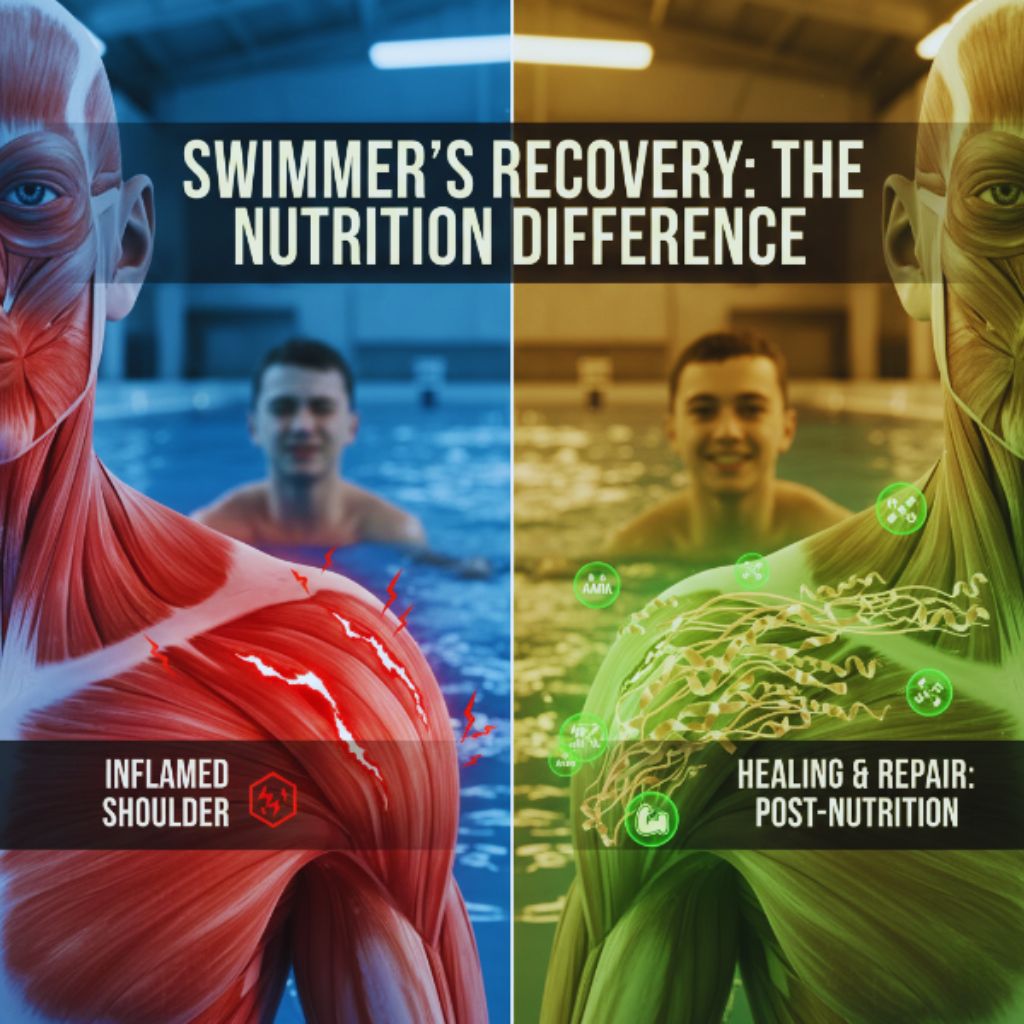
After intense activity, a child’s muscle fibers become temporarily porous — meaning they open up chemically. If the right nutrients don’t arrive fast, these open fibers turn tiny micro-tears into:
Chronic inflammation
Recurrent pain
Delayed recovery
Early overuse injuries (by age 12–14)
The problem isn’t the training. It’s the window after training.
2. The Common Parent Mistake: Sweet Snacks After Practice
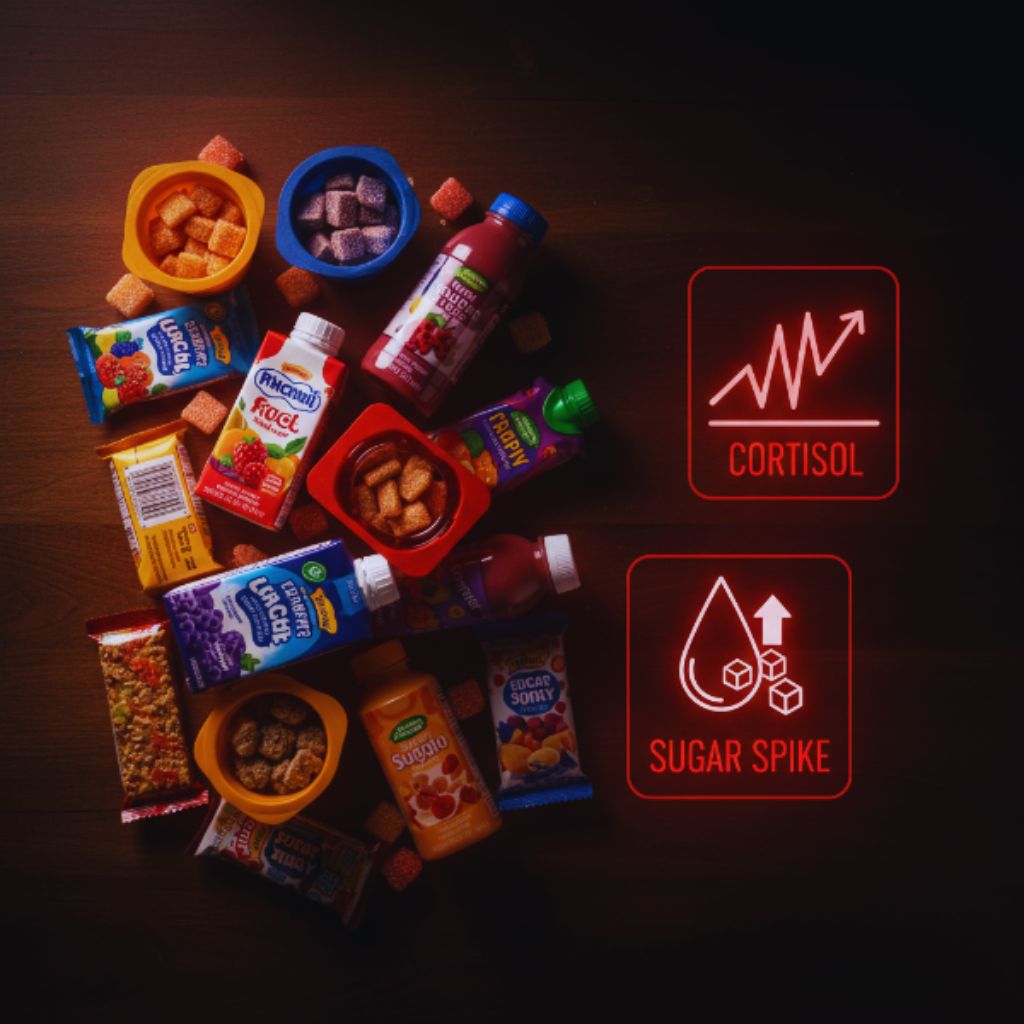
“Sugar after practice spikes cortisol — and cortisol blocks muscle repair.”
Most parents think they’re helping when they hand their child:
In 2014, researchers at the University of Southern California (USC) published a groundbreaking study showing that fasting for 72 hours (3 days) can trigger major regeneration effects in the human immune system. Here’s the science broken down simply:
1. A 72-Hour Fast Pushes the Body Into “Protective Mode”
“Day 1–3: Your body enters protective mode — conserving energy and preparing for deep immune cleanup.”
When you stop eating for about three days, your body shifts into a metabolic survival state. During this time, the body:
Burns stored fats and sugars
Conserves energy
Breaks down old or damaged immune cells
This is the body’s natural strategy for surviving long periods without food.
2. Old Immune Cells Are Destroyed (The Cleanup Phase)
“Fasting triggers the removal of old and damaged immune cells — a full system detox.”
During a prolonged fast, the number of white blood cells temporarily drops.
This may sound harmful — but it’s actually beneficial.
The drop signals the body to:
Clear out weak immune cells
Remove damaged or aging cells
Clean up cells affected by disease or inflammation
Think of it as your immune system taking out the trash.
3. Refeeding After 72 Hours Sparks Stem-Cell Regeneration
1. The Hidden “Pause Button” Most Citizens Don’t Know About
“The sentence that freezes bureaucracy in its tracks.”
He spent 18 years in administrative law. When I asked how regular people could protect themselves from deadlines, penalties, and those sudden “urgent replies” ministries love to send, he just smiled.
“Most citizens don’t realize the system has a pause button,” he said.
Then he wrote one sentence on a notepad:
“Please provide the legal basis for this request, including the specific statute and clause that obligates my response.”
2. Why This One Sentence Works
“When you ask for the statute and clause, the pressure flips.”
He explained why the sentence is so powerful.
Government agencies operate on procedure, not pressure. The moment you ask for the statute and clause, the burden flips — they must prove the request is lawful before you’re required to act.
And according to him, nearly 70% of government letters rely on implied obligation, not real legal obligation.
3. Case Study: A Family Asked for “Extra Documents”
“Most ‘urgent’ government requests collapse when legality is questioned.”
He showed me a case where a family was instructed to submit extra documents “within 5 days.”
The lawyer replied with that same single sentence.
The office took 46 days to respond because they had to confirm whether the demand even had a legal foundation.
It didn’t.
The request quietly disappeared.
4. When a Business Owner Was Threatened With Fines
“Bureaucracy runs fast—until you ask it to prove itself.”
Another case involved a business owner who was threatened with penalties unless he filed “updated records.”
Same sentence. Same outcome.
The agency put the entire penalty process on hold when its own auditor couldn’t locate the statutory requirement.
“Government systems hate uncertainty,” the lawyer said. “The moment you demand legality, everything slows down.”
5. His Final Words Were Ice-Cold
“Every citizen has a pause button. Most just never press it.”
His last line stayed with me:
“Bureaucracy feeds on citizens who react. It stalls when citizens require proof.”