1. The German Bedtime Secret: No Battles, Just Rhythm
German parents don’t force bedtime — they set the tone for it. Peace is something children copy, not obey.
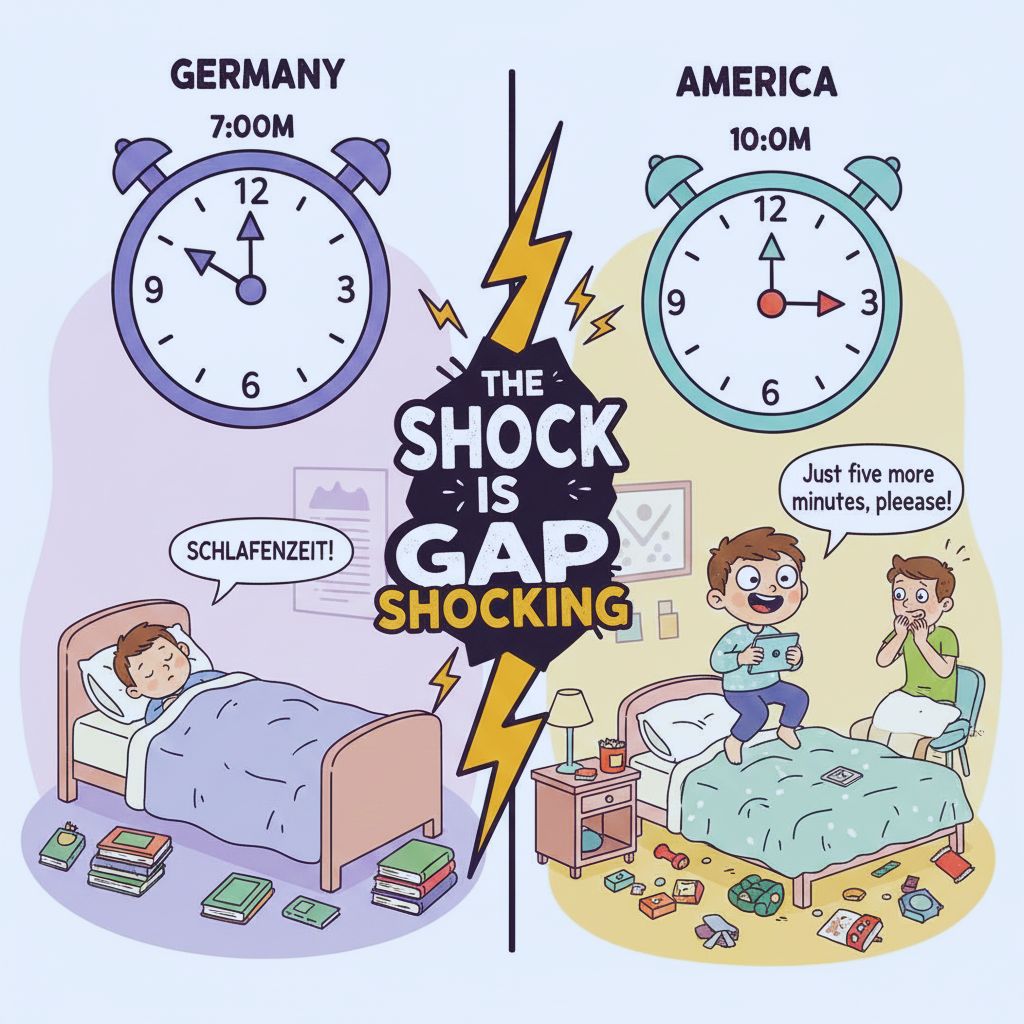
Every evening, German parents skip the bedtime battle. No timer, no bargaining. They dim lights, talk softer, and treat night as a shared slowdown—not an order. The power lies in atmosphere, not commands. One Hamburg mother said calmly, “You can’t force peace, you can only model it.” Children copy rhythms faster than they obey tone.
2. The Rule Isn’t Sleep — It’s Serenity
A calm room teaches more discipline than any strict rule ever could. Children sleep where the environment whispers “rest.”
The German approach focuses less on “Go to bed now” and more on resetting the home energy. Adults avoid screens, arguments, and loud habits. A local teacher explained, “Kids learn calm from repetition.” When the house itself slows down, kids follow without resistance. The real problem in many homes? Overstimulation ruins discipline long before lack of rules does.
3. Trust Teaches Responsibility Early
Trust grows resilience. In Berlin, parents sip coffee while babies nap outside — because calm creates safety.
This mindset goes beyond bedtime. In Berlin, strollers with sleeping babies line café walls while parents sip coffee inside. Windows open, eyes glancing occasionally. The subtle message: Safety grows from trust, not surveillance. When control fades, responsibility matures—even in toddlers.
4. Space, Not Stress, When a Child Cries
German parents don’t rush to “fix” every cry. They give space — so kids learn to regulate, not react.
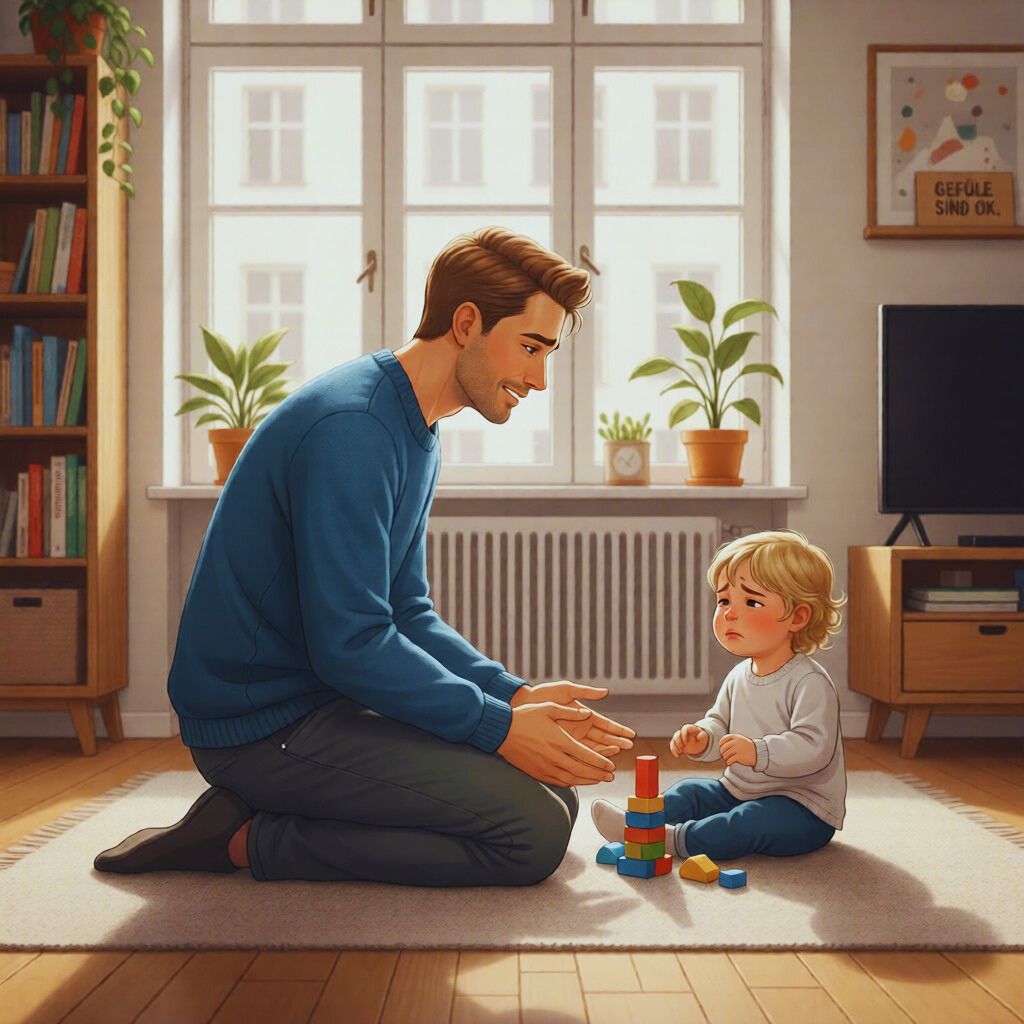
When a child cries, German parents pause. Not neglect—space. One father told me, “We want them to regulate, not react.” This builds an invisible muscle: patience under pressure. These kids can nap anywhere, handle noise, and shift routines without melting down.
5. The Science Behind the Calm: What Max Planck Researchers Found
Science agrees: consistent, peaceful evenings shape calmer brains. Resilience is built long before bedtime.
Scientists at the Max Planck Institute discovered that consistent rest rewires the stress hormone loop, making young brains calmer under daily chaos. Resilience doesn’t magically appear during challenge— it’s practiced in ordinary evenings.
Intelligence Programmer – Most of us think we know what “being monitored” looks like — the tiny microphone icon, the green camera dot, or the suspicious app permission. But according to a former intelligence programmer, those symbols are just decoys.
He told me the real warning isn’t a microphone or camera icon at all. It’s something far quieter — and far easier to miss.
1. “The Real Sign Isn’t an Icon — It’s a Freeze.”
“When your phone freezes for a split second, it might be more than bad signal — it could be data rerouting.”
He leaned in and said, “If your network indicator freezes for a split second while nothing is loading, you’re being listened to.”
That tiny hiccup, that momentary pause we blame on poor signal, might actually be the system routing your data through a secondary process.
Most people never notice it — because they’re not looking for it.
2. Background Capture Creates Latency, Not Icons
“Keyboard lag can be a hidden sign of background listening or packet duplication.”
He explained how operating systems behave during background data capture:
No pop-up
No green dot
No new icon
Instead, the OS shows delay.
“The system can hide icons. It can’t hide latency,” he said.
A half-second keyboard stall, or a pause before a voice note starts recording, can mean a secondary listener has been activated.
3. He Discovered It While Debugging Duplicated Packets
“A warm phone during simple texting? Professionals call that a surveillance red flag.”
The unnerving part?
He didn’t learn this from theory — he saw it in the logs.
While debugging packet duplication for intercepted traffic, his team marked duplicated data with a silent internal flag. Users couldn’t see anything…
…but the CPU spike was impossible to hide.
Every time duplication started, the phone froze for roughly 140–220 milliseconds.
A tiny pause. But always there.
4. “Consumers Look for Dots. Professionals Look for Patterns.”
“The real warning sign isn’t an icon — it’s the system stall you weren’t meant to notice.”
We tend to look for obvious signs: permissions, icons, notifications, camera lights.
But he said real surveillance leaves different clues:
Phone heating up during a simple text chat
Battery dropping during idle time
Audio apps taking longer to close
Keyboard lag in encrypted messaging apps
Random half-second freezes with no loading in progress
“Tracking isn’t visible,” he said. “It’s measurable.”
5. “Surveillance Doesn’t Announce Itself. It Interrupts You.”
“Surveillance doesn’t announce itself. It interrupts you.”
His last line was the one that stayed with me:
“Surveillance doesn’t announce itself. It interrupts you.”
So the next time your phone freezes for a split second while absolutely nothing is loading…
Don’t look for an icon. Look for the pattern.
Because that might be the only signal the system can’t hide.
The silent habit that reveals commitment, stability, and long-term reliability.
When people talk about relationships, they obsess over chemistry, confidence, ambition, or passion. But after 30 years of working with couples, a relationship therapist discovered something far more accurate:
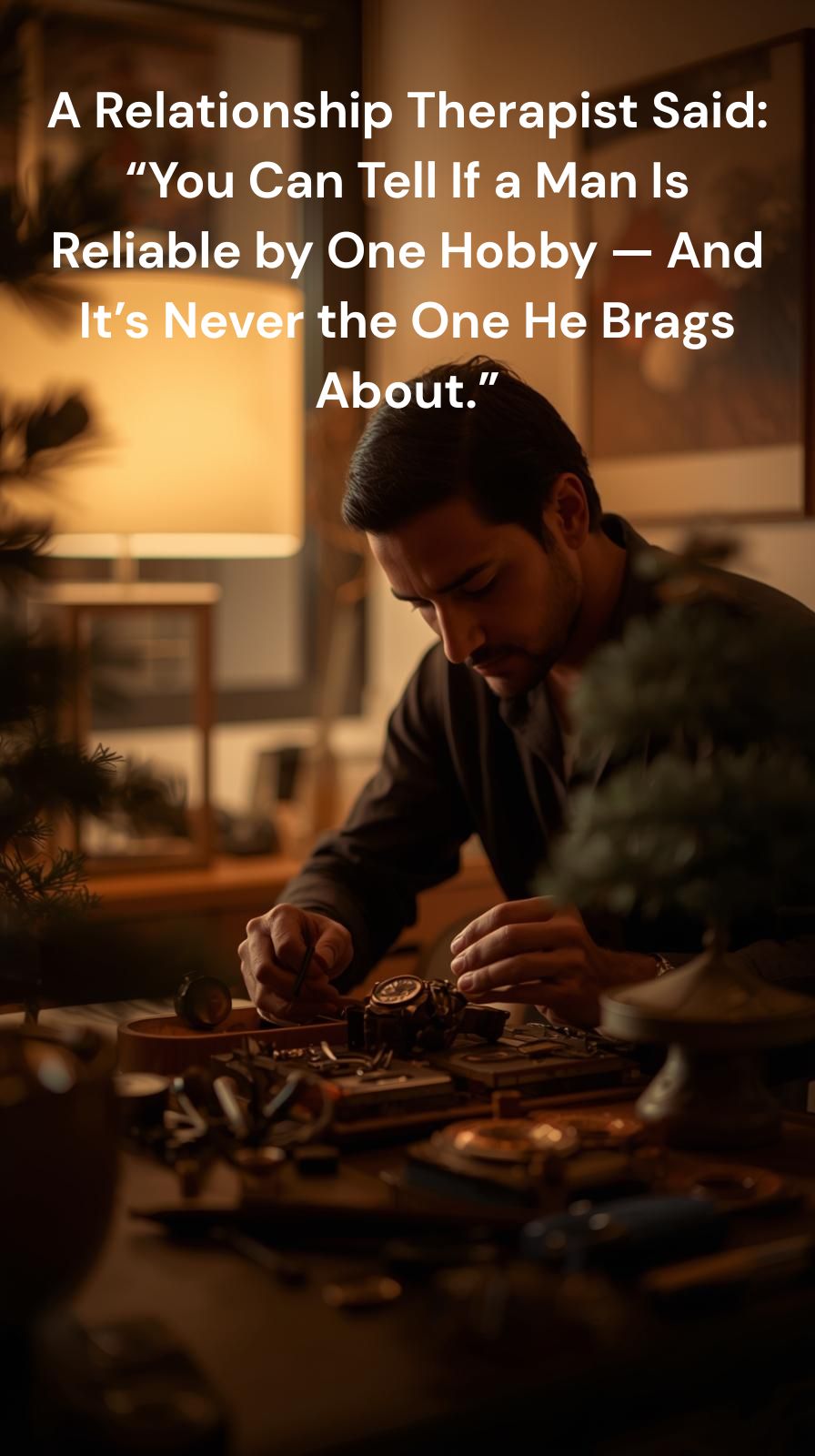
“Don’t look at the hobby he talks about — look at the one he repeats when no one praises him for it.”
This insight changes everything you think you know about judging reliability early in a relationship.
1. The “Silent Discipline Test” — How Reliable Men Reveal Themselves Without Knowing It
“A man’s real character shows in what he repeats when no one is watching.”
The therapist called it the silent discipline test.
Reliable men always have one activity they return to consistently — even when:
nobody compliments them,
nobody posts it on social media,
nobody rewards them,
nobody claps for them.
This quiet, private hobby reveals self-discipline, consistency, and inner stability — the traits that make men reliable partners.
She described them:
A man who keeps a small reading log.
A man who fixes things around the house without being asked.
A man who trains at the same hour every day.
A man who tends to plants every morning.
A man who journals consistently.
“It’s the hobby with no audience,” she said. “Whatever a man does without applause is the real blueprint of his character.”
2. Marco: The Man Who Looked Reliable but Lived in Chaos
“His only consistent habit was avoidance — and it showed up everywhere.”
She shared the story of a client named Marco.
On dates, Marco bragged endlessly:
about boxing,
about cars,
about money,
about future plans.
His wife assumed this confidence meant stability.
But the truth?
The only hobby he consistently practiced alone was scrolling on his phone until 3 a.m.
He skipped workouts.
He left projects half-finished.
He made promises he forgot.
He created excitement, not follow-through.
The therapist said:
“His silent hobby was avoidance — and that’s why nothing in their life held together.”
Avoidant men appear fun at first. But chaos is their default mode. And chaos eventually infects the relationship.
A man’s private habits will always leak into his partnership.
3. Daniel: The Man Whose Quiet Hobby Made His Marriage Unbreakable
“The man who returns to a craft returns to people the same way.”
Then there was Daniel — the opposite type.
He never bragged.
He never tried to impress.
He never listed achievements.
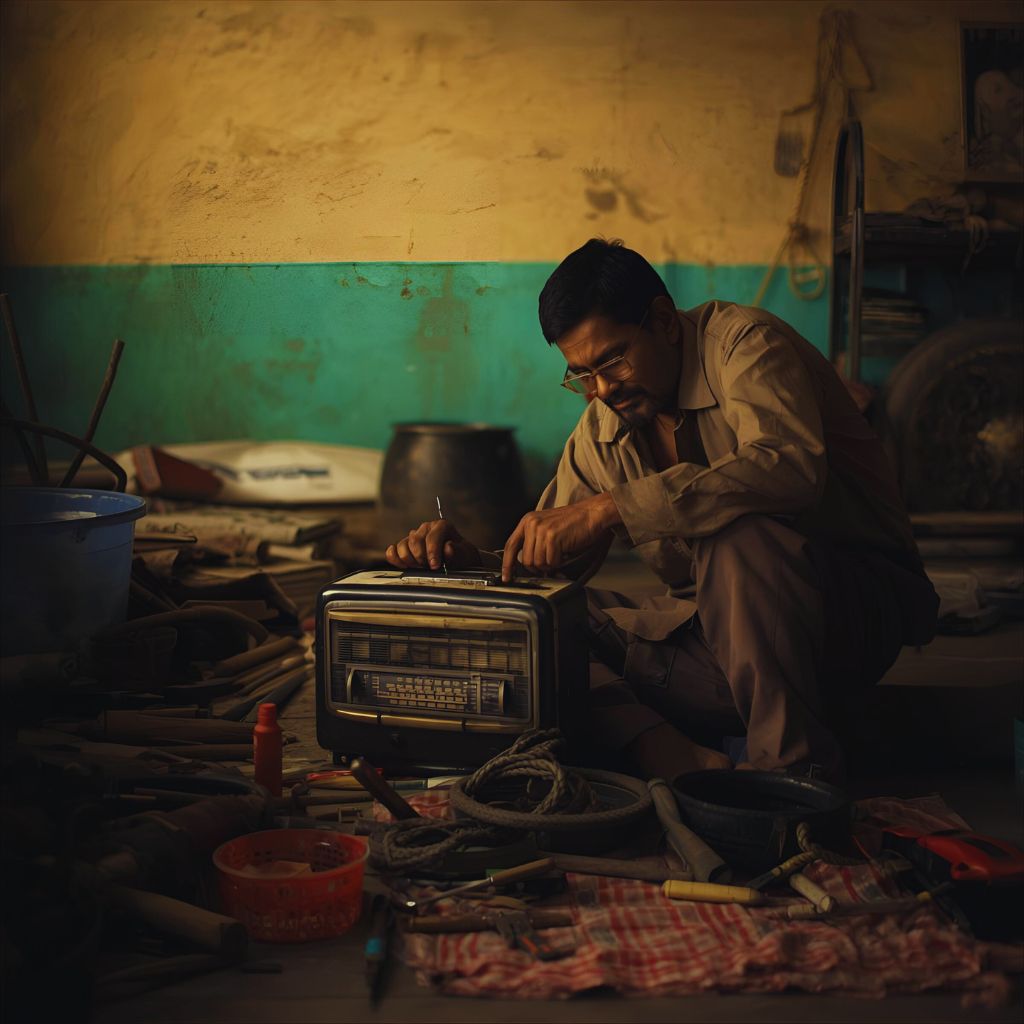
But for 14 years, he repaired old radios in his garage.
Same hour.
Same ritual.
Same quiet focus.
Nobody praised him.
Nobody watched him.
Nobody cared.
But that consistency shaped him.
The therapist explained:
“A man who returns to something patiently returns to people the same way.”
Patience in a hobby becomes patience in a marriage. Consistency in routine becomes consistency in commitment. Steadiness in habits becomes steadiness in crises.
Daniel’s marriage survived:
layoffs,
illness,
financial problems,
family stress.
Not because he was strong or brilliant — but because his nervous system was trained for steadiness, not excitement.
Excitement fades. Discipline stays. And disciplined men make reliable partners.
4. The Brutal Truth: His Loud Hobbies Show His Ego — His Quiet Hobby Shows His Future
“His loud hobbies show his ego — his quiet hobby shows his future.”
The therapist ended with a line that should be printed on every dating app:
“A man’s loud hobbies show his ego. His quiet hobby shows his future.”
Anyone can talk about passion.
Anyone can perform stability.
Anyone can promise reliability.
But what a man does when no one is watching reveals:
if he can commit,
if he can stay consistent,
if he can show up even when it’s boring,
if he follows through,
if he builds rather than avoids,
if he can be trusted when life gets hard.
**Don’t ask him what he loves doing.
Ask him what he keeps doing.**
Because that quiet habit — not the bragging, not the performance, not the storytelling — is the behavior you’ll rely on during:
arguments,
bills,
illness,
responsibilities,
parenting,
stress,
real life.
Reliability is not glamorous. It’s not loud. It’s not flashy.
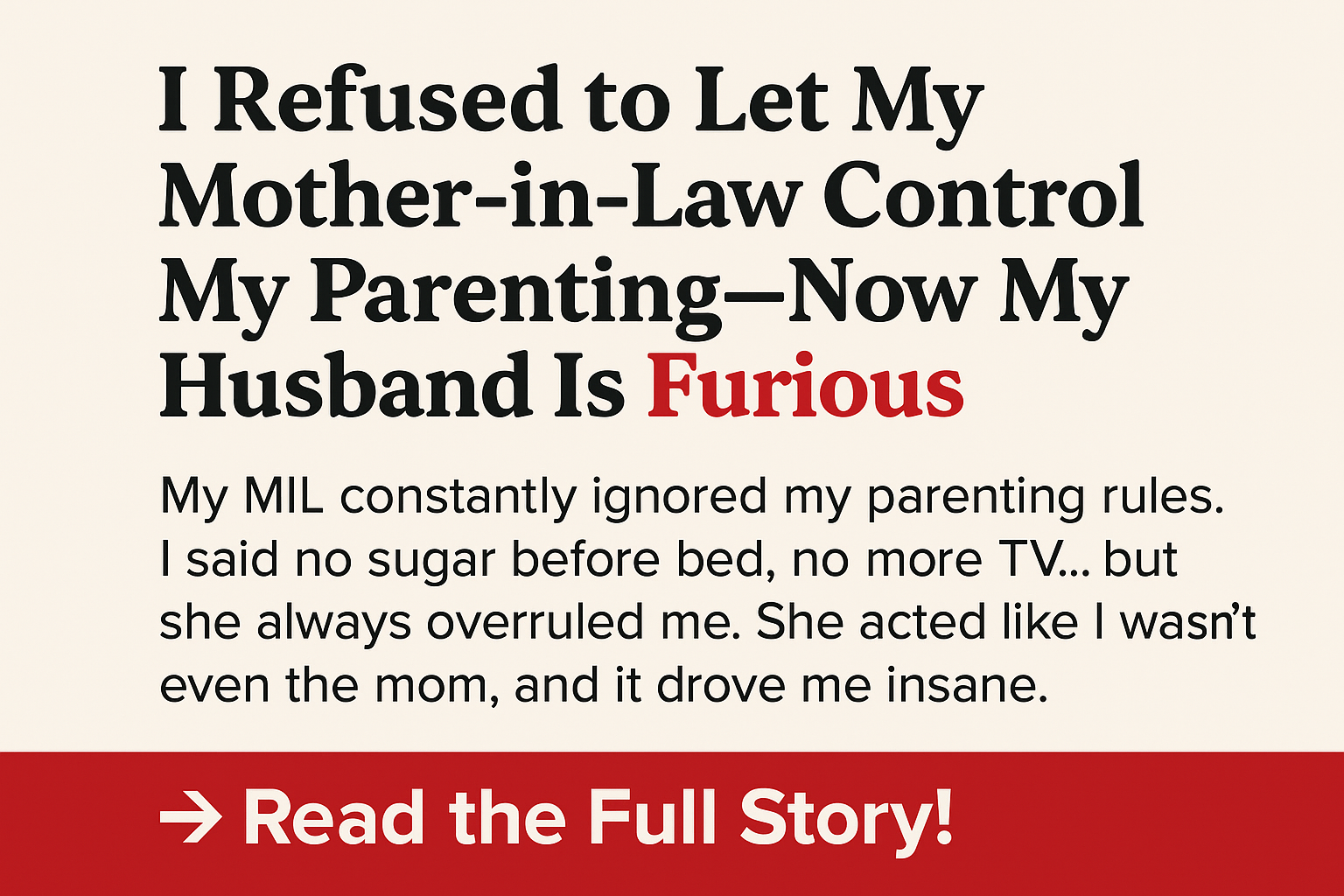
Family drama always feels like something out of a soap opera… until it happens to you. This is my real-life family conflict story about how my marriage got shaken the moment I put my foot down against my controlling mother-in-law.
When “Advice” Turned Into Control
At first, it seemed harmless. My mother-in-law would give me “parenting tips.” She’d comment on how I feed my baby, how I put her to sleep, and even how I talk to her. In the beginning, I brushed it off as harmless advice. After all, she raised her son—my husband—and he turned out fine, right?
But soon, her advice turned into full-blown control tactics. She criticized every choice I made: from breastfeeding vs. bottle, to bedtime routines, even down to the clothes my baby wore. Suddenly, I felt like I wasn’t the mom anymore. I felt like a babysitter following someone else’s rules.
The Breaking Point
The final straw came when she told me—no, demanded—that I stop taking my daughter to daycare because “a real mother should stay home.” I snapped.
I told her firmly: “I’m her mother. I make the decisions. Not you.”
Her face turned red, and she stormed out of the room. For the first time, I had drawn a line.
My Husband’s Reaction
That evening, my husband came home furious. His words cut deep: “You embarrassed my mother. You disrespected her in our own house!”
I stood there in shock. Instead of supporting me, he defended her. My voice shook as I said: “No, I stood up for myself. For our daughter. For the kind of parents we want to be. I’m not raising my child under someone else’s rulebook.”
The Fallout
Now the tension is unbearable. My husband barely speaks to me without bringing up his mother. She hasn’t visited since, but she texts him constantly, fueling the fire. Every family dinner feels like walking on eggshells.
This mother-in-law conflict has turned into a marriage struggle I never expected. I keep asking myself—am I the villain here for standing my ground? Or is this the price every mom pays when she refuses to let toxic in-laws dictate her parenting?
Why Stories Like This Matter
These kinds of family drama stories resonate because so many women secretly live them. They remind us of the impossible balance between respecting traditions, managing marriage struggles, and protecting our children.
And if you’ve ever faced something similar, you know one thing for sure: drawing boundaries is hard, but losing yourself as a parent is even harder.
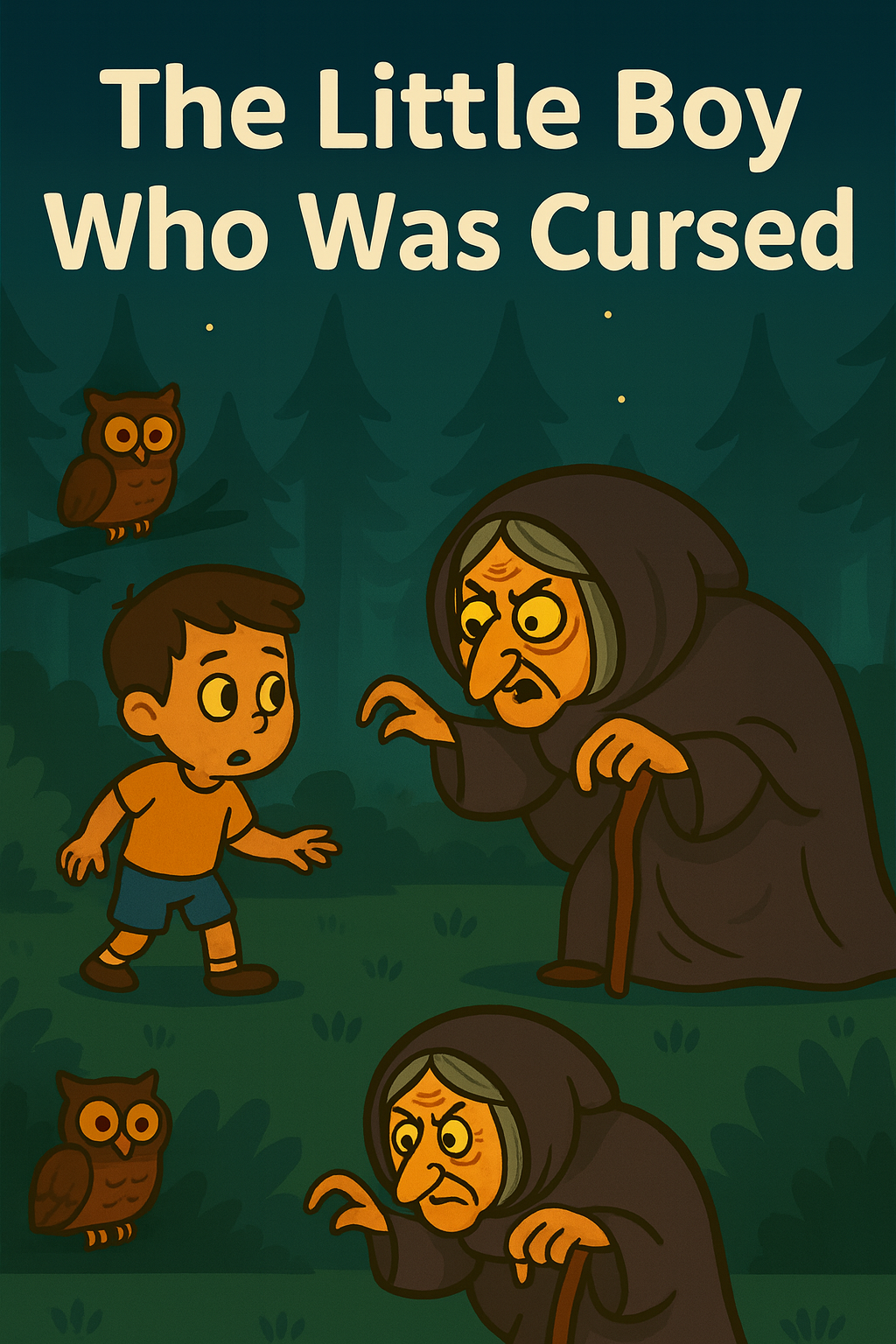
Hush now, children, come closer to the fire… let me tell you a story you won’t forget. It is the tale of a little boy who carried a curse upon his shoulders, a curse so strange that even the stars leaned closer to listen…
Once Upon a Time…
Long ago, in a quiet village surrounded by dark forests and golden fields, there lived a boy named Aarav. He wasn’t like the other children. Oh no, whenever Aarav laughed, the flowers closed instead of blooming. Whenever he cried, the river near the village began to overflow. The villagers whispered, “He is cursed!”
Now, children, imagine how lonely the poor boy felt. No one wanted to play with him. Mothers pulled their children away, and fathers locked their doors at night. The whole world seemed afraid of a small boy who longed only for friendship.
The Secret in the Forest
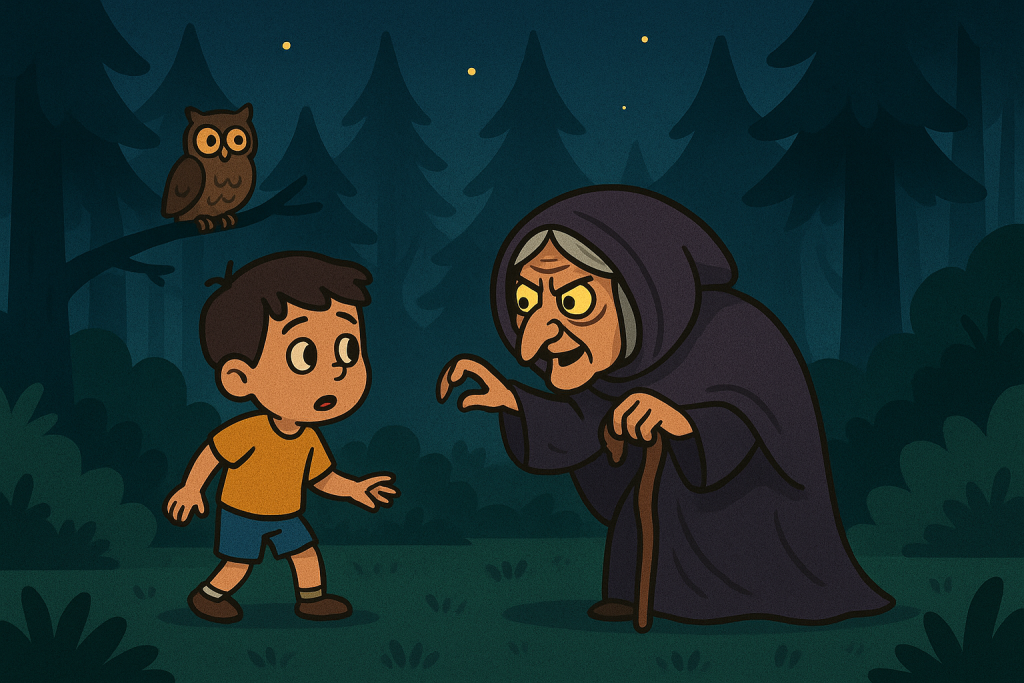
One evening, unable to bear the silence, Aarav wandered into the forest. The owls hooted, and the wind whistled through the trees. Suddenly, a crooked old woman appeared, her back bent like a bow, her eyes glowing like fireflies.
“Little one,” she croaked, “a curse is nothing but a story people choose to believe. But if you dare, you can change your story.”
She gave Aarav a task: find the “Heart of Dawn,” a hidden light that could turn curses into blessings.
The Journey of Courage
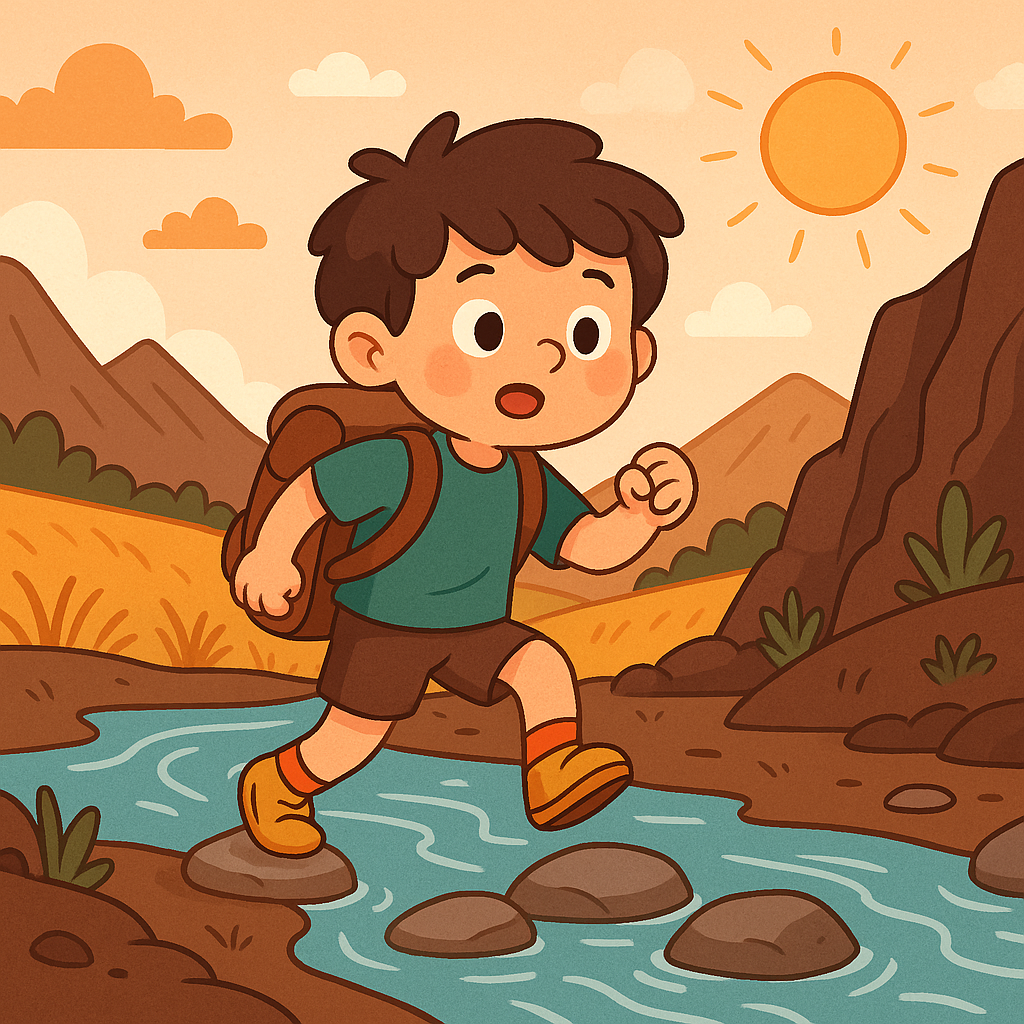
So Aarav walked through nights colder than ice and days hotter than fire. He crossed rivers that tried to drown him, and mountains that mocked his small steps. But with every challenge, his heart grew stronger.
Children, do you know the secret here? It wasn’t the curse making him different. It was courage, the kind that few people ever discover.
The Ending… Or a Beginning?
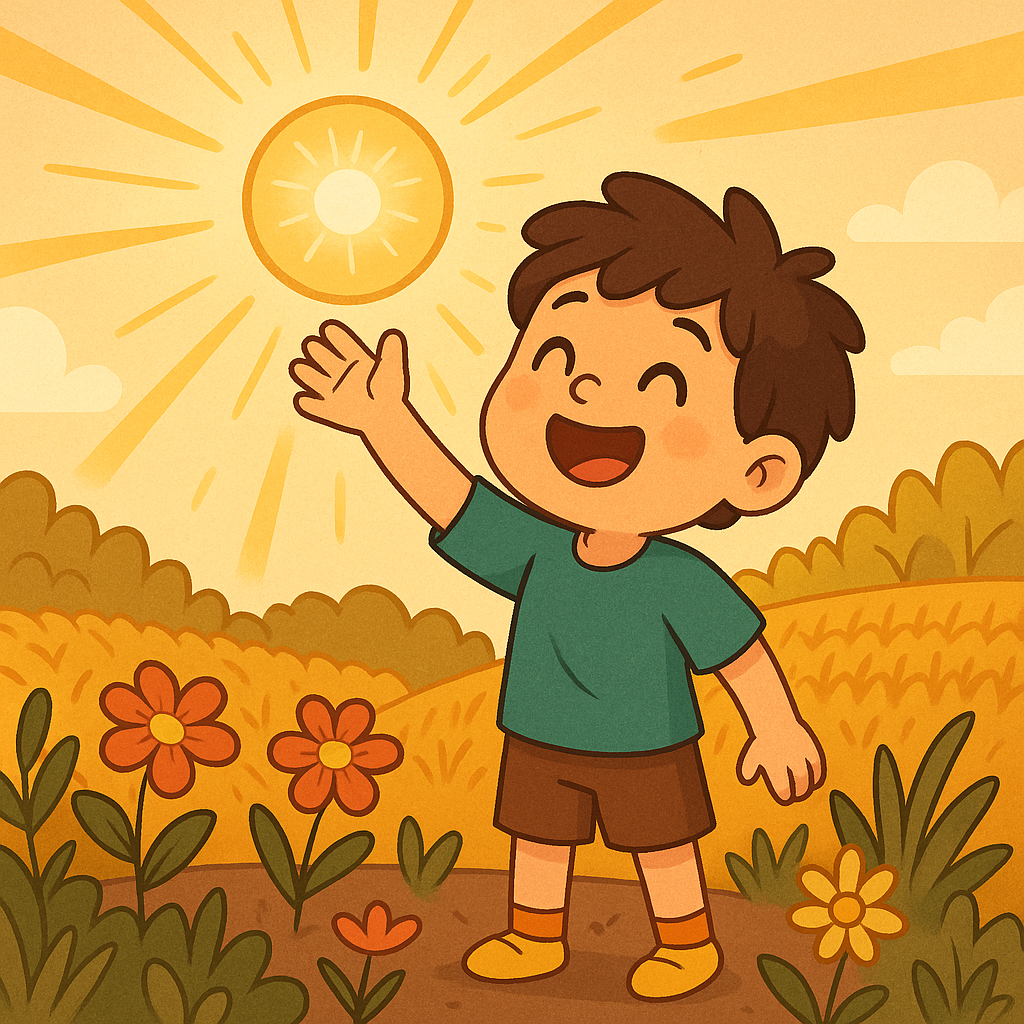
When Aarav finally touched the “Heart of Dawn,” the sky split with light. His laughter made flowers bloom at last, and his tears watered the earth so crops grew greener than ever. The villagers no longer whispered in fear—they sang his name in gratitude.
But listen carefully, my little ones: some say the boy still walks the earth, turning pain into strength, curses into blessings. If you ever feel lonely or misunderstood, perhaps Aarav’s story is still unfolding… through you.
Moral of the Story
Every curse can become a gift if you face it with courage. A story of mystery and wonder becomes a lesson for life.
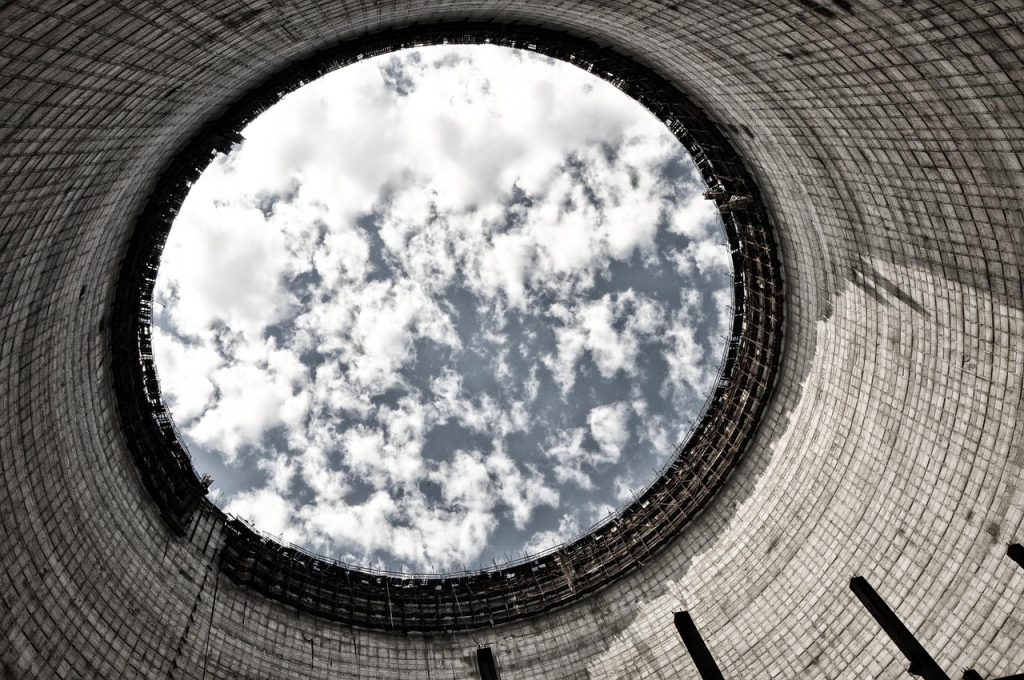
On April 26, 1986, the world woke up to one of the deadliest nuclear disasters in history — the Chernobyl explosion. But while the headlines focused on the reactor, the radiation, and the political silence, inside a small hospital in Pripyat, another story unfolded — one of courage, sacrifice, and silent suffering. This is the story of Chernobyl through the eyes of a nurse who lived it.
The Night the Reactor Exploded
It was an ordinary Saturday night in Pripyat. Families slept in their Soviet-style apartments, children dreamed of school trips, and I prepared for another night shift at Pripyat City Hospital.
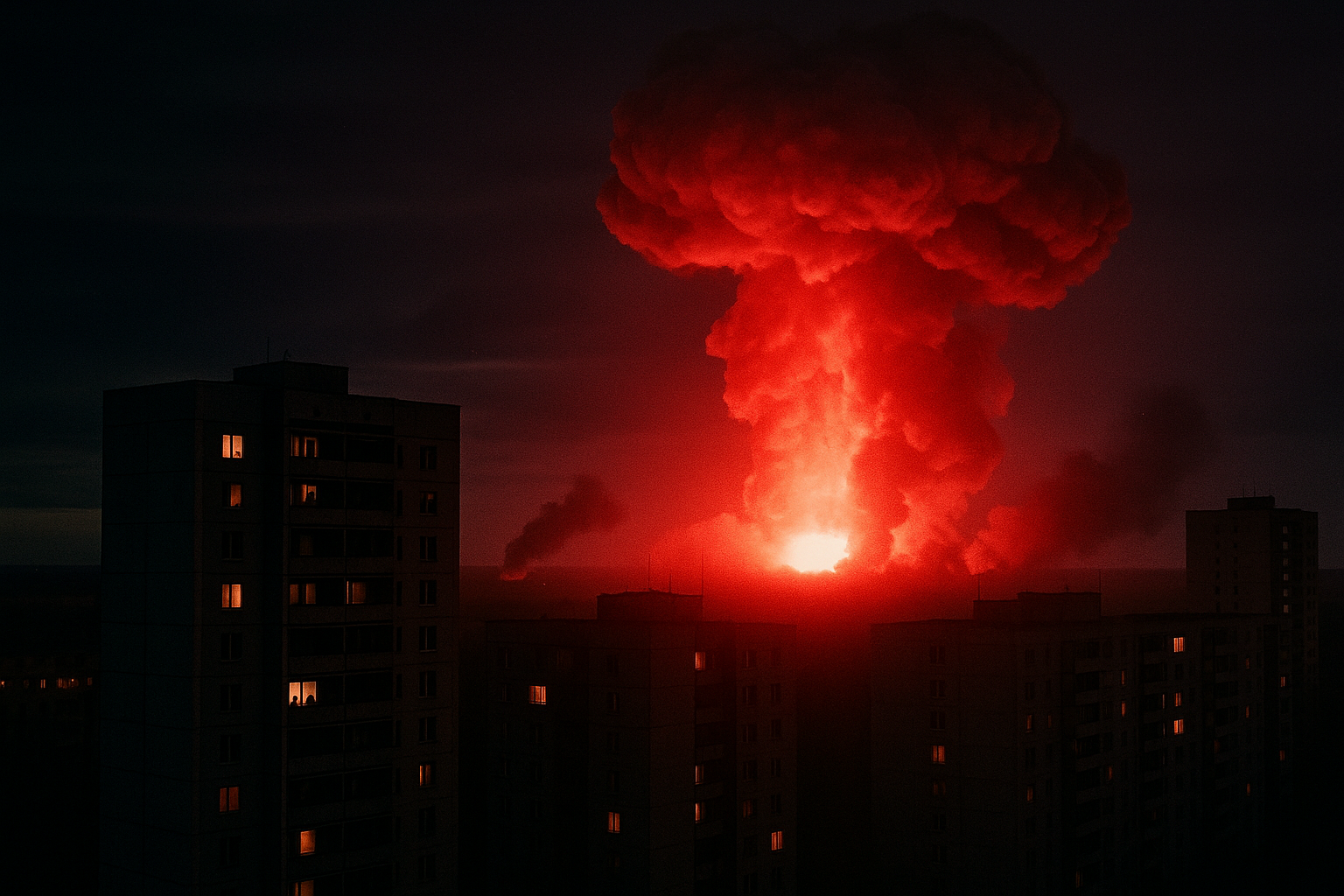
At 1:23 a.m., Reactor 4 at the Chernobyl Nuclear Power Plant exploded. The blast released more than 400 times the radiation of the Hiroshima bomb. But in those first hours, we didn’t know that.
Just after 1:30, the phone rang. “Send every available nurse. There’s been an accident at the plant.”
We thought it was a fire. Industrial accidents weren’t unusual. But nothing prepared us for what arrived next.
The Firefighters Arrive
The first patients were the firefighters — the heroes who rushed to the burning reactor without protective gear. They entered the control rooms and climbed onto the roof, trying to douse the flames with water hoses, unaware they were standing on lethal levels of radiation.
When they stumbled into the hospital, I was shocked:
Their faces were swollen, skin reddened like severe sunburn.
They vomited repeatedly, clutching their stomachs.
Some whispered about a strange metallic taste in their mouths.
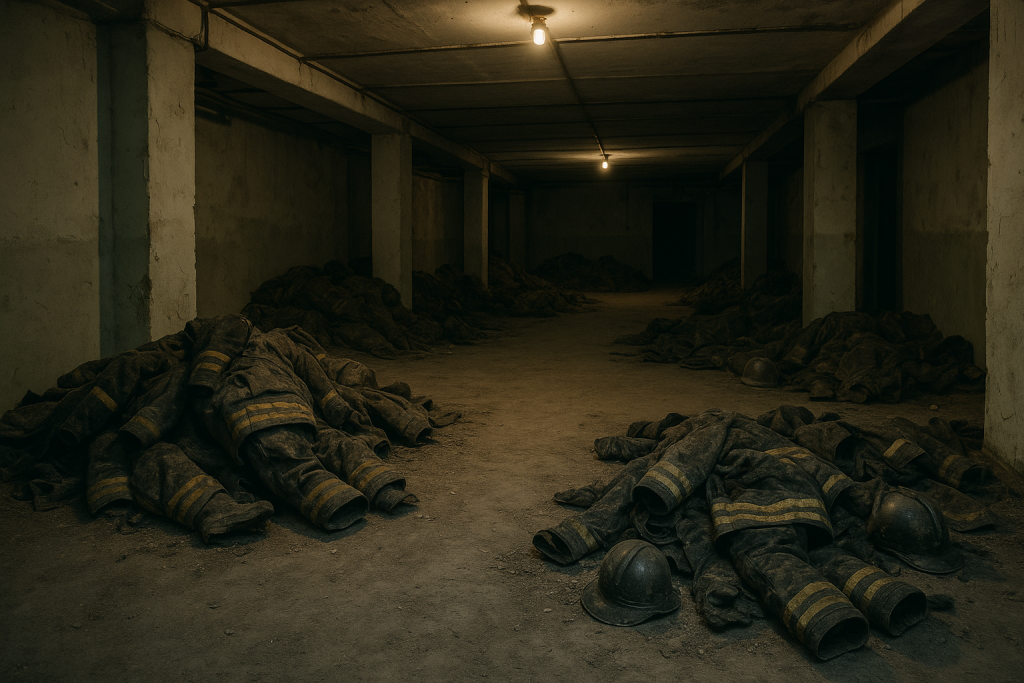
We stripped off their uniforms, the smell of smoke and graphite still clinging to the fabric. Those clothes were thrown into the hospital basement, where they remain today — so radioactive that they can never be touched again.
I remember one young firefighter asking me, “Sister, it’s just smoke inhalation, right? I’ll be fine?” I wanted to believe him.
Chaos in the Hospital Corridors
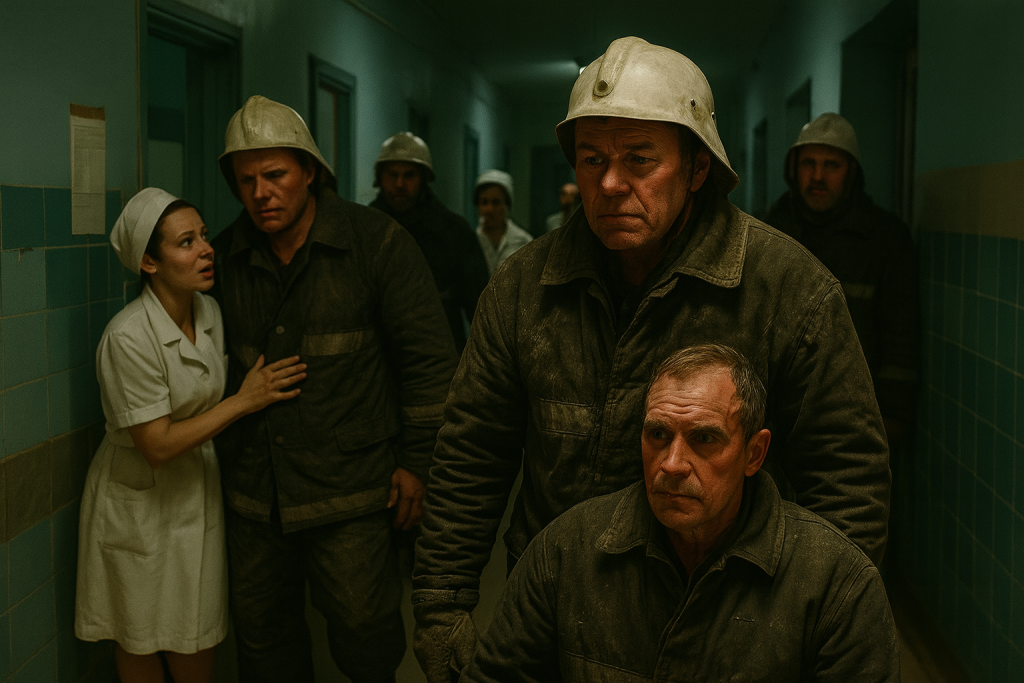
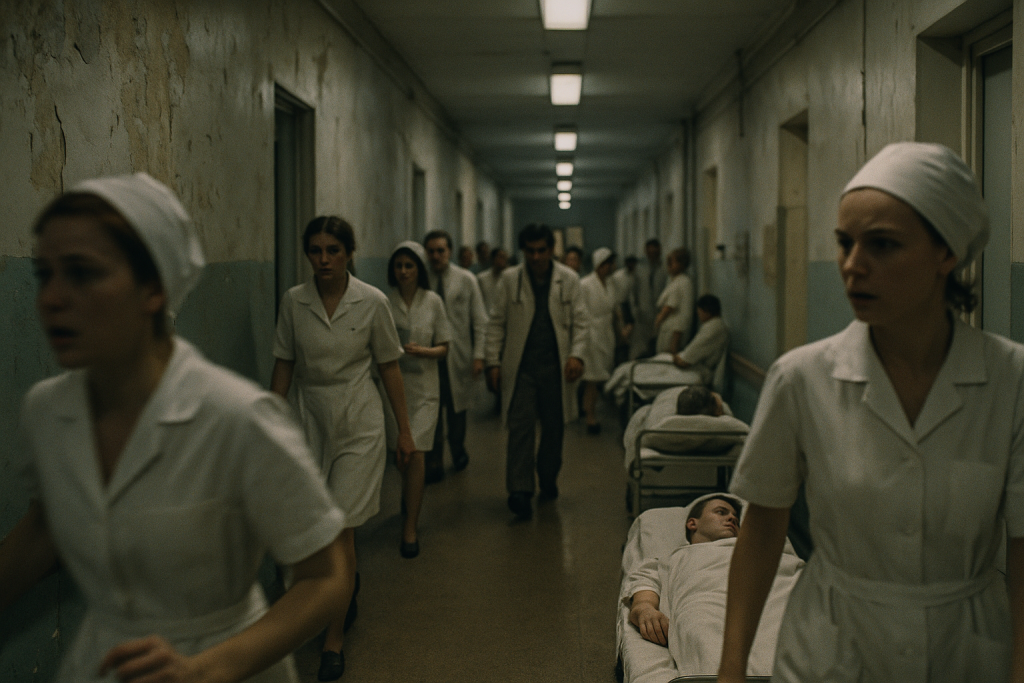
By 4 a.m., the hospital was overflowing. Plant workers, security guards, and firefighters kept arriving, all with the same symptoms: nausea, dizziness, burns that seemed to deepen by the minute.
We had no protective suits. Only cotton gowns and simple masks. The doctors worked tirelessly, inserting IVs, rinsing burns, giving oxygen. But nothing worked. The radiation was inside them, eating them alive.
I carried trays of medicines, wiped blood from the floors, and tried to comfort them as they writhed in pain. Some screamed, others went eerily silent.
One nurse fainted from exhaustion. Another collapsed from exposure. None of us truly understood what we were fighting.
Realization: The Reactor Had Exploded
By morning, rumors began to spread. Doctors whispered that the unthinkable had happened — the reactor core had exploded.
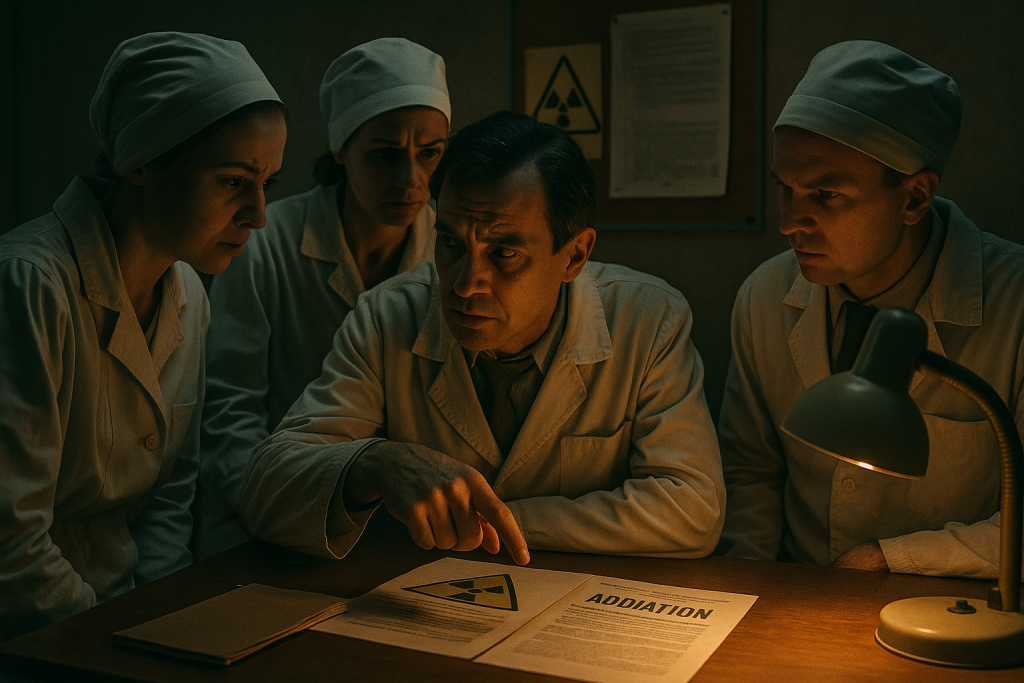
That meant the “invisible killer” was radiation itself. We were treating patients in contaminated wards, touching radioactive skin, and washing wounds with radioactive water.
Our hands blistered. Our hair started to fall. But we kept working. Nurses are trained not to abandon their patients, no matter the cost.
April 27: The Evacuation of Pripyat
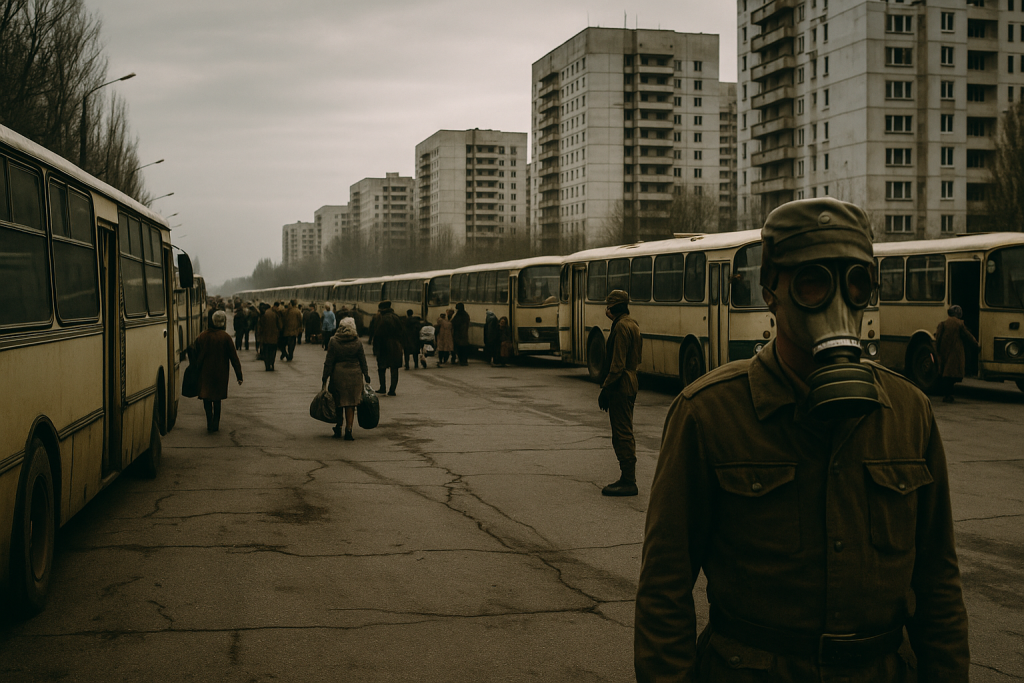
Families grabbed bread, toys, and blankets, believing they’d return in a few days. Pets were left behind. Photo albums stayed on shelves.
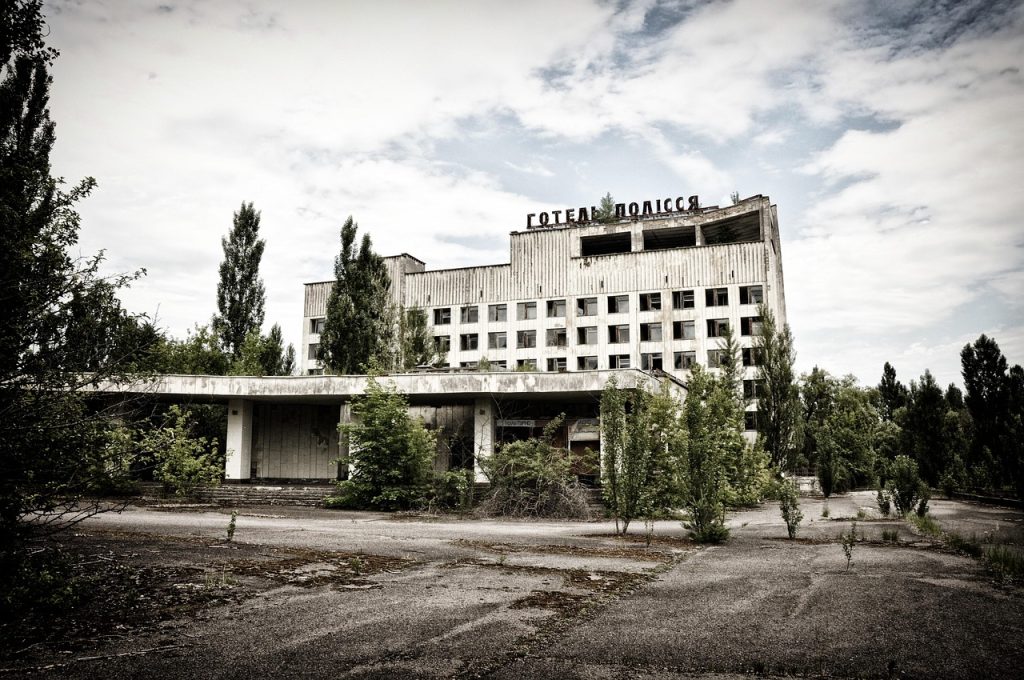
From the hospital window, I watched entire neighborhoods climb aboard the buses. Mothers held crying babies. Children clutched schoolbags. Nobody knew they would never come back. Pripyat became a ghost city within 36 hours.
I stayed behind with the patients. My duty was with those who couldn’t leave.
The Hidden Agony
The firefighters deteriorated rapidly. Their skin peeled in sheets, fevers rose uncontrollably, and their hair came out in clumps. We held their hands, changed their sheets, whispered comfort even when we knew there was no hope.
Within weeks, most of them died. Their bodies were so radioactive that they were buried in zinc-lined coffins under concrete slabs. Even in death, they were dangerous to the living.
One of them was Vasily Ignatenko, only 25 years old, who left behind his young wife Lyudmila. She stayed by his bedside despite being told to stay away. Years later, she said: “They told me I shouldn’t touch him. But how could I not? He was my husband.”
The Basement of Death
The hospital basement became infamous. That’s where we dumped the firefighters’ uniforms. Boots, jackets, helmets — all glowing with invisible poison. Even today, standing near that basement is considered deadly.
I remember walking past the piles of clothing, the smell of smoke still strong, knowing that those pieces of fabric had absorbed enough radiation to kill.
We were working inside a hospital that had turned into a radioactive grave.
Life After Chernobyl
I left Pripyat with the evacuation convoys. My body was weak, my skin burned, my hair thin. Many nurses, doctors, and medical staff later died of radiation-induced illnesses. Some survived but never fully recovered.
For years, Chernobyl haunted my dreams. The faces of the firefighters, the cries of the patients, the empty streets of Pripyat — they are etched in memory.
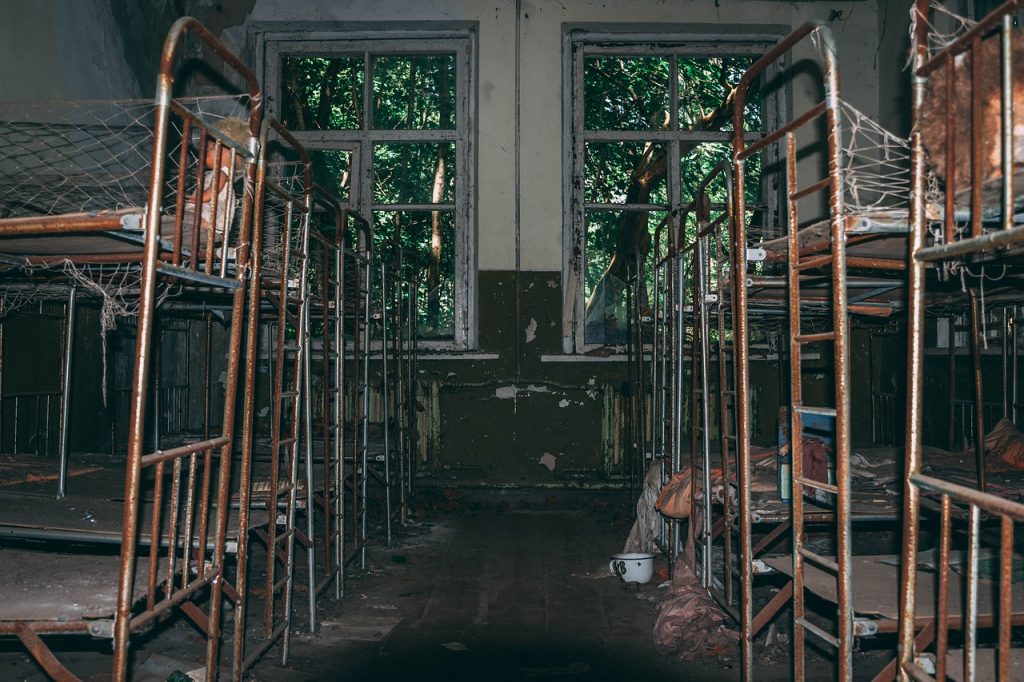
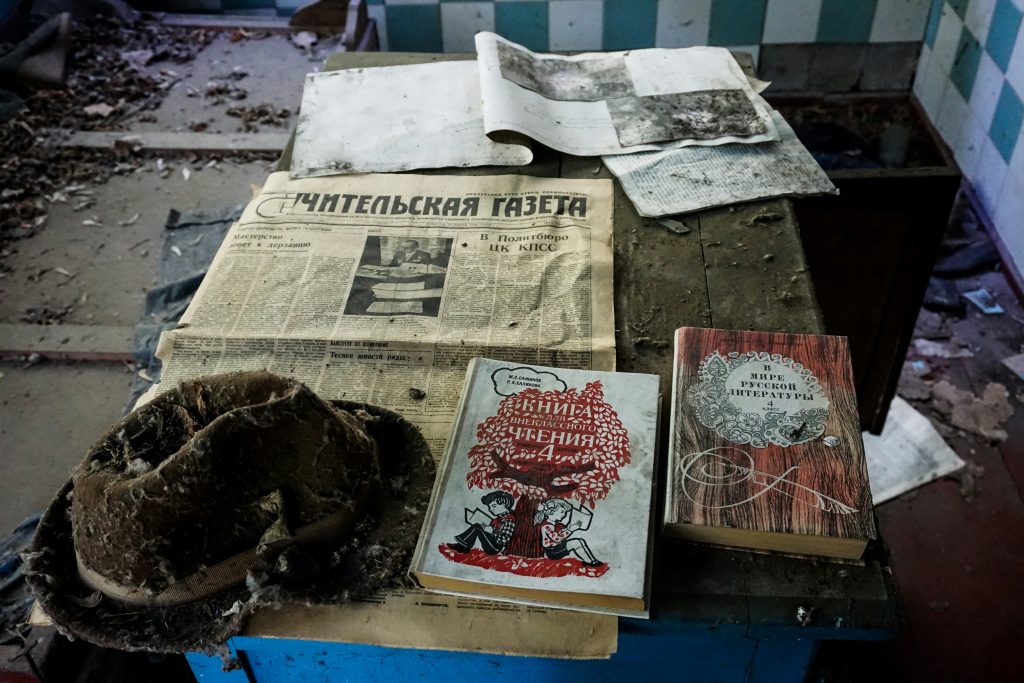
Today, when I see documentaries or photographs of the Exclusion Zone, it feels like looking into a frozen time capsule. Apartments still have toys on the floor. Classrooms still have open notebooks. But no children returned to finish their lessons.
Legacy of Chernobyl
Chernobyl was not just a nuclear accident — it was a human tragedy. More than 300,000 people were evacuated, thousands were exposed to radiation, and entire towns vanished from the map.
The nurses and doctors who stayed behind are rarely remembered, but they were the frontline soldiers in a war against something they couldn’t see.
Standing in Pripyat’s abandoned hospital today, silence fills the corridors. But if you listen closely, you can almost hear the echoes — footsteps of nurses rushing to save lives, whispers of patients asking for water, the distant wail of buses leaving the city forever.
Chernobyl is a wound carved into history. And through the eyes of those who lived it, we learn one truth: when disaster strikes, humanity is measured not in machines or reactors, but in compassion, sacrifice, and the will to stand beside the suffering — no matter the cost.
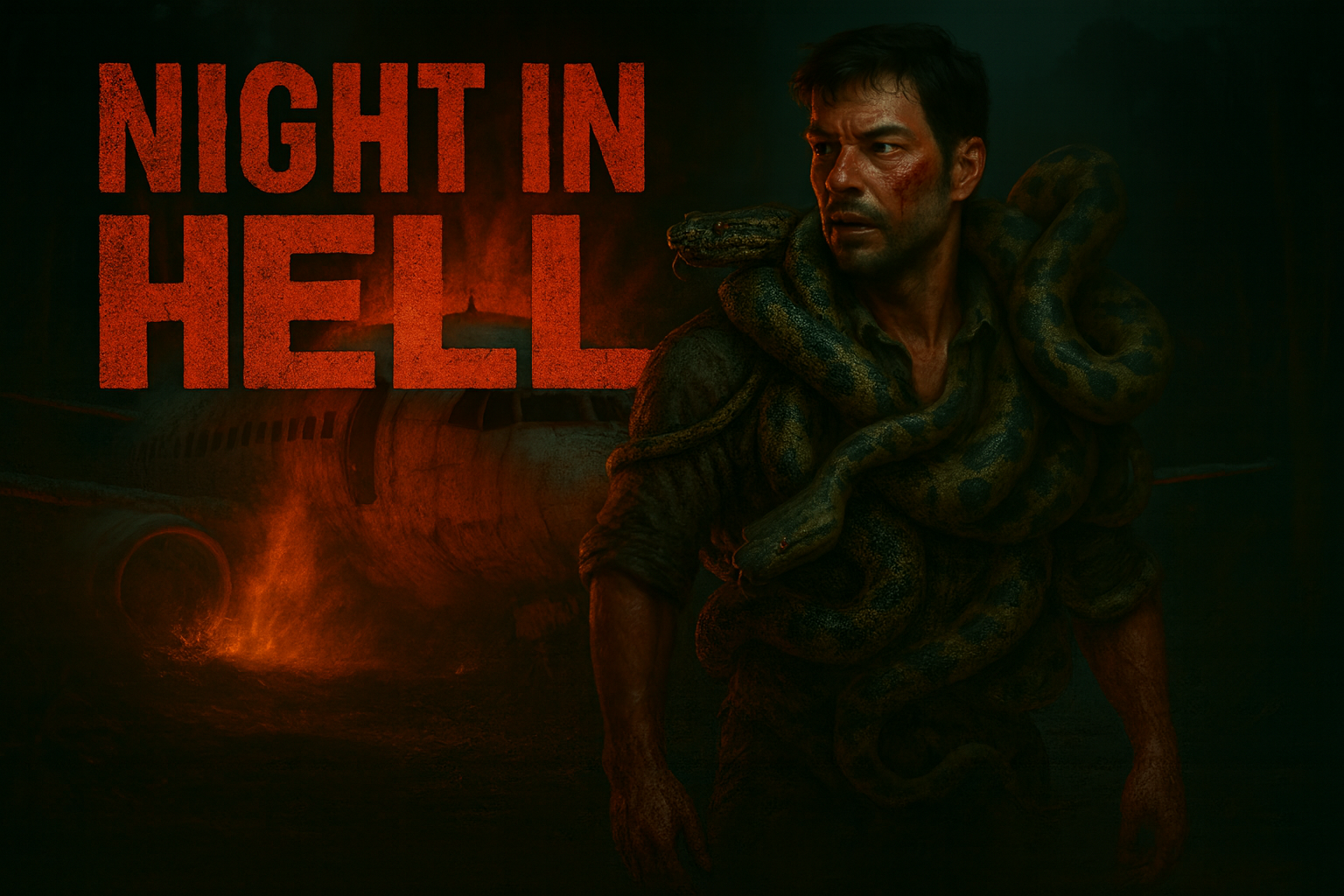
This isn’t a survival show. There were no cameras, no safety crew, no commercial breaks. Just me, a broken plane, and a jungle that didn’t care if I lived or died. I still wonder—was I wrong to leave the wreckage and step into the unknown? Or was that the only reason I’m alive to tell you this story?
The Moment Everything Fell Apart
The sky didn’t just go dark—it split open.
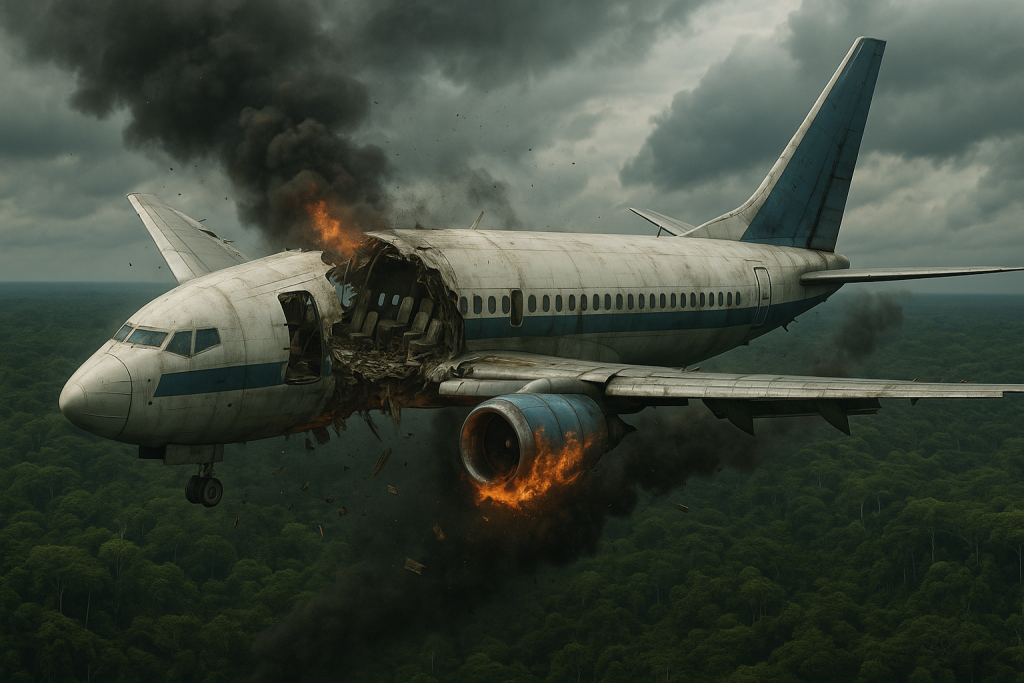
Engines coughed like dying beasts, metal screamed as if it were alive, and in the span of heartbeats, the floor dropped beneath me. My stomach rose into my throat, weightless, like a rollercoaster—but there were no tracks, no safety bar, no second chances.
Fuel burned in the air, sharp and sickening. The cabin shook so violently I thought my bones might snap before the plane even hit. People shouted, cried, prayed. Then came the sound I’ll never forget—the shriek of steel tearing apart, louder than thunder, raw enough to slice through my skull.
And then—impact. A crushing force that ripped the world sideways, slamming me into darkness.
This wasn’t a survival show. No camera crew, no commercial breaks. This was not TV. This was real.
Day Zero – The Wreckage
I don’t remember how long I was out. Seconds? Minutes? Maybe more. What snapped me back wasn’t light—it was pain. My ribs screamed, my head pounded, and my ears rang with an endless metallic echo.
When I finally moved, every muscle trembled. I crawled out through what used to be a cabin wall, dragging myself over twisted metal and shattered seats. My hands slipped on blood—mine or someone else’s, I couldn’t tell.
And then I saw it.
Half the plane was gone. The tail section had vanished into the river below, swallowed whole by the swamp. The water boiled with debris—suitcases, seat cushions, torn clothing drifting like ghosts. One wing jutted up, bent at an impossible angle, like the jungle itself had snapped it in half.
The air was thick with smoke and the stench of burning fuel. Every breath tasted of iron and ash.
Instinct kicked in—I had to find the radio. If I could call for help, maybe there was a chance. I clawed through wreckage, overturning seat frames, ripping open compartments, praying for static, for a spark, for anything.
Nothing. The radio was gone. Just like the people who had been sitting behind me.
That’s when it hit me—not the crash, not the pain, but the silence. The realization that no one was coming right now. No flashing helicopters. No rescue team waiting just out of sight.
For the first time in my life, I felt it: true, bone-deep aloneness. The jungle didn’t care if I lived or died. And for the first time, neither did the world beyond it.
First Night – Learning Fear
When the sun dipped, the jungle came alive. And that’s when the fear sank deeper than the crash ever did.
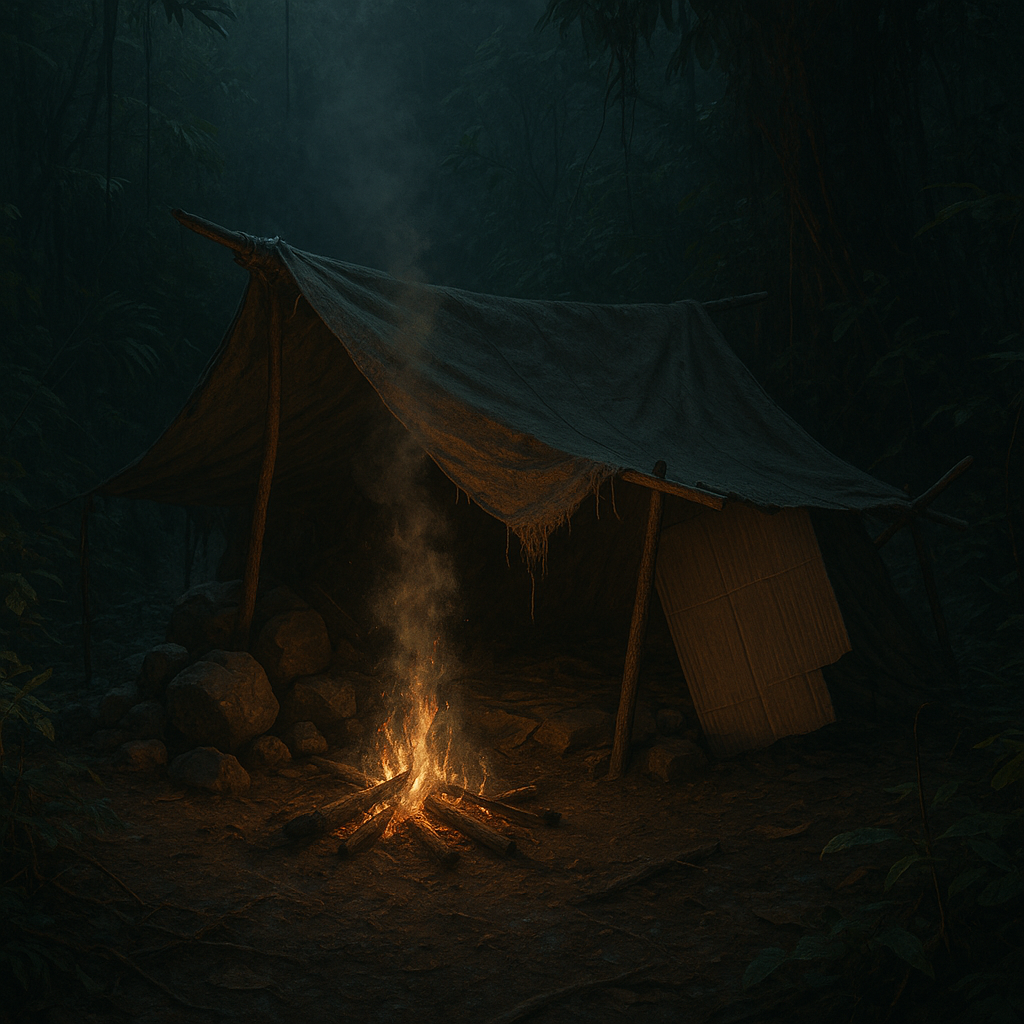
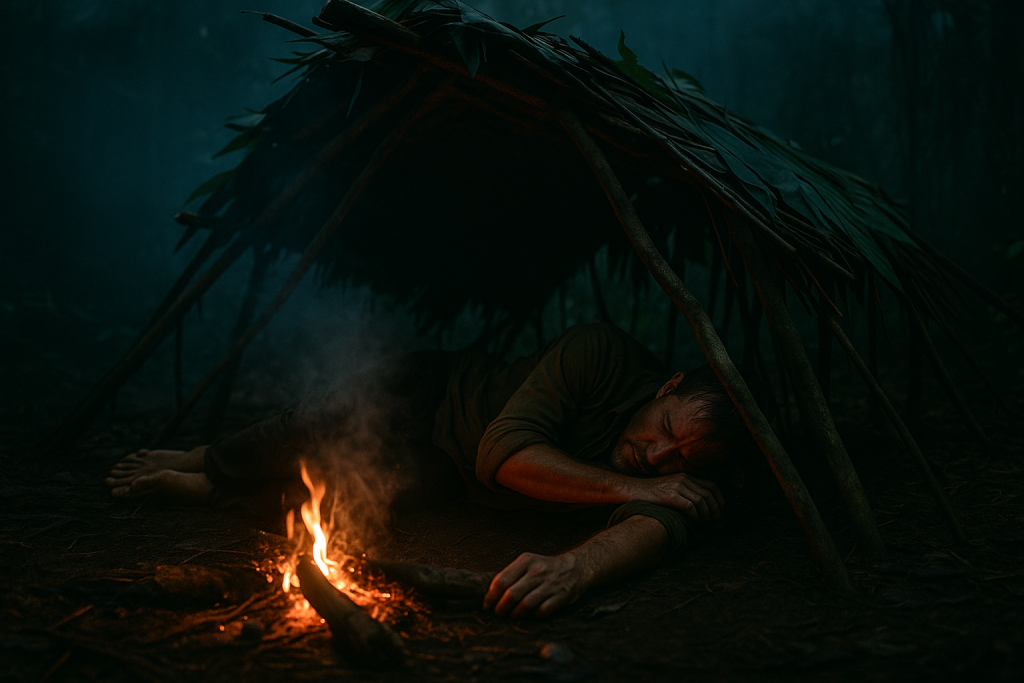
I scavenged what little I could from the wreckage—torn cloth from a seat cover, a strip of cardboard flooring, a few broken metal rods. With shaking hands, I cleared a patch of ground near a rock, hoping its weight would shield me from at least one side. I laid the cardboard down as a floor, draped the fabric over branches like a flimsy roof, and convinced myself I had a “shelter.” Truth was, it was barely enough to call shade.
I sparked a fire with scraps of wiring and what remained of the plane’s insulation. The wood was damp, and the smoke clawed at my throat with every breath. It tasted like burning leaves mixed with mold, but it was my only weapon against the insects swarming my skin.
Then the noises started.
Branches snapping. Heavy, deliberate, like something large was circling. My heart pounded so loud it drowned out the fire’s crackle. In the treeline, two yellow eyes blinked back at me—steady, unblinking. Jaguar? Or maybe just a trick of the flames reflecting off some smaller creature. I told myself it was monkeys. I told myself a lot of lies that night.
The jungle hummed, hissed, and growled. Every shadow held teeth. My skin was slick with sweat, but the damp air chilled me until I shivered uncontrollably. Lying flat on that cardboard, I wrapped myself in the cloth, clutching it like armor, though I knew it wouldn’t stop claws or fangs.
I didn’t sleep. Not for a second. I just stared into the fire, watching it fade, praying it wouldn’t go out, and counting the hours until daylight came.
Because in the Amazon, night isn’t rest. It’s a test.
Decision Point – Move or Die
Morning light didn’t bring relief. It brought enemies. Insects swarmed my skin, turning my arms and legs into raw, burning welts. Every scratch felt like fire.
I laid out what I had: a few crackers, maybe two dented cans, and half a bottle of water. That was it. My “lifeline.” Three days, at best.
I stared at the wreckage, hoping for the sound of a helicopter, a shout, anything. But the jungle stayed silent—except for the buzz of flies and the hiss of unseen creatures.
That’s when the battle started. Not with the jungle—but in my head. Stay here, wait for rescue, maybe die slow. Or move, risk the unknown, maybe die fast.
I said it out loud, just to hear a human voice again: “If I stay, I die here. If I move, I might die there.”
And then I stood up.
The Amazon Strikes Back
The jungle didn’t wait long to punish me.
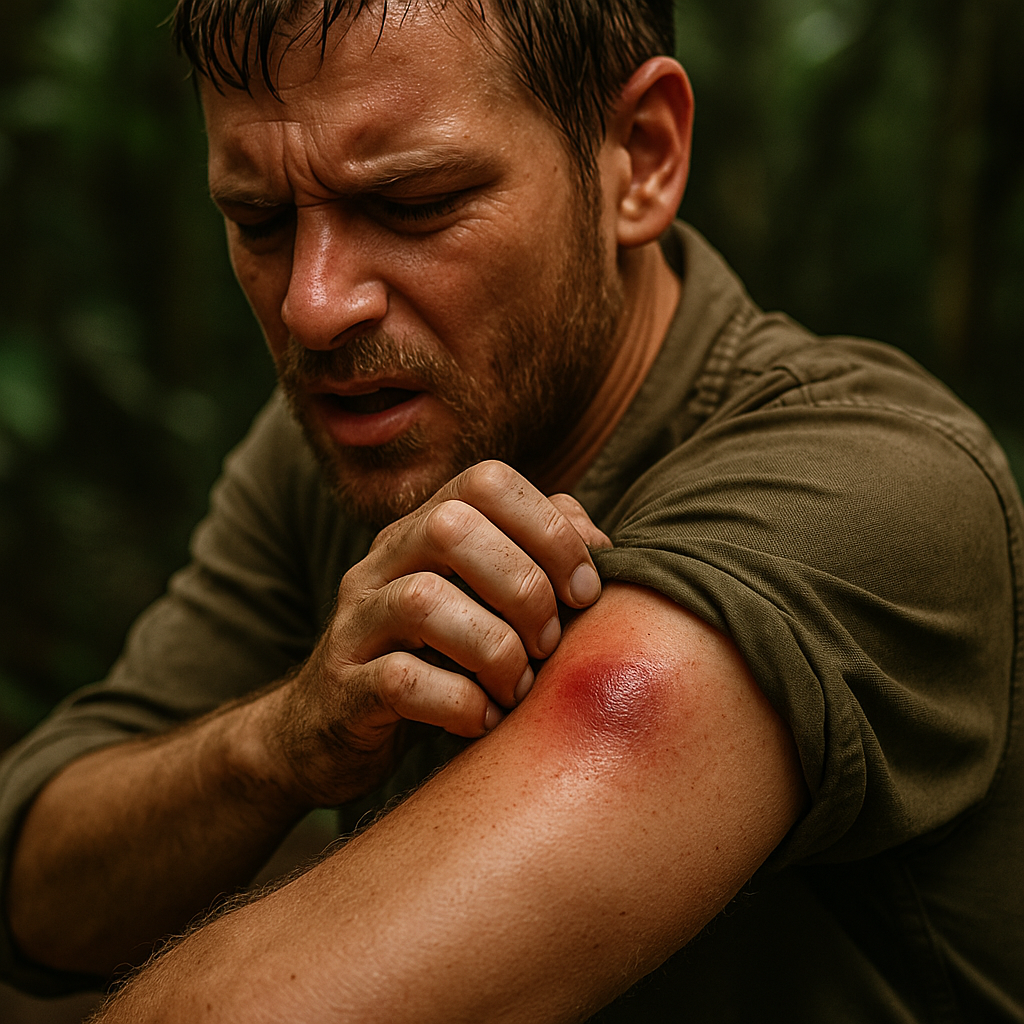
One insect bite turned my whole arm into fire. Swelling spread fast, itching until it felt like my skin was tearing. I panicked—was it venom? Was I dying already?
Then came the plants. Their leaves weren’t soft; they were blades. One brush against my leg left a deep, stinging cut that bled like I’d scraped against glass. Even the forest itself wanted me gone.
Hunger twisted my stomach until it cramped. Every step felt heavier, like the jungle was pulling me down. My head swam. Colors blurred. Shapes in the trees shifted—were they animals, or just hallucinations?
I realized then: the Amazon wasn’t just alive. It was an enemy.
Second Night – Shelter of Smoke and Desperation
By nightfall, my body was done. I scraped together sticks, branches, and broad leaves—barely a roof, more a pile of desperation.
The fire fought me. Damp wood hissed and spat, collapsing into smoke that stung my eyes. I begged it to stay alive, even for a little warmth.
My throat was sandpaper. I dipped cloth into muddy water, wrung it out, and drank. It tasted like dirt and rot, but I didn’t care. Fear of disease was nothing compared to the certainty of thirst.
When I finally lay down, the jungle pressed in. I dreamed of home, of my family’s voices, of clean air. But every time I woke, it was the same: smoke, insects, and shadows that never slept.
That night, I didn’t rest. I endured.
The Deadliest Predator – Humans
I thought the jungle was my only enemy. I was wrong.
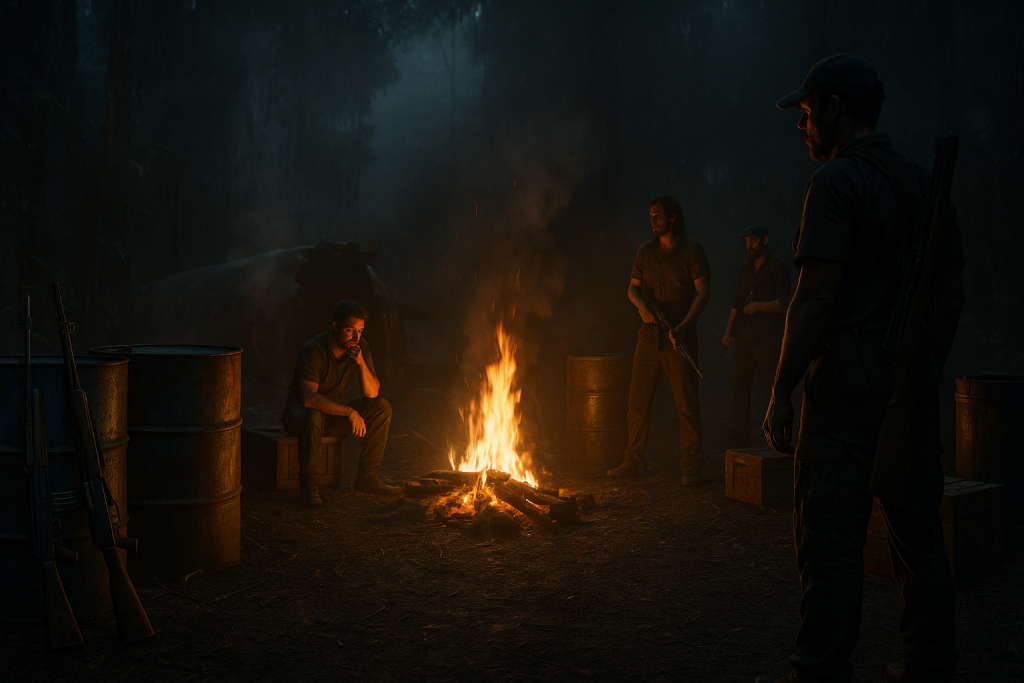
Through the trees, I saw smoke—different from my weak fires. Sharper. Controlled. I crept closer and froze.
A camp. Barrels stacked in rows. Tents lit by fire. Men pacing with rifles slung across their shoulders. Their voices were harsh, angry, the kind you don’t mistake for help. Mafia. Human traffickers.
I dropped flat, pressing my body into the damp ground. Mosquitoes chewed my skin, but I couldn’t swat them. Couldn’t breathe too loud. One snapped branch, one mistake, and I’d vanish forever.
The jungle wanted me dead. But these men? They’d make sure of it.
So I backed away, inch by inch, heart pounding like a war drum in my chest.
The Amazon had predators. But humans were the deadliest of them all.
Breaking Point – Starvation and Weakness
By the third day, my body was shutting down.
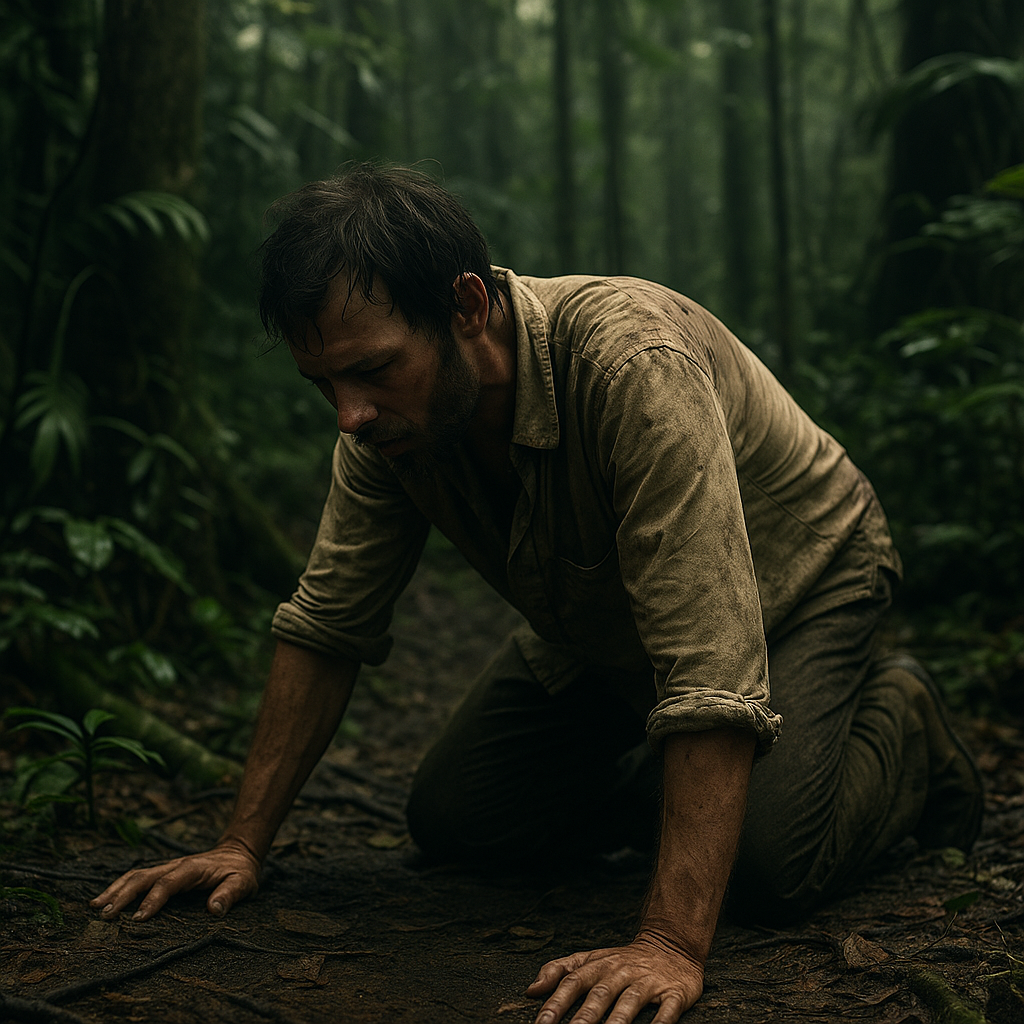
My legs trembled with every step. Knees buckled, and more than once I nearly collapsed into the dirt. Hunger clawed at me until my stomach felt hollow, nothing but pain echoing inside. This wasn’t just an Amazon survival story plane crash. This was starvation.
A voice in my head whispered, “Lie down. Close your eyes. Let the jungle take you.” It would’ve been easy. Too easy.
But every time my body begged to give up, my mind brought back flashes of home—my family’s faces, the life I’d never see again if I quit. Regret twisted deeper than hunger. I prayed, not for food, not for water, but for one more chance.
Somewhere in that endless green hell, I forced myself up again. Step by step, against the weight of death pressing down.
Because if I stopped moving, the Amazon would win.
The Miracle – Found by a Tribe
I stumbled forward, half-blind, half-dead. My body had given up, but my legs kept moving out of instinct alone. Then—I heard voices.
Not harsh, not angry. Different. Human, but not threatening. I pushed through the brush and froze.
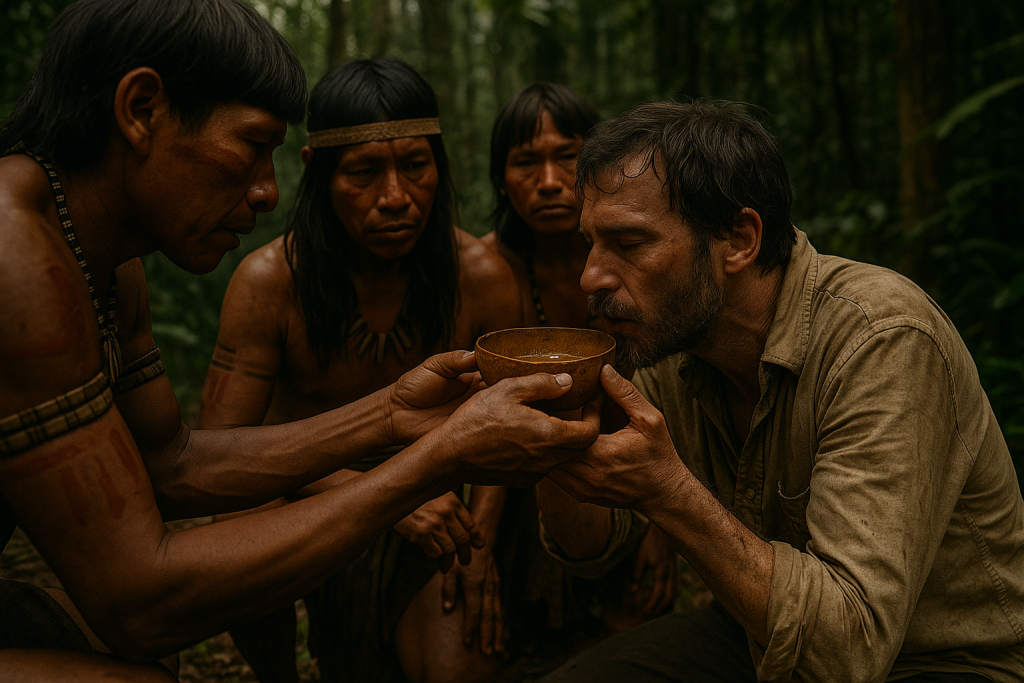
A small group stood before me. Barefoot, painted with earth, carrying bows and spears. Their eyes were sharp, cautious—but not cruel. For a heartbeat, we just stared at each other. I must have looked like a ghost: filthy, bleeding, covered in insect welts.
One of them stepped closer, holding out a wooden bowl. Inside—water. Clear, clean, alive. My hands shook as I drank, the first real sip since the crash. It was heaven in liquid form.
Then food—simple, earthy, but more nourishing than anything I’d ever tasted. My body devoured it, my mind too stunned to speak.
That’s when it hit me: without them, I would have been another nameless body swallowed by the jungle. Forgotten, gone.
But now, for the first time since the crash, I felt it—hope.
Reflection – What Survival Really Means
Looking back now, it almost feels unreal—like something I’d only ever watch on TV. But that’s the difference. TV shows cut to commercial. Real life doesn’t.
Out there, there was no camera crew. No safety net. No second takes. Just me, the wreckage, and a jungle that wanted me gone.
The line between life and death? It’s thinner than a mosquito bite. One wrong step. One bad drink of water. One sound too loud near that camp. And I would’ve vanished into the Amazon, just another story no one ever heard.
Survival isn’t glory. It isn’t adventure. It’s hunger twisting your gut, hallucinations clawing at your brain, and desperation so sharp it hurts to breathe.
If I lived, it wasn’t because I was brave. It was because I refused to give up. And maybe—just maybe—because the jungle decided to spare me.
Weddings are supposed to be joyful, but sometimes family drama overshadows the big day. One bride in the USA recently faced an emotional dilemma when her own mother wore white to wedding. Hurt, embarrassed, and feeling disrespected, she made the tough choice to ask her mom to leave.
The moment left guests divided, the family shaken, and the bride wondering: was she wrong to protect her moment, or did she go too far? This story, now making its way through social media and wedding forums, has sparked a debate about wedding family drama and where the line should be drawn when loved ones cross boundaries.
A Bride’s Worst Nightmare
For most brides, the wedding day is the one time in life when they get to wear a white dress and feel celebrated. It’s tradition, it’s symbolic, and it’s deeply personal. But for Sarah (For privacy reasons, I’ll call her Sarah) , that tradition was broken by the very person she least expected—her mom.
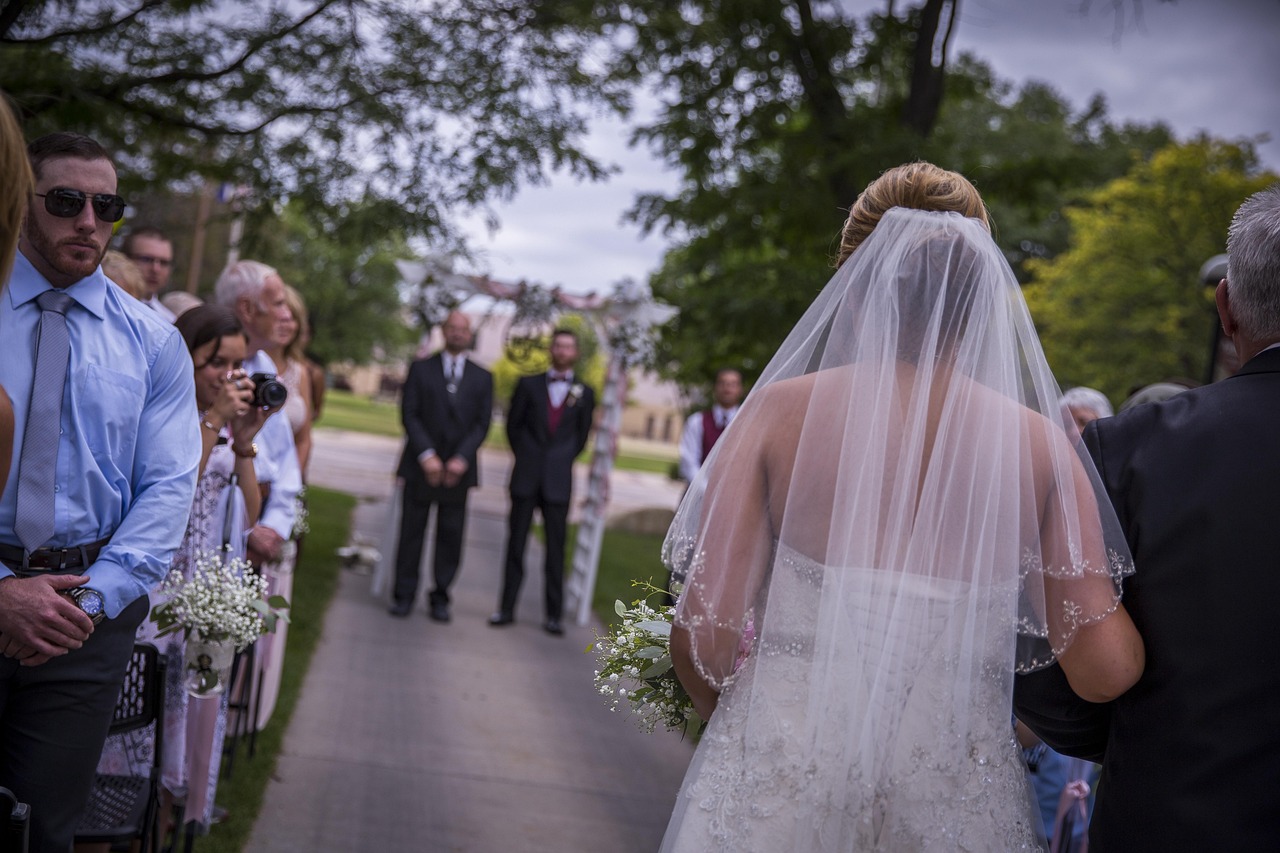
According to Sarah’s account, the day started normally. Friends and family arrived, the music played, and she felt ready to begin her new chapter. But as she walked down the aisle, her heart sank. There, in the second row, was her mother—wearing a long, elegant white gown.
Guests immediately noticed. Some whispered, others looked away awkwardly. Sarah described feeling “betrayed and humiliated.” She had made it clear beforehand that her mom could wear anything except white or ivory. She even offered to help her choose a dress. But her mom ignored the request.
At the reception, tensions grew. Guests asked if it was a mistake, some joked about it, while others said it was disrespectful. Sarah reached a breaking point. She pulled her mom aside and, with tears in her eyes, told her she had to leave. Her mom protested, saying “It’s just a color.” But Sarah held her ground.
The wedding went on—but with a storm of emotions lingering in the air.
Why Wearing White at a Wedding is Controversial
In American wedding culture, white belongs to the bride. It symbolizes purity, new beginnings, and most importantly—it makes the bride the center of attention. When a guest shows up in white, it can look like they’re trying to steal the spotlight.
This isn’t just about fashion—it’s about wedding etiquette stories USA. Ask any wedding planner, and they’ll confirm: wearing white as a guest is one of the biggest social “don’ts.” And when the person doing it is the bride’s own mother, the act cuts deeper. It feels like disrespect, or worse—an intentional move.
That’s why so many people view Sarah’s situation not as a minor dress choice, but as a symbolic violation of trust on one of the most important days of her life.
The Emotional Fallout – Bride vs Mom
Sarah later admitted that she didn’t want to throw her mom out. But every time she looked around, she saw the whispers, the side glances, the guests pulling out their phones to snap photos of the “two brides.”
The moment that pushed her over the edge was when a guest congratulated her mother, mistaking her for “the bride.” That’s when Sarah realized this wasn’t just about clothing—it was about her losing the spotlight at her own wedding.
Her mother, however, felt differently. She insisted it wasn’t intentional, and that she simply loved the dress. But Sarah couldn’t shake the feeling that her wishes had been ignored on the one day that was supposed to be about her.
The argument ended with Sarah asking her to leave. Some relatives supported her, saying she was right to draw a line. Others whispered that she was too harsh, that family should come first.
Public Reactions – Two Sides of the Debate
This story spread quickly across wedding blogs and Facebook groups, sparking heated discussions. Here’s how the debate split:
Team Bride: Supporters said Sarah was absolutely right. The day belonged to her, and her mom had no excuse for ignoring clear boundaries. Many women shared their own stories of in-laws or friends wearing white, calling it “the ultimate act of disrespect.”
Team Mom: Others argued that while the choice was poor, asking her to leave was extreme. They believed Sarah should have let it slide for the sake of family peace. As one commenter wrote, “You’ll only have one mom, but you can’t replace her if she walks out of your life.”
This debate shows why these wedding family drama moments are so divisive—they’re not just about etiquette, they’re about relationships.
What Experts Say About Boundaries
Family therapist Dr. Linda Walters (via Psychology Today) notes that boundary-setting is one of the hardest tasks in family relationships, especially during milestones like weddings. She explains:
“Boundaries aren’t about controlling others. They’re about protecting your well-being. When someone ignores those boundaries, you have the right to enforce them—even if it hurts.”
The American Psychological Association also highlights that guilt often plays a big role in family disputes. Children are raised to respect parents, so when a parent crosses the line, saying “no” feels unnatural. That’s why brides like Sarah often feel torn between protecting themselves and keeping family harmony.
What Would You Do?
Here’s where the question turns to you. If your mom showed up in a white gown on your wedding day, what would you do?
Would you quietly ignore it to keep the peace?
Or would you take action like Sarah did to protect your once-in-a-lifetime moment?
These was I wrong wedding story debates don’t have one right answer. They’re messy, emotional, and deeply personal.
One Last Thought
Every wedding is about love, but sometimes love means protecting yourself—even from family. Sarah’s story reminds us that boundaries matter, even on days meant for joy.
So, what would you have done if your mother wore white to wedding?
Drop yourthoughts below—your voice might help the next bride facing the same heartbreakingchoice.
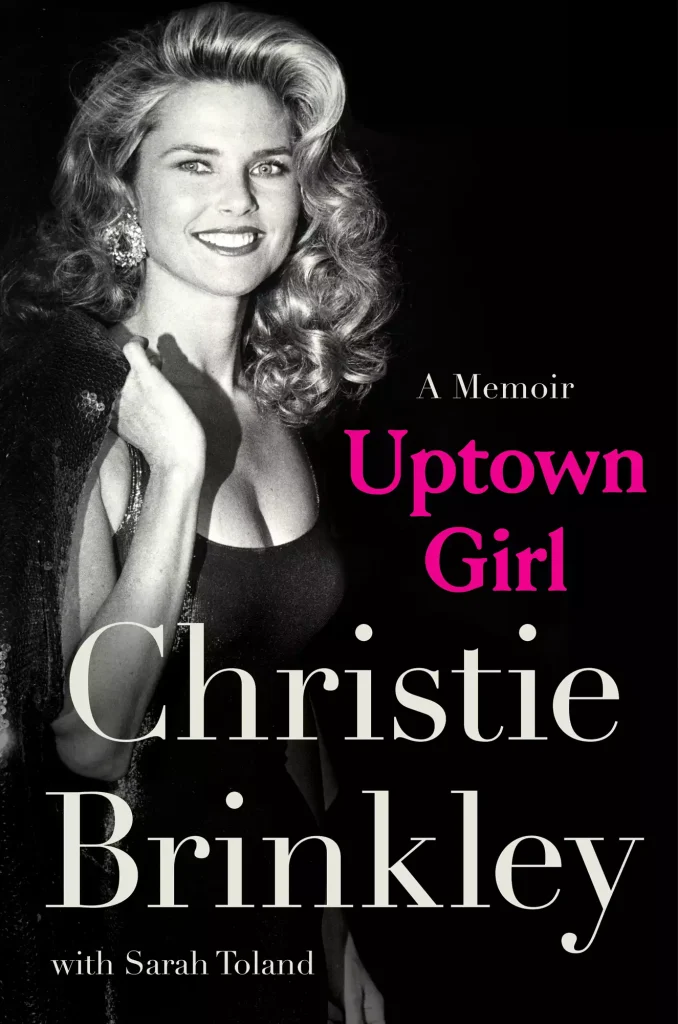
“There were many times I wondered if I’d ever recover,” the supermodel, 71, writes in her new memoir ‘Uptown Girl’ of the scandalous split from her fourth husband
“It was the most tortured relationship I’ve ever had,” writes Christie Brinkley of her fourth marriage to architect Peter Cook.
For years, the 71-year-old supermodel has said very little about what happened after she learned Cook was having an affair in 2006, leading to their scandalous split after eight years of marriage. The divorce and drawn-out custody battle over their daughter, Sailor, and Jack (her son whom he’d adopted) created endless headlines. But in her powerful new memoir, Uptown Girl, out today, Brinkley reveals much more, including how she first learned of his affair.
It was 2006 and she was giving a graduation speech at a local high school in the Hamptons, when Brinkley was approached by a man she’d never seen before.
“Excuse me,” he said softly. “I need to tell you that arrogant husband of yours has been having an affair with my teenage daughter.”
“I was so stunned that I froze,” she writes. She looked into the audience where Cook was sitting with Jack “As soon as I saw him,” she continues, “Peter’s eyes were already trained on my face, as he began shaking his head, ‘No.’”
“When your whole world falls apart and you realize in a heartbeat you’ve suddenly become the cliche middle-aged woman whose husband is having an affair with a much (much) younger woman, what do you do?” she writes.
The PEOPLE App is now available in the Apple App Store! Download it now for the most binge-worthy celeb content, exclusive video clips, astrology updates and more!
She began by finding strength in her female friends, two of whom later urged Brinkley to search their family computer for more information. One night, they came over to help — a scene, which she describes as something out of Charlie’s Angels.
There, she found a “labyrinth” of files. “A panoply of incriminating photos and porn accounts populated the screen like fireworks, and before I knew it, my printer was shooting [beaver shots] out into the room,” she writes. “It was so insane that it was almost funny and soon enough, the three of us were doubled over in laughter, as printouts of girls in X-rated poses began piling up on the floor faster than trash outside a greasy takeaway.”
Brinkley and Cook’s ensuing split ended up in a six-year court battle. “I kept saying I don’t understand what good was a prenup?” she says, looking back. “It was exhausting and scary because I always lived in fear of them taking my kids because that was the constant threat and a terrifying thing to live with. I got a prenup so I didn’t have to go through all this but still did. It was mind boggling and it was hard to write about.”
For years, she says, “I didn’t say anything to anybody. But one day when I came out of the courtroom I said, ‘Google a narcissist.’ The letters started pouring in and I had so many women saying ‘Thank you. I realize other women are going through it. I’m not alone.’”
And today, she looks back with gratitude for what the experience brought her. Namely, her three children. “There were many times when I wondered if I would ever recover,” she writes in her book. “Whenever I felt this, I stopped, looked inward and counted my blessings, which was a long list that always started with Alexa Ray, Jack, and Sailor.”
Now grown, Alexa Ray, 39, Jack, 29, and Sailor, 26, have supported her newfound candor. Reflects Brinkley, “They said it’s your story to tell, so tell it.“
Uptown Girl is on sale now, wherever books are sold.
“I don’t know how it feels to be a 14-year-old boy receiving photos of a girl. Maybe it’s wishful thinking, but I don’t think he was being malicious showing them to his friends. He was a kid,” Beer said of the incident.
Madison Beer is using her past as a way to move forward.
In a new interview with Cosmopolitan, the 26-year-old singer opened up about one of the darkest chapters in her life — the time nude footage of her as a teen was leaked online.
And while she’s spoken about that life-defining moment in the past, Beer’s latest interview marked the first time she’s shared that she’s since spoken to the guy who shared the explicit content.
“The boy who the whole nude situation happened with, he reached out to me and was like, ‘I had no idea that I hurt you like this. I’m so sorry,'” Beer told the outlet.
She continued, “I don’t know how it feels to be a 14-year-old boy receiving photos of a girl. Maybe it’s wishful thinking, but I don’t think he was being malicious showing them to his friends. He was a kid.”
Back then, Beer says she felt double-betrayed — first by the ex who posted their explicit Snapchat messages, then by the trolls who slut-shamed her for it.
And while she said getting an apology was nice, the damage ran deep. But instead of letting those wounds define her, Beer’s decided to reclaim the narrative.
“I’ve had to sit people down and be like, ‘Hey, you owe me an apology for what you did to me when I was a kid.’ And a lot of the other people from that time in my life — I just have completely severed my relationships with,” she said. “I don’t care to make up with you or be cool with you.”
The “Make You Mine” singer also got real about her mental health struggles during that time, admitting that things got pretty dark.
“I tried to go the other way and kill myself, and don’t get me wrong, I still have those moments,” Beer admitted. “But I was like, ‘I need to first prove all these people wrong. And second, maybe I can help someone out there who sees themselves in me in any way.'”
Now, she’s focusing on healing, growth, and maybe helping others find their own strength in the chaos.
“Just because I’m okay with it now doesn’t mean I deserved to go through it,” she added. “I like to think that everything I went through and continue to go through is because I’m strong enough to survive and tell the story.”
Beer addressed the leak in 2023, in her memoir, The Half of It, where she recalled not feeling protection when her personal Snapchats went public.
Speaking with PEOPLEat the time, Beer said she hoped by sharing her “honest journey” and the dark moments she endured, it’ll give online bullies pause before the fire off nasty vitriol on the internet.
“I hope by sharing my honest journey that perhaps someone that wanted to hide behind a keyboard to be mean or poke fun at someone else’s expense thinks twice before they hit ‘send,'” Beer told the outlet. “I hope that we can find the strength to support each other and that we can work to treat others in the way we would want to be treated.”




















:max_bytes(150000):strip_icc():focal(733x419:735x421):format(webp)/christie-brinkley-peter-cook-042825-1-de0e3d12f3ff43afb018a3aa723bb8c3.jpg)
:max_bytes(150000):strip_icc():focal(749x0:751x2):format(webp)/christie-brinkley-court-042825-1-2e3c891ecc4648d282147ab7db3b9bc0.jpg)
:max_bytes(150000):strip_icc():focal(760x387:762x389):format(webp)/christie-brinkley-14th-annual-american-humane-hero-dog-awards-042825-1-97b8f12d0eb042cbbef36aaca3fc17a1.jpg)