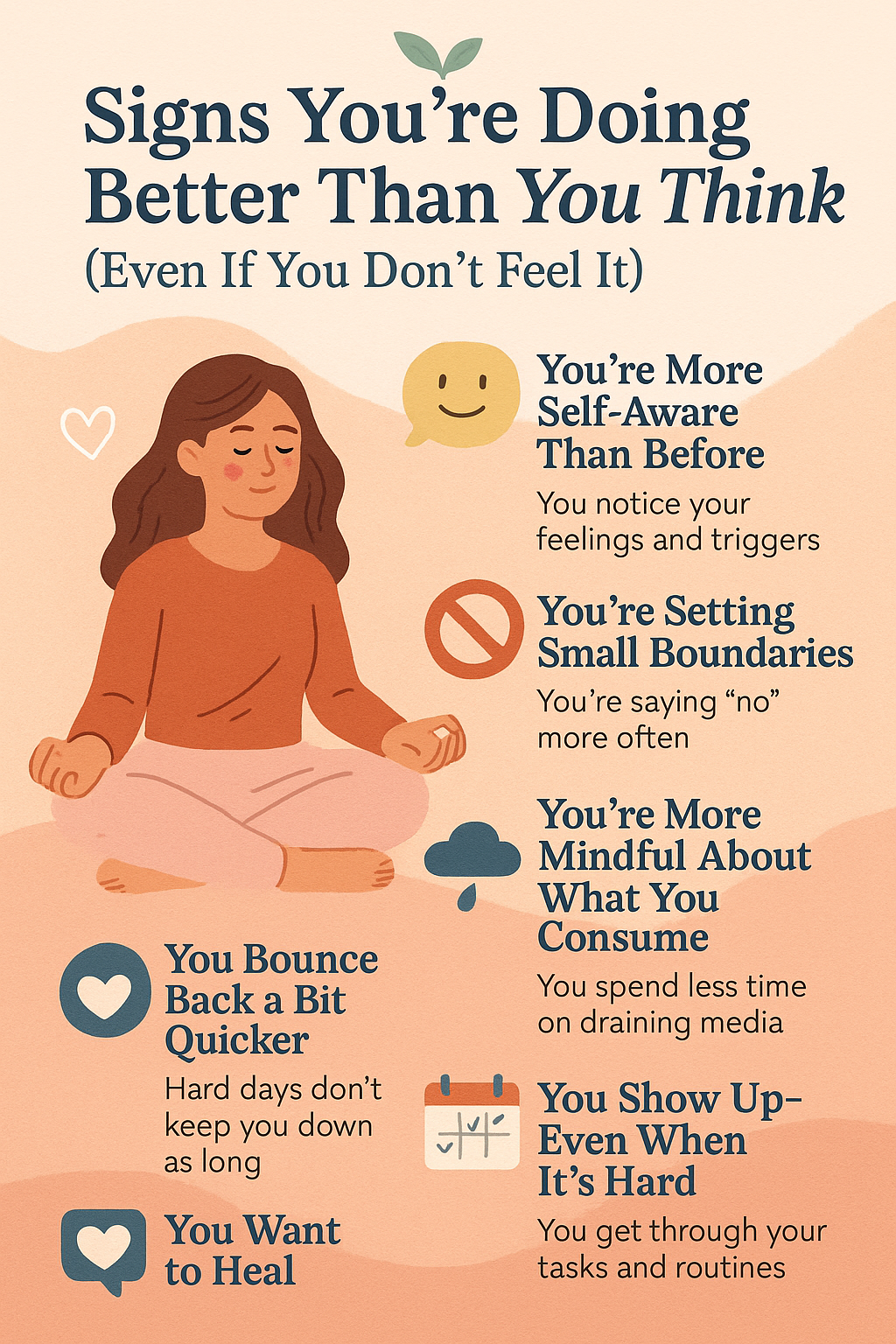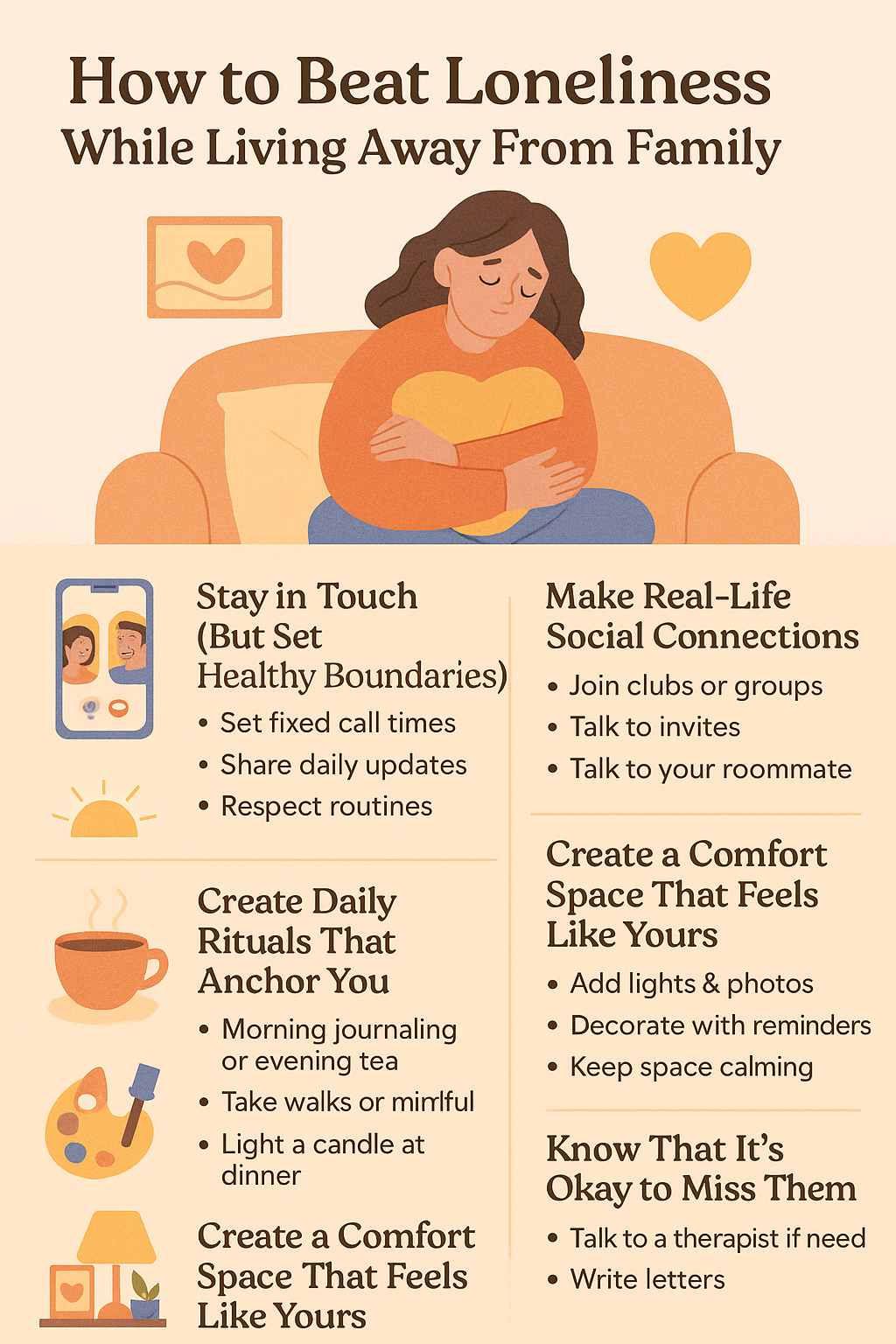
How to Beat Loneliness While Living Away From Family

Because missing home is real—and you’re not alone in it.

Living away from your family—whether for studies, a job, or personal growth—is exciting at first. But after the excitement fades, the quiet dinners, solo weekends, and emotional distance can slowly feel heavy. Loneliness isn’t weakness—it’s a human response to disconnection.

The good news? You don’t have to fight it alone. Here are simple, effective ways to ease loneliness and rebuild connection while living on your own.

1. Stay in Touch (But Set Healthy Boundaries)

Talking to your family regularly brings comfort, familiarity, and warmth. But calling too much can keep you stuck emotionally, making adjustment harder.

What to do:

  • Set fixed times for video calls or weekly check-ins
  • Share small wins and daily updates—not just problems
  • Respect time zone differences or routines

Why it works:

  • Keeps you emotionally connected without becoming dependent
  • Gives you something to look forward to
  • Helps you build a rhythm between your new life and old one

2. Make Real-Life Social Connections

No, online chats don’t count. You need real interactions—even if it’s just small talk at the gym or joining a local hobby class.

What to do:

  • Join a club, co-working space, or weekend workshop
  • Say “yes” to invites, even if you feel awkward
  • Start small: talk to your roommate, neighbor, or barista

Why it works:

  • Builds local support and community
  • Fills emotional gaps family once filled
  • Reduces isolation and builds confidence

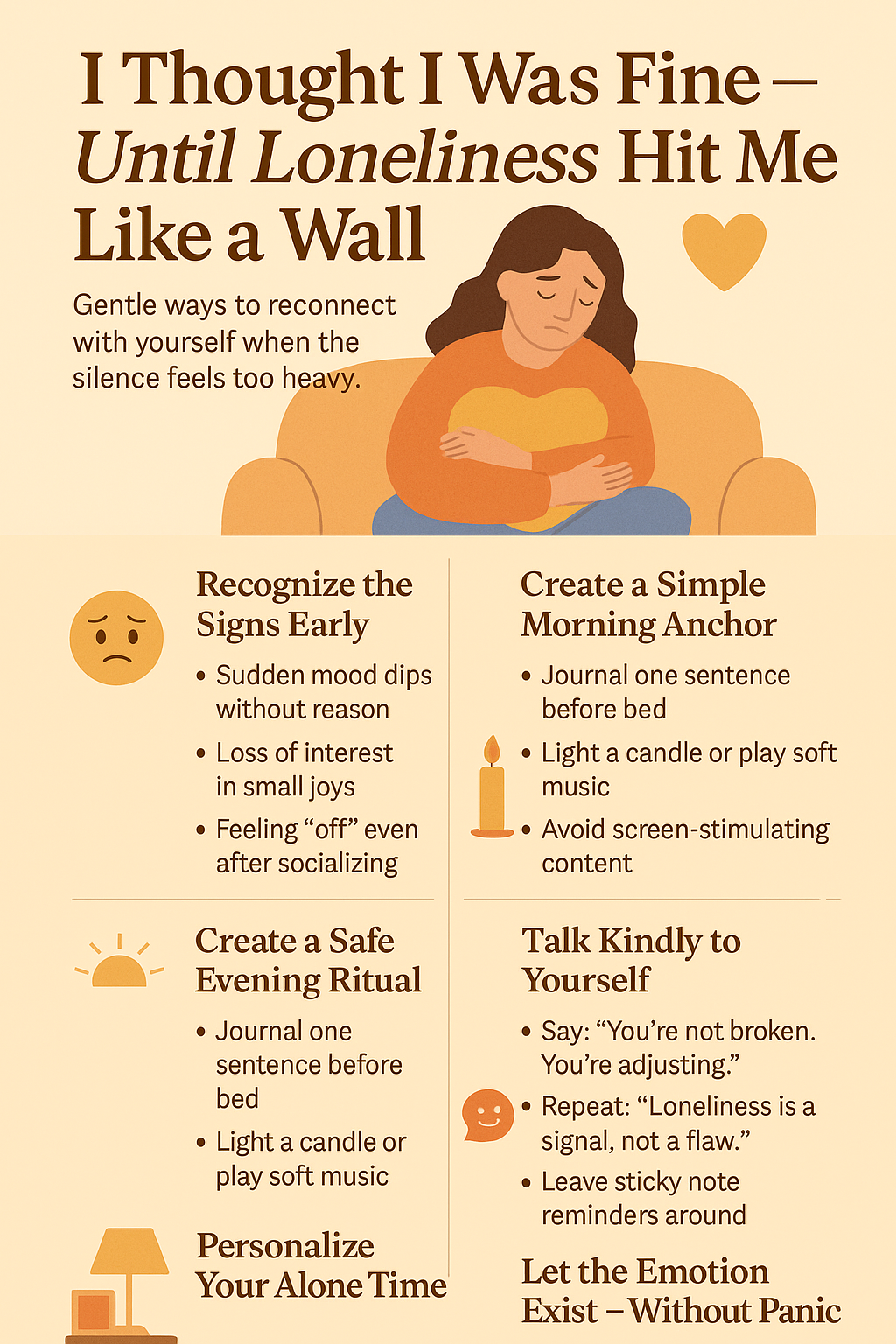
3. Create Daily Rituals That Anchor You

Loneliness often hits hardest in the empty in-between moments. Rituals give your day purpose, structure, and self-nourishment.

What to do:

  • Morning journaling or evening tea time
  • A daily walk or 15 minutes of mindful breathing
  • Light a candle or play calming music at dinner

Why it works:

  • Adds rhythm and predictability to your day
  • Makes you feel more emotionally grounded
  • Replaces chaos with calm

4. Stay Busy With Purposeful Activities

Being “busy” is not a cure—but being engaged helps. Doing things you care about fills emotional voids with meaning instead of just noise.

What to do:

  • Start a creative project (blog, art, cooking, music)
  • Take up part-time volunteering
  • Learn a new skill online or offline

Why it works:

  • Keeps your mind focused and positive
  • Replaces empty scrolling with growth
  • Boosts your self-worth and independence

5. Create a Comfort Space That Feels Like Yours

If your space doesn’t feel warm, your emotions won’t either. Create a corner that feels like home within your home—even if you’re renting a small room.

What to do:

  • Add soft lights, cozy blankets, family photos
  • Decorate with reminders of your culture or comfort foods
  • Keep the space clean and calming

Why it works:

  • Nurtures your nervous system
  • Helps with emotional safety and belonging
  • Makes your living space feel less like a “waiting room”

6. Know That It’s Okay to Miss Them

The goal isn’t to erase homesickness. It’s to live with it kindly. When you allow yourself to miss your family without guilt or shame, healing becomes easier.

What to do:

  • Talk to a therapist or counselor if it gets heavy
  • Write letters or notes you never send
  • Remind yourself: “Missing them means I was loved well.”

Why it works:

  • Validates your emotions instead of avoiding them
  • Opens space for gratitude instead of only sadness
  • Reminds you that you’re not alone in feeling this way

Final Thoughts: You’re Stronger Than You Think

Loneliness is a signal—not a sentence. It’s a reminder that you’re human, that you value connection, and that you’re growing. So take the steps. Reach out. Create joy. One small action at a time.

And always remember: Being far away doesn’t mean being forgotten.

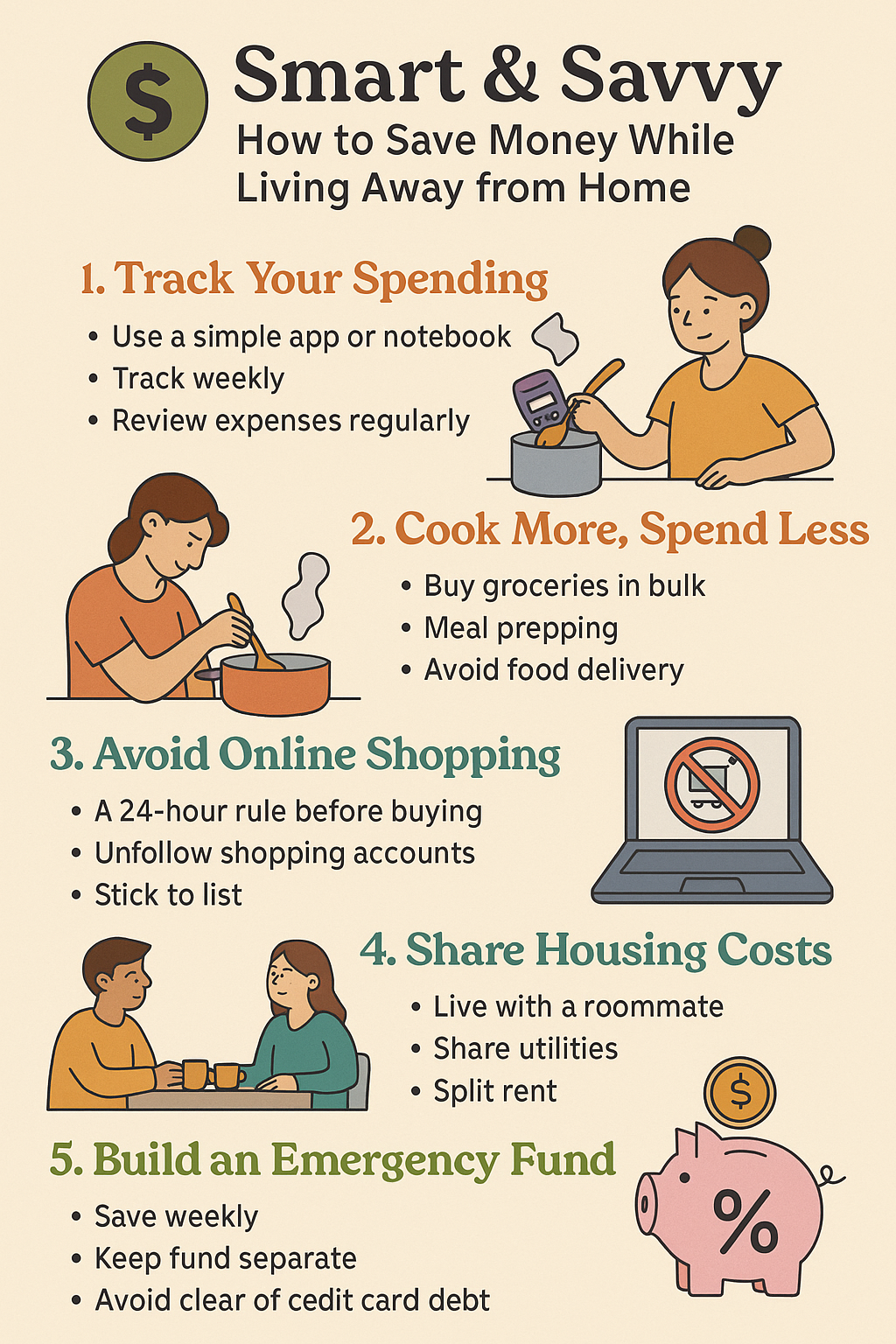
Smart & Savvy: How to Save Money While Living Away from Home

Because adulting is hard enough—your wallet shouldn’t suffer too.

Living away from home comes with freedom, late-night snacks, and no one telling you when to sleep—but it also comes with surprise bills, food costs, and rent that drains your bank account faster than you’d think. The good news? Saving money isn’t about cutting all the fun—it’s about building small, smart habits that actually give you more freedom long term.

Here’s your practical guide to saving money while still enjoying your life.

1. Start by Tracking Every Rupee (or Dollar)

You can’t fix what you don’t know. Most people don’t realize how much they’re spending until they actually track it. So before you make a budget, start by writing down every expense—even that Rs. 99 coffee or random Amazon buy.

Try this:

  • Use free apps like Walnut, Money Manager, or even Google Sheets
  • Track weekly instead of monthly so it’s not overwhelming
  • Review your spending every Sunday night (make it a ritual!)

Why it works:

  • Helps you spot patterns and money leaks
  • Makes budgeting feel doable, not scary
  • Encourages mindful spending

2. Cook More, Spend Less (And Eat Healthier Too)

Ordering food every day might feel convenient, but it’s one of the biggest money drains. Cooking at home, even basic meals, can cut your food budget in half—and it’s better for your health.

Try this:

  • Cook in bulk on Sundays (think: rice, curries, pasta sauces)
  • Buy staples like dal, oats, and frozen veggies in bulk
  • Use simple 3-ingredient recipes to avoid burnout

Why it works:

  • Meal prepping saves time during busy weekdays
  • Cooking with roommates = fun + shared grocery bills
  • Homemade food is cheaper, cleaner, and satisfying

3. Say No to Mindless Shopping Sprees

Impulse buying online? We’ve all been there. But “just browsing” leads to just broke. That dopamine hit from a cart checkout fades fast, but the financial hangover stays.

Try this:

  • Follow the “24-hour rule” before buying anything online
  • Unfollow tempting shopping pages on Instagram
  • Only buy what’s already on your planned shopping list

Why it works:

  • Cuts down emotional and late-night purchases
  • Helps you spend with intention, not impulse
  • Saves money for things that actually matter

4. Split Rent and Share Resources

Living solo sounds dreamy, but your wallet might not agree. Sharing your space can cut housing costs by 30–50%, and give you more to spend (or save) elsewhere.

Try this:

  • Look for roommates on trusted platforms (Facebook groups, local student forums)
  • Share bills: Netflix, groceries, laundry detergent—everything adds up
  • Use apps like Splitwise to manage shared expenses fairly

Why it works:

  • Less pressure to afford high rent alone
  • Shared utilities = shared savings
  • Bonus: built-in social life if your roommate’s cool

5. Avoid Debt, But Build an Emergency Fund

Credit cards may seem like a savior in tight months—but they often lead to stressful debt traps if not used wisely. Instead, focus on building a small emergency fund for surprise expenses.

Try this:

  • Save a small fixed amount weekly—even ₹100 adds up
  • Keep a separate digital wallet just for emergencies
  • Avoid “Buy Now, Pay Later” schemes unless you have a repayment plan

Why it works:

  • Reduces anxiety about broken phones, late fees, or medical bills
  • Gives you freedom to say “no” when you can’t afford something
  • Helps avoid long-term interest charges and penalties

6. Use Discounts, Cashback & Freebies (It’s Not Cheap—It’s Smart!)

Why pay full price when you don’t have to? Student discounts, referral codes, and cashback offers are everywhere—you just need to look.

Try this:

  • Use Chrome extensions like Honey or CashKaro for cashback
  • Check for student plans on Spotify, Microsoft, or even Dominos
  • Attend free college events for food, goodies, or networking

Why it works:

  • Lets you enjoy fun stuff without guilt
  • Encourages smarter digital shopping
  • Gives the joy of saving without the stress of “missing out”

Final Thoughts: Build Habits, Not Restrictions

You don’t have to live like a monk to save money. You just have to be a little more aware, a little more intentional, and a lot more clever. The small habits you build now—budgeting, cooking, sharing—will help you stay independent, stress-free, and financially confident for life.

Remember: Living smart is cooler than living broke.

Glowing Skin Made Simple: A Daily Skincare Routine for Every Girl

Because real beauty starts with healthy, happy skin.

Looking pretty starts from within—but your skincare routine plays a big part too. Whether you’re a teenager dealing with oily skin or in your 20s building your self-care habits, the right steps can help you look radiant without breaking the bank. This routine is simple, budget-friendly, and effective—perfect for busy school mornings or late-night Netflix wind-downs.

Here’s how to care for your skin, step by step.

1. Morning Routine: Wake Up & Glow

Your morning skincare should be light, refreshing, and protective. It preps your skin to face sun, pollution, and stress.

What to do in the morning:

  • Use a gentle face wash to remove sweat or oil from the night
  • Apply a toner to balance your skin’s pH
  • Dab on a Vitamin C serum for glow and sun damage protection
  • Always finish with sunscreen (SPF 30 or higher)—non-negotiable!

Why it matters:

  • Keeps skin fresh, clear, and protected from UV rays
  • Reduces dullness, dark spots, and early aging
  • Works great even for sensitive or acne-prone skin

2. Night Routine: Cleanse & Repair

Night is when your skin heals. So give it what it needs after a long day of exposure to makeup, sweat, and pollution.

What to do at night:

  • Double cleanse: First with oil/micellar water, then face wash
  • Use a hydrating toner or mist to prep your skin
  • Apply a moisturizer suitable for your skin type
  • Don’t skip under-eye cream for tired eyes and dark circles

Why it matters:

  • Removes impurities that clog pores
  • Repairs and hydrates skin overnight
  • Helps wake up looking refreshed, not puffy

3. Exfoliate Twice a Week

Exfoliation removes dead skin cells, unclogs pores, and reveals brighter skin underneath. But don’t overdo it!

How to do it:

  • Use a gentle scrub or chemical exfoliant (like lactic acid or BHA)
  • Do this only 1–2 times a week
  • Avoid exfoliating if your skin is irritated or sunburned

Why it matters:

  • Makes your skin smoother and more radiant
  • Helps products absorb better
  • Prevents breakouts and dry patches

4. DIY Face Masks for Weekend Pampering

A little pampering goes a long way. Use natural ingredients from your kitchen to give your skin extra love.

Easy face mask ideas:

  • Aloe vera + honey for hydration
  • Yogurt + turmeric for glow and brightness
  • Oatmeal + rose water for calming sensitive skin

Why it matters:

  • Calms irritation and redness
  • Gives a natural glow boost
  • It’s fun, relaxing, and budget-friendly

5. Healthy Skin Comes from Within

Skincare products help—but your daily habits play an even bigger role in how your skin looks and feels.

Lifestyle habits to follow:

  • Drink plenty of water (at least 7–8 glasses/day)
  • Eat clean: Include fruits, veggies, and healthy fats
  • Sleep 7–8 hours for a natural glow
  • Always remove makeup before going to bed

Why it matters:

  • Prevents breakouts, dark circles, and dullness
  • Boosts your skin’s natural ability to heal
  • Builds a strong foundation for your skincare products to work

Final Thoughts: Skincare Is Self-Care

You don’t need 10 expensive products. You just need consistency, good habits, and the right steps. Whether you’re a teen just starting out or someone refining their routine—take care of your skin like it’s your best friend. Because it is!

5 Quick & Healthy Dinners for Busy Weeknights

No stress, no fancy prep—just real food made fast

After a long day, the last thing you want is to stress over dinner. But eating healthy doesn’t have to be complicated. These 5 dinner ideas are perfect for busy weeknights—quick to cook, full of nutrients, and family-friendly.

Let’s dive into easy meals that keep you energized without spending hours in the kitchen.

1. Stir-Fried Veggies with Tofu or Paneer

This one-pan wonder is packed with flavor, fiber, and plant-based protein. Customize it with your favorite vegetables and sauces—ready in under 20 minutes.

Why it works:

  • High in antioxidants and protein
  • Easily adjustable for spice and taste
  • No need for side dishes—one bowl is enough

Quick tip:

Use pre-cut veggies and toss with soy sauce, garlic, sesame oil, and chili flakes.

2. Chickpea & Avocado Wraps

These wraps are fresh, filling, and totally meal-prep friendly. Chickpeas give fiber and protein, while avocado adds healthy fats for brain and skin health.

Why it works:

  • No cooking required if using canned chickpeas
  • Budget-friendly and gluten-free option
  • Great for lunch leftovers too

Quick tip:

Mash chickpeas + avocado with lemon, salt, and cumin. Add crunchy veggies and roll into whole wheat tortillas.

3. One-Pot Quinoa & Mixed Veggie Bowl

This warm bowl is cozy, nutritious, and comes together with whatever veggies you have in the fridge. Quinoa cooks fast and adds complete protein to the dish.

Why it works:

  • Quick-cooking grain
  • High in fiber and iron
  • Can be made ahead for multiple days

Quick tip:

Cook quinoa in vegetable broth. Add carrots, spinach, corn, bell peppers. Top with tahini or lemon dressing.

4. Whole Wheat Pasta with Spinach & Garlic Yogurt Sauce

Skip the heavy cream sauces. This dinner uses a protein-packed Greek yogurt base, spinach, and garlic for a creamy, guilt-free flavor.

Why it works:

  • Balanced mix of carbs, protein, and greens
  • Kid-friendly and comforting
  • Can be made in under 25 minutes

Quick tip:

Cook pasta + sauté garlic + wilt spinach. Stir in Greek yogurt off heat to avoid curdling.

5. Egg Bhurji (Masala Scrambled Eggs) with Roti or Toast

This Indian-style scrambled egg is spicy, satisfying, and cooks in 10 minutes flat. Pair it with whole grain roti or toast for a balanced plate.

Why it works:

  • High-protein meal
  • Perfect for vegetarians (who eat eggs)
  • You can toss in chopped veggies for extra nutrients

Quick tip:

Sauté onion, tomato, green chili, turmeric, and cumin. Add whisked eggs. Cook until fluffy.

Final Thoughts: Simple Can Still Be Nourishing

Healthy food doesn’t mean complicated recipes or long prep times. With the right ingredients and a little planning, you can eat clean even on your busiest nights.

Choose one or two recipes above to rotate weekly, and you’ll save time, energy—and probably money too.

Unlocking the Power of Daily Habits

How small consistent actions shape a better version of you

Big life changes often feel overwhelming—but what if the secret isn’t in giant leaps, but tiny steps repeated daily? Daily habits, when done intentionally, can rewire your mindset, boost productivity, and improve emotional well-being. It’s not about perfection—it’s about showing up again and again for yourself.

Let’s break down how daily habits work and why they’re one of the most powerful tools for self-growth.

1. Habits Create Structure, Which Reduces Overthinking

When your day follows a predictable rhythm, your brain doesn’t have to constantly decide what to do next. This frees up mental energy and keeps decision fatigue at bay.

Why it matters:

  • Reduces anxiety and over-planning
  • Makes room for creative and emotional clarity
  • Builds consistency, even on “bad” days

Try this:

Create a morning and evening routine that includes 2–3 non-negotiable actions (like drinking water, making your bed, or reading 5 minutes).

2. Small Wins Build Big Confidence

Every time you complete a habit—even something small—you reinforce trust in yourself. These “micro-wins” stack up into a solid sense of self-worth.
Why it matters:

  • Boosts motivation and momentum
  • Shifts your identity: “I’m someone who finishes what I start.”
  • Encourages more positive action naturally

Try this:

Start with 2-minute habits: 2-minute journaling, 2 push-ups, 2-minute meditation. Consistency is more powerful than intensity.

3. Habits Reduce Emotional Reactivity

When your nervous system is balanced through healthy routines, you’re less likely to spiral during stress or setbacks. Habits provide stability when life feels unstable.
Why it matters:

  • Regulates mood over time
  • Makes emotional healing more sustainable
  • Keeps you grounded during tough days

Try this:

Include habits that soothe your nervous system: walking, stretching, deep breathing, or unplugging from screens daily.

4. Your Environment Triggers Your Habits

Where you spend your time—and what’s around you—either helps or hurts your habits. Your surroundings shape your behavior without you even realizing it.

Why it matters:

  • Makes good habits easier to start
  • Makes bad habits harder to continue
  • Reinforces routine without relying on willpower

Try this:

Keep a water bottle on your desk, put books on your nightstand, place your phone out of reach before bed.

5. Tracking Makes Habits Stick

What gets measured, gets improved. When you track your habits visually (like in a journal or app), you stay more accountable—and feel rewarded seeing your progress.

Why it matters:

  • Creates a feedback loop of success
  • Builds self-discipline through visibility
  • Helps you reflect on what’s working

Try this:

Use a simple habit tracker with checkboxes or color coding. Reward streaks with mini self-care moments.

Final Thoughts: Show Up for Yourself Daily

You don’t need to change your entire life in one day. Just build one small habit at a time, and let the ripple effects unfold. Daily habits shape your identity, and your identity shapes your future.
Start small. Stay consistent. Watch yourself transform.

How to Journal for Mental Clarity & Emotional Healing

In a noisy world full of overthinking, unspoken emotions, and daily chaos, journaling is a gentle tool that helps you come back to yourself. It’s not just writing—it’s healing. Whether you’re feeling anxious, overwhelmed, heartbroken, or simply unfocused, putting your thoughts on paper creates space for clarity and emotional release.

Let’s break down how to journal in a way that genuinely helps you feel lighter, clearer, and emotionally more balanced.

1. Start with a Daily Mental Dump

Every morning or night, take 5–10 minutes to write down everything that’s on your mind—without editing or judging.
Why it works:

  • Clears out mental clutter
  • Identifies hidden worries
  • Prepares your mind for focus or rest

Prompt:

“Right now, I’m thinking about…” or “I can’t stop worrying about…”

2. Use Prompts to Explore Deeper Emotions

When you’re feeling stuck or confused, use emotional prompts to understand what you’re truly feeling and why.

Why it works:

  • Uncovers suppressed feelings
  • Builds self-awareness
  • Helps process difficult emotions

Try prompts like:

“What emotion am I avoiding right now and why?”
“What hurt me recently that I haven’t addressed?”

3. Practice Gratitude Journaling

Focusing on the good doesn’t mean ignoring pain—it’s about balancing your emotional lens.

Why it works:

  • Boosts mood and optimism
  • Reduces anxiety and rumination
  • Grounds you in the present

How to do it:

List 3 things you’re grateful for each day—big or small. Write why they matter.

4. Write Letters You’ll Never Send

If someone hurt you, disappointed you, or if you need closure—write them a letter (but don’t send it). This is about release, not revenge.
Why it works:

  • Processes emotional pain safely
  • Provides a sense of closure
  • Prevents emotional bottling

Prompt:

“Dear [Name], here’s what I need to say…”

5. Track Emotional Patterns

Over time, review your journal entries to notice patterns—what triggers you, what soothes you, what repeats.
Why it works:

  • Helps break unhealthy cycles
  • Shows your emotional growth
  • Builds awareness of emotional triggers

Tip: Use color codes or symbols to track moods over days/weeks.

6. Create a Safe Space—No Rules

Your journal is your judgment-free zone. You don’t need to write every day or have perfect handwriting. Some days you may write a full page, other days, just one word.

Why it works:

  • Builds trust with yourself
  • Encourages emotional honesty
  • Makes journaling sustainable, not stressful

Reminder: You’re not writing for anyone else. Just show up as you are.

Final Thoughts: It’s Not Just About Writing—It’s About Healing

Journaling is not about being a “good writer.” It’s about being an honest feeler. Even five minutes a day can lead to breakthroughs, clarity, and peace. Over time, your journal becomes a mirror—a place where you understand, forgive, and grow.

Start today. Your mind and heart deserve the space to breathe.

The Best Notion Templates for Women to Stay Organized, Healthy & In Control

From daily habits to self-care and finances—here’s how Notion templates are helping modern women simplify life, track progress, and thrive.

Life can feel like a constant juggling act—work, wellness, relationships, money, routines. That’s where Notion steps in. For women who want to take charge of their goals, stay healthy, and manage finances, Notion offers beautifully designed, customizable templates to do it all in one place.

Whether you’re a student, entrepreneur, homemaker, or working professional, these female-focused Notion templates will help you organize every area of life with ease.

1. Wellness Dashboard – Prioritize Mind & Body

This all-in-one self-care and wellness template is designed for mental clarity, emotional well-being, and physical health.
What’s Inside:

  • Mood tracker
  • Cycle & PMS journal
  • Sleep log
  • Self-care ideas library
  • Gratitude journal
  • Workout & hydration tracker

Why Women Love It:

It blends emotional check-ins with physical wellness, letting you reflect on how you’re feeling while keeping up with your health goals.

2. Monthly Budget & Expense Tracker – For Financial Clarity

Money stress is real, especially when bills, subscriptions, and shopping lists pile up. This budgeting template makes things simple.
What’s Inside:

  • Monthly income vs. expense dashboard
  • Categories for food, self-care, bills, shopping
  • Debt tracker
  • Savings goals
  • Visual pie charts

Why Women Love It:

The interface is clean and feminine, and the visuals make it easier to see where your money is going. Ideal for women managing homes, side hustles, or solo finances.

3. Habit Tracker – Build the Woman You Want to Be

This minimalist habit tracker helps you build the routines that support your bigger dreams—whether that’s waking up earlier, journaling, or drinking more water.
What’s Inside:

  • Monthly/weekly habit calendar
  • Color-coded goal progress
  • Morning & evening routine checklist
  • Productivity dashboard

Why Women Love It:

Tracking habits gives you daily wins and a clear sense of momentum. Plus, it feels so satisfying to mark things “done.”

4. Life OS for Women – One Template for Everything

Think of this as a digital life planner. It combines wellness, productivity, money, and goals into a master control panel.
What’s Inside:

  • Vision board
  • Weekly planning section
  • Health tracker
  • Goal setting system (quarterly + yearly)
  • Budget overview
  • Project boards (career, personal life, etc.)

Why Women Love It:

This one’s for the planner girl in you. It saves time and energy by centralizing everything in one beautiful, structured space.

5. Mindfulness & Reflection Journal

A gentle, guided template for checking in with yourself regularly—especially helpful during stressful or emotional times.
What’s Inside:

  • Daily prompts for gratitude, stress, joy, and lessons
  • Mood + anxiety scale
  • Weekly reflections
  • Meditation & breathwork logs

Why Women Love It:

It supports emotional regulation and mental well-being. Many users say it feels like “therapy in a notebook.”

6. Meal Planner + Grocery Organizer

For women managing homes or meal-prepping with intention, this Notion template saves time and brain space.
What’s Inside:

  • Weekly meal plan grid
  • Grocery list auto-population
  • Pantry tracker
  • Nutrition goals

Why Women Love It:

Makes it easy to stick to health goals, avoid food waste, and cut the chaos of last-minute cooking.

Final Thoughts:

You don’t need to use all of these. Start with just one template that fits your current season of life. The beauty of Notion is how it grows with you.

Want to feel calmer, clearer, and more in control? Try one of these templates, personalize it, and see how it transforms your daily flow.

Why Every Billion-Dollar Founder Reads Obsessively (And What They’re Reading Now)

In the lightning-paced world of startups and tech giants, it’s easy to assume that billion-dollar founders spend every waking moment on calls, in meetings, or coding. While they certainly put in the hours, there’s a powerful, often quiet, habit that underpins their success: obsessive reading.

From the methodical Bill Gates to the visionary Elon Musk, these titans of industry aren’t just scanning headlines; they’re devouring books across diverse genres, treating knowledge acquisition as a non-negotiable part of their daily routine. For them, reading isn’t a leisure activity; it’s a strategic investment, a secret weapon that saves and makes millions.

The Cognitive Edge: Why Reading Is Their Superpower

The brain of a prolific reader is constantly being optimized for high-level performance:

  • Mental Models & Pattern Recognition: Reading exposes founders to a vast array of scenarios, strategies, and outcomes. This helps them build a rich library of mental models — frameworks for understanding how the world works. When faced with a new challenge, they can quickly recognize patterns and apply proven solutions or avoid common pitfalls.
  • Enhanced Critical Thinking: Engaging with complex ideas in books strengthens the prefrontal cortex, the part of the brain responsible for critical analysis, problem-solving, and decision-making. It teaches them to evaluate arguments, synthesize information, and form independent judgments.
  • Expanded Empathy & Perspective: Biographies, history, and even fiction cultivate empathy by allowing founders to step into the minds of others. This is invaluable for understanding customers, employees, competitors, and market dynamics.
  • Reduced Cognitive Load & Stress: While seemingly paradoxical, deep, focused reading can reduce mental clutter. By immersing themselves in a single, coherent narrative or argument, founders give their brains a break from the constant context-switching of daily business, lowering stress and improving clarity.
  • Continuous Learning & Adaptation: The business landscape evolves rapidly. Reading is the most efficient way to stay abreast of new technologies, economic theories, historical lessons, and scientific breakthroughs. It fosters intellectual curiosity, a hallmark of enduring success.

What Billion-Dollar Founders Are Reading Now (Or Recently Recommended)

While specific “current” reads can change week to week, these founders consistently recommend and demonstrate a preference for books that expand their worldview, offer new frameworks, and provide deep insights. Here’s a glimpse into their recent reading habits:

Bill Gates (Microsoft Co-founder, Philanthropist)

Known for reading around 50 books a year, Gates’s recommendations often span science, global health, history, and memoirs. He publishes regular reading lists on his “Gates Notes” blog.

  • Recent Recommendations (Summer 2025 & Winter 2024 lists):
    • An Unfinished Love Story by Doris Kearns Goodwin (Memoir/History)
    • The Coming Wave by Mustafa Suleyman (AI/Future Tech)
    • The Anxious Generation by Jonathan Haidt (Social Science/Youth Well-being)
    • Born a Crime by Trevor Noah (Memoir/Social Commentary)
    • Surrender: 40 Songs, One Story by Bono (Memoir)

Mark Zuckerberg (Meta CEO)

Zuckerberg launched his “A Year of Books” challenge, emphasizing books that help him understand how society functions and evolves, covering science, history, philosophy, and technology.

  • Key Themes & Recent Mentions (General and 2024/2025 aligned interests):
    • Sapiens: A Brief History of Humankind by Yuval Noah Harari (History/Sociology) — A perennial favorite for understanding human evolution and society.
    • High Output Management by Andrew Grove (Business/Management) — A classic for operational excellence.
    • The Beginning of Infinity by David Deutsch (Science/Philosophy) — Exploring how knowledge grows and transforms the world.
    • The Three-Body Problem by Cixin Liu (Science Fiction) — Often cited for its grand scale and philosophical implications regarding humanity’s future.

Elon Musk (Tesla, SpaceX, X CEO)

Musk’s reading habits are famously tied to his ambitions in engineering, space, AI, and the future of humanity, heavily favoring biographies, science fiction, and technical books.

  • Key Themes & Recent Mentions (General and 2024/2025 aligned interests):
    • Superintelligence: Paths, Dangers, Strategies by Nick Bostrom (AI/Future) — A foundational text for his AI safety concerns.
    • Life 3.0: Being Human in the Age of Artificial Intelligence by Max Tegmark (AI/Future) — Another deep dive into the implications of advanced AI.
    • The Hitchhiker’s Guide to the Galaxy by Douglas Adams (Science Fiction) — A childhood favorite that shaped his philosophical outlook on the universe.
    • Biographies of inventors and leaders like Benjamin Franklin and Albert Einstein (by Walter Isaacson).

Jeff Bezos (Amazon Founder)

Bezos is known for his “Day 1” philosophy and customer obsession, often drawing inspiration from books on long-term thinking, innovation, and company culture.

  • Key Themes & Recent Mentions (General and 2024/2025 aligned interests):
    • The Innovator’s Dilemma by Clayton M. Christensen (Business/Innovation) — Hugely influential on Amazon’s strategy.
    • Good to Great by Jim Collins (Business/Management) — Focuses on what makes companies achieve sustained superior performance.
    • Built to Last by Jim Collins (Business/Management) — Explores characteristics of visionary companies.
    • Dune by Frank Herbert (Science Fiction) — Often cited for its themes of long-term planning and ecology.

Cultivating Your Own Obsessive Reading Habit

You don’t need a private jet to access the wisdom of these leaders. Here’s how to build your own impactful reading routine:

  1. Prioritize It: Schedule reading time daily, just like you would a crucial meeting. Even 30 minutes a day adds up to many books a year.
  2. Read Diverse Genres: Don’t just stick to business books. Explore history, science, philosophy, and even fiction to broaden your perspectives and stimulate creativity.
  3. Take Notes: Highlight, annotate, or keep a separate “reading journal.” This active engagement helps solidify learning and makes ideas easier to recall.
  4. Audiobooks Count: For busy schedules, audiobooks during commutes, workouts, or chores are an excellent way to consume content.
  5. Be Intentional: Read with a purpose. Ask yourself: “What problem am I trying to solve?” or “What new perspective do I want to gain?”
  6. Join a Reading Community: Discussing books with others can deepen your understanding and introduce you to new titles.

Reading isn’t just about accumulating facts; it’s about training your brain to think, adapt, and innovate at the highest level. By embracing the obsessive reading habits of billion-dollar founders, you’re not just expanding your knowledge base; you’re developing the cognitive architecture necessary to navigate complexity, seize opportunities, and ultimately, build your own enduring success.

What book is currently expanding your mind? Share your latest read in the comments!

The Mental Reset Routine That Helped Tony Robbins and Tim Ferriss Bounce Back From Burnout

Burnout isn’t just about being tired; it’s a state of chronic stress that leads to physical and emotional exhaustion, cynicism, and a reduced sense of accomplishment. Even the most driven individuals, like Tony Robbins and Tim Ferriss, have faced its debilitating grip. They’ve discovered that true high performance isn’t about relentless grind, but about strategic self-care and a deliberate “mental reset” routine that allows them to bounce back stronger.

The Silent Drain: How Burnout Takes Hold

Our brains aren’t wired for constant, high-stress output. When we push too hard for too long without adequate recovery, several things start to happen:

  • Amygdala Enlargement: Chronic stress can enlarge the amygdala, the brain’s fear center, making us more reactive, irritable, and anxious.
  • Prefrontal Cortex Thinning: The prefrontal cortex, responsible for decision-making, planning, and focus, can thin, impairing cognitive function and memory.
  • Dopamine Dysregulation: Our “feel-good” dopamine system can get out of whack, leading to low motivation, anhedonia (inability to feel pleasure), and a sense of dread.
  • Attention Residue & Decision Fatigue: As discussed in previous posts, constantly switching tasks and making endless small decisions drains our mental batteries.

Burnout isn’t a badge of honor; it’s a warning signal that your most valuable asset—your brain—is under attack.

The Science of the Reset: Why It Works

A mental reset routine isn’t just “taking a break.” It’s a series of deliberate actions designed to:

  • Activate the Parasympathetic Nervous System: Shifting from “fight or flight” (sympathetic) to “rest and digest” (parasympathetic) calms the body and mind, reducing cortisol levels.
  • Promote Neuroplasticity: Engaging in new or calming activities helps the brain build new, healthier neural pathways, counteracting the negative effects of stress.
  • Clear Mental Clutter: Giving the mind space to process and release accumulated thoughts, worries, and incomplete tasks.
  • Restore Cognitive Resources: Replenishing the finite mental energy needed for focus, creativity, and effective decision-making.

The Mental Reset Routine: Lessons from Robbins and Ferriss

While their specific routines vary, both Tony Robbins and Tim Ferriss emphasize similar core principles to prevent and recover from burnout. They prioritize practices that shift their mental and physical states, allowing for deep restoration and renewed focus.

Tony Robbins: The Power of State Change

Robbins’s philosophy hinges on the idea that emotion is created by motion. To change your mental state, you must first change your physical state and focus.

  1. Physiology First: Robbins is famous for his “priming” routine. This often involves:
    • Movement: Jumping, power posing, or vigorous exercise to immediately shift energy. He emphasizes that a change in posture or movement can instantly alter your mood and confidence.
    • Breathwork: Deep, controlled breathing exercises to oxygenate the brain and calm the nervous system.
    • Science Link: Physical activity and specific breathing patterns directly influence neurotransmitter release (like dopamine and endorphins) and vagal nerve tone, promoting relaxation.
  2. Focus on Gratitude: Immediately after shifting his physiology, Robbins directs his focus to what he is grateful for, often envisioning desired outcomes.
    • Science Link: Practicing gratitude has been shown to boost mood, reduce stress, and even improve sleep quality by shifting focus from threat to abundance.
  3. Strategic Language: He consciously chooses empowering language, reframing challenges as opportunities.
    • Science Link: The words we use, especially in self-talk, shape our perception and emotional response. This is a core tenet of cognitive behavioral therapy.

Tim Ferriss: Deliberate Decompression & Optimization

Ferriss, known for “deconstructing” peak performance, focuses on systematic routines that optimize his mental and physical state for long-term sustainability. He often speaks to managing energy, not just time.

  1. Morning Rituals (Anchors): Before diving into work, Ferriss typically engages in a series of “anchoring” activities:
    • Cold Exposure: Cold showers or plunges to “wake up” the nervous system, reduce inflammation, and provide a mental reset.
    • Meditation/Mindfulness: Short periods of meditation to clear the mind, improve focus, and reduce reactivity.
    • Journaling: A “brain dump” to offload anxieties, plan the day, and practice gratitude.
    • Science Link: Cold exposure can increase dopamine and norepinephrine. Meditation alters brain waves and reduces amygdala activity. Journaling reduces cognitive load and promotes emotional processing.
  2. Strategic Breaks & “Un-Scheduling”: Ferriss advocates for “slow productivity” and building in recovery.
    • Micro-Resets: Short breaks (e.g., 5-17 minutes) throughout the day to stretch, walk, or simply disconnect.
    • Time Blocking for Recovery: Deliberately scheduling “off” time, not just work time.
    • Science Link: Regular breaks prevent attention residue, reduce mental fatigue, and allow for diffused mode thinking, fostering creativity.
  3. Digital Boundaries: Ferriss is disciplined about managing his digital inputs, avoiding app-hopping and setting clear boundaries around notifications and email.
    • Science Link: This directly combats cognitive overload and decision fatigue, reserving mental bandwidth for deep work.

Implementing Your Own Mental Reset Routine

You don’t need a billionaire’s budget or a guru’s stage to benefit from these strategies. The key is consistency and personalization.

  1. Identify Your Burnout Triggers: What specifically drains you? Excessive meetings, constant notifications, lack of clear goals, poor sleep?
  2. Start Small, Be Consistent: Pick one or two habits to begin. A 5-minute gratitude journal in the morning, a 10-minute walk at lunch, or cutting off screen time 30 minutes before bed are great starts.
  3. Prioritize Physiology: Integrate movement and breathwork. Even a few deep breaths before a tough meeting can make a difference.
  4. Create “Sacred” Time: Designate periods (morning, midday, evening) where you are unreachable and fully focused on your reset activity.
  5. Listen to Your Body & Mind: Pay attention to how different activities affect you. Your routine is unique.

A mental reset routine isn’t a luxury; it’s a vital component of sustainable high performance. By deliberately building in moments of recovery and conscious state change, you can navigate the pressures of modern business, bounce back from setbacks, and continue to operate at your peak without sacrificing your well-being.

What’s one small mental reset you can commit to starting today?

Why Every Smart Businessman Keeps a Decision Log (And How It Saves Millions)

In the high-stakes world of business, decisions are currency. Every choice, big or small, carries weight — impacting revenue, strategy, team morale, and your bottom line. Yet, how often do we make a decision, move on, and never truly reflect on its outcome or the process behind it? This is where many businesses bleed money and miss massive opportunities.

The smartest business leaders don’t just make decisions; they meticulously log them. This isn’t just about record-keeping; it’s a powerful tool for learning, accountability, and strategic growth that can genuinely save (and make) millions.

The Hidden Cost of Unlogged Decisions

Without a systematic way to track your choices, you’re flying blind. This leads to several expensive pitfalls:

  • Repeating Mistakes: Ever feel like you’re facing the same problem, or making a similar poor choice, again and again? Without a log, your brain struggles to connect past actions to present outcomes, leading to recurring, costly errors.
  • Missed Opportunities: Did a great idea fail because of poor execution, or was the idea itself flawed? Without tracking, you can’t dissect the past to identify what worked and what didn’t, missing chances to refine and capitalize.
  • Hindsight Bias: After an outcome is known, it’s easy to rationalize a decision (“I knew that would happen!”). A decision log forces you to capture your thinking before the outcome, providing an honest record for true learning.
  • Lack of Accountability: When decisions aren’t documented, it’s harder to hold yourself or your team accountable for the rationale and results, hindering growth and learning.

The Brain Science Behind the Breakthrough

A decision log isn’t just a fancy journal; it’s a powerful tool leveraging fundamental cognitive principles:

  • Metacognition: The act of reviewing your decisions explicitly engages metacognition — thinking about your thinking. This self-awareness helps you understand your biases, improve your reasoning, and learn more effectively from experience.
  • Reinforced Learning: By creating a formal feedback loop, you transform vague experiences into concrete lessons. Your brain builds stronger neural pathways between actions, context, and outcomes, leading to better future judgment.
  • Reduced Cognitive Load: Externalizing your decision-making process frees up your working memory. Instead of trying to recall complex chains of thought, you have a clear record, reducing mental fatigue and allowing for more strategic thinking.
  • Pattern Recognition: Over time, a decision log reveals patterns in your successes and failures. You’ll identify your strengths, common pitfalls, and environmental factors that consistently influence outcomes, helping you make more predictable and positive choices.

The Decision Log: How It Saves (and Makes) Millions

This isn’t an exaggeration. By improving the quality of your decisions, a log directly impacts your bottom line:

  • Avoid Costly Failures: By learning from past missteps, you avoid repeating expensive marketing campaigns, product launches, hiring mistakes, or investment choices.
  • Optimize Successful Strategies: When you know why something worked, you can replicate and scale it. This leads to more efficient resource allocation and higher returns on investment.
  • Faster, Smarter Decisions: With a clear historical record and an understanding of your own decision patterns, you can make future choices with greater speed and confidence, reducing analysis paralysis.
  • Enhanced Strategic Foresight: Regularly reviewing decisions helps you spot emerging trends, anticipate market shifts, and identify competitive advantages before your rivals do.
  • Improved Delegation & Team Performance: A well-maintained decision log can serve as a living case study, guiding your team to make better decisions independently and aligning their choices with your strategic intent.

How to Build Your Own Million-Dollar Decision Log

You don’t need complex software. A simple spreadsheet, a dedicated digital note, or even a physical notebook can work. The key is consistency and structure.

For each significant decision, capture these points:

  1. Date: When was the decision made?
  2. Decision: Clearly state the choice you made (e.g., “Launch X product by Q3,” “Hire Jane Doe for role Y,” “Invest $10k in marketing channel Z”).
  3. Context/Situation: What was the environment like? What were the key factors at play?
  4. Assumptions: What did you assume to be true when you made this decision? (This is crucial for learning.)
  5. Expected Outcome: What result did you anticipate?
  6. Rationale/Why: Why did you make this particular choice? What alternatives did you consider and reject?
  7. Actual Outcome (to be filled later): What actually happened? (Give it time — days, weeks, months, depending on the decision’s scope).
  8. Lessons Learned: What did you discover? What would you do differently next time? What biases were at play?

Consistency is key. Make it a part of your weekly review or daily shutdown routine to log new decisions and check in on past ones.

Your Business’s Most Valuable Asset: Learning

The world’s smartest businessmen aren’t just making good decisions; they’re creating a system that allows them to learn from every single one. A decision log transforms raw experience into actionable intelligence, turning potential pitfalls into stepping stones and maximizing every opportunity for growth. It’s not just a record; it’s your personal business school, saving millions by helping you make smarter bets, every single time.

Are you ready to stop repeating mistakes and start learning strategically? What’s the first decision you’ll log?