This ‘One Tab Rule’ Doubled My Output — A Focus Habit That Actually Works

Open your browser right now. How many tabs do you have open? Five? Ten? Twenty? More?

If you’re like most people, your digital workspace is a chaotic labyrinth of half-finished research, unread articles, social media feeds, and urgent emails. We tell ourselves it’s “multitasking” or “staying on top of things.” But the brutal truth is, it’s a silent assassin of focus and a productivity drain.

I used to be a tab hoarder. My browser looked like a digital battlefield, each open tab a siren call, pulling my attention in a million different directions. Then I discovered something deceptively simple, yet profoundly powerful: The ‘One Tab Rule.’ And honestly, it’s doubled my output.

The Problem: Your Brain Hates Open Tabs (Even If You Don’t)

What’s the real cost of those countless open tabs? It’s not just visual clutter. It’s a constant, low-level drain on your most precious resource: attention.

  • Attention Residue (Science Alert!): Dr. Sophie Leroy’s research introduced the concept of “attention residue.” When you switch from one task to another (even just glancing at a different tab), a portion of your attention lingers on the previous task. This residue significantly reduces your focus and performance on the new task. Each open tab is a potential source of residue, constantly pulling your brain in multiple directions.
  • Decision Fatigue: Every time you see an open tab, your brain makes a mini-decision: “Should I look at that? Do I need that now? What was I doing there?” Multiply this by twenty tabs, and you’re exhausting your cognitive resources on trivial choices, leaving less for the actual work.
  • Cognitive Overload: Your working memory has a limited capacity. Too many open tabs create a visual and mental burden, making it harder to process current information and retain new ideas. It’s like trying to listen to ten conversations at once — you hear noise, not meaning.

The Solution: The ‘One Tab Rule’

The ‘One Tab Rule’ is exactly what it sounds like: At any given moment, your browser should have only ONE active tab open that is directly related to the task you are currently working on.

That’s it. Simple, right? But the discipline required to maintain it is where the magic happens.

How it works in practice:

  • Starting a task? Open the single tab you need.
  • Need information from another site? Copy the link, close your current tab, open the new one, get your info, then close it again before returning to your main task. Or, if it’s brief, jot it down.
  • Distraction pops up? Close it immediately. If it’s something you need later, add it to a “Later” list or a dedicated tab management tool (like OneTab or Pocket), but don’t keep it open.

Why It Works (The Unlocked Productivity)

This seemingly restrictive rule forces your brain into a state of monotasking, unleashing several powerful cognitive benefits:

  • Eliminates Attention Residue: When there’s only one tab, there’s nothing for your attention to linger on. Your focus is singular and complete. This is the bedrock of deep work.
  • Reduces Decision Fatigue: No more internal debates about which tab to click. Your path is clear, allowing your brain to conserve energy for the actual work.
  • Fosters Flow State: With distractions minimized, your brain can more easily enter a “flow state” — that highly productive, almost effortless zone where you perform at your best. This is where truly innovative ideas and high-quality output emerge.
  • Increases Task Completion: By focusing on one task at a time, you complete tasks faster and more thoroughly, leading to a profound sense of accomplishment and genuine progress.

Real Impact (My Experience & High-Performers’ Principles)

While I don’t have a named CEO specifically advocating for a “one tab rule” (they’re usually thinking at a higher level of strategic focus, but this is a tactical application of their principles), the impact I’ve seen in my own output and observed in high-performers is profound:

  • No More “Lost Time”: I no longer waste minutes jumping between unrelated tasks, trying to remember where I left off. Each work block is surgical.
  • Higher Quality Work: With undivided attention, the quality of my writing, research, and problem-solving has significantly improved.
  • Less Mental Fatigue: By removing constant context switching, my mental energy lasts longer throughout the day. I feel less drained by lunchtime.
  • Actual Completion: Projects that used to drag on now get finished faster because fragmented attention is no longer slowing me down.

This rule forces you to make conscious choices about where your attention goes, rather than letting your browser dictate it. It’s about respecting your brain’s limitations and leveraging its strengths.

Start Your One-Tab Revolution Today

Ready to reclaim your focus and double your output?

  1. Close Everything: Seriously. Right now. Close every single unnecessary tab.
  2. Pick ONE Task: Choose the single most important thing you need to do right now.
  3. Open ONE Tab: Open only the browser tab directly related to that task.
  4. Work: Dive in. Resist the urge to open another. If you need something else, close the current tab first.
  5. Be Patient: It will feel awkward at first. Your brain is used to the chaos. But consistency builds discipline.

The ‘One Tab Rule’ is simple, but simple doesn’t mean easy. It requires discipline. But the payoff — a calmer mind, doubled output, and the ability to consistently enter a state of deep, impactful work — is worth every effort.

Are you ready to embrace the simplicity and power of the ‘One Tab Rule’? Share your initial thoughts in the comments!


Sleep Like a Billionaire: The Night Routine of High-Performing Founders

In the relentless world of startups and high-stakes business, sleep is often the first thing to be sacrificed. The mantra of “hustle harder” frequently trumps the wisdom of rest. Yet, if you look closely at the world’s most successful and enduring founders — the ones who consistently innovate, make razor-sharp decisions, and sustain their peak performance over decades — you’ll find a surprising truth: they prioritize sleep, often with a meticulous night routine.

This isn’t about laziness; it’s about strategic optimization. They understand that sleep isn’t a luxury; it’s the foundation of high-level cognitive function, emotional resilience, and sustained creativity.

The Scientific Edge: Why Sleep is Your Brain’s Billion-Dollar Asset

While you’re asleep, your brain isn’t “off.” It’s engaged in critical maintenance and optimization processes:

  1. Memory Consolidation: During deep (NREM) sleep, your brain replays and solidifies the day’s memories, transferring them from short-term to long-term storage. During REM sleep, it processes emotional memories and integrates new information with existing knowledge. This is crucial for learning from experiences and making informed decisions.
    • Science Link: The hippocampus actively communicates with the neocortex during slow-wave sleep to facilitate memory transfer.
  2. Cognitive Restoration: Sleep clears out metabolic byproducts that accumulate in your brain while you’re awake, via the glymphatic system. This “brain wash” keeps neurons functioning optimally, ensuring clarity, focus, and problem-solving abilities for the next day.
  3. Emotional Regulation: Adequate sleep helps regulate neurotransmitters like serotonin and dopamine, impacting mood, impulse control, and stress resilience. Lack of sleep can lead to increased amygdala activity, making you more reactive and less rational.
  4. Creativity Boost: REM sleep, in particular, is linked to enhanced creativity and the ability to make novel connections between seemingly unrelated ideas. Many breakthroughs happen after a good night’s rest.

The Night Routine of High-Performing Founders: More Than Just Shutting Your Eyes

These aren’t random acts; they’re deliberate rituals designed to signal to the body and brain that it’s time to wind down, leading to deeper, more restorative sleep.

1. The Digital Sunset (No Screens 1-2 Hours Before Bed)

  • What it is: A strict cutoff for phones, tablets, laptops, and even bright TVs.
  • Science: Blue light emitted by screens suppresses melatonin production (your sleep hormone), interfering with your natural circadian rhythm. It tricks your brain into thinking it’s still daytime.
  • Who uses it: Arianna Huffington (Founder, The Huffington Post & Thrive Global) is a vocal advocate for disconnecting. She charges her phone outside her bedroom and avoids screens for at least an hour before sleep, having learned the hard way about burnout.
  • Impact: Allows natural melatonin production to begin, making it easier to fall asleep and improving sleep quality.

2. The Wind-Down Ritual (Consistent Pre-Sleep Activities)

  • What it is: A consistent sequence of calming activities like reading a physical book, taking a warm bath or shower, listening to soft music, or light stretching.
  • Science: This creates a behavioral anchor for sleep, signaling to your brain that it’s time to transition from activity to rest. It reduces mental arousal and prepares the body for sleep.
  • Who uses it: Bill Gates famously reads a physical book for about an hour before bed. This consistent ritual helps him process information and shift his mind away from daily tasks.
  • Impact: Accelerates sleep onset, deepens sleep, and provides a crucial mental decompression.

3. The Temperature Drop (Cooling the Environment)

  • What it is: Setting the bedroom temperature to a cool 60-67°F (15-19°C).
  • Science: Your core body temperature naturally drops as you prepare for sleep. A cooler room facilitates this process, making it easier to fall and stay asleep, and enhancing the quality of deep sleep (which is vital for physical restoration).
  • Who uses it: While not always publicly stated, many sleep experts recommend this, and high-performance individuals often optimize their sleep environments based on scientific recommendations. Consider it an adopted best practice from sleep science.
  • Impact: Promotes faster sleep onset and more efficient sleep architecture.

4. The “Brain Dump” (Journaling or Task Listing)

  • What it is: Jotting down worries, tasks for tomorrow, or ideas in a notebook before bed.
  • Science: This externalizes thoughts that might otherwise cause cognitive arousal or rumination, preventing your mind from racing when you try to sleep. It frees up working memory.
  • Who uses it: Many successful entrepreneurs, like Tim Ferriss, advocate for journaling to clear their minds and plan their next steps, often as part of their evening routine, though he’s more focused on morning journaling as well. This technique is widely taught in productivity circles for reducing pre-sleep anxiety.
  • Impact: Reduces sleep latency (time to fall asleep), minimizes nighttime awakenings due to a racing mind, and fosters a sense of control for the next day.

5. No Late-Night Fuel (Food, Alcohol, Caffeine Cut-off)

  • What it is: Avoiding heavy meals, alcohol, and caffeine several hours before bedtime.
  • Science: Digestion can raise core body temperature and cause discomfort. Alcohol fragments sleep architecture, disrupting REM sleep. Caffeine blocks adenosine receptors, preventing the natural build-up of sleep-inducing chemicals.
  • Who uses it: While not always explicit, the discipline required to maintain peak physical and mental performance, as seen in leaders like Elon Musk (who despite his long hours has spoken about trying to improve his sleep habits) or athletes who become founders, often extends to rigorous dietary habits before bed.
  • Impact: Ensures undisturbed sleep, allowing the body to prioritize restorative processes over digestion or detoxification.

The Ultimate Unfair Advantage

For high-performing founders, sleep isn’t downtime; it’s prime performance time for the brain. By meticulously crafting their night routines, they’re not just getting more hours of sleep; they’re getting higher quality sleep, which directly translates into sharper judgment, greater creativity, enhanced resilience, and the sustained energy needed to scale empires.

Ready to upgrade your sleep like a billionaire? Which night routine habit will you implement tonight? Share your choice below!

Why Top CEOs Avoid Multitasking — And What They Do Instead

Top CEOs aren’t just busy; they’re deliberately productive. And one of the most counter-intuitive secrets to their success? They actively avoid multitasking. While the rest of the world juggles tabs, emails, and conversations, the most effective leaders understand that true impact comes from intense, singular focus.

The myth of the heroic multitasker persists. We imagine someone effortlessly balancing phone calls, writing emails, and managing a team meeting all at once. But science, and the daily habits of the world’s most successful executives, paint a very different picture. Multitasking isn’t a superpower; it’s a productivity killer.

The Scientific Truth: Your Brain Doesn’t Multitask

Your brain isn’t built to do two cognitively demanding tasks simultaneously. What feels like multitasking is actually rapid task-switching (or “context switching”). Every time you jump from one task to another, your brain pays a price:

  • Cognitive Cost (Switch Cost): Studies by Dr. David Meyer and Dr. Joshua Rubinstein show that context switching can reduce productivity by as much as 40%. Each shift requires your brain to re-orient, reload information into working memory, and regain focus. It’s mentally exhausting.
  • Reduced Quality & Errors: When your attention is fragmented, you’re more prone to mistakes, oversights, and producing shallow work. Your brain never fully immerses itself in either task.
  • Mental Fatigue & Burnout: Constant toggling keeps your mind in a reactive, high-alert state, leading to increased stress and faster mental depletion. This contributes directly to burnout.
  • Lower Creativity & Memory: Deep, creative thinking requires sustained focus. Interruptions prevent your brain from entering a “flow state,” where innovative ideas and robust memory consolidation occur.

What Top CEOs Do Instead: The Power of Monotasking

Instead of trying to do everything at once, top CEOs employ strategies that prioritize monotasking — focusing intensely on one thing at a time — and strategic design of their day.

1. Dedicated Deep Work Blocks (Strategic Single-Tasking)

  • What it is: Carving out uninterrupted, distraction-free periods (often 90 minutes or more) for their most important, cognitively demanding tasks. Notifications are off, emails closed, and meetings are avoided.
  • Science: This leverages the brain’s Ultradian Rhythms (peak concentration cycles) and promotes a “flow state,” where productivity can increase by up to 500%. It thickens the prefrontal cortex, essential for complex problem-solving.
  • Who uses it: Satya Nadella (CEO, Microsoft) is known for time-blocking his schedule specifically for “deep work.” He famously states, “Multitasking is, above all else, a continuous exercise in futility. Instead, block time for what matters and give it your full focus.”
  • Impact: Leads to higher quality output, breakthrough insights, and faster completion of complex projects.

2. Radical Prioritization: The “Fewer, Bigger Bets” Approach

  • What it is: Ruthlessly identifying the 1-3 most critical tasks or initiatives that will have the biggest impact, and dedicating their prime energy to those. Everything else is delegated or deferred.
  • Science: Reduces decision fatigue by minimizing the number of choices made daily. It aligns actions with long-term goals, strengthening the brain’s executive function for goal attainment.
  • Who uses it: Sundar Pichai (CEO, Google and Alphabet) is renowned for his laser-focused approach to prioritization. He emphasizes identifying the highest-impact tasks and directing all energy there.
  • Impact: Ensures energy is directed towards strategic growth, preventing resources from being scattered on low-value activities.

3. Intentional Communication & Digital Boundaries

  • What it is: CEOs don’t respond to every ping instantly. They batch communications (e.g., check email only 2-3 times a day), use asynchronous communication (e.g., well-structured emails over constant Slack pings), and have clear “do not disturb” policies.
  • Science: Minimizes attention residue — the lingering thoughts from the previous task that impair performance on the new one. By batching, they reduce the number of costly context switches.
  • Who uses it: Jeff Bezos (Founder, Amazon) famously advocates for “one-way door decisions” (high-stakes, irreversible decisions) and a culture that encourages deep thinking over instant responses. He’s known for reading silently during meetings when he needs to focus.
  • Impact: Protects precious cognitive energy, allows for more thoughtful responses, and encourages a culture of focused work across the organization.

4. Strategic Delegation & Empowerment

  • What it is: Instead of trying to do it all, top leaders master the art of delegating tasks to competent team members. This isn’t just offloading; it’s empowering their team while freeing up their own time for high-level strategy.
  • Science: Reduces personal cognitive overload and allows the CEO’s brain to operate at its highest strategic level. It also fosters a sense of autonomy and mastery in team members, boosting their performance.
  • Who uses it: Sheryl Sandberg (former COO, Meta) is a master of delegation, ensuring that tasks are handled by capable individuals, allowing her to focus on broader strategic initiatives.
  • Impact: Multiplies output without multitasking, builds a stronger, more capable team, and frees the CEO to focus on vision and growth.

Your Path to CEO-Level Focus

You don’t need “CEO” in your title to adopt these powerful habits. Start by:

  1. Scheduling “Monotasking” Time: Block off 60-90 minutes in your calendar for your most important task, turning off all distractions.
  2. Identifying Your Top 3: At the start of each day, list the 1-3 most crucial items you must accomplish.
  3. Batching Communications: Dedicate specific times to check email and messages, rather than letting them interrupt your flow.
  4. Practicing “Digital Minimalism”: Remove non-essential apps from your phone, especially during work hours.

The illusion of multitasking promises efficiency but delivers exhaustion. The reality of focused, intentional work, practiced by the world’s most successful leaders, is the true path to unparalleled productivity and impact.

What’s one multitasking habit you’re ready to ditch? Share your commitment in the comments below!

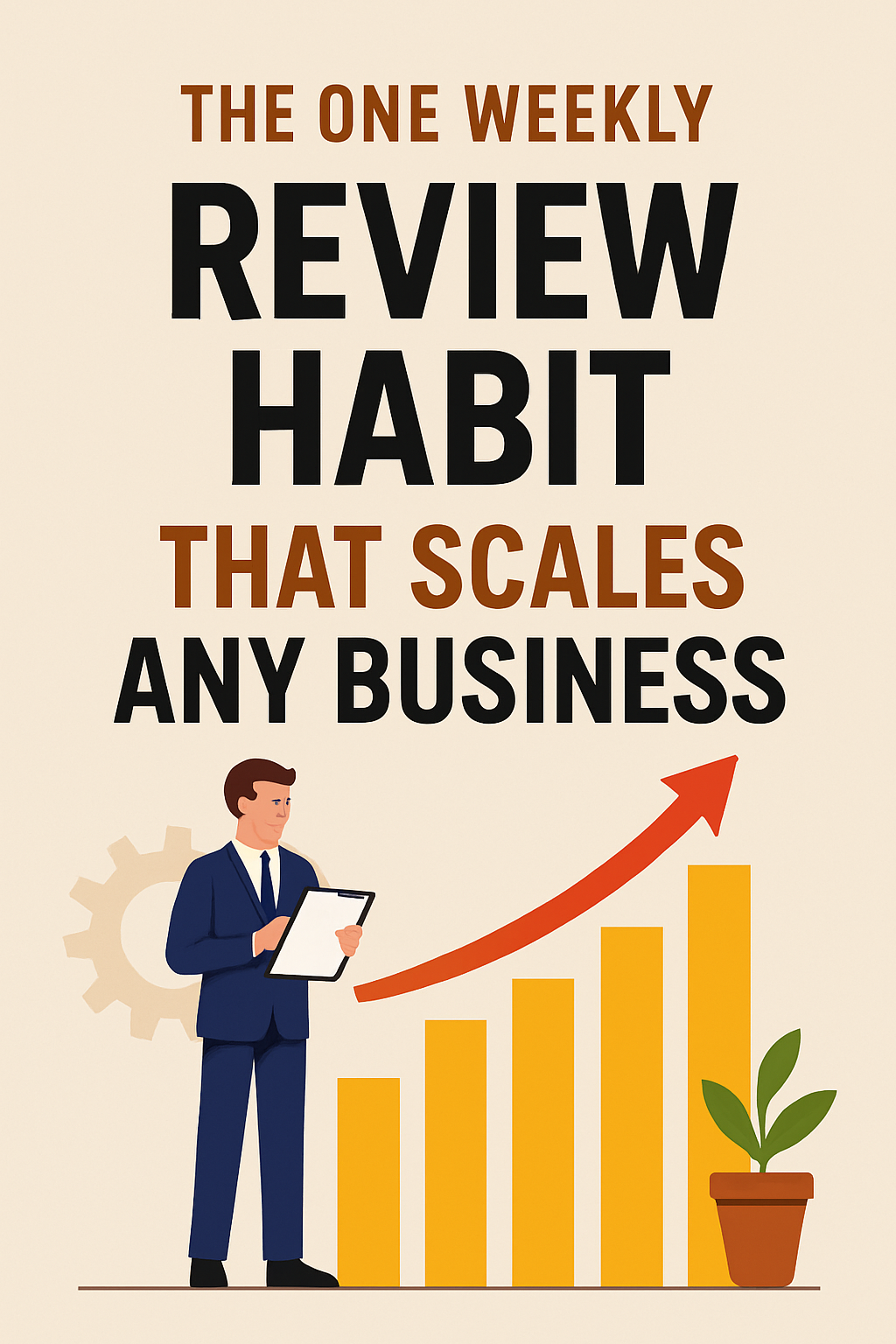
The One Weekly Review Habit That Scales Any Business

The One Weekly Review Habit That Scales Any Business

In the whirlwind of running a business, it’s easy to get lost in the daily grind. You’re constantly reacting, putting out fires, and chasing the next urgent task. But while you’re busy doing, are you truly growing? Are you strategically moving your business forward, or just staying afloat?

The most successful entrepreneurs aren’t just working harder; they’re working smarter. And one of their most potent, yet often overlooked, weapons is a simple, non-negotiable weekly review habit. This isn’t just about glancing at your to-do list; it’s a structured, proactive process that can unlock clarity, identify leverage points, and ultimately, scale any business.

The Secret Sauce: The Structured Weekly Review

The “one habit” isn’t merely reflection; it’s a disciplined feedback loop designed to transform chaos into control and activity into progress. It’s the dedicated time you pull yourself out of the weeds to work on your business, not just in it.

Here’s the core of what it entails:

  • Clear Your Decks: Collect all loose papers, notes, emails, and tasks. Get everything out of your head and into a trusted system.
  • Review the Past Week: What did you accomplish? What fell short? Why?
  • Assess Your Progress Against Goals: Were you on track with your quarterly or annual objectives?
  • Identify Bottlenecks & Opportunities: Where did you get stuck? What new possibilities emerged?
  • Plan the Next Week Strategically: Based on your insights, define your key priorities and actions for the upcoming week.

Why This Habit Scales Your Business (The Unseen Leverage)

This isn’t just about ticking boxes; it’s a powerful mechanism for growth:

  • Clarity from Chaos: Your brain is a terrible filing cabinet but a great processing unit. By externalizing all the fragmented thoughts and tasks, you reduce cognitive load. This frees up mental bandwidth for strategic thinking, innovation, and problem
Why the World’s Richest Men Practice Daily Stillness (And You Should Too)

Why the World’s Richest Men Practice Daily Stillness (And You Should Too)

It’s fascinating, isn’t it? In a world that glorifies constant motion and packed schedules, some of the most influential and successful people on the planet are deliberately carving out time for… well, nothing. They practice stillness. And it’s not just a trend; it’s a strategic weapon for unparalleled clarity and performance.

In an age of relentless notifications and the pressure to always be “on,” true stillness seems counter-intuitive. Yet, from legendary investors to tech visionaries, many of the world’s wealthiest individuals attribute a significant portion of their success to a consistent practice of quiet reflection, contemplation, or meditation. This isn’t about escaping reality; it’s about mastering it.

What Does “Stillness” Really Mean?

Stillness isn’t necessarily sitting cross-legged chanting “Om.” For these high-achievers, it can mean:

  • Mindful Moments: A few minutes of deep breathing before checking email.
  • Contemplative Walks: A solitary stroll without a phone, simply observing.
  • Scheduled Reflection: Blocking out time in the calendar just to think, read, or stare out a window.
  • Meditation: Formal practice, often Transcendental Meditation (TM) or Vipassana.

The common thread? Deliberately disconnecting from external noise to connect with internal wisdom.

The Brain Science Behind the Billion-Dollar Benefit

This isn’t woo-woo; it’s hard science:

  1. Reduced Stress & Cortisol: Stillness activates the parasympathetic nervous system (our “rest and digest” mode), significantly lowering the stress hormone cortisol. Studies have shown even short periods of silence can reduce heart rate and blood pressure more effectively than relaxing music.
  2. Enhanced Prefrontal Cortex Function: Regular stillness practices, particularly meditation, have been shown to thicken the prefrontal cortex, the brain’s command center for decision-making, planning, and emotional regulation. This leads to clearer, more rational choices under pressure.
  3. Boosted Creativity & Insight: When the brain isn’t constantly reacting to external stimuli, its Default Mode Network (DMN) — often associated with mind-wandering and rumination — can quiet down. This creates mental space for “aha!” moments, innovative ideas, and deeper insights that don’t emerge from frantic activity. An animal study from 2013 even suggested silence can stimulate the growth of new cells in the hippocampus, related to memory.
  4. Improved Focus & Attention: Stillness acts like a workout for your attention muscle. By gently bringing your mind back to the present moment, you strengthen your ability to sustain focus and resist distractions throughout the day.

Real Examples: Billionaires Who Swear By Stillness

  • Ray Dalio (Founder, Bridgewater Associates): The founder of the world’s largest hedge fund credits Transcendental Meditation (TM) as “the single biggest reason for whatever success I’ve had.” He practices 20 minutes, twice a day, calling it a “20-minute vacation” that gives him “calmness and equanimity” and helps him make better decisions. He started after being inspired by The Beatles in 1968.
  • Jack Dorsey (Co-founder, Twitter & Block): Known for extreme routines, Dorsey used to undertake 10-day silent Vipassana meditation retreats annually, meditating up to 17 hours a day and abstaining from speaking. He attributes his ability to “stay above water” amidst the stress of running two major companies to this practice, providing him “enhanced mental clarity.”
  • Bill Gates (Co-founder, Microsoft): Once skeptical, Gates now meditates 2-3 times a week for about 10 minutes. He calls it “exercise for the mind” and notes it helps him “think more clearly” and “gain a little bit of distance” from his thoughts. He even schedules “Think Weeks” where he isolates himself just to read and contemplate.
  • Oprah Winfrey (Media Mogul): A long-time proponent of mindfulness, Oprah introduced TM to her entire staff. She emphasizes that meditation helps her to “quiet the noise” and access her “inner wisdom,” enabling her to make impactful decisions for her media empire.

How YOU Can Practice Daily Stillness

You don’t need a private island or hours of free time. Start small, be consistent:

  1. The Micro-Pause: Take 1-2 minutes every hour to simply stop. Close your eyes, take a few deep breaths, and notice your surroundings without judgment.
  2. Digital Boundaries: Implement a “no-phone zone” for the first 30 minutes of your morning and the last 30 minutes before bed. Let your mind wander freely.
  3. Mindful Movement: Turn a walk, your commute, or even doing dishes into a stillness practice. Focus entirely on the sensations, sounds, and sights. No podcasts, no calls.
  4. Scheduled Reflection: Block 5-15 minutes in your calendar each day (or even just 3x a week) for intentional non-doing. This is your brain’s recovery time.
  5. Use a Timer: For formal meditation, start with just 5 minutes. As Ray Dalio and Jack Dorsey show, consistency builds over time.

The Ultimate Competitive Edge

In a world drowning in data and distraction, stillness is your ultimate competitive advantage. It’s the secret weapon that allows the world’s most successful individuals to think clearly, innovate boldly, and lead with purpose.

By embracing daily stillness, you’re not just finding peace; you’re cultivating the mental acuity, emotional resilience, and visionary insight required to thrive in any endeavor.

What’s your favorite way to find stillness amidst the chaos? Share in the comments below!

7 Brain-Training Habits Every Successful Businessman Uses Before 9 AM

1. The 5-Minute Mind Reset: Conscious Breathing

  • What it is: Not full meditation, just 5 deep, intentional breaths. Focus purely on the inhale & exhale.
  • Science: Activates your parasympathetic nervous system (the “rest and digest” mode). This instantly lowers cortisol (stress hormone) and increases vagal tone, improving emotional regulation.
  • Who uses it: Oprah Winfrey starts her day with moments of quiet reflection and breath work, crediting it with bringing clarity and calm before her demanding schedule kicks in.
  • Impact: Shifts you from reactive stress to a state of calm, centered readiness. Eliminates morning chaos from your mind.

2. Hydrate & Activate: The Big Glass of Water Hack

  • What it is: First thing out of bed, chug 16-20 oz of plain water. Add lemon for an extra kick.
  • Science: Your body is dehydrated after 7-8 hours of sleep. Rehydration boosts brain performance (cognitive function) and energy. Even mild dehydration can impair concentration and memory.
  • Who uses it: Tech mogul Tim Cook is known to wake up “very early” and drink a big glass of water, setting his body and mind in motion before diving into emails.
  • Impact: Wakes up your cells, kickstarts metabolism, and instantly improves mental alertness, warding off the morning “brain fog.”

3. Move Your Mind: The Morning Burst

  • What it is: A short, intense burst of physical activity. Could be 10 minutes of burpees, jumping jacks, or a brisk walk.
  • Science: Exercise increases blood flow to the brain, releasing BDNF (Brain-Derived Neurotrophic Factor) – essentially “Miracle-Gro” for your brain cells. It also boosts dopamine and serotonin.
  • Who uses it: Richard Branson starts most days with kitesurfing, tennis, or a run. He famously says exercise gives him “at least four hours of extra productive time” daily.
  • Impact: Sharpens focus, enhances creativity, reduces stress, and boosts mood for hours. Your brain wakes up, ready to tackle complex problems.

4. The “No-Swipe” Zone: Phone Detox

  • What it is: Keep your phone out of reach for the first 30-60 minutes after waking. No checking emails, news, or social media.
  • Science: Avoiding immediate digital input prevents your brain from entering a reactive state (constant distraction). It allows your prefrontal cortex to activate and set your own agenda.
  • Who uses it: Bill Gates used to be known for his deep work focus. While his routine has evolved, many highly productive leaders enforce a “no-screens” rule to protect their morning ideation time. Real users are now adopting this, too!
  • Impact: Protects your mental clarity. You initiate your day on your terms, not in response to others’ demands, fostering proactive thinking.

5. Prime Your Day: The “Top 3” Decision

  • What it is: Before the workday officially begins, identify your absolute top 3 highest-impact tasks for the day. Write them down.
  • Science: This leverages the Zeigarnik Effect, where incomplete tasks create mental tension. By clearly defining tasks, you reduce cognitive load and activate your brain’s “goal-seeking” mechanism.
  • Who uses it: Many CEOs, including Indra Nooyi (former PepsiCo CEO), are known for meticulous daily planning that prioritizes critical objectives. This structure allows focused execution.
  • Impact: Eliminates decision fatigue, ensures you focus on what truly matters, and provides a clear mental roadmap for your most productive hours.

6. Future Focus: Quick Visualization

  • What it is: Spend 2-3 minutes vividly imagining yourself successfully achieving your daily goals or a long-term aspiration. Feel the emotions of success.
  • Science: Neuroplasticity allows your brain to “rehearse” success. Visualization activates the same neural pathways as actually performing the action, building confidence and readiness.
  • Who uses it: Renowned motivational speaker and businessman Tony Robbins frequently discusses the power of “priming” and visualization to prepare for success.
  • Impact: Boosts confidence, reduces anxiety, and subconsciously aligns your actions throughout the day with your desired outcomes.

7. Fuel Your Growth: Intelligent Input

  • What it is: Dedicate 15-20 minutes to consume high-quality information: read a business book, listen to an educational podcast, or review industry reports.
  • Science: This taps into the brain’s neurogenesis (creation of new neurons) and synaptic plasticity, keeping your mind agile and open to new ideas. It’s active learning.
  • Who uses it: Warren Buffett famously spends a significant portion of his day reading. Bill Gates also devotes time to reading diverse non-fiction, attributing much of his learning and success to this habit.
  • Impact: Continuously expands your knowledge base, sparks new ideas, and keeps your thinking sharp and adaptable in an ever-changing business landscape.
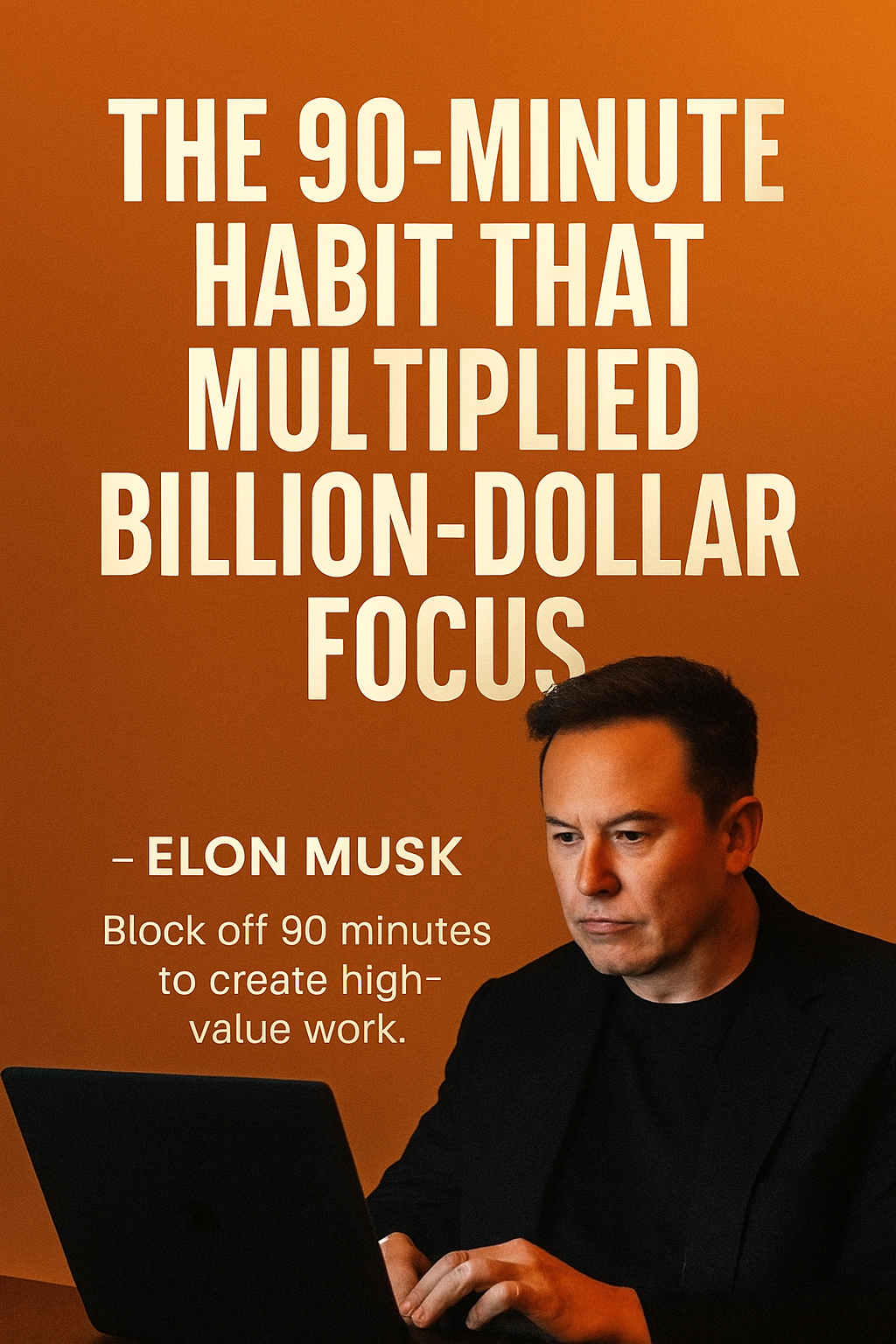
The 90-Minute Habit That Multiplied Billion-Dollar Focus

In today’s hyper-connected world, true focus feels like a superpower. We’re constantly bombarded by notifications, emails, and the endless scroll of social media. Yet, amidst this digital cacophony, a simple, powerful habit is consistently employed by the world’s most successful entrepreneurs to achieve extraordinary results: the 90-minute deep work session.

Think of visionaries like Elon Musk, known for his relentless pursuit of innovation, or Twitter co-founder Jack Dorsey, who masterfully balances multiple ventures. Their secret isn’t magic; it’s a deliberate commitment to uninterrupted, high-concentration work. They block out 90-minute segments each morning, free from distractions, calls, or emails. This isn’t just a quirky habit; it’s rooted in fascinating brain science.

The Science of Peak Performance: Your Ultradian Rhythm

Our bodies operate on natural cycles, not just the 24-hour circadian rhythm that dictates sleep and wakefulness. We also experience Ultradian Rhythms, roughly 90-minute cycles where our brains can maintain peak concentration and energy. After this period, our productivity naturally dips, and we need a short break to recharge.

Trying to push beyond this natural rhythm leads to diminishing returns, increased errors, and burnout. Ignoring it is like trying to run a marathon without taking sips of water – you’ll eventually hit a wall. Top performers understand this intrinsic biological wiring and leverage it to their advantage.

Real-World Impact: How Billionaires Harness Deep Work

Consider Elon Musk’s famously intense work ethic. While he’s known for breaking his day into demanding 5-minute blocks, his most complex and creative problem-solving – the engineering sessions that move the needle on his audacious goals – are always conducted in focused, uninterrupted 90-minute chunks. He safeguards this time fiercely, knowing it’s where true innovation happens.

This isn’t about being glued to your desk for 12 hours straight. It’s about optimizing the most valuable hours of your day for maximum output and quality.

Your Path to Billionaire Focus: Implementing the 90-Minute Rule

Ready to transform your own productivity? Here’s how to integrate the 90-minute deep work rule into your routine:

  1. Identify Your “Most Important Task” (MIT): Before you begin, clearly define the single most impactful task you need to accomplish. This isn’t clearing your inbox; it’s the work that truly moves you closer to your biggest goals.
  2. Set the Timer: Choose a 90-minute timer. This firm boundary helps train your brain to focus intently during that specific period.
  3. Eliminate All Distractions: This is non-negotiable.
    • Turn off all notifications: Phone, email, social media, Slack – everything. Put your phone in another room if necessary.
    • Close unnecessary tabs: Your browser should only have what you absolutely need for your MIT.
    • Inform others: If possible, let colleagues or family know you’ll be unavailable for the next 90 minutes.
    • Create your sanctuary: Ensure your workspace is clean, organized, and conducive to deep concentration.
  4. Dive In (No Warm-Up): Resist the urge to “just check one more thing” or do shallow work before you start. Immediately immerse yourself in your MIT.
  5. Take a Real Break: When the timer goes off, step away. Stretch, grab a drink, walk around, or do something completely unrelated to work for 15-30 minutes. This allows your brain to consolidate information and recharge for the next focused burst.
  6. Consistency is Key: Aim to implement at least one 90-minute deep work session, five times a week. That’s 450 minutes of your highest-level, most impactful work – the kind that builds businesses, finishes projects, and accelerates careers.

The Unseen Advantage

Beyond increased output, consistently practicing deep work cultivates a stronger, more resilient focus muscle. You’ll find yourself less susceptible to digital distractions, more capable of tackling complex problems, and experiencing a profound sense of accomplishment at the end of each session.

This isn’t about working harder; it’s about working smarter and leveraging your brain’s natural rhythms for unparalleled productivity.

Want to unlock your own billionaire focus? Start with that 90-minute window today. What will your first deep work session be dedicated to? Share in the comments below!

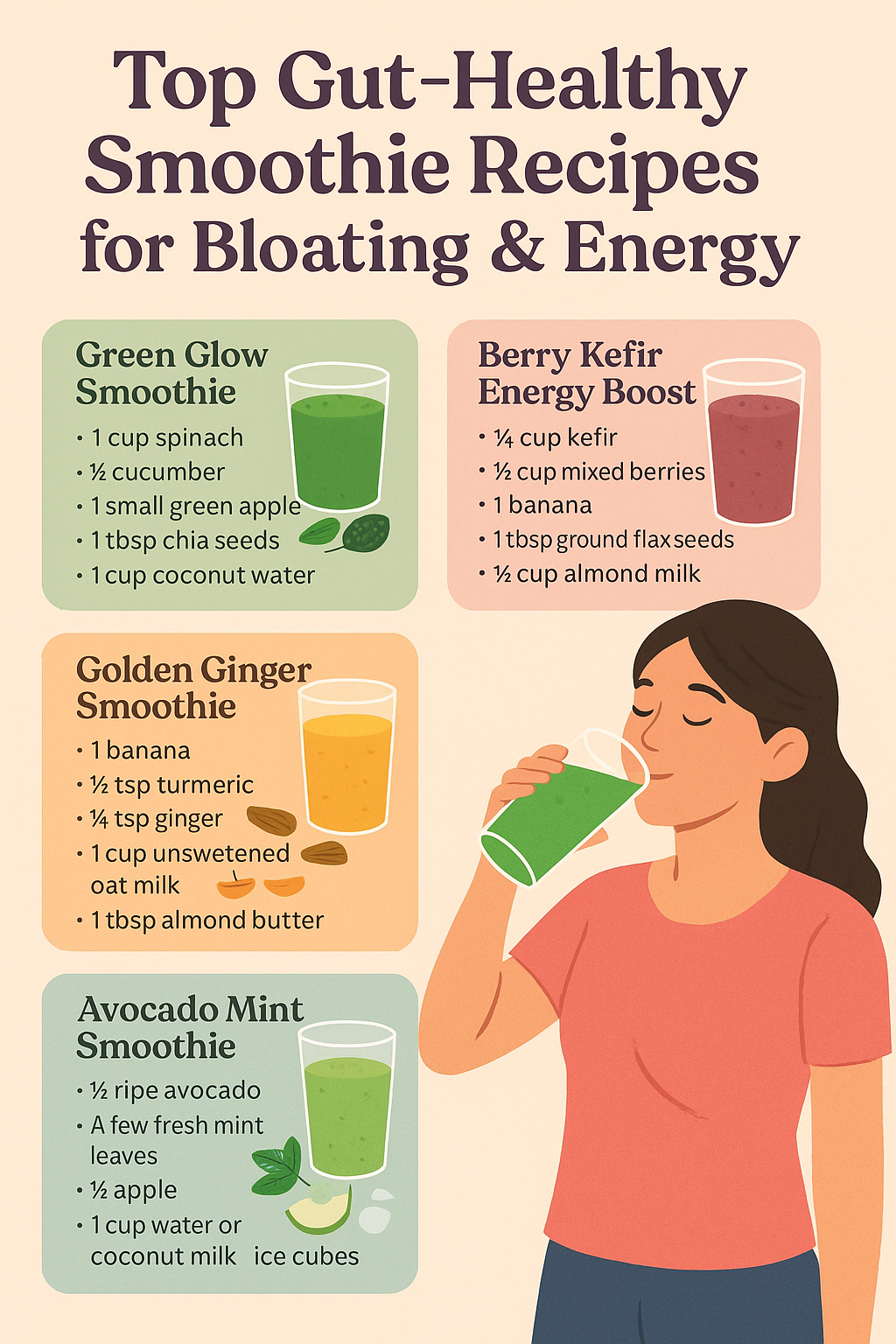
Top Gut-Healthy Smoothie Recipes for Bloating & Energy

If you often feel bloated or tired, your gut might need a little extra love. Smoothies are an easy and delicious way to support digestion, reduce bloating, and boost your energy naturally. By blending gut-friendly ingredients like fiber, probiotics, and healthy fats, you can give your body a refreshing reset.

Here are some of the best gut-healthy smoothie recipes that are perfect for women who want to feel light, active, and nourished.

Green Glow Smoothie (for Bloating Relief)

This smoothie is full of fiber and enzymes that calm the stomach and support digestion.

Ingredients:

  1. 1 cup spinach
  2. ½ cucumber
  3. 1 small green apple
  4. 1 tbsp chia seeds
  5. 1 cup coconut water
  6. Juice of ½ lemon

Why it works: Spinach and cucumber reduce bloating, lemon boosts digestion, and chia adds fiber to cleanse the gut.

Berry Kefir Energy Boost (for Gut + Mood)

A probiotic-packed option that fuels your morning and keeps your gut bacteria happy.

Ingredients:

  • ½ cup kefir (or plain yogurt)
  • ½ cup mixed berries (blueberry, strawberry, raspberry)
  • 1 banana
  • 1 tbsp ground flaxseeds
  • ½ cup almond milk

Why it works: Berries are anti-inflammatory, kefir gives good bacteria, and banana offers natural energy and sweetness.

Golden Ginger Smoothie (for Inflammation & Digestion)

This warm, spiced smoothie is perfect for calming the belly and reducing gas.

Ingredients:

  • 1 banana
  • ½ tsp turmeric
  • ¼ tsp ginger powder or fresh ginger
  • 1 cup unsweetened oat milk
  • 1 tbsp almond butter

Why it works: Turmeric and ginger are natural anti-inflammatory ingredients that also ease bloating and gas.

Avocado Mint Smoothie (for Long-Lasting Energy)

Creamy and refreshing — perfect for staying full and focused.

Ingredients:

  • ½ ripe avocado
  • A few fresh mint leaves
  • ½ apple
  • 1 cup water or coconut milk
  • Ice cubes

Why it works: Avocado has healthy fats for energy, while mint calms the stomach.

Best tip

Drink your smoothie slowly, preferably in the morning or mid-day. Don’t gulp it down. Let your body absorb the nutrients fully for best gut benefits.

Really read this

These smoothies aren’t just tasty — they’re a gentle way to support your gut, reduce bloating, and boost natural energy without caffeine or heavy meals. With just a blender and simple ingredients, you can feel lighter and more energized every day!

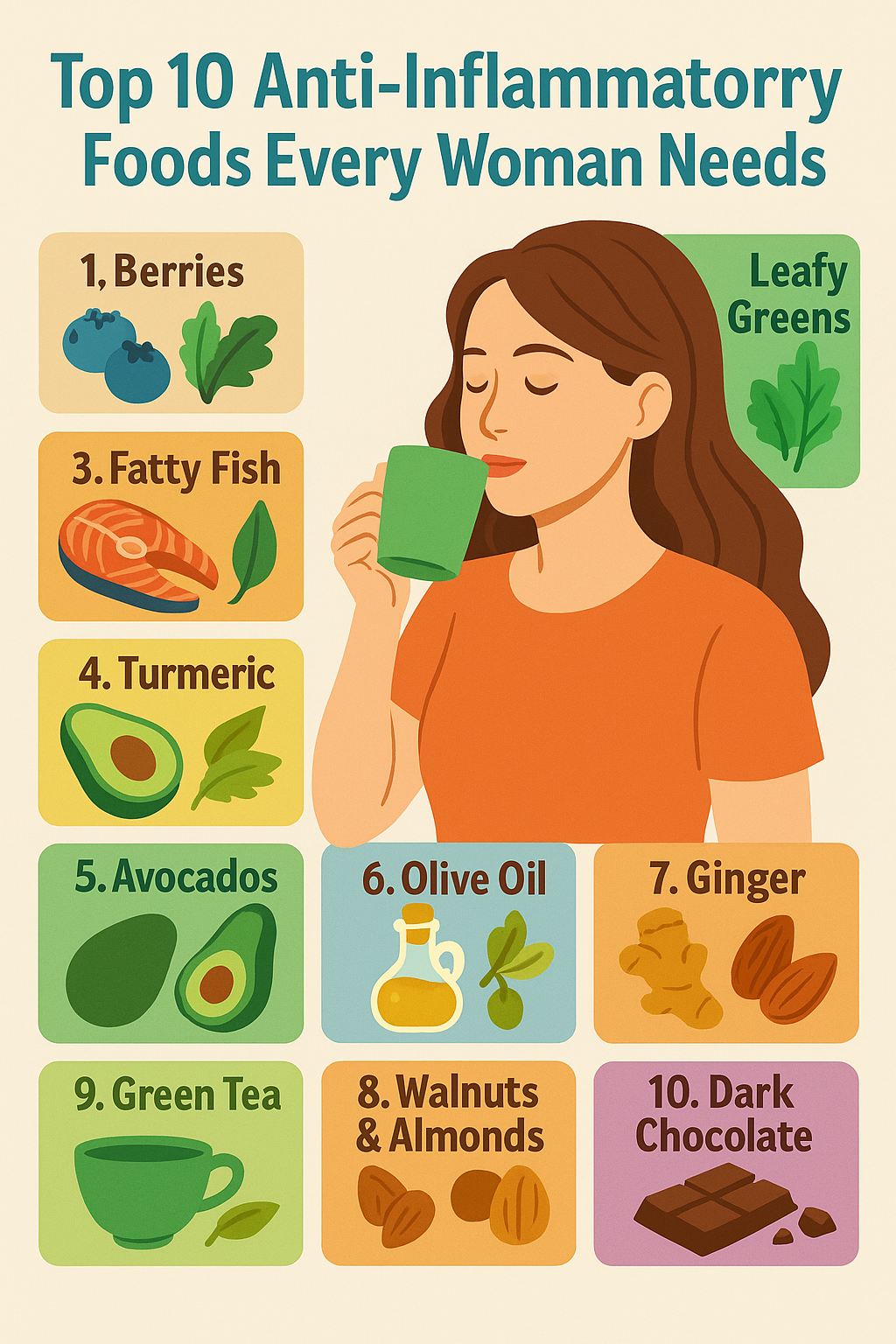
Top 10 Anti-Inflammatory Foods Every Woman Needs

Inflammation is your body’s natural response to injury or stress, but too much of it can lead to chronic problems like joint pain, acne, bloating, fatigue, or hormone imbalance. Luckily, food can be powerful medicine. Certain foods help cool down inflammation and support your body from the inside out.

Here are the top 10 anti-inflammatory foods every woman should include in her weekly meals to feel lighter, stronger, and more balanced

1. Berries (Blueberries, Strawberries, Raspberries)

Packed with antioxidants and fiber, berries help reduce inflammation and protect your skin and heart.
Try in: Smoothies, yogurt bowls, or oatmeal.

2. Leafy Greens (Spinach, Kale, Swiss Chard)

These greens are rich in vitamins A, C, and K — all great for reducing inflammation and detoxing the body.
Try in: Salads, wraps, or smoothies.

3. Fatty Fish (Salmon, Sardines, Mackerel)

Loaded with omega-3s, these help lower inflammation and support brain, heart, and hormone health.
Try in: Grilled with veggies or in a salad.

4. Turmeric

This golden spice contains curcumin, a powerful anti-inflammatory compound that helps ease joint pain and PMS symptoms.
Try in: Warm turmeric milk, curries, or soups.

5. Avocados

Full of healthy fats and potassium, avocados help fight bloating and nourish your skin from within.
Try in: Toast, smoothies, or salads.

6. Olive Oil

Extra virgin olive oil is rich in antioxidants and supports heart and hormone balance.
Try in: Salad dressings or drizzled over cooked veggies.

7. Ginger

Ginger is great for digestion, bloating, and calming the body during stress or cramps.
Try in: Herbal tea, soups, or stir-fries.

8. Walnuts & Almonds

These nuts are a great source of omega-3s, vitamin E, and protein — all of which reduce inflammation.
Try in: Snack packs or yogurt toppers.

9. Green Tea

Known for its calming effect and antioxidants, green tea supports metabolism and reduces body inflammation.
Try in: Morning or mid-afternoon.

10. Dark Chocolate

Yes — in moderation, dark chocolate (70% or more) is full of antioxidants that help protect your cells and fight inflammation.
Try in: A square after dinner or in a smoothie.

Read carefully

Adding anti-inflammatory foods into your everyday meals doesn’t need to be complicated. Just a few simple swaps — like olive oil instead of butter, berries instead of sugar, or tea instead of soda — can make a huge difference. Nourish your body with love and feel the benefits from the inside out.

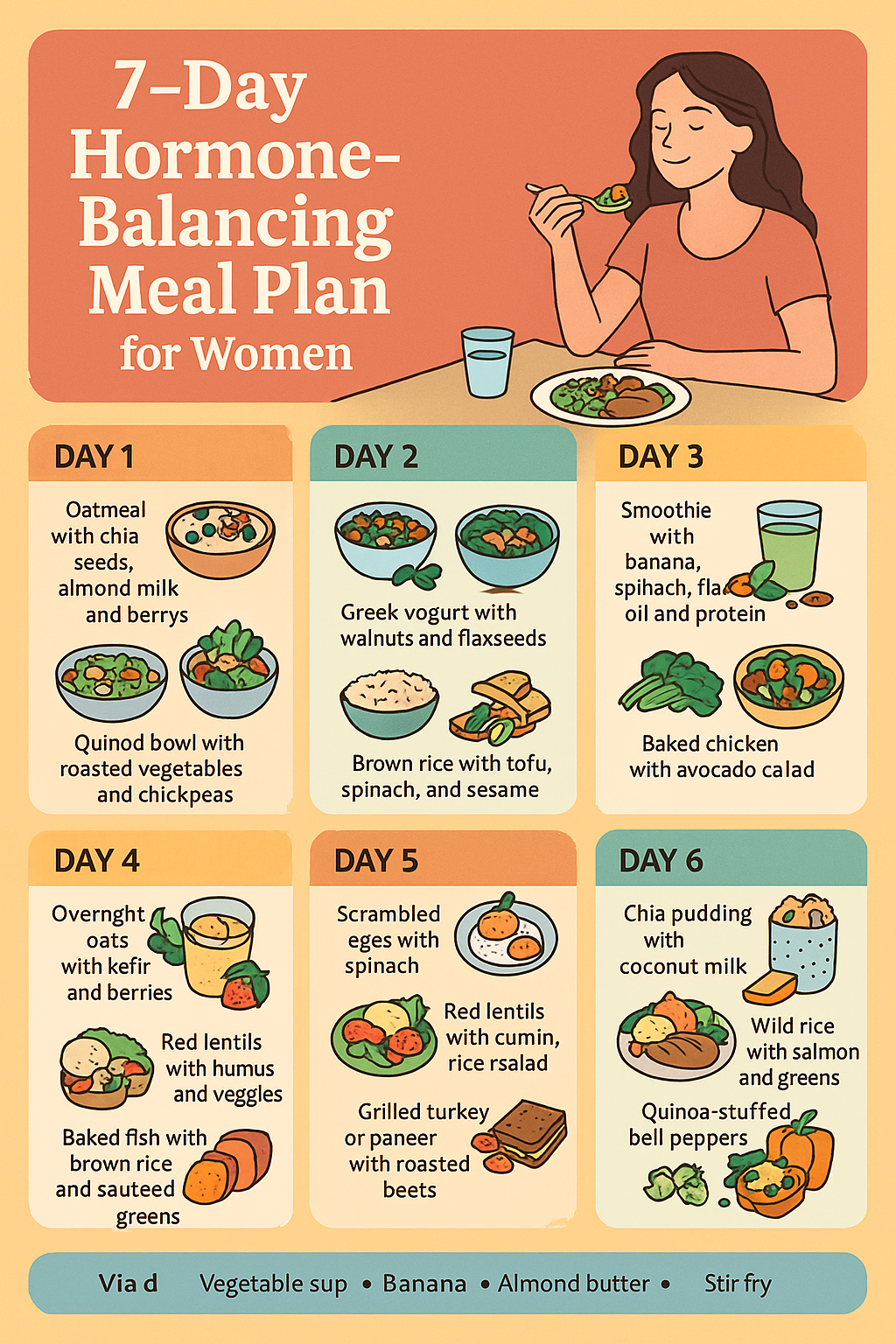
7-Day Hormone-Balancing Meal Plan for Women

Hormones affect everything — your energy, mood, sleep, weight, and even skin. The right food can support your hormones naturally and bring your body back into balance. This 7-day meal plan is designed to help women feel better by using simple, nourishing ingredients that support hormone health.

Each day includes meals that are rich in healthy fats, fiber, lean proteins, and essential vitamins to help keep your hormones happy and stable.

Day 1 – Focus on Fiber and Healthy Fats

  • Breakfast: Oatmeal with chia seeds, almond milk, and berries
  • Lunch: Quinoa bowl with roasted vegetables and chickpeas
  • Dinner: Grilled salmon with steamed broccoli and sweet potato
    Fiber helps your body clear out extra estrogen, while healthy fats support hormone production.

Day 2 – Keep Blood Sugar Steady

  • Breakfast: Greek yogurt with walnuts and flaxseeds
  • Lunch: Brown rice with tofu, spinach, and sesame dressing
  • Dinner: Baked chicken with avocado salad
    Balanced meals reduce sugar spikes and mood swings.

Day 3 – Add Anti-Inflammatory Foods

  • Breakfast: Smoothie with banana, spinach, flax oil, and protein
  • Lunch: Lentil soup with carrots and celery
  • Dinner: Stir-fried veggies with turmeric and grilled paneer
    These foods calm your body’s stress levels and support hormone detox.

Day 4 – Support Your Gut Health

  • Breakfast: Overnight oats with kefir and berries
  • Lunch: Whole wheat wrap with hummus and veggies
  • Dinner: Baked fish with brown rice and sautéed greens
    Good gut health = better hormone balance and improved mood.

Day 5 – Nourish with Protein and Iron

  • Breakfast: Scrambled eggs with spinach
  • Lunch: Red lentils with cumin, rice, and salad
  • Dinner: Grilled turkey or paneer with roasted beets
    Iron-rich foods help during your menstrual phase to prevent fatigue.

Day 6 – Boost Omega-3 and Magnesium

  • Breakfast: Chia pudding with coconut milk
  • Lunch: Wild rice with salmon and greens
  • Dinner: Quinoa-stuffed bell peppers with pumpkin seeds
    Omega-3s and magnesium reduce cramps and improve hormone function.

Day 7 – Light, Balanced, and Relaxing

  • Breakfast: Herbal tea with banana and almond butter toast
  • Lunch: Vegetable soup with beans
  • Dinner: Stir-fry with tofu, brown rice, and ginger
    This day focuses on digestion and calm before restarting your next cycle.

Read carefully

This meal plan is not about strict rules — it’s about eating whole, nourishing foods that support your body’s natural rhythm. By adding these hormone-friendly meals to your week, you’ll feel more balanced, energized, and in tune with your body.