This Daily Routine Helped Me Feel Less Alone — It’s Unbelievably Simple

This Daily Routine Helped Me Feel Less Alone — It’s Unbelievably Simple

“I didn’t realize how lonely I felt… until I finally sat with myself.”

Whether you’re studying abroad, living in a new city, or simply feeling emotionally distant from your family and friends, the weight of loneliness can creep in quietly. I felt it too — until I started this one daily practice that’s surprisingly simple… and deeply effective.

What Changed Everything?

A 10-minute morning routine designed to bring me back to myself.

Not texts. Not calls. Not more scrolling. Just a short ritual that grounds you, connects you, and gently dissolves the feeling of isolation.

Step 1: Wake Up Without the Phone

The first shift? I stopped grabbing my phone first thing. Instead of absorbing other people’s world, I started with mine.

Try this: Put your phone in another room. For the first 10 minutes, focus on what you feel, hear, or need — not what Instagram says.

Step 2: Sit in Stillness (Just 2 Minutes)

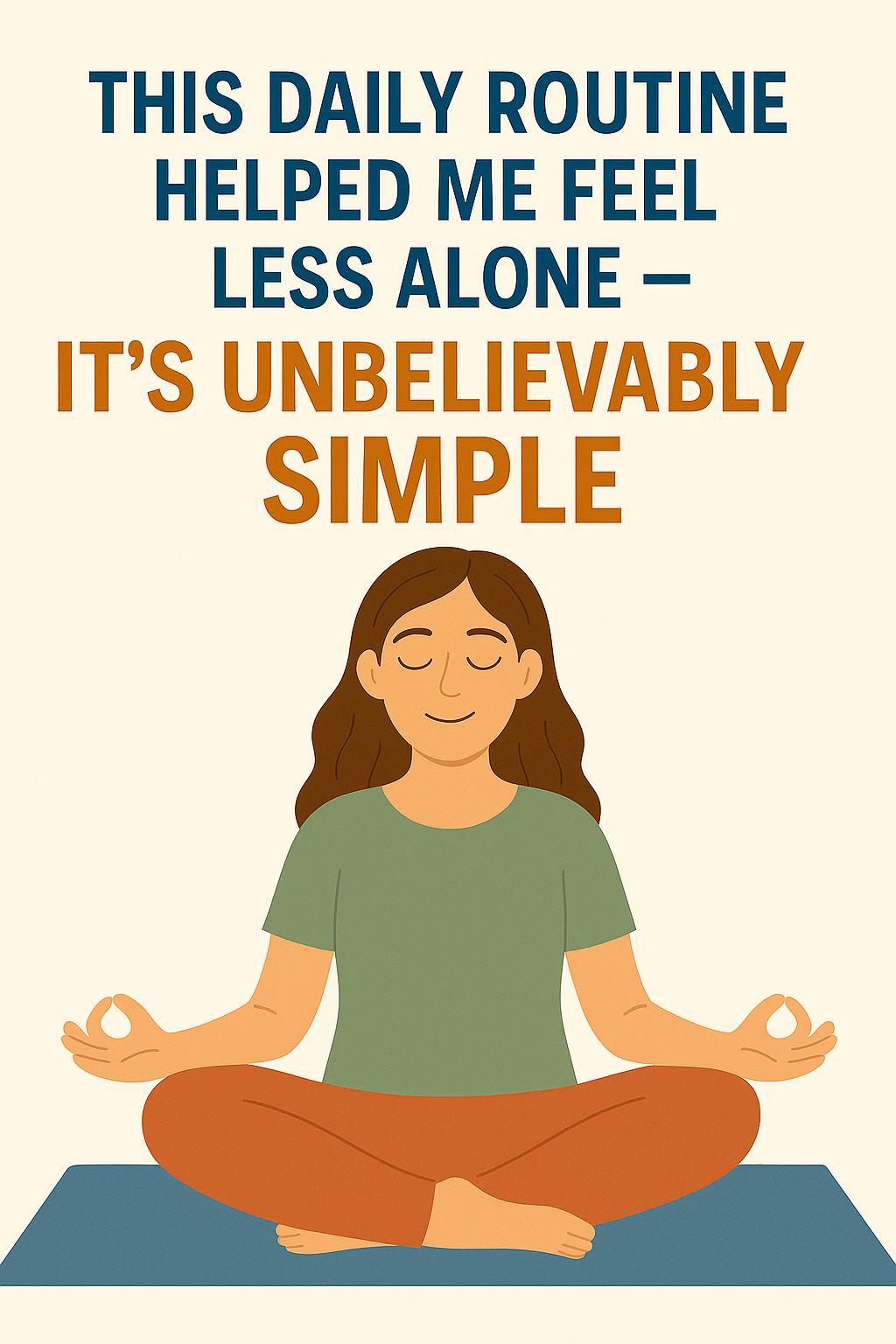
I’d sit cross-legged on my yoga mat, eyes closed. No pressure to “meditate perfectly.” Just breathing. Noticing the quiet.

At first it felt odd. Then… peaceful.

Tip: Set a 2-minute timer. That’s all. Even that is enough to reset your nervous system.

Step 3: Gentle Movement (Yoga or Stretching)

I’d do 5 minutes of slow stretches — child’s pose, cat-cow, forward bend. My goal wasn’t fitness. It was feeling my body again.

And when you connect to your body, your mind starts to quiet down. Loneliness softens when you’re fully present in yourself.

Optional: Play soft instrumental music or nature sounds in the background.

Step 4: Journal 3 Lines

After movement, I opened my notebook and wrote just 3 simple things:

  • One sentence about how I feel
  • One thing I’m grateful for
  • One thing I’m looking forward to

No fancy prompts. Just real emotions. Over time, this became my anchor.

Why This Works (Backed by Psychology)

  • Routine = Emotional Safety: Consistency tells your brain that you’re supported.
  • Self-connection = Reduced Loneliness: People who spend intentional time alone feel less lonely than those who distract themselves constantly.
  • Mind-body focus = Present Moment Awareness: Which lowers cortisol and improves mood.

The Surprising Outcome?

After two weeks, I started feeling a deep calm. Not because my life changed — but because I was no longer avoiding myself.

I became my own safe space. And that, surprisingly, made it easier to connect with others too — without clinging or needing.

Want to Try It?

Here’s your simple version to start tomorrow:

10-Minute Anti-Loneliness Morning Routine

  • 2 min stillness (eyes closed, just breathe)
  • 5 min gentle yoga/stretching
  • 3 lines of journaling

That’s it. No phone. No pressure. No noise.

Final Thought: You Are Never Truly Alone

Sometimes the best way to feel less alone is to first meet the version of you that’s been waiting for your attention.

Try this for 7 days. Let it surprise you like it did for me.


Tags: beat loneliness, simple daily routine, mindfulness, emotional self-care, morning habits, yoga and journaling, solo living wellness tips

You Won’t Believe These 7 Habits Actually Help Beat Loneliness

Feeling lonely while living far from your family? These unexpected daily habits are not just comforting — they retrain your brain to feel emotionally supported, even when you’re alone.

Why This Matters

Whether you’ve moved to a new city for work, live abroad for education, or just don’t have close family around — loneliness can hit hard. And it’s not about being alone; it’s about feeling disconnected.

But here’s the good news: You can rewire your emotional patterns with a few simple habits — and no, it’s not just about “calling home more.”

Let’s dive into 7 habits that actually work — backed by neuroscience, mental health research, and real-life experience.

1. Voice-Note Ritual: 2 Minutes a Day

Instead of long calls, send a daily 2-minute voice note to a loved one — a sibling, cousin, parent, or friend. It removes the pressure of a full conversation but still builds connection. Hearing each other’s voice builds emotional warmth, even asynchronously.

Bonus tip: Save one special voice message and replay it when you’re feeling low.

2. “Familiar Joy” Playlist

Create a playlist of songs from your childhood, family road trips, or cultural background. Studies show music linked to strong emotional memories triggers oxytocin — the same hormone that creates bonding.

Do this: Start your morning with one nostalgic song. It triggers a sense of belonging instantly.

3. Evening “Check-In Journal”

Write just 3 lines every night:

  • What did I feel today?
  • What helped me cope?
  • What’s one thing I’m grateful for?

This short reflection rewires your brain to process emotions, instead of letting them pile up. It’s a loneliness disruptor.

Surprise Benefit: People who journal for just 5 minutes daily report feeling 25% more connected to themselves after two weeks.

4. Send a “Throwback Photo” Weekly

Pick one old family photo and send it to a sibling or cousin with a line like: “Remember this day? Can’t believe how long it’s been!”

You’ll be shocked how such a small gesture can reignite long-lost bonds and start meaningful conversations.

5. Go for a 10-Minute Walk Without Your Phone

Yes, alone — but completely present. Loneliness shrinks when we connect with our environment. Walking phone-free boosts endorphins, mindfulness, and even random social interactions.

Try this today: Walk the same route for a week. Wave at the same shopkeeper or smile at one stranger each time.

6. Volunteer Online (or Offline)

Helping others is one of the most underrated ways to beat loneliness. Whether it’s mentoring a student virtually or feeding stray animals, contributing makes you feel part of something bigger than yourself.

Fact: Volunteering reduces loneliness more effectively than therapy for many young adults, according to a 2023 UK study.

7. Create a “Comfort Corner” in Your Room

Set up one corner with soft lights, a blanket, a framed family photo, and one book you love. It becomes your emotional reset zone — a visual and sensory reminder that you are safe and supported.

Mini habit: Spend 5 minutes here with a cup of tea before bed, without scrolling.

Final Thought: Loneliness ≠ Lack of People

It’s about lack of connection. And connection doesn’t always need others — it can begin with you.

Pick just one habit from this list and practice it for 7 days. You’ll be surprised how your inner world shifts — even if your outer world stays the same.


Tags: beat loneliness, emotional connection, living away from family, daily wellness habits, mental health tips, self-care routines

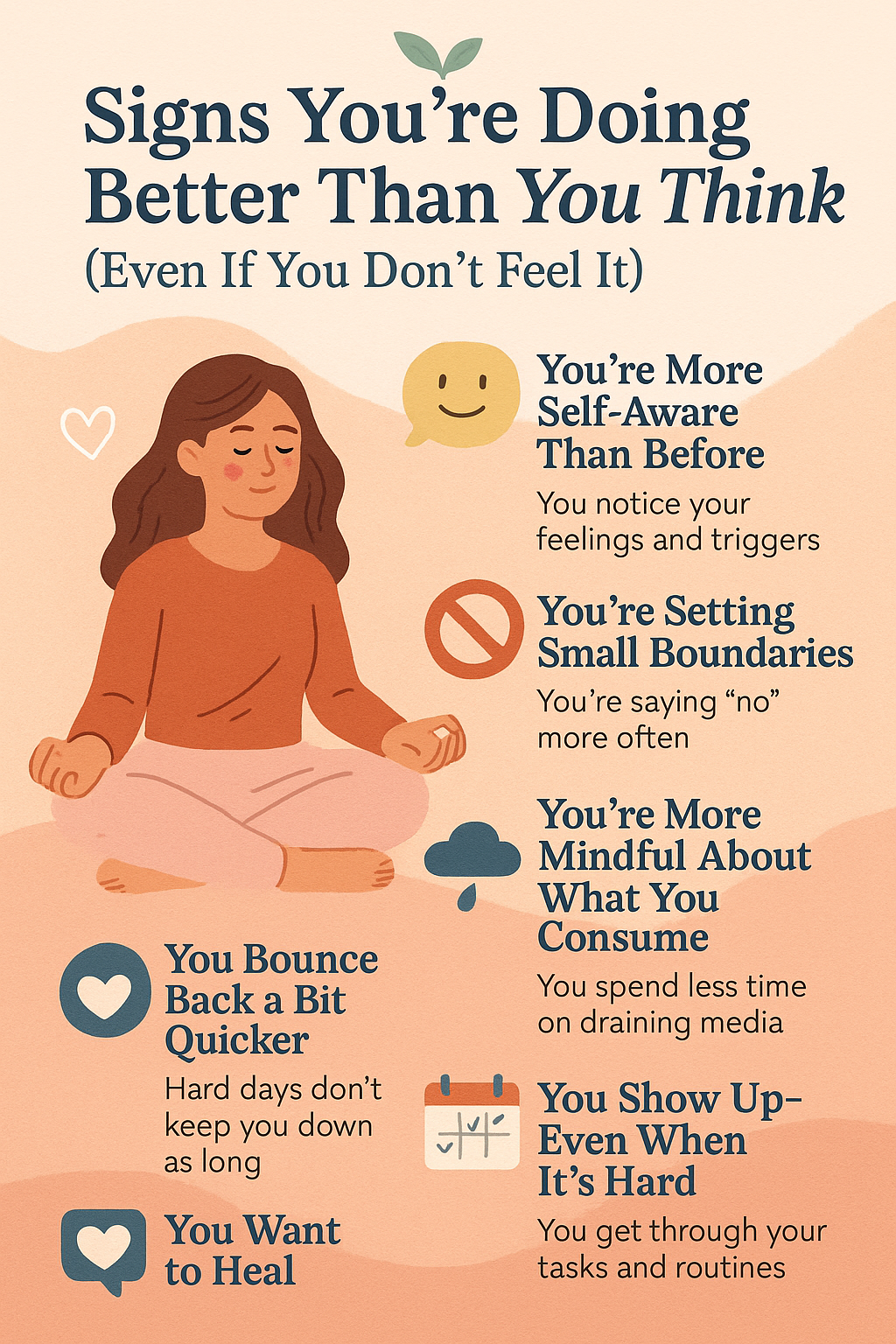
vSigns You’re Doing Better Than You Think (Even If You Don’t Feel It)

Because healing isn’t always loud—and progress can feel quiet.

Some days, you wake up feeling behind, like you’re not where you should be. Everyone else seems to be thriving, glowing, leveling up—and you’re just… getting through the day. But here’s the truth: just because your progress doesn’t look dramatic doesn’t mean it isn’t real. Sometimes, the biggest wins are silent.

Let’s talk about the subtle signs you’re doing better than you give yourself credit for.Some days, you wake up feeling behind, like you’re not where you should be. Everyone else seems to be thriving, glowing, leveling up—and you’re just… getting through the day. But here’s the truth: just because your progress doesn’t look dramatic doesn’t mean it isn’t real. Sometimes, the biggest wins are silent.

Let’s talk about the subtle signs you’re doing better than you give yourself credit for.

1. You’re More Self-Aware Than Before

You may still have anxiety, you may still overthink—but now you notice it. That’s a huge shift. Being able to name your feelings and pause before reacting? That’s growth.

Why it matters:

  • You’re observing, not just reacting
  • You can recognize your triggers or patterns
  • You’re breaking cycles slowly and consciously

Subtle sign:

You say things like “I know I do this when I’m stressed.” That awareness is healing.

2. You’re Setting Small Boundaries (Even If It Feels Awkward)

You’ve started saying “no” more often, or at least, not always saying “yes.” You leave conversations that drain you. You choose silence over arguments. That’s emotional maturity.

Why it matters:

  • You’re protecting your peace
  • You no longer people-please at the cost of your energy
  • You’re learning to value your time

Subtle sign:

You cancel plans without guilt when you’re mentally exhausted—and that’s okay.

3. You Bounce Back a Bit Quicker

Hard days still come. But now, you bounce back just a little faster. What used to take a week to recover from now takes a day. That’s resilience.

Why it matters:

  • You’ve built emotional muscle over time
  • You’ve got small coping tools in place (journaling, walking, talking)
  • You no longer spiral as deeply

Subtle sign:

You think: “This sucks, but I’ve handled worse.” That’s strength talking.

4. You’re More Mindful About What You Consume

You’ve unfollowed accounts that make you feel insecure. You take social media breaks. You mute WhatsApp groups that drain you. That’s intentional living.

Why it matters:

  • You’re protecting your mental space
  • You realize what you see daily shapes how you feel
  • You choose peace over FOMO

Subtle sign:

You now scroll with curiosity, not comparison.

5. You Want to Heal (Even If You Don’t Know How Yet)

Just the fact that you’re reading blogs like this, listening to self-help podcasts, or journaling at night—it means you want better for yourself. That desire is powerful.

Why it matters:

  • Healing starts with wanting more peace
  • You’re planting seeds even when results aren’t visible
  • It shows you care about yourself

Subtle sign:

You’re not numb. You’re just learning to feel in new ways.

6. You Show Up—Even When It’s Hard

You went to work today. You cleaned your room. You made that phone call. It may seem small, but in survival mode, these tasks are wins.

Why it matters:

  • Consistency is more powerful than motivation
  • You’re choosing to try, and that’s heroic
  • It’s not about productivity—it’s about showing up for yourself

Subtle sign:

You say, “I don’t feel like it… but I’ll do it anyway.” That’s growth in motion.

Final Thoughts: You’re Not Behind. You’re Becoming.

Healing doesn’t look like glow-ups or big announcements. Sometimes it looks like washing your hair, saying no, or crying without self-blame. You’re not stuck—you’re just in a chapter where progress is invisible, but still happening.

So next time you think, “I’m not doing enough,” pause.
Read this list again.
And remind yourself: You’re doing better than you think.

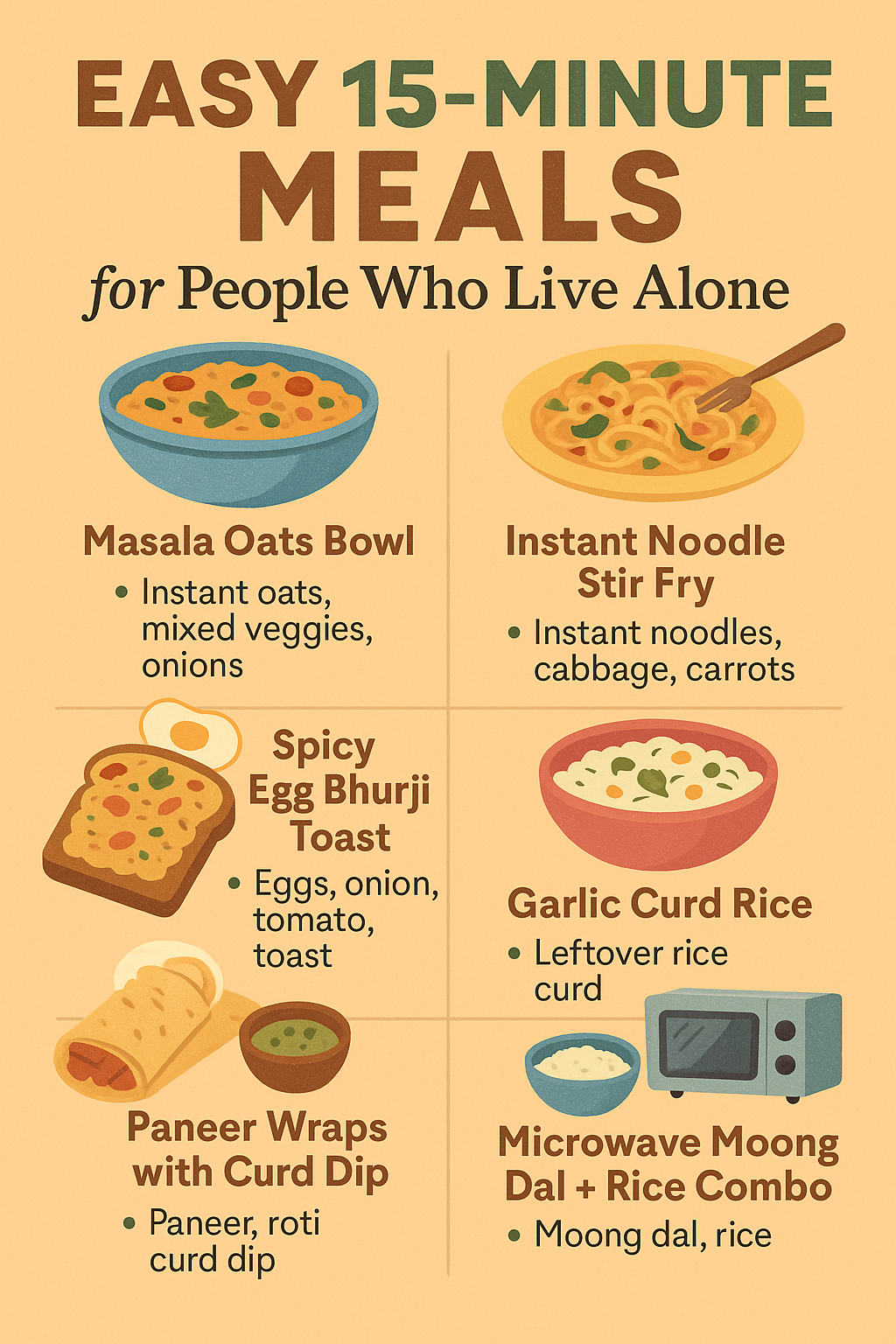
Easy 15-Minute Meals for People Who Live Alone

Because solo cooking should feel smart, not sad.

Living alone can feel freeing… until hunger strikes. Suddenly, cooking feels like a chore, and ordering food (again) sounds easier. But wait—what if you could cook a tasty, comforting meal in just 15 minutes, with barely any prep, and no fancy appliances?

Whether you’re a student in a PG, a single professional, or just tired of overcomplicated recipes, these easy 15-minute solo meals are here to rescue your cravings—and your budget.

1. Masala Oats Bowl (Savory, Warm & Filling)

Not your typical bland oats. This version is spicy, veggie-loaded, and feels like a mini hug in a bowl. Bonus: it’s super healthy too.

How to make it:

  • Sauté onions, tomatoes, and mixed frozen veggies
  • Add instant oats + water + salt + garam masala
  • Cook for 5–6 mins till soft

Why it’s great:

  • Super quick and high in fiber
  • Zero chopping if using frozen veggies
  • Comfort food without the calories

Optional add-on:

Top with peanuts or grated cheese for extra texture.

2. Instant Noodle Stir Fry (Level-Up Your Maggi)

This isn’t just instant noodles—it’s an actual meal upgrade. Add veggies and sauce, and it feels gourmet without the effort.

How to make it:

  • Boil your favorite instant noodles (without flavor packet)
  • In another pan, stir-fry garlic + cabbage + carrots + capsicum
  • Add soy sauce, chili sauce, and mix in noodles

Why it’s great:

  • Budget-friendly with easy ingredients
  • Feels fancy but needs no brainwork
  • You can make it “desi” or “Asian-style”

Pro tip:

Add scrambled egg or tofu for extra protein.

3. Spicy Egg Bhurji Toast (Breakfast-for-Dinner Vibe)

Indian-style scrambled eggs on toast = high-protein comfort food in minutes. Great for late-night hunger pangs or lazy dinners.

How to make it:

  • Sauté onion, tomato, green chili, turmeric, salt
  • Add 2 whisked eggs, cook till fluffy
  • Serve over buttered toast

Why it’s great:

  • Protein-packed, comforting, and fast
  • No special spices needed—just basics
  • Works for breakfast, lunch, or post-party

Optional:

Add cheese slice or ketchup for a fusion twist.

4. Garlic Curd Rice (No-Cook Hero)

When you’re too tired to chop or even boil—this South Indian classic saves the day. It’s cooling, satisfying, and needs no fancy ingredients.

How to make it:

  • Use leftover rice (or microwave packet)
  • Mix with curd, salt, and a tempering of mustard, curry leaves, garlic
  • Done!

Why it’s great:

  • Great for digestion and heaty days
  • Calming, minimal effort
  • Uses up leftover rice

Optional

Add chopped cucumber or roasted peanuts for crunch.

5. Paneer Wraps with Curd Dip (Quick, Tasty, Meal-on-the-Go)

This one’s for the “I need something tasty, fast, and no utensils please” days. Paneer makes it filling, and the dip keeps it fun.

How to make it:

  • Lightly sauté paneer cubes with salt, cumin, chili flakes
  • Roll into a roti/paratha with onions and mint chutney
  • Serve with curd + black salt dip

Why it’s great:

  • Doesn’t require exact measurements
  • Feels like takeout but cheaper
  • Portable & mess-free

Pro tip:

Add lettuce or chopped veggies if you’re feeling fancy.

6. Microwave Moong Dal + Rice Combo (For True Lazy Days)

No gas stove? No problem. This entire meal can be made in the microwave, and it’s wholesome too.

How to make it:

  • Wash 2 tbsp moong dal, microwave with water for 7–8 mins
  • Add salt, turmeric, and microwave again
  • Pair with microwave rice or ready rotis

Why it’s great:

  • Gas-free cooking
  • Protein + carb combo = full meal
  • Costs barely ₹15–₹20

Optional:

Add a spoon of ghee for that “ghar ka khaana” vibe.

Final Thoughts: Solo Cooking Isn’t Sad—it’s Smart.

Cooking for one doesn’t have to mean boring meals or messy kitchens. With just 15 minutes and a little creativity, you can enjoy warm, tasty food that feels like care—not survival.

So next time you’re tempted to order in, open this blog instead. Your wallet—and your future self—will thank you.

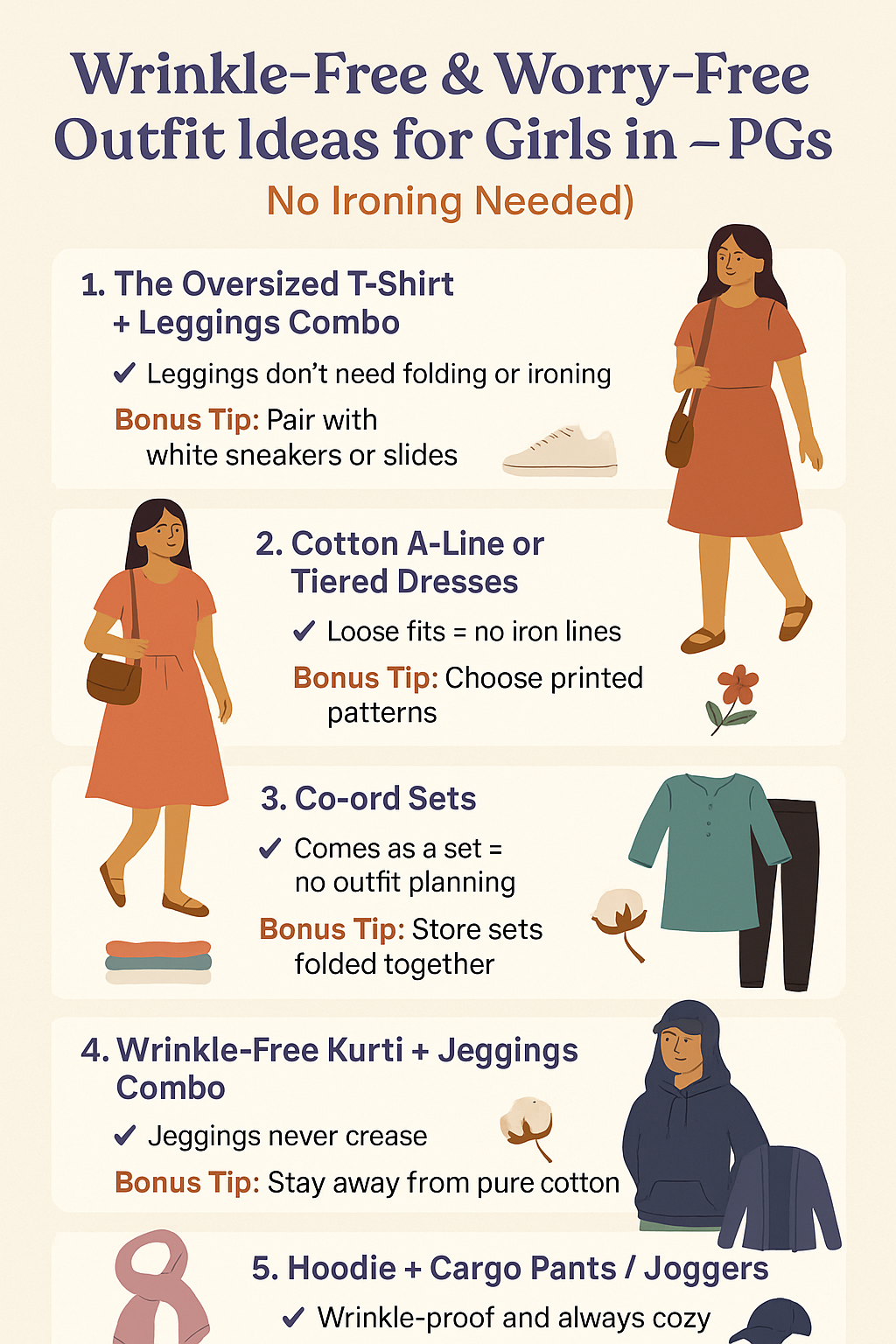
Wrinkle-Free & Worry-Free: Outfit Ideas for Girls in Hostels & PGs

Because who has time to iron when breakfast is at 9 and class is at 9:05?

Let’s face it—living in a hostel or PG (Paying Guest accommodation) means you’re constantly in a rush. Whether you’re running to college, grabbing chai downstairs, or squeezing in a last-minute group project—there’s no time to pull out an ironing board (if you even have one). That’s why you need easy, comfy, no-ironing-needed outfits that still make you look put-together.

Here’s your fun, practical fashion guide for everyday hostel life—wrinkle-proof, wash-friendly, and totally cute.

1. The Oversized T-Shirt + Leggings Combo (Everyday Hero)

This is the hostel girl uniform—comfy, breezy, and perfect for everything from class to canteen runs. Plus, both pieces dry fast and don’t wrinkle even if you slept on them.

Why it works:

  • No ironing needed
  • Leggings don’t need folding or ironing
  • T-shirts can double as nightwear too

Bonus Tip:

Buy T-shirts in solid colors or graphic prints that hide creases. Pair with white sneakers or slides.

2. Cotton A-Line or Tiered Dresses (Look Cute with Zero Effort)

Dresses aren’t just for outings! A-line cotton or rayon dresses (especially tiered ones) are hostel gold—they don’t wrinkle easily, are airy, and need zero styling.

Why it works:

  • Breathable & hostel-laundry-friendly
  • Loose fits = no iron lines
  • Looks dressed up with zero actual effort

Bonus Tip:

Choose printed patterns—they hide creases better. Add a sling bag, and you’re ready for class or café!

3. Co-ord Sets (Stylish & Lazy-Friendly)

Matching co-ords (like top + jogger or kurta + palazzo) are pre-matched magic. They give the illusion of being well-styled, but require no brainwork in the morning.

Why it works:

  • Comes as a set = no outfit planning
  • Most co-ords are made from wrinkle-resistant fabrics like jersey, rayon, or viscose
  • Doubles up for quick outings or reels

Bonus Tip:

Fold and stack sets together while storing to avoid mismatch panic at 8:55 a.m.

4. Wrinkle-Free Kurti + Jeggings Combo (Desi but Durable)

Want that desi yet comfy vibe? Go for wrinkle-resistant kurtis (like rayon-blend or printed cotton) and pair them with jeggings or lycra churidars.

Why it works:

  • Jeggings never crease + stretch = full comfort
  • Printed kurtis hide crush lines
  • Works for college, temple visits, or guest appearances

Bonus Tip:

Stay away from pure cotton kurtis—they wrinkle just from existing. Choose blends instead.

5. Hoodie + Cargo Pants / Joggers (For Late Night & Chill Days)

When you’re surviving on Maggi and barely slept—hoodies save lives. Throw it over anything with joggers or cargos and you’ll still look cute half-awake.

Why it works:

  • Wrinkle-proof and always cozy
  • Oversized hoodie = one outfit solved
  • Works for movie night, library, or even a Zoom call

Bonus Tip:

Choose darker shades—they hide hostel food spills better .

6. Dupatta? Nah. Use a Scarf or Shrug Instead.

Layering makes outfits look styled—but dupattas wrinkle like paper. Instead, throw on a soft scarf, long shrug, or even a flannel shirt tied at the waist.

Why it works:

  • Adds style without ironing
  • Makes basic outfits feel new
  • Doubles up as light cover-up

Bonus Tip:

Keep 2–3 scarves in go-to colors (beige, black, pastel) to mix and match with any outfit.

Final Thoughts: Look Stylish, Stay Real

You don’t need a steamer, a full closet, or a 5-step wardrobe plan to look good in hostel life. You just need smart fabric choices, ready combos, and comfort-first fashion. Whether you’re rushing to class, chilling on the terrace, or heading for a PG lunch—these outfits have your back.

Because let’s be real—the best hostel outfits are the ones that don’t require ironing… or effort.

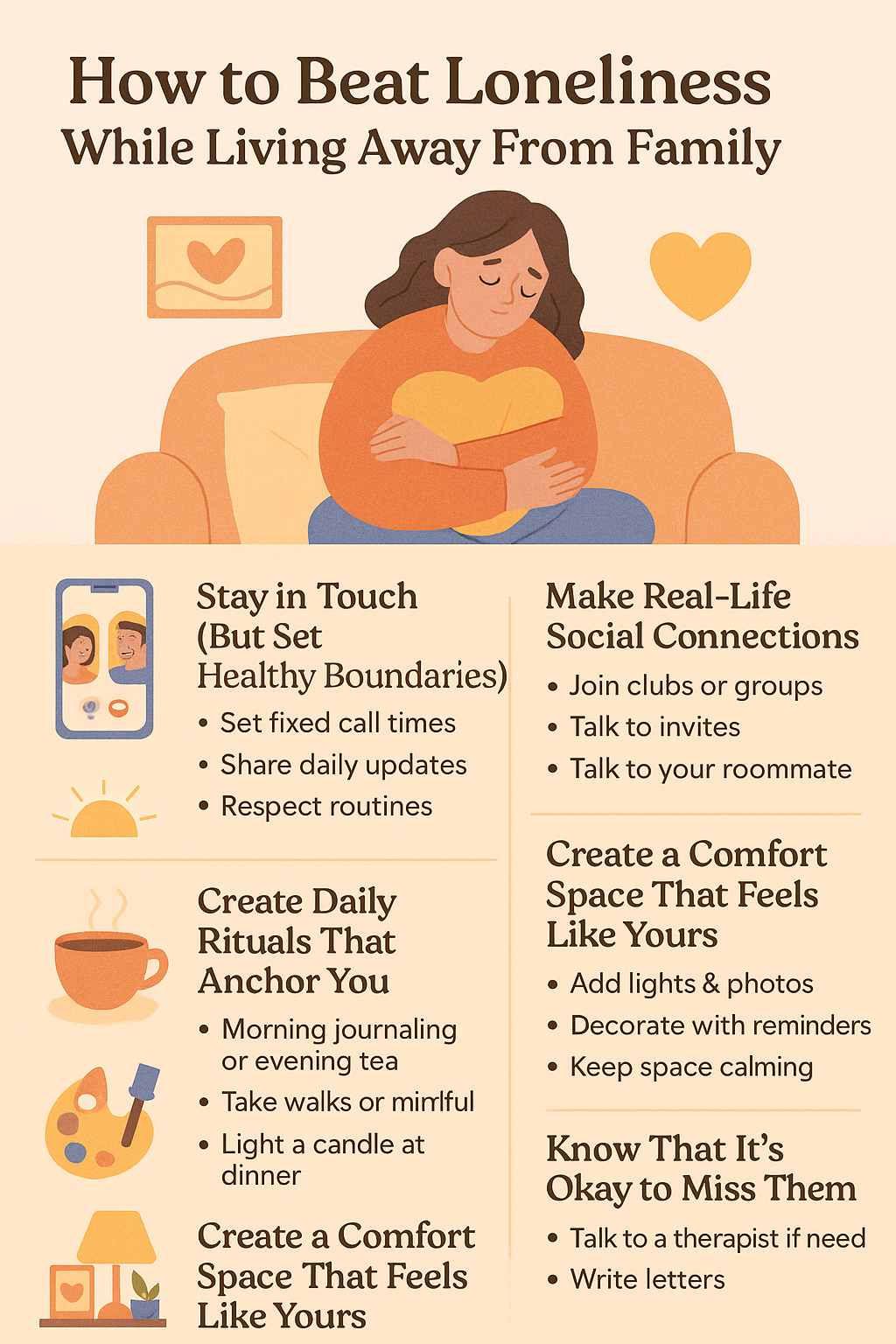
How to Beat Loneliness While Living Away From Family

Because missing home is real—and you’re not alone in it.

Living away from your family—whether for studies, a job, or personal growth—is exciting at first. But after the excitement fades, the quiet dinners, solo weekends, and emotional distance can slowly feel heavy. Loneliness isn’t weakness—it’s a human response to disconnection.

The good news? You don’t have to fight it alone. Here are simple, effective ways to ease loneliness and rebuild connection while living on your own.

1. Stay in Touch (But Set Healthy Boundaries)

Talking to your family regularly brings comfort, familiarity, and warmth. But calling too much can keep you stuck emotionally, making adjustment harder.

What to do:

  • Set fixed times for video calls or weekly check-ins
  • Share small wins and daily updates—not just problems
  • Respect time zone differences or routines

Why it works:

  • Keeps you emotionally connected without becoming dependent
  • Gives you something to look forward to
  • Helps you build a rhythm between your new life and old one

2. Make Real-Life Social Connections

No, online chats don’t count. You need real interactions—even if it’s just small talk at the gym or joining a local hobby class.

What to do:

  • Join a club, co-working space, or weekend workshop
  • Say “yes” to invites, even if you feel awkward
  • Start small: talk to your roommate, neighbor, or barista

Why it works:

  • Builds local support and community
  • Fills emotional gaps family once filled
  • Reduces isolation and builds confidence

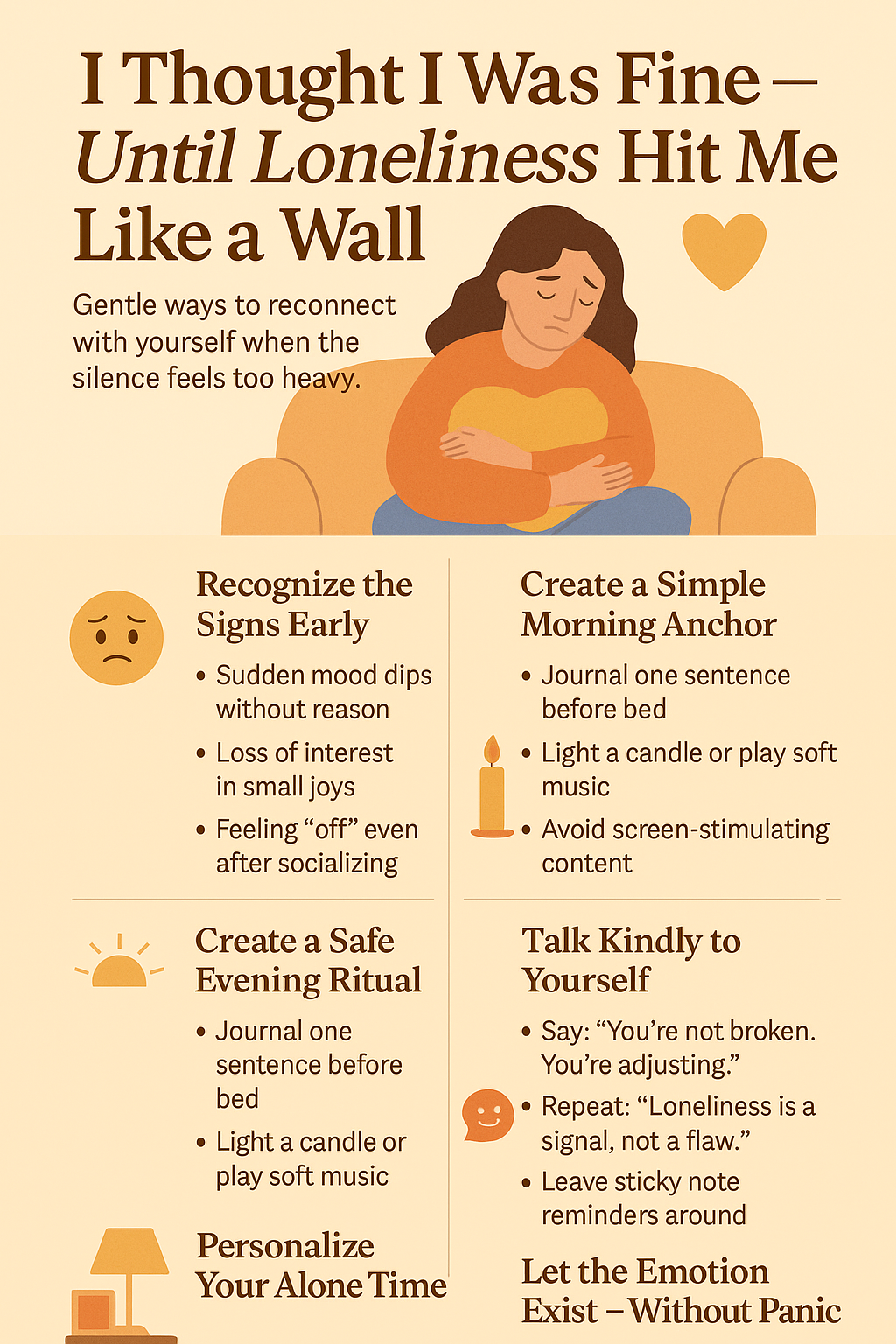
3. Create Daily Rituals That Anchor You

Loneliness often hits hardest in the empty in-between moments. Rituals give your day purpose, structure, and self-nourishment.

What to do:

  • Morning journaling or evening tea time
  • A daily walk or 15 minutes of mindful breathing
  • Light a candle or play calming music at dinner

Why it works:

  • Adds rhythm and predictability to your day
  • Makes you feel more emotionally grounded
  • Replaces chaos with calm

4. Stay Busy With Purposeful Activities

Being “busy” is not a cure—but being engaged helps. Doing things you care about fills emotional voids with meaning instead of just noise.

What to do:

  • Start a creative project (blog, art, cooking, music)
  • Take up part-time volunteering
  • Learn a new skill online or offline

Why it works:

  • Keeps your mind focused and positive
  • Replaces empty scrolling with growth
  • Boosts your self-worth and independence

5. Create a Comfort Space That Feels Like Yours

If your space doesn’t feel warm, your emotions won’t either. Create a corner that feels like home within your home—even if you’re renting a small room.

What to do:

  • Add soft lights, cozy blankets, family photos
  • Decorate with reminders of your culture or comfort foods
  • Keep the space clean and calming

Why it works:

  • Nurtures your nervous system
  • Helps with emotional safety and belonging
  • Makes your living space feel less like a “waiting room”

6. Know That It’s Okay to Miss Them

The goal isn’t to erase homesickness. It’s to live with it kindly. When you allow yourself to miss your family without guilt or shame, healing becomes easier.

What to do:

  • Talk to a therapist or counselor if it gets heavy
  • Write letters or notes you never send
  • Remind yourself: “Missing them means I was loved well.”

Why it works:

  • Validates your emotions instead of avoiding them
  • Opens space for gratitude instead of only sadness
  • Reminds you that you’re not alone in feeling this way

Final Thoughts: You’re Stronger Than You Think

Loneliness is a signal—not a sentence. It’s a reminder that you’re human, that you value connection, and that you’re growing. So take the steps. Reach out. Create joy. One small action at a time.

And always remember: Being far away doesn’t mean being forgotten.

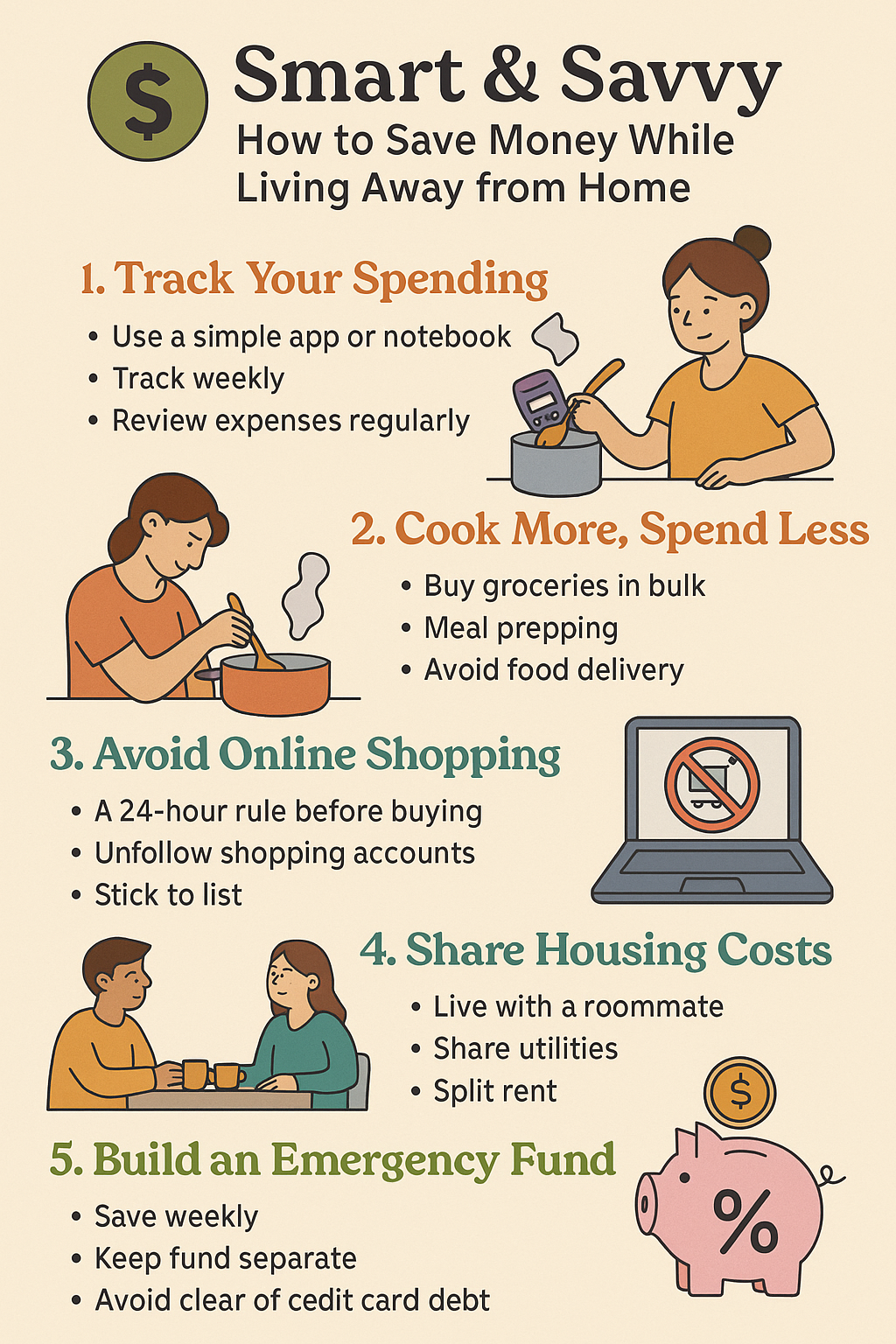
Smart & Savvy: How to Save Money While Living Away from Home

Because adulting is hard enough—your wallet shouldn’t suffer too.

Living away from home comes with freedom, late-night snacks, and no one telling you when to sleep—but it also comes with surprise bills, food costs, and rent that drains your bank account faster than you’d think. The good news? Saving money isn’t about cutting all the fun—it’s about building small, smart habits that actually give you more freedom long term.

Here’s your practical guide to saving money while still enjoying your life.

1. Start by Tracking Every Rupee (or Dollar)

You can’t fix what you don’t know. Most people don’t realize how much they’re spending until they actually track it. So before you make a budget, start by writing down every expense—even that Rs. 99 coffee or random Amazon buy.

Try this:

  • Use free apps like Walnut, Money Manager, or even Google Sheets
  • Track weekly instead of monthly so it’s not overwhelming
  • Review your spending every Sunday night (make it a ritual!)

Why it works:

  • Helps you spot patterns and money leaks
  • Makes budgeting feel doable, not scary
  • Encourages mindful spending

2. Cook More, Spend Less (And Eat Healthier Too)

Ordering food every day might feel convenient, but it’s one of the biggest money drains. Cooking at home, even basic meals, can cut your food budget in half—and it’s better for your health.

Try this:

  • Cook in bulk on Sundays (think: rice, curries, pasta sauces)
  • Buy staples like dal, oats, and frozen veggies in bulk
  • Use simple 3-ingredient recipes to avoid burnout

Why it works:

  • Meal prepping saves time during busy weekdays
  • Cooking with roommates = fun + shared grocery bills
  • Homemade food is cheaper, cleaner, and satisfying

3. Say No to Mindless Shopping Sprees

Impulse buying online? We’ve all been there. But “just browsing” leads to just broke. That dopamine hit from a cart checkout fades fast, but the financial hangover stays.

Try this:

  • Follow the “24-hour rule” before buying anything online
  • Unfollow tempting shopping pages on Instagram
  • Only buy what’s already on your planned shopping list

Why it works:

  • Cuts down emotional and late-night purchases
  • Helps you spend with intention, not impulse
  • Saves money for things that actually matter

4. Split Rent and Share Resources

Living solo sounds dreamy, but your wallet might not agree. Sharing your space can cut housing costs by 30–50%, and give you more to spend (or save) elsewhere.

Try this:

  • Look for roommates on trusted platforms (Facebook groups, local student forums)
  • Share bills: Netflix, groceries, laundry detergent—everything adds up
  • Use apps like Splitwise to manage shared expenses fairly

Why it works:

  • Less pressure to afford high rent alone
  • Shared utilities = shared savings
  • Bonus: built-in social life if your roommate’s cool

5. Avoid Debt, But Build an Emergency Fund

Credit cards may seem like a savior in tight months—but they often lead to stressful debt traps if not used wisely. Instead, focus on building a small emergency fund for surprise expenses.

Try this:

  • Save a small fixed amount weekly—even ₹100 adds up
  • Keep a separate digital wallet just for emergencies
  • Avoid “Buy Now, Pay Later” schemes unless you have a repayment plan

Why it works:

  • Reduces anxiety about broken phones, late fees, or medical bills
  • Gives you freedom to say “no” when you can’t afford something
  • Helps avoid long-term interest charges and penalties

6. Use Discounts, Cashback & Freebies (It’s Not Cheap—It’s Smart!)

Why pay full price when you don’t have to? Student discounts, referral codes, and cashback offers are everywhere—you just need to look.

Try this:

  • Use Chrome extensions like Honey or CashKaro for cashback
  • Check for student plans on Spotify, Microsoft, or even Dominos
  • Attend free college events for food, goodies, or networking

Why it works:

  • Lets you enjoy fun stuff without guilt
  • Encourages smarter digital shopping
  • Gives the joy of saving without the stress of “missing out”

Final Thoughts: Build Habits, Not Restrictions

You don’t have to live like a monk to save money. You just have to be a little more aware, a little more intentional, and a lot more clever. The small habits you build now—budgeting, cooking, sharing—will help you stay independent, stress-free, and financially confident for life.

Remember: Living smart is cooler than living broke.

Glowing Skin Made Simple: A Daily Skincare Routine for Every Girl

Because real beauty starts with healthy, happy skin.

Looking pretty starts from within—but your skincare routine plays a big part too. Whether you’re a teenager dealing with oily skin or in your 20s building your self-care habits, the right steps can help you look radiant without breaking the bank. This routine is simple, budget-friendly, and effective—perfect for busy school mornings or late-night Netflix wind-downs.

Here’s how to care for your skin, step by step.

1. Morning Routine: Wake Up & Glow

Your morning skincare should be light, refreshing, and protective. It preps your skin to face sun, pollution, and stress.

What to do in the morning:

  • Use a gentle face wash to remove sweat or oil from the night
  • Apply a toner to balance your skin’s pH
  • Dab on a Vitamin C serum for glow and sun damage protection
  • Always finish with sunscreen (SPF 30 or higher)—non-negotiable!

Why it matters:

  • Keeps skin fresh, clear, and protected from UV rays
  • Reduces dullness, dark spots, and early aging
  • Works great even for sensitive or acne-prone skin

2. Night Routine: Cleanse & Repair

Night is when your skin heals. So give it what it needs after a long day of exposure to makeup, sweat, and pollution.

What to do at night:

  • Double cleanse: First with oil/micellar water, then face wash
  • Use a hydrating toner or mist to prep your skin
  • Apply a moisturizer suitable for your skin type
  • Don’t skip under-eye cream for tired eyes and dark circles

Why it matters:

  • Removes impurities that clog pores
  • Repairs and hydrates skin overnight
  • Helps wake up looking refreshed, not puffy

3. Exfoliate Twice a Week

Exfoliation removes dead skin cells, unclogs pores, and reveals brighter skin underneath. But don’t overdo it!

How to do it:

  • Use a gentle scrub or chemical exfoliant (like lactic acid or BHA)
  • Do this only 1–2 times a week
  • Avoid exfoliating if your skin is irritated or sunburned

Why it matters:

  • Makes your skin smoother and more radiant
  • Helps products absorb better
  • Prevents breakouts and dry patches

4. DIY Face Masks for Weekend Pampering

A little pampering goes a long way. Use natural ingredients from your kitchen to give your skin extra love.

Easy face mask ideas:

  • Aloe vera + honey for hydration
  • Yogurt + turmeric for glow and brightness
  • Oatmeal + rose water for calming sensitive skin

Why it matters:

  • Calms irritation and redness
  • Gives a natural glow boost
  • It’s fun, relaxing, and budget-friendly

5. Healthy Skin Comes from Within

Skincare products help—but your daily habits play an even bigger role in how your skin looks and feels.

Lifestyle habits to follow:

  • Drink plenty of water (at least 7–8 glasses/day)
  • Eat clean: Include fruits, veggies, and healthy fats
  • Sleep 7–8 hours for a natural glow
  • Always remove makeup before going to bed

Why it matters:

  • Prevents breakouts, dark circles, and dullness
  • Boosts your skin’s natural ability to heal
  • Builds a strong foundation for your skincare products to work

Final Thoughts: Skincare Is Self-Care

You don’t need 10 expensive products. You just need consistency, good habits, and the right steps. Whether you’re a teen just starting out or someone refining their routine—take care of your skin like it’s your best friend. Because it is!

5 Quick & Healthy Dinners for Busy Weeknights

No stress, no fancy prep—just real food made fast

After a long day, the last thing you want is to stress over dinner. But eating healthy doesn’t have to be complicated. These 5 dinner ideas are perfect for busy weeknights—quick to cook, full of nutrients, and family-friendly.

Let’s dive into easy meals that keep you energized without spending hours in the kitchen.

1. Stir-Fried Veggies with Tofu or Paneer

This one-pan wonder is packed with flavor, fiber, and plant-based protein. Customize it with your favorite vegetables and sauces—ready in under 20 minutes.

Why it works:

  • High in antioxidants and protein
  • Easily adjustable for spice and taste
  • No need for side dishes—one bowl is enough

Quick tip:

Use pre-cut veggies and toss with soy sauce, garlic, sesame oil, and chili flakes.

2. Chickpea & Avocado Wraps

These wraps are fresh, filling, and totally meal-prep friendly. Chickpeas give fiber and protein, while avocado adds healthy fats for brain and skin health.

Why it works:

  • No cooking required if using canned chickpeas
  • Budget-friendly and gluten-free option
  • Great for lunch leftovers too

Quick tip:

Mash chickpeas + avocado with lemon, salt, and cumin. Add crunchy veggies and roll into whole wheat tortillas.

3. One-Pot Quinoa & Mixed Veggie Bowl

This warm bowl is cozy, nutritious, and comes together with whatever veggies you have in the fridge. Quinoa cooks fast and adds complete protein to the dish.

Why it works:

  • Quick-cooking grain
  • High in fiber and iron
  • Can be made ahead for multiple days

Quick tip:

Cook quinoa in vegetable broth. Add carrots, spinach, corn, bell peppers. Top with tahini or lemon dressing.

4. Whole Wheat Pasta with Spinach & Garlic Yogurt Sauce

Skip the heavy cream sauces. This dinner uses a protein-packed Greek yogurt base, spinach, and garlic for a creamy, guilt-free flavor.

Why it works:

  • Balanced mix of carbs, protein, and greens
  • Kid-friendly and comforting
  • Can be made in under 25 minutes

Quick tip:

Cook pasta + sauté garlic + wilt spinach. Stir in Greek yogurt off heat to avoid curdling.

5. Egg Bhurji (Masala Scrambled Eggs) with Roti or Toast

This Indian-style scrambled egg is spicy, satisfying, and cooks in 10 minutes flat. Pair it with whole grain roti or toast for a balanced plate.

Why it works:

  • High-protein meal
  • Perfect for vegetarians (who eat eggs)
  • You can toss in chopped veggies for extra nutrients

Quick tip:

Sauté onion, tomato, green chili, turmeric, and cumin. Add whisked eggs. Cook until fluffy.

Final Thoughts: Simple Can Still Be Nourishing

Healthy food doesn’t mean complicated recipes or long prep times. With the right ingredients and a little planning, you can eat clean even on your busiest nights.

Choose one or two recipes above to rotate weekly, and you’ll save time, energy—and probably money too.

Unlocking the Power of Daily Habits

How small consistent actions shape a better version of you

Big life changes often feel overwhelming—but what if the secret isn’t in giant leaps, but tiny steps repeated daily? Daily habits, when done intentionally, can rewire your mindset, boost productivity, and improve emotional well-being. It’s not about perfection—it’s about showing up again and again for yourself.

Let’s break down how daily habits work and why they’re one of the most powerful tools for self-growth.

1. Habits Create Structure, Which Reduces Overthinking

When your day follows a predictable rhythm, your brain doesn’t have to constantly decide what to do next. This frees up mental energy and keeps decision fatigue at bay.

Why it matters:

  • Reduces anxiety and over-planning
  • Makes room for creative and emotional clarity
  • Builds consistency, even on “bad” days

Try this:

Create a morning and evening routine that includes 2–3 non-negotiable actions (like drinking water, making your bed, or reading 5 minutes).

2. Small Wins Build Big Confidence

Every time you complete a habit—even something small—you reinforce trust in yourself. These “micro-wins” stack up into a solid sense of self-worth.
Why it matters:

  • Boosts motivation and momentum
  • Shifts your identity: “I’m someone who finishes what I start.”
  • Encourages more positive action naturally

Try this:

Start with 2-minute habits: 2-minute journaling, 2 push-ups, 2-minute meditation. Consistency is more powerful than intensity.

3. Habits Reduce Emotional Reactivity

When your nervous system is balanced through healthy routines, you’re less likely to spiral during stress or setbacks. Habits provide stability when life feels unstable.
Why it matters:

  • Regulates mood over time
  • Makes emotional healing more sustainable
  • Keeps you grounded during tough days

Try this:

Include habits that soothe your nervous system: walking, stretching, deep breathing, or unplugging from screens daily.

4. Your Environment Triggers Your Habits

Where you spend your time—and what’s around you—either helps or hurts your habits. Your surroundings shape your behavior without you even realizing it.

Why it matters:

  • Makes good habits easier to start
  • Makes bad habits harder to continue
  • Reinforces routine without relying on willpower

Try this:

Keep a water bottle on your desk, put books on your nightstand, place your phone out of reach before bed.

5. Tracking Makes Habits Stick

What gets measured, gets improved. When you track your habits visually (like in a journal or app), you stay more accountable—and feel rewarded seeing your progress.

Why it matters:

  • Creates a feedback loop of success
  • Builds self-discipline through visibility
  • Helps you reflect on what’s working

Try this:

Use a simple habit tracker with checkboxes or color coding. Reward streaks with mini self-care moments.

Final Thoughts: Show Up for Yourself Daily

You don’t need to change your entire life in one day. Just build one small habit at a time, and let the ripple effects unfold. Daily habits shape your identity, and your identity shapes your future.
Start small. Stay consistent. Watch yourself transform.